Archive

Tag Archives: movies

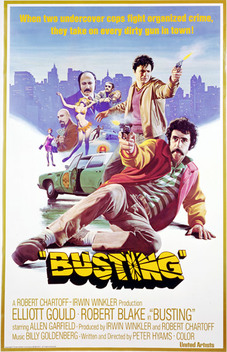
Like Walter Hill, Peter Hyams is a workmanlike director with several efficient and entertaining movies under his belt. Capricorn One, Outlander, and Narrow Margin are crisp commercial fare with occasional flair. While Hyams does not have a masterpiece in his oeuvre, unlike Hill (The Long Riders), after watching this flawed debut, you feel one was in there.

Busting tracks its’ early buddy cop kin, Freebie and the Bean, but swaps out the verbose and frenetic James Caan and Alan Arkin for the dour and focused Elliott Gould and Robert Blake. The latter are two LA vice detectives who are becoming disillusioned with the pointlessness of rousting massage parlors, gay bars and porno shops. They become obsessed with a corrupt crime lord (Alan Garfield) who thwarts their work by paying off the cops, politicians, and judges.

It’s an uneven picture, sometimes quietly comic, then discordantly violent. The camera work, however, is superb. In particular, a stunning extended foot chase shootout through Grand Central Market at night. The dolly shot was filmed decades before the pool scene in Boogie Nights and the nightclub scene in Goodfellas and was made all the more difficult because the leads flow, dodge and weave through dozens of terrified extras screaming and crouching as bullets whiz about. The scene is not an anomaly. Hyams has a deft feel and eye that portended a more illustrious career.

Other notes. 

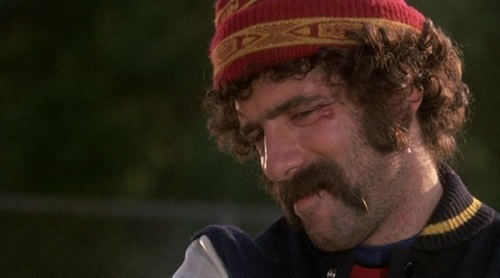
Gould is an LA detective who wears a Washington Redskins winter hat, which is cool. 

As with Freebie and the Bean, if they showed this politically incorrect picture at Oberlin, the student body would revolt.

The movie is also said to have been the inspiration for Starsky and Hutch

During the shootout, Hyams does things often ignored in such scenes. People fall. An innocent bystander get shot. And lo and behold, both Blake and Gould reload their revolvers. 

Quentin Tarantino’s take:

On Amazon. 

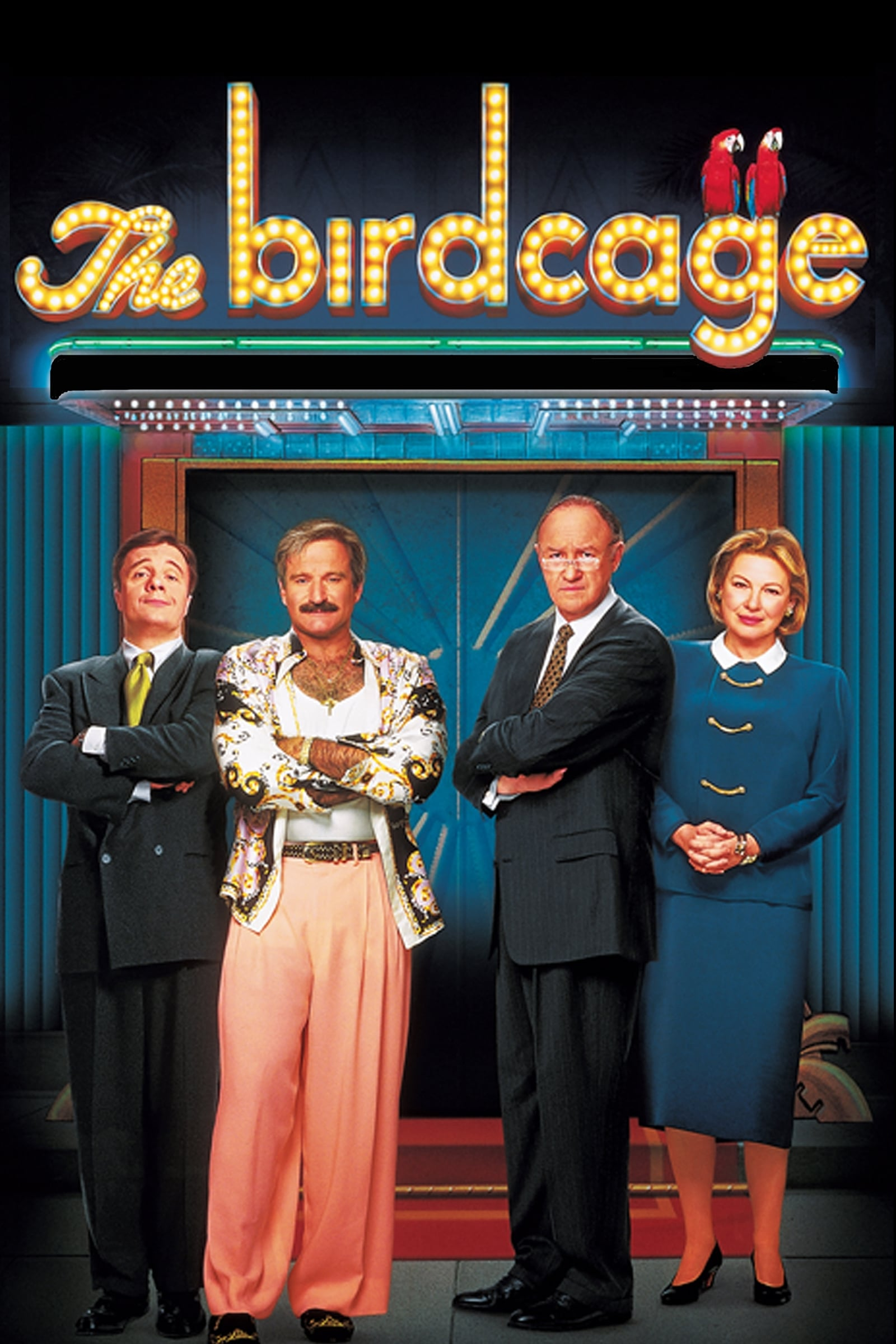
My daughter has been keeping an eye out for special screenings of older films, and Sunday, we went out to Tyson’s Corner to see Mike Nichols’ adaptation of La Cage au Folles, The Birdcage.

The film is a classic combination of crack timing, unrestrained joy, and comedic generosity. If you haven’t seen it (and it is currently on any number of streaming services, including Netflix), you are engaging in unnecessary self-neglect.

Since it is a well-known classic, I’ll just offer a few observations.

1. It is a crime no one was nominated from the picture. Not the uproarious Nathan Lane, the surprisingly canny Gene Hackman (who was just coming into his own as a comic force after the prior years’ Get Shorty), or the gut-busting Hank Azaria, the butler who can neither cook nor walk in shoes. Not even …

2. Robin Williams, who plays well-off character as the straight man, allowing Lane to fill the zany and manic spaces he normally occupies. Williams is the glue. Sure, he is funny, but he’s largely setting up everyone else, and in the rare moments of genuine drama (which are smartly short and tender), he packs a wallop.

3.  The set-up is ingenious. The daughter (Calista Flockhart) of a scandal-escaping conservative moral majoritarian senator (Hackman) falls in love with the son (Dan Futterman) of a gay couple who own and perform at a South Beach drag club (Williams and Lane). At the behest of the smitten son, Williams and Lane try to tone down their gayness and play as straight, conservative Greek diplomats (Williams the father, and Lane, the uncle) while entertaining the senator and his wife (Diane Wiest) for dinner. In the wrong hands, that same set-up could portend a preachy lesson-fest that has a few yuks, but Nichols (or rather, his longtime collaborator, screenwriter Elaine May) is having none of that. May is about the laughs and any zingers are broadly comic, more cultural than political, and woven tightly in the larger bit. Her bon mots never get in the way of the physical comedy, they enhance it.

Case in point.

Wonderful picture.            

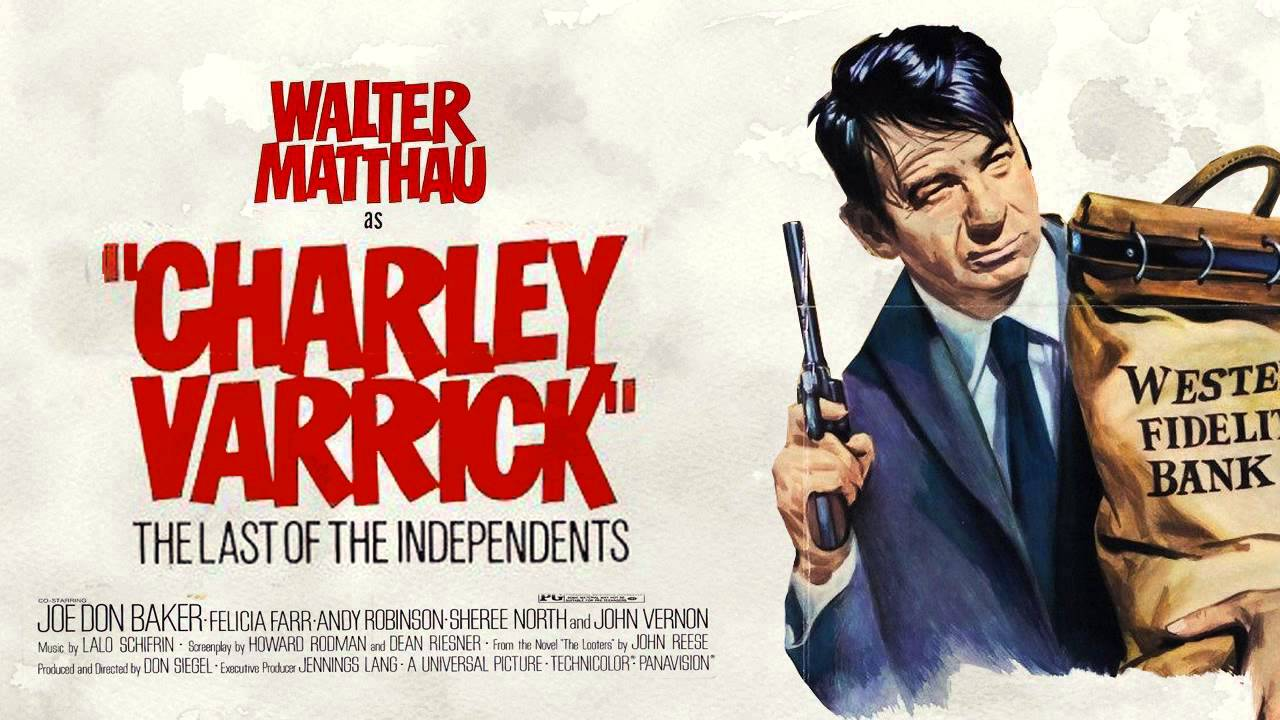
A smarter than average bank robber (Walter Matthau) robs a small town New Mexico bank that, unbeknownst to him, is holding $750,000 in mob money. The job goes terribly bad. Matthau’s wife and wheel woman (Jacqueline Scott), an accomplice, and several deputies are shot dead. When Matthau and his surviving accomplice (Andrew Robinson, the memorable Scorpio Killer in Dirty Harry) hear on TV that the robbers only got away with several thousand dollars, he susses out the massive shitstorm that is coming in the form of mob money man John Vernon and enforcer Joe Don Baker. Matthau has to figure out how to survive the ordeal.      

This is a competent and serviceable Don Siegel (Dirty Harry, Escape from Alcatraz) crime flick. The picture is no great shakes but it has its moments, and the cat-and-mouse machinations of the characters are compelling.  

The picture is also very very weird.

First, apparently, in the 70s, all you had to do to a woman to transform her to putty in your hands was rough them up a bit. Sure, 1960s James Bond could get away with it, but a majority of those women were play-acting for the post-coital kill, so, all’s fair. Not so the women of this flick. A slap or threat, and they positively melt. Times change.

Second, there are several actors who should not be kissing women in film. John Wayne is probably number one. Brad Pitt, with his blasé remove, is three.  Matthau has got to be number two. In this flick, he kisses his dead wife on the lips – twice – and then he beds a live woman (Vernon’s executive secretary, Felicia Farr). It’s hard to tell which woman was less enthralled. Matthau looks ridiculous and uncomfortable.

Last, has there ever been a luckier actor than Joe Don Baker? “Oh, so, you want me to be a quirky Southern tough guy who can exude jovial sarcasm followed immediately by swift violence?  I can do that.” And a career playing basically the same role – and playing it well – followed.

On Amazon Prime.       

This is not a film review, but some events require a detour from standard operating procedure.

A close friend and fellow film buff sent me the following:

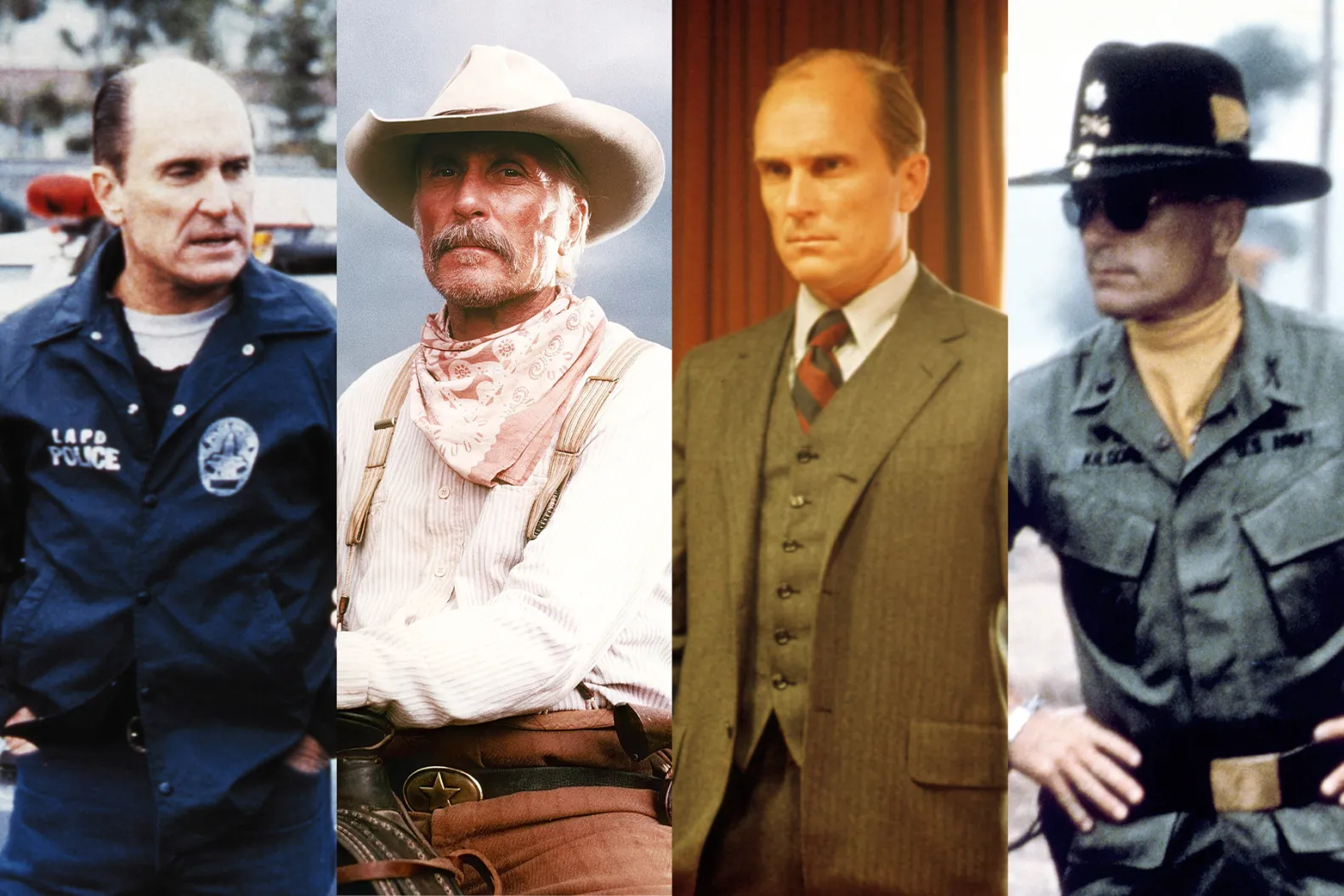
Robert Duvall’s very first film is hard to find and may not exist: a made for TV Playhouse 90, John Brown’s Raid, directed by Sidney Lumet starring James Mason as John Brown, filmed on location at Harper’s Ferry. In addition to Mason and Duvall, the movie had James Broderick and Ossie Davis. His second film and first feature was, of course, To Kill a Mockingbird. He made about 7 feature films in the 60s–mostly episodic TV. But those 7 features arguably set up the next decade of his career: Countdown, a failed film by Robert Altman, The Rain People, a failed film by Francis Ford Coppola, and then The Chase (Arthur Penn), True Grit and Bullitt (Peter Yates). Oh, yeah, he plays a gay biker and Richard Jaeckel’s lover in Nightmare in the Sun. So the 70s opened and he plays a lot of assholes: MASH, Network, Killer Elite, Great Northfield Minnesota Raid. Also a lot of fairly colorless people: I’m sorry, but Tom Hagen is a thankless role, and while he’s an interesting Doctor Watson, it’s not very showy. And a Good Nazi, kind of, in The Eagle Has Landed. Also a lot of movies we’ve forgotten about. But almost all of his movies share two characteristics: he’s getting much bigger parts and most are directed by or written by big names. So even though at the end of the 70s, the average person hadn’t heard of him, he’s got a lot of respect in the industry and criticis love his ass. Setting up The Great Santini, Apocalypse Now, True Confessions and Tender Mercies–and that’s a sequence of films that’s got few rivals, particularly given he’s starring in three of them. Now he’s kind of found his groove as a movie star–of this group, only True Confessions wasn’t Oscar nominated. Ironically, his 80s after that is a bit tame–probably taking some time off. And then the epic Lonesome Dove, where he creates Augustus, leading to his strongest decade not in movies (that’s the 70s by far) but in Robert Duvall Roles. He made 24 movies in the 70s, 12 in the 80s, and 23 in the 90s. He still worked up into his own 90s, getting another nomination and directing up into his 80s. From CNN, “…the family encourages those who wish to honor his memory to do so in a way that reflects the life he lived by watching a great film, telling a good story around a table with friends, or taking a drive in the countryside to appreciate the world’s beauty.” He was apparently a Republican, too. Long time buddies with Gene Hackman and Dustin Hoffman. I’m glad he had a better end than Hackman.

There is very little with which to disagree there, except for her misstep on Tom Hagen. Duvall’s turn as the “almost brother” is an understated, canny performance, pitch perfect to his co-stars, with quiet moments of real hurt. When Michael says, “You’re out, Tom,” Duvall shows piercing vulnerability, beseeching Vito with his eyes. When Michael attacks Tom for disloyalty, again, his bewilderment belies a greater fear (“Why do you hurt me, Michael? I’ve always been loyal to you”).

The scenes must be juxtaposed with Tom’s fights with Sonny, who also derided Tom, but with whom Tom was at ease, because for all his faults, Sonny was human, they were blood even if Sonny could cruelly suggests otherwise. And Sonny was dumber than Tom, a reality so patently obvious to Tom that his worth was never in doubt. They’d fight, Tom took it with a grain, and Sonny immediately apologized.

Michael, however, was inhuman and smarter.

The performance is masterful, like so much of what Duvall did.

Last thought. A Civil Action is an underrated legal thriller about a class action case brought against local polluters. John Travolta is the engine, a plaintiff’s lawyer fighting a massive, all-enveloping case and his own sense of inadequacy, and he is quite good. Duvall represents one of two corporate defendants, a wily, eccentric old line senior partner with a white shoe Boston firm. I’ve been around lawyers of all stripes my whole life. He is spot-on, brilliant, and inhabits the quirky-but-wise character entirely:

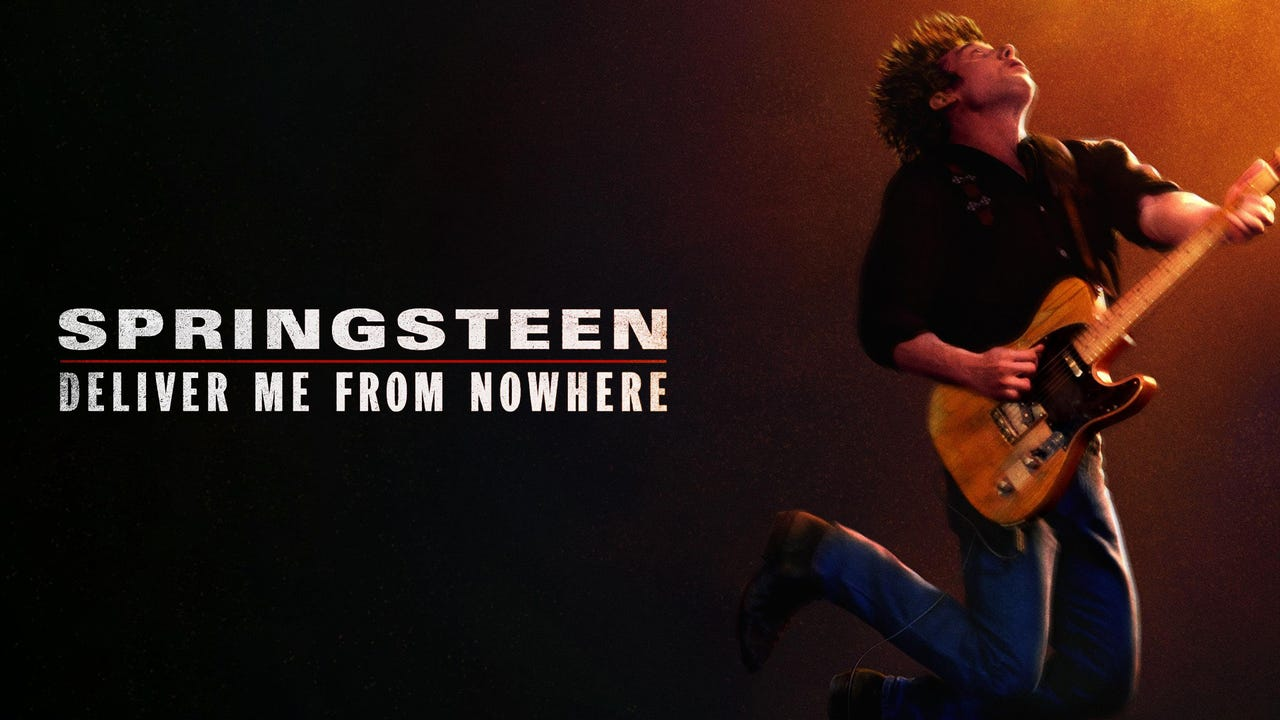
At the outset, we meet Bruce Springsteen (Jeremy Allen White) as a little boy, hearing his father (Stephen Graham) coming up the stairs, drunk, to spar with him. Bruce catches a slap, and we know it’s gonna’ be these two guys the whole picture, as the shy, depressed superstar makes his most personal, least commercial opus, Nebraska, while grappling with his troubled upbringing.  

I read Bruce’s autobiography and was impressed with its honesty, charity, and equanimity. There was little, however, about his abusive father. Maybe Bruce wasn’t ready to share. But the point is relevant because in the film, while his father seems to be a handful, he is not portrayed as such a monster so as to justify the depths of Bruce’s torment. In fact, when Bruce is writing Nebraska, he seems more influenced by Terence Malick’s Badlands than Daddy issues.

In the midst of his struggle, Bruce has a relationship with a single mother (Odessa Young). Their union is supposed to be simple, earthy, a local rocker and a “heart of gold” fan who sees through The Boss’ facade. Mind you, this is post The River. Bruce is massive. He’s been on the cover of Newsweek and Time.

No matter. The picture persists in the massive conceit of Bruce the regular guy. When Bruce drops his waitress gal off, because of course she’s a waitress (in a diner, no less), it is in a blue collar row house, oil storage tanks in the background. Her father comes out and says, in a hackneyed, suspicious New Jersey small townie way, “is that the … uh … guitar player fella’?” Dad then sneeringly brings up Uncle Dave, who also “played guitar” and presumably, was not much of a success.

Oof.

Worse, the relationship doesn’t add much if anything to the story. Given the woman didn’t exist, one would expect writer/director Scott Cooper (Hostiles) to do more with the character. But she is there solely to be dumped by the angsty Bruce and to utter pap like, “if you can’t be honest with yourself, I don’t know how I can expect you to be honest with me.”

Holy Moses.

The second half of the film goes straight into the ditch. Bruce is struggling to present Nebraska in his stripped down vision while fending off the mildest of pressure to release Born in the USA. In the doing, he engages some more with his father while struggling with depression. It’s a long slog, with Bruce upset his cassette tape sound cannot be replicated in the studio, a struggle treated as if we were watching Oppenheimer and his team of scientists making Fat Man. In these moments, the film has absolutely no sense of proportion and lapses into the ridiculous.

The Boss’ head is in his hands. A lot.

Another negative is the Jon Landau character (Jeremy Strong). As Springsteen’s manager, Landau is supposed to provide some obvious tension between the Boss’ failure to follow up The River with something more commercial than his sparse, acoustic passion project. But there really is no tension at all because Landau is first and foremost an acolyte, and an uber reverential one at that. If Bruce said he wanted to follow up The River with hand puppetry, from this Landau, we’d get: “Hey [deep soulful look into Bruce’s eyes, hand on shoulder]. I Iove you. You do you.” When Landau and his wife discuss the Nebraska demo, their conversation is the most elemental exchange you’ll hear in film, as if Cooper fears the audience is so stupid it must be painstakingly explained just what a departure this record is and just how “dark” it seems. When Bruce plays the hit Born in the USA, Landau says, “I think a Muse came down and kissed you on the mouth.”

Sweet Mother of Jesus.

Ultimately, Cooper cannot land on any one thing for very long, and it is just not very cinematically interesting to watch a film about a guy writing a personal solo record.

The resolutions at the end are brutally maudlin, shield your eyes syrupy.

“You need therapy man.”

“You did the best you could. You had your own battles to fight.”

This while Bruce, an adult who just finished a concert, is sitting on his father’s lap.

There is a positive. Jeremy Allen White is really quite good as Springsteen. One has to be really careful with such a mythic figure, and White does a very understated job while still capturing the persona. The script calls for him to be perpetually tortured but he pushes back with a refreshing natural humanity. This is no small thing given how humorless and dour the script portrays him.  

It’s not grotesquely terrible. But it’s pretty bad, hopelessly muddled and much duller and pedestrian than it had to be.

I was hoping this touching film would be properly rewarded at Oscar time, but it was ignored. The omission is even more galling given the Academy’s decision to nominate 10 films this year, including the dreck of F1 and Frankenstein. Getting an Oscar nomination is never a confirmation of merit. But with 10 nominees? Please. Noah Baumbach’s story of mega Hollywood star Jay Kelly (George Clooney) in midlife crisis is clever, entertaining, and tender, and Clooney gives his best performance since The Descendants. The picture deserved better.

After the death of a mentor, the man who “discovered” him, Clooney is approached by an old friend from acting school (Billy Crudup). In the hope of establishing more of a real connection with both his past and normality, Kelly invites Crudup for drinks to reminisce about the old times. Unfortunately, Clooney is a massive, unknowing target, and he becomes the repository for Crudup’s bitter regret, as well as a TikTok sensation when the two get into a fist fight in the parking lot. Clooney, however, is not deterred, and takes his retinue, led by longtime manager Adam Sandler and publicist Laura Dern, to chase his younger daughter through France on his way to a tribute ceremony in Italy. To be unencumbered is a freeing experience for Clooney, albeit one that is laughably abnormal. He is recognized, fawned over, and catered to by a staff of five, and soon, even he sees the absurdity in his efforts.

The trek is infused with real heart and pathos, and throughout, Clooney flashes back to his ascent to stardom. While he seeks to reconcile himself to failures with family and friends, including his father (an irascible Stacy Keach) and an older adult daughter, who is estranged and embittered and attributes all of her mental torments to her wanting father, ultimately, they are not there for his moment. Clooney is left to the expected support from his longtime manager and assistants, but Sandler himself is going through his own crisis, realizing the limits of friendship in his uneven relationship as the fixer of all things for megastars. Dern has had it, and bolts with a “save yourself, this man does not love us” warning for Sandler. Eventually, Clooney is alone.

There are wonderful exchanges, poignant moments but, thankfully, no real resolution. Baumbach studiously avoids the pat. This type of film would normally result in some kind of oath, or commitment, or suggest a rapprochement, a teachable moment. Here, it ends with Clooney at the festival given in his honor to credit him for his life‘s work on the screen, and his lesson is not quite clear. Yes, like all men and women, Clooney has made mistakes, but when you get to see the joy in the faces of the people who love his work, work that has accompanied and maybe even inspired many of the moments in their own lives, there is at least a rebuttal to the regret.

For some, this, I suspect, may be too much sentimental log rolling for Hollywood. I ate it up with a spoon and wanted more.

A lovely film, one of the best of the year, replete with fantastic, unheralded performances. Sandler is particularly good, vulnerable and piercing. Though he has impressed enough, however sporadically (Punch Drunk Love, The Meyerowitz Stories, Uncut Gems, Hustle) that I can no longer register surprise.

If AI did not write this film, then we need more AI in film. 

I feel confident, however, AI had a hand in this empty, soulless picture, which feels like a Marvel flick but doesn’t even meet that low bar. The movie looks good, moves relatively well, and the actors are for the most part fine. But the script is predictable slop and the presentation so dumbed down, all things equal, it must have come from an algorithm. Writer/director James Vanderbilt has a few Screams and Spidermans under his belt, but, inexplicably, co-wrote Zodiac. So color me perplexed.

The picture also offers a glimpse as to what the future holds for historical films. Not a single bit of this recitation of the Nuremberg trial rings true. Sure, it technically comports with some of the facts, but the feel is all “now.” Viewers can glean just enough information to get a sense as to historical stakes (Nazis bad, Herman Göring bad but sneakily charming), but the picture never nears informative or elucidating.

The Nazis have lost the war, and in an over-long lead-up, we learn it is critical they be placed on trial through Supreme Court Justice Robert Jackson (Michael Shannon), who spars over the wisdom and efficacy of such a trial with his wife via witty banter. When the trial becomes threatened, Jackson goes to the Vatican to enlist the Pope’s blessing, which he receives by blackmailing the Church as an arguable co-conspirator with Hitler, a complete fabrication. But a lie that serves an exchange in keeping with this simplistic rendition.

Pope cowed. Full steam ahead.

Russell Crowe plays Göring, the biggest fish in the dock. He must go to toe-to-toe with army psychologist Rami Malek, a cynical practitioner so full of himself his eyes bug out.

Okay. Cheap shot.

The men bond in verbal exchanges that are dull and unilluminating. One gets the sense Crowe got the role because he’s heavy and imposing, but he competently delivers the muck given him. As for Malek, his casting is a mystery. He should not receive any further film roles unless in Bohemian Rhapsody II or movies where he plays offbeat or weirdo. When Malek engages with Göring’s young daughter, as he passes letters between father and family, he almost takes on the mien of a molester. Peter Lorre as William Holden.

Malek gets deeper into Göring’s psyche while acting as Jackson’s mole and stoolie, which is incongruent, given all of Jackson’s testaments to fairness. Malek also intercedes on behalf of Göring‘s family when they are arrested. Depressed, he takes refuge in the arms of a buxom reporter and spills his guts. She prints a front page article betraying him and leading to his ouster from the Army.

Most of these plot points are either false or distorted. In reality, the Malek character was not cashiered; he was promoted and back in the U.S. by the time Göring took the witness stand.

In the film, Malek attends the trial and before so, he rushes in to see Jackson to offer his book of notes entitled, How to Get Herman Göring.

The big day arrives.

The Nazis and lawyers don their outfits for legal battle.

Göring does pushups in full regalia and walks out amongst cheers from other caged Nazis. Like in Gladiator.

Cue AI dialogue. 

“In seven hours, the whole world will be focused on this room. This is it. This is everything.”

“Let’s finish this war.”

“This is your day. You’re ready.”

“Bury him.”

“He’s got him.”

While watching this drivel with my family, we started a game. A character would say something. We would pause the movie and take a stab at what would be said in response. Our success rate was shockingly and depressingly high.

Example. The interpreter who works with Malek offers him a cigarette. When Malek notes the interpreter does not smoke, he explains he carries cigarettes to curry favor with officers. The interpreter then states wistfully that perhaps, at the end of the war, he will have a cigarette. Malek responds, “the war has ended.”  There is a silence.

The movie was paused. Bets were placed on whether the interpreter would have his cigarette at the moment of conviction of the Nazis.

EXT. PALACE OF JUSTICE – NIGHT

Howie stands outside. Silence save for the crickets. He pulls out the pack of cigarettes. Takes one out. Puts it in his mouth. Goes to light it. Hands shaking…From inside, we hear the gallows drop again. Another man down. Howie stands there. Pulls the cigarette from his mouth unlit and tosses it away.

There is a great deal of this hackneyed bullshit throughout the flick.

Thankfully, the dreck eventually ends. Malek, who writes a book about the experience, is portrayed as a haunted soul, desperately trying to warn the world that the good German is in all of us.  And then, he kills himself, just like Göring.

Sans the push-ups.

Streaming.

Did you know Eddie Murphy was funny? That he always knew he would be a star? That he inspired many a black comic? That he was angry at SNL when David Spade took a dig at him?

If so, you’re good to go.

If you insist on watching this tepid Netflix documentary, prepare for what seems to be a retrospective about a funny man that inexplicably does not show him being all that funny.

There is no delving into his craft, no in-depth discussion of how he matured in stand-up or established himself in films.

There are no great stories of Hollywood.

There is, really, very little insight at all. 

Rather, Murphy is presented as a pleasant, sensible fellow, a bit of a homebody, guarded but practiced in the art of bland recollection.

It is all very boring, and made more so by the likes of Arsenio Hall, Michael Che’, Dave Chappelle, Kevin Hart, Jerry Seinfeld, Pete Davidson, Jamie Foxx, Chris Rock, and others basically blowing so much elegiac smoke up Murphy’s ass that he seems more demigod than man. Which is weird when you see his oeuvre laid out, and his sermon on the mount is playing so many characters in The Nutty Professor who can fart.

Look, I love Eddie Murphy. When I saw 48 Hours, I was blown away by his presence and the interplay with Nick Nolte, a buddy cop flick with real comedic teeth in the articulation of racial tension. I also thought Murphy was overlooked in Dreamgirls, though I was pleased to see his Best Supporting Actor nomination and was dying to hear him explain how he evoked a true falling star, and one with substance abuse issues, given his own clean living. As for his unheralded classic, Bowfinger, all we get is how it was nice for him to walk to lunch with Steve Martin.

The endeavor is generic, Commissar-approved dreck through and through. Though I give it 1 star for a few clips of Eddie’s hilarious, now deceased brother, Charlie.

Tediously directed by the same person who helmed The Longest Day, once dubbed “The Longest Movie,” Ken Anankin’s resume’ does not inspire confidence. The picture takes forever to start, and when it gets going, it is permeated with flat ahistorical battle sequences and clunky dialogue. All the actors seem to be taking their cue from Henry Fonda, who plays the lone officer who foresaw the Nazi surprise attack through the Ardennes. Fonda sports a ho hum bemusement that screams, “Did the check cash?” The usual suspects for WWII flicks – Telly Savalas, Robert Ryan, Charles Bronson – make their bank as well, and similarly phone in their personas.

A bore through and through, it looks cheap and inauthentic, particularly when they put the leads in tanks with the actual film footage on a screen behind them.

Very Batman and Robin TV show driving.

Though it maintains a soft spot in this old heart for reasons having nothing to do with artistic merit.

When I was in high school, due to economic strain, my mother was forced to take in boarders. One, Klaus Kristmas (name changed because if my Googling is correct, he’s a rather accomplished German government official) was a smart, ramrod straight, punctilious young man whose father was in the Bundestag. Klaus was great fun, and my mother immediately made him part of the family. He even came to the beach with us, where we recoiled in horror as he pulled down his shorts to reveal a European look, the mini-Speedo.

At home, I would hang out with Klaus and watch TV. One night, sure enough, we watched this flick, which is all Germans kicking ass for the majority of the picture. When Robert Shaw, as the lead Panzer commander, nears the oil depot that will allow his continued advance, however, things have shifted. Shaw burns to death when a fuel drum hits his tank.

Klaus: “Oh nooooooooooooooo,”

14 year old Filmvetter : “USA, USA, USA!!”

On Tubi.

James Foley’s (After Dark, My Sweet) film never really decides what it wants to be, a family drama or a crime picture. Foley eventually throws up his hands and cedes everything to the captivating Christopher Walken.

Not the worst of decisions. Walken plays a minor rural Pennsylvania crime kingpin. He skippers a crew that includes his two brothers and a few other hardened locals. They do heists, car thefts, drugs, and, if necessary, murder, a lethal but merry band of crooks.

Walken’s estranged son, Sean Penn, is a townie still living at home with his mother and grandmother. The women smoke, glare at the TV and otherwise exude the hopelessness of abandonment and near poverty. Penn, seeking something more, falls in at-first-sight love with Mary Stuart Masterson, who looks his way as he cruises at night around the town square. It is for her that he joins up with his father’s crew, to “get out while we’re young … ’cause tramps like us …” 

When Penn realizes murder is part of the gig, he splits from Walken, gets arrested working his own “baby” crew (which includes his brother Chris and a very young Crispin Glover and Kiefer Sutherland), and is incarcerated. There, the cops work on him to fink on his father.

Here, the film becomes ridiculous. Walken, paranoid Penn will flip on him, kills nearly every one of the kids working with Penn, even though Foley does not show them to be integral enough to his operation to be much of a threat. He also rapes Stuart Masterson, which makes even less sense if the plan is to bring Penn back into the fold. Penn comes out of jail, tries to make a run for it with his gal, fails, and in a rushed, abrupt ending, testifies against his father (for 30 seconds).

That’s that.  Lights up.

None of it makes much sense, but the thematic indecision is worsened by gross character underdevelopment. Walken is a charming sociopath, but how did he get here? No clue. We even have his ex-wife moping about, warily eying the establishment of a relationship between Walken and Penn. Foley, however, suffices to use her as a sad totem, so we don’t get any insight into Walken from her. Similarly, Penn needs a Daddy. Then, on a dime, he doesn’t. As he is near mute for most of the picture, we are left to guess as to what he has missed and the basis for his immediate and strong moral stand. Stuart Masterson is looking for something, but as she and Penn prepare to light out for the territories, leaving her house, she is clearly from money. So why is she hanging with these lowlifes? Unexplored.

The film has its strengths. Foley’s feel for rural Pennsylvania is strong. The fields and woods are spooky and forbidding at night. During the day, the crappy cars and houses, the dead-end bars, they all contribute to Penn’s lust for some way to get out. Foley shows just how big and cold this country can be, the kind of place that swallows you up and tells no tales or grinds you down little by little. The murder spree is indelible.

As noted, Walken is the picture, and in every scene, he is riveting. Penn, however, goes low to Walken’s high, and the effect is somnambulant. He’s in with Daddy, then immediately out, then annoyingly internal until his final nose-to-nose with Daddy, all to the conclusion that he needed a better Daddy.

The story is apparently based on a true criminal, Bruce Johnston Sr.

Another note – at the time of the picture, Penn was married to Madonna. She had a song for the picture which then became extended to the soundtrack. It is synthy, mid-80s fare, better suited to Vision Quest or even Risky Business. It has no business being near this gritty movie.  Sure, I joked about Springsteen above, but his music would have been pitch perfect to the film.

On Amazon Prime.