No doubt, Danny Boyle movies are easy on the eyes. This one is no different. But as good-looking as the film may be, tonally, it’s a mess.

Boyle updates us on the world 28 years after the release of the rage virus, and we find ourselves in the Scottish Highlands, where an isolated community is celebrating a 12 year old boy, Spike (Alfie Williams), and his passage into manhood. No, they don’t put Spike outside the gates of the town to fend for himself, like the Spartans. But he does accompany his father (Aaron Taylor Johnson) to the mainland, which has been quarantined for 28 years, to get Spike his first kill. There are a few fraught moments, and Spike does … okay. But he shows very natural terror during the terrifying chore, and when they return to their small burg to tell tales of his bravery, he is a bit ashamed.

He shouldn’t be. During his trip, we see that the infected have either regressed, stayed the same, or progressed. So, they are either crawling sloth-like behemoths who move at a glacial pace and eat worms (unless they can get near a human) and standard rage lunatics who speed attack in packs and have learned to eat. There is also an Alpha, a rage survivor so big and powerful that when he grabs your head, he can pull it off your body and your entire spinal column will follow. Spike also sees a fire, suggesting the presence of an un-infected.

Things go awry shortly after Spike’s return. He learns of a mysterious doctor (Ralph Fiennes) who may or may not be a lunatic, but is still on the mainland and may be the keeper of the fire. Spike’s mother )Jodie Comer) is bedridden, afflicted by crippling headaches and memory issues. After Spike sees his father with another woman, the revelation pushes him into a decision so monumentally stupid, all allowances you might give other failures in the film are immediately expended.

Looking to find the doctor who can help his mother, Spike enters the dangerous world of the mainland, but this time, not with his adroit and capable father, who got them out of several close calls the first trip, but with his infirm mother. On their first night, Spike almost buys it from one of the sloths, who was moving 30 yards over at least an hour, such is his capability.

Regardless, after some time on the mainland, which is beautifully rendered by Boyle, they find a pregnant infected. Spike’s mom and the woman hold hands to get her through delivery, a laughable conceit. Then, Mom and Spike tote the baby around (unlike the baby in Zack Snyder’s Dawn of the Dead, this baby “appears” healthy, though the immediate acceptance of that reality is in keeping with Spike’s guileless approach to the dangerous mainland) and find the doctor. They also defeat the Alpha, who, lo’ and behold, is the baby’s father.

Before and after that victory, a bunch of pseudo philosophical mumbo-jumbo about love and death is bandied about.

And then Spike meets up with some locals who have been roving and fighting the infected.

They all look like members of A-ha. Or a grubbier Duran Duran.

A watchable, scenic, silly, pointless film.

I was hoping this touching film would be properly rewarded at Oscar time, but it was ignored. The omission is even more galling given the Academy’s decision to nominate 10 films this year, including the dreck of F1 and Frankenstein. Getting an Oscar nomination is never a confirmation of merit. But with 10 nominees? Please. Noah Baumbach’s story of mega Hollywood star Jay Kelly (George Clooney) in midlife crisis is clever, entertaining, and tender, and Clooney gives his best performance since The Descendants. The picture deserved better.

After the death of a mentor, the man who “discovered” him, Clooney is approached by an old friend from acting school (Billy Crudup). In the hope of establishing more of a real connection with both his past and normality, Kelly invites Crudup for drinks to reminisce about the old times. Unfortunately, Clooney is a massive, unknowing target, and he becomes the repository for Crudup’s bitter regret, as well as a TikTok sensation when the two get into a fist fight in the parking lot. Clooney, however, is not deterred, and takes his retinue, led by longtime manager Adam Sandler and publicist Laura Dern, to chase his younger daughter through France on his way to a tribute ceremony in Italy. To be unencumbered is a freeing experience for Clooney, albeit one that is laughably abnormal. He is recognized, fawned over, and catered to by a staff of five, and soon, even he sees the absurdity in his efforts.

The trek is infused with real heart and pathos, and throughout, Clooney flashes back to his ascent to stardom. While he seeks to reconcile himself to failures with family and friends, including his father (an irascible Stacy Keach) and an older adult daughter, who is estranged and embittered and attributes all of her mental torments to her wanting father, ultimately, they are not there for his moment. Clooney is left to the expected support from his longtime manager and assistants, but Sandler himself is going through his own crisis, realizing the limits of friendship in his uneven relationship as the fixer of all things for megastars. Dern has had it, and bolts with a “save yourself, this man does not love us” warning for Sandler. Eventually, Clooney is alone.

There are wonderful exchanges, poignant moments but, thankfully, no real resolution. Baumbach studiously avoids the pat. This type of film would normally result in some kind of oath, or commitment, or suggest a rapprochement, a teachable moment. Here, it ends with Clooney at the festival given in his honor to credit him for his life‘s work on the screen, and his lesson is not quite clear. Yes, like all men and women, Clooney has made mistakes, but when you get to see the joy in the faces of the people who love his work, work that has accompanied and maybe even inspired many of the moments in their own lives, there is at least a rebuttal to the regret.

For some, this, I suspect, may be too much sentimental log rolling for Hollywood. I ate it up with a spoon and wanted more.

A lovely film, one of the best of the year, replete with fantastic, unheralded performances. Sandler is particularly good, vulnerable and piercing. Though he has impressed enough, however sporadically (Punch Drunk Love, The Meyerowitz Stories, Uncut Gems, Hustle) that I can no longer register surprise.

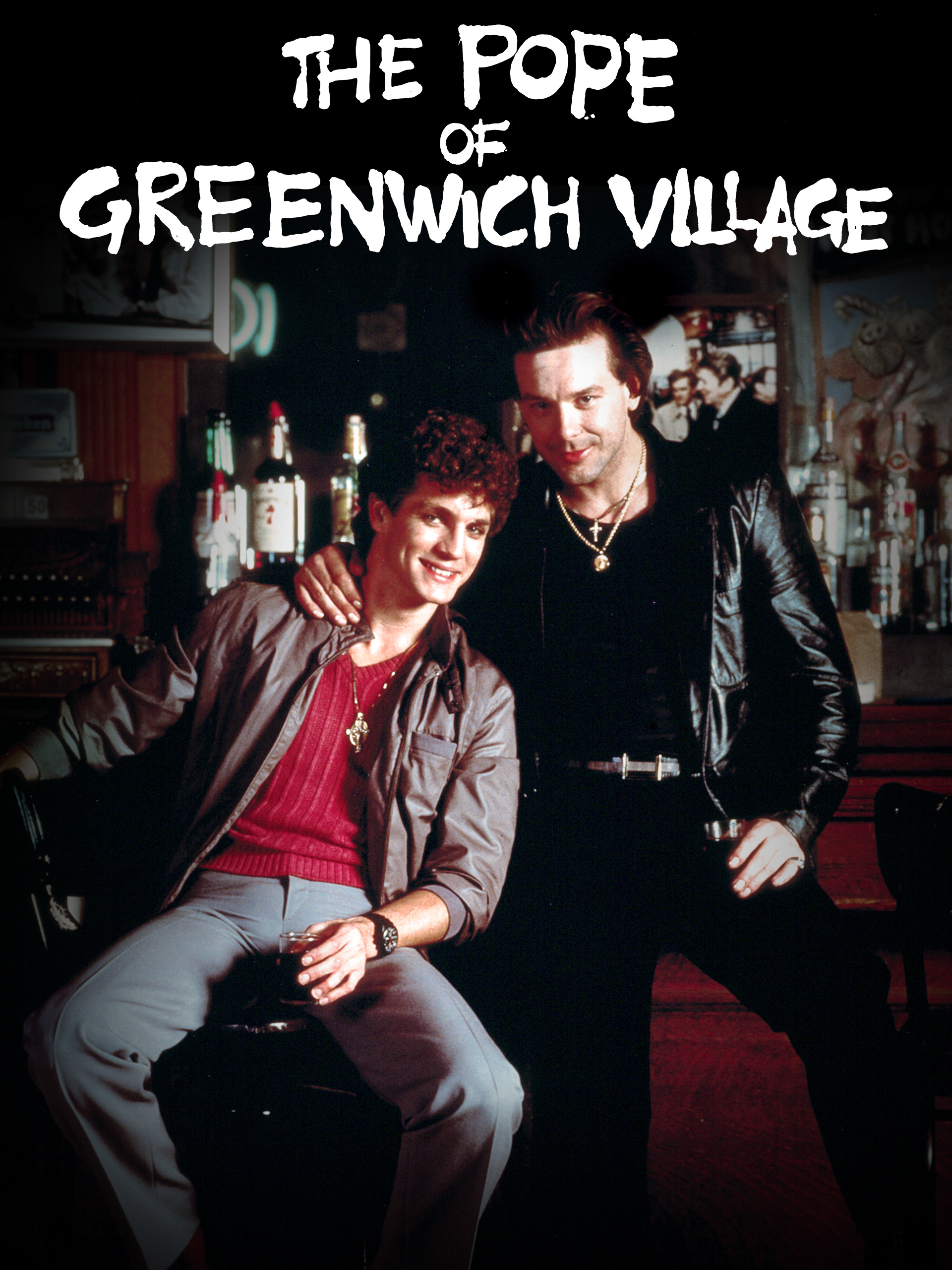
I signed up for Tubi because it has a lot of older movies that don’t get run on some of the other streaming services. This very competent Peter Yates (Bullitt) flick from 1977 beguiled me as a young teen for a couple of reasons. First, it was a Peter Benchley, post Jaws vehicle, with Robert Shaw as yet another boat captain, though this time his quarry is treasure, not a shark.

Second, well … I was 13 years old, Jacqueline Bisset, enough said.

My prurient childhood fascination aside, this is a pretty solid picture. Two tourists (Nick Nolte and Bisset) happen upon two collided shipwrecks while snorkeling. They cross a local drug lord (Louis Gossett) who also has an interest in what they’ve found (tens of thousands of vials of morphine from an old WWII medical ship) and must enlist a wily old diver and antiquity collector (Robert Shaw) to help them find treasure from the other vessel, deliver the drugs, and otherwise negotiate their way out of the mess.

Nolte exudes charisma as the thrill seeker captivated by the jewels of the sea. Shaw is Shaw, commanding and interesting even when he is probably phoning it in. Gossett is oozily charming as a lethal Haitian trafficker interested not in treasure, but in the drugs, until he learns of the treasure and gets greedy.

Bisset is every bit as alluring as she was when I was 13, and it turns out, now that I can focus, she can act. She is menaced throughout the picture and her terror is palpable.

The film gets balky when Gossett inexplicably harasses the trio even though they are working on his behalf, and the ending is the cheesiest finale in movie history. But otherwise, sexy and solid.

If AI did not write this film, then we need more AI in film. 

I feel confident, however, AI had a hand in this empty, soulless picture, which feels like a Marvel flick but doesn’t even meet that low bar. The movie looks good, moves relatively well, and the actors are for the most part fine. But the script is predictable slop and the presentation so dumbed down, all things equal, it must have come from an algorithm. Writer/director James Vanderbilt has a few Screams and Spidermans under his belt, but, inexplicably, co-wrote Zodiac. So color me perplexed.

The picture also offers a glimpse as to what the future holds for historical films. Not a single bit of this recitation of the Nuremberg trial rings true. Sure, it technically comports with some of the facts, but the feel is all “now.” Viewers can glean just enough information to get a sense as to historical stakes (Nazis bad, Herman Göring bad but sneakily charming), but the picture never nears informative or elucidating.

The Nazis have lost the war, and in an over-long lead-up, we learn it is critical they be placed on trial through Supreme Court Justice Robert Jackson (Michael Shannon), who spars over the wisdom and efficacy of such a trial with his wife via witty banter. When the trial becomes threatened, Jackson goes to the Vatican to enlist the Pope’s blessing, which he receives by blackmailing the Church as an arguable co-conspirator with Hitler, a complete fabrication. But a lie that serves an exchange in keeping with this simplistic rendition.

Pope cowed. Full steam ahead.

Russell Crowe plays Göring, the biggest fish in the dock. He must go to toe-to-toe with army psychologist Rami Malek, a cynical practitioner so full of himself his eyes bug out.

Okay. Cheap shot.

The men bond in verbal exchanges that are dull and unilluminating. One gets the sense Crowe got the role because he’s heavy and imposing, but he competently delivers the muck given him. As for Malek, his casting is a mystery. He should not receive any further film roles unless in Bohemian Rhapsody II or movies where he plays offbeat or weirdo. When Malek engages with Göring’s young daughter, as he passes letters between father and family, he almost takes on the mien of a molester. Peter Lorre as William Holden.

Malek gets deeper into Göring’s psyche while acting as Jackson’s mole and stoolie, which is incongruent, given all of Jackson’s testaments to fairness. Malek also intercedes on behalf of Göring‘s family when they are arrested. Depressed, he takes refuge in the arms of a buxom reporter and spills his guts. She prints a front page article betraying him and leading to his ouster from the Army.

Most of these plot points are either false or distorted. In reality, the Malek character was not cashiered; he was promoted and back in the U.S. by the time Göring took the witness stand.

In the film, Malek attends the trial and before so, he rushes in to see Jackson to offer his book of notes entitled, How to Get Herman Göring.

The big day arrives.

The Nazis and lawyers don their outfits for legal battle.

Göring does pushups in full regalia and walks out amongst cheers from other caged Nazis. Like in Gladiator.

Cue AI dialogue. 

“In seven hours, the whole world will be focused on this room. This is it. This is everything.”

“Let’s finish this war.”

“This is your day. You’re ready.”

“Bury him.”

“He’s got him.”

While watching this drivel with my family, we started a game. A character would say something. We would pause the movie and take a stab at what would be said in response. Our success rate was shockingly and depressingly high.

Example. The interpreter who works with Malek offers him a cigarette. When Malek notes the interpreter does not smoke, he explains he carries cigarettes to curry favor with officers. The interpreter then states wistfully that perhaps, at the end of the war, he will have a cigarette. Malek responds, “the war has ended.”  There is a silence.

The movie was paused. Bets were placed on whether the interpreter would have his cigarette at the moment of conviction of the Nazis.

EXT. PALACE OF JUSTICE – NIGHT

Howie stands outside. Silence save for the crickets. He pulls out the pack of cigarettes. Takes one out. Puts it in his mouth. Goes to light it. Hands shaking…From inside, we hear the gallows drop again. Another man down. Howie stands there. Pulls the cigarette from his mouth unlit and tosses it away.

There is a great deal of this hackneyed bullshit throughout the flick.

Thankfully, the dreck eventually ends. Malek, who writes a book about the experience, is portrayed as a haunted soul, desperately trying to warn the world that the good German is in all of us.  And then, he kills himself, just like Göring.

Sans the push-ups.

Streaming.

Did you know Eddie Murphy was funny? That he always knew he would be a star? That he inspired many a black comic? That he was angry at SNL when David Spade took a dig at him?

If so, you’re good to go.

If you insist on watching this tepid Netflix documentary, prepare for what seems to be a retrospective about a funny man that inexplicably does not show him being all that funny.

There is no delving into his craft, no in-depth discussion of how he matured in stand-up or established himself in films.

There are no great stories of Hollywood.

There is, really, very little insight at all. 

Rather, Murphy is presented as a pleasant, sensible fellow, a bit of a homebody, guarded but practiced in the art of bland recollection.

It is all very boring, and made more so by the likes of Arsenio Hall, Michael Che’, Dave Chappelle, Kevin Hart, Jerry Seinfeld, Pete Davidson, Jamie Foxx, Chris Rock, and others basically blowing so much elegiac smoke up Murphy’s ass that he seems more demigod than man. Which is weird when you see his oeuvre laid out, and his sermon on the mount is playing so many characters in The Nutty Professor who can fart.

Look, I love Eddie Murphy. When I saw 48 Hours, I was blown away by his presence and the interplay with Nick Nolte, a buddy cop flick with real comedic teeth in the articulation of racial tension. I also thought Murphy was overlooked in Dreamgirls, though I was pleased to see his Best Supporting Actor nomination and was dying to hear him explain how he evoked a true falling star, and one with substance abuse issues, given his own clean living. As for his unheralded classic, Bowfinger, all we get is how it was nice for him to walk to lunch with Steve Martin.

The endeavor is generic, Commissar-approved dreck through and through. Though I give it 1 star for a few clips of Eddie’s hilarious, now deceased brother, Charlie.

Tediously directed by the same person who helmed The Longest Day, once dubbed “The Longest Movie,” Ken Anankin’s resume’ does not inspire confidence. The picture takes forever to start, and when it gets going, it is permeated with flat ahistorical battle sequences and clunky dialogue. All the actors seem to be taking their cue from Henry Fonda, who plays the lone officer who foresaw the Nazi surprise attack through the Ardennes. Fonda sports a ho hum bemusement that screams, “Did the check cash?” The usual suspects for WWII flicks – Telly Savalas, Robert Ryan, Charles Bronson – make their bank as well, and similarly phone in their personas.

A bore through and through, it looks cheap and inauthentic, particularly when they put the leads in tanks with the actual film footage on a screen behind them.

Very Batman and Robin TV show driving.

Though it maintains a soft spot in this old heart for reasons having nothing to do with artistic merit.

When I was in high school, due to economic strain, my mother was forced to take in boarders. One, Klaus Kristmas (name changed because if my Googling is correct, he’s a rather accomplished German government official) was a smart, ramrod straight, punctilious young man whose father was in the Bundestag. Klaus was great fun, and my mother immediately made him part of the family. He even came to the beach with us, where we recoiled in horror as he pulled down his shorts to reveal a European look, the mini-Speedo.

At home, I would hang out with Klaus and watch TV. One night, sure enough, we watched this flick, which is all Germans kicking ass for the majority of the picture. When Robert Shaw, as the lead Panzer commander, nears the oil depot that will allow his continued advance, however, things have shifted. Shaw burns to death when a fuel drum hits his tank.

Klaus: “Oh nooooooooooooooo,”

14 year old Filmvetter : “USA, USA, USA!!”

On Tubi.

One scene encapsulates the silliness of this film and perhaps of writer-director Guillermo del Toro. The enraged monster crashes a fancy wedding party but before he arrives, we see the dandy of a groom telling the hired hand walking around with a basket of rose petals, essentially, to “keep them coming. No matter what.” The monster busts in and kills two or three people, grabs the bride, and walks out of the party with her draped in his arms, slower-motion.

Amidst a shower of rose petals.

And they say you can’t get good help.

It’s the shot, the look, that consumes del Toro, obliterating pace, story, dialogue or, in the case of the hardest working petal thrower in film history, common sense. As beautiful as his eye may be, The Shape of Water, Crimson Peak, Nightmare Alley, all are gorgeously photographed but empty vessels. No matter how many frames look like paintings, the effect is one of misdirection, not involvement. del Toro keeps larding it on, way past the moment when the Wizard’s curtain is pulled away, and a pudgy bureaucrat with a lot of bells and whistles is revealed.

Yea, the picture is gorgeous. And for the first 45 minutes, it connects, but truth be told, it connects because it is economical and lighter, in a Tim Burtony way. 

When Dr. Frankenstein (Oscar Isaac) begins his work on the monster and descends into madness, the picture becomes absurdist. When the monster (Jacob Elordi) is loose, we move to an uncomfortable mix of turgid and maudlin. When the chase is on, as Dr. Frankenstein must hunt the monster to the outer reaches of the North Pole, if you are not stifling a laugh or making cracks, bully for you.

By the film’s resolution, the monster has transformed into the Hulk and the film packs all of the emotional wallop of a Marvel film.

The movie is also badly acted. Isaac plays Frankenstein like a dude on a speedball. As his brother and the brother’s intended, Felix Kammerer and Mia Goth are as dull as dishwater. They simply do not resonate other than as clotheshorses for del Toro’s unnecessarily ornate costumery. As the financier of the project with a ham-handed agenda of his own, Christoph Waltz is only missing a mustache to twirl. Elordi is just big.

As bad as this whole endeavor is, it is made worse by del Toro’s cringingly infantile script.  His monster is a tortured soul whose transformation from a conglomeration of electrically charged parts to the most erudite Hulk is so ridiculous as to be Mel Brooksian. His Dr. Frankenstein is such a douchebag you can no more invest in him than Bradley Cooper as “Sack” in Wedding Crashers. Indeed, Frankenstein’s primary impetus for his forswearing of his creation is that Goth and the monster got on for a moment and he, coveting his brother’s gal, is now jealous. His secondary factor is that the monster is a lot of work.

Another note. del Toro luxuriates in the gratuitously violent here, yet another brushstroke on his canvas. He can make the monster’s ripping the skin off a wolf’s head super cool looking. But to see such a struggle with mere wolves, followed by Elordi moving an entire ship with a little push at the finale, it just hammers home the director’s ruinous fixation.

A colossal failure that scored an 85% on Rottentomatoes.

Hacks.

On the plus side, if you have Netflix, it is free. 

James Foley’s (After Dark, My Sweet) film never really decides what it wants to be, a family drama or a crime picture. Foley eventually throws up his hands and cedes everything to the captivating Christopher Walken.

Not the worst of decisions. Walken plays a minor rural Pennsylvania crime kingpin. He skippers a crew that includes his two brothers and a few other hardened locals. They do heists, car thefts, drugs, and, if necessary, murder, a lethal but merry band of crooks.

Walken’s estranged son, Sean Penn, is a townie still living at home with his mother and grandmother. The women smoke, glare at the TV and otherwise exude the hopelessness of abandonment and near poverty. Penn, seeking something more, falls in at-first-sight love with Mary Stuart Masterson, who looks his way as he cruises at night around the town square. It is for her that he joins up with his father’s crew, to “get out while we’re young … ’cause tramps like us …” 

When Penn realizes murder is part of the gig, he splits from Walken, gets arrested working his own “baby” crew (which includes his brother Chris and a very young Crispin Glover and Kiefer Sutherland), and is incarcerated. There, the cops work on him to fink on his father.

Here, the film becomes ridiculous. Walken, paranoid Penn will flip on him, kills nearly every one of the kids working with Penn, even though Foley does not show them to be integral enough to his operation to be much of a threat. He also rapes Stuart Masterson, which makes even less sense if the plan is to bring Penn back into the fold. Penn comes out of jail, tries to make a run for it with his gal, fails, and in a rushed, abrupt ending, testifies against his father (for 30 seconds).

That’s that.  Lights up.

None of it makes much sense, but the thematic indecision is worsened by gross character underdevelopment. Walken is a charming sociopath, but how did he get here? No clue. We even have his ex-wife moping about, warily eying the establishment of a relationship between Walken and Penn. Foley, however, suffices to use her as a sad totem, so we don’t get any insight into Walken from her. Similarly, Penn needs a Daddy. Then, on a dime, he doesn’t. As he is near mute for most of the picture, we are left to guess as to what he has missed and the basis for his immediate and strong moral stand. Stuart Masterson is looking for something, but as she and Penn prepare to light out for the territories, leaving her house, she is clearly from money. So why is she hanging with these lowlifes? Unexplored.

The film has its strengths. Foley’s feel for rural Pennsylvania is strong. The fields and woods are spooky and forbidding at night. During the day, the crappy cars and houses, the dead-end bars, they all contribute to Penn’s lust for some way to get out. Foley shows just how big and cold this country can be, the kind of place that swallows you up and tells no tales or grinds you down little by little. The murder spree is indelible.

As noted, Walken is the picture, and in every scene, he is riveting. Penn, however, goes low to Walken’s high, and the effect is somnambulant. He’s in with Daddy, then immediately out, then annoyingly internal until his final nose-to-nose with Daddy, all to the conclusion that he needed a better Daddy.

The story is apparently based on a true criminal, Bruce Johnston Sr.

Another note – at the time of the picture, Penn was married to Madonna. She had a song for the picture which then became extended to the soundtrack. It is synthy, mid-80s fare, better suited to Vision Quest or even Risky Business. It has no business being near this gritty movie.  Sure, I joked about Springsteen above, but his music would have been pitch perfect to the film.

On Amazon Prime.

A timely watch, as I recently finished Nuclear War, A Scenario, an eye-opening, cautionary theoretical which envisions North Korea lobbing several nuclear warheads at the United States, thereby testing decades- old protocols from all major powers and igniting a nuclear Armageddon.

Here, Kathryn Bigelow (Zero Dark Thirty)  dramatizes the story via three timelines, all ending at the moment of decision as to response. Just as the attack is reported, after which we have 16 minutes before detonation, President Idris Elba, harkening back to George W. Bush reading to little kids when informed of the terror strikes of 9-11, is shooting hoops at a basketball camp run by Angel Reese.

And … there goes another minute.

Heart-pounding, riveting, and expertly paced, I was most reminded of Paul Greengrass’ United 93, a picture that elevated the professionals and non-professionals in a nightmare scenario, finding bravery, competence, and no matter the outcome of their particular hell that day, a rise to the occasion, with beautiful moments of humanity and humility. Bigelow’s characters are authentic, capable, and thus, all the more engrossing, and she does not neglect them in a film primarily about process and protocol. We learn but tidbits about who they are and what they do. With 16 minutes, there is not time enough, but Bigelow’s economical explication is superb.

On Netflix, one of the better flicks of the year.

*SPOILERS*

There is one major hole. In the book, the scenario had more than one missile coming and they were definitively from North Korea, which truly made the decision as to retaliate more salient. Were more coming? If so, now may well be the time to counterstrike to ensure they were interdicted, even if it meant destabilizing Russia and/or China and inviting a counterstrike based on their misapprehension.

Here, by using a single missile, and making the striking of Chicago a foregone conclusion, on reflection, the response, for which we are all obviously waiting on pins and needles, is not really in doubt.

You would wait on the single missile to hit, see if it detonated, and then wait to see if any more were launched. Nothing that you could do two minutes before the missile hit, you could not do after the missile hit. 

A wild, screwball thrill ride, Paul Thomas Anderson infuses adrenaline with wit and a surprising knack for action sequencing. Leonardo DiCaprio, after Once Upon a Time In Hollywood again demonstrating he is our most accomplished dramatic/comedic actor, plays Bob, a former American domestic revolutionary. Think Weathermen, or Symbionese Liberation Organization, but hyper-charged with comic book pizzazz. Bob got out of the game when he had a daughter, Willa (Chase Infiniti). When Willa is endangered by the past, DiCaprio must save her from a dangerous man on a mission, the government, and a white supremacist society that feels like a mix of Eddie Bauer and SPECTRE. If you wish to stop the review here, as this is a current release, no worries. Enjoy and come back. This is one of the better flicks of the year.

*MINOR SPOILERS FOLLOW*

DiCaprio’s wife, Perfidia Beverly Hills (Teyana Taylor), is a mix of Coffy and Angela Davis. After Willa is born, Perfidia cannot quit the rush of the struggle or face the yoke of motherhood, so she abandons the family, continues to participate in robberies and bombings, and is eventually captured. Her kick-ass bravado exposed, Perfidia squeals on her fellow compatriots, leaving DiCaprio vulnerable and forced to lam it with infant Willa. Bob gives up the life and settles in a quiet town a fat happy stoner, where Willa’s safety is priority number one. 15 years later, a loose end from the past, Sean Penn as Colonel Lockjaw (yes, this is indeed a comic book), needs the daughter, DiCaprio must rouse his flabby mind and body to save her, and the giddy, hilarious chase and race are on.

**MAJOR SPOILERS FOLLOW**
On the minus side, and the basis for deductions.

The film is overlong. Penn is offed twice, to no good end in a film nearing 3 hours. Anderson also tacks on a sop, Willa reading a “Fight the Power!” letter from Perfidia, which, if you do not see it coming means you do not watch many movies.

Penn is also problematic, some of it his fault, some not. He is well-developed as a rigid, top-of-food-chain guy who is so sexually attracted to Perfidia (and she to him) his obsession seems genuine and all-encompassing. They are warriors, on opposite sides, feral, carnal, battle junkies. But when Perfidia is gone, and 15 years pass, Penn’s fixation stems from a funny cartoon creation. “The man,” as in white supremacist corporatist types in a suburban star chamber, come calling for Penn and offer him entree’ to their racial purification club. To enter this august body, however, Penn must erase the fact of his mixed-race daughter. If Anderson had expeditiously grounded Penn’s desires for acceptance and/or the roots of his racial enmity as well as he did his hunger for Perfidia, the film would have been stitched tighter, and Penn’s dilemma would have been more interesting.   

Penn himself is also over-the-top at times, which is sometimes called for (Mystic River) and sometimes not (his William Holden in Anderson’s Licorice Pizza was a masterclass in cool understatement, but he still has the sin of Casualties of War for which he must atone). Given that we spend so much time on Penn’s fate, he needed to be better fleshed out and ratcheted back.  

There is also the matter of the film’s politics. While the revolutionary group opposes all forms of classist, misogynist, racial establishment dominance, ICE-like deportation raids are at the center of the story. Indeed, DiCaprio is ensconced in a sanctuary city. Naturally, this has raised the hackles of observers on the right, another sad development in a world where you can’t even eat a Chick-Fil-A sandwich or drink a Bud Lite without a political colonoscopy.  Nonetheless, Anderson is not interested in proselytizing. He wants action, slowing only to have a little fun, such as when DiCaprio forgets a password and must deal with a punctilious comrade much as we all have to deal with help desks and call centers:

  • Bob: I need this rendezvous point, you understand what I’m saying? I need it.
  • Comrade Josh: I understand and the question is “What time is it?”
  • Bob: Fuck! If you don’t give me the rendezvous point, I swear to God I will hunt you down and stick a loaded, fuckin’ hot piece of dynamite right up your fuckin’ asshole.
  • Comrade Josh: Okay, this doesn’t feel safe. You’re violating my space right now.
  • Bob: Violating your space? Man, come on – what kind of revolutionary are you, brother? We’re not even in the same room here. We’re talking on the phone, like, man!
  • Comrade Josh: Okay, there’s no need to shout. This is a violation of my space to me. These are noise triggers.
  • Bob: Fuckin’ noise triggers? Listen, I wanna know something. I wanna know one thing when this is all said and done: what is your name? I need to know your name.
  • Comrade Josh: My name is Comrade Josh.
  • Bob: Comrade Joshua? Get a better name. “Comrade Josh” – that’s a fuckin’ ridiculous name for a revolutionary. First off. Second off, I want to know your coordinates. I want to know your location right now. What is it?
  • Comrade Josh: I’m in a secure location somewhere between the stolen land of the Wabanaki and the stolen land of the Chumash.
  • Bob: You’re fuckin’ intolerable, man. You’re really intolerable. This is not the way revolutionaries do shit. Do you know how hard you are to talk to? Do you know the information I’m trying to give you? You’re a little nitpicking prick! That’s what you are: a little nitpicking prick. And do you know what I’m gonna do to nitpicking pricks? I’m gonna call in a Greyhawk 10.
  • Comrade Josh: You’re calling in a Greyhawk 10?
  • Bob: I’m calling in a Greyhawk 10, all right? I want you to get your supervisor on the phone right now, because I know you’ve got one. I know you’ve got one, Comrade Josh. All right, I’m going way over your fuckin’ head. Way over your head, all right? Put your commanding officer on the phone now!
  • Comrade Josh: Cause you’re calling in a Greyhawk 10?
  • Bob: I’m calling in a Greyhawk 10, Comrade Josh.
  • Comrade Josh: Please hold.

The interlude is a reminder that this is a trip, not a treatise, and the revolutionaries and their adversaries on the ground are presented as professionals or cogs rather than ideological heroes or villains. They never veer too far from a wink and a nod.  

Ultimately, I think liberal audiences will love the flick no matter their artistic sensibilities. As I feel the excitement of conservative retributive justice (rights be damned!) in a Dirty Harry or Equalizer movie, this flick is the fantasy of glorified gutsy, cool, strutting anti-fascists who possess skill, discipline, and smarts. As opposed to their meh real-life counterparts, living in their mother’s basement, contributing to the revolution one bag of Cheetos and social media post at a time.