Archive

Tag Archives: movies

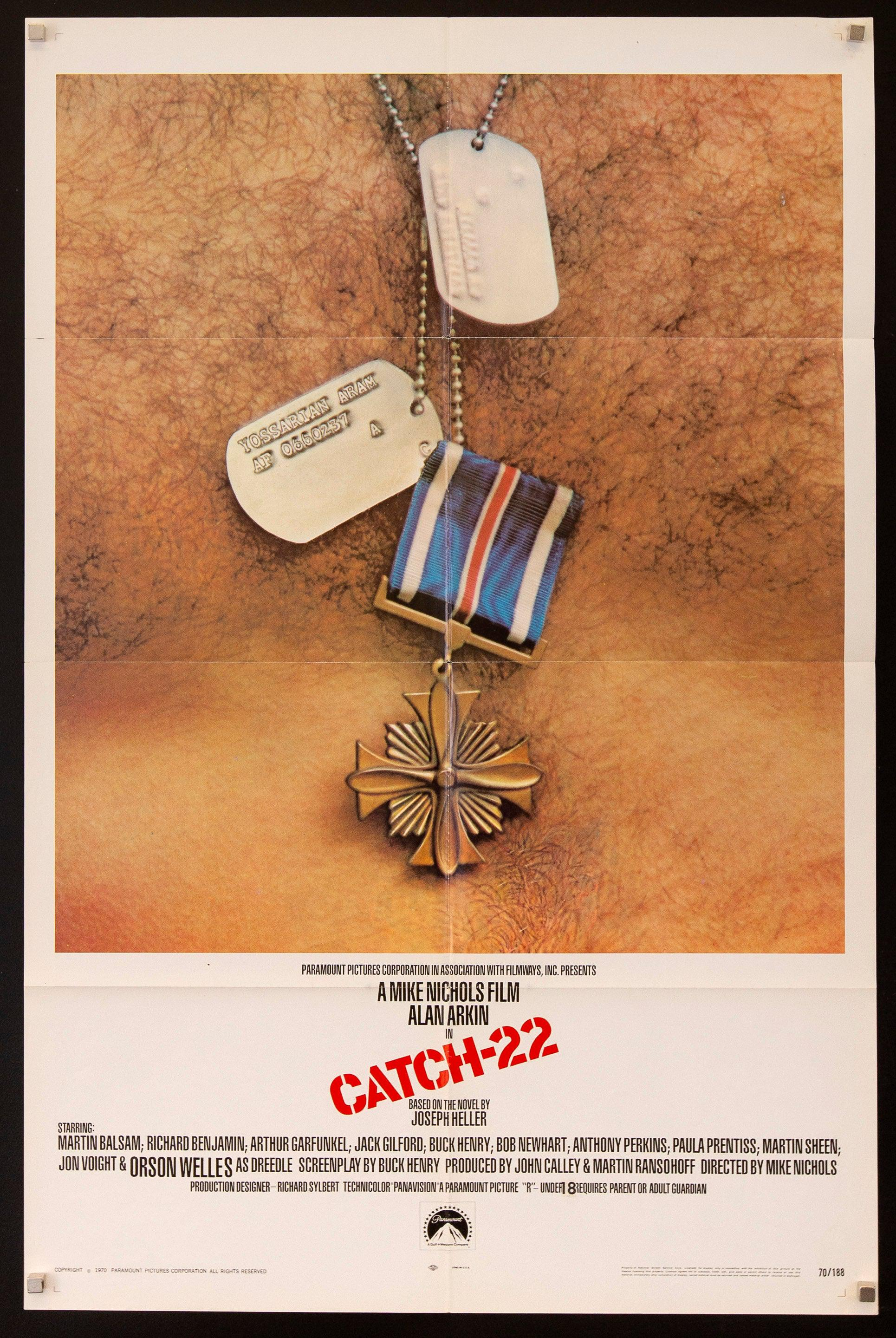
Mike Nichols’ adaptation of Joseph Heller’s dark comic novel is energetically brisk and sometimes entertaining. Tonally, however, the film is an uneven mess, a pointless downer playing bleakness for laughs. 

As the original Corporal Klinger, Alan Arkin’s Captain Yossarian is the engine of the picture, a bombardier stationed in Italy who is losing his nerve and wits. His superiors (Bob Newhart, Buck Henry, and Martin Balsam) vex him by upping the number of bombing missions necessary for a ticket home to curry favor with their commanding officer (Orson Welles). Yossarian’s fellow fliers (including Martin Sheen, Richard Benjamin, Anthony Perkins, Charles Grodin, Bob Balaban, Jon Voight, Art Garfunkel, Jack Gilford and Norman Fell ) all suffer under the same yoke, but with cheerful acceptance or apathy rather than the indignation of Arkin’s whirling dervish.  How the Academy overlooked Arkin astonishes me; whatever the flaws of the picture, his commitment and on-the-edge turn requiring an actor’s entire skill set is unforgettable.        

The film’s main problem is rooted in the see-sawing expanse of the endeavor. Yes, war is FUBAR, and aspects of it are both craven and bizarre. In the world of Nichols and Heller, the poor bombers are riddled with asinine and unctuous leadership, wackadoodle stir-crazy types, suicidal loons, sex-crazed fiends, one murderer, and one uber-capitalist who trades parachutes for commodities on the open market.

When played for laughs, the picture is solid, and no one is begging for verisimilitude. However, when pathos is introduced, such as truly tragic deaths of compatriots (including a particularly brutal death of a young flier) and civilians, the film feels incongruously cruel.

Worse, the picture is more than anti-war. It is anti-American, maybe even anti-everything. As nothing matters, there is no investment in the fates of anyone. A fair juxtaposition is Robert Altman’s M*A*S*H, in which the madness of the endeavor is clear but even in that madness, the professionalism of the medical staff is unquestioned and laudable, the loss of life truly sad. Nichols himself felt M*A*S*H did his picture in: “We were waylaid by MASH, which was fresher and more alive, improvisational, and funnier than Catch-22. It just cut us off at the knees.” All of which is true. But M*A*S*H also had heart and a respect for the craft of combat surgery. Here, there is no respect for anything or anyone and the characters seem more from Looney Tunes than Heller’s book.

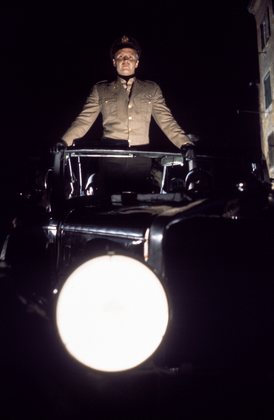
Indeed, every hallmark of the American ethos is there for Nichols to malign. The military leaders are insecure dolts, silly and moronic, who care not a whit for the men. The fliers are chumps or burn outs, pawns in the great game, either oblivious or devious in their plans to get out and shirk. Everyone is also an automaton, caring for nothing, even each other. The goal and aim of the war, and this is World War II we are talking about, is at best corrupt and ultimately criminal, as we bomb not only towns with no military significance, but, in a perversion of capitalism, we allow the Germans to bomb our own base for profit. The Italians are victims of the Americans, just as they were victims of the Germans, because, you see, there is no difference between the two. By the end of the picture, the genius behind the corporate conglomerate, Jon Voight, is now close to full Nazi in regalia and trappings.

Hell, even parents who come to Italy to see their dying son are treated as props for a goof.   

Yes, yes. None of this is to be taken literally in a “war is madness” story, and the film is a black comedy grossly overgeneralizing for the laughs. Still, it’s the kind of smart set entertainment that fairly encapsulates the philosophy of the sophisticate, a sneering besmirchment that puts the last torpedo into a sinking ship.

I wonder what Heller made of the movie’s iciness. Obviously, his book was a cynical send-up (I read it in high school, along with Vonnegut’s SlaughterHouse-Five), but Heller also flew 60 combat missions as a B-25 bombardier during the war.

On Amazon Prime.               

There are many many fine war films, but to a near fault, the pictures are accompanied by moving scores and dialogue that seeks to translate the madness into something articulable as a broader goal. The characters negotiate their horror, sometimes in a simplistic, overly cynical or patriotic manner, often anachronistically. A common fault is too much explication. Think Eric Bana telling Josh Hartnett in Black Hawk Down that the only thing that matters is the man next to you, after which he poetically slips away to do more of God’s work in Mogadishu. Or the often trying banter of Spielberg’s platoon, looking for Private Ryan, with their hopes and dreams too much on their sleeves. Or Charlie Sheen’s overt “what are we doing here, who am I?” voiceovers in Platoon.

Then there’s the misery and degradation in all its forms, seen on Spielberg’s Omaha Beach or in the trench hell of the most recent remake of All Quiet on the Western Front. Hamburger Hill, We Were Soldiers, Hacksaw Ridge, Flags of Our Fathers, and dozens of other combat flicks, all which show us the meat and the grinder and the indomitable or broken spirit of those who survive or die in its gears.  

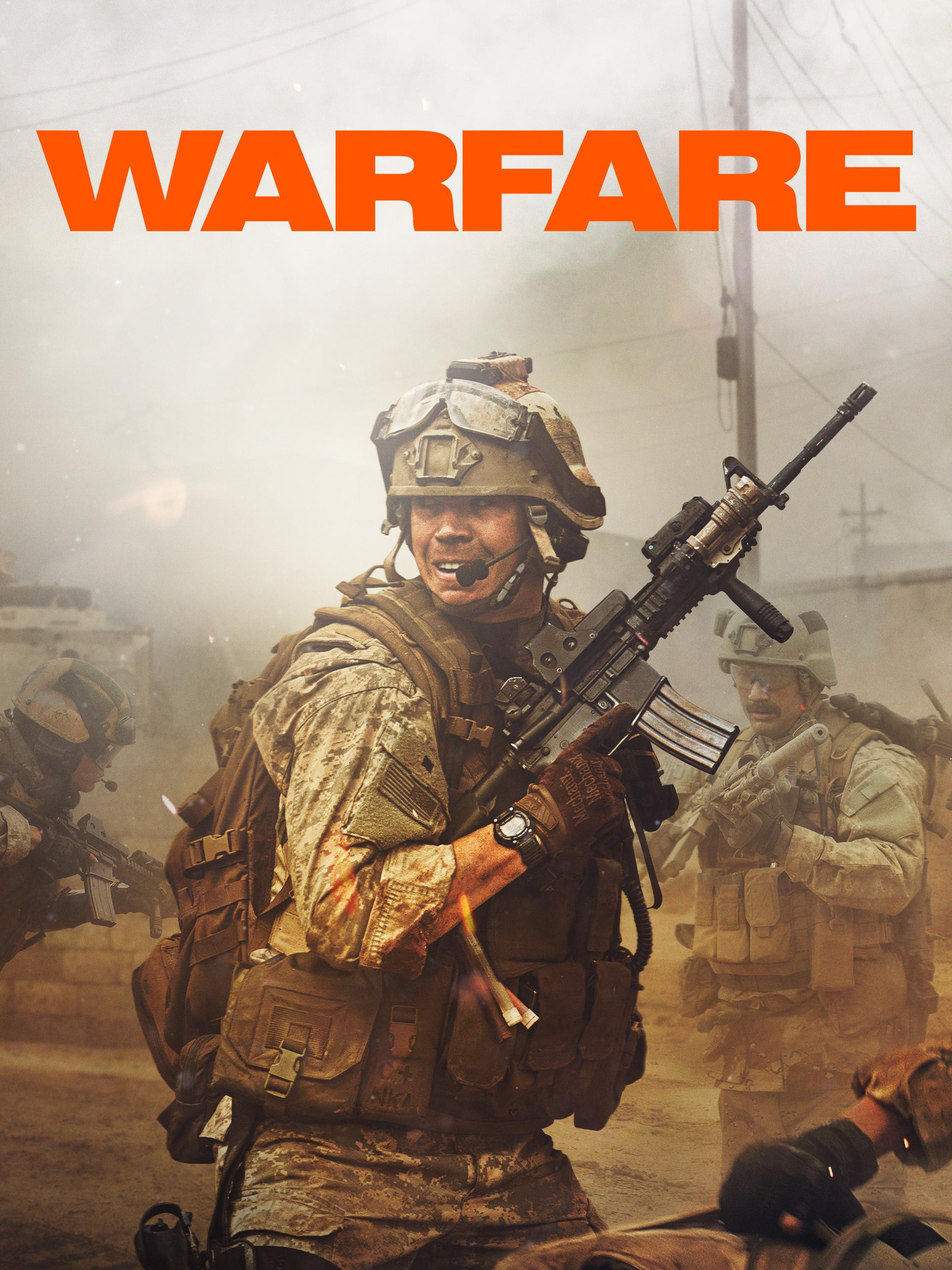
Warfare, directed by Alex Garland (Ex Machina, Civil War, 28 Years Later) and Navy Seal Ray Mendoza, a veteran who served during the action depicted, is like none of these films. A platoon on a observational mission in 2006 Iraq after the Battle of Ramadi soon becomes the quarry. What ensues is a riveting recreation of their fate as they are besieged on all sides. What is revealed is a professionalism in a real time pressure cooker, less heroism than necessity. There are no speeches, no mournful strings, no hoo-rah. No soul searching or leather strap biting (well, a little, but for before morphine is administered, it is a terrible, pitched screaming).

In the place of such war film hallmarks, there is increasing tension and isolation. As the fear and confusion mount, it is met with collaboration, spine, and ingenuity, all hampered by human foible under great stress. Mistakes are made but they are almost built into the scenario and they are not dwelled upon. Terror abounds but it is revealed subtly. The soldiers, pinned down in an Iraqi home for the entirety of the film, have every weapon and gadget American fighting ingenuity can provision. They have surveillance from above, as well as the ability to call in armor or air support. Yet, the unit seems near overmatched by the persistence of their foes, which enhances a secondary threat, the possibility of panic and loss of discipline. There are no dramatic explosions, not unit uprising, no philosophical meanderings. There is hesitation, the glance of doubt, the zoning out to cope, the “are you fucking serious?” look, the nano-second wait for someone else to step up, the grudging assumption of the task when they do not, and the missteps that would occur in any such maelstrom.

There is a beautifully rendered scene where the besieged platoon is reinforced. The first platoon’s lieutenant says to his newly arrived counterpart, “I’m fucked up.” He is not injured, though concussed and disoriented, but he is spent and incapable of command. His near wordless relinquishment, met by acknowledgement, dawning and the assumption of responsibility, is poignant.

The film is really about the business of war, and the exercise of it as craft when literally and figuratively all is crashing down about you. It’s an original work of art in the genre.

I’ll add one contemporary observation. There has been much talk of late as to the physical standards necessary for combat. This film will educate you as to a basic requirement. If you can’t pull a wounded man from harm’s way, you have no business being in the business.

On MAX.

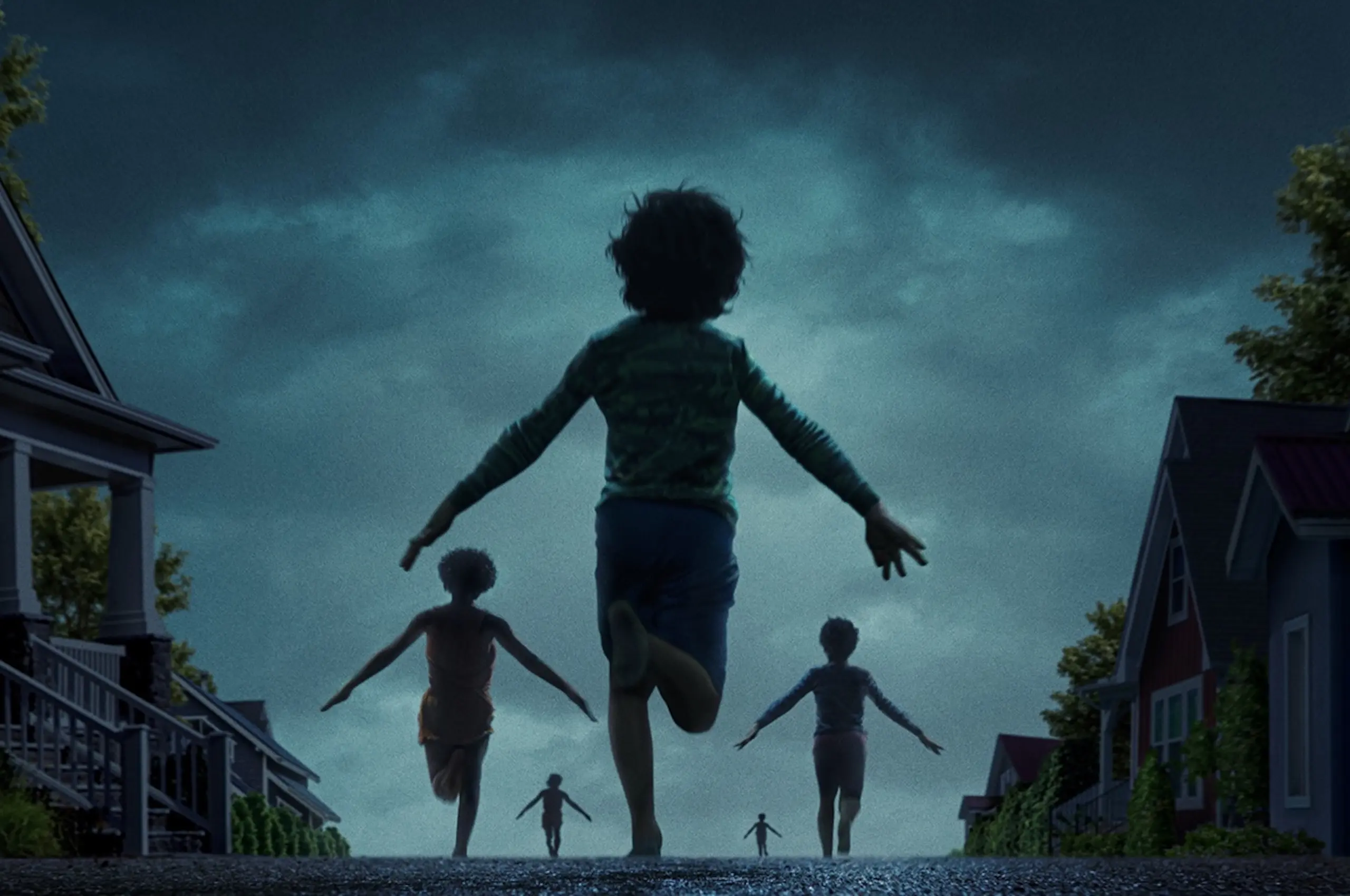
At the outset, you are entranced. Like a scary campfire story, a child’s voiceover explains the disappearance of a group of grade school children in a mid-size Pennsylvania town. One night, they alight from their beds simultaneously, leave their houses, and simply … disappear. All to George Harrison’s Beware of Darkness, a haunting, beautiful tune, pitch perfect to the moment, reminding you just how important good music is to a movie. It is one of the more impressive film openings I’ve seen.

As I mentioned in an earlier review, I suffered from night terrors as a child, which were, unsurprisingly, terrifying. But I also had spates of sleepwalking, and as I saw the children rise and go off into the night, it brought back the visceral feel I had of being that age and traipsing in bitter cold around the block, barefoot, impelled without any autonomy, until I simply drifted back in my house, or that of a neighbor, and went back to a bed, feet dirtied and maybe a bit bloodied, but otherwise not worse for wear.         

The children here are worse for wear, and on that, I can say no more. But we learn their fates through an ingenious approach. Writer-director Zach Cregger (Barbarian) recapitulates the event through the lens of six people – the schoolteacher, a father of one of the children, the school principal, a town police officer, a homeless criminal/drug addict and the one child from the class who did not disappear, offering clues and different vantage points that enhance the story.   

I was impressed by Barbarian, and as in that picture, Cregger captures the spooky qualities of the mundane. There, it was decrepit Detroit. Here, it is a hamlet in Pennsylvania, though it could be any town USA exurb. Without being showy, Cregger can make a convenience store, a non-descript alley or even gas station pumps vaguely threatening.

Cregger also has a way of writing like people speak. Stephen King film fare is generally situated in small town venues much like this, and almost always accompanied by dialogue so painfully obvious and hackneyed – be it from the town drunk or floozie or sadistic bully or chummy mayor – you shudder, not from fear, but embarrassment. Cregger is comfortable with the natural exchanges of colleagues, lovers, neighbors, and enemies. His dialogue between the principal and the teacher is an apt example, as he expresses his frustrations with and care for her, and she manipulates him all the same.

Nor has Cregger lost the sharp sense of humor from Barbarian, which is interwoven in the everyday patter of the characters. His final scene is a melange of unbridled terror and tension-cutting, roller coaster ride slapstick.   

The performances are solid. Josh Brolin is moving as a bewildered father who yearns for his son and just can’t wrap his head around it. As the teacher, Julia Garner is unnerved yet refreshingly feisty, not just willing to lay down and be the town’s sacrificial lamb. She’s no angel either, a bit of an unlikeable pain in the ass, which adds heft to her persona. There is also a bravura turn from a near-unrecognizable Amy Madigan (kudos to me for sussing out that under quite heavy makeup, sure enough, that was Uncle Buck’s girlfriend, Chanise).

So, why the half point deduction?

I am not going to call the picture out on a Longlegs critique, a film that was all feel and little sense. Weapons does not strain credulity to the point of eye-rolling. For the most part, Cregger circles the squares, and he maintains such a taut, engrossing pace you don’t dwell on impracticalities.  Nor is the town one where kids are disappearing on a regular basis, yet people keep populating it and settling down, as in King’s It. This is a one-time event.

That said, there is a glaring hole, and please stop here and return to read later if you intend to see the movie.

**SPOILERS”

It’s not just a few kids who go missing.  It is 17, all from one classroom, in one night, at 2:17 a.m. When we arrive on the scene, the crime is still fresh, having occurred a mere month or two prior. While Cregger nods to a town in upset, as well as a comprehensive police investigation that, to date, has found nothing. this case would have been bigger than the Lindbergh kidnapping, and the den of the malefactor would have been torn to pieces in a New York minute. Even if nothing was found, the place would have been surveilled 24/7 by anyone from the feds to local p.d. to state police to investigators hired by the parents to the National Guard.

Cregger should have dropped the number to 3 or 4 kids, ala’ Picnic at Hanging Rock and extended the time period between the event and the resolution.  A reward poster for a paltry $50,000, is a bad moment, but not as bad as when the weary police chief acts sympathetically but put out by Brolin’s badgering about the case.

Had Cregger set this film pre-internet, at a time of more rudimentary forensics and no Ring cameras, a lot of the film’s troubles are solved. But no one asked me.

Eh, ignore my kvetching. It’s a really great flick.

A big, flashy, visually overwhelming nirvana for speed junkies. But when cars are not going vroom vroom around the cinematic coliseums of the Formula 1 race tour, the film is unoriginal, dull, sexless, and stupid. It is also badly acted (Brad Pitt excepted, as he doesn’t act so much as pose).

Pitt is a journeyman racer, much like Tom Cruise’s Cole Trickle in Days of Thunder, though Cruise was silly as an old “I can race anything with wheels” hand given his youth in that picture. Pitt is more plausible as a man who can race anything, be it in NASCAR, Lemans, Formula One, Baja, or, the Sahara, on a camel. But he’s still silly as a a man looking for something transcendent and elusive, like Kwai Chang Caine in Kung Fu. When Pitt’s old chum Javier Bardem arrives to offer him a spot on his flailing Formula One team, Pitt can’t say no even if it interrupts his quest.

The old timer Pitt joins the team and runs into a hotshot younger driver teammate (Damson Idris). Idris is resistant to the grizzled interloper. He makes his mark on social media more than on the track.

Pitt teaches him maturity, discipline and self-respect.

Pitt also runs into team car design guru Kerry Condon.

Condon teaches Pitt how to be a good teammate.

They also sleep together.

Pitt has not had very good on-screen chemistry with women since Thelma and Louise. The trend continues Here, he is a stoic, and in return, Condon musters all the heat of a flagging sterno cup. With a strongly established “older brother, younger sister” vibe, they have what can only be envisioned as some of the worst sex in history.

Just when you are nodding off, another race will start. You will perk up, because the spectacle is kinetic and exciting. But you can only watch so much racing. These people will have to start talking again, and when they do, it is drivel.

The plot then begins to echo that of a much better racing film – Talladega Nights. There is corporate skullduggery in the form of Tobias Menzies, who wants control of the entire racing team and schemes to depose and supplant Bardem. Like Ricky Bobby, Pitt must not enter the final race for Menzies’ machinations to succeed.

Pitt, of course, enters the final race and saves the day.

In a withering coup de grace, Pitt texts Menzies an emoji.

It is the finger.

Now, we have just spent an entire film trying to establish that Pitt is a simple, grounded, live-in-your camper, shut-out all of the noise enigma.

Yet, in declaration of his own worth and independence, he texts an emoji.

Yeesh.

The movie is terrible when characters talk, impressive when wheels are turning, a bit of a conundrum, because I can’t imagine it would transfer as well at home.

Use your best judgment. Knowing what I know now, I believe mine would have been to forgo the film and watch the vastly superior Rush.

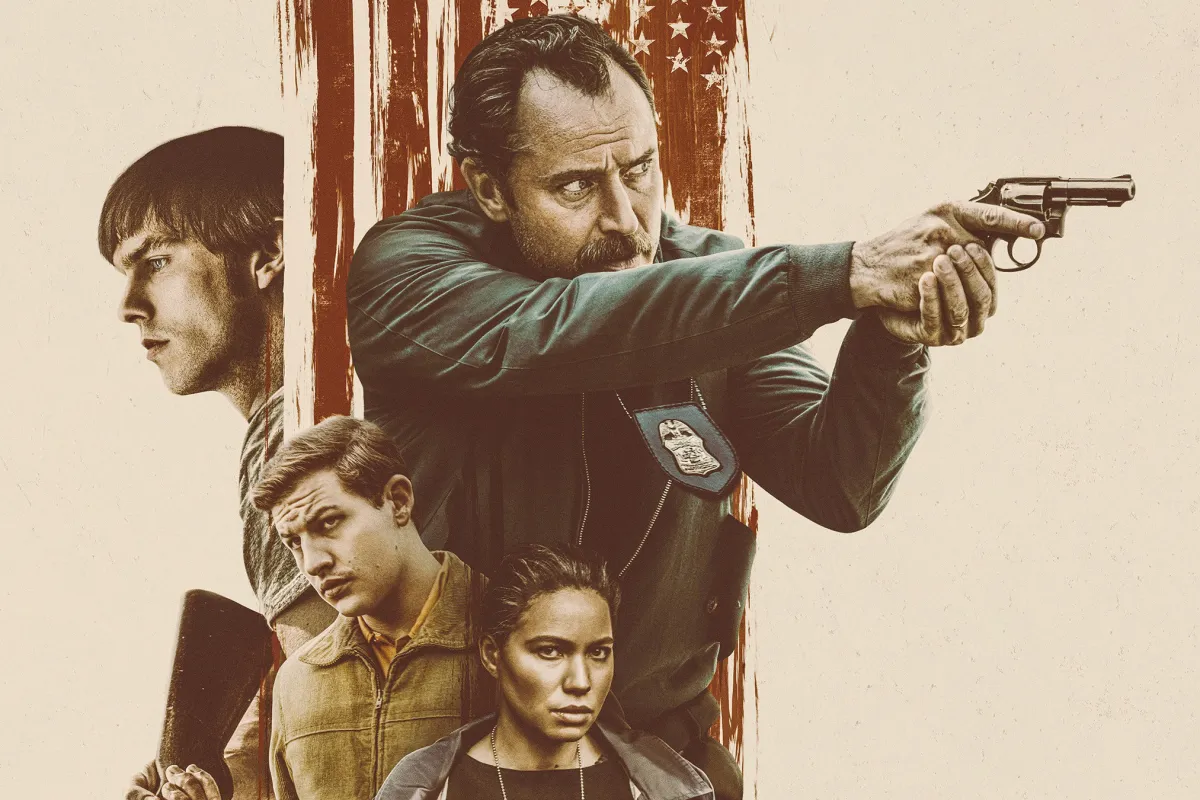
A straightforward procedural based on a true story, broke-down and ailing FBI agent Terry Husk (Jude Law, as unpretty as you’ll find him) arrives at his new desk in Idaho only to stumble upon the rise of The Order, an “action, not words” offshoot of The Aryan Nations in the early 1980s. The Order is led by the charismatic Bob Matthews (Nicholas Hoult), who guides it from counterfeiting to bank robbery to assassination to planned insurrection. As Matthews rises, Husk and the Feds close in, amidst a backdrop of the majestic and haunting Pacific Northwest.

There is nothing new here save for restraint, but restraint is in awful short supply these days. The pace is taut, the acting largely superb, and the photography memorable. In the hands of a lesser director or writer, the temptation to weigh in on the philosophy of The Order, and to jam it into whatever current bugaboo is in fashion, would be too much to resist. Here, writer Zach Baylin shows you what The Order believes and how, attenuated or not, those beliefs are connected to their criminal endeavors. To Law, who we learn has worked undercover on cases from The Klan to The Mob, the “the” doesn’t really matter. They’re all the same. And that keeps the story from stalling on the anticipated wordy handwringing that you expect.

As one article observed, “Ultimately, the hope of slipping an unsparing portrayal of domestic extremism—produced outside of the Hollywood studio system—into the December award season is to reintroduce a discussion of radicalization to American society. ‘If you don’t learn from history, you’re doomed to repeat it—how a guy that, in the way Nick depicted him, could live down anybody’s street,’ says Haas. ‘There are lots of people right now who are hurting and struggling and looking for answers.'”

Thankfully, this kind of easy, didactic tripe is little found in the actual picture.

We also aren’t loaded down with Law’s past. There is a medical issue and familial distress, but Baylin explains just enough to give you a sense as to their effect on Law’s nature and psyche. Husk is not out here for redemption or revenge. Even his obligatory “Let me tell you about this one horrible thing” speech is muted, his explanation almost perfunctory. Much like the father of one of the young men who joined The Order, a man who resignedly tells Husk, basically, “you do the best you can with your kids, but it’s a crapshoot.”

The film could have used a little more exposition (particularly with the doomed local deputy, Tye Sheridan), the tough gal FBI supervisor (Jurnee Smollett) is hackneyed even with the gender change, and maybe there should have been one more turn before reaching resolution.

But otherwise, very solid, entertaining crime flick. Reminded me of the equally impressive Under The Banner of Heaven.

On Hulu.

My dive into the crime films of Amazon Prime gets deeper.

I was intrigued by this flick because I like Jeff Bridges, the movie was an early Oliver Stone screenplay (a co-write), and it was one of last films directed by Hal Ashby (Shampoo, Being There, Coming Home).

I don’t have 8 million reasons to hate this film, but I have 8.

  1. Stone’s writing is garish and ridiculous. In an attempt at modern noir, we actually hear Bridges say, in voiceover, “Yeah, there are eight million stories in the naked city. Remember that old TV show? What we have in this town is eight million ways to die.” A high-priced call girl ups the retch factor, cooing to Bridges, “the streetlight makes my pussy hair glow in the dark. Cotton candy,” as she lays out ala’ Ms. March 1978. Maybe these gems were penned in the source novel by Lawrence Block. I don’t know. It doesn’t land here.
  2. Hal Ashby knows about as much about film action as I do taxidermy. It’s not like Coming Home’s Jon Voight was doing wheelies in his chair. This picture, which involves blackmail and cocaine and kidnapping and gunplay, is as flat and unimaginative as professional bowling.
  3. As the alcoholic ex-cop, Bridges seems as confused by the script as the viewer. There are times you feel, his eyes alone, Bridges is communicating, “What the hell is this thing about, again?” When he’s involved in a bad shooting, and guns down a man in front of his family, he says, “Shit.” Like when you don’t get a good score in Skee Ball. And then, “Fuck,” like when you leave home without your iPhone.
  4.  Bridges is also forced to play an alcoholic who relapses; he does this by reprising his role in Thunderbolt & Lightfoot, after he was thunked on the head.
  5. The plot is inane. Bridges is lured into the entire mess because the girl with the cotton candy pubic hair heard his name from the friend of a friend.
  6. Roseanna Arquette is terribly miscast as the sultry, misunderstood, cynical call girl with a heart of gold. Arquette is cute best friend, quirky neighbor.  She ain’t this.
  7. The supporting turns are execrable.  Andy Garcia is so over the top (see below), it’s hard to stop laughing, as if he saw Scarface and said, “Hmmmm. Pacino seems a bit muted.” Another actor, Randy Brooks, nemesis to Garcia, is also near-lunatic. Brooks scurried off to TV after this flick, only to return as the worst actor in Reservoir Dogs six years later. The cotton candy girl is the badly miscast Alexandra Paul. She is the girl next door. Here, she’s over-the-top coquettish, as erotic and worldly as Georgette in The Mary Tyler Moore show. To be fair, this may not all rest on the actors. From the analysis below, “Ashby’s style of directing, according to Block, involved letting the actors do takes where they exaggerated their emotions, before reining them back in for subsequent takes. Since Ashby did not have final cut, some of these ‘dialed up’ takes were used in the film.” Seems like all of them were.                 
  8. Scenes are interminable. The characters scream the same thing at each other ad nauseum or endlessly posture. Behold, the longest, loudest, most idiotic confrontation scene in film history:

Apparently, I am not alone in my derision and confusion.

An unheralded gem, powered by the stellar performances of Robert De Niro and Robert Duvall, as brothers Dez and Tom Spellacy. De Niro is a rising monsignor in post-WWII Los Angeles, archbishopship on the horizon. Duvall is a tainted LA homicide cop. De Niro is ambitious and technocratically capable but fast becoming disillusioned with the moral elasticity necessary to keep the church afloat, including being chummy with the likes of a scumbag real estate mogul (Charles Durning, who seeks the church as beard for his corruption and literally sweats menace). Duvall is trying to make up for his past as a bagman. A Black Dahlia-esque murder connects them, and as De Niro wrestles with his faith and station, Duvall agonizes over his past crimes and his attempt to make amends by going after Durning, damage to his brother be damned. We learn about their secrets and upbringing in an L.A. that has a Chinatown-vibe.

One of my favorite fiction authors, John Gregory Dunne, wrote the screenplay with his wife Joan Didion, and it exudes verisimilitude and deftness. The script allows De Niro and Duvall significant space and what they do with the quiet moments is poignant. There is always tension, but also, always an intimacy and a shorthand that speaks to shared happier, or unhappier, times. Their exchange on their uber-Catholic mother is emblematic:

Tom Spellacy: How’s ma? Is she still eating with her fingers?

Des Spellacy: Well, she says the early Christian martyrs didn’t have spoons.

Tom Spellacy: Tell her they didn’t have Instant Cream of Wheat, either.

It’s a cheat to cite a review within a review, but Vincent Canby’s is so dead on and conclusive, I’ll transgress:  the film is a “tough, marvelously well-acted screen version of John Gregory Dunne’s novel, adapted by him and Joan Didion and directed by Ulu Grosbard who, with this film, becomes a major American film maker. Quite simply it’s one of the most entertaining, most intelligent and most thoroughly satisfying commercial American films in a very long time.”

If there is a problem, it is third act, which could have used a few more moves to get to the ultimate revelation. But I’m hesitant even in that criticism for fear that any nod to beefing up the procedural would have taken away from Grosbard’s patience and care with the characters. The film not only showcases De Niro and Duvall, but takes time to establish real connections between De Niro and an older priest (Burgess Meredith), who De Niro puts out to pasture because of the latter’s interference and sermonizing (“I’m not a man of the cloth, I’m a man of the people”); Duvall and a whorehouse madame (Rose Gregorio) with whom he had some sort of ragged relationship until she took the fall for his crookedness and did a stint in jail (“I need you like I need another fuck,” she spits at him); and Duvall and his partner, Kenneth McMillan, who shakes down Chinese restaurants for his retirement motel and tries to keep Duvall out of trouble (“You know who we’re going to pull in on this one? Panty sniffers, weenie flashers, guys who fall in love with their shoes, guys who beat their hog on the number 43 bus. What? Do you think I’m gonna lose any sleep over who took this broad out?”). The blunt and cynical nature of the dialogue aside, Dunne and Didion never stoop to hackneyed tough guy patter, and they counterbalance with real tenderness. The train station scene where the parents of the murdered girl meet with Duvall to take their dead daughter home is one memorably piercing example.       

Just added to Amazon.

William Friedkin’s follow-up to the massive successes of The French Connection and The Exorcist, the film has met with greater favor in recent years, but at the time, it was a dud at the box office. While it has its charms, the tepid response at its release was deserved.

By way of set up, Roy Scheider is part of a 4 man stick-up crew in New York City that robs from the mob. Three are killed in the caper and Scheider goes on the run, to a small town in Chile, There, he works as a laborer under an assumed name on subsistence wages for an American oil company. He is joined by a French financier, an Arab terrorist, and a hit man of indeterminate background, all incognito and under the gun for their own reasons. None has the means to get out of town. Guerillas, however, blow up an oil well 200 miles away, and the four men are hired to ferry highly combustible dynamite containing nitroglycerin in two trucks through a hellacious terrain of winding mountain roads, dismal swamps, and, at times, torrential rain. The dynamite is necessary to cap the well and extinguish the geyser of fire.

The problems.

First, Roy Scheider is not a lead. Never has been. His intensity is unquestioned but his range is limited, and he’s only asked to be wary and furious, which he does fine. He’s just not very interesting.

Second, given the massive jostling and bouncing in the trucks during the expedition, one does wonder, “Why again was a helicopter out of the question?” Assuming it just was because somehow the flight was more unstable than the truck (which when you see the journey, is ludicrous), I’m still with one commenter, and I don’t think this is niggling:

“This big oil company calls in a helicopter and asks the pilot to transport unstable nitro that would be unsafe to handle, but never thinks to ask the helicopter pilot to bring with him some stable explosives that they can use right away. Was it more cost-effective to pay 40000 pesos (plus supplying two large trucks and apparently a bunch of additional new auto parts) and risk a 218-mile land journey than it would have been to just fly in some new explosives?

Third, other than the French financier (Bruno Cremer), with whom we spend a lot of time explaining his backstory, we don’t really get to know these men, and in their journey, they share very little.  

On the plus side, many of the ordeals are stunning (getting the trucks over wooden, swinging bridges is one of the most riveting things I’ve ever seen in movies); the visual grit of the film is palpable, which in the age of sterile CGI, is always welcome; there is also a matter-of-fact lack of sentimentality that melds well with the harshness of the environment; and the picture introduced Tangerine Dream (Thief, Risky Business, Near Dark) and the synthy soundtrack is dissonant but effective, as the environs seem almost otherworldly.    

Bill Burr, Quentin Tarantino, and my son (his biting rejoinder pending) are decidedly more enthusiastic. Hell, Tarantino deems it “one of the greatest movies ever made.”  

On Amazon, for $3.99.

I was abandoned this past weekend, and I don’t do well alone. With an empty house and the care of a disinterested 15-year-old cat entrusted to me, I took the time to catch up on a few 70s flicks in my queue, including this strange creature.

Burt Reynolds – not at the height of his popularity, but post-Deliverance – is Arkansas inmate Gator McCluskey. He’s in the federal pen for illegal liquor running when he learns that a crooked sheriff (Ned Beatty) has murdered his younger brother. Why? Because the brother was a meddlesome hippie, and Beatty does not like hippies. So, Gator gets out, insinuates himself into the county, and exacts his revenge.

There’s a lot bad to meh here.  The “I hate hippies” thing is unexplained – we never really know what the kid did to deserve being dumped in the swamp, and a sit-down between Beatty and Reynolds never happens. And the women of the Arkansas county are so carnal in their attraction to Gator, it seems cartoonish. Worse, there are tons of car chases, but not of the ilk of The French Connection or The Seven-Ups or Bullitt. Just a lot of banal vrooming around dusty country roads. From this demon seed sprouted Smokey & the Bandit and Cannonball Run (Hal Needham was a mere stuntman for the picture, but a few years later, he was second unit director on a reprise, Gator, and then he moved on to directing the slop that was Smokey and the Bandit I & II and Cannonball Run I & II). The first glimpses of Reynolds’ giggling, slapsticky, “I don’t give a fuck” mien can be found in the flick as well.    

There are a few notes on the plus side of the ledger. Reynolds connects. He has movie star gravitas and just enough menace left over from Deliverance to project power and fear. Beatty is also strong, exuding a meanness and lethality in the guise of a portly bureaucrat. The film also takes a few runs at a healthy cynicism.

Fun facts – at the tail end of his career, the picture’s screenwriter, William Norton, did 19 months for ferrying guns to the IRA. After being released from prison, he moved to Nicaragua, where he shot and killed an intruder in his home. He then spent a year living in Cuba, was unimpressed, and was smuggled into the U.S. by his ex-wife.

Where is this film?

On Amazon, not recommended except as a curio.      

I pledged to go to the theater Saturday to see the three-and-a-half hour The Brutalist. I begged off at the last minute, but then, the guilt of it made me do penance.

I watched Killers of the Flower Moon, another glaring omission, especially on the part of an unpaid film reviewer. Killers was adapted from David Grann’s best-selling book about a series of murders of Osage Indians in the 1920s, crimes borne of their oil wealth and societal vulnerability.

The good.

Martin Scorsese is no slouch behind the camera, and he ably presents the grandeur and sweep of Osage life and the peculiar opulence that sprouted about it. The film looks and feels like a $200 million picture. The detail is impeccable and the feel authentic (not the garish, silly design of Gangs of New York).

Lily Gladstone. Her job as the stoic sufferer of any number of depredations could have been capably performed with simple solemnity. But she infuses it with charm, passion, and subtle resignation. In a film during which I often found myself stifling a yawn, she was captivating.     

To the bad.

Scorsese seems to be having a late-in-life problem with repetitive scenes. Here, we are treated to at least a half dozen scenes of Robert De Niro (the bad guy) telling Leonardo DiCaprio (his nephew and henchman) what to do, DiCaprio getting more and more upset, and De Niro just yelling at him again and again. Much like The Irishman, the movie is 3.5 hours. In that film, it was “1.5 hours … trying to get Jimmy Hoffa (Al Pacino) either to his senses or a meeting.” Here, it is De Niro and DiCaprio bickering.

Worse, their interminable mugging is to the detriment of more interesting characters and subplots, from the resistance of one white man (played quite ably by Jason Isbell), to the genesis of the federal investigation, to the intervention of an Indian investigator, to the actual murders themselves.  Simply put, no one gives a flying fig about these two one-dimensional, barking characters, but there they are, hogging all the scenery at the trough.

The film is also painfully confused. Is this a testament to a historical wrong? A little. But that factor seems mailed in, with scenes of Osage registering objection, but no real agency. Which is fine.  Most people in history have little to no agency. They are subject to the cruelties of their surroundings. It leaves us the machinations of the criminals. But they are so simple (Osage sheep, whites sheep shearers), they don’t lend themselves to captivating drama. Also, Scorsese’s tie to the Tulsa race massacre seems cheap and manipulative.

Is it a procedural or whodunit? Nope.  We know the villain from moment one, he only lacks a mustache to twirl, and when the case is cracked in the last third, it is by far the best part of the picture. But the way it is solved is mundane. They try to break a guy, he gives a bit of guff but soon talks. The book was very much a whodunit and a procedural, grippingly so.

Is it a love story? Scorsese tries, but there is no real chemistry between DiCaprio and Gladstone, certainly, not enough to sustain his serial abuses, i.e., his central part in the murder of her family and friends. The lovable scamp!

Is it a psychological portrait? Perhaps. DiCaprio is the guilty henchman, no doubt, but he is so glaringly stupid (Scorsese even give him pointless unwieldy teeth, this side of Simple Jack), you wonder if the character’s psychology is worth the inquiry.

The writing is not so much weak as it is misdirected. If you’re going to pay $5 million for adaptation rights to a book, why jettison the most interesting parts? The book really digs into the strange origins and dichotomy of the Osage and their oil wealth, which was borne of their savvy as much as their geographic fortune. Here, they hit oil, and the rest is a surface coverage of their spendthrift ways and the fact that to access the wealth, they need white guardians. Scorsese presents this in a sort of mashed up montage. Similarly, the book covers the birth of the FBI and the investigation of the corrupt locals from a federal agent, a first. Here, the Feds just show up (led by a criminally underutilized Jesse Plemons) and start to brace some dudes.          

Like The Irishman, I felt this would never end, and like The Irishman, the universal plaudits feel like they are being artificially elevated on the vapor of Scorsese’s status and the ennobling of the cause.