For those of you who are not in the know, Eddie and the Cruisers is a wonderfully bad movie about a Springsteen knock-off and the legend he spawned as he reached the mountaintop and then mysteriously disappeared, never having released the second disc that was to be the album of albums. The film starts with production of a documentary about Eddie and his band, and there are scads of flashbacks, much soul-searching, as well as searching for the tapes of that album. But while you may come for the K-Tel sort-of Springsteen tunes, the treatment of Eddie as Jesus of Nazareth is why one stays.
Xmastime has blogged about the film, and Eddie and the Cruisers II, by my count, nearly two dozen times, which is enough to certify him as THE WORLD’S FOREMOST AUTHORITY ON EDDIE AND THE CRUISERS.
So listen up. His reinterpretation of a seminal scene is nothing short of inspired.
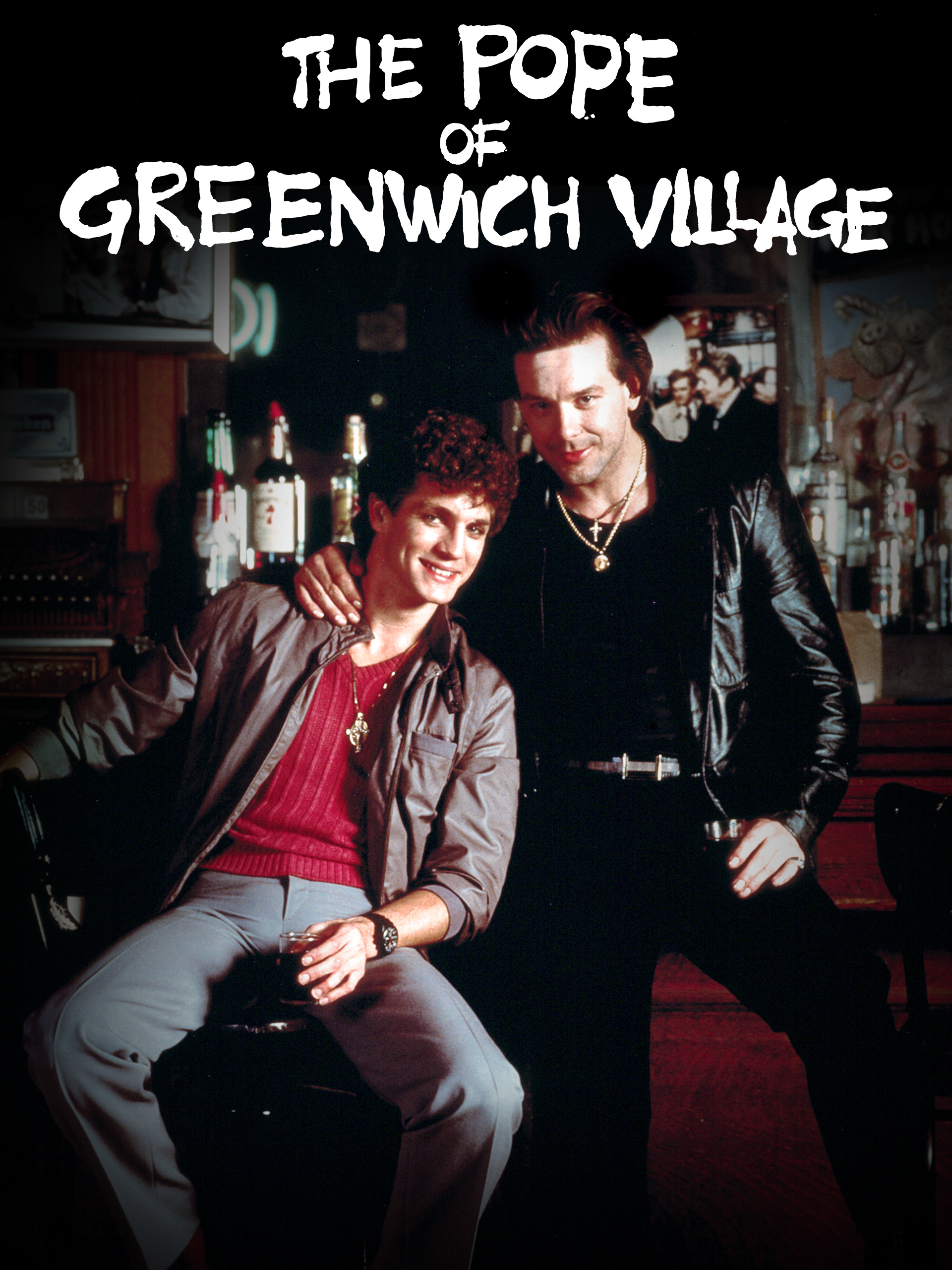
The movie is a projectile vomit of the worst type of overacting, the principal emitter being Eric Roberts, though Mickey Rourke and Burt Young give him a run for his money on occasion. The story is nothing. Rourke is a smooth maître d’, Roberts is his dimwit waiter cousin. Roberts screams and shakes and hollers and overemotes, always talking about his next big deal, always with ants in his pants. Rourke humors him but the indulgence soon lands them both in trouble. They get crosswise with crime lord Bed Bug Eddie (Young) in a rip-off gone bad. Young exacts his revenge on Roberts and then we get this.
In the pantheon of film histrionics, it may get no worse.
Ironically, the only memorable thing about this dull, pedestrian turd is the dramatic flatulence.
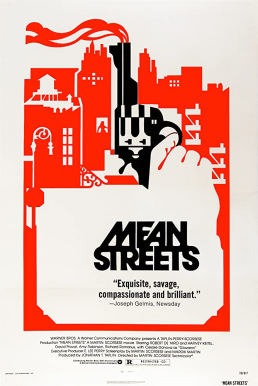
The obligation and title of Filmvetter is weighty enough, but to have so many omissions in what I should have seen, well brother, it’s a heavy burden. And boy, is this omission glaring. Up until a few weeks ago, I’d never seen Martin Scorsese’s masterpiece about a minor mob figure (Harvey Keitel) negotiating his ambition while fending off the crazy of his childhood friend Johnny (Robert DeNiro); grappling with his carnal desires, primarily with Johnny’s epileptic cousin Teresa (Amy Robinson); and reconciling his Catholicism with his life .
It’s hard to overstate the brilliance of the movie. Raw, pulpy, kinetic, the picture also oozes with verisimilitude. You can smell the violence in the air, always nearby, hovering, waiting. Keitel moves as a man with a mark on his back, trying to hold it all together while Johnny and Teresa make more and more demands of him. Yet his skills are such that you think, foolishly, he might just pull it off. In his little world, which feels like a few square blocks in the city with its own barbaric codes and uncrossable lines, he never stands a chance, not with the decency that proves to be his Achilles heel.
It’s all here for Scorsese: the handheld frenetic tracking shots, the spot-on use of music, the Catholic iconography, the bravura interludes:
The picture is transfixing. It is also important to note that Mean Streets was the first true Scorsese feature. He’d gone to Hollywood as the next hot thing, directing an underwhelming Boxcar Bertha for Roger Corman, after which John Cassavetes rebuked him with, “You’ve just spent a year of your life making a piece of shit.” This jewel followed.
So, that’s my lapsed Catholic confession. I might as well go all in.
Of the AFI Top 100 films, I have not seen the following:
City Lights
Sunset Boulevard
The General
The Grapes of Wrath
Annie Hall
It Happened One Night
The Gold Rush
Nashville
Cabaret
A Clockwork Orange
Sunrise: A Song of Two Humans
Swing Time
A Yankee Doodle Dandy
I don’t know if I’ll get to these, and even if I do, honestly, what hasn’t been written about them?
I am a Walter Hill enthusiast. His scripts for The Getaway and The Drowning Pool are cynical, economical, and hard-boiled, but also, deftly clever. Hill is not showy, so his dialogue never comes off as anachronistic or stilted.
He’s also adept with historical pieces. The Long Riders is a gem, his best and most complete film.
48 Hours is overlooked, known more as the vehicle for Eddie Murphy’s ascent, but in its brutal bones is a real beating heart, as can be seen in Mike from Better Call Saul imploring Jack Cates not to give up his gun.
Then there is The Warriors, a cult classic that somehow elides silliness despite a premise that would make lesser men chortle. Hill guides the Warriors through a comic book hellscape of late 70s NYC where all the other increasingly ridiculously attired gangs (one wears suspenders and roller skates, another sports black-and-white face paint and baseball bats) are after them and you can’t get enough.
Lin Manuel Miranda is readying it for Broadway.
Hill often gets the slightly condescending moniker “workmanlike” but to me, that just mean he merits more work.
He has some lazy slop (Extreme Prejudice), paycheck work (Red Heat), and ill fits (Brewster’s Millions), but even later in his career, he directed two rich historical features (Wild Bill, Geronimo: An American Legend).
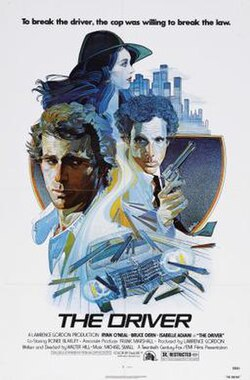
So, what of The Driver, Hill’s second feature as writer-director?
Sadly, if ever there was a tonal failure made toxic by terrible casting, this is the picture.
Ryan O’Neal is a stud driver, a man-with-no-name type who is the hire for robbery getaways. He drives. That’s it. We know nothing of him, other than his simple rooming house existence (he lays in bed fully clothed with the door open) and uber-laconic (or catatonic) demeanor.
I can think of no worse choice for this role. Whereas Steve McQueen’s grim humor or Charles Bronson’s hard stoicism might have worked, O’Neal doesn’t look cool. He looks like he has a fever and slight indigestion.
Hill could have paired the dyspeptic O’Neal with a romantic interest, someone who could draw him out, ala’ Jacqueline Bisset in Bullitt. Instead, he chose 23 year old Isabel Adjani, and she underplays the already monotone O’Neal. She’s barely more than a mannequin and nothing said between the two is interesting or illuminating. Bruce Dern, as the dogged detective obsessed with catching O’Neal, must have sensed the sleepy miens of his co-stars, and he counters with a manic performance bordering on the comical. It doesn’t help that he sports Napoleon Dynamite’s hairstyle before it was ironic.
It’s not all casting. Hill seems bored by his story halfway through the flick, and things happen that make you go, “Wait. How did the cops know where the money would be? Did I fall asleep?”
Co-writer/director David Robert Mitchell blew me away with 2014’s It Follows. Since that debut, he wrote and directed Under the Silver Lake, which got past me and is now in one of my queues. Twelve years after It Follows, Mitchell is back with this smart, funny, gripping roller-coaster ride.
My son recommended this movie with “silly premise, full commitment, a total blast.” I ran to the theater and agree wholeheartedly with his second two comments. As for the premise, I read nothing about the film before I saw it and even picked a generic photo for this review so as NOT to give anything away. I loved the premise, which is simple and crisply delivered. Hardly silly.
It is 1982. Ewan McGregor and Ann Hathaway live with their two teenage children (Maisy Stella and Christian Convery) at, you guessed it, the end of Oak Street, a quiet Michigan suburb where all the neighbors know each other and one even compliments McGregor on his wonderful family. But all is not well. The entire unit is cracking under the weight of marital discord and papered-over disintegration. A cosmic event intercedes, one that creates palpable terror, requiring the family to get it together.
Non-specific, I know, but my ignorance greatly enhanced my enjoyment, so I urge you to replicate my approach. Just go, or, wait for streaming and watch it blind. The movie has the feel of a Saturday morning serial, and it is not coincidence it was produced by JJ Abrams. It has a lot in common with his Super 8, which is set in 1979 and follows a group of teenagers (some from breaking families) who witness a mysterious train derailment that connotes a deeper danger.
Everyone is excellent, and in particular, Hathaway really connects, an accolade she is due after my criticism of her performance in The Odyssey. She redirects the frustration and claustrophobia of her suburban station into steely action and resolve but never once goes over-the-top. Stella, who I massacred in My Old Ass, is poised and affecting. She is the glue that holds the fractured family together.
The quarter point deduction is really niggling, but it bears mentioning. Convery is probably a couple of years too old for the role, as some of his decisions in the direst of moments scream pre-teen.