Archive

Decade

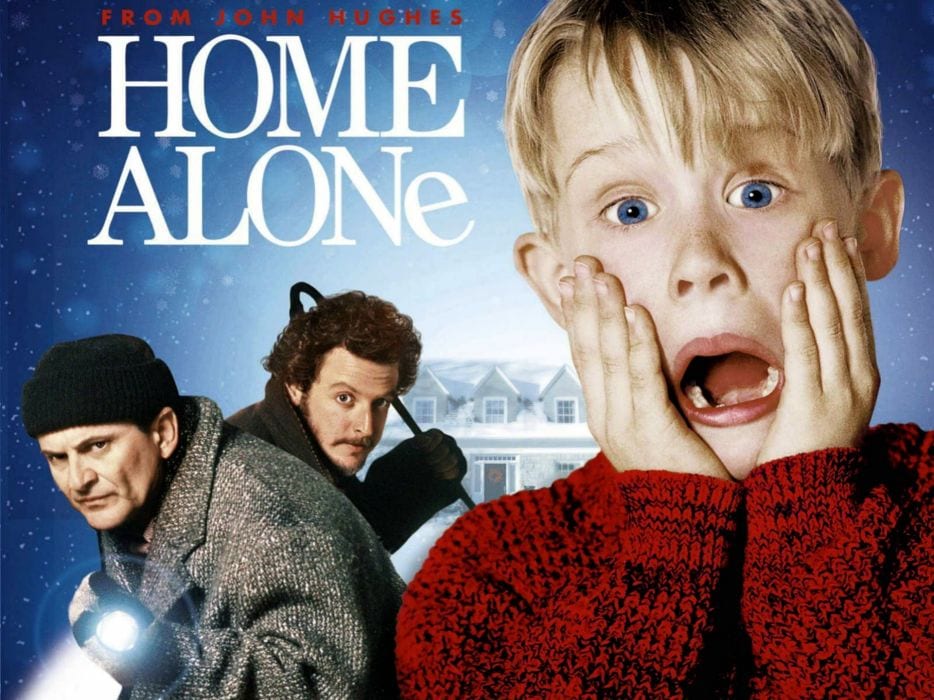
My Favourite Christmas Movie - Home Alone

John Hughes produced and wrote this Christmas classic about a kid accidentally left “home alone” for the holiday. Hughes pushes the syrup, but this picture has more of Looney Tunes-Meets-Tarantino vibe.  What little Kevin (Macaulay Culkin) does to burglars Daniel Stern and Joe Pesci is waayyyyyyy beyond enhanced interrogation.  I had to leave the room more than once, such was the barbarity, but I did see Kevin shoot them point blank with a pellet gun (balls and forehead), burn their heads and hands, smash their faces with full swinging paint buckets and a hot iron, cut a rope line so they crashed into brick, and ice the stairs and litter the floor with tiny cars (resulting in perhaps permanent spinal injury to both men). He also placed sharp objects under the windows, and even a nail, which went through Stern’s foot.  I think variations of tar-and-feathering occur as well, and the kid even uses a live tarantula to terrorize the duo. 

Now, I’m generally a “stand your ground” guy; if you stick your fingers inside the facemask, you get bit.  But this is just too much.

When the mayhem is not in session, the movie is a little ho-hum.  Kevin is not that cute, his family are a coterie of monsters (except for his Dad, John Heard, Gonzaga alum and fittingly nonplussed by the abandonment of his child), and as with almost all John Hughes films, almost every adult is a moron or a cretin.              

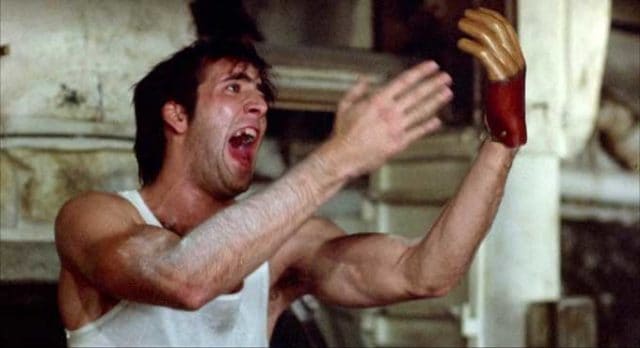
The Top Five Nicolas Cage Yelling Scenes in Movies

I had never seen this movie in its entirety, only clips (“MY HAND!!!!” and “Snap out of it”) or a few scenes.  It’s a charming film, made more so by funny and smart performances all around.  Every character, save for John (scene stealer) Mahoney, is an old country-linked Italian in 1980s Brooklyn, so I expected broadly comic, and there are some such scenes.  But for the most part, the film eschews “Mama Mia!” and instead, provides opportunity for Cher, Nicholas Cage (his weird instincts and passion are transfixing), Danny Aiello, Olympia Dukakis, Vincent Gardenia, William Hickey and others for a little introspection, some intelligent mugging, some surprising underplaying, and some truly tender moments. 

The picture feels almost like a long-running and beloved stage play.  I guess that makes sense, given it was written my renowned playwright John Patrick Shanley (“Doubt”).  Shanley snatched the Oscar for best original screenplay, and while I would have gone with Broadcast News, I’m okay with it. 

At 102 minutes, the film is also a shining exemplar of economy.  I laughed, I cried, and I didn’t need to go to the bathroom. 

Currently on Showtime.    

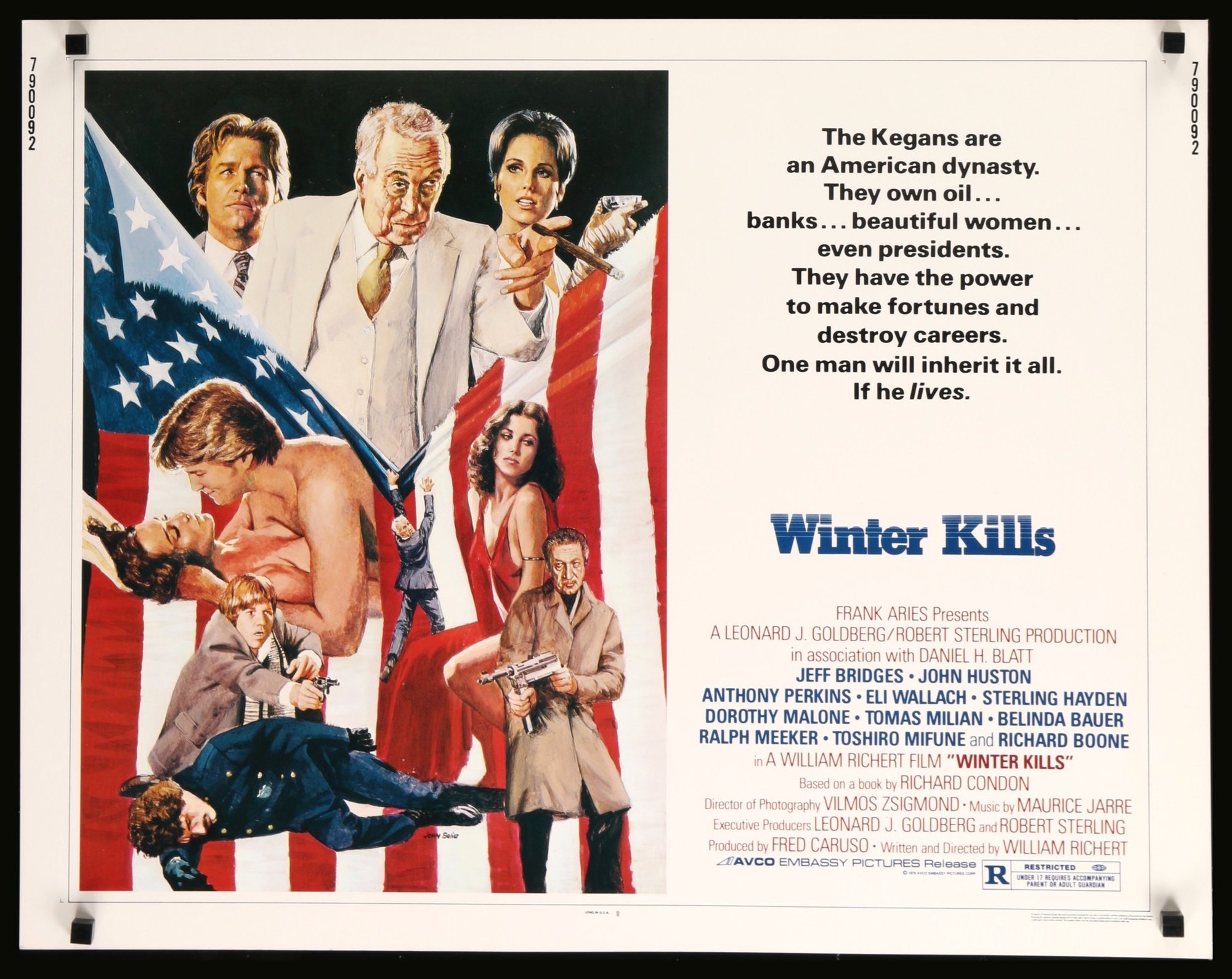
What a strange find on Amazon Prime. A 1970s black comedy with John Huston playing the Joseph Kennedy character and Jeff Bridges playing Bobby, if Bobby was sweet tempered and had no political ambitions after the death of his brother. Of course, this is not the Kennedys, but the Kegans, and little brother Bridges is swept up into a re-investigation of his half brother’s assassination after a lone gunman has been fingered by the equivalent of the Warren Commission. In essence, Bridges goes on a dangerous wild goose chase (egged on by his father, who hopes this will propel the son into heroism and political fortune) to find the real powers behind the killing, after a second shooter confesses.

The film is absurdist, and doesn’t really work as either a comedy or a thriller. But uneven as it is, you have to be somewhat in awe of its ambition. The rumor is that the Kennedy family was none too pleased with the feature back when it had the power to squelch it, but the film is so uneven, it likely didn’t need any opposition from the dynasty. Bridges is winning, and Huston is a gas as the corrupt, sybarite of a patriarch, and the whole thing is best when it is trippy.  Worth the time.  

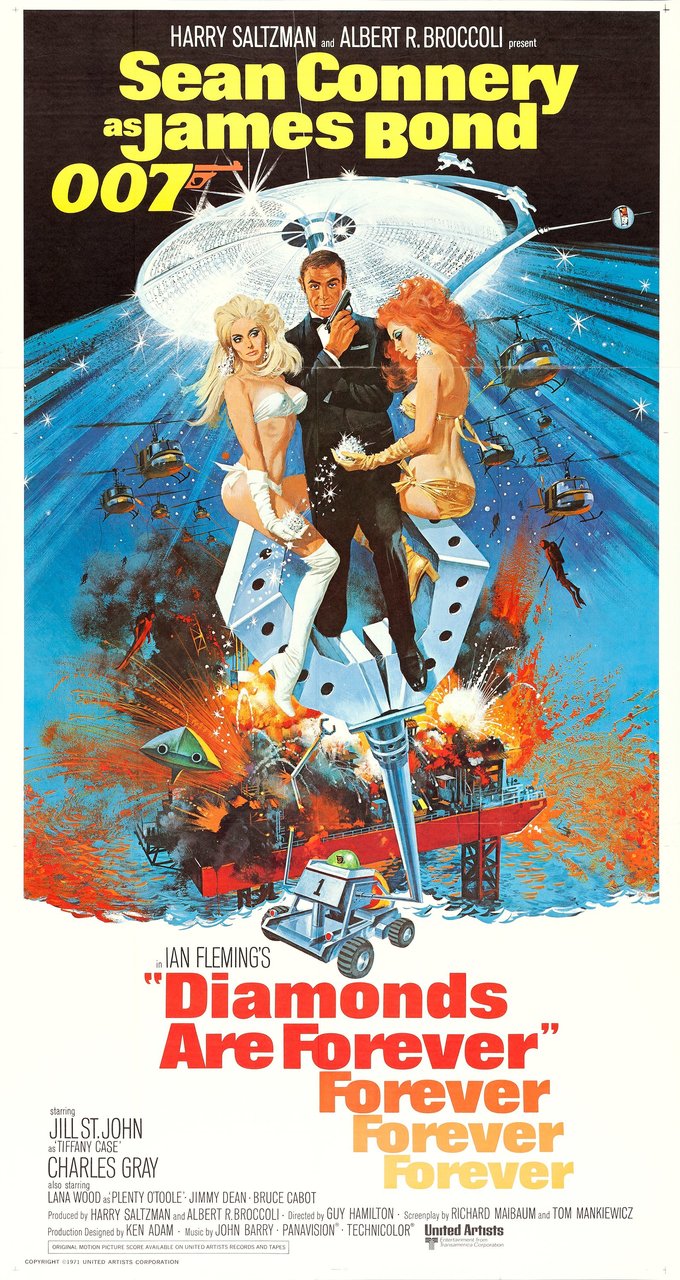
We have started a new tradition at home when all four of us are present. One of us gets to pick the movie and the other three have no veto power. I was first up and showed this gem, primarily to discomfort my wife and daughter, but also because Sean Connery had just passed and the movie always had a soft spot in my heart. In the first minutes, Connery did not disappoint: he pulled off a woman’s bikini top and strangled her with it until she gave up information on how to find his nemesis Blofeld. He also popped another woman in the mouth. Not to get too far off track, but while I can see that James Bond is certainly no paragon of modernity, the fact that he smacks women around for information always struck me as one of his more proto-feminist qualities. He does not discriminate.  Blofeld first. Chivalry second.

I loved this movie when I was a kid because when my brother and I went to Puerto Rico, and we started to fight with each other, my abuela took him for the day, and my abeulo took me. I am certain that I got the better of the deal, because I had lunch at a restaurant in San Juan where my hamburger was brought to me on an electric train. Then we went to see a double feature: this second run flick was the opener to the first run feature about a killer octopus, Tenacles. We drank up Bond and left during the fish movie. 

My love for the film grew a little more because I married a doppelgänger to Jill St. John. Of course, one would never marry a woman based on the firm imprint of a beautiful Bond girl during adolescence. But it doesn’t hurt. 

To the film. It’s pretty awful. You can see that this entry of the series was the one most heavily relied upon by Mike Myers in his Austin Powers send ups. Bond is dead-to-rights on four separate occasions, and on each, rather than shoot him dead, the villains consign him to some elaborate end which he foils. 

Worse, contrary to almost every other Bond film, the picture is ugly. The closest we get to an exotic locale is Amsterdam, where we see a dead body pulled out of one of the canals. Other than that, it’s gruesome 1970 Las Vegas, a desert, some kind of hidden missile base, and a finale on a grubby oil rig. The interior decoration seems to be Playboy-meets-The Poconos. When your most picturesque locale in a Bond film is the 1979 Circus Circus casino, oof. 

The movie also makes absolutely no sense and attempts to rely on the comic to the exclusion of any intelligible plot.  Sometimes, it borders on an episode of The Monkees. Almost every other movie in the early series entries are better.  A dog, but near and dear to my heart.

8FF0E132-BB1C-4F21-8E41-8783914AB97D

Futuristic flicks from the 70s are a guilty pleasure of mine and I watched a bunch of them with my father growing up. Logan’s Run, Soylent Green, The Omega Man, Planet of the Apes, Death Race 2000. You could count us in.

This one is meh. The world is run by a few corporations.  The executive class is the aristocracy, and they entertain themselves with luxury and regular ingestion of what seems to be a mix of ecstasy and LSD. The sport of the global masses is Rollerball, a violent and deadly mixture of roller derby, lacrosse, hockey and maul ball. James Caan is its biggest star, but for reasons unknown to us, he is being forced out of the game at his peak by corporate titan John Houseman, at a moment when the sport is moving to a “no penalty” phase, which will up the murders and further endanger his teammates.  Caan resists and delves deeper.

The picture mixes futurism and corporate skullduggery, but the latter is simplistic, and Caan’s attempt to get to the bottom of things is haphazard and a little dull. Caan also can’t convey the emerging intellect that could drive his lummox of a character to ask deeper questions. He seems as if he senses the silliness of the endeavor, and appears to be wincing at his own involvement.  Also, Houseman is really not a very good actor, pretty much at the level of his old Smith Barney commercials.

But the flick has its fun moments.  And even though one doesn’t equate director Norman Jewison (In the Heat of the Night, And Justice for All) and “action,” the Rollerball itself is good, clean, bloody fun.

On Amazon Prime.

BB25D191-021E-46FC-9F3F-E4CB44B5B54C
This film is now on the HBO rotation and I surprised myself when I realized I hadn’t reviewed it. It is an exceptional picture, a crisp and intelligent thriller.

Michael Clayton (George Clooney) is an attorney at a prestigious corporate law firm. But he’s no legal eagle. Rather, he’s a “fixer “, a guy who can get you a heads up on an indictment or bail out the son of a big client for a drunk and disorderly. Clayton also happens to be a gambling addict with a host of debts.  This is Clooney’s best role. There’s not a hint of his bankable but often annoying, self-satisfied “you know, I’m acting” grin.

His entire persona aligns with the disappointments of his endeavors. As a fixer, he is anything but glamorous or intrepid. When called to the home of a major corporate client after being oversold by his managing partner, Clayton has to firmly tell the man (who has just fled the scene of a hit-and-run after drinking and likely engaging in infidelity) that his talents are pretty pedestrian — the client needs a good criminal lawyer and Clayton “likes” someone local for the job. When the fuming and underwhelmed client taunts Clayton with, “A miracle worker. That’s Walter on the phone twenty minutes ago. Direct quote, okay, ‘Hang tight, I’m sending you a miracle worker’”, his response is a summation of his self-worth: “Well he misspoke . . . There’s no play here. There’s no angle. There’s no champagne room. I’m not a miracle worker, I’m a janitor. The math on this is simple. The smaller the mess the easier it is for me to clean up.“

Clayton’s game is poker, which, of course it is, because it is the only game where the winner can take your money and humiliate you in the process.  

Still, Clayton maintains a resolute decency and innocence as he is enveloped by a conspiracy involving the law firm’s largest client, its’ ambitious and single-minded general counsel (Tilda Swinton) and the firm’s mercurial wiz litigator (Tom Wilkinson), who  goes off his meds and imperils both the corporation and the firm. Clooney is almost pathetic as he feigns sophistication while asking the firm’s managing partner if, in fact, there is something truly insidious about the corporation. A perfectly cast Sydney Pollack replies, “This is news? This case reeked from day one. Fifteen years in I gotta tell you how we pay the rent?“

This is a legal thriller that more than meets both bars. The story is engrossing and writer-director Tony Gilroy must have spent some time in a modern law firm, because he has the milieu, the patter, and the casual arrogance of the place down cold. Big time law firms are funny places, populated by very smart people who convince themselves they are priests, and damned if they don’t attract their own sort of worshipful congregations.

Nominated for Best Picture in 2007, unfortunately for Gilroy and the film, the same year as No Country for Old Men.

Amazon.com: California Split POSTER (11" x 17"): Posters & Prints

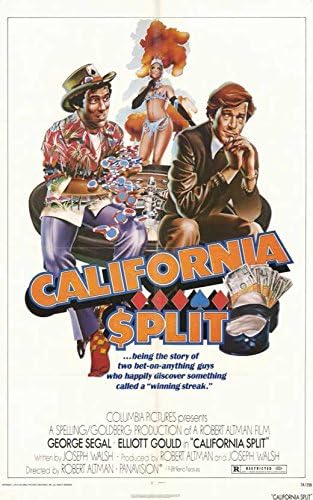
Robert Altman directed this film after his three masterpieces – M*A*S*H, McCabe and Mrs. Miller, and The Long Goodbye – and directly before his next one, Nashville. It has all the hallmarks of an Altman film . . . overlapping dialogue, a leisurely almost poetic pace, and a complete disregard for traditional narrative.

The film is essentially about two degenerate gamblers – George Segal and Eilliot Gould – who haunt the poker rooms, casinos and race tracks of California and Nevada in search of the juice. While Gould is carefree and seemingly happily stuck in the mire, Segal has one foot in the straight world and one foot in the dens of iniquity. He owes, he craves, and he can’t wait for the next shot at a pot, so much so that when Gould leave him for a week, he feels as if he’s being ripped off, that somehow, his partner is keeping a score away from him.

Unlike some of Altman’s better films, there’s no real character development here.  Segal and Gould simply happen upon each other at a poker room and start hanging out and kibbitzing, often with two working girls who live with Gould.  Altman is so intrigued by the machinations of the lowlife, he forgets that we are only here to see what happens to these addicts.  And, until the end, not much does happen to them.

Ultimately, Segal comes to a fork in the road, but it is a bolt from the blue.  We don’t know much about him and Altman doesn’t really let us in.  So, when he takes one road over another, it is of no real moment.

Still, it’s a fascinating picture with a real affinity for the disreputable denizens of the 70’s cocktail bar, race track and casino.  Altman doesn’t glorify but he does offer a vivid portrait of the world.


29C35719-1659-4256-A05E-A40679007A8E
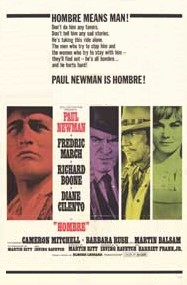
Paul Newman is ridiculous as an Apache but it’s as if he senses that fact in the first 10 minutes of the movie and just concludes, “Fuck it. I’ll just be Paul Newman.”  That’s just what he does, and thankfully,  from that point forward, all is well again in this Stagecoach-ish Martin Ritt western.

Newman and a group of misfits (including Martin Balsam doing his best Eli Wallach as a Mexican) share a stage to Bisbee and they are set upon by thieves/killers. Newman rises above the racism of his traveling companions (when they find out he is an Apache, they make him ride outside of the stage) and works to get them out of the jam.

It’s a tight script (based on Elmore Leonard story), it’s cynical, the ensemble is decently fleshed out, and it travels pretty well. 

Image result for The Enforcer

Dirty Harry was a film so conservative, Paul Newman gave it a hard pass. But not without cementing the franchise by recommending Clint Eastwood for the role.  Eastwood plays the iconic Inspector Harry Callahan, and when San Francisco is terrorized by a serial killer (the Scorpio, rather than the Zodiac), it turns to Harry to save its ass. Unfortunately, every time Harry gets near the crazed nut, some liberal judge or pencil-pushing, ass-covering bureaucrat is obstructing his simple moral code and his massive .44 Magnum. Finally, he just has to go rogue and takes matters into his own hands. After he finishes the job, a disgusted Callahan tosses his badge in the bay.

Except, the movie was wildly popular.

So . . . tin star retrieved.

It took the talents of a young John Milius to pull Callahan back from the ranks of the fascist in the follow-up, Magnum Force, where the bad guys are actually cops, an execution squad working at the behest of seeming pencil-pushing, ass-covering bureaucrat Hal Holbrook (in fact, Holbrook is the mastermind of a new form of vigilante justice). In the second film, Callahan is still our cynical, equal opportunity bigot who loathes the politics, regulations and political correctness of the city. But he can’t quite get on board with a Star Chamber. As much as  he detests the system, he figures it’s better than any alternative.

In The Enforcer, Callahan is back to his conservative roots, and stuck with an affirmative action partner, Tyne Daley. In Dirty Harry, his partner was Hispanic and in Magnum Force, African-American, but one never got the impression they hadn’t earned their stripes. Daley, on the other hand, is introduced as someone who has never made a collar (felony or misdemeanor), a quota baby straight out of . . . . grrrrrr . . . . Personnel.

Worse, an officious woman from the mayor’s office – likely, straight out of a precursor to the Office of Diversity and Inclusion – is present at Daley’s interview, one conducted by Callahan.  Daley fails, miserably, but the fix is in and she’s given the gig.

After she importunes Harry to give her a chance, things start off rocky. On her first day, she almost gets her head blown off by a hand-held rocket launcher, almost loses her lunch during an autopsy, and unwittingly runs around half of San Francisco with a bomb. But she’s got moxie. And with a band of the most brutal hippies having just kidnapped the feckless “pay them!” mayor, you’re going to need Tyne Daley’s moxie.

The Enforcer is more of the same but smartly done. You get the satisfying back-and-forth between Harry and the government weasels:

Capt. McKay: That’s it Callahan, you just got yourself a sixty-day suspension.

Harry: Make it ninety!

Capt. McKay: A hundred-and-eighty, and give me your star.

Harry: (Giving Capt. Mckay his badge) Here’s a seven-point suppository, Captain!

Capt. Mckay: What did you say?!

Harry: I said stick it in your ass!

You also get a lot of gunplay, a jazzy Jerry Fielding score, some inspired action sequences, and numerous chases through eclectic, weird and grimy 1970s San Francisco. But it is Daley as the earnest sidekick who just wants to earn her stripes who elevates the picture.  She’s winning, sympathetic and you root for her, the first time a character from the corrupt system makes you say, “C’mon, Harry.  Lighten up.” When she meets Harry’s standards (she blows two of the bad guys away and to one, she says “You laugh at me mister, and I’ll shoot you where you stand”), you cheer.

Because how could you not?  Punk.


Image result for the EAgle has landed

My father took me to The Eagle Has Landed in 1976, and I of course loved it.   John Sturges (The Great Escape) can make a solid  war picture and this one was smart, cynical, compelling and the last one he directed.

As I watched it again last weekend, I imagined this script landing on some hotshot Hollywood moguls’ desk today.

First pages, not so bad.  The war is going poorly for the Nazis and they are looking into a plan to kidnap Churchill. 

Okay, so far so good.

The plan is dropped on an armless  Nazi with an eye patch.  No, not Tom, Cruise as Von Stauffenberg in Valkyrie.  That film is 30 years and a Bryan Singer sex scandal away.

This armless, eyeless Nazi is played by Robert Duvall.  And whoa!  In what he thought was a moment of whim on the part of Hitler, it turns out that the plan is feasible and the game is afoot.

So feasible that Duvall scours the records for the perfect German unit to take on the task of posing as a Polish outfit in a northern English town until Churchill arrives, when he can be snatched.  Who does he find?

Michael Caine, and his close-knit commandos, who have been kicking ass and becoming more and more embittered on the Eastern front.

But Duvall needs more; he needs two boots on the ground in the little town before the “Polish” troops arrive.  Enter . . . Donald Sutherland, an Irishman who hates the English so much he’s in league with the Nazis.

Okay.  It seems like a lot of money to be throwing at the bad guys. 

Who is the hero?

Larry Hagman?  J.R EWING?

Well, no, but Hagman does play the American commander on the ground in the quaint English town.  He’s no hero.  He’s more like John Larroquette in Stripes, a martinet wannabe who craves combat badly.  Hagman is incompetent, Caine’s men repel his frontal assault with ease, and he dies in such an ignominious manner, it’s almost comic.

Oh good.  There’s a young Treat Williams and Jeff Conaway.  Good looking American GIs who . . . . hmmmmmm, these guys have no lines!  They barely even register!!

Wait, are you telling me . . . . the leads are all Nazis!!???

Yup.

In 1976, this is how Hollywood got past this inconvenient cast.  First, they made Duvall erudite and resigned, as well as armless and eyeless, and they had him present the opportunity to grab Churchill as an opportunity to sue for peace.

As for Caine, as he and his men are shipped back from the Eastern Front, they meet an SS unit rounding  up Jews at a railroad junction.  Out of sheer frustration, Caine assaults the SS commander, assists in the escape attempt of a Jewish woman, and for his troubles his men are all cashiered and consigned to tasks that will eventually result in all their deaths.  Did Caine revolt because he was torn over the Holocaust?  Well, no.  In his own words, “I have nothing for or against Jews, personally. But I’ve seen too many men die for cause, to watch a young girl be killed for sport!”

Okay.  Good enough for the Bicentennial.

And Sutherland?  Well, he’s humanized because his beef is about Ireland, not that icky master race stuff, and he’s quick with a drink and the brogue and he’s so charming, Jenny Agutter falls in love with him instantly (really, the weakest part of the picture because he’s too old for her, it’s too immediate, and what she does for her “love” is so extreme it just doesn’t pass the smell test).

Solid flick, clearly of its time.  Triggerocity at about an 8 out of 10. On Amazon.