Linking two famous hauntings, Amityville and Enfield (both almost certainly hoaxes, which, I suppose outs me as someone who accepts the possibility of “authentic” paranormal phenomena), director James Wan sends his un-dynamic duo (Patrick Wilson and Vera Farmiga) from Long Island to London, where they lend their assistance to a beleaguered family of five whose council house appears to be spooked by its former occupant. There are a few frights, but not much beyond that, the failures attributable to a number of factors. First, Wilson and Farmiga are boring, just dull as dishwater. I get it. They are religious. But religious people need not be saltines.
Second, big houses with sprawling grounds are scary; crappy British public housing, not so much.
Third, Wan over-relies on the same gimmick – camera pans away, nothing there, then back, all is well, then back, okay, then . . .
Whammo! Look who’s in the mirror. It gets old.
Finally, the whole story is the fact that the creepy nun wants to get Farmiga, much like the demon wanted to get Father Merrin in The Exorcist. Only, Merrin v. Satan was a mere subplot of what was an otherwise compelling, intricate and literate horror film, which The Conjuring 2 is decidedly not.
Given the subject matter – reporter Tina Fey gets out of her rut in NYC by going to cover the war in Afghanistan circa 2003 – it’s amazing they managed to make such a boring film. The first error is casting Fey, who can barely get one inch past her Liz Lemon character from 30 Rock. She’s little more than a smirk and a wink, so any transformation in or development of her character is simply impossible, and when she starts an affair with photographer Martin Freeman, she seems as put-off by the experience as the audience. Their love scene is akin to two kangaroos boxing, and further suggestions of coitus are shown the morning after, where Liz Lemon is hungover and horrified she may have slept with Griz.
Taxing her limited dramatic abilities further, the filmmakers ask her to try her hand at being an “action junkie.” You can almost hear the voices in Fey’s head imploring her, “act, damn you, act!”
So, we are left with a culture clash flick, with Fey repeatedly doing things most people in Afghanistan would not like, such as walking around without headcover, and holding hands publicly with Freeman, and filming things surreptitiously under her Islamic garb. Also not very good.
Although it does have the value of being surprisingly politically incorrect – the indigenous folk are primarily used as pratfall props while the Westerners are amused and snide, and in what has become the cardinal sin of Hollywood, non Afghanis are (gasp!) cast as locals – none of it rings true, which is a particular problem with a film based on a true story.
The film closes with a violent lurch to a Bin Laden type rescue of Freeman, orchestrated by the plucky Fey, to “Can’t Live” by Badfinger (or Harry Nilsson) and a treacly visit to a maimed Marine for whom she feels responsible but whose aplomb helps her become more grounded. It’s just godawful.
The film has two directors, neither of whom knows what he is doing, which they demonstrate repeatedly over the picture’s excruciating two hours.
Billy Bob Thornton is the only saving grace as a gruff Marine officer who shepherds Fey around, but his screen time is limited.
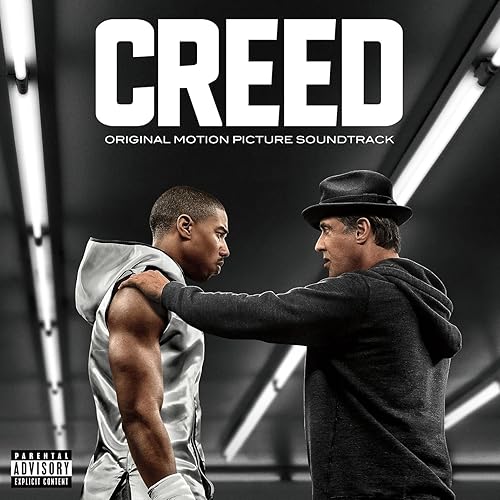
In the hullabaloo about the dearth of people of color represented as Oscar nominees, Creed was identified by some as a glaring omission, not only for director Ryan Coogler (Fruitvale Station) but actor Michael B. Jordan (Fruitvale Station, The Fantastic Four). Sylvester Stallone was also awarded a nomination for best supporting actor and the critics scored the film a 94% on rottentomatoes.
Everyone appears to have lost their fool mind. The movie – which chronicles the son of Apollo Creed as he vies for the title – veers between the deathly dull and the ludicrous. There are four – count ‘em, four! – montage scenes of Jordan training, one of which has him being chased down a Philly street in slo-mo by kids on dirt bikes and trikes, howling outside the window of Rocky, who looks embarrassed by the spectacle. It’s one of the most bizarre images I’ve seen in a mainstream movie. You really have to see it to believe it. There are also some dizzying fight scenes. That’s all of the recommendations.
Jordan is given the thankless role of the young up-and-comer, plagued by the relationship he never had with his father. Except, he’s a rich kid, plucked from a group home by his mother (Phylicia Rashad) and well-ensconced at Smith Barney or some such firm. It is on the weekend he laces up and goes to Tijuana to box. Why? Who the hell knows? As played by Jordan, Adonis Creed is a medium cool dullard, drawn to Philadelphia to train with Rocky by sheer ennui. He doesn’t seem to care much, so why should we?
When he gets there, he finds ole’ Rock shambling about a restaurant. Rocky won’t train him, but then relents, and then Rocky doesn’t want Adonis to take the big fight prematurely, but then relents, and then Rocky gets cancer and won’t get treatment, but then relents. All this relenting is done in that same barely articulable monotone Stallone has honed over the years. I guess I can see how the protestors at the Oscars felt. If you’re gonna’ award Stallone for this phone in performance, how about all of us for the larger piece of shit?
Along the way, we get such gems as Rocky putting Adonis in front of a mirror, counseling, “That’s the toughest opponent you’re ever going to have to face.” There’s also a unpersuasive love story between Adonis and a Lisa Bonet look-alike – they emit as much spark as siblings.
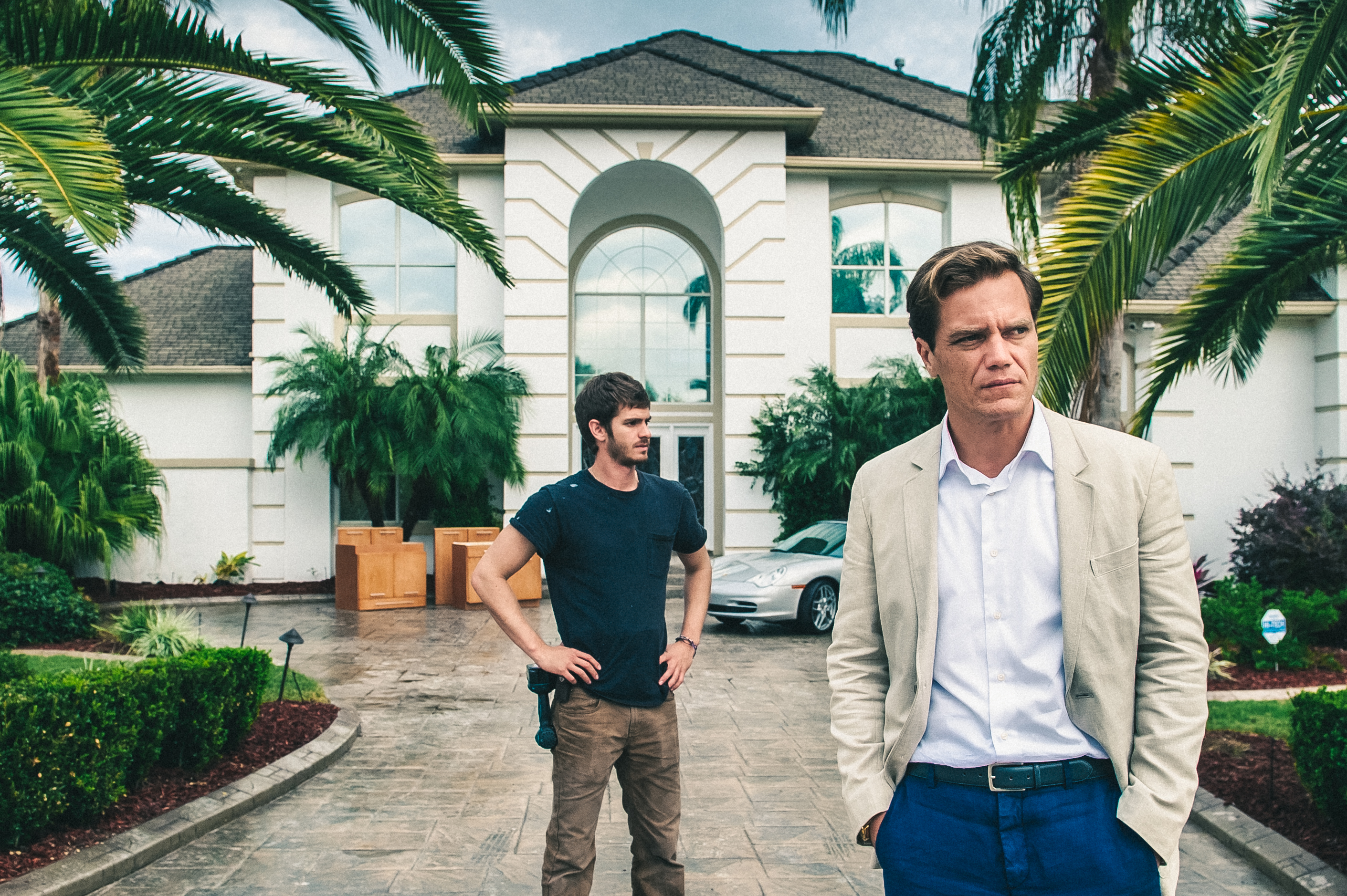
In the opening scene, Michael Shannon, a rising Florida real estate broker, walks out of a house where he has just attempted to evict a man. The tenant has blown his brains out in the bathroom. Shannon cares not a whit; he has the lives of many more good, hard-working, decent Frank Capraesque archetypes to ruin, and there are only so many hours in a day. This is the most subtle part of 99 Homes. I get the sense they show this picture to Bernie Sanders volunteers to get them jacked up before they go door-to-door.
Shannon soon moves to the house of Andrew Garfield, a construction worker who is behind on payments for his childhood home, which he shares with his mother (Laura Dern) and son. Garfield gets the boot through the collusion of the courts, the sheriff and indeed, modern American capitalism, but fate brings him back to Shannon, who sees something in the lad. Soon, Garfield is working for Shannon, evicting a passel of George Baileys and making serious bank.
But what does it profit a man to gain the whole world and forfeit his soul? Yup. It’s that kind of movie, a bludgeon. It’s also repetitive (if you want a “how to” on evictions, this is your flick, because we see scads of them) and unwittingly undermines its message. Garfield is a pretty stupid poor person and an even dumber rich person; he equivocates and Hamlets through the entire picture, so much so you actually feel bad for the devil Shannon in having to negotiate the soul of this dimwit. Also, director Ramin Bahrani obviously knows squat about the Florida police. The film ends with an extended scene where a man resisting eviction fires a rifle out his window at the cops numerous times and yet, miraculously, they don’t shoot him. Poppycock.
Shannon is the only reason to see the movie; he does his level-best to give real estate Satan some heft and depth, and he is one of the most interesting actors around.
Naturally, the movie was adored by the critics (“makes you understand how this poisonous financial ecosystem thrives” – David Edelstein; “nails the predicament in which so many working-class folks now find themselves. Although they cling to the American dream, for many of them it has become a nightmare” – Calvin Wilson), who – as everyone in the know knows – have for years been in the pocket of the anti-eviction lobby.
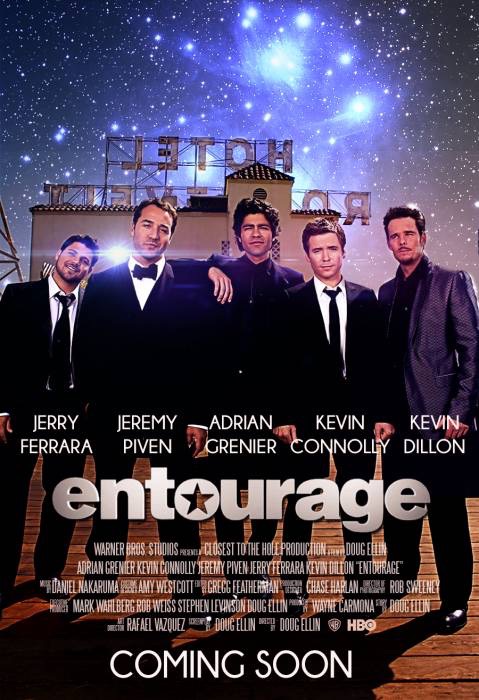
The TV show was two seasons too long but most always amusing, giving you a taste of what it might be like to be young, dumb, affable and famous in the candy dish that is Hollywood. The show’s greatest attributes were its locale, engine (the hyper, high-powered brutal agent Ari Gold played by Jeremy Piven) and length (a brisk 30 minutes). Entourage gave to men what Sex in the City gave to women, though the latter could often seem a conflicted and forbidding place for the female archetypes. Not the sandbox that was Entourage‘s Hollywood. Sure, the fellas had occasional relationship issues or fights with studios, but nothing that could not be wrapped up quickly and remedied by weed, easy sex with nubile ornaments, and kick-ass parties.
The film bollixes up all the critical elements of the TV show. The locale is used solely for a series of unfunny cameos and time-wasting sojourns. The likes of Liam Neeson, Mark Wahlberg (the show’s canny producer) and Armie Hammer (he’s someone?) just show up, which is just weird.
Worse, the Hollywood of now just seems tired and pedestrian. Piven, now a studio head instead of a mere agent, is less antagonistic and biting than weary and beleaguered, and his time is spent making sure the dream film of his pretty boy Eliza Doolittle/Vinnie Chase (Adrian Grenier; he directs!) is financed by mean old Billy Bob Thornton, a gun totin’ Texas kabillionaire and the studio’s primary financial partner. This leaves Piven in the role of supplicant most of the film, not aggressor, and as anyone who watched the series will tell you, Ari Gold is one entertaining combatant.
Two hours in and one gets the feeling that director, writer, and creator Doug Ellin was desperately looking for filler. He does a few pointless things with Vince’s gang, but it is not enough. Like a kid completing a term paper coming in short, we get a lot of driving and walking scenes. If they are your thing, this is your flick.
The best part of the movie is one aspect of the actual story, which has Thornton’s spoiled son (played by Haley Joel Osment of The Sixth Sense fame, who now sees bored people) coming up to Hollywood and attempting to put the kibosh on Vince’s opus, a futuristic remake of Jekyll and Hyde, because Vince aced him out of a girl.
Even though they are excuses used to cover for being hurt over the girl, Osment’s criticisms are valid. He explains that Vince’s brother (Johnny Chase, played by Kevin Dillon) is putrid in his four “pivotal scenes” and that Vinnie himself sucks as the lead, and you know he’s probably right. Hell, when Ari nervously screens the picture and we get 2 minutes of it, it has the look and feel of a high-end Sprite commercial.
Alas, Osment is sent packing, and the boys get Golden Globes (ha! Not a People’s Choice?).
Osment, however, gets the last laugh. He was actually nominated for a real Academy Award.
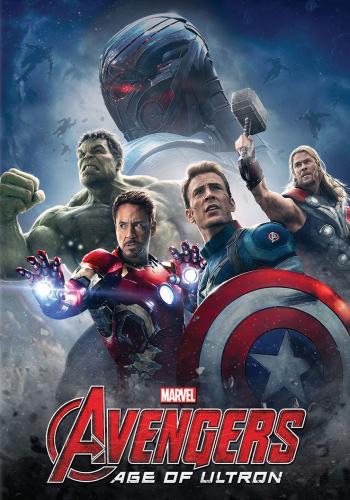
Oof. The first scene demonstrates everything wrong about the movie. Forced patter straight out of How I Met Your Mother, nauseating CGI, dozens of violent acts but no deaths, and not for a minute do you sense that any of the Avengers, outnumbered as they are, are in the slightest bit of danger. Good for kids; good for a parent or adult with a kid who needs a nap; soul-rotting juvenilia for anyone else.
Best part. A friend of Captain America asking if he’s found a place to live in Brooklyn yet and Captain America responding that he doesn’t think he can afford it. Because what’s missing from these films is the Avengers at a cocktail party.
About halfway through this dour documentary about Nirvana front man Kurt Cobain, his widow Courtney Love reveals that at the advent of their courtship, “I had already done heroin, beat the thing, had a rule. I loved it still, but I didn’t have a fantasy that he had. He had a fantasy. His fantasy was, ‘I’m gonna get to $3 million and then I’m gonna be a junkie.'” Nirvana bassist Krist Novoselic echoes Love, observing that drug use was “all part of the package of building a home” for Cobain.
So, halfway in, you learn that the subject of the documentary is a putz, and much to your dismay, he took a crapload of home video in the last few years of his life demonstrating his putzitude. What follows is a lot of dismal footage of a bedraggled, strung out Cobain and Love spouting banality (either under the influence of heroin or not; it’s hard to tell) while holding their baby, which is like watching two winos toss a crystal vase.
Director Brett Morgen does his best to jump up the material, creatively using all of the detritus of Cobain’s life (scribblings, drawings, home movies, cassettes, paintings) to tell his story, but the story is just not that compelling. Troubled kid, broken home, hates “the man”, puts it all into his angry band, big sound, superstardom which is near immediately resented, and then, the repellent creation of a sneering, condescending persona that presents as tortured and deep only by the efforts of rock critics who use phrases like “voice of a generation” (a moniker lobbed up solely to be spit upon by the acid Cobain) and a shotgun. And at the end, Nirvana really was about a sound. It was a helluva sound, I will grant that, but Cobain only made one record that lyrically matched that sound (Nirvana’s last, In Utero).
For the most part, a whole lot of nothing, though for fans, there’s a lot of good early footage.
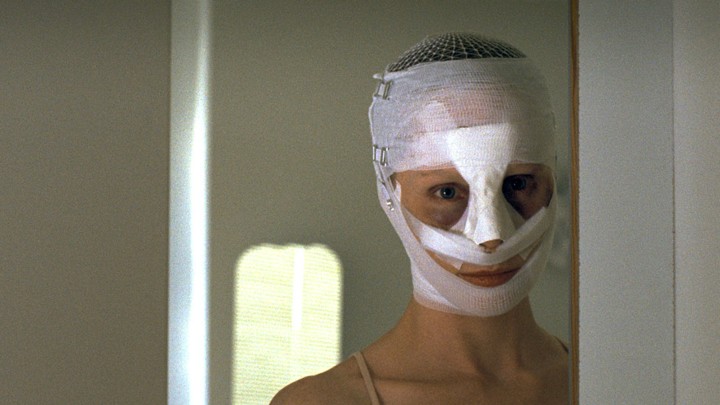
A psychological thriller from Austria that pits two young boys against their mother, who has been in a car accident, undergone facial reconstruction surgery and who, as time passes and the bandages come off, they suspect is not their mother. The critics hailed this (82% on rottentomatoes.com) as rising above genre, both terrifying and revolutionary, but the audience, who scored it at 67%, is closer to the mark. The film starts intriguing (if a bit obvious in it’s The Sixth Sense twist), but soon becomes monotonous, artily sterile, and then simply cruel. I turned it off.
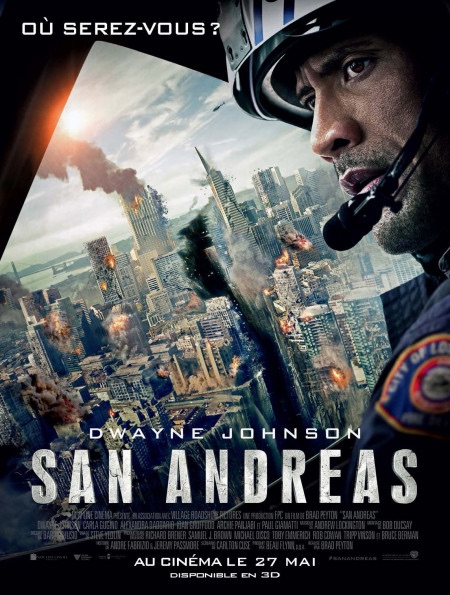
I have an affinity for “the world is ending” movies. None of them are very good and they follow the same model, be it Earthquake, The Day After Tomorrow, Independence Day, Armageddon, 2012, Godzilla and now, San Andreas. Disaster strikes, the warnings of smart, nebbishes notwithstanding. Heroes arise, but family comes first, so Charlton Heston, Dennis Quaid, Randy Quaid, Bruce Willis, John Cusack, Aaron Taylor, and The Rock brave the catastrophe to find and/or save their loved ones. It is in these ordeals that frayed relationships are cemented, so much so that often, new and old spouses have to be dispatched. The children are always saved and mankind perseveres. But their surroundings are ravaged. And as they witness the destruction, they say “oh my God” (twice in San Andreas). Just like Leslie Neilsen in The Poseidon Adventure. Well, not exactly. No one says “oh my God” like Neilsen playing it straight.
It’s the ravaging I love most. The cyclones of The Day After Tomorrow thrillingly rip Los Angeles apart, the same city where those moony hippies with their “we love you, aliens” signs get satisfyingly incinerated and Genevieve Bujold’s house on stilts slides into the canyon below. Godzilla quickly stomped Honolulu and Vegas and nearly took down the Golden Gate Bridge, which – in one of the few cool moments – does not survive San Andreas. Armageddon disappoints for any number of reasons, but foremost is the fact that Willis, Affleck and company save the day. That’s no fun and its best moment is when the pre-meteors obliterate Paris.
Same story, same devastation here, but somehow, San Andreas is worse than the others. It’s as if The Rock decided to use this film as his first true test playing sorrow, and boy is that uncomfortable. So uncomfortable that Carla Gugino, playing his wife, appears to be averting her eyes. While The Rock, recalling the pain of losing their daughter white water rafting, tries to squirt a few out, Gugino plays it rather lightly, as if to say, “hey, The Rock, this is just filler until the next shot of a building collapsing. Don’t be so glum.”
And here we are in San Francisco, but for the most part, the stuff we know is left alone. Instead, most of what gets shredded are office buildings, one of which is not even a real building. Give me Coit Tower! Give me some careening cable cars! Give me Alcatraz or at least the Transamerica Pyramid! Nope. Just nondescript skyscrapers falling listlessly into each other.
Finally, the movie has no sense of humor. None. Not an aside, or an inside joke, or even the thrill of watching something cool, like Paris obliterated. It’s dead straight, serious as a heart attack, except when The Rock and Gugino sky dive into second base at AT&T Field and he says, “it’s been a long time since I got to second base with you.” And then you appreciate the film’s dull seriousness.
A final note. The daughter who The Rock and Gugino cover hill and dale to save (Alexandra Daddario, who played Woody Harrelson’s impossibly beautiful mistress in the first season of True Detective) is so buxom and model-like that it feels exploitative. Yes, parents have daughters that grow up to be busty bombshells, but the first time we meet her, she’s splayed out on a chaisse lounge by the pool, Kardashian-like, and you kind of want her to die. Of course, she doesn’t.
This story of one woman’s journey – a 1000 mile hike along the Pacific Crest Trail – is unfortunately marred by unconvincing dialogue, inconsistent pacing, and an actress not quite up to the task. Reese Witherspoon’s best actress Oscar came after her portrayal of June Carter Cash, a performance that took advantage of her quick wit, common sense instincts, and sunny disposition. She was also able to sing, no mean feat. As the distraught daughter of a mother who died young (Laura Dern), Witherspoon cannot sing her way to our hearts, and de-glamorization and nudity do not sell the fact that she is supposed to have lapsed into a downward spiral of promiscuity and heroin addiction after Dern’s death. There is still too much of Ellle Woods and Tracy Flick in Reese Witherspoon. She doesn’t even curse authentically, much less play a waitress who has sex with two customers in the alley behind her restaurant just because it feels good. The role required an actress with more gut and greater reserves. Meg Ryan, another plucky can-do lead, tried to toughen up later in her career in In the Cut with similar results.
Even with another actress, this film still has real problems. Everyone becomes depressed upon the death of a loved one, but there is no basis to suggest why Witherspoon’s character became so self-destructive. Rather than elicit our sympathy, Witherspoon at times threatens to evoke our scorn. Her choices are presented to us in flashback, in the bedrooms of strange men, with her long suffering friend, in the heroin dens of Minneapolis, or in conversations with her mother, scenes that are supposed to give us insight into how she ended up here. They don’t. Rather, they are too disjointed to tell us much of anything, and we are left wondering “how the hell did she end up there?”
Finally, the film is too new-agey and pat for its own good. Witherspoon reminisces along the trail while inscribing the words of poets at its various check-in stations. She is followed by a mystical fox. She meets people who say wildly unrealistic things (her discussion with a little boy in particular) that are supposed to reflect her singularity and the momentous nature of her trek (she is even dubbed queen of the trail by other hikers). She finishes and tells us in an ego-centrism that lacks any self awareness that it all worked out in the end. Heck, she informs us in voiceover – she even has two lovely kids.
To the good, it is beautifully shot and the beginning of the film, when Witherspoon is starting on the trail wholly unprepared and over-fortified, had promise. I thought she might even get an appendage stuck in between some rocks.