Archive

Decade

Local Hero at 35: turning Hollywood's greatest Scottish film into a musical

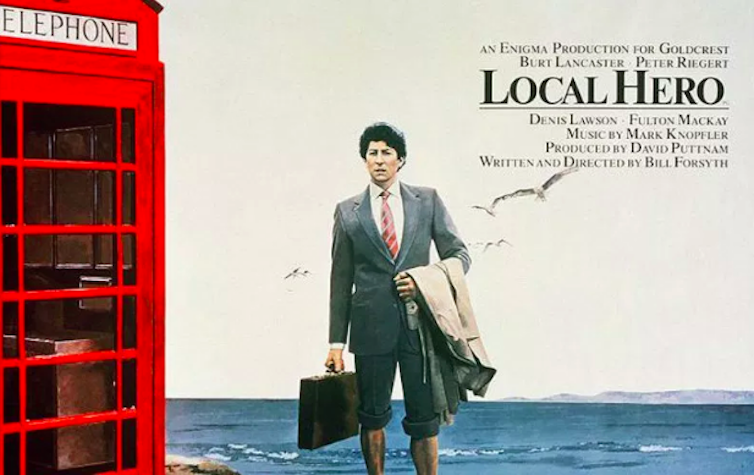
Writer/director Bill Forsyth was born in Glasgow so he was well-positioned to create this love letter to Scotland. Big oil executive Peter Riegert, who lives a precise, antiseptic and singular life in Houston (he prefers to do deals at arm’s length – “I’m a telefax man”) is sent to a small fishing community in Scotland to buy up the land for a new refinery site. Before his journey, the company’s quirky owner and amateur astronomer, Burt Lancaster, enlists Riegert to canvass the skies in search of a comet. Riegert finds a quaint, simpler life that slowly transforms him from uptight businessman to wistful boy, entranced by the scenery, pace and wonder of the coast.  The charm of the film is embodied in the village, in the film’s quieter moments, and as it infatuates Riegert, so too the audience.

There are so many good things about this picture it’s hard to catalogue them all. Riegert manages to be deadpan yet earnest, never once lapsing into sarcasm or condescension, and Forsyth writes him in a manner that never requires an explanation of or ode to his disquiet. The villagers are not schmaltzy local yokels, with a song in their heart and a lesson to impart.  Rather, they are a slightly cynical bunch who received intel on the purchase and they – like anyone – lust for the big payoff.  As Forsyth has acknowledged, “I don’t want you to think there was some deliberate message. You talk about the plot, but was there one? I mean, people can look back and say, oh, this was all an early one about the environment or whatever, but it didn’t happen that way, or if it did it was accidental. I’m not political, either in film or personally, and I don’t really do plot, and certainly don’t aim to broadcast a ‘message’. I suppose I like to tell stories. And if I’m writing a film, and don’t really have a plot, then you have to fill the screen with something, so I try to do so with characters, incidents.”

The picture features an impossibly young Peter Capaldi (In the Loop, World War Z), hilarious as Riegert’s liaison.  His high dudgeon when the town’s cook serves him an injured rabbit he has saved from a road injury is priceless.  Mark Knopfler also contributes a restrained, moody score that melds his guitar licks with a little-80s Vangelis synthesizer.

Apparently, Forsyth only got a few bites at the apple in Hollywood, the last one being a poorly reviewed Robin Williams vehicle, Being Human.  It’s a shame.  Forsyth was interviewed by The Guardian in 2008, which correctly called Local Hero “one of the quiet must-see little masterpieces of British cinema.” 

Ranked 21 on AFI’s Top 100 films, Roman Polanski’s Chinatown opens with credits that suggest the romanticism of Rebecca, but what follows is a more cynical noir that reveals a pre-war Los Angeles rotten to its core. Private investigator Jake Giddes (Jack Nicholson) becomes embroiled in a snoop case that appears to be standard infidelity but the job embroils him in discovery of political corruption and sexual depravity. His client, Faye Dunaway, is hiding a horrible family secret that involves her titan of a father, John Huston. Giddes carries scars of his own, stemming from his time in the police force working Chinatown.

Polanski’s film is meticulously shot, presenting a classic LA that is mesmerizing and foreboding. Robert Towne’s script is taut and engrossing. Still, this is an overpraised film. Towne chooses to keep the demons of Giddes’ past a secret, which is ultimately unsatisfying, given how critical he is to the story. Moreover, the love affair between Nicholson and Dunaway is unconvincing, mainly because Nicholson is giving a modern performance, whereas Dunaway is mannered and breathlessly dramatic, as if they were working separate material. Nicholson is updating the tough talk of Sam Spade while Dunaway is embracing the older form. When Nicholson puts himself on the line for her, the act seems forced and inauthentic, and the closing line has the faint whiff of the Gouda.

A fine film but certainly not the 21st best picture of all time.

image
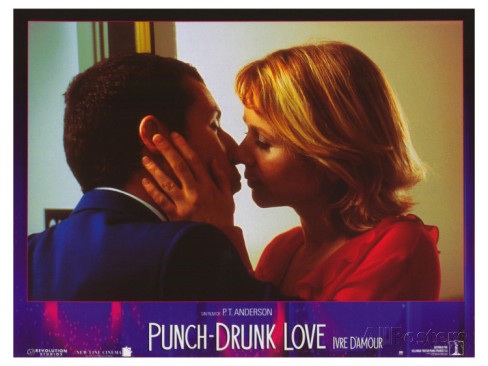
Paul Thomas Anderson’s follow-up to the sweeping, first-half brilliant, second-half excessive Magnolia could not have been more different, a love story between the closed-off, anger-ridden Adam Sandler and the co-worker of one of his sisters, Emily Watson. Sandler, a small business owner in LA, is clearly plagued by inner demons, exacerbated by his extroverted, intrusive and brutal sisters (he has 7 of them and when they are not calling him incessantly at work, embarrassing him in front of Watson, or blithely trading in his confidences, they are recounting humiliating stories from his youth). Sandler seeks connection and unfortunately, he does so via the use of sex call operation run by Phillip Seymour Hoffman that specializes in blackmail and harassment. This crisis comes down upon Sandler right as he has forged a true, real connection with Watson.

Sandler’s movies are almost all bad, but I’ve come to the conclusion that he’s running a welfare program for each and every one of his comedian compatriots, and for this, he should be commended. When he receives good material, such as this film, The Wedding Singer and Funny People, he suppresses his twin excesses – the goofy and the superior smart aleck amongst the goofier – and presents nuanced, multi-dimensional characters. Here, his character is immediately sympathetic, just this side shy of a man who has voices in his head, and I was reminded of Bradley Cooper’s more realistic character in Silver Linings Playbook. Both yearn for normalcy. The former almost appears to have wasps around his head, while Sandler has them in his insides. Watson calms his roil, and her presence allows him to use his anger management issues in a positive fashion.

As much as the film emphasizes Sandler’s struggle, the moments of peace he earns in his time with Watson are poignant.

Anderson’s visuals put Sandler’s torment under a glare, constantly stalking him, scoping him.  Similarly, the music is a staccato of plinking piano, off-kilter horns and rolling drum, giving the viewer a sense of what it must be like to be in Sandler’s head. The shots and clatter only settle when Watson appears, and in those moments, Anderson re-creates the whirling, lightheartedness of a traditional romantic comedy from the 40s.

A truly unique picture, it’s unlikely you’ve seen anything like it.

Not just historically inaccurate, but outright hostile to the facts, Mel Gibson’s Braveheart matches its puerile fantasy with cheezy romance, splatterfest battle scenes, and cartoonish characters (Patrick McGoohan plays King Edward Longshanks as Ernst Stavro Blofeld and Peter Hanley plays his son as if auditioning for La Cage Aux Folles). Then, there is the James Horner score that brings you back to the ye olde highlands of Busch Gardens. Naturally, like Robert Redford and Kevin Costner before him, the Academy honored an actor turned director with an undeserved Best Picture statuette. But Ordinary People and Dances with Wolves are merely pedestrian. Braveheart is bad through and through and often, excruciatingly so.

On the plus side, when you decide to rewrite history, you might as well give William Wallace a haircut straight out of Duran Duran.

Image result for braveheart

Hungry like the wolf for FREEEEEDOOOMMMMM!!!!!”

Related image

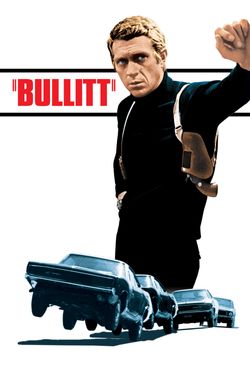
Peter Yates’ 1968 detective thriller is a medium cool exercise in restraint propelled by the quiet, canny performance of Steve McQueen as Detective Frank Bullitt. Bullitt is assigned to protect a mob witness by an ambitious D.A. (the charmingly oily Robert Vaughn) and the case goes bad.  As he tries to salvage the situation, we learn about Bullitt’s relationships, methods and character, all with less than 100 words from our hero.

The picture is notable for an over 10 minute car chase in and around San Francisco that alternates between chess match and smash up derby. The effect is mesmerizing, an automotive ballet, which is in many ways more impressive than William Friedken’s bid to outdo it in The French Connection three years later (the car chase wasn’t the only influential set piece; Bullitt has an extended chase scene on foot through the exterior of the San Francisco Airport, which Michael Mann reprised in Heat).

The film also demonstrates why Steve McQueen is such an icon. The debates over his ability to “act” are legitimate.  The “movie star versus actor” discussions invariably arise in consideration of  impossibly macho or attractive leads, such as Wayne, Eastwood, Redford and Gibson. Debate aside, McQueen so resonates on screen that discussing his skills as a thespian seems like quibbling. There is something to be said for understatement (Tom Cruise may just be learning that now).  McQueen can do more with a look or eating a sandwich than a lot of folks can with a soliloquy or stem winder.  When he is poorly imitated (see the catatonic Ryan Gosling in the wildly overrated Drive or George Clooney in The American), his charisma and presence become all the more apparent.

Yates’ film is a bit of a jazz riff and some of his shots are annoyingly showy, but hey, it’s 1968 San Francisco and Bullitt’s girlfriend is the chic and arty Jacqueline Bisset.  So, he gets a pass.

Blood Simple (1984) - Rotten Tomatoes

Al Pacino once explained his attraction to a project by tapping his finger to his temple and noting that the director had “a vision.” That director was Warren Beatty and the project was the bloated Dick Tracy.

The Coen Brothers’ first film demonstrates a true vision, one that has it flaws, but one that is unique and rich, through and through – a sun-drenched, steamy Texas noir potboiler that evokes Jim Thompson and James Cain, updated to include a very sly, dark humor. The plot takes numerous turns, but it is simple in its introduction.   A bartender (John Getz) runs off with the wife (Frances McDormand) of his boss (Dan Hedaya), who in turn puts a lethal private investigator (M. Emmett Walsh) on their trail. Walsh introduces the story in voiceover:

“The world is full of complainers. But the fact is, nothing comes with a guarantee. I don’t care if you’re the Pope of Rome, President of the United States, or even Man of the Year–something can always go wrong. And go ahead, complain, tell your problems to your neighbor, ask for help–watch him fly. Now in Russia, they got it mapped out so that everyone pulls for everyone else–that’s the theory, anyway. But what I know about is Texas…”

What follows is the twisted story of these four characters against the backdrop of a flat, unforgiving landscape. The photography is stunning, and the camera-work is assured, if sometimes a bit too film school flashy (as McDormand and Getz confront each other at his front door, a slo-motion newspaper crashes against it to startle us all). Composer Carter Burwell started his partnership with the Coens on this film, and his score is primarily solo piano, sparse and ominous.  Hedaya is the embodiment of the cowardly cuckold, but he seethes, almost a human pressure cooker. Walsh’s sleazy dick is repellant. He almost oozes, but he’s canny, using his “aw shucks” as a way to get the advantage. Getz and McDormand are weaker. Getz just doesn’t project and while I respect the Coens for eschewing the expected sultry, bored kept woman, McDormand’s character requires some charisma and sexuality to justify the risks taken on her behalf. She’s never been that kind of actress and here, she’s flat.

Still, this is a very good film, and as a debut, it’s all the more impressive, presaging the brilliance of Fargo.

As biopics go, this one is near the top, a sprawling, textured story of fame, fall, passion and redemption that can’t avoid cliche’ but never nears cheezy.

Joaquin Phoenix doesn’t embody Johnny Cash so much as incorporate him into his own personality. His performance feels roots deep rather than technically proficient (see Jim Carrey as Andy Kaufman in The Man in the Moon for an example of the latter), enhancing your investment in Cash’s plight. Phoenix does all his own singing and his vocals are deeper and more frenetic than those of Cash (his live version of “Cocaine Blues” at Folsom Prison is more fevered and angry than Cash’s performance), but they feel real, especially when matched with Reese Witherspoon’s brassy bid as June Carter. James Mangold’s film is ostensibly the love story of Cash and Carter, but his attention to the music is the glue to the picture. The supporting players in the roles of Jerry Lee Lewis, Roy Orbison and Elvis are all musicians also doing their own singing. And the scene of Cash’s audition is notable not only for the tension and the dissertation on what goes into music people want to listen to, but for the riveting turn of Dallas Roberts as producer Sam Phillips. Talk about making the most of your one scene.

If there are weaknesses, one is self-inflicted and one is a related injury. Cash’s demons stem from the childhood trauma of his brother’s death, after which he felt unworthy and guilty. His father (Robert Patric) didn’t help when immediately after the funeral, he yelled at a grieving little boy, “he took the wrong son!” Now, perhaps this happened. But even if it did, the screenwriter has to jettison historical accuracy for good sense. It’s too incredible, too jarring, to believe. Worse, it became the centerpiece joke of the Walk the Line spoof, Walk Hard: The Dewey Cox Story.

The effect is much like that of Austin Powers on the prior James Bond films, changing them in your mind from occasionally fun and campy to wholly ridiculous. Another nit is the unfair treatment of Cash’s first wife, who is portrayed as so shrill and shrewish it feels unfair.

The Coen Brothers have taken many stabs at comedy, with varying results. On the plus side, Raising Arizona is a wild, human cartoon, with performances by Holly Hunter and Nick Cage approximating Claymation; Intolerable Cruelty an amusing facsimile of a screwball comedy; and The Big Lebowski a whimsical, goofy trip. The Ladykillers however, was a dud, The Hudsucker Proxy an ornate mess, and A Serious Man too self-loathing to support interest, much less humor.

The best of the bunch, by far, is 2008’s Burn After Reading, a crisp, tight ensemble that melds madcap and cloak-and-dagger. The story is too elaborate to capsule, but the tale – intersecting vanity, intrigue, the CIA and personal fitness – is almost besides the point. The actors could have let the serpentine twists carry the day, but to a person, they invest silly characters with pathos and even gravitas.  George Clooney’s philandering everyman goes from loathsome to sympathetic and is almost admirable in his pathological ardor. John Malkovich’s rage-filled civil servant stands in for all us “surrounded by idiots”, especially when we are introduced to his brittle, scheming, focused wife (Tilda Swinton). Frances McDormand’s novice blackmailer is annoyingly hilarious yet almost tragic in her desperate fights for companionship and against the ravages of time. And Brad Pitt, as her dim but lovable accomplice, should have been nominated for Best Supporting Actor. There is not a scene he doesn’t steal, and the one where he must contend with a maniacal Malkovich is one for the ages.

“You think that’s a Schwinn.”


To Live and Die in L.A. - The Best Movie You Never Saw

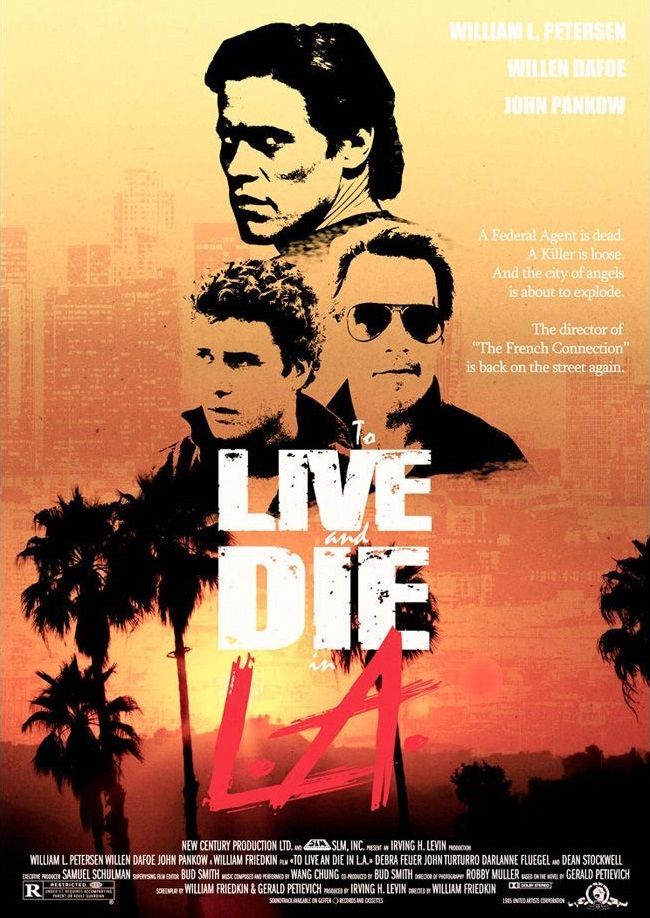
During AFI’s recent LA Modern series, we were hoping to see William Friedken’s picture on the big screen, but schedules wouldn’t permit, so we settled for a Netflix rental.  Friedken’s modern crime noir tracks Secret Service agents William Peterson and John Pankow as they hurtle through a maelstrom in an effort to bag master counterfeiter and killer Willem Dafoe. Their zeal seals their doom.

It’s a more than competent thriller, with a few problems.  Peterson’s adrenaline junkie character is too one-dimensional, and the screenplay (written by a former Secret Service agent and Friedken) can be awkward in its reliance on hyper machismo, tough guy patter (“You want bread?  Fuck a baker!”) or even hackneyed (“I’m getting too old for this shit”).

But the second half of the movie overcomes a lot of the weaknesses of the first, as Peterson and Pankow are revealed to be screw-ups in the ultimate clusterfuck. As they dig deeper, Pankow enlists the aid of Dafoe’s own lawyer, a confident but slightly oily Dean Stockwell, and it is a revelation to see the portrayal of a cop who is probably took weak for the job. Meanwhile, Dafoe proves less efficient than his stylish demeanor suggests and his errors eventually become too much to bear. Dispensing with super cops and criminal masterminds results in a much more satisfying picture.

Friedken also includes a boffo car chase after a heist gone bad in homage to his own The French Connection, and all of his action scenes are non-stylized and immediate (my son observed that the flick has to hold the record for guys shot in the face at 3). Notably, and in keeping with its inclusion in the AFI series, the locations are almost exclusively sun-bleached and bleak industrial LA, a rarity.

Finally, if you were a Wang Chung fan, this is your movie.

I normally watch this during the holidays, but it is now on the HBO rotation, and I’ve been enjoying it in segments. Based on Nick Hornby’s novel (Hornby was also one of the screenwriters), this is a fine story of a charming but vacuous and intentionally isolated rich guy (Will, played by Hugh Grant) who corrals a neighborhood boy into playing his son in the hopes it will impress a romantic target. He is soon brought into the boy’s world, against all his selfish instincts.

This is a very funny film.  The comedic set pieces (including a harrowing talent show, the death of a park swan, and awkward support groups) are masterful.  The narrative is punctuated by voiceovers from Marcus or Will, and their observations are either hilarious or sentimental. The message is A Christmas Carol – no man is an island, and we are defined by how we treat each other, but for every sweet note, there is an arch counterpoint. My favorite is Will’s voiceover upon meeting Marcus’s earthy, liberal, disapproving mother, Fiona (Toni Collette) over lunch, where he lords his non-vegan ways by ordering steak while, in his mind, deriding her Yeti-like sweater.

About a Boy – 5 stars | filmvetter

Grant is usually reliant on an affected, stammering, faux-shy schtick (his performances in Notting Hill and Love Actually are of this stripe; cloying and relentlessly puppydog). But here, he’s pretty much a dick, playing Will as someone who enjoys a relationship only to the extent it provides him an opportunity or the solace of being kind-hearted. Once there is heavy lifting, he is out, as Grant explains:

Grant is really quite good in the role, especially upon the realization that he is worth nothing in this world. Nicholas Hoult plays Marcus with a sweet perseverance that never once smacks of child-actor manipulation, and Collette is truly vulnerable as Marcus’ crunchy, depressed mother, who is oblivious to the needs of Marcus, his desperation to save her, and the burdens she places on his shoulders.

It’s also heartening to know that poor, sweet Marcus

has grown up to date

Justice.