Archive

Tag Archives: reviews

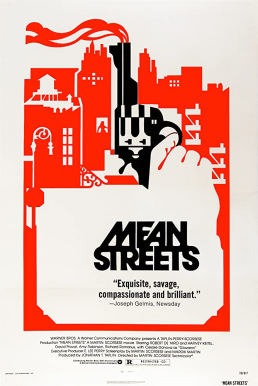
The obligation and title of Filmvetter is weighty enough, but to have so many omissions in what I should have seen, well brother, it’s a heavy burden. And boy, is this omission embarrassing. But up until a week ago, I’d never seen Scorsese’s masterpiece about a minor mob figure (Harvey Keitel) negotiating his ambition while fending off the crazy of his childhood friend Johnny (Robert DeNiro); grappling with his carnal desires, primarily with Johnny’s epileptic cousin Teresa (Amy Robinson), with whom he is having an affair; and reconciling his Catholicism with his life .

It’s hard to overstate the brilliance of the movie. Raw, pulpy, the picture positively oozes with verisimilitude. You can smell the violence in the air, always nearby, hovering, waiting. Keitel moves as a man with a mark on his back, trying to hold it all together while Johnny and Teresa make more demands of him. Yet his skills are such that you think, foolishly, he might just pull it off. In his little world, which feels like a few square blocks in the city with its own barbaric codes and uncrossable lines, he never stands a chance, not with the decency that proves to be his Achilles heel.

It’s all here for Scorsese: the handheld frenetic tracking shots, the spot-on use of music, the Catholic iconography, the bravura interludes:

The film is nothing short of transfixing.  It is also important to note that Mean Streets was the first true Scorsese feature. He had gone to Hollywood as the next hot thing, directing an underwhelming Boxcar Bertha for Roger Corman, after which John Cassavettes rebuked him with, “You’ve just spent a year of your life making a piece of shit.” This jewel followed.

So, that’s my lapsed Catholic confession. I might as well go all in.

Of the AFI Top 100 films, I have not seen the following:

City Lights

Sunset Boulevard

The General

The Grapes of Wrath

Annie Hall

It Happened One Night

The Gold Rush

Nashville

Cabaret

A Clockwork Orange

Sunrise: A Song of Two Humans

Swing Time

A Yankee Doodle Dandy

I don’t know if I’ll get to these, and even if I do, honestly, what hasn’t been written about them?

Stay tuned.

On Tubi.
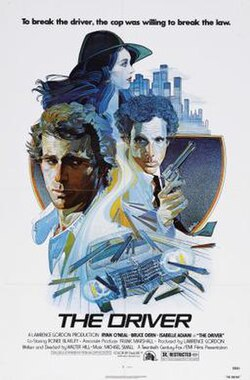
I am a Walter Hill enthusiast. His scripts for The Getaway and The Drowning Pool are cynical, economical, and hard-boiled, but also, deftly clever. Hill is not showy, so his dialogue never comes off as anachronistic or stilted.

He’s also adept with historical pieces. The Long Riders is a gem, his best and most complete film.

48 Hours is overlooked, known more as the vehicle for Eddie Murphy’s ascent, but in its brutal bones is a real beating heart, as can be seen in Mike from Better Call Saul imploring Jack Cates not to give up his gun.

Then there is The Warriors, a cult classic that somehow elides silliness despite a premise that would make lesser men chortle. Hill guides the Warriors through a comic book hellscape of late 70s NYC where all the other increasingly ridiculously attired gangs (one wears suspenders and roller skates, another sports black-and-white face paint and baseball bats) are after them and you can’t get enough.

Lin Manuel Miranda is readying it for Broadway.

Hill often gets the slightly condescending moniker “workmanlike” but to me, that just mean he merits more work.

He has some lazy slop (Extreme Prejudice), paycheck work (Red Heat), and ill fits (Brewster’s Millions), but even later in his career, he directed two rich historical features (Wild Bill, Geronimo: An American Legend).

So, what of The Driver, Hill’s second feature as writer-director?

Sadly, if ever there was a tonal failure made toxic by terrible casting, this is the picture.

Ryan O’Neal is a stud driver, a man-with-no-name type who is the hire for robbery getaways. He drives. That’s it. We know nothing of him, other than his simple rooming house existence (he lays in bed fully clothed with the door open) and uber-laconic (or catatonic) demeanor.

I can think of no worse choice for this role. Whereas Steve McQueen’s grim humor or Charles Bronson’s hard stoicism might have worked, O’Neal doesn’t look cool. He looks like he has a fever and slight indigestion.

Hill could have paired the dyspeptic O’Neal with a romantic interest, someone who could draw him out, ala’ Jacqueline Bisset in Bullitt. Instead, he chose 23 year old Isabel Adjani, and she underplays the already monotone O’Neal. She’s barely more than a mannequin and nothing said between the two is interesting or illuminating. Bruce Dern, as the dogged detective obsessed with catching O’Neal, must have sensed the sleepy miens of his co-stars, and he counters with a manic performance bordering on the comical. It doesn’t help that he sports Napoleon Dynamite’s hairstyle before it was ironic.

It’s not all casting. Hill seems bored by his story halfway through the flick, and things happen that make you go, “Wait. How did the cops know where the money would be? Did I fall asleep?”     

The car chases are fine, if routine and overlong. There is no sequence that approaches the virtuoso chases in The French Connection, Bullitt, or The Seven-Ups.

Pretty bad. On Youtube.

I recently watched a documentary on the estimable Sidney Lumet and ran across one of his later films on one of my streaming queues. Q&A is a New York City potboiler about an idealistic and ambitious young assistant district attorney (Timothy Hutton) and his quarry, a corrupt, enigmatic detective (Nick Nolte). The film opens with Nolte executing a perp and planting a gun. Hutton is brought in by the district attorney (Patrick O’Neal) to investigate the shooting.  It is clear from the outset that Hutton is supposed to play ball and not dig too deep. Hutton is more than happy to perform the task.

Then Hutton has lunch with an old mentor (Lee Richards). Hutton tells Richards that O’Neal is tough but fair, and decisive.

Richards, who once worked with O’Neal, does not tell Hutton to be wary. Rather, he tells him that O’Neal is a prick, a racist and an anti-Semite who manufactures evidence to put people in the electric chair. He also tells Hutton a story. In one case, O’Neal went to go witness one of the black defendants he railroaded “fry” at Sing Sing, and when he came back to the DA’s office, he crowed about it, telling the other lawyers that he sure hoped that the guy was guilty. Hardy har!

“Fuck him. Now and forever,” says Richards. 

To this, Hutton eats his corned beef sandwich. He does not object. He does not ask any questions. He does not say to his mentor, “Come on. You must be exaggerating.”  He just eats. 

Then Richards tells Hutton that the case he drew is all wrong, suggesting that Nolte must’ve planted a gun, because the decedent never carried a .45, only a .32. 

More chewing of corned beef.  Ho hum.

That is when I turned this intolerably stupid film off.

22 minutes in. 

We already know from the outset that Nolte is dirty, and now we know that the district attorney is even dirtier and everyone knows Nolte is dirty.

At 22 minutes, we also know that the script is dogshit and the Hutton character may have been lobotomized.

On Tubi.

Like Walter Hill, Peter Hyams is a workmanlike director with several efficient and entertaining movies under his belt. Capricorn One, Outlander, and Narrow Margin are crisp commercial fare with occasional flair. While Hyams does not have a masterpiece in his oeuvre, unlike Hill (The Long Riders), after watching this flawed debut, you feel one was in there.

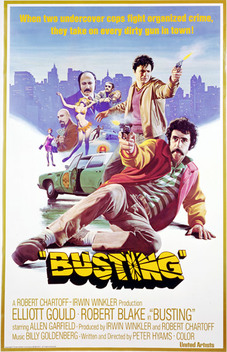
Busting tracks its’ early buddy cop kin, Freebie and the Bean, but swaps out the verbose and frenetic James Caan and Alan Arkin for the dour and focused Elliott Gould and Robert Blake. The latter are two LA vice detectives who are becoming disillusioned with the pointlessness of rousting massage parlors, gay bars and porno shops. They become obsessed with a corrupt crime lord (Alan Garfield) who thwarts their work by paying off the cops, politicians, and judges.

It’s an uneven picture, sometimes quietly comic, then discordantly violent. The camera work, however, is superb. In particular, a stunning extended foot chase shootout through Grand Central Market at night. The dolly shot was filmed decades before the pool scene in Boogie Nights and the nightclub scene in Goodfellas and was made all the more difficult because the leads flow, dodge and weave through dozens of terrified extras screaming and crouching as bullets whiz about. The scene is not an anomaly. Hyams has a deft feel and eye that portended a more illustrious career.

Other notes. 

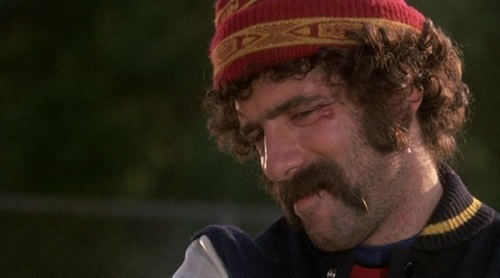
Gould is an LA detective who wears a Washington Redskins winter hat, which is cool. 

As with Freebie and the Bean, if they showed this politically incorrect picture at Oberlin, the student body would revolt.

The movie is also said to have been the inspiration for Starsky and Hutch

During the shootout, Hyams does things often ignored in such scenes. People fall. An innocent bystander get shot. And lo and behold, both Blake and Gould reload their revolvers. 

Quentin Tarantino’s take:

On Amazon. 

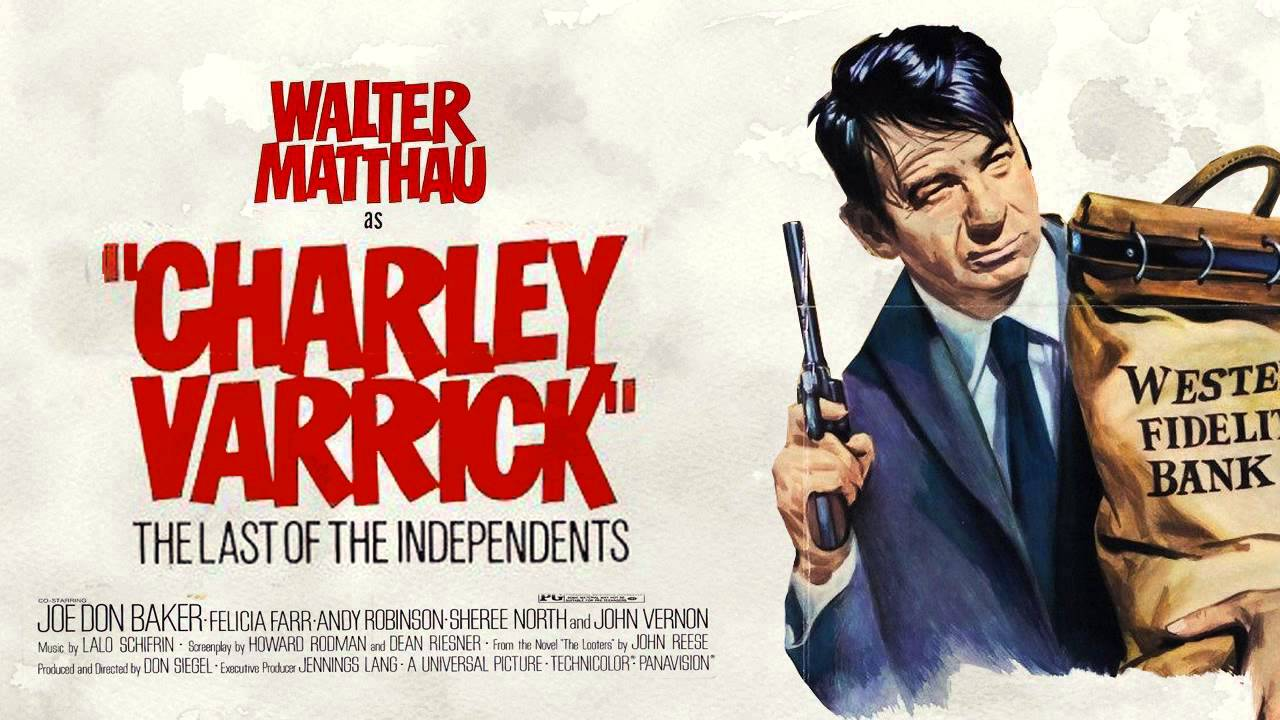
A smarter than average bank robber (Walter Matthau) robs a small town New Mexico bank that, unbeknownst to him, is holding $750,000 in mob money. The job goes terribly bad. Matthau’s wife and wheel woman (Jacqueline Scott), an accomplice, and several deputies are shot dead. When Matthau and his surviving accomplice (Andrew Robinson, the memorable Scorpio Killer in Dirty Harry) hear on TV that the robbers only got away with several thousand dollars, he susses out the massive shitstorm that is coming in the form of mob money man John Vernon and enforcer Joe Don Baker. Matthau has to figure out how to survive the ordeal.      

This is a competent and serviceable Don Siegel (Dirty Harry, Escape from Alcatraz) crime flick. The picture is no great shakes but it has its moments, and the cat-and-mouse machinations of the characters are compelling.  

The picture is also very very weird.

First, apparently, in the 70s, all you had to do to a woman to transform her to putty in your hands was rough them up a bit. Sure, 1960s James Bond could get away with it, but a majority of those women were play-acting for the post-coital kill, so, all’s fair. Not so the women of this flick. A slap or threat, and they positively melt. Times change.

Second, there are several actors who should not be kissing women in film. John Wayne is probably number one. Brad Pitt, with his blasé remove, is three.  Matthau has got to be number two. In this flick, he kisses his dead wife on the lips – twice – and then he beds a live woman (Vernon’s executive secretary, Felicia Farr). It’s hard to tell which woman was less enthralled. Matthau looks ridiculous and uncomfortable.

Last, has there ever been a luckier actor than Joe Don Baker? “Oh, so, you want me to be a quirky Southern tough guy who can exude jovial sarcasm followed immediately by swift violence?  I can do that.” And a career playing basically the same role – and playing it well – followed.

On Amazon Prime.       

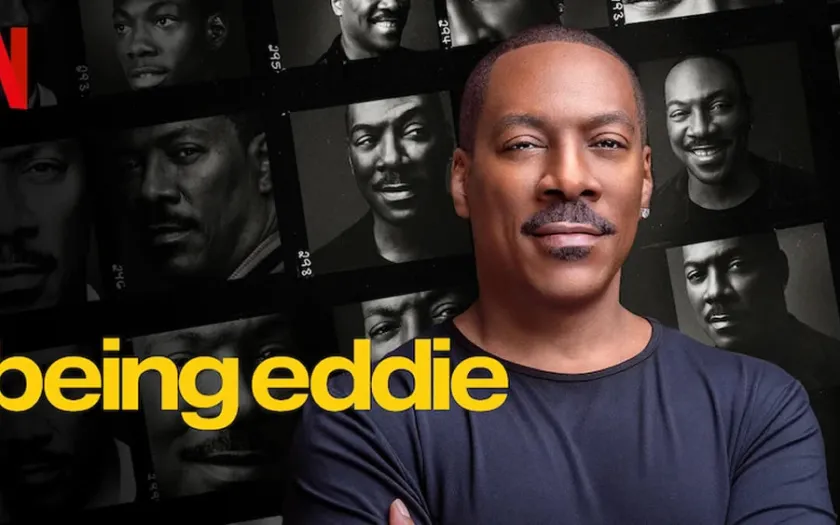
Did you know Eddie Murphy was funny? That he always knew he would be a star? That he inspired many a black comic? That he was angry at SNL when David Spade took a dig at him?

If so, you’re good to go.

If you insist on watching this tepid Netflix documentary, prepare for what seems to be a retrospective about a funny man that inexplicably does not show him being all that funny.

There is no delving into his craft, no in-depth discussion of how he matured in stand-up or established himself in films.

There are no great stories of Hollywood.

There is, really, very little insight at all. 

Rather, Murphy is presented as a pleasant, sensible fellow, a bit of a homebody, guarded but practiced in the art of bland recollection.

It is all very boring, and made more so by the likes of Arsenio Hall, Michael Che’, Dave Chappelle, Kevin Hart, Jerry Seinfeld, Pete Davidson, Jamie Foxx, Chris Rock, and others basically blowing so much elegiac smoke up Murphy’s ass that he seems more demigod than man. Which is weird when you see his oeuvre laid out, and his sermon on the mount is playing so many characters in The Nutty Professor who can fart.

Look, I love Eddie Murphy. When I saw 48 Hours, I was blown away by his presence and the interplay with Nick Nolte, a buddy cop flick with real comedic teeth in the articulation of racial tension. I also thought Murphy was overlooked in Dreamgirls, though I was pleased to see his Best Supporting Actor nomination and was dying to hear him explain how he evoked a true falling star, and one with substance abuse issues, given his own clean living. As for his unheralded classic, Bowfinger, all we get is how it was nice for him to walk to lunch with Steve Martin.

The endeavor is generic, Commissar-approved dreck through and through. Though I give it 1 star for a few clips of Eddie’s hilarious, now deceased brother, Charlie.

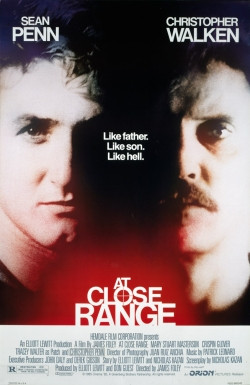
James Foley’s (After Dark, My Sweet) film never really decides what it wants to be, a family drama or a crime picture. Foley eventually throws up his hands and cedes everything to the captivating Christopher Walken.

Not the worst of decisions. Walken plays a minor rural Pennsylvania crime kingpin. He skippers a crew that includes his two brothers and a few other hardened locals. They do heists, car thefts, drugs, and, if necessary, murder, a lethal but merry band of crooks.

Walken’s estranged son, Sean Penn, is a townie still living at home with his mother and grandmother. The women smoke, glare at the TV and otherwise exude the hopelessness of abandonment and near poverty. Penn, seeking something more, falls in at-first-sight love with Mary Stuart Masterson, who looks his way as he cruises at night around the town square. It is for her that he joins up with his father’s crew, to “get out while we’re young … ’cause tramps like us …” 

When Penn realizes murder is part of the gig, he splits from Walken, gets arrested working his own “baby” crew (which includes his brother Chris and a very young Crispin Glover and Kiefer Sutherland), and is incarcerated. There, the cops work on him to fink on his father.

Here, the film becomes ridiculous. Walken, paranoid Penn will flip on him, kills nearly every one of the kids working with Penn, even though Foley does not show them to be integral enough to his operation to be much of a threat. He also rapes Stuart Masterson, which makes even less sense if the plan is to bring Penn back into the fold. Penn comes out of jail, tries to make a run for it with his gal, fails, and in a rushed, abrupt ending, testifies against his father (for 30 seconds).

That’s that.  Lights up.

None of it makes much sense, but the thematic indecision is worsened by gross character underdevelopment. Walken is a charming sociopath, but how did he get here? No clue. We even have his ex-wife moping about, warily eying the establishment of a relationship between Walken and Penn. Foley, however, suffices to use her as a sad totem, so we don’t get any insight into Walken from her. Similarly, Penn needs a Daddy. Then, on a dime, he doesn’t. As he is near mute for most of the picture, we are left to guess as to what he has missed and the basis for his immediate and strong moral stand. Stuart Masterson is looking for something, but as she and Penn prepare to light out for the territories, leaving her house, she is clearly from money. So why is she hanging with these lowlifes? Unexplored.

The film has its strengths. Foley’s feel for rural Pennsylvania is strong. The fields and woods are spooky and forbidding at night. During the day, the crappy cars and houses, the dead-end bars, they all contribute to Penn’s lust for some way to get out. Foley shows just how big and cold this country can be, the kind of place that swallows you up and tells no tales or grinds you down little by little. The murder spree is indelible.

As noted, Walken is the picture, and in every scene, he is riveting. Penn, however, goes low to Walken’s high, and the effect is somnambulant. He’s in with Daddy, then immediately out, then annoyingly internal until his final nose-to-nose with Daddy, all to the conclusion that he needed a better Daddy.

The story is apparently based on a true criminal, Bruce Johnston Sr.

Another note – at the time of the picture, Penn was married to Madonna. She had a song for the picture which then became extended to the soundtrack. It is synthy, mid-80s fare, better suited to Vision Quest or even Risky Business. It has no business being near this gritty movie.  Sure, I joked about Springsteen above, but his music would have been pitch perfect to the film.

On Amazon Prime.

My dive into the crime films of Amazon Prime gets deeper.

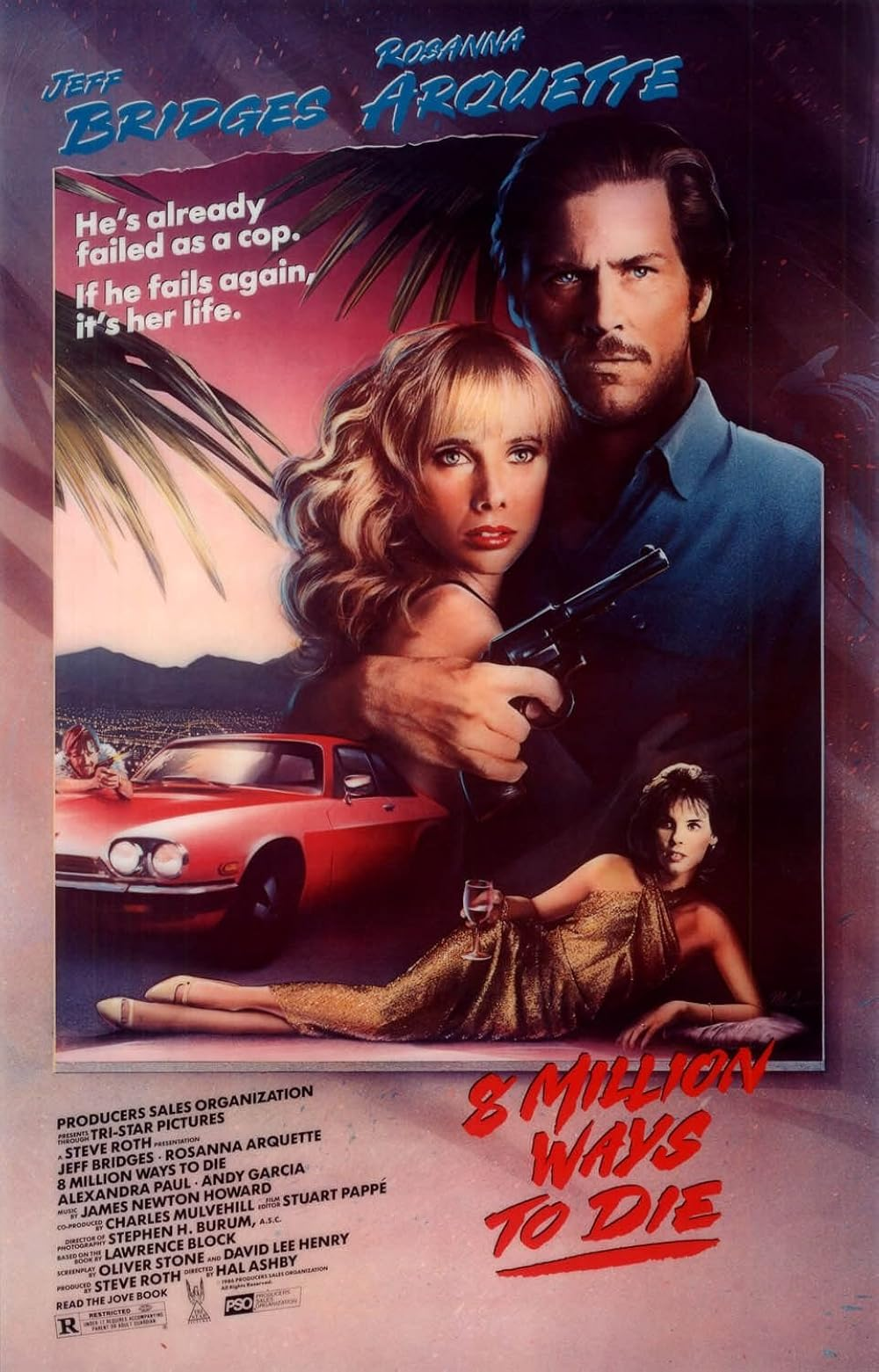
I was intrigued by this flick because I like Jeff Bridges, the movie was an early Oliver Stone screenplay (a co-write), and it was one of last films directed by Hal Ashby (Shampoo, Being There, Coming Home).

I don’t have 8 million reasons to hate this film, but I have 8.

  1. Stone’s writing is garish and ridiculous. In an attempt at modern noir, we actually hear Bridges say, in voiceover, “Yeah, there are eight million stories in the naked city. Remember that old TV show? What we have in this town is eight million ways to die.” A high-priced call girl ups the retch factor, cooing to Bridges, “the streetlight makes my pussy hair glow in the dark. Cotton candy,” as she lays out ala’ Ms. March 1978. Maybe these gems were penned in the source novel by Lawrence Block. I don’t know. It doesn’t land here.
  2. Hal Ashby knows about as much about film action as I do taxidermy. It’s not like Coming Home’s Jon Voight was doing wheelies in his chair. This picture, which involves blackmail and cocaine and kidnapping and gunplay, is as flat and unimaginative as professional bowling.
  3. As the alcoholic ex-cop, Bridges seems as confused by the script as the viewer. There are times you feel, his eyes alone, Bridges is communicating, “What the hell is this thing about, again?” When he’s involved in a bad shooting, and guns down a man in front of his family, he says, “Shit.” Like when you don’t get a good score in Skee Ball. And then, “Fuck,” like when you leave home without your iPhone.
  4.  Bridges is also forced to play an alcoholic who relapses; he does this by reprising his role in Thunderbolt & Lightfoot, after he was thunked on the head.
  5. The plot is inane. Bridges is lured into the entire mess because the girl with the cotton candy pubic hair heard his name from the friend of a friend.
  6. Roseanna Arquette is terribly miscast as the sultry, misunderstood, cynical call girl with a heart of gold. Arquette is cute best friend, quirky neighbor.  She ain’t this.
  7. The supporting turns are execrable.  Andy Garcia is so over the top (see below), it’s hard to stop laughing, as if he saw Scarface and said, “Hmmmm. Pacino seems a bit muted.” Another actor, Randy Brooks, nemesis to Garcia, is also near-lunatic. Brooks scurried off to TV after this flick, only to return as the worst actor in Reservoir Dogs six years later. The cotton candy girl is the badly miscast Alexandra Paul. She is the girl next door. Here, she’s over-the-top coquettish, as erotic and worldly as Georgette in The Mary Tyler Moore show. To be fair, this may not all rest on the actors. From the analysis below, “Ashby’s style of directing, according to Block, involved letting the actors do takes where they exaggerated their emotions, before reining them back in for subsequent takes. Since Ashby did not have final cut, some of these ‘dialed up’ takes were used in the film.” Seems like all of them were.                 
  8. Scenes are interminable. The characters scream the same thing at each other ad nauseum or endlessly posture. Behold, the longest, loudest, most idiotic confrontation scene in film history:

Apparently, I am not alone in my derision and confusion.

An unheralded gem, powered by the stellar performances of Robert De Niro and Robert Duvall, as brothers Dez and Tom Spellacy. De Niro is a rising monsignor in post-WWII Los Angeles, archbishopship on the horizon. Duvall is a tainted LA homicide cop. De Niro is ambitious and technocratically capable but fast becoming disillusioned with the moral elasticity necessary to keep the church afloat, including being chummy with the likes of a scumbag real estate mogul (Charles Durning, who seeks the church as beard for his corruption and literally sweats menace). Duvall is trying to make up for his past as a bagman. A Black Dahlia-esque murder connects them, and as De Niro wrestles with his faith and station, Duvall agonizes over his past crimes and his attempt to make amends by going after Durning, damage to his brother be damned. We learn about their secrets and upbringing in an L.A. that has a Chinatown-vibe.

One of my favorite fiction authors, John Gregory Dunne, wrote the screenplay with his wife Joan Didion, and it exudes verisimilitude and deftness. The script allows De Niro and Duvall significant space and what they do with the quiet moments is poignant. There is always tension, but also, always an intimacy and a shorthand that speaks to shared happier, or unhappier, times. Their exchange on their uber-Catholic mother is emblematic:

Tom Spellacy: How’s ma? Is she still eating with her fingers?

Des Spellacy: Well, she says the early Christian martyrs didn’t have spoons.

Tom Spellacy: Tell her they didn’t have Instant Cream of Wheat, either.

It’s a cheat to cite a review within a review, but Vincent Canby’s is so dead on and conclusive, I’ll transgress:  the film is a “tough, marvelously well-acted screen version of John Gregory Dunne’s novel, adapted by him and Joan Didion and directed by Ulu Grosbard who, with this film, becomes a major American film maker. Quite simply it’s one of the most entertaining, most intelligent and most thoroughly satisfying commercial American films in a very long time.”

If there is a problem, it is third act, which could have used a few more moves to get to the ultimate revelation. But I’m hesitant even in that criticism for fear that any nod to beefing up the procedural would have taken away from Grosbard’s patience and care with the characters. The film not only showcases De Niro and Duvall, but takes time to establish real connections between De Niro and an older priest (Burgess Meredith), who De Niro puts out to pasture because of the latter’s interference and sermonizing (“I’m not a man of the cloth, I’m a man of the people”); Duvall and a whorehouse madame (Rose Gregorio) with whom he had some sort of ragged relationship until she took the fall for his crookedness and did a stint in jail (“I need you like I need another fuck,” she spits at him); and Duvall and his partner, Kenneth McMillan, who shakes down Chinese restaurants for his retirement motel and tries to keep Duvall out of trouble (“You know who we’re going to pull in on this one? Panty sniffers, weenie flashers, guys who fall in love with their shoes, guys who beat their hog on the number 43 bus. What? Do you think I’m gonna lose any sleep over who took this broad out?”). The blunt and cynical nature of the dialogue aside, Dunne and Didion never stoop to hackneyed tough guy patter, and they counterbalance with real tenderness. The train station scene where the parents of the murdered girl meet with Duvall to take their dead daughter home is one memorably piercing example.       

Just added to Amazon.

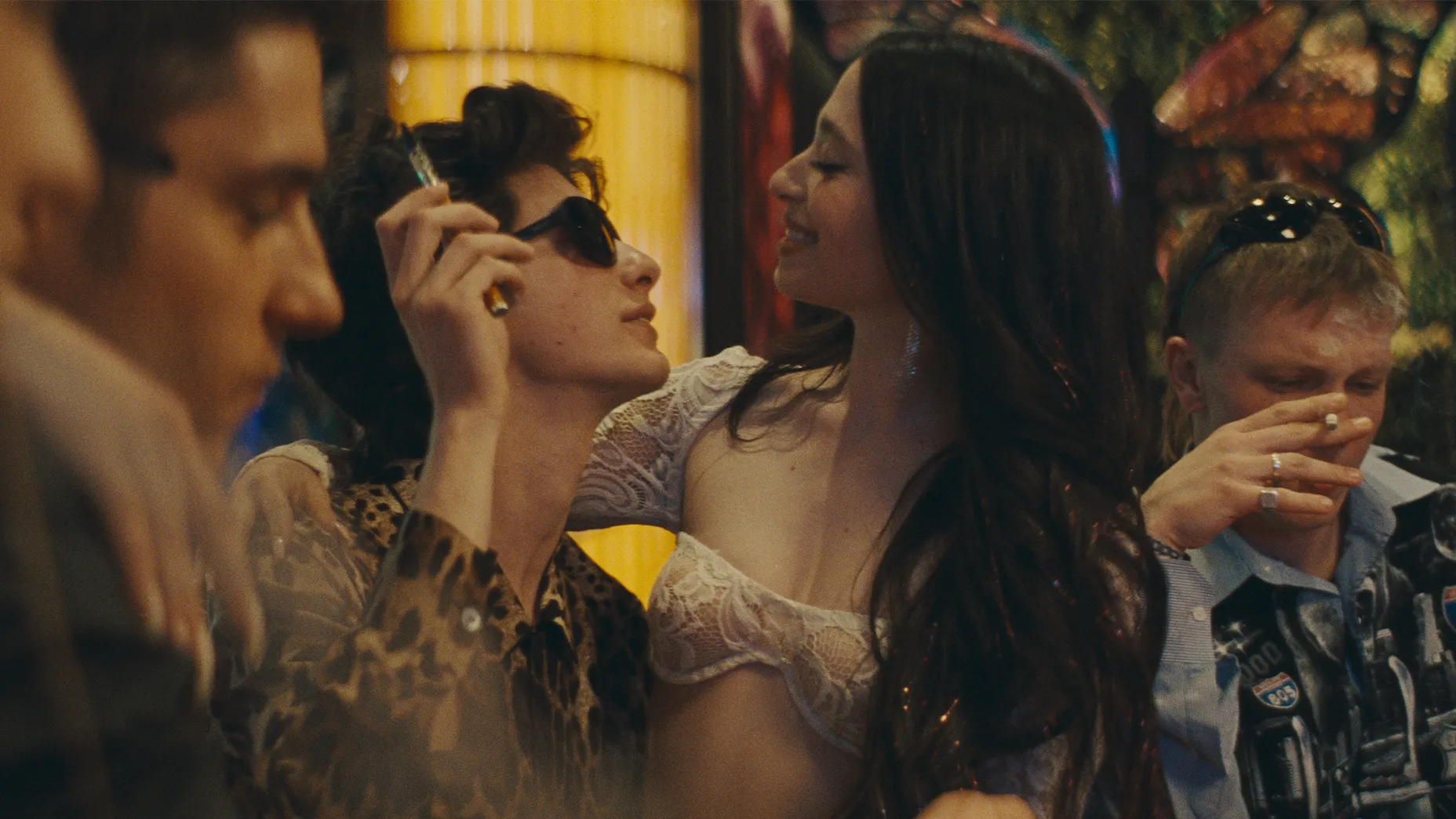
Sean Baker (The Florida Project) delivers an uproarious, tender, unexpected love story, powered by a rollicking, unyielding performance from Mikey Madison as the lead (last seen by me as one the Manson gals of Once Upon a Time in Hollywood, the one who Leonardo DiCaprio ultimately dispatches with a flamethrower).

Anora, or Ani, works as a stripper at Headquarters in Midtown, a sanctum where she peddles her wares (simple company, lap dances, and in the private rooms, maybe more). She supplements her income as an escort. Sex is transactional, which does not devalue her ability to enjoy it, but the financial nature permeates the act such that her brittle nature seems organic rather than a symptom.

Then, she meets her knight in shining armor, Vanya, the child-like, fun-loving son of a Russian oligarch (Mark Eydelshteyn), who blows through Daddy’s rubles like water, rents her for the week, and then, after a bender in Vegas, marries her. This obviously does not go down well, and the oligarch must rely on his Armenian reps in New York to rectify the situation. They are not quite the Eastern thugs of lore, and their intercession is more Three Stooges than John Wick.

As they say, hilarity ensues.

As does much more. The connection between the man-child Vanya and Anora is in part about money, yes, but you can feel a spark, and even though Anora remains focused on the payments, soon, she fancies herself Julia Roberts. This is love, and he is hers, even if he just started shaving. You know that it cannot be, but Baker has you as enthralled as Anora, on pins and needles, hoping against all hope and reason. When the forces of power intercede, they are partially represented by an Armenian thug Igor (Boris Yurasov) who reveals a gentle, protective disposition and an alternative approach, one that Anora fights with the same verve and fire she exhibits to hold on to Vanya.

Ultimately, there is a reckoning, a declaration of independence, and a new beginning, but before we get there, Anora and her unwelcome coterie of Armenian minders endure an evening that harkens to Scorsese’s After Hours.

As with The Florida Project, Baker has such command of place, you feel immersed. Here, due to the whirlwind nature of the story, Baker’s pace is not Florida languid, but Big Apple urgent and exhilarating. It’s a joy ride with heart.

Madison, Eydelshteyn, and Yurasov all deserve Oscar nominations, and my fingers are crossed, as Madison and Yurasov received nominations for the Golden Globes.    

I have many films to see, but this is currently the leader in the clubhouse for best of the year.