A subtle, surprising movie that avoids many of the easy choices and gratuitous emotionalism of similar “coming home” war films. Woody Harrelson received a deserved nomination for best supporting actor. Harrelson played the role of grizzled Army vet who leads a notification duo to inform relatives that they have lost a loved one in Iraq, but it’s a Jeff Bridges kind of role – old, broken down, folksy, etc . . . No real stretch. Other nominations should have gone to Ben Foster (Six Feet Under, Alpha Dog, 3:10 to Yuma) as his new partner, recently returned from Iraq after being wounded, and Samantha Morton (In America, Minority Report) as the wife of a KIA who they inform.
4 stars
The Hurt Locker – 4 stars
![]()
A strong war film that came under a little fire for its fantastical representation of one soldier’s experience in Iraq, circa 2004. Admittedly, the action sequences of the ace bomb detonator (Jeremy Renner) are over-the-top. But the sequences are exciting and director Kathryn Bigelow gets the blinding, washed-out and arid feel of urban Iraq right.
Renner, who was nominated for Best Actor, is the weakest link, but only because he is too broadly written. He’s just a cowboy and to the extent he resonates, it is solely as reflected by his team members (Anthony Mackie and Brian Geraghty), who are both awed and mighty pissed off at his danger-junkie b.s. Their performances, as guys who just want to do the job well and get the hell out, are riveting.
By the end, the film finds it necessary to spell out what is painfully clear, from the opening Chris Hedges quote (war is a drug) to a stateside scene with Renner and his baby where we hear Renner tell the infant (because we might not have gotten it) that he only loves one thing (danger). Oy vey.
Bigelow’s direction, however, is expert, she can masterfully craft battle with all of its hectic bursts and then tedious monotony. Better, there are very short cameos by actors who can present forcefully with little screen time (Guy Pearce, David Morse, and Ralph Fiennes).
Moon – 4 stars
Moon. This is a deservedly celebrated film by David Bowie’s son, who must have been influenced by “Space Oddity” and Major Tom as a child. It’s a thoughful, affecting story about a man finishing a 3 year stint on the dark side of the moon (where, in the future, we get all of our energy) and preparing to come home to his wife and child. He discovers an awful secret. It’s a tight, engrossing picture and Sam Rockwell is particularly good as the main character, Sam, who is aided by his computer ala’ 2001, voiced by Kevin Spacey.
Inglorious Basterds – 4 stars

I was teed up to hate this picture, given how juvenile and overpraised Quentin Tarantino’s last offerings were (the Kill Bills, and the truly execrable double feature, drive-in homage). Those movies were the toasts of critics yet belied all of his worst qualities – excess, self-regard and juvenilia.
But Tarantino returns to his sweet spot here, with crackling dialogue, edgy and beautifully crafted set pieces, and a brisk pacing, comic but not immature. It’s a clever and exciting popcorn film, anchored by the actor who plays the primary Nazi baddie (Christoph Walz) with such relish, you near root for him.
Great fun, and yet, highly intricate and accomplished. The shootout scene in the French cafe’ basement is one of the most tense and exciting I’ve ever scene on film. A worthy Best Picture nominee.
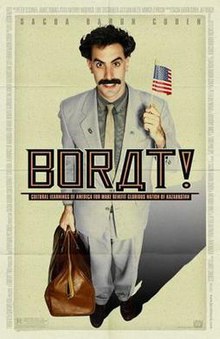
Borat – 4 stars
![]()
Funny to the point of tears, but a testament to the generous nature of Americans. My fear was that Sacha Baron Cohen would be cruel to his subjects, but the film is, perhaps unintentionally, quite the opposite. Yes, the rubes and dudes and New York toughs can be less than politically correct, but what they lack in modern manners they make up for in their easy acceptance of this bizarre, crude faux immigrant who tests the limits of all patience. As Christopher Hitchens noted:
Americans are almost pedantic in their hospitality and politesse. At a formal dinner in Birmingham, Ala., the guests discuss Borat while he’s out of the room… agree what a nice young American he might make. And this is after he has called one guest a retard and grossly insulted the wife of another… The arrival of a mountainous black hooker does admittedly put an end to the evening, but if a swarthy stranger had pulled any of the foregoing at a liberal dinner party in England, I wouldn’t give much for his chances.
Big Fan – 4 stars

Patton Oswalt gives a helluva performance in this grim film, one that surprises given the picture’s refusal to have its main character validated or bettered. Oswalt is a 34 year old Staten Island parking garage attendant who lives with his mother and eats, breathes and exists for the New York Giants. He is so committed he writes prose in his booth, in particular, a speech he will give nightly to a sports radio station on behalf of his team. When he sees his idol (a Giants linebacker), it is like seeing a super hero, and he follows him to a strip club, where things go horribly wrong.
This is a strange and quirky picture, and it rises on Oswalt’s fealty to his bizarre code. His loyalty is not to himself, his lone friend (the always down-to-earth and believable Kevin Corrigan, who at this juncture should be in The Supporting Character Actor Hall of Fame), his family, or justice, but always to the team, which is nuts but also endearing, and given his loneliness, understandable. Oswalt is actually quite moving in a “Travis Bickle meets Jim Rome” way.
You also get a different view on why certain people smash their TVs, brawl, or become hysterical when a team to which they have no foundational connection other than geography loses.
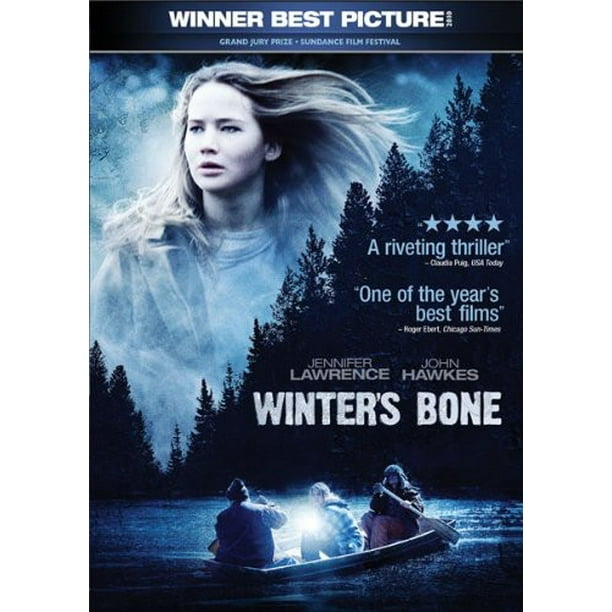
Winter’s Bone – 4 stars

A rough, gritty picture about a girl (Jennifer Lawrence) living a bleak life in the hills of Missouri. Her father is a crank processor who put up the family land for bond and has gone missing. Accordingly, it is up to his daughter to navigate the familial bonds and brutal reality of her surroundings to find him and convince him to appear for trial. Her journey takes us to the core of a back hills and backwards society that in many ways echoes the distrustful, independent and dangerous world of Walter Hill’s The Long Riders, although the setting is modern day. The film also echoes James Foley’s At Close Range, giving an insight into a foreign criminal world in our rural midst. Gripping and authentic, and Lawrence gives one of those assured performances that portends stardom.
The King’s Speech – 4 stars

If not exceptional, the film is a competent and beautifully appointed period piece. The Oscar nominations of Colin Firth and Helena Bonham Carter are well deserved. As King George, Firth encapsulates the insecurity and terror of a man thrust into power who fears he will be found wanting, or even an imbecile, such is his speech impediment. As Firth’s wife, Bonham Carter deftly plays the role of droll, drawing room observer as well as the rock that supports her husband. Their bond is authentic.
The interplay between George VI and his speech therapist (Geoffrey Rush) is funny and very well written, and the introduction of modern psychology to the era’s infantile methods of treatment for the speech malady is interesting.
Guy Pearce also contributes as the callow Edward, leaving his brother and country in the lurch for that Baltimore tramp.

The Kids Are Alright – 4 stars

Julianne Moore and Annette Bening are two middle-aged lesbians with two teenage children in the midst of a mid-life crisis. The kids decide they want to meet their father (Mark Ruffalo, who is actually just their sperm donor). Very funny, occasionally poignant, and refreshingly devoid of the kind of politics you might fear from such an endeavor. Bening is particularly good as the controlling, more responsible member of couple, the uncool drudge, trying to keep it all together in competition with cool “new” and fun, breezy Moore.
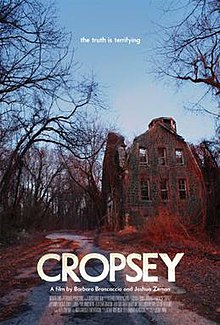
Cropsey – 4 stars
![]()
Cropsey focuses on an accused Staten Island child murderer in the 70s and 80s. The documentarians do a very nice job of melding a crime story (there is, in fact, an accused killer) with a child’s sense of the bogeyman. During my childhood, there was a myth of the house where a father slaughtered his family (in fact, a grandmother had a heart attack), there was the deranged retarded man who dragged kids to the woods (no, but he did sell newspapers), and, of course, the exorcist boy was in the vicinity and went to my high school for a short time. Cropsey brings back those good ole’ creepy days.