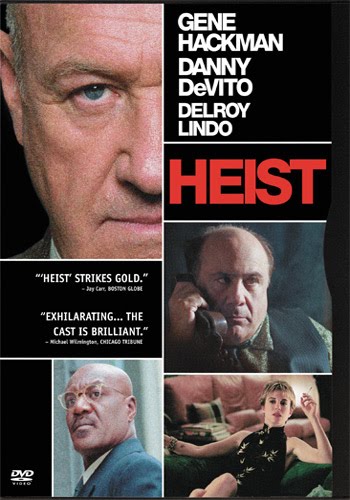
David Mamet-speak can be taken to parody.
But why bother when you have a David Mamet written and directed film that does it for you?

David Mamet-speak can be taken to parody.
But why bother when you have a David Mamet written and directed film that does it for you?
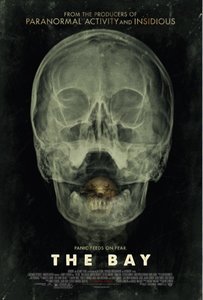
The Bay had a few things in its favor going in. Director Barry Levinson is no slouch. The “found media” approach is appealing to me, as is evidenced by my affection for the Paranormal Activity movies. And the premise – a small Maryland town is plagued by a bacteria that cuts through it on a July 4th celebration – had promise. Two factors, one personal to me and the other a colossally stupid decision on Levinson’s part, resulted in my turning the flick off about a third in.
I’ll take my lumps first. I can handle slashers (if not gore porn), serial killers, unsettled ghosts, zombies . . . you name it. But a plague of pustules and vomiting blood and boils? A very, very hard ask. And then, there were afflicted children. Damn, this better be good.
It wasn’t. Levinson was more interested in making an eco-horror tract than an actual scary movie. As such, once his narrator (a witness to the July 4th disaster who is video-blogging) introduces us to the source of the plague (apparently, chicken shit being run off into the Chesapeake Bay), we learn that near everybody but our narrator dies. At the outset! She even points out people in the collated footage and says, “he dies” and “he doesn’t survive the day.” So, within 15 minutes, the audience knows the source of the killings and pretty much who dies.
Hell if I’m going to sit through pustules and boils on children under such circumstances.
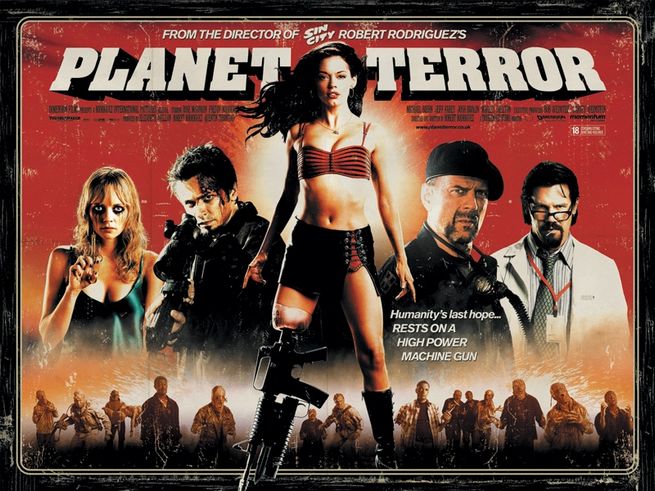
In evaluating Robert Rodriguez’s half of the Grindhouse double feature experiment/debacle with Quentin Tarantino, one has to remember that the insistence on an homage to 70s drive-in crap was an insurmountable mistake.
A small Texas town is beleaguered by zombies, created by a military experiment gone bad. All hell breaks loose. Not really funny and not at all terrifying, mostly boring, often disgusting. But in the ultimate structural pass, Rodriguez is not responsible for a lazy, uninteresting film, because he is patterning his movie on same. Along with Tarantino’s Death Proof, there are few greater examples of Hollywood hubris.
Entertainment Weekly called it “crazily funny and exciting tribute to the grimy glory days of 1970s exploitation films” that “will leave you laughing, gasping, thrilled at a movie that knows, at long last, how to put the bad back in badass”, proving that some critics will go to great lengths for fear of seeming uncool.
It was, however, kind of gutsy to cast a near midget (Freddie Rodriguez) as the strong, silent hero.

A Bataan death march of a rom-com. Let me count the ways.
1) As secondary characters in Knocked Up, Paul Rudd and Leslie Mann were welcome respites from the manic upheaval of the leads. As primary characters, they outstay their welcome very quickly. Mann is a limited, mannered actress without a shred of heart. ready-made for a brief comic turn. She is also director Judd Apatow’s wife. He lightens her wispy load by primarily having her repeat the lines of other characters quizzically or allowing her to deliver others with a lilting, sing songy chirp. He also uses his daughters, the younger of whom is charming and genuine and the older of whom is as grating and one-note as her mother. Nepotism . . .bad! Rudd’s goofy, sweet smarm is tiresome. If there was ever an actor who needed to play a villain quick, it’s Rudd.
2) The film is annoyingly haphazard. Hey, we just ate a marijuana cookie. Hey, we’re going to the doctors and we have witty things to say as they explore the orifices of our just-turned-40 bodies. Hey, look at my asshole, honey. Hey, we have fathers (John Lithgow and Albert Brooks) who do their schtick and both have young children. Hilarious!
3) It feels as if Apatow let Mann and Rudd riff and most of it lays as flat and listless as a Navy base whore. Apatow definitely let Melissa McCarthy improv in one of the laziest, saddest scenes ever. How the hell do you make Melissa McCarthy unfunny?
4) Apart from a few laughs provided by secondary characters, this movie is drudgery, and the leads do and say things so odious or stupid that not enough bad things can happen to them to satisfy the viewer.
5) If this couple has been married for 14 years, one of them would have to have been in a coma for 13 of them to avoid a murder-suicide.
6) The movie is over 2 hours long. Brutal.
7) The film confuses sexual frankness and obscenity with the funny, as if saying cock and fuck a lot does the trick.
8) A primary source of marital discord is money, but these people live in a mansion and want for nothing, so they are particularly punch-able.
9) As Dana Stevens of Slate so nicely put it, the flick is as funny as a hemorrhoid.
On the plus side, it features a nice Ryan Adams song. but alas, he has aged as well as the flick.
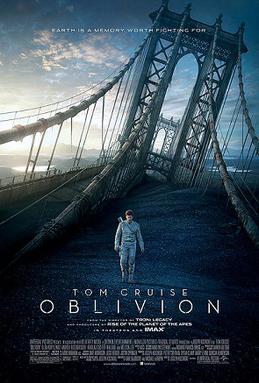
There has been a cataclysmic war. Aliens destroyed our moon leaving earth ravaged and uninhabitable. While we won the war, the victory was pyrrhic, as we were forced to abandon earth to a few remaining aliens. In our new home in space, we need seawater, and the massive machines that suck it up are threatened by these aliens. Accordingly, earth is monitored and protected by drones, which are monitored and maintained by Tom Cruise and Andrea Riseborough.
But all is not as it seems. Spoilers follow.
1) the aliens threatening the seawater suckers are actually humans, and earth is actually habitable.
2) we didn’t win the war. We lost. Cruise and Riseborough are clones of two humans captured by the aliens. Hence, Cruise is always having dreams and flashbacks of pre-war earth. Which makes him curious. Which makes him increasingly problematic. Which makes him singularly the worst choice an alien could make to monitor earth.
The choice of clones who can dream and recollect their past is the least of the aliens’ ineptitude. When Cruise turns, and flies his vessel into the alien planet/ship, the alien (voiced by Melissa Leo) —
A. Allows Cruise to come into the planet/ship even though he’s clearly gone rogue
B. Detects that Cruise is nervous and lying, but does not detect that he has brought a big bomb with him.
Cruise actually seems to be telegraphing how ridiculous the film is as he acts. His face says, “Wait. This makes no sense. Does this makes sense to you?”
It’s also sloppy. When our Cruise gets bashed in the face, he gets a cut on his nose and a scrape on his cheek. Later, he meets one of his clones and pretends to be that clone. So he goes back to a Risenborough clone, and she doesn’t say, “hey, what happened to your face?”

On the plus side, Riseborough is beautiful.
 My son makes me watch pieces of these Adam Sandler films now that they are on regular cable rotation, in what appears to be some kind of social experiment. I watch the movies, which masquerade as comedies, and I don’t laugh. My son watches me intently. If I do laugh, which is rare, he mocks me for having laughed. At the end of the endeavor, we shake our heads, and then, when we have time to reflect, we ponder larger questions:
Does Adam Sandler make the least funny movies ever made?
It’s hard to come to any other conclusion but yes. Add Bedtime Stories, Billy Madison, Click, Just Go With It, The Waterboy, Little Nicky, 50 First Dates, You Don’t Mess with the Zohan, Mr. Deeds, I Now Pronounce You Chuck and Larry, Bulletproof, Anger Management, and Big Daddy. There’s barely a laugh in any of them, though I am partial to some parts of Happy Gilmore, and The Wedding Singer was cute. But that was 1996 and 1998, respectively.
Does Sandler have any films that reflect well on what purports to be his talent?
Two. He was apt in Paul Thomas Anderson’s overlooked Punch Drunk Love, and Judd Apatow’s underrated Funny People was greatly reliant on his ability to play himself (a mega star comedian who makes crappy movies).
Is there a major star less deserving of his success?
I’m a fan of Clint Eastwood’s line in Unforgiven (“deserves got nuthin’ to do with it”), but, no.
Is there a major star more loyal to his pals?
No. If there is one thing consistent in Sandler’s films, other than being unfunny, it is the presence of his regulars: Allen Covert (15 Sandler films), Jonathan Loughren (13 Sandler films), Peter Dante (11 Sandler films), Rob Schneider (10), Blake Clark (9), Nick Swarsdon (8), Steve Buscemi (7) and Dennis Dugan (7 as actor, 8 as director). So, while his movies suck, he is certifiably a loyal and true friend.
Why is Sandler fascinated with sex and old women?
I won’t catalogue all the examples, but randy oldsters getting it on with folks 50 years their junior is heavy in his oeuvre. Sandler may have noticed it himself and course-corrected, because in That’s My Boy, he went the other way.
Which film goes the longest without eliciting a laugh?
Grown Ups, which is a little surprising, because Sandler is supported by a bevy of other semi-accomplished comedians. But there really isn’t a hearty laugh in this picture, and hooray! Part Two is in post-production.

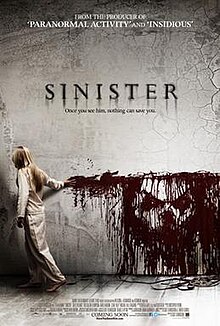
Ethan Hawke is a true crime writer on the down slope who moves his wife and kids into the house where the grisly murder of another family occurred. His m.o. is to solve the case or to at least highlight the screw-ups of the authorities.
The funny thing is, he doesn’t tell his wife or two children he’s moved them into a house where grisly murders occurred, he finds Super 8 film of the grisly murders and the grisly murders of numerous other families from other areas throughout the country in the attic, his teen son is flipping out from night terrors, his lights don’t work, there are horrible thumps in the attic (and a snake and a scorpion), he sees a creepy dude in the yard who he has also seen in the Super 8 films, and his kids start drawing gruesome images of dead children. And his wife sleeps the sleep of a thousand nights, even though, during the day, she’s understandably nervous about this whole situation.
And he stays because “This could be my In Cold Blood.”
So his wife stays.
Implausible, predictable and stupid.

After taking my boy to Django Unchained, we started a concerted effort to watch the Tarantino catalogue. When he asked about the Kill Bills, I told him they were films made primarily for children, but were so violent, if cartoonishly so, that children probably shouldn’t be allowed to watch them. Of course, Tarantino is a visionary, having anticipated an audience of children of a wider breadth than I could have imagined, scads of 24 to 36 year old slacker geeks, still living in Mom’s basement, deathly terrified of footballs and baseballs and supervisors and real women, banking retirement on mint condition comic books, their only meaningful relationships having been 2 to 3 minute internet trysts with the various Jenna Jamesons cranked out of the San Fernando Valley with increasingly worrisome regularity.
This is their crack cocaine.
Volume 1 is stylish, meticulous, occasionally funny and inventive but a mostly tiresome abscess of a picture. As if any enjoyment derived from the first picture required penance, Volume 2 is that contrition.

I could only bear 20 or so minutes of this student picture. Written and directed by Mark and Jay Duplass, this is a movie that represents the dark side of “independent” film. Jason Segal plays a 30 year old stoner who . . . lives at home. Ed Helms plays his brother in exactly the same style as his Andy character on The Office. Their mother, Susan Sarandon, suffers them both as they are tasked to buy her wood glue.
Alas, she suffered them longer than I. The script is pretentious, the set-up uninviting, the direction (the Duplasses are addicted to an ostentatious jump zoom) self-indulgent and the plot random, all sins that cannot be expiated by deeming it “quirky.”
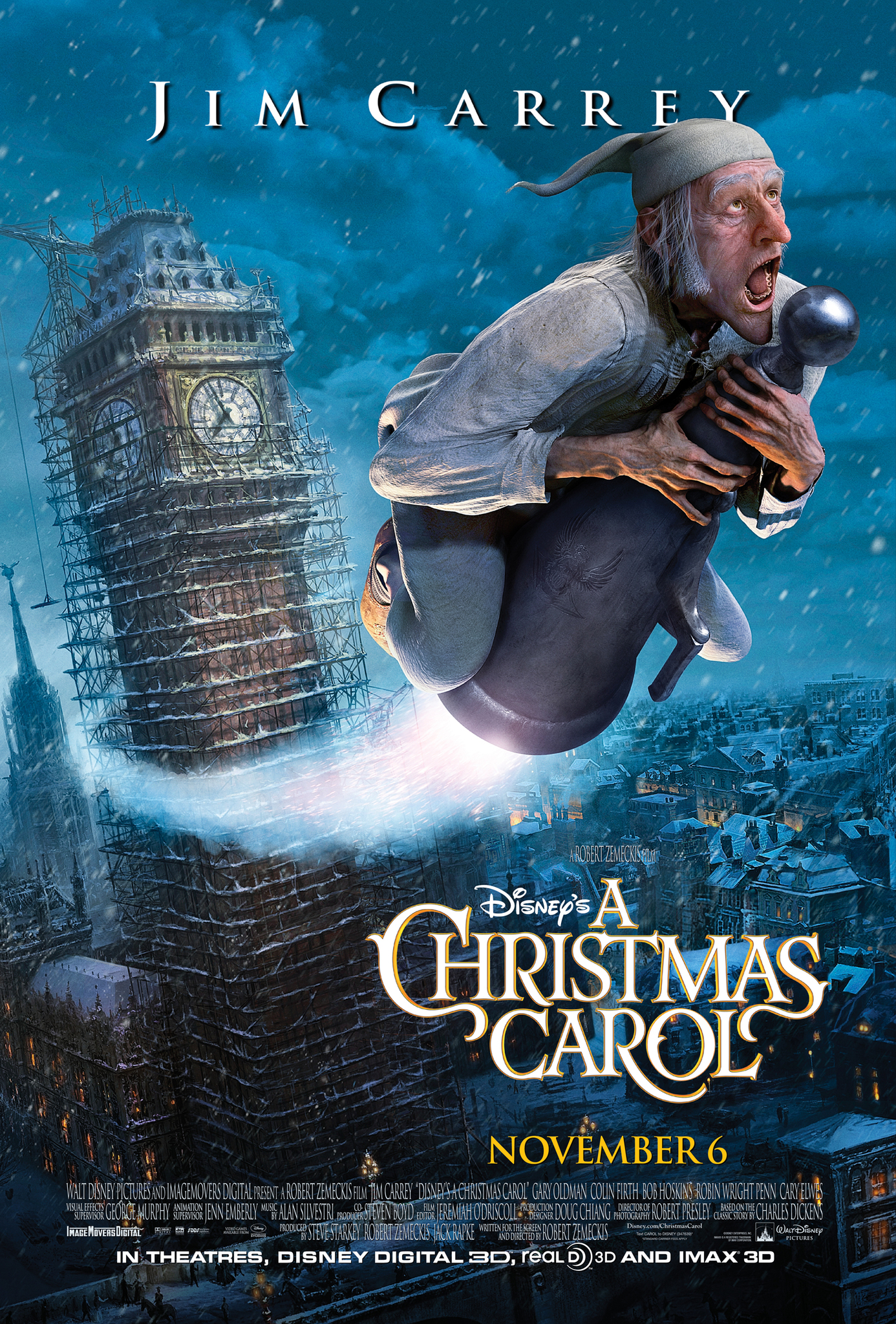
Take a classic Christmas tale, animate it in the creepy Polar Express method, cast Jim Carrey as Ebeneezer Scrooge, drain the tale of any nuance or subtlety, make the ghost of Christmas past child molester creepy and Marley so horrifying his jaw falls off, and dramatize it in such a manner that you fault cartoon characters for overacting, and you have a Robert Zemeckis holiday “classic.” The only redeemIng feature is the guilty pleasure you’ll get when you imagine how terrified a child in the theater would be during this family film. Grotesque.

