Archive

Genre

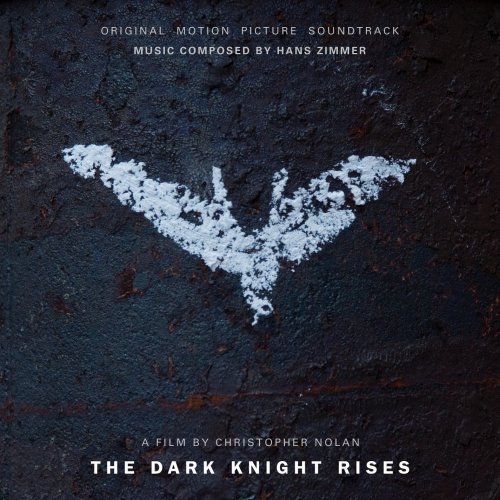
Christopher Nolan’s last entry to his Batman trilogy closes the story out in satisfying fashion and even leaves room for the rise of Robin (Joseph Gordon-Levitt) should Warner Brothers need a fiscal stimulus in the future. The story is the same as the prior two pictures. A reluctant Bruce Wayne/Batman (Christian Bale) is drawn back into the fray when his beloved Gotham City is threatened. This time, the threat comes from Bane (Tom Hardy), a muscular beast who wears a mask not unlike a greyhound. Much like The Joker, Bane seeks to test the mettle and morals of Gotham.  Bane’s appeal is Occupy Wall Street on steroids. The city is shut down and isolated by a moving nuclear device controlled by Bane, and as its time runs out, the new masters judge the rich and powerful (the villain Scarecrow plays Robespierre) while Bane’s henchmen and at least a certain portion of the citizenry pillage their apartments.

This is actually the most interesting part of the movie, begging the question, “Why does Batman dig this fickle town so much?” Unfortunately, less time is devoted to the occupation’s class warfare and the internal de-evolution of Gotham and too much to Batman’s angst, Alfred’s (Michael Caine) regret that Bruce did not have a normal life, and some corporate skullduggery that is . . . eh. The movie is also a bit too solemn. I applaud the darker, starker vision of Batman and his story, but we are, in the end, talking about a man who dresses up like a bat. With the exception of a few smart quips from Catwoman (a lithe Ann Hathaway), the movie is largely humorless.

Still, the action is first-rate and the big finish does not disappoint.


I could only bear 20 or so minutes of this student picture.  Written and directed by Mark and Jay Duplass, this is a movie that represents the dark side of “independent” film.  Jason Segal plays a 30 year old stoner who . . . lives at home. Ed Helms plays his brother in exactly the same style as his Andy character on The Office. Their mother, Susan Sarandon, suffers them both as they are tasked to buy her wood glue.

Alas, she suffered them longer than I. The script is pretentious, the set-up uninviting, the direction (the Duplasses are addicted to an ostentatious jump zoom) self-indulgent and the plot random, all sins that cannot be expiated by deeming it “quirky.”

Image result for The Perfect Storm crew

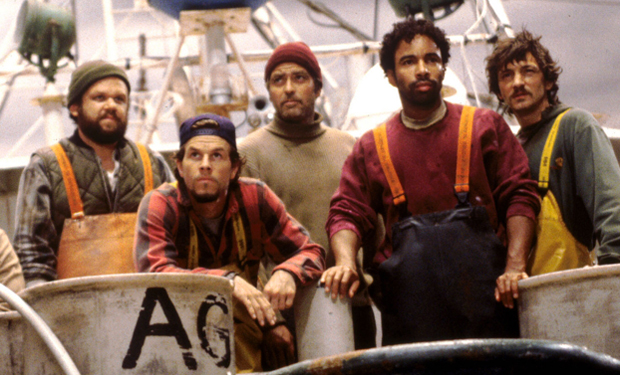
A Gloucester fishing boat captained by George Clooney goes out to get some fish and is soon in “the perfect storm.” Based on Sebastian Junger’s best-selling book about the fate of the Andrea Gail, the visuals are occasionally impressive but this is no Captain’s Courageous. The characters have a working class look but not the feel, and Clooney, who normally chooses well, is too damn dreamy to be the salty sea dog (he would have been better as the telegenic and wide-eyed meteorologist who captures the storm on his Doppler).

A better skipper would have been John Hawkes, the crewman furthest to the right above, who was nominated for an Oscar for Winter’s Bone and should be nominated again this year for The Sessions.

Junger’s book delved deeply into the precarious, brutal and chancy world of commercial fishing, but the script elects to show hard drinkin’, hard lovin’, misunderstood men of the sea while on land, and on the water, a boring band of brothers. The screenplay is either hackneyed or just plain dull.

Here’s a taste.

This is the the moment of truth”

“Billy, you’re not gonna’ like this but I’m gonna’ say it anyway.  You be careful.”

“I always find the fish.  Always.”

“Last night was worth it. There’s nothin like sleepin’ with you… just sleepin’… lyin next to you… all warm and sweet… Me wishin’ the mornin’ would never end.”

“You just caught me on a good night. I’m doing what I was made to do – and I’ve got a feeling I’m going to do it even better this time.”

And when crew member John C. Reilly is about to drown, he doesn’t scream or panic. Instead,  being a man of the sea, he says to no one in particular, “This is gonna be hard on my little boy.”

Hard on the audience as well, John.

There’s also a lot of forlorn women looking out the window for these good men of the sea (Diane Lane is completely wasted). Old Spice commercials are filled with greater verisimilitude.

Director Wolfgang Peterson made it to Hollywood on the strength of his gripping U boat drama Das Boot, but since then, he’s gone to sea twice, with The Perfect Storm and the even worse Poseidon.

He needs to stay on land.


This is the most un-Tarantinoesque of Quentin Tarantino’s pictures, faithfully adapted by the director from an Elmore Leonard book. A flight attendant (Pam Grier) gets caught shuttling money and drugs for a gun seller (Samuel L. Jackson) and caught in between the ATF (represented by Michael Keaton) and Jackson, she devises her own scheme to steal all of the latter’s funds while extricating herself from prosecution, enlisting the help of a bail bondsman (Robert Forster) in the process.

Tarantino’s pace is languid, his body count minimal, and the film features long stretches of sharp dialogue and silent character reflection. As Jackson’s scheming girlfriend and dim accomplice, Bridget Fonda and Robert DeNiro shine in a cast of apt, funny secondary characters. This is a clever and straightforward crime story.

Like the two Tarantino pictures that preceded it, Jackie Brown utlizes the seedy environs of Los Angeles to great effect (the bar and nightclub locales are particularly well-chosen). In an interview, Tarantino explained his changing of the locale from Miami to LA:

I don’t really know anything about Miami. I had never been to Miami before. One of the things Elmore Leonard has to offer in his novels, is an expert sense of both Miami and Detroit. He has got his Detroit novels and he has got his Miami novels. I can’t compete with that, and Miami is very hot! You don’t want to got there to shoot! One of the things I do have to offer is that same kind of knowledge about Los Angeles; partly in the area that the area is shot in, in the South Bay. It is not used that often. Tequila Sunrise used it a little bit, and a few other movies have touched on it a little bit. I am very familiar with that area because I grew up around that area. It is one of the things I could bring to the piece; an expert knowledge of that area, the way he brings an expert knowledge to Miami.

While Jackson uses the “n” word with his usual vigor, the script is refreshingly shorn of the showy pop culture references found in Reservoir Dogs and Pulp Fiction. It’s also a lot moodier than those pictures.

The plot, however, is not wildly intricate and certainly doesn’t justify a 2 and a half hour running time. Also, while Tarantino loves reclamation projects like John Travolta and David Carradine, Pam Grier and Robert Forster are bridges too far. Neither are particularly good actors, and while Forster’s wooden approach isn’t terrible given his role, Grier is key, and she cannot convey the emotions necessary to really bring the character home.

She was a B picture star in the 70s for a reason other than acting.

Lawless (film) - Wikipedia

I wonder how a movie like this gets made these days.  Tom Hardy, Jessica Chastain, and Shia LeBeouf can’t open it, the milieu (1930s backwoods of Virginia) doesn’t relate, it can’t be cross-marketed with a soundtrack, and the script, which could override all of the above if it were really good, is not.  In fact, there is not a memorable exchange in it. Hardy is colorless (he resonated stronger with a mask in The Dark Knight Rises), Chastain a stock dancer with a heart of gold, and LeBeouf showy, always “acting!”

The Bondurants are bootleggers in Franklin County, Virginia.  On principle, they won’t pay off the authorities, which smacks of stupidity more than honor or savvy business sense.  The authorities hire Guy Pearce to shut them down. Pearce must have sensed what a dreary endeavor this was to be, so he took on the affectation of a sexually dysfunctional dandy/germaphobe.

And he hates hillbillies.

Character developed!

Pearce goes too far, Hardy brings hell and damnation with him, and it ends with an underwhelming shoot-out and an interminable voice-over coda by LeBeouf.

Pin on Jinx

Even Halle Berry cannot save the ridiculously coiffed, barely interested Pierce Brosnan in the last of his four Bond films (her love scene with Brosnan makes you uncomfortable, like watching your father dance to a pop song at a wedding). Shockingly, even though Austin Powers had been released five years earlier, this Bond film amped up the cheese, provided a cartoonishly mwahahaaa villain (Toby Stephens), an ice fortress, Duran Duran video slow-motion, enough sexual double entendres to shame Roger Moore, Halle Berry uttering the line “read this bitch!” to baddie Rosamund Pike, and perhaps the most laughable stunt in the series.

Bond gains entrance to the villain’s lair because a guard takes a leak at an inopportune time.  You can hear the toilet flushing.  Hilarious.

Daniel Craig arrived in the nick of time.

The Queen of Versailles (2012) - IMDb

The gaudy nouveau riche feel, stately-meets-Glamour Shot portraits on the wall, grotesque adornment (including a gold throne), spoiled kids with Filipino nannies and a house staff of 19, stuffed dogs, fake tits, boasts of having gotten George W. Bush elected by illegal means (wink, wink), all presented within the framework of a family who wants to move from a 16 bathroom mansion to a Florida Versailles, well . . .  you cannot wait for the fall of this cretinous couple, Jackie and David Siegel, the latter self-titled The Time Share King.

But as you watch them lose it all after the 2008 market crash, it is hard not to root for them.  There is something endearing about Jackie’s limo ride to McDonalds, and there is a down-to-earth quality about the family, as well as a toughness in the adversity.  But when the staff is downsized, and the house goes to shit (even the tropical fish and pet lizard die), and Jackie actually says, “I never would have had so many kids without a nanny,” well, the schadenfreude returns.

This documentary says a few things about resilience, greed, the American dream, status (Jackie’s take on TARP – “I thought it was supposed to go to the common people . . . You know . . . us” – is priceless) and excess, but it doesn’t preach or instruct, which is its greatest strength (so many documentarians force what they capture into a desired narrative).  It is content to record a fascinating story about one very unique American family caught from their zenith to a fall (which didn’t last long).

This documentary chronicles the work of Act Up in the fight against AIDS and in combat with the government, drug companies and the Catholic Church.  It is comprehensive, informative, and fleshed out by contemporaneous film and video.  As a historical exemplar, the documentary is important, and it establishes the heart and success of the group, especially in the fight to expedite the testing of drugs and application to lower their cost and expand accesss. Unfortunately, the documentary lacks introspective moments save for internal strife on drug approval speed after one of the first therapies, AZT, turned out to be a mixed bag (a splinter group, TAG, resulted).  There is a moving but very brief depiction of a schism in the organization, punctuated by Larry Kramer boiling over at a particularly contentious and petty meeting.  Still, the primary goal is as a testimonial. At no point does a participant say, “yea, that was a mistake” or “it turns out that protest was self defeating or counterproductive.”

There is plenty of video of protests and emotional speeches, as well as Reagan hung in effigy, Bush golfing, Anthony Fauci being cavalier, it being beyond discussion that these men are to some extent murderers all. While the work of Act Up was critical, and the documentary is inspiring, ultimately, this film is a little monotonous and reverential. This oral history project of Act Up, particularly the interviews of Mark Harrington and Kramer, serve as an accompaniment while underscoring some of the stories left untold and themes left undeveloped. Perhaps it is Kramer’s Hollywood background, but his interview is chock full of nuggets, greater exploration of some of which might have made this good documentary great:

(on GMHC) There had to be – you had to take people whether they were good or not, because they represented certain genders or certain colors.

* * *

Yes. There was a lot of flak from people like Maxine [Wolfe] about going inside, when we were finally able to go inside. And I said, “Are you crazy? Of course, you go inside! They let you inside! What can you do from the outside?” You can only go so far on the outside. I’m convinced that the destruction – well we can get to that later, but – the destruction of ACT UP was the severing of this dual nature. What destroyed ACT UP was when Treatment and Data picked up their marbles and went somewhere else, leaving only the bad guys, so to speak.

* * *

(on the schism of Act Up and TAG) LK: Because they became drunk on hubris – drunk on their brains, drunk on the very things Maxine predicted, I might add. They were drunk on their power. They could sit down with the head of Bristol-Myers or the chief scientists. They could call all these people up and they could do it on their own from then on, and they didn’t need anyone fighting on the outside for them. And perhaps they became a little ashamed of us, I don’t know. But I will never forgive them for it. I feel that strongly about it – to this day. Mark and I don’t talk – haven’t for years. I don’t know. I don’t know. You don’t know how close I came to dying a couple of years ago because of the Hepatitis B in my liver. I was given six months to live. I don’t know if you remember – I looked like this. And, I had no energy. And they told me – that was the end, because livers were not available. And the days were ticking away. Just prior to that, Dr. Fauci – the man I had called a murderer many years before – has become one of my closest friends. Talk about a moving story of irony. He saw me somewhere and he said, “You look terrible.” And they put me in the NIH hospital, and they discovered a lot of this shit, that had not been discovered in me before.

* * *

SS: Which one of these drugs do you feel exist as a consequence of ACT UP? LK: All of them. I have no doubt in my mind. Those fucking drugs are out there because of ACT UP. And that’s our greatest, greatest achievement – totally.

* * *

You’ve got Koch in New York City, you’ve got Krause at the head of NIAID, which is the most important institute at the NIH for looking after infectious diseases, and we’ve got this prick in the White House, who’s got a supposedly gay son. It’s a famous story. All the heads of the various institutes can live in their own houses. It looks like a college campus – it’s very pretty. And the head of NIAID was a guy called Richard Krause, and he invited me out to lunch, and his assistant was a guy called Jack Whitescarver, and they gave me all this bullshit about – there was money for this, and money for that, and this is happening and column A, and column B – and I called him on everything. And he had to leave and the dishes were all there, so Jack Whitescarver and I washed the dishes in this house. And I had to go to the john, and I went upstairs – there was only one john on the second floor. And coming out of the john I look into this bedroom, and there are bookcases and things and photos all around. What writer isn’t nosy? This one certainly is. So, I go in the bedroom and on Krause’s bureau are pictures of him with all these guys in bathing suits. And I say, “Holy fucking shit, this guy is gay!” And I go downstairs and I say – Whitescarver whispers to me, “I want you to know that my friend and I just loved Faggots.” So I looked him in the eye and I said, “Jack, is Krause gay?” Not a sound.

* * *

SS: Larry I forgot something that I wanted to ask you, and this is just a personal question. I remember at Vito Russo’s funeral, you made this speech where you said, “We killed Vito, don’t you know that? Can’t you see that?” And I remember feeling as I was sitting there, that I was not the appropriate target of that speech. That was just a personal reaction that I had, sitting there. And I’m wondering if you have had any hindsight on that kind of rhetoric or that sort of approach? LK: You’re too sensitive. I have tried, in my time, many kinds of rhetoric – you read Reports from the Holocaust and there are many attempts at different tactics and voices. Sometimes you need one, sometimes you need another. You keep looking. You make it up as you go along. When Vito died, everybody was dying, and there still weren’t that many people out there fighting, so we did kill Vito. And yes, you were a target – everybody was a target – as many people that were in that room, it didn’t equal the membership of ACT UP. I yell at gay people, still.

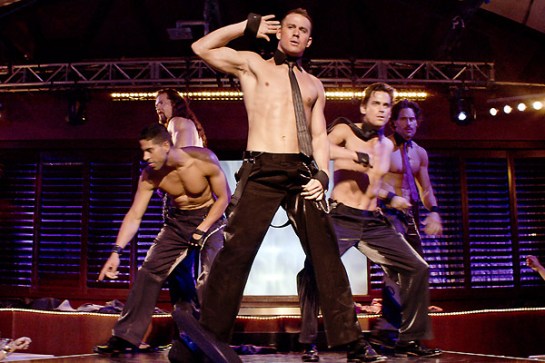
Steven Soderbergh’s semi-rags to not-quite-riches story of a young Tampa male stripper and his introduction to the world confirms two things.

First, Soderbergh is one of those rare talents who can direct most any kind of film, be it jokey caper flicks (The Oceans movies), intricate ensemble thrillers (Contagion, Traffic), meditative crime pictures (Underneath, The Limey), comic crime pictures (Out of Sight), period pieces (King of the Hill), star vehicles/accessible treacle (Erin Brockovich), action flicks (Haywire), and biographical comedies (The Informant).  Hell, Soderbergh even coaxed a passable performance from porn star Sasha Grey (EntourageSlut Puppies 2) in The Girlfriend Experience.

Second, while Channing Tatum is a huge star, he’s also going to be an enduring one.  He showed a real affinity for comedy in 21 Jump Street and in Magic Mike, he reveals depth to go with his light touch.   He is undeniably attractive, but he’s also winning and vulnerable.  He will be touching the erogenous, mommy and soulmate zones of female viewers for a long time.

Tatum is one of a troupe of male strippers under the sway of club owner Matthew McConaughey, who has taken oily to new heights.  The men live in a bubble world, scoring $500 a night to dance for Tampa’s enthusiastic females, while living a dream of sun, fun and ecstacy (the drug and constant and varied sex).  Tatum, however, has a bigger dream.  Though he wants equity in the club, which will soon be going big time in Miami, he has other irons in the fire.  When he becomes the big brother to a new 19 year old dancer (Alex Pettyfer), he falls for Pettfyfer’s protective sister (Cody Horn) and rethinks his situation.

Soderbergh manages to make the world both enticing and seedy (though not as comic as Demi Moore’s milieu in Striptease, it is a similar evocation), which makes Mike’s dilemma convincing.  Tatum delivers his crisis of conscience and his desire to “be something” so you buy in.  A weakness, however, is Soderbergh’s decision on too many dance/strip/hump sequences.  Admittedly, I am not the target audience for these scenes, if they were meant to be erotic or titillating, but save for one scene where Horn actually watches Tatum ply his trade (her response is equivocal, a mix of fascination and discomfort), I don’t think that’s where Soderbergh was heading.  Indeed, the male revue world is loudly bacchanalian, with women whooping and hollering in mock lust and real joy, a jarring contrast to the world of female stripping, where, as Larry Miller used to joke, the men eye the strippers like lions eye antelope.

Quentin Tarantino’s Achilles heel is his immaturity and obsession with genre.  Be it Japanese ninja films or 70s drive-in schlock, his bad pictures (and the Kill Bills and his contribution to Grindhouse are bad pictures, “fear of not being hip” critical acclaim notwithstanding) are foreordained by his choice of an homage to shit, which merely produces higher caliber shit.

Hence, my trepidation walking into Django Unchained.  Fortunately, spaghetti westerns are stronger source material than Japanese ninja crap and American drive-in crap, and Tarantino doesn’t become engulfed by this particular genre.  Sergio Leone is ever present, but the picture does not attempt to ape or glorify his work.  Tarantino also adds humor with a very modern sensibility.  Finally, Christoph Waltz, who electrified Inglorious Basterds and collected a well-earned supporting actor Oscar for his work, and Leonardo DiCaprio, who embodies oily, smooth charm and venom, elevate the material, so much so that when they are absent from the film, you can hear it leaking air.

Django (Jamie Foxx) is a slave freed by a bounty hunter (Waltz) who needs Django to identify some targets.   A partnership develops and soon, the duo endeavor to retrieve Django’s wife (Kerry Washington) from Mississippi slavemaster DiCaprio and his conniving house master (Samuel L. Jackson).  Cartoonish, bloody, often wildly funny, and fast-paced, Django would have scored higher save for a tacked-on ending that adds a wholly unnecessary 25 minutes to a film that was satisfyingly concluded.  Worse, it is in these 25 minutes that Tarantino the actor appears, with a befuddling Aussie accent, to jerk the picture to a standstill.  From there, surreal becomes outrageous and outrageous becomes boring.

Still, what precedes the unsatisfying ending is a blast, part blaxploitation revenge fantasy, part loving tribute to Italian westerns, and part sly, broad comedy (the scene where a posse of pre-Klan night riders argue over the utility of their white sheet hoods is more Blazing Saddles than Once Upon a Time in the West).  Best, professional scold and Knicks fan Spike Lee, who I understand used to have something to do with filmmaking, is not amused by the melding of a slave story and a western  When Lee is up in arms, it is a strong endorsement indeed.  Lee’s criticism is almost as stupid as the Village Voice‘s defense of Tarantino’s use of the word “nigger” (over 100 times) on the grounds of historical accuracy.  Even if that word hadn’t been used in the Mississippi of 1858, Tarantino would have used it nonetheless, for two reasons.  First, he loves that word, and he loves it most when uttered by Samuel L. Jackson.  Second, just to spite Spike.