Archive

Historical

12 Years a Slave: the book behind the film | 12 Years A Slave | The Guardian

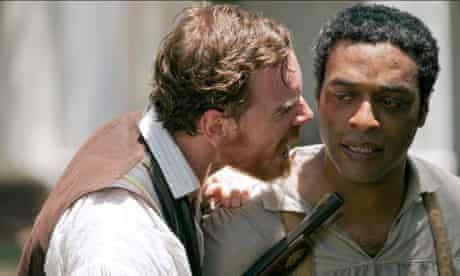
Steve McQueen’s adaptation of the memoir of a free black man, Solomon Northup (Chiwetel Ojiofor) lured from family and respect in New York to kidnapping and bondage in Louisiana, is haunting, meditative and thought-provoking. Precious few feature films dramatizing slavery have been produced and those that have tend to make the experience secondary or simplistic. That Quentin Tarantino could say of his riotous comic book Django Unchained “I wanted to break that history-under-glass aspect, I wanted to throw a rock through that glass and shatter it for all times, and take you into it” almost certainly speaks more than he knows. Tarantino’s rock through the glass was the introduction of such fictions as Mandingo fighting, near-automatic weaponry and Roland Emmerichian explosives to the Deep South.

Thankfully, in his lyrical portrait, the director McQueen evokes is Terence Malick rather than Tarantino. The look and patience of the film reminded me of The Thin Red Line, especially with its mournful Hans Zimmer score. But where Malick’s characters are wisps or archetypes, and his stories formless, Ojiofor’s Northup is distinct and his tale is stark, requiring that he sublimate his educated status to a facade of ignorance and become invisible. When this is not possible, he catches the attention of an insecure overseer (Paul Dano) or a sadistic owner (Michael Fassbender). Ojiofor’s performance is riveting, a study in restrained fury and canny survival. Matthew McConaughey is favored to win the best actor Oscar, and if they gave awards for years, he would win hands down for Mud, The Wolf of Wall Street, Dallas Buyer’s Club and, for good measure, HBO’s True Detective.

But Ojiofor deserves the award. It is not even close.

McQueen’s film is strongest at its quietest. The scenes of brutality pale in comparison to the humdrum portrait of plantation life, where children play while slaves are beaten or lynched. A simple walk across the yard becomes a study in terror, made even more frightening because most times, violence gives way to languor or malaise. Giving us the viewpoint of a man who has expected freedom his entire life, a man with a wife and two children, is a searing perspective.

One criticism. Near the end of the film, Northup comes across an abolitionist who secures his release. Producer Brad Pitt plays the abolitionist and to say that his appearance is distracting is an understatement. He simply radiates big star and his ahistorical discussion on the merits and future of slavery with plantation master Epps (Fassbender) doesn’t help. It is a minor issue, but noteworthy because it was so avoidable.

Thirteen years later, Martin Scorsese has re-made Boiler Room, writer-director Ben Younger’s patient and understated Wall Street picture about a sweet kid (Giovanni Ribisi) who gets sucked into the easy cash of a penny stock chop shop run by crooked investment manager Tom Everett Scott. Scorsese’s picture is from the vantage point of Scott’s character, penny stock maven Jordan Belfort, and clearly, the guy who played the drummer in That Thing You Do wasn’t going to cut it as his lead. Enter Scorsese’s boy Leonardo DiCaprio, an able and unsurprising choice. But as I sat through this excessive, gaudy, and at too many times, repetitive extravaganza of the go-go 90s, I pined for the more muted touch of Ben Younger.

DiCaprio as Belfort is an aspiring stockbroker tutored by Matthew McConaughey (who is hilarious; what a year he’s having) but wiped out on 1987’s Black Monday. He reinvents himself by switching to penny stocks, where the clientele is working class, the investments not so much risky as ludicrous, and the broker commissions 50%. Soon, with a band of merry fuckups (including Jonah Hill, who walks a steady line between an ambitious man and a raging child), he is crazy rich. He is also a drug and sex addict of mythic proportions and his life is an endless bacchanal, until, like Ray Liotta in Goodfellas, he must pay the piper.

The Wolf of Wall Street apes Goodfellas and Casino in its exposition, showing us through voiceover or DiCaprio speaking directly to the camera just how the securities game works. But writer Terence Winter lacks interest in the mechanics, and many times, DiCaprio leers and tells us directly, “You don’t want to know this.”

The film deduces that what we really want to know is what it’s like to live a high-wire act where every desire is fulfilled, and then some. For the most part, the filmmakers are correct, but in depicting the excess, they overindulge in it. There are two too many orgies, drug crack-ups and the like and at times, the mind wanders. Worse, as in Casino with Sharon Stone and Robert De Niro, Scorsese wrongly presumes we are interested in the marriage of DiCaprio and his trophy wife (Margot Robbie), a union founded on lust, greed and advancement that doesn’t deserve the time given to dramatize its crack-up. Our interest in Robbie peaked on her first date with DiCaprio, when she alights from the bedroom naked save for thigh highs of her own design.

Despite these foibles, the film is often very funny, and when it hits strides, dizzying and infectious. It also does not labor under the burden of a heavy message. Oliver Stone would surely have had Martin Sheen arrive in the final chapter to lecture us about American greed. Hell, Adam McKay, he of titanic films that reach to the heart of who we are as nation, closed The Other Guys with a tutorial on the excesses of Bernie Madoff (but we would expect no less from our new Capra, the creator of not only Anchorman, but Step Brothers and Anchorman 2). Instead, Scorsese and Winter don’t provide a message as much as a testament to the tribal customs and loyalty of certain American subcultures (Winter wrote 19 episodes for The Sopranos) and the universal intertwinement of the American dream and gluttony. But really, this is a picture about how crazy shit can get when those who pray at the altar of the dollar are fueled by endless cash, and the result is both alluring and grotesque.

The cast is very good. DiCaprio gives such a muscular, physical, manic performance (his 1 mile trip from his country club to mansion while on too many Quaaludes is herculean) , he is a lock for a best actor a nomination, but the win will go to McConaughey for Dallas Buyer’s Club.

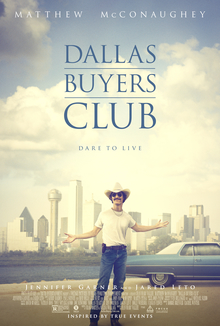
Image result for dallas Buyer's club
Matthew McConaughey’s transformation from wiry homophobic cowpoke to frail, determined AIDS survivor in mid-80s Texas is riveting, and he is ably supported by Jared Leto as a young transvestite who becomes his business partner (the business being the importation of non-FDA approved drugs for AIDS patients as an alternative to the toxic AZT). I expect Oscar nominations for both actors for their understated and moving performances, when showy and overwrought was to be expected.

The first half of the film paints a portrait of Ron Woodruff’s (McConaughey) fast living, his “I ain’t no homo” denial of his diagnosis, and his determination to stay alive and flourish, and your investment in his fate is total. But that leaves half a film, and unfortunately, the picture then stumbles. McConaughey makes the jump from survivor to advocate and soon, his finger in in the face of the FDA, the presumably corrupt dispensers of AZT at the hospital, Big Pharma, and yes . . . the system.

The institutional corruption and failure story has been done to death, and it carries a feel wholly distinct from what has come before – inauthenticity. I’ve read a great deal about Woodroof, and much of his tale is corroborated, but in that corroboration, there is no confirmation of the most Hollywoody of the film’s vignettes, such as his attacking the evil doctor in the hospital or his crashing of Big Pharma roll outs of AZT. Perhaps these things occurred, but even if they did, their depiction in the film is cheap and easy. As a historical aside, the availability and affordability of AZT was demanded most vigorously by Act-Up, and its therapeutic value was significantly greater than shown in the film.

There are other problems. Jennifer Garner, as the doctor who McConaughey charms to his side of the drug fight, is a fictional character. She never should have been drawn, or at least, she should have been cast with a more compelling actress. Garner is no match for McConaughey. She gamely tries to communicate empathy and dawning but musters mere wet eyes and wonder.

The bad guys (Dennis O’Hare and Richard Barkley) are stock, almost sneering suits and what Steve Zahn is doing in this picture as a 3 foot ridiculously mustachioed sheriff escapes me.

Otherwise, Dallas Buyer’s Club is a serviceable platform for McConaughey and Leto which eventually succumbs to its own good intentions.

image

A fitting choice on the 50th anniversary of President Kennedy’s assassination, Parkland is a sober, gripping recreation of that event through the eyes of his Secret Service detail, the FBI office in Dallas, the medical staff at Parkland Hospital, Abraham Zapruder and Oswald’s family.  It is hard to achieve verisimilitude on such a well known event, but director Peter Landesman does just that in his handling of detail.  It seems unbelievable that the Secret Service would entrust the 8mm film shot by Zapruder to his care even as they desperately sought local facilities to develop the film, but it was his property, that’s exactly what they did, and the discussions over the disposition of the footage are fascinating. There is also an incredible frenzied argument between the Dallas medical examiner and the Secret Service staff over control of the body, which Landesman handles without judgment, and while it just seems incredible that Vice President Johnson is walled off in a hospital file room behind a barricade of guns while the medical staff works on the president, that too is a true fact not oft reported.

These touches are enhanced by determined performances from Billy Bob Thornton, Paul Giamatti, Colin Hanks, Zach Effron, Marcia Gay Harden, Mark Duplass and others. The scene where Kennedy’s aides and the Secret Service have to remove seats from the plane and jam the casket into the passenger area is particularly and deeply affecting.

The primary criticism of this film is that it lacks cohesion, that it somehow didn’t communicate something broader. Actually, that was its strength. The characters do not strive to communicate anything more than having to deal with a horrific event as best they can, and Landesman focuses on their plight, not on a deeper meaning to the event.  The assassination itself is enough to provide the context, and in an era when each of these bit players in a national trauma would likely be on cable news within minutes, the self-restraint of the picture underscores the self-restraint of the times.

The closest I came to smelling Hollywood was when they wheeled Oswald into the same emergency room as Kennedy and the senior nurse pushed him to another, saying, “He’s not going to live or die in here.”  It was artistic license, but it was appropriately chosen.

A minor nit – Texas Governor John Connally, also struck by rifle fire, was taken to Parkland as well, and it would have been interesting to have covered even in a small way his treatment while the hospital staff worked so desperately on Kennedy.

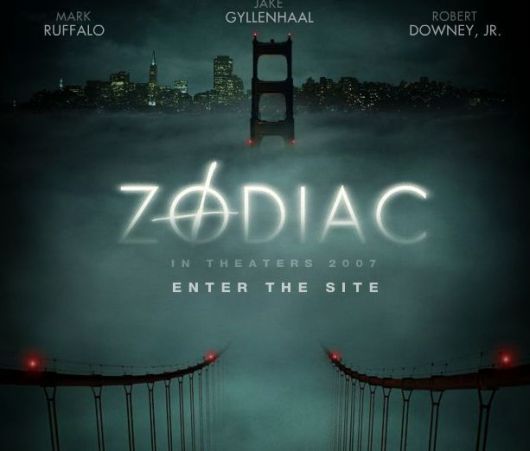
I would have given a great deal to have been at the studio screening of David Fincher’s Zodiac. I wonder who said first, “You mean, this movie is almost 3 hours and we never definitively learn whodunnit?”

The 1969-1970 Zodiac killings are unsolved and at least by serial killer standards, the Zodiac racked up a meager body count (only 5 victims are confirmed as by Zodiac’s hand).  Nonetheless, these narrative infirmities are more than compensated for by the killer’s panache.  Zodiac taunted the police departments of four different Northern California communities with letters to newspapers, including ciphers to be broken which promised to reveal his identity and wild threats (including one to shoot San Francisco kids as they left school buses). Like Jack the Ripper, the Zodiac wanted to lord his superiority over his pursuers.

Fincher takes the Zodiac case and uses it to dramatize exactly how such a crime burrows itself into the marrow of people, altering them profoundly. Jake Gyllenhaal is The San Francisco Chronicle cartoonist Robert Graysmith, who becomes obsessed with the killer the day his first letter to The Chronicle appears. Graysmith would eventually write the definitive book on the Zodiac, and as played by Gyllenhaal, he is sucked into the mystery to the near exclusion of all else. Robert Downey, Jr. plays Paul Avery, the Chronicle crime reporter who covered the case and received a threatening letter from the Zodiac. Avery had labeled the Zodiac a latent homosexual and the Zodiac wrote him a Halloween card warning, “You are doomed” (which resulted in the staff of The Chronicle creating buttons emblazoned with “I Am Not Paul Avery”).  Downey’s Avery is driven from The Chronicle, to drink and drugs and despair, exacerbated by his fear of the Zodiac. The two police officers assigned to the case are also damaged. William Armstrong (Anthony Edwards) eventually transfers to another division while Dave Toschi (Mark Ruffalo) is at one point accused of forging a Zodiac letter (he was cleared of all charges).  There are also the survivors. The Zodiac attacked 3 couples while they were alone and vulnerable, but two men survived, one of whom was the only living person to see the Zodiac. He is a shell, having escaped the country, found at the end of the film to provide one final clue.

The psychological study is encased in a meticulous yet accessible procedural. Screenwriter James Vanderbilt keeps myriad threads intertwined without sacrificing pace, no mean feat given a multi-jurisdictional crime reverberating in the worlds of the police and journalism.

Fincher re-creates those crimes in a manner that communicates their terror and the vulnerability of the victims without being sensationalist or gratuitous. Indeed, the most frightening scene is one where no violence is done. Five months after his last killing, the Zodiac killer pulled over a woman with her baby on a highway, letting her know her back tire was wobbly. He feigned assistance by tightening the lugnuts, but the wheel fell off immediately after she got back on the road. The killer came back, offered to bring her to a service station, but instead drove her around until she was able to escape into a nearby field with her baby (the connection to the Zodiac was made after he referenced the encounter in a letter to The Chronicle a few months later).

It’s hard to imagine that the director of the gruesome Seven made this picture, which is restrained, methodical and to my mind, infinitely scarier. Having to turn away and shut your mind off has less of an effect than when you cannot do so and you’re required to think.

This film has just recently been offered for streaming on Netflix so take advantage.


Dreadful in every respect. Ostensibly about an impeccably tailored group of LA police vigilantes formed to take down gangster Mickey Cohen in 1949, Gangster Squad sports a script so hackneyed it seems like a goof. The picture is a mash of The Untouchables and LA Confidential, if those films were re-written by a 13 year old boy whose sole inspiration was Rambo II.

Some gems:

“To the sarge. You’re a bull in a china shop but we’d follow you anywhere.”

***

“I’ve been with a lot of outfits but none better than you group of misfits”

“To the Gangster Squad!”

***

“I signed up for this so I could tell my boy I tried to do something about it”

***

“Can you remind me of the difference between us and them? Because at this point I can’t tell anymore.”

***

“If I leave, Keeler dies for nothing.”

***

“Tomorrow they’ll take my badge. Tonight I’m still a cop.”

***

“Let’s finish it.”

***

“We gotta’ take out that gun!”

“Watch this, hoss.” (six shooter beats machine gun)

***

“Wanna’ dance?” (Man with gun drops it so a fistfight can occur)

***

“Every man carries a badge. Mickey Cohen pledged allegiance to his own power.”

***

“Jerry threatened to leave the force but he never did. I guess he couldn’t shake the call of duty that echoed in his ears.”

You simply cannot believe what you are hearing.

The squad is led by the wooden and true Josh Brolin and is rounded out by a playboy (Ryan Gosling), a cowboy (Robert Patrick), a black guy (Anthony Mackie, who uses a knife just like James Coburn in The Magnificent Seven), a Hispanic (Michael Pena, who is Patrick’s Tonto, and maybe even his son, depending on your reading of a death scene), and a geek (Giovanni Ribisi).

Not quite Costner’s gang in The Untouchables, but damn close.

All the character are awful, but Gosling is by far the worst, utilizing a Brooklyn accent on helium. The result is a really dreamy Elmer Fudd.

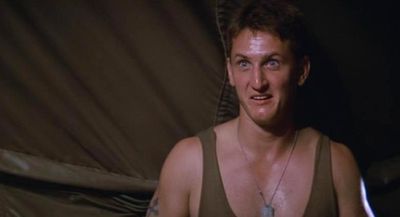
And Sean Penn as Cohen?

Image result for Sean Penn Mickey Cohemn

See Sean Penn in Casualties of War.

The picture also gives us Emma Stone as the Kim Basingeresque world weary ingenue?

Taylor Swift must have been unavailable.

***

Ryan Gosling. “Don’t go.”

Emma Stone. “Don’t let me.”

***

***

The plot thuds along.  Our avengers mess with Cohen, but their efforts must be expedited because Cohen is setting up a wire service which will give him control of all betting west of Chicago . . . in a week! If it becomes operational, he will be too big to take down.

But our heroes can’t find the location of this new wire service.

Perhaps they shouldn’t have blown up his trucks carrying the wire service equipment instead of following them.

No matter. Because Cohen places the wire service HQ, the jewel in his criminal crown, in the back of the nightclub that doubles as the hottest spot in LA.

The film was not well received but it is troubling that it was not roundly demolished, it is so crappy.

For example, in one scene, a thug’s overcoat (in balmy LA, mind you) catches on fire when he is backed into flames. He removes the burning coat, kills a man, and yet, in the next shot, voila!  The overcoat has returned to his body, unsinged!

The film also shows Mickey Cohen watching footage of one of his boxing matches, an Cohen explains how he held on to the championship.

The real Cohen, however, never had a championship fight (he lost to World Featherweight Champion Tommy Paul two minutes into the first round), which I suppose is nitpicking.  Yet, despite being a “championship” boxer, Cohen loses a fistfight to Brolin to close the movie, which is not nitpicking.

The following critics gave the film positive reviews: Ricardo Baca (Denver Post), Richard Roeper, Rafer Guzman (Newsday), Rex Reed (The New York Observer), John Hanlon (Big Hollywood) and Peter Debruge (Variety).

Follow the money, I say. Follow the money.


This biopic of Alfred Hitchcock’s making of Psycho attempts to juggle three stories:  the strain on the relationship between the director (Anthony Hopkins) and his wife (Helen Mirren), Hitchcock’s own perverse infatuations with his leading ladies, present and former (Scarlett Johannson as Janet Leigh and Jessica Biel as Vera Miles), and the actual making of the movie, with its unsettling, revolutionary ties to the Ed Gein murders.  Each of these threads is presented in a tepid and/or listless manner.

Hopkins and Mirren are quite good, but the script gives Hitch little to do but mope about his wife’s inattention, and Mirren’s near-dalliance with another writer (Danny Huston) is a bit uncomfortable.  Either the 68 year old Mirren, or Alma Hitchcock (she was 60 at the time of the making of Psycho) are too old for the communication of unquenched sexual urges necessary for the role.

As for Hitchcock’s own urges, the film cops out.  The director is shown as a peeping tom, and any darker heart is reflected only by his silly imagined conversations with Gein.  Leigh and Miles commiserate a bit on the director’s peculiarities, but nothing particularly upsetting is revealed, and neither actress is capable of delivering some deeper psychic injury or fear.  At best, they cluck, “oh, be careful.  You know old Hitch.” Given the director’s very disturbing behavior prior to, during and after Psycho, the wispy treatment seems cowardly. But even if the filmmakers were reluctant to travel that dark path, they missed many other opportunities to illuminate the eccentricities of the director. The lore has it that Leigh and Hitchcock were both unhappy with John Gavin’s work in his love scene with the former, and that Hitchcock instructed her to “take matters in her own hands” to amp up the passion. Yet this gem of a vignette is left out?

Finally, there is the risky making of Psycho, a film Hitchcock bankrolled himself when the studio became leery over the subject matter.  Hitchcock is ostensibly based on Alfred Hitchcock and the Making of Psycho by Stephen Rebello. which I have not read but hope is more interesting than was portrayed in the film.  The making of the film is characterized as worrisome at times. The director’s financial stress is shown, and he pouts when his wife is away, but that’s about it. Nothing of Hitchcock’s craft is developed, and some of the hurdles, such as the fight with the censors over the shower scene, are played mainly for laughs. So much is missed.

Take Rebello in a 2010 interview:

But she is killed in the shower in the novel. In fact, Hitchcock told many people that he was most attracted by Bloch’s notion of a murder coming out of the blue in an everyday, confined setting—the shower, where we feel relaxed and complacent but where we’re utterly vulnerable.  Hitchcock was thrilled with the idea of shocking audiences by casting a major star as the heroine and killing her off so early in the picture. That violated every Hollywood rule. Bloch’s heroine has her head cut off in the shower, not exactly the kind of thing that even Hitchcock could have gotten away with, even if he had been tempted. Bates in the novel is middle-aged, pudgy, alcoholic, brooding, unattractive, repugnant. He also has extensive conversations with his mother, which would have been fatal and a cheat on film. Casting Anthony Perkins was a lucky masterstroke; he’s as charming, attractive, sad, perverse, and lethal as earlier Hitchcock killers like the one Joseph Cotten played in Shadow of a Doubt and Robert Walker played in Strangers on a Train. Perkins had already worked with top directors like William Wyler, Anthony Mann, and Stanley Kramer, and Paramount had spent lots of money promoting him as a successor to the late James Dean or comparing him to the young James Stewart or Henry Fonda. Although he had become a teen idol and even made some hit records, things hadn’t quite clicked and, at the time, Perkins felt typecast and owed Paramount a movie. Hitchcock could hire him inexpensively. It was a perfect storm.”

There is so much here, but the film merely gives us Hitchcock cackling at killing Leigh early and the tut-tutting over the ghastly plot, with Alma disapproving, the powers that be huffing “You can’t do that!” and Hitch gleeful as the bad little boy.

One added point.  As noted, Johannson and Biel are pedestrian, but they aren’t the only ones.  The bullying studio head is played in embarrassingly broad fashion by Richard Portnoy, James D’Arcy’s Anthony Perkins is an impression rather than an embodiment, and Ralph Macchio is unfortunately unearthed for a short scene as the writer, Joseph Stefano.  The Karate Kid is not missed.  And I can watch Robocop only so often to remove the taste of yet another Kurtwood Smith uptight authority figure performance.

At the end, you’re left with a damning question – why make this picture?  It does little to communicate Hitchcock’s demons or his genius, it meanders and plays it safe, an unfortunate testament for a cinematic trailblazer. One that should not have been delegated to director Sacha Gervasi, whose resume’ is anchored by his 2008 documentary of a Canadian metal band, Anvil: the Story of Anvil.

Search Results for gangs of new york GIFs on GIPHY | Gangs of new york,  Leonardo dicaprio, Gang

Martin Scorsese’s sprawling, excessive period piece, set in The Five Points of Civil War era New York City, is almost punishing in its immoderation. A directionless Leonardo DiCaprio works his way up the ladder of nativist gang chieftain Bill “the Butcher” Cutting (Daniel Day Lewis) to avenge the death of his father, Liam Neeson, who died at Cutting’s hand when DiCaprio was a boy. Scorsese sought to offer a steamy, vibrant and bloody portrait of the slum that was lower central Manhattan, but the feel is inauthentic and verisimilitude is overcome by the garish. The opening scene – the gang fight resulting in Neeson’s death – plays as a mash up of Walter Hill’s The Warriors and a really violent version of West Side Story. You almost expect Neeson to sing, “The Dead Rabbits are gonna’ get their way, toniiiiiight!” as he brings his crew to battle.

If only. The story is deathly dull, duller even than the featured Cameron Diaz, horribly miscast as an Irish lassie/grifter (her accent comes and goes like the viewer’s interest).

Day Lewis’s performance is widely lauded and he was nominated for a best actor Oscar, but he is so over-the-top as to appear foolish. Still, scene-chewing is bound to garner easy accolades, and Day Lewis is voracious. More surprising are the nominations of the phlegmatic script and Scorsese’s aimless helming. The film meanders, half-heartedly committing to DiCaprio’s vengeance but then veering into historical re-creation, such as the machinations of Boss Tweed and the draft riots. The former plot line is marred by DiCaprio’s sullen, disinterested performance, the latter by pat conclusions (including a pretentious morphing of old and new Manhattan that closes the film and nearly induces the gag reflex).

By the time Gangs of New York was released, Scorsese had suffered the indignities of having his classic Raging Bull lose to the tepid Ordinary People and Goodfellas go down to the overpraised and politically acceptable Dances with Wolves and certainly, the Academy felt bad about that. But guilt is a bad adviser, and this is Scorsese’s worst film (though the dull and similarly overpraised Hugo and the bruising Shutter Island are close seconds).

Behind the Candelabra (2013) - Rotten Tomatoes

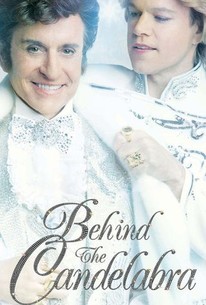
This is Steven Soderbergh’s last picture? A flimsy, small biopic about a kitschy figure (Michael Douglas as Liberace) and his boy toy (Matt Damon as Scott Thorson), arguing over dog poop in the mansion, plastic surgery and the fact that Thorson won’t agree to be on the receiving end in sex? There is no insight, Liberace’s fear of being outed is without nuance, and Soderbergh doesn’t have any fun with the Vegas excess, so the film fails as a character study and as a mindless guilty pleasure, ala’ Mommy Dearest. At its best, it is a decent VH1 “Behind the Music” as Thorson’s descent progresses. Mainly, it is clumsy and pedestrian and really disappointing when we realize this is Thorson’s story (Liberace is the reasonable one pretty much throughout).

Douglas has some strong moments, especially during his last visit with Thorson as he lay dying of AIDS, but Damon is way past “boy” much less “toy” (Thorson met Liberace when has was 17 and stayed with him until he was in his mid 20s) and he is unconvincing.

This is the filmic equivalent of Bjorn Borg’s comeback and the subject matter is Soderbergh’s wooden racket.