Archive

Drama

1BE80664-A59C-438D-94BE-1558746C7053

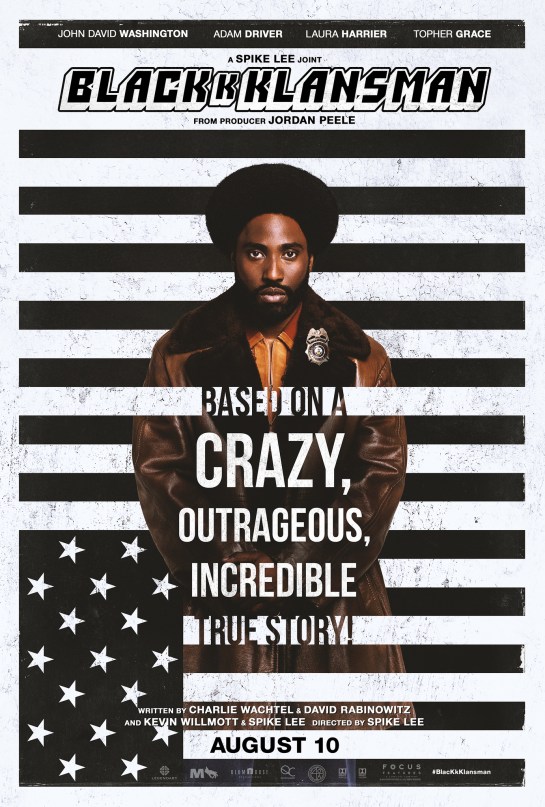
Finally got a chance to see this. It’s bad. Green Book bad.

It starts as a mildly amusing, slick sit-comish comedy structured on a ridiculous premise – in the 1970s, black Colorado cop Ron Stallworth (John David Washington) calls the KKK to join up, and they are eager to have him, so after first contact, he has to use his white partner (Adam Driver) for face-to-face meetings, which creates unnecessarily close shaves.

Why not have Driver simply make the calls and handle the meets?

The answer is – wacky hijinx!  And there’s plenty of that.

Eventually, the funny gets less funny and the picture lapses into an absurdist procedural punctuated by overt, earnest philosophical discussions that would make kids in an Oberlin coffee house roll their eyes.  

Perhaps sensing the lightness of the fare and his own elapsing clock, Lee goes heavy at the end, utilizing actual footage from the Nazi rally in Charlottesville.  It’s like appending pictures of James Meredith’s shooting at the end of a poignant Different Strokes.

It’s a cheap ploy that seeks to elevate the zany caper that preceded it to serious statement.  Worse, as pointed out by Boots Riley, director of the infinitely better Sorry to Bother You, Lee’s film is based on a true story, and a less convenient aspect of that story might be that the real Stallworth was infiltrating black organizations to their detriment.

Ah well.  

You gotta’ give it to Lee, though. He knows his audience and he oversauced this goose good. Heck, he almost pulled it off. 

Alas, Oscar found another cheesy race fable to take home the gold. 

Curses!

Related image

This is a confounding but worthwhile picture.  It tries to be many things.   A heist caper.  A feminist tract.  A racial observance.  A cynical statement on corruption.  A twist flick.  It fails to be complete in any of these pursuits, but that doesn’t make it unenjoyable, just vexing.

Steve McQueen (Shame, Twelve Years of Slave) brings his meditative touch to Chicago, where the widows of a group of professional criminals (think the gang in Heat; in fact, the widows pick up a driver on the fly just like in that flick) must pick up where their flawed husbands have left off.  Their pursuit is intertwined with romantic, political, and familial entanglements.

There’s a lot here, but eventually, the film falters because it takes on way too much.  This is a mini-series sized saga, and given how well McQueen does with various scenes, you’re eventually frustrated at the truncated resolutions.  Still, the performances are stellar.  In particular, Viola Davis, even saddled with an ever-present and ridiculous West Highland White Terrier, is penetrating, and as villains go, Daniel Kaluuya (Get Out) is a top ten.

In post-WWII Poland, a pianist and an ingénue he has selected for the national cultural ensemble fall in love.  He escapes through Berlin on a concert tour, but she is hesitant, and they are separated.  They see each other every few years, and eventually, they are reunited in Paris, free.  But they cannot make a go of it, she retreats back to Poland, and in what is supposed to be a grand gesture of everlasting devotion, he admits his sin against the state, returns to his native country and does 15 years hard labor, which, coupled with torture, destroys his fingers.

I suppose this was supposed to connect as a moody, timeless, passionate yet doomed romance.  But the two leads, who alternately smolder and pout, are so childish and impetuous, it’s hard to gin up much sympathy.  Indeed, when she makes it to Paris, they bicker like children, she constantly kvetching about his prior lover and Western ambition, he inexplicably distant (in fact, he often looks as if he knows he made a very big mistake in working so hard to be with her but can’t bring himself to admit it).

Neither character acts in a manner showing any deference to their good fortune.  These aren’t lovers separated by culture or prior marriages or obligation, but rather, an iron curtain where, to be on the wrong side of it, you lose your freedom and you can get your delicate pianist fingers mangled by 15 years of forced labor and torture.  And they surmount that curtain!  So, when they chuck it for seemingly pedestrian reasons, and he insists on his grotesque punishment, you don’t care.  Well, maybe you will.  The movie is very well regarded.  But I didn’t.

On the plus side, the movie is beautifully shot and blessedly short at under an hour-and-a-half.

Nominated for Best Director, Best Foreign Film and Best Cinematography and available on Amazon.

7C9B9607-6014-41E4-8234-36FA8FCA7AC5

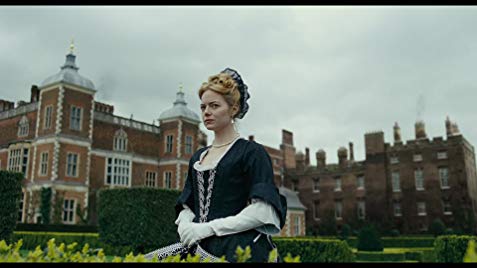
A filmmaker who can communicate his vision as completely as Yorgos Lanthimos is no mean feat, even if the vision is as cruel and base as this. Lanthimos’ The Lobster was as original as it gets, but also sterile, unfeeling, and nasty. The Favourite, a period piece of court intrigue, is more traditional, but it shares The Lobster‘s rank cynicism and hatred of its characters.

Rachel Weisz and Emma Stone attend court and vie for the attentions and favor of Queen Anne (Olivia Coleman). Weisz wants power, Stone security. They share a weary, dim view of their patriarchal world; the men are for the most part fops, suck-ups, and/or brutes, and it is amusing to watch Weisz and Stone endure and best them.  While their war has its moments, their single-minded pursuit of the upper hand is rooted solely in the base instincts of survival, empathy is hard to come by. The viewer is detached from their fates and the accompanying pain. They flash as human, but they don’t really seem it.

The performances, however, are stellar.  Coleman’s turn as the mercurial and insecure queen, for which she won the Oscar, is a masterful blend of the sympathetic and comic. She is the ultimate tormentor, but ironically, she’s the only one you feel bad for.

Ultimately, per custom, Lanthimos has made a technically adept yet a frigid and un-involving picture.  Lanthimos reminds me of Darren Aronofsky in his penchant for brutalization, but he also brings a morbid fascination with bodily functions, which doesn’t help.

EFDFA64D-0815-48BE-B103-65A482CB8851

When Spike Lee acted like a petulant fool after BlackKKlansman lost Best Picture to Green Book, it seemed silly, and given the mediocrity of his own picture, a sad stunt.  But I get it Spike. I apologize.

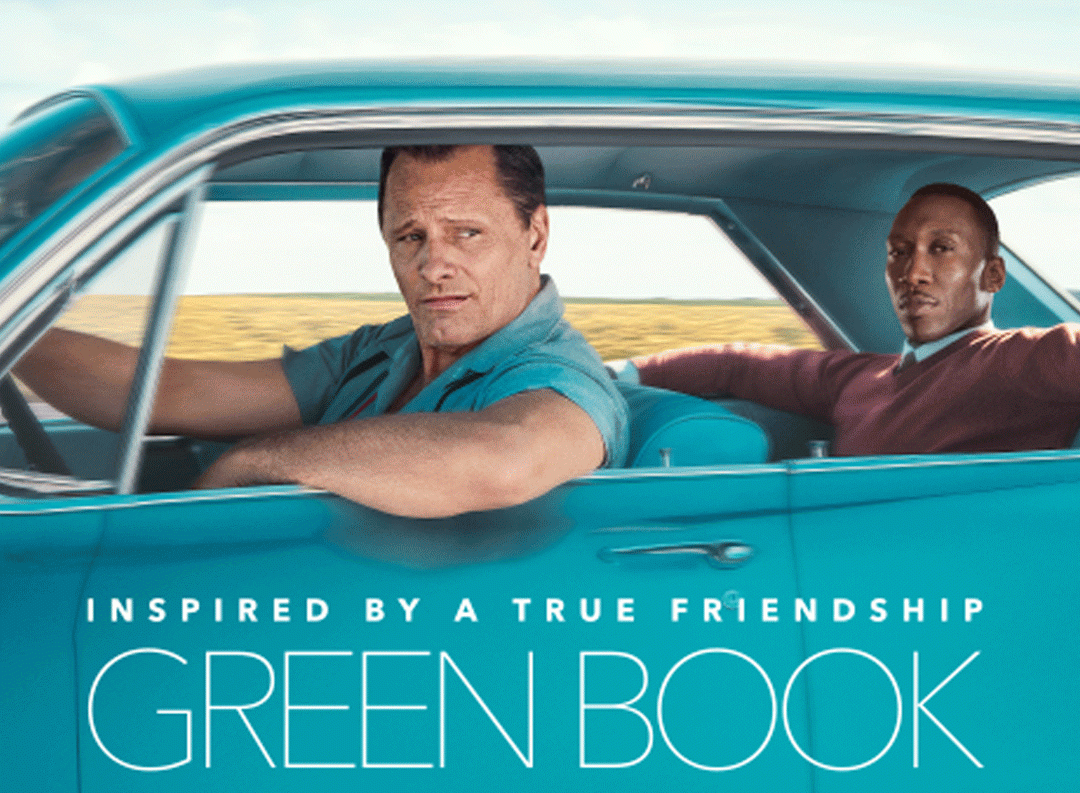
The story of classical pianist Dr. Don Shirley (Mahersheela Ali) who enlists Italian bouncer Tony Lip from New Yawk (Viggo Mortenson) for a Southern swing of concerts in 1962 is so chock full of cliche’, it borders on spoof.  Ten minutes in, you know that the hotheaded Tony will hit a cracker cop, the cultured Shirley will play boogie woogie in a honkey tonk, and they will teach each other, oh, so many things.

Sadly, it is not a spoof.

This picture is atrocious. Simplistic, repetitive, nonsensical, and boring.  It has no idea what it wants to be. A civil rights era Odd Couple?  A moral tract about role reversal and rejection by one’s own race?  A road movie?  It does none of it well.

But it has a white guy teaching a black guy the joys of fried chicken, so, there’s that.

The characters lack any consistency. When black men perform repairs at his apartment, Tony throws away the glasses the men drink water from, such is the viral nature of their cooties. But in the blink of an eye, he is driving a black man around, comfortable not only with his boss’s skin color, but his homosexuality.

’Cause he’s been around nightclubs, and tings, day get, complicated. Mangia, manigot, caprese, spumoni, to da’ moon, Sbarro!

And while Shirley is supposedly working the southern swing in solidarity with Nat King Cole, who was beaten years earlier for playing white music, he also inexplicably plays private affairs at the homes of cartoon bigots. For what, I don’t know. Cash?  Self flagellation?  And when rich Southerners have a cultured pianist perform at their homes and eat dinner at their table, he is still sent to the wooden outhouse to pee.  Jesus, even in The Help, the bathroom had plumbing.

Making matters worse, Viggo Mortenson’s tough guy driver from da’ Bronx is so broad, so exaggerated, you can’t believe what you’re seeing. He’s half Joey from Friends, half The Fonz. He actually says Ba Fongool.  Or Ba Fon Goo. Or whatever they say in Chef Boyardee commercials.  He’s brutal to watch, yet, a thing to behold.

It ends sweet and there is charm in its insouciance as to its own plausibility or depth, but that gets you exactly one star.

Oscar?  Fuggedaboutit!!!

88500353-FBE8-4895-81A4-D9BC86BE1862

One of the best of the year, powered by Melissa McCarthy’s misanthropic turn as a struggling biographer in the leanest of times. Unemployed, unpublishable and unliked, McCarthy (playing writer Lee Israel) hits upon a scheme to forge letters from the ranks of Noel Coward and Dorothy Parker and soon, her money woes are over. The endeavor also fills an artistic void. She takes pride in her turns of a phrase and bon mots, her work put in the mouths of giants, and she is invigorated. It all goes bad, as it must, but it is eventually to the good.

I can’t say enough about McCarthy. She inhabits the skin of Israel, with a vicious self-protective quality and a reflexive meanness. Yet you invest in her. Her bitter exchanges with her agent and attorney are both hilarious and poignant.

There is good in her, and a hell of a lot of hurt, both of which are unearthed by her chance friendship with an elegant scammer and libertine, Richard E. Grant.  McCarthy and Grant were rightfully nominated for Oscars and it is a joy to watch him match McCarthy’s desire to be left alone with an insistence that they will be friends.  Their hi-jinx and commiseration are the heart of the film.

I was blown away by the fact that this is director Marielle Heller’s first major feature.  It felt like the work of an old hand, steady, confident and mature. The movie skips with ease but pauses for moments of true beauty and consideration.

This is an elegant movie, folding how much people need each other into a very funny, well-told story.

190D5A0E-F567-4FE3-ABF0-126B8A846388

I always thought Queen was camp, a goof, and their primary contribution was “We are the Champions” and “We Will Rock You” which you sang in the bleachers during CYO basketball games. When I realized some people thought they were a great band, I was surprised. So, I walked into this as if it were a biopic of Emerson Lake & Palmer. Or Kansas.

Still, a great movie does not have to be about a great band. This, however, is not a great movie. It is cookie cutter, inoffensive, as risk-averse a biopic as you’ll find (it’s clear why Sacha Baron Cohen was jettisoned from the project), but well-paced and energized by the erstwhile Bryan Singer and made a little more interesting by Rami Malek’s weird, lizard-like performance (he’s just this side of Bela Lugosi, you never know if he’s just about to bite someone on the neck).  To be fair, Malek is also very moving towards the end.

The scenes of the band playing live and in studio are silly. The scenes of the band talking about the music and themselves are like a slightly more serious episode of the Monkees.  The rendition of the creative process is hilarious.

The primary feeling you’re left with is foreordained watching any story sanctioned by its subjects (the band had script approval) – it’s pleasant.  Rock and roll, drugs, cats and AIDS, brought to you by Disney.  It’s formulaic, harmless and overlong at two hours and fifteen (ending with an extended scene of their set at Live Aid, which is dull in that Malek is lip-synching), but not unentertaining.

FC2209D5-D8AC-4A9A-9DEB-858C1B287A29.jpeg

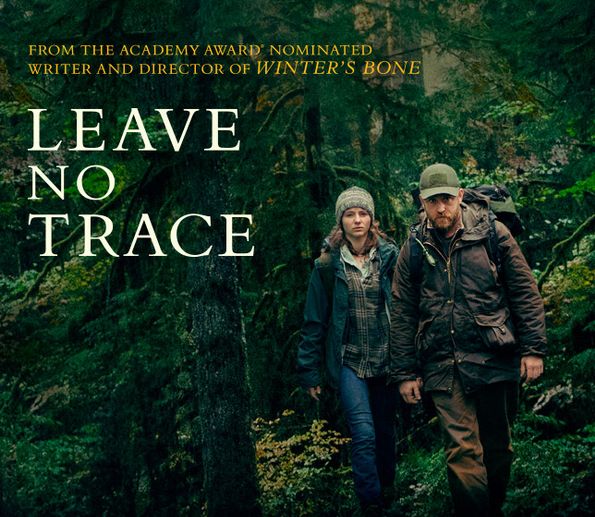
Captain Fantastic was about a father who raised his kids in the woods because he did not trust modernity. It was a terrible movie, mainly because the grown man (Viggo Mortensen) wouldn’t shut up about his philosophy and how superior it was. This movie is about another father (Ben Foster) who insists on living off the grid with his teenage daughter. This is a better film, and the relationship between Foster and Thomason McKenzie is well developed.  But their circumstances suffer from too little explication.  Why are they off the grid? What brought them to this extremist situation? All we really know is that Mom is dead, Foster is introverted and plagued and that as much as he appears to love his daughter, he is really just making her share his demons.

McKenzie is accomplished as the girl torn between loyalty to her Dad and a need to connect with and be in the wider world.  Her desire to commune, to be a part of, is heart-rending.  Writer-director Deborah Granik’s Winter’s Bone put Jennifer Lawrence on the map and I can see this film doing the same for McKenzie.  Foster, as always, is stellar as the troubled father, economical and precise.  There is a scene where he is required to answer a computerized voice asking him true or false questions to determine his mental health that he handles beautifully.

There is also a thematic bright spot.  The duo are consistently helped by people who are outgoing, caring and supportive, and yet, Foster rejects all their assistance, underscoring just how near impossible it is to deal with many mentally ill people. The system and surrounding community are, for a change, not the villains. They’re the heroes. And for the most part, it ain’t enough.

On Amazon.


image

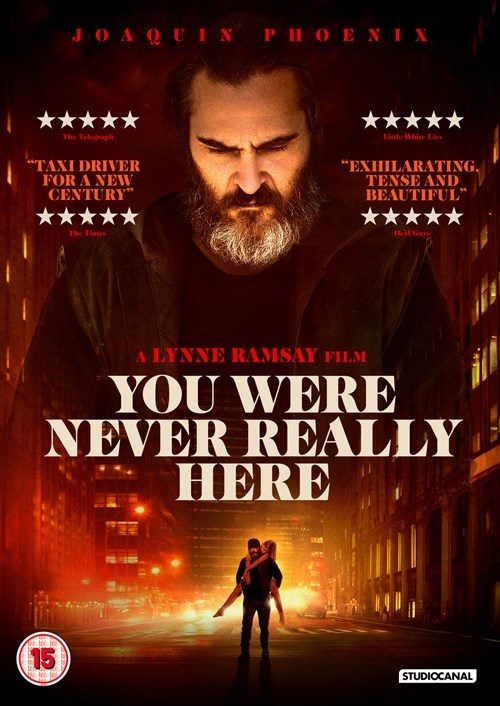
Arty, messy, self-indulgent and obtuse, a very bad movie. Joaquin Phoenix plays a violent loner with a side line finding missing children and beating their abductors with a ball peen hammer. He himself is plagued by childhood trauma, trauma from the Iraq war, and even more trauma from his time as a border agent? I don’t know. It’s all in flashback and unnecessarily muddled.

He catches the wrong case, saving a pre-teen girl from a sex ring who just happens to be the favorite sexual partner of the governor (Allesandro Nivola, who has zero lines). That’s right, the governor of the state of New York is a pedophile, and at his disposal are numerous police officers and security men who will murder on his behalf so he can continue his disgusting practice. Hell, Trump can’t even get people to shut up about cadging Hillary’s emails.

But I digress.

Really dumb, with the primary feature of creating lethargy and numbness in the viewer.

But what do I know?  It got 89% from rottentomatoes.com. Currently on Amazon.

Image result for First man

Damien Chazelle has directed two gems (Whiplash, La La Land) that could not be more different, and his third picture is every bit as accomplished and even further afield tonally from his prior movies.  On the surface, the film is the story of Neil Armstrong (Ryan Gosling) and the Moon landing, but this is not the gripping, white-knuckle paean to American ingenuity that was Apollo 13 or the sweeping, ironic The Right Stuff, both exquisite films in their own right.  Instead, this is the personal story of Armstrong and his wife Janet (Claire Foy), who, after having lost a young daughter to a malignant tumor, forge ahead in the space program, where calamity is a daily feature.  It’s a beautiful, personal picture, seamlessly melding the grit and determination of one family with an overarching, monumental and patriotic (more on that below) achievement.  It is one of the more moving yet subtle films I’ve ever seen.

Two addenda.  First, the omission of Gosling and Foy in the acting categories for the Oscars is, in my view, the filmic version of the Saints-Rams no-call.  Gosling’s driven and emotionally-stunted introvert is meticulous and engrossing, a master class in precision (think Casey Affleck in Manchester by the Sea).  Foy, as the wife holding it all together, is simply heartbreaking.

Second, this film caught some flack for failing to depict Armstrong planting the American flag on the Moon.  When asked (and never ask an actor anything), Gosling took as stab at an answer, observing that the landing “was widely regarded in the end as a human achievement” and that he didn’t think Armstrong “viewed himself as an American hero.”

And . . . .kaboom!  The culture dummies – this time on the right – went after the picture, as some sort of anti-American agitprop.  Little Marco Rubio was particularly incensed:  “This is total lunacy. And a disservice at a time when our people need reminders of what we can achieve when we work together. The American people paid for that mission,on rockets built by Americans,with American technology & carrying American astronauts. It wasn’t a UN mission.”

The criticism is moronic.  Films are not required to meet a quota of patriotic content.  Worse, though, the charge is false.  The singular American achievement of the landing is represented by footage of JFK literally crowing over, well, the race to that achievement.  Moreover, there is footage of a French woman who observes, “I always trust an American. I knew they wouldn’t fail.”

As if that idiocy wasn’t enough, the left weighed in to label the film a right wing fetish object with a “misbegotten political premise that America used to be greater—and that the liberating and equalizing activism of the sixties ignored, dismissed, and even undermined that greatness” or, gasp!, potentially dangerous for reinforcing the “pervasive notion about achievement—that it occurs when people toughen up and don’t let feelings impair their judgment.”

What a bunch of fucking losers.