Archive

Comedy

image
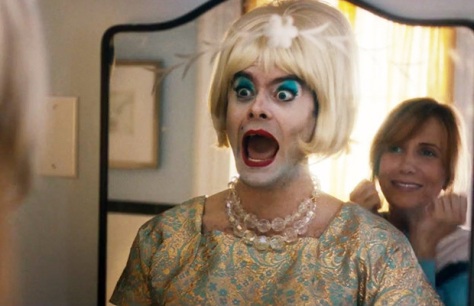
When the two major characters of a film attempt suicide in the first scene, by the end of the picture, you’re not supposed to regret their lack of success. The Skeleton Twins is a ragged, cloying, mannered dramedy starring entirely-out-of-their-depth SNL alums Kristen Wiig and Bill Hader as estranged siblings brought together by near tragedy. Wiig is utterly lost here, and all her tics and quivers cannot make up for substance. Hader is a little better, if a facsimile of a gayer Sean Hayes from Will & Grace is the aim.

The siblings are the children of tragedy, their father a suicide and their mother a hackneyed New Age narcissist introduced only to make her children seem noble. They are presented to us as seeming losers who have lost their way and their special bond on the rocky road of life. They come alive in a weirdly incestuous routine of replaying bits and hijinks from their childhood, and the watching (particularly, a drawn out stoned scene featuring Wiig’s HI-larious flatulence and a lip-synch duet brazenly stolen from Bridesmaids, sans humor) is cringeworthy. These two are as likely to be siblings as Olivier and Midler, but as foreign as they seem, the real problem is that they are fundamentally disinteresting to anyone but each other. It’s like spending an evening with two dull people who constantly crack each other up with reference to inside jokes and childhood excesses (burps, farts, hopes and dreams). Um. Check please.

As for the story, it is a lurching mess, serving primarily to highlight ridiculous and arty visuals, such as a slow dance in Halloween costumes that is finger-down-your-throat precious. When nothing happens (the film feels interminable), a character says or does something clunky and overt, and we slog forward. One example: Wiig is unhappy in her marriage to Luke Wilson and surreptitiously takes birth control pills while they are “trying” to get pregnant. Hader tips Wilson off after a HI-larious scene where hetero Wilson takes homo Hader rock climbing, which is funny because . . . gay. The clue? Sometimes my sister hid things when we were kids. And off Wilson goes to find the pills in a basket of decorative soaps.

An awful hipster picture with nary an authentic moment in it. Makes Zach Braff seem like Cassavettes.
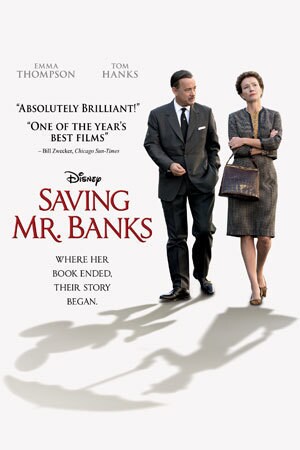
Image result for Saving Mr Banks

The writer of the Mary Poppins books, P.L. Travers, was apparently such a pain in the ass that, according to her grandchildren, she “died loving no one and with no one loving her.” As played by Emma Thompson, Travers more than fits this bill as she is whisked to Hollywood against her better instincts to be wooed by Walt Disney (Tom Hanks) in an effort to adapt her stories to the screen. Travers’ prickliness and exactitude with Disney and his team (Bradley Whitford, Jason Schwartzmann and B.J. Novak, all very good here) is the best part of the film. Unfortunately, director John Lee Hancock (The Blind Side) keeps interrupting the best part with flashbacks to Travers’ childhood, and in particular, her relationship with her whimsical, alcoholic father (Colin Farrell).

I understand the juxtaposition. The audience is supposed to learn what has embittered this awful woman. But you really don’t care (she’s such a witch that motivation is irrelevant), and you also begin to resent the interruption of the more interesting creation of a film.

Worse, the technique is cloying, leading to a sugary-sweet ending that has Disney melting the ice encasing Travers’ heart. In reality, Disney and Travers ended their relationship in acrimonious fashion, with Disney fed up with her stubborn nature, and Travers so offended she refused any further association between the company and her books. The disharmony is alluded to in the film, but it is near-blotted out by Travers’ copious tears as she undergoes a sort of catharsis at Grauman’s Chinese Theater.

Those were actually tears of fury.  From Travers herself:  “As chalk is to cheese, so is the film to the book. Tears ran down my cheeks because it was all so distorted. I was so shocked I felt that I would never write—let alone smile—again!”

Image result for barton fink

There’s not a scene in this Coen Brothers film I don’t like, and the story of a Clifford Odets-esque playwright’s (John Turtorro) introduction to the oily world of Hollywood is both visually striking and thematically ambitious.  But no matter the film’s look or intriguing interpretations (the mind of the writer, the dangers of solitude, the corruption of money), by the end, you feel trifled with, as if you watched a parlor trick perpetrated by a cast of broad, comic actors (John Goodman, John Mahoney, Michael Lerner) for no greater purpose than the goof.  Like The Hudsucker Proxy and Miller’s Crossing, Barton Fink has its joys, but the feel is sterile and your investment unrewarded.

Martin Scorsese’s surreal nightmare of one man’s (Griffin Dunne) ill-advised late-night trip into lower Manhattan is painfully funny and, at times, genuinely unsettling. Dunne is beset by a quintent of quirky, if not outright dangerous females (Roseanna Arquette, Linda Fiorentino, Teri Garr, Catherine O’Hara and Verna Bloom), a fact that will one day be Exhibit X in his anticipated trial for misogyny.  His torture is lovingly photographed by Michael Ballhaus, giving SoHo’s grimy exterior a dream-like quality (and there is no greater horror than being hunted by a mob that has commandeered a Mister Softee truck).

Dunne is very good and much like Steve Carell, except he’s not burdened at all by the imprint of a long-running character, and where Carell is childlike and vulnerable, Dunne is sympathetic, but sexually opportunistic.

Bonus: if anyone asks you, “What movie casts the parents from Home Alone, one of whom went to filmvetter’s high school?”, now you know.

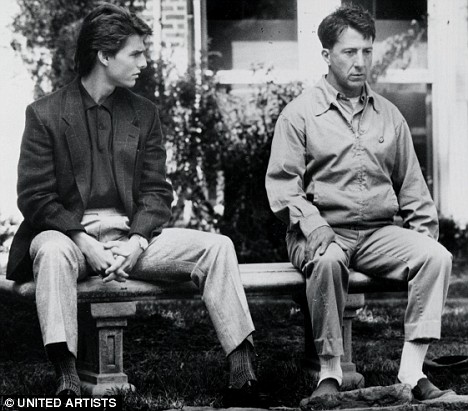
When Rain Man came out, I enjoyed it, but soon came to sour on the film for its easy emotional manipulation and an affected star turn by Dustin Hoffman. I didn’t credit Hoffman the prescience of Robert Downey Jr. in Tropic Thunder (“never go full retard”) and found Hoffman’s portrayal of an autistic adult unsubtle and obvious. Perhaps had I waited until Al Pacino’s blind rampage in Scent of a Woman, I would have been more forgiving.

Pauline Kael called it “a piece of wet kitsch” and I can’t say I could have disagreed. Rain Man has always maintained a spot in the pantheon of overpraised domestic drama Oscar winners that, I assumed, would age very ungracefully (see Forrest Gump, American Beauty, Crash).

Rain Man has hit the schedule on my pay movie channels, and yes, it is emotionally manipulative and yes, it does sport some of the more annoying hallmarks of the 80s (a Hans Zimmer synthesized score that would put him on the map, a few too many montage scenes, a gorgeous and pointless female lead, Valeria Golino, who came and went). But Hoffman’s performance as a hidden older brother to Tom Cruise (Cruise learns of him upon their wealthy father’s death and “kidnaps” him to have an edge in getting his share of the will) is very strong. What unfortunately became represented by cute catchphrases (“I’m an excellent driver”, “10 minutes to Wapner”) is actually a canny, deep portrayal of a tortured soul, and director Barry Levinson never really lets you forget the dangers that lie therein. Much like Bradley Cooper in Silver Linings Playbook, Hoffman is endearing until he is terrifying, and at exactly the moment Spielberg would have inserted treacle, Levinson has Hoffman explode again.

Tom Cruise is even better in his role as Hoffman’s wheeler-dealer, LA smooth brother, Ray. His frustration with Hoffman is communal. His entire performance is a study in anger at Hoffman, not for being denied his loving company or for being shut out by his father, but because Hoffman is an annoying lunatic. “I know you’re in there somewhere,” he screams, and while he undergoes change in his time with the afflicted Hoffman, he does not become redeemed so much as educated.

The film is also very, very funny, perhaps too much so for our times. I can imagine grievance groups objecting to the use of an autistic adult for chuckles, but the screenwriters’ (Barry Morrow and Ronald Bass, the former of whom, like Golino, pretty much disappeared after this film) don’t pull many punches and the exchanges between Hoffman and Cruise are often brutally comic:


Related image

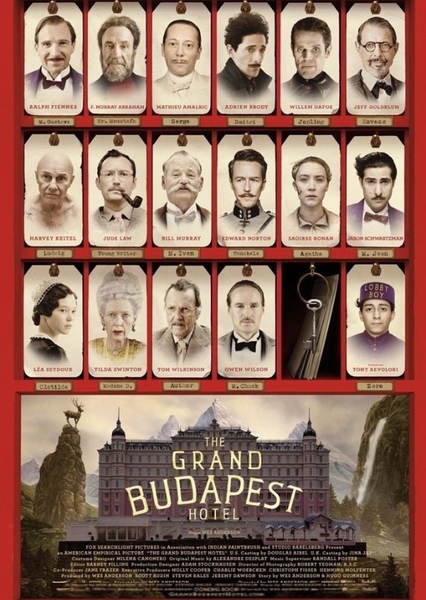
Wes Anderson makes highly detailed, whimsical and richly textured children’s stories for adults, films that evoke an old picture book or model train set from our youth.

The Grand Budapest Hotel is in that same vein, a colorful story about the concierge of a once majestic property (Ralph Fiennes) and his efforts to tutor a protégé (Toni Revolore).

Here, Anderson accentuates the stylish (the scenery approximates toy furniture) and emphasizes the screwball.  Missing, however, are the moments of true human connection that punctuate his earlier works, the moment in Rushmore when Jason Schwartzman shows his hurt feelings or introduces his father, or in Moonrise Kingdom, when the children kiss or Edward Norton reveals his fears of failure as a scout master, or even in The Life Aquatic, when Bill Murray tries to woo Cate Blanchett.

Grand Budapest is Anderson’s non-animated The Fantastic Mr. Fox, a fantastic film,  So too this film, but it’s Anderson’s least affecting picture.

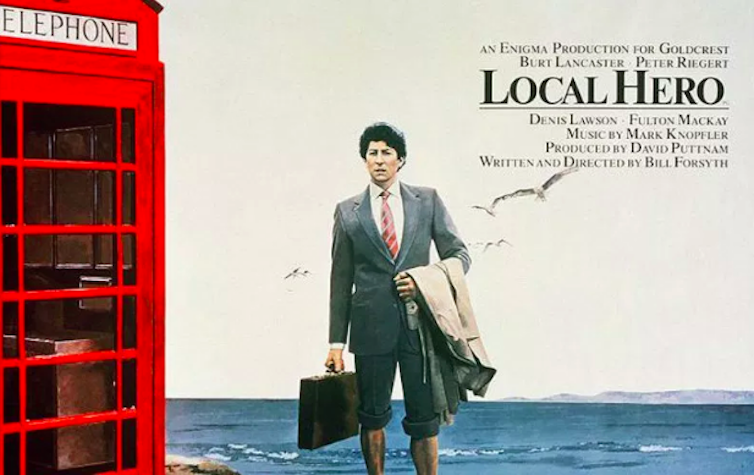
Local Hero at 35: turning Hollywood's greatest Scottish film into a musical

Writer/director Bill Forsyth was born in Glasgow so he was well-positioned to create this love letter to Scotland. Big oil executive Peter Riegert, who lives a precise, antiseptic and singular life in Houston (he prefers to do deals at arm’s length – “I’m a telefax man”) is sent to a small fishing community in Scotland to buy up the land for a new refinery site. Before his journey, the company’s quirky owner and amateur astronomer, Burt Lancaster, enlists Riegert to canvass the skies in search of a comet. Riegert finds a quaint, simpler life that slowly transforms him from uptight businessman to wistful boy, entranced by the scenery, pace and wonder of the coast.  The charm of the film is embodied in the village, in the film’s quieter moments, and as it infatuates Riegert, so too the audience.

There are so many good things about this picture it’s hard to catalogue them all. Riegert manages to be deadpan yet earnest, never once lapsing into sarcasm or condescension, and Forsyth writes him in a manner that never requires an explanation of or ode to his disquiet. The villagers are not schmaltzy local yokels, with a song in their heart and a lesson to impart.  Rather, they are a slightly cynical bunch who received intel on the purchase and they – like anyone – lust for the big payoff.  As Forsyth has acknowledged, “I don’t want you to think there was some deliberate message. You talk about the plot, but was there one? I mean, people can look back and say, oh, this was all an early one about the environment or whatever, but it didn’t happen that way, or if it did it was accidental. I’m not political, either in film or personally, and I don’t really do plot, and certainly don’t aim to broadcast a ‘message’. I suppose I like to tell stories. And if I’m writing a film, and don’t really have a plot, then you have to fill the screen with something, so I try to do so with characters, incidents.”

The picture features an impossibly young Peter Capaldi (In the Loop, World War Z), hilarious as Riegert’s liaison.  His high dudgeon when the town’s cook serves him an injured rabbit he has saved from a road injury is priceless.  Mark Knopfler also contributes a restrained, moody score that melds his guitar licks with a little-80s Vangelis synthesizer.

Apparently, Forsyth only got a few bites at the apple in Hollywood, the last one being a poorly reviewed Robin Williams vehicle, Being Human.  It’s a shame.  Forsyth was interviewed by The Guardian in 2008, which correctly called Local Hero “one of the quiet must-see little masterpieces of British cinema.” 

The Coen Brothers have taken many stabs at comedy, with varying results. On the plus side, Raising Arizona is a wild, human cartoon, with performances by Holly Hunter and Nick Cage approximating Claymation; Intolerable Cruelty an amusing facsimile of a screwball comedy; and The Big Lebowski a whimsical, goofy trip. The Ladykillers however, was a dud, The Hudsucker Proxy an ornate mess, and A Serious Man too self-loathing to support interest, much less humor.

The best of the bunch, by far, is 2008’s Burn After Reading, a crisp, tight ensemble that melds madcap and cloak-and-dagger. The story is too elaborate to capsule, but the tale – intersecting vanity, intrigue, the CIA and personal fitness – is almost besides the point. The actors could have let the serpentine twists carry the day, but to a person, they invest silly characters with pathos and even gravitas.  George Clooney’s philandering everyman goes from loathsome to sympathetic and is almost admirable in his pathological ardor. John Malkovich’s rage-filled civil servant stands in for all us “surrounded by idiots”, especially when we are introduced to his brittle, scheming, focused wife (Tilda Swinton). Frances McDormand’s novice blackmailer is annoyingly hilarious yet almost tragic in her desperate fights for companionship and against the ravages of time. And Brad Pitt, as her dim but lovable accomplice, should have been nominated for Best Supporting Actor. There is not a scene he doesn’t steal, and the one where he must contend with a maniacal Malkovich is one for the ages.

“You think that’s a Schwinn.”


22 Jump Street Review | Vanity Fair

Not as funny as the first one, mainly because it is too self referential and a great deal messier, but plenty funny anyhow. The plot is the same – Channing Tatum and Jonah Hill have to crack a drug ring, only this time, they’re at college. Highlights include Hill’s turn as a Hispanic gang member and later, his impromptu def jam poetry performance at a coffee house, as well as Channing’s bromance with the college quarterback. For better or worse, and mainly better, these guys may be the next Benny and Hope. Downsides include too much Ice Cube and a surprisingly leaden performance from the usually hilarious Jillian Bell (Workaholics, East Bound and Down). You could see this in the theater and get your money’s worth or wait for video and enjoy all the more with the extra $25 in your pocket.

I normally watch this during the holidays, but it is now on the HBO rotation, and I’ve been enjoying it in segments. Based on Nick Hornby’s novel (Hornby was also one of the screenwriters), this is a fine story of a charming but vacuous and intentionally isolated rich guy (Will, played by Hugh Grant) who corrals a neighborhood boy into playing his son in the hopes it will impress a romantic target. He is soon brought into the boy’s world, against all his selfish instincts.

This is a very funny film.  The comedic set pieces (including a harrowing talent show, the death of a park swan, and awkward support groups) are masterful.  The narrative is punctuated by voiceovers from Marcus or Will, and their observations are either hilarious or sentimental. The message is A Christmas Carol – no man is an island, and we are defined by how we treat each other, but for every sweet note, there is an arch counterpoint. My favorite is Will’s voiceover upon meeting Marcus’s earthy, liberal, disapproving mother, Fiona (Toni Collette) over lunch, where he lords his non-vegan ways by ordering steak while, in his mind, deriding her Yeti-like sweater.

About a Boy – 5 stars | filmvetter

Grant is usually reliant on an affected, stammering, faux-shy schtick (his performances in Notting Hill and Love Actually are of this stripe; cloying and relentlessly puppydog). But here, he’s pretty much a dick, playing Will as someone who enjoys a relationship only to the extent it provides him an opportunity or the solace of being kind-hearted. Once there is heavy lifting, he is out, as Grant explains:

Grant is really quite good in the role, especially upon the realization that he is worth nothing in this world. Nicholas Hoult plays Marcus with a sweet perseverance that never once smacks of child-actor manipulation, and Collette is truly vulnerable as Marcus’ crunchy, depressed mother, who is oblivious to the needs of Marcus, his desperation to save her, and the burdens she places on his shoulders.

It’s also heartening to know that poor, sweet Marcus

has grown up to date

Justice.