Archive

Decade

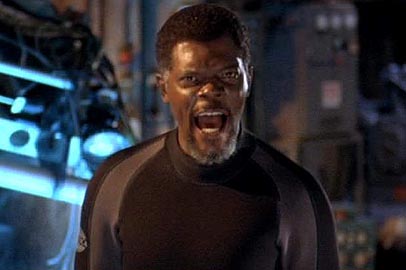
I am getting muthafu***** tired of these muthafu***** sharks!

Deep Blue Sea. Researchers at a deep sea lab experiment on sharks by making their brains huge (4 times a normal size) so they can extract a secretion that will cure Alzheimers. The sharks (computer generated) get very smart. Too smart. A hurricane gives them an opportunity to hunt down several stock characters on the isolated station. None of the characters is “bankable” so their gruesome ends are ho hum. Samuel L. Jackson makes an appearance, and LL Cool J is the sea station cook who says things like “Damn, muthaf***a'” and “Peace out, bitc*” and “Open wide, you nappy toothed fu**a’.” And there is a Jacqueline Bisset look-a-like and damned if her diving suit doesn’t allow for ample cleavage.

There are three sharks, and they are all dispatched in manners strikingly similar to the Jaws films. Figure that.

All that said, this film can be fun and Jackson’s “give the sharks hell” speech is memorable. Snakes on a Plane memorable.

Lock, Stock and Two Smoking Barrels - Wikipedia

A black crime comedy that is full of visual gambits (many hit, many miss), this is a heist film billed as Great Britain’s Pulp Fiction. It has many similarities – the screwing around with sequence, the blase’ attitude to brutality, the quirky characters – but visually, it shares more in common with the Cohen Brothers first film, Blood Simple, though post-MTV in attitude. The director shows you every knife in his drawer, from stop action to slow motion 360 (an entertaining card game gone bad), to interspered music video. The result is a mash of a film, but it is populated by engaging players (a quartet of inept thieves, a trio of crass, drugged out marijuana brokers, a Mr. Big, a fatherly enforcer with a weird concept of family values, an Abbott and Costello) and it moves quickly (sometime, too quickly, because the Cockney is a bitch).

The director, Guy Ritchie, has moved on to the Robert Downey-Jude Law Sherlock Holmes flicks, infusing them with the same action and pace as this picture.

Does it have soul? None. It’s all flash and teeth.

The first half of this cynical war comedy is pretty audacious, if derivative. The plot – essentially, Kelly’s Heroes – has four Gulf War servicemen scheming to steal gold previously stolen by Saddam Hussein from the Kuwaitis.  The beginning of the picture is loaded with funny bits reliant on the culture clash of Americans and Iraqis. Coupled with eye-catching camera work and clever forays into fantasy (the recreation of the route of a bullet into the human body is noteworthy), the film hurtles along, and you never really notice the complete lack of plot or character.

The problems ensue when Three Kings moves from the wacky to the message-laden.  Faced with the horrors of war (dead civilians and specifically, the fate of Iraqis who rose against Saddam without U.S. support), our protagonist thieves become changed men. Up until this point, however, they are merely cleverly written cardboard cut-outs, so it is impossible to determine from where or what they have changed.

The film also descends into hackneyed “I have met the enemy and he is me” tripe.  The political moralizing becomes a bit much, and the sweeping feel-good ending is awkward.  Messages delivered — the war was about oil, not the liberation of Kuwait; there is a human cost to civilian deaths; war is indeed hell; and, if we just listen, we can all get along.

Still, the film’s first half is damn near flawless. The quartet – George Clooney, Mark Wahlberg, Ice Cube and Spike Jones – are also quite good, as are the people given the thankless, noble Iraqi roles.

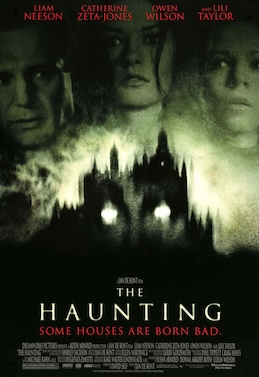
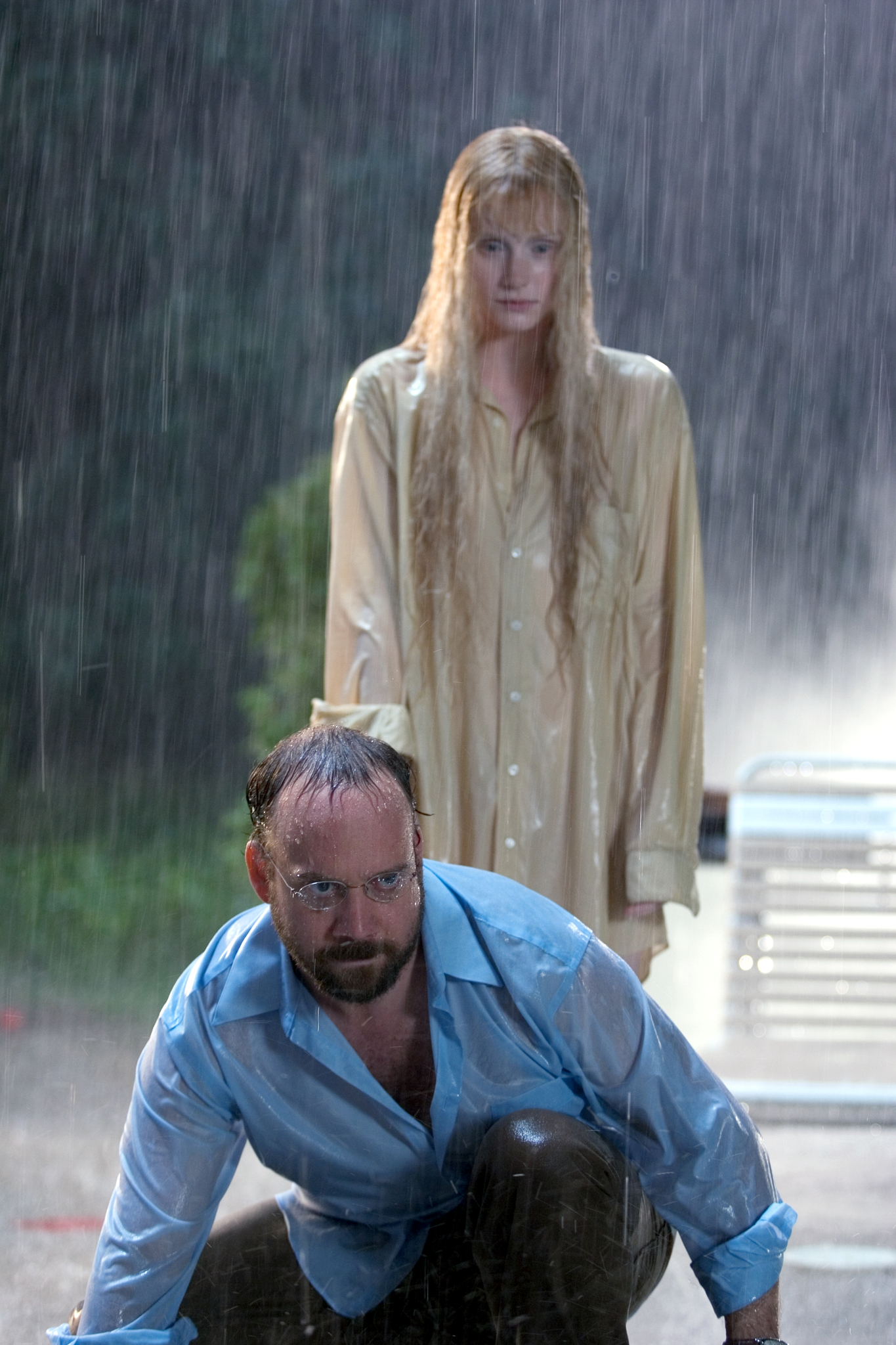
How bad? Shortly after release, Liam Neeson told a magazine that The Phantom Menace was his last film (he recanted shortly thereafter). I’m guessing Neeson’s despair had nothing to do with The Phantom Menace.  This is the kind of film that makes me think Alec Baldwin was lying when he told Charlie Rose that when a film doesn’t work out, “it’s not like we planned to make an awful picture.”  The Haunting is made more wretched because it is purports to be a remake of an excellent supernatural, psychological thriller from 1963.

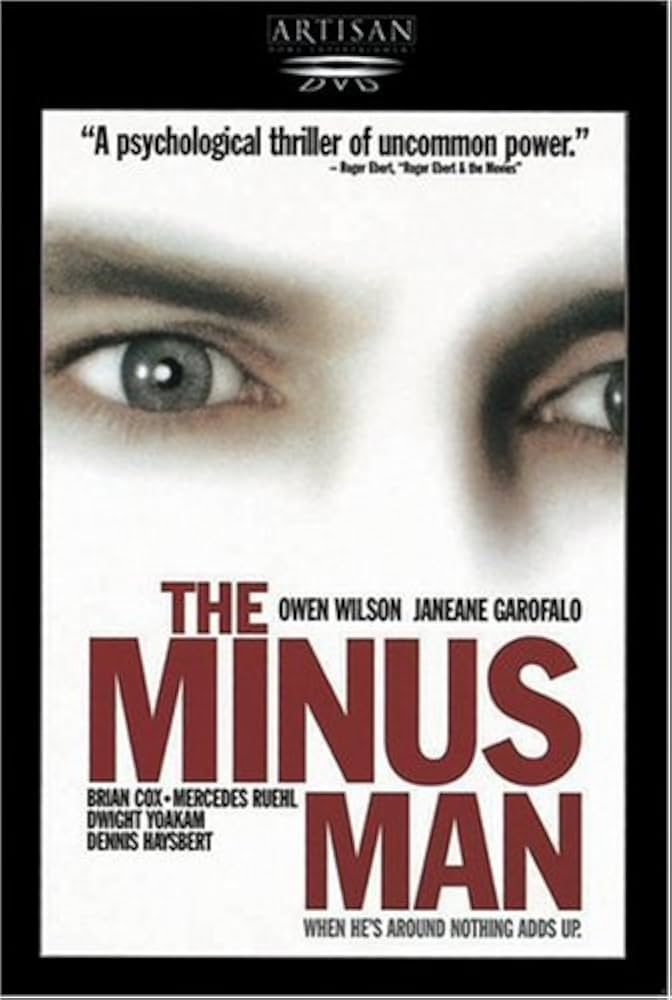
A sweet serial killer film, if such a thing is possible. Owen Wilson plays a drifter who poisons his victims. He is a gentle soul with a horrific secret, a man-child who comes into the lives of several characters in pain (in particular, Mercedes Ruehl and Brian Cox playing parents grieving the departure of what appaers to be their teenage daughter) and provides them what appears ito be support, all the while practicing his craft.

This is an offbeat, even sleepy picture, wholly reliant on Wilson’s quirky, dream-like performance, which I found riveting.

Image result for perfect storm

Twister but only marginally better acted.

The first 30 minutes is devoted to character development, so we can invest in our crew of six fishermen who will weather the storm of the century. There is the romantic captain on a bad streak (George Clooney); the young turk in love (Mark Wahlberg); the divorced father of one fighting to maintain a relationship with his son though he is a “man ‘o the sea” (John C. Reilly); the poor white trash outcast (William Fichtner); the old salt who just met true love in the form of a lonely, overweight woman at the bar (John Hawkes); and the superstitious guy (Allen Paine). Fichtner and Reilly don’t get along for reasons that make little sense, except that one must thereafter save the life of the other, which is exactly what happens.

We also meet the women who love the men who bring us fish fillets: a hard-bitten divorcee (Diane Lane) who curses the day a sail was set; a harder-bitten tavern owner and mother of two of our ill-fated crew (Sherry Jones); the competing hard-bitten captain who wants to transfer Clooney’s heart from the sea to her stern (Mary Elizabeth Mastraontonio); the hard-bitten overweight woman with two kids who waits for the old salt (Rusty Schwimmer); the ex-wife of Reilly; and some floozie who shacks up with the superstitious guy.

To a person, the characters are hackneyed and lame. Hollywood goes to Gloucestor and gets a Gorton’s fisherman accent.

As for the storm, it’s technologically impressive and makes the film watchable. The film is also helped by a gripping subplot involving a Coast Guard air/sea rescue (the insights into the pilots of the rescue helicopter are better communicated through a few lines during stress than all of the preceding soliloquies of the main characters).

But even during the technical wizardry, we are treated to two godawful bids for supporting actress nominations by Lane and Mastroantonio.  Big, gloppy, weepy, leaden and ultimately, unconvincing speeches.

The film even has an old sea captain making salty pronouncements at the bar.

“Ayyy matie! Let me tell you about the storm on ’62.”

The entire schmaltz-fest is coated in a gooey James Horner score. At end, rather than dab a tear from your eye, you are more inclined to go out for seafood and question the heroics of six men who risked life and limb (theirs and those of rescuers) so they could make a buck (they risk the storm because the ice machine on their boat broke, and if they wait the storm out, the fish will rot).

And they don’t wear life preservers.

Final note: the film is about sword fisherman, but they assure us that no animals were harmed during its filming, which means most of the picture’s budget was expended on wiggly, rubber fish.

Harry Callahan (Clint Eastwood) is a no-nonsense detective in 1970s San Francisco, where the political correctness is thick, Miranda-warning era sensitized bureaucrats rule, and crooks are coddled (every thug in Dirty Harry has the sneering, arrogance of a punk who knows that the law is on his side). The baddest guy in a sea of bad guys is the film’s facsimile of the Zodiac Killer, a vicious beatnik with Woodstock hair, an army fatigue jacket and a peace symbol on his belt buckle. Callahan is called in to help with the case.  He is immediately accosted by the D.A. for his excessive brutality.

District Attorney Rothko: You’re lucky I’m not indicting you for assault with intent to commit murder.

Callahan: What?

District Attorney Rothko: Where the hell does it say that you’ve got a right to kick down doors, torture suspects, deny medical attention and legal counsel? Where have you been? Does Escobedo ring a bell? Miranda? I mean, you must have heard of the Fourth Amendment. What I’m saying is that man had rights.

Harry Callahan: Well, I’m all broken up over that man’s rights!

In fighting with the mayor – who wants to give in to the killer’s demands – Callahan is blunt and dismissive.

Mayor: I don’t want any more trouble like you had last year in the Fillmore district. Understand? That’s my policy.

Harry: Yeah, well, when an adult male is chasing a female with intent to commit rape, I shoot the bastard. That’s my policy.

Mayor: Intent? How did you establish that?

Harry: Well a naked man is chasing a woman through an alley with a butcher’s knife and a hard-on, I figure he isn’t out collecting for the Red Cross.

Even in his ultimate scene, where he mocks one of three hold-up men, Callahan embodies the rugged conservative fantasy of turned-tables and frontier justice.

Harry: Ah Ah, I know what you’re thinking. Did he fire six shots or only five? Well, to tell you the truth, in all this excitement, I’ve kinda lost track myself. But being as this is a .44 Magnum, the most powerful handgun in the world, and would blow your head clean off, you’ve got to ask yourself one question: ‘Do I feel lucky?’ Well, do ya punk?

Punk. He’s a punk. Not a suspect. Not a person. Not a downtrodden, misunderstood product of an uncaring society.

Paul Newman was offered the film, but legend has it he was nervous about its politics, and suggested Eastwood for the part. Great suggestion. Eastwood has commented on Dirty Harry that “It’s not about a man who stands for violence, it’s about a man who can’t understand society tolerating violence.” Pauline Kael called the film “fascist.” This is, however, the same Pauline Kael who was stunned when McGovern lost in 1972, saying “I live in a rather special world. I only know one person who voted for Nixon.”

Politics aside, this is an excellent picture. Eastwood is mythic, the story moves, the San Francisco locale is used to great advantage, and the killer is truly frightening.