Archive

5 stars

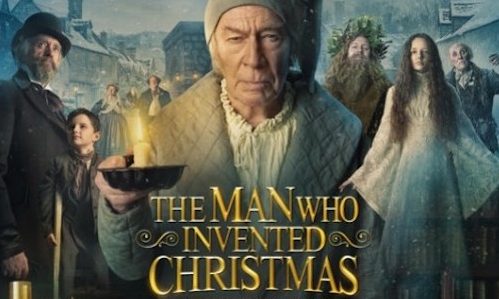
Image result for The Man Who Invented Christmas

Charles Dickens (Dan Stevens) has had three flops and his “A Christmas Carol” is a must-win.  We spend the film watching Dickens cobble his daily observances into the book, and soon, he is followed by all of its characters, who inspire him to write more, or mock his writer’s block (most of the mocking is by way of Scrooge, played with a sly bite by Christopher Plummer).  The end of the book tortures Dickens, but much like Scrooge himself, addressing his personal demons brings the author to resolution and redemption.  This is great fun, very well-done and will take a post on my ten “must see” list of Christmas films next December.  Here are the other nine:

A Christmas Carol (George C. Scott version)

About a Boy

Die Hard

It’s a Wonderful Life

Arthur Christmas

A Christmas Story

Elf

Bad Santa

The Nightmare Before Christmas

image

This is what a superhero movie is supposed to be. Consistently clever, mainly for young people but with crossover to adults, and devoid of all the dreary seriousness of Gotham city and world politics and ethical dilemmas for people dressed up for Mardis Gras. Add the fact that the characters are almost impossible not to enjoy, the CGI is nifty rather than a blaring assault, and there are some really funny bits. And the finale is a blast (rather than a dark, dull, crashing snorefest ala’ Wonder Woman). The film also has a proper villain, the sleek, sultry, campy goddess of death Cate Blanchett.

Quintessential popcorn flick.

Image result for Their Finest

This is a clever, touching story of harried Ministry of Information filmmakers working on a “Dunkirk” morale booster propaganda picture during the Blitz.  An ode to the magic of movies and Brit pluck, the script is sly and witty, and the love interests (Gemma Arterton and Sam Claflin) have actual chemistry.  But if none of that were true, I’d still recommend the picture unreservedly for Bill Nighy’s hilarious turn as a fussy, conceited, insecure actor who cannot accept that his age has negated his role as the hero.  As usual, he’s marvelous.  One reviewer aptly called Night “a colossally proportioned scene-stealer”, which is spot on.

Image result for The Florida Project

The Florida Project owes some debt to Beasts of the Southern Wild, another audacious and free-flowing picture that relied almost exclusively on a natural environment and its inhabitants through the eyes of a child.  In that film, the environment was the Southern bayou and a community cut off from the rest of the world by a Louisiana levee. Here, it is a stretch of highway miles from Orlando’s Disney World, where gift shops, liquor stores, time share scams and gaudy, low-end motels litter the strip.  The motels are primarily housed by people who pay by the week (the unfortunate tourists did not look too closely at the promotional materials), and we are introduced to the milieu via the daily play of four young actors. They are the children of poor people who cannot care for them during the day, and they play largely unobserved, unhindered, wildly, and desperate for attention.  That attention is given to them in a decent and caring manner by the motel manager, Willem Dafoe, who struggles to keep the right amount of emotional distance from the residents, almost all of whom are troubled or are going through tough times. He can barely disguise his affection for the children while at the same time maintaining order at his establishment, an order which includes forcing residents to spend a night away from the place at intermittent periods so they do not establish residency, and presumably, tenant rights.

I understand the child actors were for the most part amateurs, and the decision to use them was keen.  The best child actors lack the affectation and self knowledge you often find at its worst on Nickelodeon or in precocious children who watch too much of it.   These children are so natural, the film nearly veers into documentary, making their plight all the more harrowing and their story all the more compelling.  Brooklyn Prince, the leader of the kids, is seven years old, and she is mesmerizing.

Dafoe, who is nominated for best supporting actor, delivers a dignified, quiet and measured performance, but the film is stolen by Bria Vinatae, who plays the single mother of one of the children. She is a child herself, wholly ill-equipped to raise one of her own, yet fiercely loving and resourceful.

Director Sean Baker (Tangerine) eschews a traditional narrative, opting for a languorous approach that mirrors the hot summer days depicted in the film.  The effect is to embed the viewer with the children and their community, which heightens what you feel for these kids.  Yet, there is not a single maudlin or false note.

Best film of the year.

 

image

During WWII, the Germans occupying Denmark laid 2.2 million mines on its coast in anticipation of an Allied invasion. The Danes employed their former occupiers to clean up those mines, the subject matter of this harrowing and haunting film. We follow a group of very young, very scared German soldiers who are given mine-clearing training and then a quadrant containing 45,000 mines. If they clear them at a certain rate, they will be allowed to go home in three months.

The process is nerve wracking. Mind you, these boys have instruction and some support, unlike the Iranian children during the Iran-Iraq war who were simply sent into the mine fields to clear by suicide in some glorious sacrifice. But the toll, both physical and psychological, is brutal, especially when inflicted on ones so young. They are homesick, hungry (their care was not paramount) and under the leadership of an embittered Danish sergeant who is fighting his own demons but is also humanized by their plight.

This is a beautiful picture, enhanced by touching, sensitive performances. There is talk every year of creating an Oscar for an ensemble, and this cast would be a deserving nominee. The film, however, is not for the faint of heart.


Image result for Scrooge Sim

Alistair Sim is by far and away the best Ebenezer Scrooge.  He is hardened and fierce yet he carries a barely perceptible regret and tenderness that makes his eventual transformation more of a de-icing than a bullet-dodged.  His exhilaration and mirth upon redemption are infectious, his realization he can play some awesome practical jokes on the likes of his housekeeper and clerk is hilarious, and his heartfelt apologies are actually very moving.  This is my favorite of the film adaptations.  DVR at once.

image

Writer-director Greta Gerwig’s picture is assured, ingenious, and alternatively, hilarious and moving. A coming-of-age story that touches on the themes of leaving home and the mother-daughter relationship is not exactly original, but in Gerwig’s hands, it is fresh. Lady Bird (Saiorse Ronan of last year’s beautiful Brooklyn) is a Catholic school senior in Sacramento navigating her college choices, academic ennui, sexual inexperience, insecurity, and her family’s economic frailty, all while negotiating an increasingly strained relationship with her passive-aggressive (and sometimes, aggressive-aggressive) mother (Laurie Metcalf).

Gerwig stitches a narrative together with brisk and evocative vignettes, and her characters carry the nuance and surprise of real people. Lady Bird’s reach for popularity and desire for something beyond what she deems the stodgy and suffocating Sacramento might normally make her empathetic, but she is of her age, which means selfish and even cruel, in her ambition. This harsh light prevents the film from becoming maudlin. She’s a real girl and her world feels authentic. I watched the film with my wife and daughter, and their knowing glances and nonverbal communication throughout certified the truth of its nature.

I was reminded of different films at different times while watching Lady Bird. Gerwig’s command of pace and sharp timing evokes Wes Anderson’s The Royal Tenenbaums, shorn of his mannered style. Her strong portrayal of the bond of family and place also brought to mind last years’ incredibly under appreciated 20th Century Women. Finally, the mother-daughter dynamic on the eve of separation made me think of Nicole Holofcener’s Enough Said.

I don’t mean to convey that Gerwig’s picture is derivative, only exceedingly accomplished. These are great pictures for purposes of comparison.

This is one of the best of the year, and I expect nominations for best picture, best director and best original screenplay. At a time when Hollywood may very well want to go with films that are smaller and more pure, keep this one in mind when filling out your Oscar ballot.

image

Taylor Sheridan, the writer of Sicario and Hell or High Water, has turned in a stunning directorial debut melding his signature economy of dialogue with an accomplished feel for the ebb and flow of backcountry America and a lyrical visual style. The frozen mountains of Wyoming serve as the locale to a murder investigation where FBI outsider (Elizabeth Olsen) partners with a fish and game tracker (Jeremy Renner) and an Indian reservation sheriff (Graham Greene) to solve the rape and murder of a teen found in the snow.

Sheridan is the nephew of a former U.S. Marshal and a Texas sheriff, and as with his prior films, his replication of the patter of law enforcement feels as if he has spent much time at their knee. His characters avoid the bravado and cliche’ of many movie cops. They inhabit a matter-of-fact world, not cartoonish macho, but one that exudes a professional cynicism. Like Emily Blunt in Sicario, Olsen is not the standard female law enforcement officer who has to “prove” herself in a near-all male world. There is no overcompensation.  She just is.

The performances are understated and genuine, and Renner in particular well renders the pain of a haunted but determined man.

Sheridan is also deftly political, never overt but still seamlessly intertwining some of the cultural realities in rural American with the narrative.  It never gets in the way of the pace, and Sheridan’s handling of the thrill part of thriller is expert.  The crescendo to a violent explosion is damn near excruciating

One of the better films of the year, which admittedly ain’t saying much this year, but that shouldn’t be held against this picture.

Stagecoach (1939) – The Movie Screen Scene

John Ford’s classic alternates between deft commentary on social strata, hypocrisy and manners and, for its time, jaw-dropping action (the chase scene at the end almost certainly had to result in many a broken bone, if not worse).  Orson Welles studied the picture obsessively prior to Citizen Kane, and the film’s influence is evident in everything from Eastwood’s westerns to Tarantino’s The Hateful Eight As Eastwood correctly observed, “There’s something about the way he approached his subject that broke down clichés of the era.”

In the vein of these dimwitted times, you can leave it to Tarantino to lodge the standard p.c. indictment:  “I hate him [Ford]. Forget about faceless Indians he killed like zombies. It really is people like that that kept alive this idea of Anglo-Saxon humanity compared to everybody else’s humanity—and the idea that that’s hogwash is a very new idea in relative terms.”  Regardless, as is evident in Tarantino’s last film, which expertly apes and updates Ford’s socially diverse discourse, Ford’s influence is inescapable even if Tarantino believes himself immune to his charms.  An excellent rebuttal to Tarantino’s juvenile approximation of Ford can be found here and properly notes:

His films don’t live apart from the shifts in American culture and the demands of the film industry, but in dialogue with them. Do those films provide the models of racial enlightenment that we expect today? Of course they don’t. On the other hand, they are far more nuanced and sophisticated in this regard than the streamlined commentaries that one reads about them, behaviorally, historically, and cinematically speaking, and the seeds of Ulzana’s Raid and Dead Man are already growing in Fort Apache and The Searchers. Is Ford’s vision “paternalistic?” I suppose it is (and that includes The Sun Shines Bright and Sergeant Rutledge), but the culture was paternalistic, and holding an artist working in a popular form to the standards of an activist or a statesman and condemning him for failing to escape the boundaries of his own moment is a fool’s game. Maybe it’s time to stop searching for moral perfection in artists.

The film also made John Wayne a star, and Ford’s introductory shot of the actor could hardly have done less:

Methinks the fix was in.

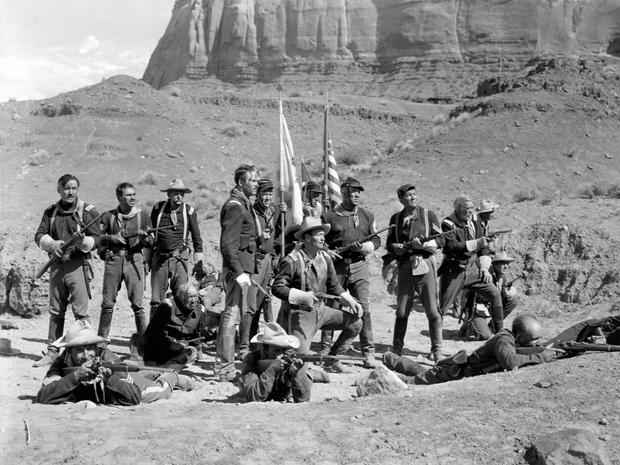
Image result for Fort Apache Monument VAlley

John Ford’s western, an extremely loose re-imagining of the Custer massacre, surprises in numerous ways.  The film has a heady sense of humor – the hard-boozing Irish of The Quiet Man are present, but not quite so cartoonishly so.  It again reveals that John Wayne was quite underrated as a dramatic actor.  But it is most unique in its melding of patriotic lore and bitter cynicism, ultimately concluding that the fraudulent propagation of patriotic heroism is at a minimum a necessary evil and perhaps even a critical component of the national ethos.  What matters, ultimately, is the myth.

It is also, of course, beautiful in its use of Monument Valley.