Archive

5 stars

d714221b-26f1-468b-b825-744fd2f9179f

A technical advance in both sound and movement, and a caustic, first-of-its-kind black comedy, Robert Altman’s M*A*S*H was once deemed a masterpiece. Alas, now, it is as culturally atonal and offensive as Gone With the Wind.

The women in the film are nothing but sexual playthings, constantly subject to the predations of Trapper John, Hawkeye and all the rest of the misogynists who inhabit the camp. The nurses are first and foremost flesh to be pawed at, conquests to be made. Add an indelible strain of homophobia, a black character named “Spearchucker” and Trapper John and Hawkeye in Japan yukking it up with racist Charlie Chan imitations, and you end up with the transformation of what used to be an iconic, anti-establishment, anti-Vietnam (Korea just plays the part) film into a vessel for the most retrograde and debilitating of social views, a moral blight as offensive as blackface.

Mind you, I do not come to this conclusion lightly or happily. Before my own reeducation, I would have found this a clever, funny and brash film. The characters possess incredible medical gifts and live in an untenable situation, surrounded by gore and death, and they resort to sophomoric gags and easy sex because that’s what some people under stress do, especially in dark comedies. The old me would view this film as cruelly hilarious. I might have also found the treatment of the women tempered by their corresponding consent, agency and obvious value to the camp.

But that was before I understood the power of patriarchal constructs. My God, at one point, Hawkeye brings a female nurse to a depressed colleague as if she were a comfort girl to a marauding victor. And she is dreamily driven off, her lust was so sated.

The brutal ouster of the pious Frank Burns and the ritual humiliation of Hot Lips Hoolihan aren’t the mere comeuppance of villains. Watch again as she is unbared in the shower. The leering men settle a bet as to whether she is, in fact, a true blond; she writhes, naked, abused, on the shower floor while they hoot and holler and jeer.  Despicable.

God help the campus movie house that accidentally runs this baby.

Image result for First man

Damien Chazelle has directed two gems (Whiplash, La La Land) that could not be more different, and his third picture is every bit as accomplished and even further afield tonally from his prior movies.  On the surface, the film is the story of Neil Armstrong (Ryan Gosling) and the Moon landing, but this is not the gripping, white-knuckle paean to American ingenuity that was Apollo 13 or the sweeping, ironic The Right Stuff, both exquisite films in their own right.  Instead, this is the personal story of Armstrong and his wife Janet (Claire Foy), who, after having lost a young daughter to a malignant tumor, forge ahead in the space program, where calamity is a daily feature.  It’s a beautiful, personal picture, seamlessly melding the grit and determination of one family with an overarching, monumental and patriotic (more on that below) achievement.  It is one of the more moving yet subtle films I’ve ever seen.

Two addenda.  First, the omission of Gosling and Foy in the acting categories for the Oscars is, in my view, the filmic version of the Saints-Rams no-call.  Gosling’s driven and emotionally-stunted introvert is meticulous and engrossing, a master class in precision (think Casey Affleck in Manchester by the Sea).  Foy, as the wife holding it all together, is simply heartbreaking.

Second, this film caught some flack for failing to depict Armstrong planting the American flag on the Moon.  When asked (and never ask an actor anything), Gosling took as stab at an answer, observing that the landing “was widely regarded in the end as a human achievement” and that he didn’t think Armstrong “viewed himself as an American hero.”

And . . . .kaboom!  The culture dummies – this time on the right – went after the picture, as some sort of anti-American agitprop.  Little Marco Rubio was particularly incensed:  “This is total lunacy. And a disservice at a time when our people need reminders of what we can achieve when we work together. The American people paid for that mission,on rockets built by Americans,with American technology & carrying American astronauts. It wasn’t a UN mission.”

The criticism is moronic.  Films are not required to meet a quota of patriotic content.  Worse, though, the charge is false.  The singular American achievement of the landing is represented by footage of JFK literally crowing over, well, the race to that achievement.  Moreover, there is footage of a French woman who observes, “I always trust an American. I knew they wouldn’t fail.”

As if that idiocy wasn’t enough, the left weighed in to label the film a right wing fetish object with a “misbegotten political premise that America used to be greater—and that the liberating and equalizing activism of the sixties ignored, dismissed, and even undermined that greatness” or, gasp!, potentially dangerous for reinforcing the “pervasive notion about achievement—that it occurs when people toughen up and don’t let feelings impair their judgment.”

What a bunch of fucking losers.

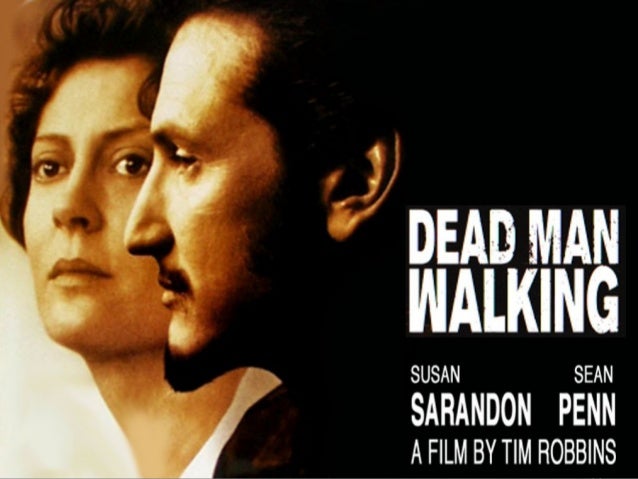
Image result for Dead Man Walking

I caught this a few rainy days ago.  There are very few films that deal with contemporary hot button issues well. Most of the time, the inclination of the writer and director is so patently obvious that the art is robbed of plausibility and force.

This movie is an exception.  The issue is subordinate to the human story, and while that story is primarily told from the viewpoint of an anti-death penalty character (Susan Sarandon as Sister Helen Prejean) ministering to convicted murderer and rapist Matthew Poncelet (Sean Penn), that in no way colors the message, which is admirably equivocal, even, to my mind, shockingly, a hair pro-capital punishment. That is probably just me, given the hackneyed uniformity of most such films, but that the picture provides an emotional and almost ethical argument for the practice is astonishing.

Sarandon is restrained and effective as a woman of faith called to provide spiritual comfort to a man who has committed a monstrous crime, and as that man, Penn exhibits all the bravado, self-pity, cruelty and narcissism of a thug.  Eventually, she learns she is not there to redeem him in any way, and shucks off her self-comforting fantasies that he was just a good boy led astray,  and focuses on simply leading him to confession.

Director Tim Robbins takes meticulous pains to display the brutal toll on the victims’ families and has the balls to juxtapose the execution with an unforgiving flashback of the crime, and unlike what Poncelet has been selling Prejean up until the last moments before he is executed (he is innocent, he was stoned, his accomplice did the killing and raping and things just got out of hand), those flashbacks show him as a vile, entirely in control piece of shit.

Nobody is caricatured. No easy rhetorical gotcha’ lines are delivered.  The employees of the prison, the medical professionals involved in the process, the families, they are treated with rare grace and equanimity.  An example: Sarandon has dinner with her wealthy family, some of whom question her service to Poncelet.  In the wrong hands, they would have been portrayed as the aristocratic, privileged rich, more concerned with their name and espousing small, likely bigoted views.  Robbins, however, shows them as loving and concerned, with questions (“Why spend so much time on this cretin when you could be helping young children not to grow up into becoming this cretin?”) similar to that of the audience.

Similarly, Poncelet is never a beatific victim.  Near the end, he praises Hitler, he spews racist invective, he even makes a sexual come on to Sarandon.  But she works with him, to help him find a dignity within himself through the sole act of the admission of his guilt and contrition.

Great film.


The Changeling 1980 | Changeling, Horror, Ghost stories

One of my favorite ghost stories, it has all the elements: a believable tortured performance by George C. Scott, a recent widower with whom an old house begins to communicate; absolutely chilling, hair-standing on the back of your neck moments; an engrossing mystery that seamlessly ties into the increasingly disturbing hauntings; and, a unhurried pace which heightens the terror.  Trust me. Or trust Martin Scorsese. It’s on his list of the 11 scariest horror films of all time.

Also, scariest wheelchair ever.

image

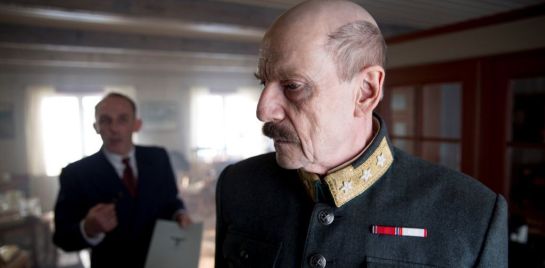
Just as Dunkirk was an ode to English pluck and a representation of the viscerally brutal and arbitrary nature of war, The King’s Choice serves the dual purpose of a national homage to Norway’s resistance in the face of a Nazi invasion and the strain placed on the powerful and the ordinary in such circumstances.  Norway’s King Haakon VII, is a sweet, doting grandfather who is constitutionally deferential to a democratic body that is crumbling under the weight of events.  He must bolster the government while staving off the more muscular, ambitious desires of his son, which carry with them an implicit criticism of his father as weak.  Indeed, as the king suffers from a bad back, we often see him in a fetal position on the floor or a bed.  Meanwhile, the German attaché, who is juxtaposed favorably with the uncompromising Wermacht, desperately pleads with the king to accede to Hitler’s demand for submission, knowing that failure to do so totally will mean the deaths of many innocents.   The tension is palpable, the pace gripping, and the quiet moments – especially the scenes showing the effect on the families – poignant.

Image result for The Man Who Invented Christmas

Charles Dickens (Dan Stevens) has had three flops and his “A Christmas Carol” is a must-win.  We spend the film watching Dickens cobble his daily observances into the book, and soon, he is followed by all of its characters, who inspire him to write more, or mock his writer’s block (most of the mocking is by way of Scrooge, played with a sly bite by Christopher Plummer).  The end of the book tortures Dickens, but much like Scrooge himself, addressing his personal demons brings the author to resolution and redemption.  This is great fun, very well-done and will take a post on my ten “must see” list of Christmas films next December.  Here are the other nine:

A Christmas Carol (George C. Scott version)

About a Boy

Die Hard

It’s a Wonderful Life

Arthur Christmas

A Christmas Story

Elf

Bad Santa

The Nightmare Before Christmas

image

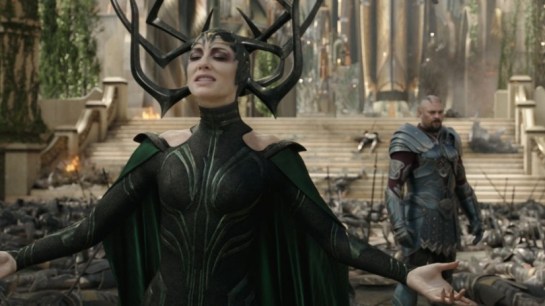
This is what a superhero movie is supposed to be. Consistently clever, mainly for young people but with crossover to adults, and devoid of all the dreary seriousness of Gotham city and world politics and ethical dilemmas for people dressed up for Mardis Gras. Add the fact that the characters are almost impossible not to enjoy, the CGI is nifty rather than a blaring assault, and there are some really funny bits. And the finale is a blast (rather than a dark, dull, crashing snorefest ala’ Wonder Woman). The film also has a proper villain, the sleek, sultry, campy goddess of death Cate Blanchett.

Quintessential popcorn flick.

Image result for Their Finest

This is a clever, touching story of harried Ministry of Information filmmakers working on a “Dunkirk” morale booster propaganda picture during the Blitz.  An ode to the magic of movies and Brit pluck, the script is sly and witty, and the love interests (Gemma Arterton and Sam Claflin) have actual chemistry.  But if none of that were true, I’d still recommend the picture unreservedly for Bill Nighy’s hilarious turn as a fussy, conceited, insecure actor who cannot accept that his age has negated his role as the hero.  As usual, he’s marvelous.  One reviewer aptly called Night “a colossally proportioned scene-stealer”, which is spot on.