Archive

5 stars

Image result for Guardians of the Galaxy

The model summer movie, with perfectly distributed action, humor and homage.  There is nothing original in the film – Chris Pratt as intergalactic robber “Star Lord” is a younger, hipper Han Solo, Vin Diesel is Chewbacca without the fur, and the Death Star has been miniaturized to a tiny crystal – but if not unique, it is fresh. Rather than reaching for the myth of Star Wars, Guardians opts for more humor, and the operatic sweep of John Williams is replaced by vintage pop, courtesy of Pratt’s 70s mixtape. There is sweetness (Bradley Cooper voices a surprisingly moving raccoon) and while director James Gunn’s resume’ (Slither) contains nothing suggesting an ability to handle this fare, the actions sequences are expert, comprehensible and brief, avoiding the mind-numbing excess of so many Marvel pictures.  The only criticism is the short shrift given to the motives and backstory of the villains, but I assume that comes in the inevitable and welcome sequel.

The best sports movie ever made, a character-driven blend of sentimentality and tension that dramatizes the football culture on a small, poor Texas town. Every trope that is bandied about by lesser sports films is obliterated, yet, the film doesn’t reject the formula. There are gridiron heroes, strong women who stand behind them, racial undertones, father-son generational combat and an obligatory half time speech.

But compare the ridiculous grandiosity and easy message of most any sports film with the replication of the game in this picture and you’ll find there is no comparison. The women are actual characters, not noble support. The racial issues are genuine and near imperceptible, the blacks don’t exist to teach the whites to dance, and the whites don’t exist for the confession of absolution. The father son dynamic between Tim McGraw and Garrett Hedlund is incredibly moving and Billy Bob Thornton’s halftime speech is poetry.

This is a beautifully acted film, as much about a community as the players, and I’m moved every time I see it. Never more so than by Derek Luke’s work in this scene:

Local Hero at 35: turning Hollywood's greatest Scottish film into a musical

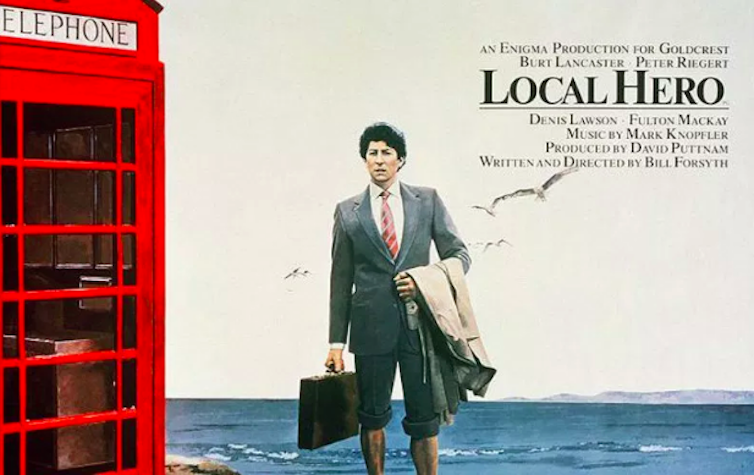
Writer/director Bill Forsyth was born in Glasgow so he was well-positioned to create this love letter to Scotland. Big oil executive Peter Riegert, who lives a precise, antiseptic and singular life in Houston (he prefers to do deals at arm’s length – “I’m a telefax man”) is sent to a small fishing community in Scotland to buy up the land for a new refinery site. Before his journey, the company’s quirky owner and amateur astronomer, Burt Lancaster, enlists Riegert to canvass the skies in search of a comet. Riegert finds a quaint, simpler life that slowly transforms him from uptight businessman to wistful boy, entranced by the scenery, pace and wonder of the coast.  The charm of the film is embodied in the village, in the film’s quieter moments, and as it infatuates Riegert, so too the audience.

There are so many good things about this picture it’s hard to catalogue them all. Riegert manages to be deadpan yet earnest, never once lapsing into sarcasm or condescension, and Forsyth writes him in a manner that never requires an explanation of or ode to his disquiet. The villagers are not schmaltzy local yokels, with a song in their heart and a lesson to impart.  Rather, they are a slightly cynical bunch who received intel on the purchase and they – like anyone – lust for the big payoff.  As Forsyth has acknowledged, “I don’t want you to think there was some deliberate message. You talk about the plot, but was there one? I mean, people can look back and say, oh, this was all an early one about the environment or whatever, but it didn’t happen that way, or if it did it was accidental. I’m not political, either in film or personally, and I don’t really do plot, and certainly don’t aim to broadcast a ‘message’. I suppose I like to tell stories. And if I’m writing a film, and don’t really have a plot, then you have to fill the screen with something, so I try to do so with characters, incidents.”

The picture features an impossibly young Peter Capaldi (In the Loop, World War Z), hilarious as Riegert’s liaison.  His high dudgeon when the town’s cook serves him an injured rabbit he has saved from a road injury is priceless.  Mark Knopfler also contributes a restrained, moody score that melds his guitar licks with a little-80s Vangelis synthesizer.

Apparently, Forsyth only got a few bites at the apple in Hollywood, the last one being a poorly reviewed Robin Williams vehicle, Being Human.  It’s a shame.  Forsyth was interviewed by The Guardian in 2008, which correctly called Local Hero “one of the quiet must-see little masterpieces of British cinema.” 

image
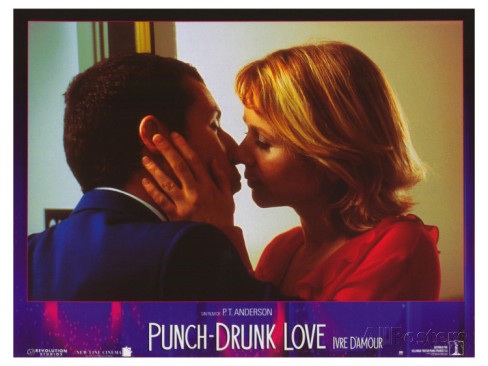
Paul Thomas Anderson’s follow-up to the sweeping, first-half brilliant, second-half excessive Magnolia could not have been more different, a love story between the closed-off, anger-ridden Adam Sandler and the co-worker of one of his sisters, Emily Watson. Sandler, a small business owner in LA, is clearly plagued by inner demons, exacerbated by his extroverted, intrusive and brutal sisters (he has 7 of them and when they are not calling him incessantly at work, embarrassing him in front of Watson, or blithely trading in his confidences, they are recounting humiliating stories from his youth). Sandler seeks connection and unfortunately, he does so via the use of sex call operation run by Phillip Seymour Hoffman that specializes in blackmail and harassment. This crisis comes down upon Sandler right as he has forged a true, real connection with Watson.

Sandler’s movies are almost all bad, but I’ve come to the conclusion that he’s running a welfare program for each and every one of his comedian compatriots, and for this, he should be commended. When he receives good material, such as this film, The Wedding Singer and Funny People, he suppresses his twin excesses – the goofy and the superior smart aleck amongst the goofier – and presents nuanced, multi-dimensional characters. Here, his character is immediately sympathetic, just this side shy of a man who has voices in his head, and I was reminded of Bradley Cooper’s more realistic character in Silver Linings Playbook. Both yearn for normalcy. The former almost appears to have wasps around his head, while Sandler has them in his insides. Watson calms his roil, and her presence allows him to use his anger management issues in a positive fashion.

As much as the film emphasizes Sandler’s struggle, the moments of peace he earns in his time with Watson are poignant.

Anderson’s visuals put Sandler’s torment under a glare, constantly stalking him, scoping him.  Similarly, the music is a staccato of plinking piano, off-kilter horns and rolling drum, giving the viewer a sense of what it must be like to be in Sandler’s head. The shots and clatter only settle when Watson appears, and in those moments, Anderson re-creates the whirling, lightheartedness of a traditional romantic comedy from the 40s.

A truly unique picture, it’s unlikely you’ve seen anything like it.

The Coen Brothers have taken many stabs at comedy, with varying results. On the plus side, Raising Arizona is a wild, human cartoon, with performances by Holly Hunter and Nick Cage approximating Claymation; Intolerable Cruelty an amusing facsimile of a screwball comedy; and The Big Lebowski a whimsical, goofy trip. The Ladykillers however, was a dud, The Hudsucker Proxy an ornate mess, and A Serious Man too self-loathing to support interest, much less humor.

The best of the bunch, by far, is 2008’s Burn After Reading, a crisp, tight ensemble that melds madcap and cloak-and-dagger. The story is too elaborate to capsule, but the tale – intersecting vanity, intrigue, the CIA and personal fitness – is almost besides the point. The actors could have let the serpentine twists carry the day, but to a person, they invest silly characters with pathos and even gravitas.  George Clooney’s philandering everyman goes from loathsome to sympathetic and is almost admirable in his pathological ardor. John Malkovich’s rage-filled civil servant stands in for all us “surrounded by idiots”, especially when we are introduced to his brittle, scheming, focused wife (Tilda Swinton). Frances McDormand’s novice blackmailer is annoyingly hilarious yet almost tragic in her desperate fights for companionship and against the ravages of time. And Brad Pitt, as her dim but lovable accomplice, should have been nominated for Best Supporting Actor. There is not a scene he doesn’t steal, and the one where he must contend with a maniacal Malkovich is one for the ages.

“You think that’s a Schwinn.”


I normally watch this during the holidays, but it is now on the HBO rotation, and I’ve been enjoying it in segments. Based on Nick Hornby’s novel (Hornby was also one of the screenwriters), this is a fine story of a charming but vacuous and intentionally isolated rich guy (Will, played by Hugh Grant) who corrals a neighborhood boy into playing his son in the hopes it will impress a romantic target. He is soon brought into the boy’s world, against all his selfish instincts.

This is a very funny film.  The comedic set pieces (including a harrowing talent show, the death of a park swan, and awkward support groups) are masterful.  The narrative is punctuated by voiceovers from Marcus or Will, and their observations are either hilarious or sentimental. The message is A Christmas Carol – no man is an island, and we are defined by how we treat each other, but for every sweet note, there is an arch counterpoint. My favorite is Will’s voiceover upon meeting Marcus’s earthy, liberal, disapproving mother, Fiona (Toni Collette) over lunch, where he lords his non-vegan ways by ordering steak while, in his mind, deriding her Yeti-like sweater.

About a Boy – 5 stars | filmvetter

Grant is usually reliant on an affected, stammering, faux-shy schtick (his performances in Notting Hill and Love Actually are of this stripe; cloying and relentlessly puppydog). But here, he’s pretty much a dick, playing Will as someone who enjoys a relationship only to the extent it provides him an opportunity or the solace of being kind-hearted. Once there is heavy lifting, he is out, as Grant explains:

Grant is really quite good in the role, especially upon the realization that he is worth nothing in this world. Nicholas Hoult plays Marcus with a sweet perseverance that never once smacks of child-actor manipulation, and Collette is truly vulnerable as Marcus’ crunchy, depressed mother, who is oblivious to the needs of Marcus, his desperation to save her, and the burdens she places on his shoulders.

It’s also heartening to know that poor, sweet Marcus

has grown up to date

Justice.

Alexander Payne’s black-and-white portrait of a geriatric mid-westerner (Bruce Dern) intent on getting from Montana to Nebraska to collect a sham $1 million sweepstakes prize is patient, lyrical and loving.  The film evokes David Lynch’s The Straight Story in its pathos, but it also contains a wry sense of humor, largely provided by Dern’s suffering younger son (SNL alum Will Forte) and his brutal, loudmouth but ultimately protective wife (June Squibb)  Lesser films would have played up the wackiness of the extended family, who now believe Dern is flush and are making their claims, or they would have provided Dern the platform to release his Korean war demons or his crushed dreams to his son on their journey.  There is none of that easy bull here.  Instead, Payne presents an authentic portrait of a stoic rural family (Dern seems to have 7 brothers, all of whom watch the NFL with nary a quiver) steeled by time and want, with the very true message that most people don’t really know much about their parents, and that their pasts grow more foreign to us every day.  This film is a lesson in restraint, and Payne (The Descendants, Sideways, Election, Citizen Ruth) has cemented his place as a writer/director with a unique, American voice.

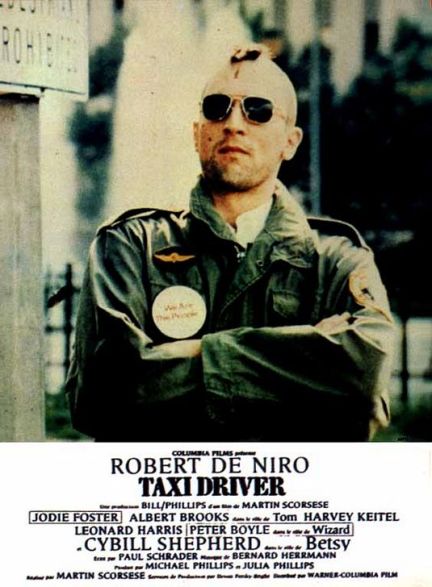
I was surprised to see several things in my recent re-viewing of Martin Scorsese’s classic, including Albert Brooks as the exact same character he has been playing for nearly 40 years; Scorsese himself making a Hitchcockian appearance in the background, but then taking a significant one-scene role as a lunatic in the back of Travis Bickle’s (Robert DeNiro) cab, suggesting he changed his mind about how much time he would spend in front of the camera; and the effectiveness of the score, which was Bernard Herrmann’s last one.

That aside, it holds up as the classic it is considered (47 on AFI’s Top 100). Scorsese’s New York is a modern hell.  He shoots the city so it almost reeks. Steam pulses out of the grates, rot is everywhere and kindness is non-existent (I couldn’t get a fantastic book, “Ladies and Gentlemen, the Bronx is Burning” out of my mind).  The viewer is immediately in kinship with Bickle’s voiceover, “All the animals come out at night – whores, skunk pussies, buggers, queens, fairies, dopers, junkies, sick, venal. Someday a real rain will come and wash all this scum off the streets.” Bickle is a Vietnam vet who can’t sleep and teeters on the edge of sanity. When he falls for a campaign worker (Cybill Shepherd) merely by viewing her through a plate glass window, it seems creepy only until he approaches her, and then there is charm and hope. He is similarly touching with teen prostitute Iris (Jodie Foster), passionately replying to her taunt that he is a square: “Hey, I’m not square, you’re the one that’s square. You’re full of shit, man. What are you talking about? You walk out with those fuckin’ creeps and low-lifes and degenerates out on the streets and you sell your little pussy for peanuts? For some low-life pimp who stands in the hall? And I’m square? You’re the one that’s square, man. I don’t go screwing fuck with a bunch of killers and junkies like you do. You call that bein’ hip? What world are you from?”

But they are from the same world. Bickle is not wired right, he sabotages himself with Shepherd, and soon, he retreats into the mode of a dangerous and unstable assassin, one who has gone from observer of the inferno to an extinguisher. Ahead of its time, Bickle’s would-be John Hinckley gets a Bernie Goetz makeover, cementing Scorsese’s theme that in the jungle, there’s often but a hair between hero and lunatic, moral beacon and dysfunctional threat. Woody Allen’s Blue Jasmine doesn’t seem a natural comparison to Taxi Driver, but in essence, when it ends with Cate Blanchett in rumpled clothes, talking to herself in the park, the directors are exposing the same reality.

The Silence of the Lambs - July 11th, 2020 at Lefty's Drive In!

My son is headed off with his pals to see The Silence of the Lambs tonight, courtesy of AMC theaters’ occasional screenings of older films. I saw it with him a few weeks back and I think he’s looking forward to watching it again in the theater as much as witnessing the reaction of his friends.

Jonathan Demme’s masterpiece is one of the few films that focuses on the serial killer but doesn’t give way to excess. What we know about Hannibal Lecter (Anthony Hopkins) is simple: he is locked up for eating people; he is brilliant and fascinating; and he is lethal. When a serial killer, Buffalo Bill (Ted Levine) starts to plague the Ohio, Pennsylvania, West Virginia area, FBI profiler Jack Crawford (Scott Glen) sends a trainee, Clarice Starling (Jodie Foster), to elicit any advice from Lecter. Starling and Lecter use each other for their own ends, engaging in a thrilling psychological dance that is one part therapy and one part mental combat; she seeks to stop Buffalo Bill while he waits for a slip-up.

The Silence of the Lambs is so well-paced and taut that on occasion, you are near-breathless. There is only one pause in the film’s very serious, unrelenting tone (when Starling is “hit on” by two geek entomologists with whom she is consulting). The pressure is not only from Lecter and Buffalo Bill, but from Starling’s lack of experience, harrowing childhood, and even her gender and diminutive physicality.  The odds seem uncomfortably stacked against her.

The exchanges between Hopkins and Foster are electrifying. You can see just how dangerous Lecter is and near curse yourself for being charmed by him. Yet, you root for the seemingly overmatched Starling, and when she stumbles, you feel the sting of her awkwardness. When Lecter so easily assesses her background and her sexual desires, it is excruciating. Yet Starling comes up to speed and achieves a plausible parity.  Levine is also expert as the tortured, frightening Buffalo Bill, and his transformation to “normal” when he is questioned is a chilling addition to this “monsters among us” story.

The picture is one of only three to win Academy Awards in all the top five categories: Best Picture, Best Actor, Best Actress, Best Director, and Best Writing (Adapted Screenplay), and deservedly so.

There simply hasn’t been a better satire since . . . well, since South Park: Bigger, Longer and Uncut. Matt Stone and Trey Parker carve up American idiocies and icons, and as is their custom, they fear no maven of political correctness nor do they take the easy shot. Of course, they do that sort of thing regularly on South Park, but not with puppets, and not with Broadway-worthy anthems. Offensive on almost every level, from the hilarious spoof of Rent (Lease) and its signature song (“Everybody has AIDS!”) to the jingoistic, red-white-and-blue power chordy

Casting marionette Alec Baldwin as not only the greatest actor ever, but also the head of a subversive Film Actors Guild (yes, F.A.G.) is genius, and if you’ve ever wanted to see the coterie of noxious celebrity dunces portrayed as members of a S.P.E.C.T.R.E.-like organization, only to get their comeuppances in the form of horrifically violent deaths (as marionettes, mind you), you’re in for a special treat.

Susan Sarandon is particularly good:

Apparently, Sean Penn was offended, but Sean Penn was offended when Chris Rock poked fun at Jude Law during the Oscars.

Be warned.  If you supported the ouster of Baldwin from MSNBC because of his homophobic broadsides against paparazzi, or you were hurt and dismayed when that woman on MSNBC made fun of the Mitt Romney family photo, or Rush Limbaugh’s broadsides against just about anyone furrow your brow and get you thinking about “positive action” or “inclusion” and “dialogue”, or the recent South Park where the boys cannot comprehend that anyone would name a psychological condition “Assburgers” made you think, “Where is the FCC in all of this to protect the children?”, this is not the film for you.

Or, it’s a necessity.