Archive

4 stars

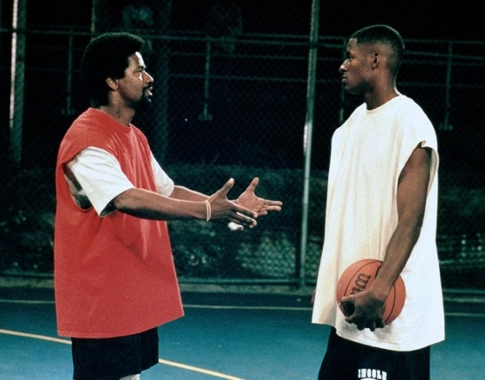
This is one of Spike Lee’s better films, an audacious picture of Americana (scored by Aaron Copland no less) that both mythologizes and indicts the sports culture while dramatizing the strained relationship between a convict father (Denzel Washington) and his son (Ray Allen), a prized high school basketball recruit. Washington is released from Attica with the promise of a lessened sentence if he can convince Allen to sign with the governor’s alma mater. He has one week to do it, and has to overcome several hurdles, the greatest of which is the fact that he is in jail for accidentally killing Allen’s mother in a domestic fight.

As in Summer of Sam, Lee’s appetite is enormous, and he typically tries to tackle too many issues in this sweeping story. He also includes a pointless subplot between Washington and a prostitute (Milla Jojovich) and indulges in his unfortunate penchant for speeches (Roger Guenveur Smith plays the local crime boss and delivers a PSA soliloquy on all the perils of fame that brings the picture to a screeching halt). But at the heart of the picture is Lee’s love for basketball, which he portrays as something truly majestic and unifying, skillfully interspersing old footage to punctuate the revered history of the game.

Washington is also commanding as the father who drove his son to succeed, and we see in him the love as well as the excesses of a parent who wants too much for his child. The scenes of a younger Washington pushing his little boy to be Jordan and their later one-on-one are beautiful and heartbreaking. Allen, an acting novice, does surprisingly well as the son, communicating the wonder of it all as the world opens itself for him.

This is a flawed picture, but Lee is working from the heart and shooting for the stars and it shows.
Related image

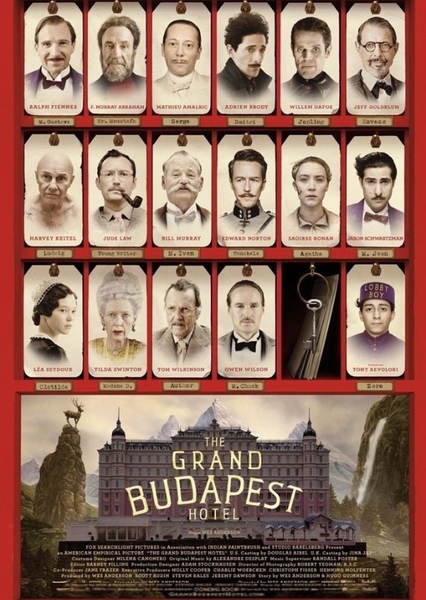
Wes Anderson makes highly detailed, whimsical and richly textured children’s stories for adults, films that evoke an old picture book or model train set from our youth.

The Grand Budapest Hotel is in that same vein, a colorful story about the concierge of a once majestic property (Ralph Fiennes) and his efforts to tutor a protégé (Toni Revolore).

Here, Anderson accentuates the stylish (the scenery approximates toy furniture) and emphasizes the screwball.  Missing, however, are the moments of true human connection that punctuate his earlier works, the moment in Rushmore when Jason Schwartzman shows his hurt feelings or introduces his father, or in Moonrise Kingdom, when the children kiss or Edward Norton reveals his fears of failure as a scout master, or even in The Life Aquatic, when Bill Murray tries to woo Cate Blanchett.

Grand Budapest is Anderson’s non-animated The Fantastic Mr. Fox, a fantastic film,  So too this film, but it’s Anderson’s least affecting picture.

Related image

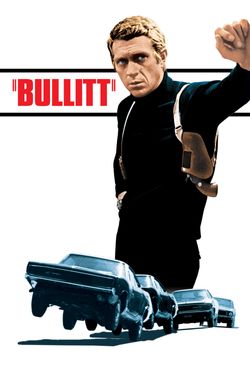
Peter Yates’ 1968 detective thriller is a medium cool exercise in restraint propelled by the quiet, canny performance of Steve McQueen as Detective Frank Bullitt. Bullitt is assigned to protect a mob witness by an ambitious D.A. (the charmingly oily Robert Vaughn) and the case goes bad.  As he tries to salvage the situation, we learn about Bullitt’s relationships, methods and character, all with less than 100 words from our hero.

The picture is notable for an over 10 minute car chase in and around San Francisco that alternates between chess match and smash up derby. The effect is mesmerizing, an automotive ballet, which is in many ways more impressive than William Friedken’s bid to outdo it in The French Connection three years later (the car chase wasn’t the only influential set piece; Bullitt has an extended chase scene on foot through the exterior of the San Francisco Airport, which Michael Mann reprised in Heat).

The film also demonstrates why Steve McQueen is such an icon. The debates over his ability to “act” are legitimate.  The “movie star versus actor” discussions invariably arise in consideration of  impossibly macho or attractive leads, such as Wayne, Eastwood, Redford and Gibson. Debate aside, McQueen so resonates on screen that discussing his skills as a thespian seems like quibbling. There is something to be said for understatement (Tom Cruise may just be learning that now).  McQueen can do more with a look or eating a sandwich than a lot of folks can with a soliloquy or stem winder.  When he is poorly imitated (see the catatonic Ryan Gosling in the wildly overrated Drive or George Clooney in The American), his charisma and presence become all the more apparent.

Yates’ film is a bit of a jazz riff and some of his shots are annoyingly showy, but hey, it’s 1968 San Francisco and Bullitt’s girlfriend is the chic and arty Jacqueline Bisset.  So, he gets a pass.

Blood Simple (1984) - Rotten Tomatoes

Al Pacino once explained his attraction to a project by tapping his finger to his temple and noting that the director had “a vision.” That director was Warren Beatty and the project was the bloated Dick Tracy.

The Coen Brothers’ first film demonstrates a true vision, one that has it flaws, but one that is unique and rich, through and through – a sun-drenched, steamy Texas noir potboiler that evokes Jim Thompson and James Cain, updated to include a very sly, dark humor. The plot takes numerous turns, but it is simple in its introduction.   A bartender (John Getz) runs off with the wife (Frances McDormand) of his boss (Dan Hedaya), who in turn puts a lethal private investigator (M. Emmett Walsh) on their trail. Walsh introduces the story in voiceover:

“The world is full of complainers. But the fact is, nothing comes with a guarantee. I don’t care if you’re the Pope of Rome, President of the United States, or even Man of the Year–something can always go wrong. And go ahead, complain, tell your problems to your neighbor, ask for help–watch him fly. Now in Russia, they got it mapped out so that everyone pulls for everyone else–that’s the theory, anyway. But what I know about is Texas…”

What follows is the twisted story of these four characters against the backdrop of a flat, unforgiving landscape. The photography is stunning, and the camera-work is assured, if sometimes a bit too film school flashy (as McDormand and Getz confront each other at his front door, a slo-motion newspaper crashes against it to startle us all). Composer Carter Burwell started his partnership with the Coens on this film, and his score is primarily solo piano, sparse and ominous.  Hedaya is the embodiment of the cowardly cuckold, but he seethes, almost a human pressure cooker. Walsh’s sleazy dick is repellant. He almost oozes, but he’s canny, using his “aw shucks” as a way to get the advantage. Getz and McDormand are weaker. Getz just doesn’t project and while I respect the Coens for eschewing the expected sultry, bored kept woman, McDormand’s character requires some charisma and sexuality to justify the risks taken on her behalf. She’s never been that kind of actress and here, she’s flat.

Still, this is a very good film, and as a debut, it’s all the more impressive, presaging the brilliance of Fargo.

As biopics go, this one is near the top, a sprawling, textured story of fame, fall, passion and redemption that can’t avoid cliche’ but never nears cheezy.

Joaquin Phoenix doesn’t embody Johnny Cash so much as incorporate him into his own personality. His performance feels roots deep rather than technically proficient (see Jim Carrey as Andy Kaufman in The Man in the Moon for an example of the latter), enhancing your investment in Cash’s plight. Phoenix does all his own singing and his vocals are deeper and more frenetic than those of Cash (his live version of “Cocaine Blues” at Folsom Prison is more fevered and angry than Cash’s performance), but they feel real, especially when matched with Reese Witherspoon’s brassy bid as June Carter. James Mangold’s film is ostensibly the love story of Cash and Carter, but his attention to the music is the glue to the picture. The supporting players in the roles of Jerry Lee Lewis, Roy Orbison and Elvis are all musicians also doing their own singing. And the scene of Cash’s audition is notable not only for the tension and the dissertation on what goes into music people want to listen to, but for the riveting turn of Dallas Roberts as producer Sam Phillips. Talk about making the most of your one scene.

If there are weaknesses, one is self-inflicted and one is a related injury. Cash’s demons stem from the childhood trauma of his brother’s death, after which he felt unworthy and guilty. His father (Robert Patric) didn’t help when immediately after the funeral, he yelled at a grieving little boy, “he took the wrong son!” Now, perhaps this happened. But even if it did, the screenwriter has to jettison historical accuracy for good sense. It’s too incredible, too jarring, to believe. Worse, it became the centerpiece joke of the Walk the Line spoof, Walk Hard: The Dewey Cox Story.

The effect is much like that of Austin Powers on the prior James Bond films, changing them in your mind from occasionally fun and campy to wholly ridiculous. Another nit is the unfair treatment of Cash’s first wife, who is portrayed as so shrill and shrewish it feels unfair.

Space aliens called mimics (lethal, metallic, whirring Battling Tops) have landed in France and after checking their advance at Verdun, a global force plans a knockout punch in a D-Day redux. Tom Cruise is unexpectedly assigned to that landing and upon his near immediate death on the beach, wakes up ala’ Groundhog Day to relive the event, again and again. The hero of Verdun, Emily Blunt, recognizes the potential and together, they train, re-live and work to gain the advantage.

Doug Liman’s (Swingers, The Bourne Identity) film is clever, straightforward in concept, and for sc-fi, plausible. Cruise is refreshing playing a reluctant if not cowardly cad thrust into the role of mankind’s savior and Blunt is a convincing, modern Joan of Arc. The blend of London and Paris with CGI is expert and the alien force is intricate and scary.

The picture also sports a sly, muted sense of humor, which Cruise delivers alone, as Blunt takes on the role of the tortured, stoic warrior. Naturally, it tries to establish a deeper connection between the leads, an attempt that largely fails (Cruise is still cursed with a 100% to 0% charm to romance ratio), but Liman doesn’t stubbornly force the issue.  The end is also unsatisfyingly upbeat.  Minor complaints.

My wife and daughter had been badgering me to see this Disney pic for some time, and I finally got a chance over the holiday weekend. I suspect it was as much of a pleasant surprise to Disney as to me. With a relatively modest budget of $150 million (Disney’s much less successful Tangled sported a budget of $250 million) and a voice cast sporting the lesser known Kristen Bell, Idina Menzel and Josh Gadd, the film was the highest grossing of 2013 and has gone on to make $1.2 billion worldwide. It’s clear why. The story, based on Hans Christian Anderson’s The Snow Queen, is solid; you get two princesses for the price of one; and the songs (written by Robert Lopez and Kristen Anderson-Lopez, the former of whom was a co-creator of The Book of Mormon) are captivating, in particular, the Oscar winning “Let it Go”, which has a Wicked-esque quality and has become this ubiquitous:

The film is also economical (hello, parents of the two leads, this is a Disney film, so your presence will not be required for long) and visually stunning, blending CGI and hand-drawn animation to create a Fjordic, Nordic wonderland.  Gadd’s clueless but loyal snowman is a tribute not only to Frosty but to my favorite Disney sidekick ever:

My only nit is that the villain is sprung on the audience, when it would have been better to have him seduced into the role.

Raging Bull (1980) - IMDb

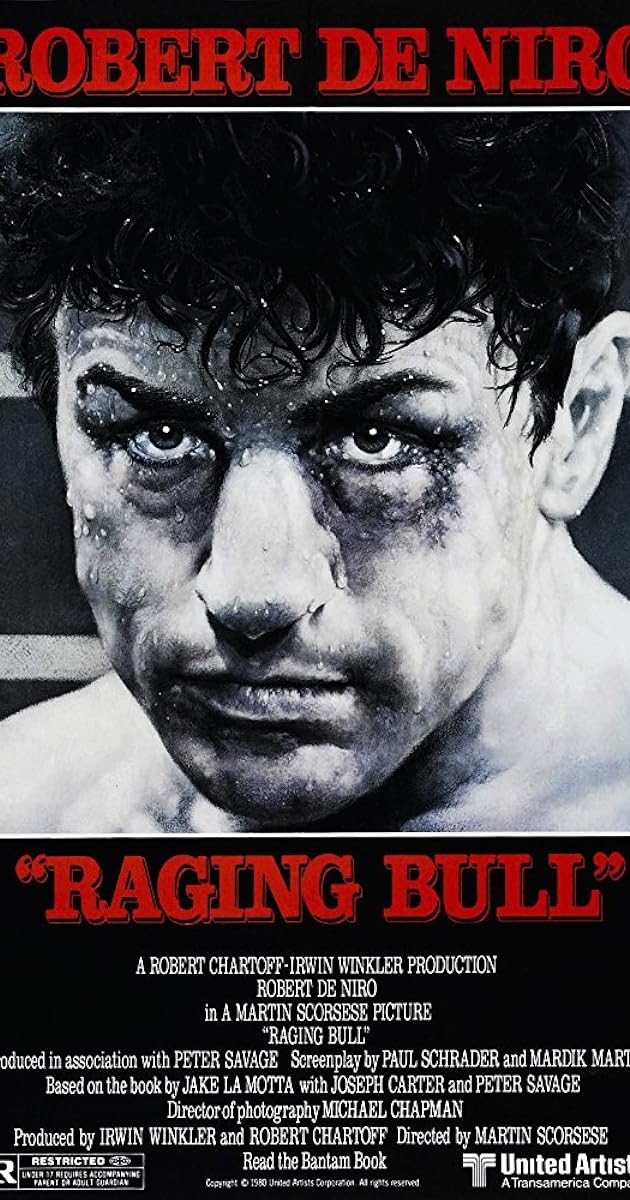
Martin Scorsese’s film is visually captivating and anchored by Robert De Niro’s mythic performance as the tortured pugilist Jake LaMotta. The feel of 40s and 50s New York is made more authentic by Scorsese’s use of black-and-white, and as boxing movies go, there is none better at conveying the bloody brutality of the sport. All these gifts, however, come with the stench of a major character who is, through and through, a dim, vicious brute. A recent film with a similar infirmity is Paul Thomas Anderson’s The Master, which had myriad other problems, but which also asked the audience to invest in Joaquin Phoenix, a jet fuel slurping, brainless, dypso thug who comes under the sway of a charismatic. Who cares? Similarly, in an otherwise brilliant film, Scorsese asks us to engage with an animal, a one-note beast. After the fourth scene of LaMotta becoming violent and/or obsessively compulsive over the fidelity of his blond bombshell of a wife (Cathy Moriarty), the yawns become harder to stifle. It’s a testament to the charms of the picture that you happily stick with it.

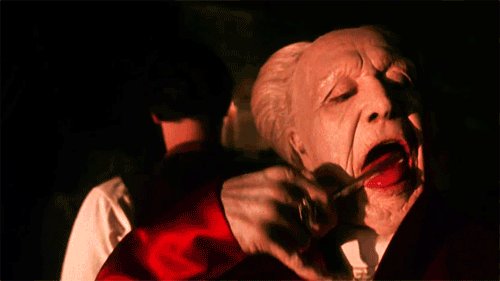
Francis Ford Coppola’s take on the Dracula story is wild, campy, and brisk.  It also has a few scares, but one gets the sense Gary Oldman’s operatic Transylvanian count is not to be taken too seriously.

After all, Oldman appears in, by my count, 7 guises, including a nifty pile of rats, and he is just short of hammy in all.  Not to be outdone, Anthony Hopkins’ Dr. Van Helsing is near giddy in his thirst for scene-chewing and vampire heads.

In its first half, the picture feels very Baz Luhrmann meets Saturday-at-the-movies serial. It settles into a more leisurely pace in the middle, as Dracula attempts to take root in London and his opposition grows.  The picture is a gas, and Coppola’s rejection of an overly serious, brooding vampire is welcome. Perhaps it is not quite a rejection, as Oldman tries so hard to be otherworldly and tortured, he may be the last one in on the joke.

The film is also surprisingly erotic, as is evidenced by poor Jonathan Harker’s seduction at the hands of Dracula’s babes and the complete, sensual overload delivered to Winona Ryder and Sadie Frost as they fall under Dracula’s sway and then use all of their wiles to get at necks.

Speaking of, Harker is played by Keanu Reeves, who was then fresh off of two Bill and Ted’s Excellent Adventure movies.  If you thought Kevin Costner had problems with an English accent in Robin Hood, you have to check out this performance (both Costner and Reeves are listed in the Top Five Most terrible British Accents, and rightfully so.  Reeves can hold his accent – barely – for one line, and then, he’s one syllable away from San Dimas and “duuuude.” Then, he’s back to a dramatic and unconvincing “Carfax Abbey” only to drop it again, as if he knows how silly he sounds. Ultimately, Reeves appears so uncomfortable, he retreats into the implacably unaffected stoner no matter what Oldman and Hopkins throw at him, a treat all in itself.

Great, grandiose soundtrack as well.

Jason Bateman’s directorial debut is bracingly cynical and consistently funny. Bateman stars as a jerk who has found the loophole that allows him to enter and win kids’ spelling bees, making it all the way to the nationally televised (on PBS) Golden Quill finals. On the way, he torments the journalist covering/funding his story (Kathryn Hahn), the competition director (Allison Janney), its founder (Phillip Baker Hall) and various parents, but he also befriends a young competitor (the wide-eyed and charming Rohan Chand). At just under 90 minutes, it never nears wearing out its welcome, and Bateman’s hand is steady. There are a few flat notes. Rachael Harris reprises her role from The Hangover as another repressed, psychotic type, and again, her performance is too much (as is her comeuppance). Bateman’s engagement with his child’s competitors is brutally funny, but his treatment of one girl, while a testament to his commitment, is perhaps too painful to endure. These, however, are minor problems. Bateman has depth beyond being a mere crank, and Chand’s insouciance blends perfectly with his deadpan amorality.