I’ve had the misfortune of watching this movie twice (I endured it because I remembered a better film). Mel Gibson had his own cut, which was better than that of director Brian Helgeland (screenwriter for LA Confidential), though still pretty bad. The picture is a loose remake of John Boorman’s 1967 Lee Marvin vehicle Point Blank. The story is uncomplicated. A crook (Gibson) pulls of a heist, is double-crossed by his girlfriend and partner and left for dead. He does not die, but returns, to collect his share of the money. It turns out his partner used that share to buy his way back into “the Syndicate,” so Gibson works his way up the chain, killing folks up a higher level of authority until he gets to the top. The original was arty, tough and noir, and Marvin’s anger convincingly propelled the simplistic plot, which culminated in a cool shoot-out in then-abandoned Alcatraz.
Gibson’s version exchanges San Francisco for Chicago, tough for brutal, and noir for ostensibly hip (which, as defined by Gibson, is taking every opportunity to smack women and crunch bones). While Gibson throws in a touch of humor in the plot, his performance is leaden. He emulates Robocop and The Terminator, not Marvin.
Gibson’s version ends better (he uses a kidnap of the top Syndicate man’s son to get at him, while Helgeland settles for a lame shoot-out on a Chicago train platform), but it’s a pointless endeavor. The only redeeming qualities are some wry performances as criminal lowlifes by Gregg Henry, James Coburn, William Devane, John Glover, David Paymer and Lucy Liu.
Like Any Given Sunday, a bad movie that is occasionally engaging but makes you feel guilty for being engaged, Oliver Stone’s The Doors is indulgent, dizzying and vapid. The caricature of James Morrison invades Val Kilmer, who gives an embarrassing, showy performance. Kilmer’s idea of Morrison is little more than a faraway stare and a lycanthropic lope. So perpetual is Kilmer’s saunter that he presents less Lizard King, more inebriated catwalk model.
The film almost stops dead in its tracks a third in with a ridiculous overlong band “trip” to the desert for some peyote and pretentious native American b.s. The Doors emerge from this interminable detour performing a live version of a song as silly and overlong as the movie, “The End.” All time taken away from the only story you want to see about a marginal rock talent: rise to fame, drugs, booze, chicks, and then, crash and burn.
Stone is so enamored of his subject he not only photographs him lovingly, he actually takes the singer’s poetry seriously. Morrison is such an obvious talent Stone felt he could dispense with any back story for him. We don’t know much about his early life (except he once saw a dead Indian by the road during a family trip) because Stone is in such a hurry to show us this avant garde pioneer, a guy who riffed “mother, I want to f### you” right into the director’s heart.
We get a few fun moments, snapshots of nostalgia from the 60s, like the Ed Sullivan performance. But even that has to be gussied up and romanticized. The Doors were asked to forego the line “girl we couldn’t get much higher” from their hit, “Light my Fire.” They happily did so in rehearsal, but during a lethargic live performance, Morrison forgot and sang it. Not good enough for Stone. In the film, Kilmer lectures the band on kowtowing to “the Man” and then belts it out as a taunt just to show those suits what for. Then he starts hip swiveling, sending lily-livered execs into apoplexy.
As Morrison descends into the fat, bloated bore he would become, visions of a dour Indian pop up. In the desert. During gigs. Even before meeting Andy Warhol (portrayed by Marty McFly’s father). When unintentionally funny imagery isn’t on screen, the picture is a crashing bore. Morrison always was a pompous dick and a medium talent at best. He never really merited the Stone treatment. Or maybe that is exactly what he deserved.
Clint Eastwood’s biopic is lovingly photographed. Washington, D.C., and other venues, from the teens through the 1970s, are regal, warm and classic. Unfortunately, Eastwood has populated his pretty film with a dull collection of historical figures, none of whom have much to offer. Eastwood also mostly punts on the nature of Hoover, and as played by Leonardo DiCaprio, the character is little more than a one-note old windbag, constantly going on and on about the same thing – the enemy within. Eastwood’s vehicle for Hoover’s reminisces – Hoover is dictating his memoirs to an ever-changing number of aides- does not help. As one is replaced, you can almost hear the jettisoned aide saying, “Thank God! What a snooze!” Oliver Stone’s Nixon gave us a ridiculously lustful and evil Hoover, played by Bob Hoskins, but at least he wasn’t tedious.
Naomi Watts is wholly wasted as Hoover’s long loyal secretary. Armie Hammer, as Hoover’s long loyal number 2 Clyde Tolson, does a poor version of a young Brendan Fraser (Hammer was last seen in The Social Network playing the Winkelvosses). Judi Dench’s turn as Hoover’s overdoting mother is predictable. Josh Lucas’s take on Charles Lindbergh is foggy. In fact, the only decent performance is a brief appearance by Jeffrey Donovan as a trumped Bobby Kennedy. Donovan thankfully avoids the standard “Haaaaaaaaahvaaaaaads” and “Baaaaaaahstons” endemic to the role.
Eastwood portrays Hoover as a repressed homosexual, no question. Which makes Mom upset and Tolson bitter. And Hoover seems most bothered by Martin Luther King because he overheard King having sex on a wiretap. Not much of a motivation. Eastwood even gives in to the dubious cross dressing story, but ennobles it because Hoover gets gussied up in Mom’s clothes after she dies. Another punt.
Another problem. DiCaprio’s makeup as an older Hoover is very good. Hammer and Watts, however, look ridiculous, very similar to the characters in “Star Trek” when they age decades in hours.
Dustin Lance Black’s (Milk) script ends in treacle and nonsense. Out out of nowhere, Hoover turns moralistic, the man who would stop . . . Nixon! This prefaces a melodramatic conversation between an old Hoover and Tolson that is straight up “One Life to Live.” When Tolson, doddering in his ridiculous makeup, finds the dead Hoover, it comes close to bringing laughter.
At one point, DiCaprio asks Watts, “Did I kill everything I love?”
Oh if she’d said, “No Edgar. That was Michael Corleone. You just bored them to death.”
David Mamet-speak is one thing. There is nothing quite like the staccato of the pitiable salesman in Glengarry Glen Ross, and Alec Baldwin’s thunderous sermon to those below him has become so ubiquitous that a generation of frat boys can now recite it – or parts (“coffee is for closers!”) – verbatim.
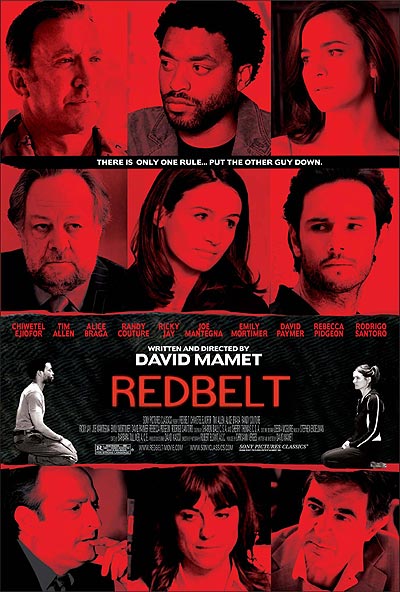
But Mamet-speak has it limits and when coupled with Mamet’s macho honor philosophy, the results can be toxic. And thus, we have Redbelt, a bizarre modern moral tale about a martial arts enthusiast (Chiwetal Ejiofor) who spouts a lot of Kung Fu b.s. while negotiating through a plot so byzantine and ridiculous that were I to attempt to encapsulate it, I’d have a stroke.
So, I’ll let Wikipedia do it for me:
While closing his Jiu-jitsu studio one evening, Mike Terry (Chiwetel Ejiofor) is approached by attorney Laura Black (Emily Mortimer), who is seeking the owner of the vehicle she accidentally sideswiped. Off-duty police officer Joe Collins (Max Martini), who was receiving a private lesson from Mike, sees that Laura is distressed and tries to take her coat. Startled, Laura grabs Joe’s gun and fires it; shattering the studio’s front window. To avoid having Laura charged with attempted murder, Mike and Joe agree to conceal the event.
Mike’s insurance, however, will not cover his act of God claim that the window was broken by a strong wind. Mike’s wife Sondra (Alice Braga), whose fashion business profits are the only thing keeping the struggling studio afloat, requests that Mike ask for a loan from her brother Ricardo (John Machado), a mixed martial arts champion. At Ricardo’s nightclub, Mike meets with Sondra’s other brother, Bruno (Rodrigo Santoro), and learns that Joe quit as the club’s bouncer because Bruno never paid him. Mike confronts Bruno about the situation but is rebuffed. Mike then declines Bruno’s offer to fight on the undercard of an upcoming match between Ricardo and Japanese legend, Morisaki (Enson Inoue), which could potentially pay out $50,000. Mike believes competitions with money as the incentive are not honorable and weaken the fighter.
Meanwhile, aging Hollywood action star Chet Frank (Tim Allen) enters the nightclub without security and is accosted by a man with a broken bottle. Mike intervenes and subdues three men in the process. The following day, Mike receives an expensive watch and an invitation to dinner from Chet. Mike gives the watch to Joe to pawn in lieu of his unpaid salary at the nightclub. At the dinner party, Chet’s wife Zena (Rebecca Pidgeon) arranges an informal business deal to buy a large amount of dresses from Sondra’s company. Chet, impressed by Mike, invites him to the set of his current film. As Mike and Sondra leave the dinner, Mike explains his unique training method to Chet’s business associate Jerry Weiss (Joe Mantegna). Before a sparring match, each fighter must draw one of three marbles, two white and one black; whoever draws a black marble has to fight with a handicap.
Mike uses his military experience to answer a few technical questions for Chet on the film set and is offered the role of co-producer. That evening, Mike faxes the details of his training methods to Jerry so they can be used in the film. Joe arrives at the studio and informs Mike that he was suspended from duty for pawning the watch, which turned out to be stolen. During their dinner that evening, Mike relays the information to Jerry who excuses himself to handle the matter, but never returns. At home, Mike learns that the phone numbers that Zena gave Sondra have been disconnected. Sondra is panicky, having borrowed $30,000 from a loan shark to order the fabric for the dresses. As he meets with the loan shark to discuss an extension, Mike notices Bruno and Marty Brown (Ricky Jay) on television using Mike’s marble-drawing method as a promotional gimmick for the undercard fights of Ricardo’s match.
Mike hires Laura to sue, but Marty’s lawyer threatens that if they do not drop the lawsuit, he will give the police an empty shell casing with Laura’s fingerprints, as proof that she attempted to kill an off-duty cop. He also threatens Mike as a witness who covered up the crime by bribing the cop with a stolen watch. When told of the situation, Joe feels responsible and kills himself. Mike feels obligated to help Joe’s financially struggling wife and, in desperate need of money himself, decides to compete as an undercard fighter in the upcoming competition.
At the arena, Mike discovers the fights are being fixed via a magician (Cyril Takayama) using sleight of hand to surreptitiously switch the white and black marbles. Disgusted by this revelation, Mike confronts the conspirators: Marty, Jerry and Bruno who confirm that unknown to the competitors, the fights are handicapped by the fight promoters so as to ensure winning bets. They also reveal that Ricardo is intentionally losing the fight to Morisaki so they can make money on the rematch. Jerry tells Mike that Sondra is the one who told them about Laura shooting the window and Bruno justifies her betrayal by explaining that his sister is too smart to stay with someone who cannot provide for her.
As Mike is exiting the arena, he meets Laura. Their conversation is not audible, but it ends with Laura slapping Mike. Mike then re-enters the arena. He incapacitates several security guards trying to stop him and is ultimately engaged by Ricardo. The audience and camera crews take notice as Mike and Ricardo face off in the arena’s corridors. Inspired by the Professor, an elderly martial arts master attending the match, Mike manages to slip a difficult choke hold and defeats Ricardo. He is approached by Morisaki, who awards Mike with his ivory-studded belt, previously referred to as a Japanese national treasure. Mike is then approached by the Professor himself, who awards Mike the coveted Redbelt.
As my Mom might say, “Jeez-o-flip!”
I am not a Mamet hater. Oleanna, Glengarry, Homicide, State and Main, House of Games, The Spanish Prisoner, these are all very good films, and Mamet displays an authentic American voice in their telling. His work on films he did not direct, or which did not come from one of his stage plays, such as The Verdict, The Untouchables, The Edge, Hoffa and Ronin, is vivid and accomplished.
Redbelt, however, came out in 2008, about the time someone needed to tell Mamet that his mystical machismo and rat-a-tat dialogue had not only reached their expiration date, but had become as embarrassing as a driver’s hat and leather gloves on a newly divorced man.
Since Redbelt’s release, and critical failure, Mamet has written a few shorts, and episodes for his TV show “The Unit.” He also wrote a very interesting book explaining his “conversion” from Hollywood liberal to a member of the right, “The Secret Knowledge: On the Dismantling of American Culture,” as fine a read as you’ll get if you want to understand the nuts-and-bolts philosophy and precepts of a modern conservative (beyond the human sacrifices of panhandlers and the ritual rape of the land). Perhaps he’s done with film writing, but if so, Redbelt is both Mamet’s pathetic coda and a testament to his loss of the gift.
Steve McQueen’s Shame offers the story of Michael Fassbender, a New York City something or other, who is a sex addict. We learn this because he flirts with women on the subway, engages prostitutes, and masturbates/watches porn morning, noon and night. When his unbalanced sister, Carey Mulligan, comes to visit, his equilibrium is shattered, either because she is nude in his apartment, she sleeps with his boss, or she references their childhood. No matter. This is the kind of film that is destined to have as a penultimate scene Fassbender on his knees, in the rain, with a “will he or won’t he crawl back into sex addiction?” finale.
Why is Fassbender this way? As Mulligan says, “we’re not bad people. We just come from a bad place.” However, that place is actually identified in the script as either Ireland or New Jersey. And that is the sum and substance of motivation, backstory or reason.
In place of exposition, McQueen provides pointless, overly showy scenes, including a long, several block Fassbender jog through the streets of NYC; a preposterous nightclub song by Mulligan (she sings “New York, New York” and sports a Marilynesque “Happy birthday, Mr. President” skintight dress); and, a ridiculous threesome with Fassbender and two women that is half Obsession by Calvin Klein, half Showtime soft core.
“I know how you feel, pal.”
My wife summed it up beautifully: “I don’t even think he was a sex addict.” Her comment is akin to watching Raging Bull and declaring, “I don’t even think he was a boxer.”
Also, Hans Zimmer should sue the composer, Harry Escott, who ripped his work off on The Thin Red Line damn near note for note.
The 1.5 stars are awarded because our good friend’s sister is in the picture and the movie looks great.
This critically-acclaimed 2011 release purports to be a psychological study of its protagonist, Martha (Elizabeth Olsen), who becomes a member of an upstate New York commune/cult led by the charismatic John Hawkes (nominated for an Academy Award for his role in Winter’s Bone). The film opens with Martha’s escaping the collective farm, though Hawkes and the other members of the commune (a motley assortment of women who serve him and a few young men) don’t do very much to stop her flight. Martha ends up 3 hours away, at the Connecticut lake home of her wealthy sister and her new husband. There, we learn of her ordeal through flashback (sexual abuse, violence, co-opting and subordination to the whole) while she struggles to adapt to life outside the cult. She provides tension to her sister’s household as she brings bad habits from the commune with her (swimming nude, curling up in the bed of her sister and brother-in-law while they are having sex, condescending to them about their lifestyle) and undergoes post-traumatic stress that manifests itself in panic attacks, wetting herself and refusal to discuss what happened.
All of which makes for a frustratingly monotone of a movie. Martha is treated with such sensitivity by her sister that you sympathize most with the husband, who has to endure a recalcitrant, moody weirdo in his midst without anyone ever saying, “What the hell happened?” Worse, while it is clear that Martha undergoes trauma, her behavior after she endures it suggests a person who was under the sway of the commune since childhood. In fact, Martha was there for two years. Also, the key to a psychological study is an explication of why Martha was lured into the life, but we get no clue as to what Martha was looking for when she voluntarily allowed herself to be part of Hawkes’ crew and scant information on what the cult is really about. Martha seemed shallow and dull in flashback and during present-day, she seems shallow, dull and jittery. Moreover, Martha says some very terrible things about and to her sister (“You’re going to be a terrible mother”), who has the patience of Job, suggesting she was a first-class turd even before she went to the commune. This is not conducive to empathy. Finally, the picture reveals a Manson-esque quality to Hawkes very late, which is awkward and unconvincing.
Another problem is Olsen’s performance. Yes, she does better work than her sisters ever did on television’s “Full House”, but it is still a one-note, amateurish turn.
The Bone Collector is a thriller about a police detective (Denzel Washington) who is paralyzed. Unfortunately for New York City, a serial killer is on the loose and there is nothing Denzel can do except mentor a rookie cop during the investigation. The killer dwells in the NYC subway system, so naturally, the rookie cop must be sent in its bowels, with an earpiece and camera, allowing the bedridden Washington to see what she sees and thus guide her.
As implausible as that may seem, try this on for size – the rookie cop is Angelina Jolie.
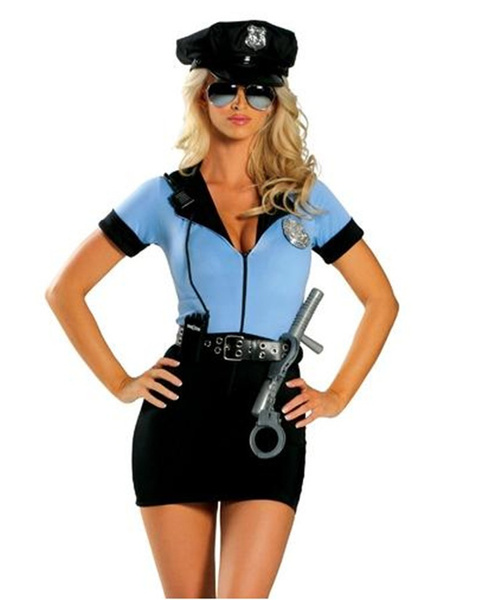
Those lips, those cheekbones, that gun!
The choice was so inept that the scriptwriter actually wrote in the fact that she is an ex-model. You half expect her to start disrobing, ala’
Truly, Jolie’s character should set the teeth of all modern womanhood on edge. When she cries, all the men pat her on the back and tell her she is “terrific” (in fact, Mike McGlone and Denzel Washington actually call her “terrific” within 10 minutes of each other). And then she bucks up with a pretty smile. When she is upset, she huffs off the job, although she is a beat cop. But then the men drop by to see if she is “all right.”
For some reason (and I am guessing “those lips, those cheekbones!”) the men don’t say, “Hey. Where the hell are you going, you piece of sh**.”
Anyone with a rudimentary knowledge of movies and a brain stem will have this figured out in a jif. That said, New York City is very spooky in this film. It gave me that same creepy, flesh crawl I felt in “Ghostbusters II.” Hence the single star.
Matthew McConaughey plays a smarmy, slick, charming southern lawyer . . . in every single movie he makes. He does it again here, inexplicably drawling his way through a role as a hotshot Los Angeles criminal attorney retained to defend Ryan Phillipe, a rich boy accused of a brutal rape.
The entire film rests on selling you the real possibility that Phillipe is innocent. And there is not one moment when you believe that Phillipe is innocent.
Look at him. Guilty, guilty, guilty.
Now that the story is hosed, we’re left with McConaughey’s schtick, a motley crew of character actors without character (dewy-eyed Marisa Tomei, as McConaughey’s ex-wife prosecutor; tough old cop Bryan Cranston; hippie P.I. William H. Macy; and the peripatetic bondsman John Leguizamo) and “twists” so implausible that Director Brad Furman must have assumed the audience had checked out by the time of the reveals.
2. The Patriot is a revenge movie set during The Revolutionary War. Revenge movies are fine. But a revenge movie fails if the person upon whom revenge must be visited is blase’ about his own life or death. In The Patriot, the villain (a British officer played by Harry Potter baddie Jason Isaacs) is a vicious killing machine with no desire to live other than to burn women and children alive. So, short of having his skin peeled off, there can be no satisfaction in his demise. And there is none. Which, in the words of Donald Rumsfeld, makes this a very long, hard slog.
3. The Patriot veers wildly from the manipulative (excess depictions of crying and/or dying children) to the sitcomish (Saving Private Ryan screenwriter Robert Rodat uses tension-breaking quips between men-in-war and then expands them into broad cartoonish gag scenes worthy of “The Jeffersons”) to near-spoofs of beer commercials (the slow-motion as men high-five after winning the big battle is missing only the bosomy blondes and frothy pitchers of ale, and the scene where Gibson gets romantic with Joely Richardson is a replica of Corona commercials).
4. The best part of the movie is when Gibson appears heroically, flag in hand, and all the militia scream “Huzzah!” but it sounds exactly like “Wazzzzzzzzzuuuuuuuuup!”
5. The Patriot is predictable. If you don’t know whose life the stoic black-man-fighting for his freedom will save; if you don’t know that the moment Gibson gives his daughter-in-law a necklace, it is proof of her death; if you don’t know the “trick” played on the Brits to gain the release of American militia; if you don’t know the fate of a warship off in the distance as the Brits live the high-life and General Cornwallis (Tom Wilkinson moans about his less-than-spectacular uniform), you are not very observant.
6 There are a few historical inaccuracies. My favorite is the use of exploding cannonballs. They hadn’t been invented yet, but you can just see Emmerich screaming “I vant it BIGGER!!!!!!” And when Isaacs character burns an entire church filled with women and children, based on an incident from World War II when Nazi soldiers burned a group of French villagers alive, I’m sure Emmerich was there screaming, ‘I vant him MEANER!!!!!!”.
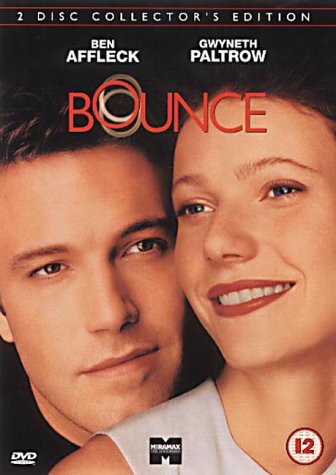
In 1998, Don Roos came out of the gate with The Opposite of Sex, one of the funnier comedies of the 1990s. As a reward, he got to helm a big budget romance with a promising story. A playboy gives his plane ticket to a husband/father so the husband/father can be a good Dad and the playboy can make a girl at the airport bar. The plane goes down. The playboy is affected and insinuates himself into the widow’s life.
First problems first. The playboy is Ben Affleck. Affleck has found his way as a director (Gone Baby Gone and The Town are excellent and fine, respectively). When acting, however, he is best in an ensemble – a little goes a long way. But Bounce came out when they were trying to make Affleck a lead, which he is not. He is a leaden, two-trick pony (the eyes welling with tears; the set jaw). Affleck is the best friend, not the lead. He can occasionally rise to the occasion, but he is no more than a big, good-looking light-stepper.
Paltrow, who prior to her strange incarnation as a country singer, could lead, is weighed down by a script that requires her to lament and panic at almost every turn. She is less and less sympathetic as she veers into the territory of mentally unbalanced. Perhaps this is because she is being stalked by Affleck, who has decided to change his debauched ways on the back of the husband’s death. The effect is creepy and doesn’t lend itself to a love story.




 Those lips, those cheekbones, that gun!