This is a charming documentary about the first fan club president of The Beatles – Freda Kelly – who started out in a typing pool, sneaking off work to see the band at The Cavern Club, and worked her way in to become the assistant to Beatles manager Brian Epstein. Kelly provides nothing really new about “the lads” (Paul was always nice, John could be a handful), but her remembrances are touching and frankly, impressive. She took her job as correspondent for the band very seriously, and while in their employ, authored thousands of responses to fan mail, even going so far as to fire an employee for sending non-Beatle hair to a fan who had requested a strand. She even used her home address as the fan club address for a time, until her father complained that he couldn’t find his utility bills in the sacks of mail that arrived every day.
Kelly worked faithfully for the group until its demise, and then just moved on with her life. As the documentarian finds her now, she is a working secretary. The surviving Beatles and the estates of John and George must have given the filmmakers rights to the music, because Beatles tunes litter the film, and Ringo even gives a video goodbye to Freda during the credits. I will say, however, there’s a bit of a bad taste at the end. Freda is presented as a true gem, someone who tended to the band’s needs, kept their confidences, never once traded in on their fame for her own aggrandizement, and even became a companion to many of their parents. I don’t expect the Beatles to shower attention on all of the “little people” who helped their rise, but Freda seems a cut above, and so . . . what the fu**, Paul!
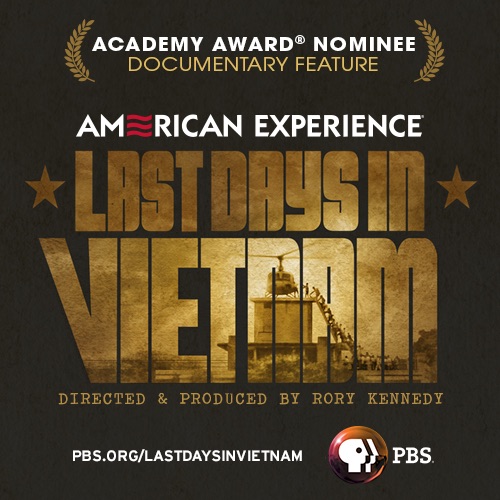
Rory Kennedy’s Academy Award nominated documentary opens with American Captain Stuart Herrington asking, “The burning question. Who goes and who stays?” When it went bad, Herrington took his South Vietnamese friends out surreptitiously (Americans were not allowed to bring South Vietnamese out without authorization), but the move was not expected nor planned for. As Herrington explains, as do others, after the Paris Accords, the presumption of most in-country Americans was that peace was at hand, and the Americans would be in South Vietnam for a long time.
This film shows the feel on the ground for the last denizens of Saigon, while adding insight on a geopolitical level. For example, the North Vietnamese took very seriously the threat of Nixon bringing back American air power after execution of the accords – as one interviewee states, the North Vietnamese thought Nixon was a madman – but after Watergate and the “madman’s” self-inflicted wound, they were naturally emboldened. “Overnight, everything changed. Hanoi suddenly saw the road to Saigon as being open.”
With 16 divisions bearing down on Saigon, Herrington recounts how Ambassador Graham Martin wouldn’t countenance plans for evacuation because it was defeatist and he feared a panic (Martin is a tragic figure who lost his only son in combat in Vietnam, and while he is criticized for his intransigence, he also saved hundreds of South Vietnamese by refusing to leave the embassy until more civilians were evacuated).
At the end, there were 6,000 Americans still in country, and Martin held firm even after he returned to the United States to watch President Ford’s $722 million request for an evacuation voted down. At this juncture, embassy staff began to risk their careers to get South Vietnamese compatriots out in makeshift airlifts to the Philippines, and at the very end, in any other way they could find. Their stories are harrowing.
There is no political agenda here. Kennedy’s documentary is about people, not policy, and their stories are engrossing. One Vietnamese evacuee recalls his father, a pilot in the South Vietnamese, picking his family in a Chinook and heading out to sea (“when I heard the Chinook, I knew my Dad was coming to get me”). When it couldn’t land on an American vessel, the occupants jumped out to be fished from the water.
Much of the footage is simply jaw-dropping. A scene of a modern World Airways passenger jet taking off with its on-board stairs lowered, hustling panicked South Vietnamese on as it hurtles down the runway, is indelible. Another is footage of the pick-up points (Americans knew when to go to them; the code was the playing of “White Christmas” on the radio”) as South Vietnamese press the buses for entry to helicopter evacuations, one of the last options available after the North Vietnamese closed down the airport with artillery fire. Or the American naval vessels that became deposit points for South Vietnamese helicopter pilots, who had flown from their air bases to pick up their families and then headed to sea hoping for the best. The ships could only accommodate one helicopter at a time, so when one landed, and its passengers disembarked, the crewmen pushed it over the side to make room for the next.
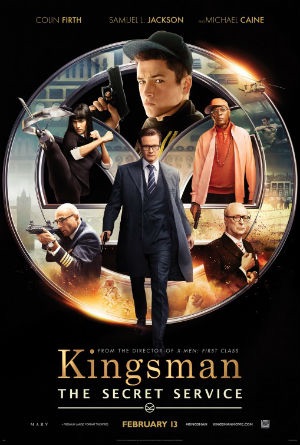
This is a Roger Moore-era Bond flick, but with cheeky self-referential humor, first-rate, modern action sequences and a decidedly South Park sensibility. It features a budding, young James Bond from the wrong side of the tracks (Taron Egerton), his sophisticated mentor (Colin Firth), a megalomaniac, quirky villain (Samuel L. Jackson, with a lisp), his own Odd Job (Sofia Boutella, who slices you with her scythe legs instead of a hat) and a plan to destroy the world to save it from the menace that is man, much like Drax in Moonraker and Stromberg in The Spy Who Loved Me.
Spoilers follow. There’s no way to do the film justice without talking about the plot.
Jackson, a zillionaire, has decided, like his Bond forebears, that man is a virus. So, he enlists the upper reaches of society – prime ministers, royalty, heads of state (including President Obama) and the rich and powerful – to let him loose a transmitting signal that will make man kill man. And thus, the world will be saved from the global warming man has created through immediate, violent, hand-to-hand near self-extinction. Again, Jackson “enlists” the upper crust. But to ensure they stay the course, he implants a chip in all their necks so, if they do decide to balk, he can blow their heads up. But they don’t balk. The world’s leadership is mostly in on the gig. They willingly and without reservation sign on to the plan that will have mankind wipe itself out, except for the rich and powerful.
This is a delightful, wildly politically incorrect “eat the rich” comic book, which just amps up the absurdity. The Kingsmen not only thwart Jackson’s design, but we get to see it tested out on Westboro Baptist Church-types, who dispatch each other out with gusto in a raucous church melee. Then, a Kingsman activates the implants, so we see the heads of state and the rest of their aristocratic collaborators, blow up.
Some world leaders do not collaborate, and they are jailed. One is a beautiful Swedish princess, blonde and resolute, and when Egerton shows up to save her, as with Bond before, she offers him a kiss and more if he will free her and kill Jackson. And if he saves the world? His prize is enhanced.
I re-watched and reviewed Apocalypse Now a few weeks ago and followed it up with the documentary of its making, Hearts of Darkness: A Filmmaker’s Apocalypse. Directed by Francis Ford Coppola’s wife Eleanor and two others, the documentary intersperses Eleanor’s “home movies” of the extended shoot in the Philippines with participant interviews and actual film footage. The result is a gripping, informational remembrance from start to finish. The story is incredible. Coppola put up his own money against the profits and endured a host of calamities: a change in lead actor (Coppola brought in Martin Sheen to replace Harvey Keitel after reviewing a few weeks of footage); a typhoon that destroyed many of his sets; a Philippine air force (standing in for American Vietnam-era air cavalry) whose helicopters would often have to leave in the middle of his shoots to fight rebels; Sheen’s heart attack, which delayed filming further; and finally, the bewildered behemoth that is Marlon Brando, who came to the shoot fat, unprepared, and mercurial, insisting on spending days talking about character motivation rather than shooting scenes. On this last fiasco, Coppola realized Brando had not read the book Heart of Darkness as instructed nor was he in any shape to adhere to the script, Unfortunately, Coppola had given $1 million to Brando to show up, and it was non-refundable. In a particularly tragicomic part of the documentary, Coppola explains that he made a decision to have Brando just walk around and improvise during his time on set, and some of the rushes are painfully funny, as Coppola tries to prompt some sort of usable dialogue from Brando, and Brando rejoins with pomposity and ultimately, a certain “can I just cash my check and get out of here?” weariness.
This is just one of many brilliant nuggets exploring the process of filming this audacious movie.
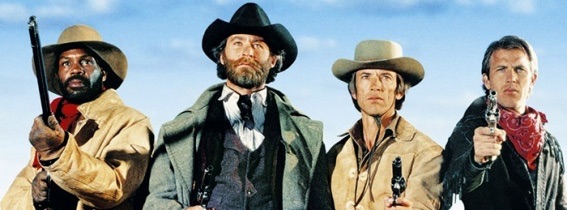
Lawrence Kasdan sought to revive the western, and thank God his vision of it failed. We owe it to better filmmakers who rejected sweeping camera shots, Aaron Coplandesque scores, and stories where you have heroes, villains, and a town that appears both sterile and old-timey. Like a Disney ride.
The film has a few inspired moments. Scott Glen’s opening shootout rising above White Rock, New Mexico is memorable and the final Kevin Kline/Brian Dennehy gunfight in the middle of the windy town rises above the hackneyed. Kevin Costner also showed real personality as Glen’s wild younger brother.
Other than that, it’s pretty awful, made even more silly by the gritty realism that followed in Unforgiven and HBO’s Deadwood. Nobody misses when they shoot, even with a pistol from hundreds of yards away. The town of Silverado also has the best and quickest dry cleaners around, because everyone looks so damn fine in their cowboy get-ups.
“Ladies and gents, The Village People!”
The language and attitudes are as new as the fashion. Danny Glover is enlisted as the proud, honorable messenger of racial tolerance; Roseanna Arquette is the feminist landowner; and Kline is a gunslinger with a sweet disposition towards animals and women (Kline’s casting is peculiar; he seems too nice to be the town barber much less a desperado). It’s all very clean, and for each of our enlightened characters, there are ten chaw-spitting, sneering henchmen to assure us of their goodness (including Jeff “Evil Eyes” Fahey).
Nominated for Best Foreign Film, this Argentinian entry consists of several vignettes of revenge, the first being one of the best openings of a film I’ve ever seen. The stories that follow exhibit a sly and dark sense of humor, enlivened by writer-director Damian Szifron’s accomplished visual style. It’s difficult to criticize any of the decision-making that led to the massive hit that is Jurassic World. But that film is a charmless, forgettable visual mess, and I’ll never understand why such a project was given to a filmmaker whose last work, as much as I liked it, was on such a small scale. It’s a picture that should have been given to the likes of Szifron, who handles close-in dialogue and action, suspense and large-scale calamity with expertise and vision. If I have a a criticism, it’s that it was all too much. I needed a break.
Richard Donner’s devil picture was a big hit in 1976, and 40 years later, it’s easy to see why. Rejecting the dour, sinister tone of The Exorcist, The Omen also lacks that film’s intelligence and gravitas. In its stead, however, is schlock elevated by top-notch performances (Gregory Peck, Lee Remick and David Warner play it straight and true, and Billie Whitelaw is chilling as a modern Mrs. Danvers) and some truly terrifying scenes. A suicide by hanging at a child’s birthday party, an impalement of a priest, and poor Remick’s two falls are memorable, as is the demon child’s first visit to church (he is not happy) and his drive through a wild animal park (they are also not happy). But it also follows the rules of a mystery. Clues are given, investigation follows, and then, terrible dawning. Jerry Goldsmith’s Oscar winning original score rejects subtlety, and even as over-the-top as it is, heightens dread.
Best, any film that ends with Peck about to stab a child with ceremonial knives and an unmitigated win for the devil has a place in my heart.
Of Apocalypse Now, Director and co-writer Frances Ford Coppola famously told a room full of reporters, “”My film is not a movie. My film is not about Vietnam. It is Vietnam.” Putting aside the cockiness and disrespect of such a statement, it is fair to say the film (and it is merely a film) is about a certain concept of Vietnam, one unique at the time it was released. Most Vietnam films fall into three categories. The first uses Vietnam as a mere location for a story about man’s triumph over adversity (seeThe Hanoi Hilton, Uncommon Valor, Rescue Dawn, Bat *21). The second, in the tradition of The Best Years of Our Lives, hones in on the war at home and the effect of the conflict in a much-changed stateside (Rolling Thunder, Coming Home, Birdy, Jackknife, Gardens of Stone and even the ridiculous Forrest Gump). The third category shows the war in-country and orbits a central thesis; the war was not only a bad war, but it was a pernicious war, one where America lost its soul, to the jungle, militarism, hubris, the military industrial complex, or some combination of same. The Deer Hunter, Born on the Fourth of July, Casualties of War, Full Metal Jacket, and Platoon all fit this bill. Most of these films are well made . But none bear any resemblance to Apocalypse Now, a harrowing visual nightmare drawing from all three categories, paralleling a novel (Joseph Conrad’s Heart of Darkness) as interpreted by a macho right-winger (John Milius) and Coppola himself.
The film begins with a portrait of Captain Willard (Martin Sheen), an intelligence officer and assassin, as he endures a drunken nervous breakdown in a Saigon hotel. Coppola got Sheen wildly drunk for the scene, baiting him with verbal cues to elicit a reaction, and the effect is mesmerizing; Sheen even cut open his hand smashing a mirror, which perhaps should have been a portent for Coppola (later in production, Sheen suffered a heart attack that significantly delayed filming). Here, Willard has already been home to find his world changed, and he is back, hollowed out and estranged from his family, to take a new assignment.
That assignment, to “terminate the command” of a rogue American Colonel Kurtz (Marlon Brando) who has created his own army as a god-like figure in Cambodia, propels us forward, as we travel with Willard and his boat crew to a final confrontation. The trip is a grotesque menagerie. A thrilling and sickening helicopter attack on a VC area led by Lt. Colonel Kilgore (Robert Duvall) shows American ingenuity, power and recklessness. I’d never seen a battle re-creation so skilled and visceral until Spielberg’s rendition of the D-Day landing in Saving Private Ryan 30 years later.
Further up the river, Hollywood comes to Vietnam, as the USO brings in playboy bunnies for the entertainment of troops who are this point so on the edge, a near riot ensues. The scene is jaw-droppingly audacious, a brilliant representation of Willard’s observation, “the more they tried to make it just like home, the more they made everybody miss it.” Willard tell us that “[Charlie’s] idea of great R and R was cold rice and a little rat meat. He had only two ways home: death or victory.” Coppola’s juxtaposition?
The crew also searches a suspicious junk, and edgy and exhausted, opens fire on its passengers, almost all of whom die (one woman survives, briefly, but Willard puts her down with his pistol so his mission is not delayed). This is Coppola’s My Lai. Even further is the Du Lung Bridge, a stalemate where GIs either beg to be rescued by the boat or hunker down in a drug-induced haze, in a never-ending firefight with the VC (Willard asks a wired GI “Who’s in charge here?” and gets the response, “Ain’t you?”). Through it all, Willard provides a voiceover, which is half Sam Spade evaluating the situation, half epitaph for everything that went wrong for America in Vietnam.
Unfortunately, Willard’s mission ends. He finds Kurtz, distressingly played by Brando, who has shown up solely for the check. Brando was fat, unprepared, and uncooperative. In a 1979 interview with Rolling Stone, Coppola protected the actor, but only so much: “I shot Marlon in a couple of weeks and then he left; everything else was shot around that footage, and what we had shot with Marlon wasn’t like a scene. It was hours and hours of him talking . . . . Marlon’s first idea – which almost made me vomit – to play Kurtz as a Daniel Berrigan: in black pajamas, in VC clothes. It would be all about the guilt [Kurtz] felt at what we’d done. I said, “Hey, Marlon, I may not know everything about this movie – but one thing I know it’s not about is ‘our guilt’!” Yet Marlon has one of the finest minds around: Thinking is what he does. To sit and talk with him about life and death – he’ll think about that stuff all day long.”
Brando’s deep thoughts notwithstanding, there is no way around it; the last 20 minutes of the film near grind it to a halt, even with the addition of a frenetic Kurtz acolyte played by Dennis Hopper. It is a testament to Coppola’s gifts that he was able to utilize Brando’s ramblings in as coherent a form as he did.
Very much in the vein of Godzilla, Jurassic World is just gripping and exciting enough, you almost look past its flaws.
Almost.
The script is cobbled-together from the Spielberg factory and is largely a knock-off. We come to the park with kids scarred by impending divorce bond (two, like in the first movie) where they are met by their aunt, a park executive, who has no parenting instincts (ala’ Sam Neill, in the first movie). There is also a bad guy who wants to use velociraptors for, you guessed it, military purposes, and plenty of discussions about the ethics of all of this (much less impressive coming from the likes of B.D Wong and Chris Pratt, as opposed to Sir Richard Attenborough and Jeff Goldblum). And our heroes live because the dinosaurs fight amongst themselves (again, as in the first movie).
Speaking of Pratt, he’s in a bit of bind here. Pratt’s wheelhouse is a certain goofy but childishly masculine charm, best represented in Guardians of the Galaxy and Moneyball (as the confused, boyish catcher-turned-first-baseman). Here, when Pratt flashes that charm – mainly in banter with the aunt, Bryce Dallas Howard – he’s fun to watch. But Pratt also tries to play it straight, and he simply lacks the gravitas to do so. A fair comparator is Bruce Willis, who went from the light comedy of TV and Moonlighting to the sarcastic aside of John McClane in the Die Hard flicks to a plausible straight hero. But Willis started late and had the rough look of an older man, coupled with a menace he could draw upon. Pratt ain’t there yet and it’s hard to tell when he is being serious or joking.
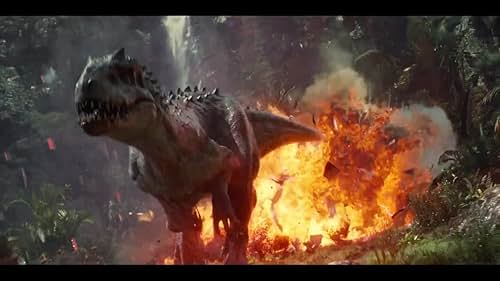
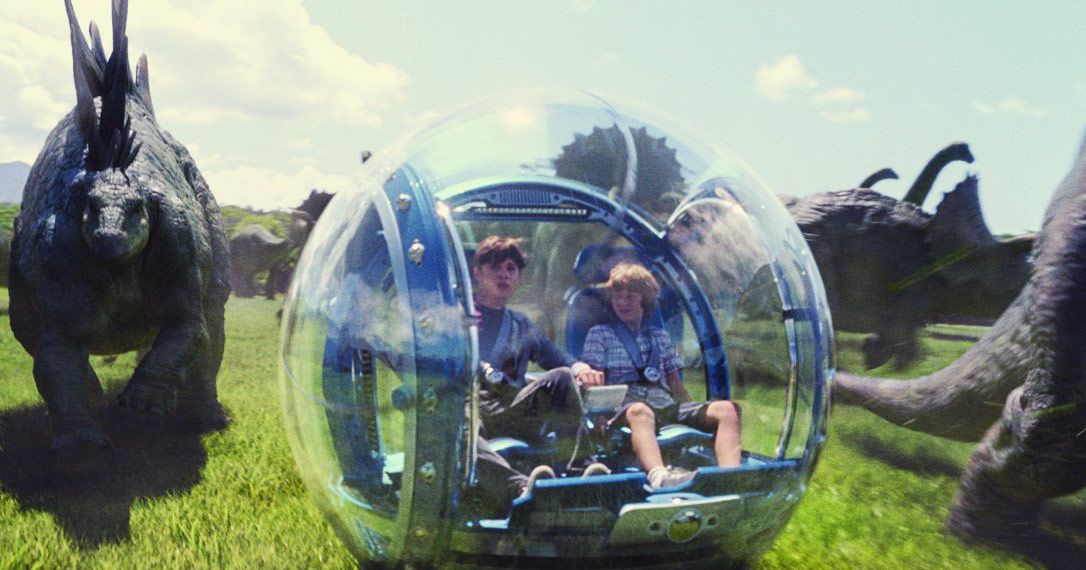
There’s also a fair amount of lazy plotting. It is never adequately explained why certain features of the new, terrifying animal – Indominus Rex – were allowed to manifest themselves in the creature (such as its ability to think like George Patton) without also injecting a kill switch. Also, the response of the park staff is less professional than what you might get on a windy day at Busch Gardens, and if Busch Gardens keeps you on a metal track for the Old Time Antique Car Ride, there is no way a park would allow its patrons to self-navigate dinosaurs in one of these:
Still, this is an easy and fun movie which, at last count, has made enough dough to bail out Greece.
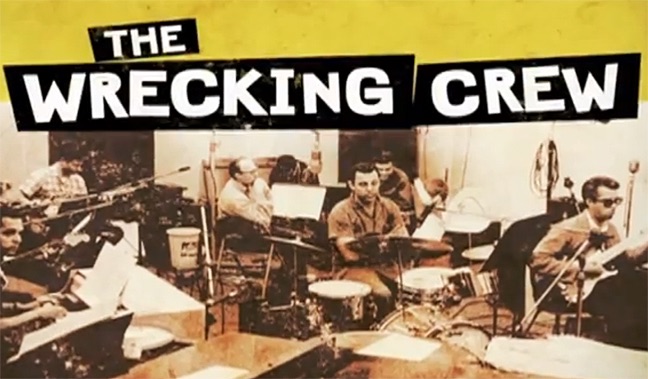
A significant portion of Love & Mercy is devoted to Brian Wilson’s production of The Beach Boys record “Pet Sounds.” Wilson enlists a room full of session musicians rather than the Beach Boys, who are utilized solely for vocals. The studio players were known as The Wrecking Crew, and it was from this group that the band found its replacement for Wilson on the road, Glen Campbell.
Denny Tedesco, the son of session guitarist Tommy Tedesco, has written and directed a fascinating documentary that chronicles the heyday of The Wrecking Crew, who played the music on a seemingly exhaustive list of pop records in the the 60s and 70s. Working from interviews of the players and the acts they backed, as well as home movies of his father, Tedesco provides great insight into the times as well as the life of a working musician.
The interviews are particularly fun. Roger McGuinn of The Byrds, who had been a session player himself, had to break it to the band that the rest of them wouldn’t be playing on their hit single “Mr. Tambourine Man” which didn’t go over well. As McGuinn recalls, The Byrds produced two tracks in three hours during the “Mr. Tambourine Man” session, while it took 77 takes to produce “Turn, Turn, Turn” which the band insisted on playing.
Tommy Tedesco tells the story of The Gary Lewis and the Playboys guitarist who confessed he could never play what Tedesco had played in studio on tour and always felt embarrassed when fans complimented his playing on the records. Peter Tork of The Monkees tells a poignant story of the disappointment he felt when he was invited to come to the studio for the production of a Monkees tune only to learn that the invitation was solely as an observer. On an up note, Mickey Dolenz reveals that the studio musicians taught him how to play the drums in preparation for his Monkees tour.
Obviously, the days of a small crew of players backing most of the pop radio play (and film and televisions tracks and radio and TV commercials) coming out of LA couldn’t last, but this is a blast of a documentary that also serves as a loving remembrance of the filmmaker for his father.







 filmvetter