Archive

Drama

image


Adam McKay’s The Big Short is ingenious, economical, and expert in translating a difficult subject – the mortgage crisis of 2008 – for non-expert viewers.  McKay makes what could be an arcane and tedious topic move, and his use of characters and celebrities to directly address and instruct the audience is particularly effective. The film is also wildly entertaining, and for the most part, well paced. In adapting Michael Lewis’s book, McKay alternates between keeping a sense of humor and paying appropriate deference to the deadly serious nature of the crash, revealing the seeming lunacy of modern finance and inherent flaws in our system. As we cover the prescient characters who foresaw the collapse of the mortgage market, and created a new financial instrument to short it to their advantage, the film builds to a depressing climax that is educational and even moving.

But one has to remember, McKay tacked on tedious moral lessons about our financial system in, of all things, the moronic buddy comedy The Other Guys. So after watching Will Ferrell and Mark Wahlberg engage in their crazy hijinx, we received a sermon on the ponzi scheme that is Wall Street, though blessedly, only during the credits.  McKay did the same thing for campaign finance reform in the Ferrell/Zach Galifinakis comedy The Campaign, but his jeremiads actually crept into the film, and I’ll bet dollars to donuts he considers Anchorman 2 a modern Network.  Anybody who had to append morality epilogues to these light stinkers clearly was itching for more serious fare.

Unfortunately, when McKay got it, he made a riveting, rip-roaring, true life story, and then . . . he choked. A moral fable was not enough.  McKay wanted a moral scolding.  So, every representative of the establishment – bankers, investors, an SEC investigator, a bond rating company analyst, two Florida real estate brokers, the financial reporter – are to a person grotesque cartoons. As depicted by McKay, they might as well be spit-roasting the homeless. Worse, every single one of our hedge fund manager protagonists, all of whom made a shit ton of money off of the collapse, is presented as a tortured, morally conflicted hero. Profiteer Brad Pitt scolds two characters by reminding them that when unemployment rises 1%, 40,000 people die. They are chastened, though I doubt chastened enough to do much about it. Christian Bale, who made billions for his firm betting on the economy to fail, closes his shop with an email to investors that bemoans the cruelty of the market. And the third genius, Steve Carell, literally apes Christ on the cross as he weighs whether to sell. He is urged to do so by his staff as they call him from the steps of a church! And yes, he too cashes in, but only after much soul searching and many, many lectures. And after all that, McKay adds a coda where he warns us that it is all happening again, no one went to jail for it the last time, and so, we are not absolved.

It was all right there, the deed done with, if not a scalpel, a stiletto.  But McKay couldn’t trust his own narrative and so, he used a butcher knife. The ensuing bludgeoning is gonna’ pay off with an Oscar tomorrow night, followed by, I am sure, a sermon much like the one that kneecapped his own movie.

image

The first half of this biopic whizzes by, introducing the three main characters (NWA founders Easy E, Ice Cube and Dr. Dre) as young pop visionaries who see the future and impact of gangsta’ rap. They rise against the backdrop of racially-charged LA, and director F. Gary Gray gives each their own space and voice. We invest in them individually and collectively, while rooting for their success as they navigate fame, the music industry, the violence of their environment and financial and professional jealousies. Gray also skillfully juxtaposes the raw anger of their music with the brutality of Compton. It’s good, involving fun.  The second half, however, is slower, and the path is well-worn. Excess takes its toll, “the man” (i.e., manager Jerry Heller, the record company, cops and the government) does what he does, and it sure gets lonely at the top.

Overall, this is an entertaining and competent if overlong film. It’s also filled with factual inaccuracies, to be expected when rich men collaborate on the telling of their own rise (and Dr. Dre and Ice Cube are mega-rich). A few, however, are problematic. Gray obviously wants to set a time of rampant police brutality and oppression, so he has Dre arrested for simply talking back to a thuggish Compton cop. All well and good, except Dre was actually arrested for . . . unpaid parking tickets! Ha ha ha. Not very gangsta’.

Similarly, there is a scene where the Detroit police, led by a Bull Connoresque whitey and his phalanx of all-white cops, chase NWA off the stage and beat them viciously, throwing them one by one into a van for processing, for playing “Fuck the Police.”  In fact, while NWA was arrested in Detroit, it wasn’t at the venue, nor were they beaten. Instead, later that evening, they were safely ensconced in their hotel when they went to the lobby to meet some girls.  There the cops took them in with little fanfare, and no body blows.

Oh well.  They still had attitude.

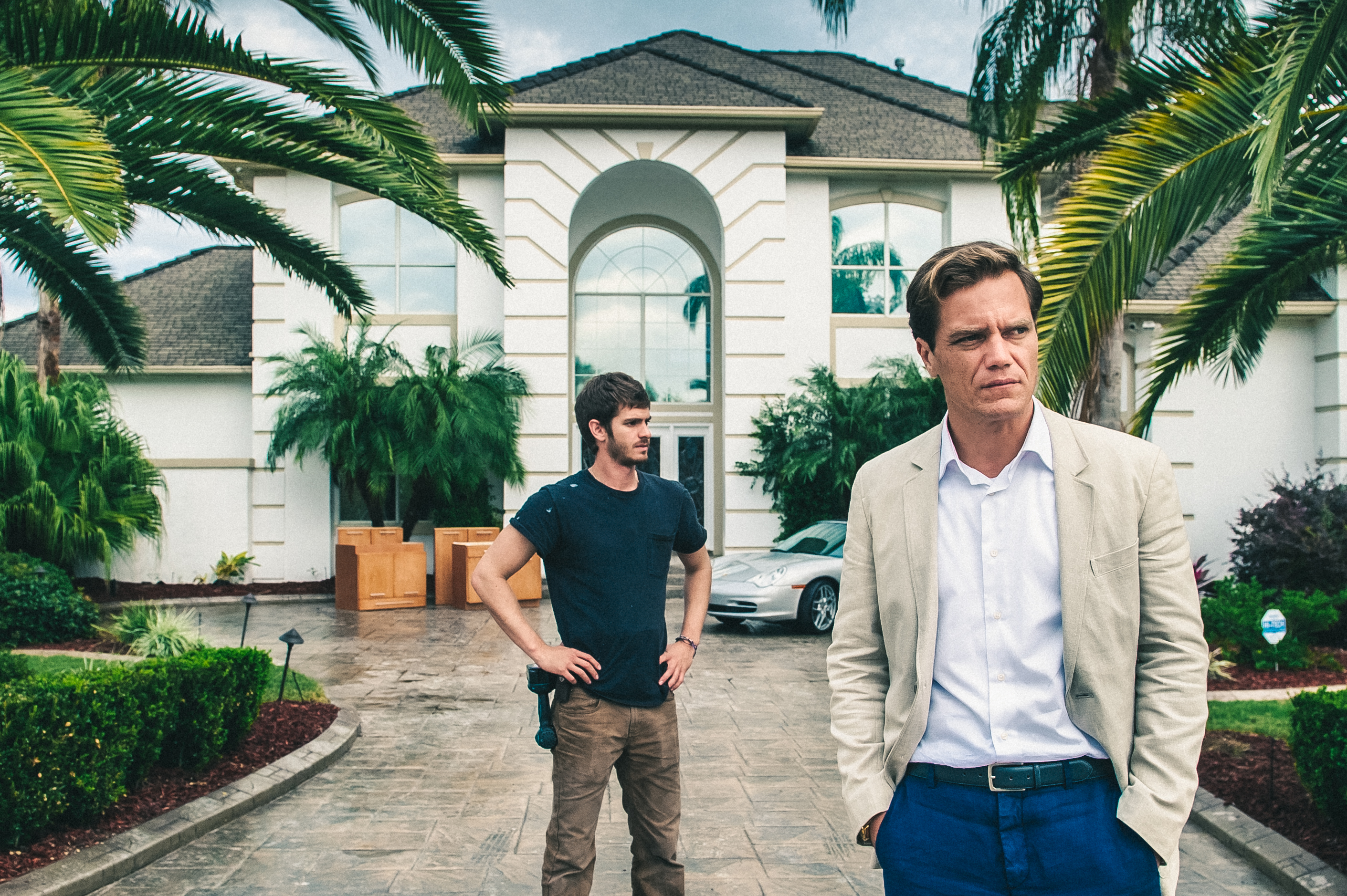
In the opening scene, Michael Shannon, a rising Florida real estate broker, walks out of a house where he has just attempted to evict a man. The tenant has blown his brains out in the bathroom. Shannon cares not a whit; he has the lives of many more good, hard-working, decent Frank Capraesque archetypes to ruin, and there are only so many hours in a day. This is the most subtle part of 99 Homes. I get the sense they show this picture to Bernie Sanders volunteers to get them jacked up before they go door-to-door.

Shannon soon moves to the house of Andrew Garfield, a construction worker who is behind on payments for his childhood home, which he shares with his mother (Laura Dern) and son. Garfield gets the boot through the collusion of the courts, the sheriff and indeed, modern American capitalism, but fate brings him back to Shannon, who sees something in the lad. Soon, Garfield is working for Shannon, evicting a passel of George Baileys and making serious bank.

But what does it profit a man to gain the whole world and forfeit his soul? Yup. It’s that kind of movie, a bludgeon. It’s also repetitive (if you want a “how to” on evictions, this is your flick, because we see scads of them) and unwittingly undermines its message. Garfield is a pretty stupid poor person and an even dumber rich person; he equivocates and Hamlets through the entire picture, so much so you actually feel bad for the devil Shannon in having to negotiate the soul of this dimwit.  Also, director Ramin Bahrani obviously knows squat about the Florida police. The film ends with an extended scene where a man resisting eviction fires a rifle out his window at the cops numerous times and yet, miraculously, they don’t shoot him.  Poppycock.

Shannon is the only reason to see the movie; he does his level-best to give real estate Satan some heft and depth, and he is one of the most interesting actors around.

Naturally, the movie was adored by the critics (“makes you understand how this poisonous financial ecosystem thrives” – David Edelstein; “nails the predicament in which so many working-class folks now find themselves. Although they cling to the American dream, for many of them it has become a nightmare” – Calvin Wilson), who – as everyone in the know knows – have for years been in the pocket of the anti-eviction lobby.

image

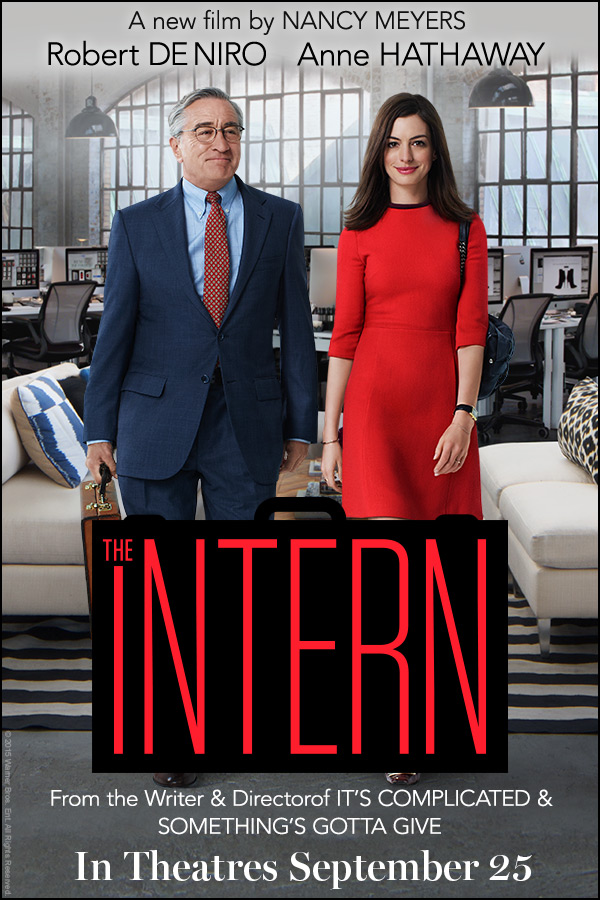
Makes Love, Actually seem like a gritty documentary.  This is a cloying, revolting film about a young entrepreneur (Anne Hathaway), her senior intern (Robert DeNiro) and her struggles to have it all in the fast paced world of tech and fashion.  Hathaway grew up from her stint as a personal assistant in The Devil Wears Prada, and now she runs her own on-line clothing company.  But she works too hard, her marriage is in crisis, she’s mulling bringing in a new CEO and fortunately for her, dapper, impossibly cute DeNiro arrives to provide balance to her life.  That’s the whole thing, which would be bearable, except for the fact that Hathaway is playing her own excruciating “aw, shucks, me?” persona; DeNiro looks bored; the plot is non-existent and the presentation slipshod; Anders Holm (from Comedy Central’s Workaholics) is Razzie-worthy for his clumsy, unconvincing turn as Hathaway’s mushy husband: the film doesn’t know whether it wants to be a comedy or a drama so it settles as a statement on the pressures put on rich professional women who live in impossibly gorgeous and classy Brooklyn brownstones; the score is a maudlin, soapy piano that bores into your skull; and everyone in the thing is just so damned cute, you hope that just maybe, they’ll inject a devastating calamity.  They don’t, unless you consider accidentally sending an email criticizing your mother to your mother of that stripe.

Also, apparently, in Brooklyn and Manhattan, parking isn’t a problem.  Anywhere.

In the immortal words of a review of a Spinal Tap record, shit sandwich.

The Martian - Disney+ Hotstar

Matt Damon anchors this futuristic mash-up of Apollo 13 and Castaway (with a little bit of Gravity thrown in for good measure), and for the most part, the results are positive. Stranded on Mars, Damon must learn to adapt to the planet’s forbidding nature, ingeniously deducing how to grow food, warm himself, and communicate with NASA to effectuate his rescue. This is an Oscar-nominated film and still in the theaters, so I’ll be broad in my comments.

Damon, as usual, elevates a picture. We view him battling the elements and disaster, and he veers between gallows humor, heartfelt wonder when he hits upon an idea that can help him survive, and mental and physical breakdown. He’s a gifted and still, incredibly, underrated actor, too often overlooked. He was the heart of The Talented Mr. Ripley, but everyone was dazzled by Jude Law; he made The Departed tick, but the buzz went to Jack Nicholson, Leonardo DiCaprio and even Mark Wahlberg, who played a stock tough Boston cop and received an Oscar nod for it. In the Coen Brothers re-make of True Grit, Damon near stole the picture, and his smaller part in Contagion was the most affecting.

The film moves rapidly as director Ridley Scott alternates between Damon attempting to survive on Mars and the efforts of NASA to rescue him. While we are with Damon, the picture is consistently compelling. When it reverts to NASA, however, it becomes uneven, pat and pedestrian. It does not help that Jeff Daniels has decided to portray the director of NASA as some sort of mannered Aaron Sorkin archetype. It also does not help that Kristen Wiig is anywhere near this movie (as the director of Public Relations for NASA, she seems to be itching to show us her googly eyes). Finally, Scott is clearly aping Apollo 13 by giving us a picture of the NASA brainiacs as they work to save Damon. Unfortunately, unlike in Apollo 13, the science is less accessible and negatively juxtaposed with what Damon is doing on the planet, where he actually explains to us what he is doing in his daily video logs.

Scott is no stranger to space.  His breakout film, Alien, was set in 2127, where space was industrial, dirty and haunted, and government and corporations conspired to screw the little man. Clearly, he is in a better place today. In 2035, NASA’s kindly counterpart in China subverts its own government to help Damon; the people who work at NASA have a certain blasé “I worked in a Blockbuster and I will never wear a uniform again” mien: and missions to Mars are the kind of endeavors wear crewmates can play kissy face.

My curmudgeonly nits aside, this is very solid entertainment.

image


(Reporting from the Blizzard of ’16)

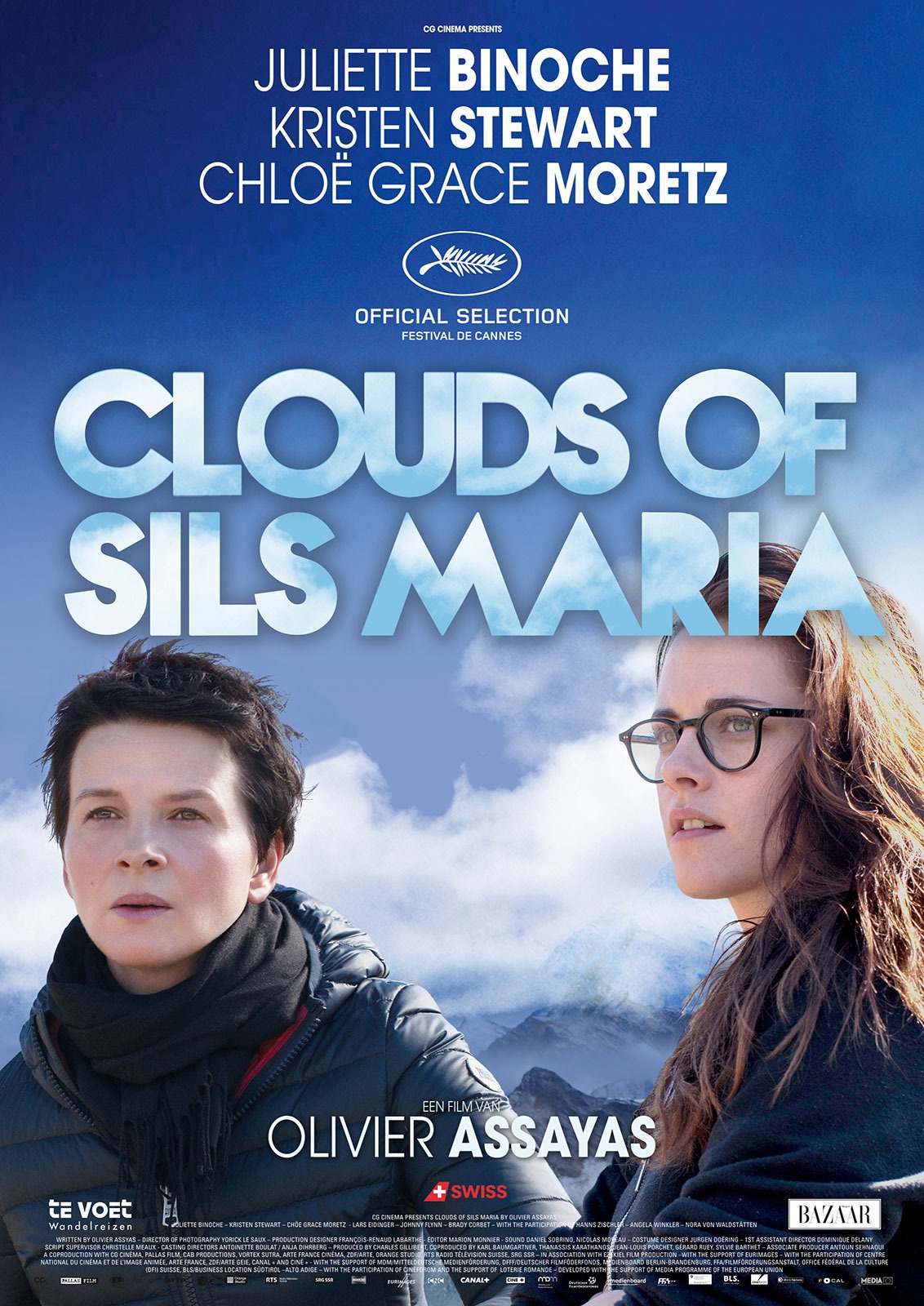
Writer-director Olivier Assayas has created a beautiful character study and meditation on the subjects of stardom, aging and generational disconnect.  Juliette Binoche gives the performance of her career as a world famous actress.  She made her stage debut twenty years earlier as an ingénue who seduces and destroys an older woman. In a revival, Binoche is asked to play the part of the older woman, and she must deal with the passage of time, the change in her viewpoint, the suicide of her old friend the playwright, and her own vulnerability to youth in the guises of her personal assistant (Kristen Stewart) and the young superstar actress playing Binoche’s debut role (Chloe Grace Moretz). Stewart is Binoche’s connection to the world of celebrity and Internet media and must support Binoche as she becomes increasingly nervous about her performance while suffering her neediness and condescension.  Grace Moretz is coming to destroy her

Binoche is noble, fragile, and bravely bears her soul and insecurities in the face of time and the vagaries of celebrity. When we meet her, she is glamorous, beautifully made up for a Chanel photo shoot and a tribute to the playwright. When Binoche makes herself sexually available to an old flame who mistreated her in the past, only to be reduced to the role of the spurned lover waiting in the hotel for the visit that never comes, it is deeply affecting.

Binoche is ambivalent about playing the role because she knows all too well the fragile state of her age, which results in passive aggressive behavior towards Stewart and capitulation to Grace Moretz. As she prepares for the role with Stewart, she is natural, without makeup and the accouterments of the star. It is as if her armor has been discarded.

Grace Moretz is electric as the the new, hot thing, seemingly deferential to Binoche while harried by paparazzi and swirling scandal. Stewart is canny, but her problems as an actress continue. Her appeal has always struck me as inexplicable. At her worst, she is capable of mere sullen boredom, and at her best, a medium cool disaffection. Here, she does a bit better, but she can’t quite elevate her blase’ demeanor to a suggestion of anything deeper.  Still, she’s adept, and does not get in the way here.


image

Like Birdman before it, there are scenes in this movie so visually audacious, I gasped. But where that picture hit you like a ton of bricks based on the cumulative effect of its dizzying pace and construction in the close confines of a Broadway theater, Alejandro Inarritu’s The Revenant – which is essentially a lone survivor/revenge flick, with a little spiritual mumbo jumbo thrown in for good measure – presents dazzling set pieces interspersed with awesome portraits of the vastness of nature. The year is 1823, and Leonardo DiCaprio is a guide for a fur trapping expedition in South Dakota beset by a brutal Indian attack, and in escorting the survivors back to the safety of their fort, he is viciously mauled by a bear, a scene so expertly rendered I could not believe it had not happened, yet, of course it had not. DiCaprio seems a committed actor, but no one is that zealous.

After the attack, DiCaprio has many more hurdles before him, including a suspicious and dangerous member of the surviving group (Tom Hardy, channeling Tom Berenger in Platoon, a compliment) and pretty much every calamity the brutal world of the wilderness can provide.  DiCaprio has little to say, but he brings all the physicality he mustered in The Wolf of Wall Street, only this time, during his infirmity, he exudes animalistic fury instead of stoned near-paralysis.

This is one of the most thrilling, visually stunning films I’ve ever seen. Inarritu used natural light and subjected the actors to enormous rigors (some say, “a living hell“).  Like George Miller in Mad Max: Fury Road, Inarritu dispensed with CGI, remarking, “If we ended up in greenscreen with coffee and everybody having a good time, everybody will be happy, but most likely the film would be a piece of shit … When you see the film, you will see the scale of it, and you will say, ‘Wow.'”

Wow indeed.  It all pays off in making the picture visceral, authentic and epic.  My only nits are a bit of anachronistic, stale “you have stolen everything from us” dialogue from the primary Indian and one depiction too many of DiCaprio hallucinating his Pawnee wife welcoming him to death ala’ Russell Crowe in Gladiator. But these are very minor criticisms. This is a great film and certainly one of the best of the year.

image

Key Largo melded with Quentin Tarantino’s bravura scenes in Inglorious Basterds and his crackling dialogue in Reservoir Dogs. I had the pleasure of watching this picture on Christmas Day in 70mm at the AFI Silver Theater, complete with an overture and an intermission. The latter occurred after 1:46 minutes, and I remarked to my son that the film was flying by, particularly so because almost all that had occurred was conversation. Obviously, a Tarantino film cannot subsist on talk alone, but when the violence occurs, it is supported by the rich, if broad, characters developed beforehand (unlike in Django, where the carnage at the end felt like an indulgent spasm, revealing an insecurity at what came before).

It’s one of the best films of the year and it’s also one that should not be in any way spoiled by a plot summary or any other commentary that could lessen the fun. Accordingly, I’ll make my review brief and non-specific in the form of a few notes.

First, Spike Lee once disrespected Samuel L. Jackson when the latter was a working character actor and the former was the auteur du jour. Lee is also made apoplectic by Tarantino, who wades into race with a daring and incisiveness that obliterates Lee’s rote and easy observations. As it turns out, Lee and Jackson have achieved a rapprochement (they do commercials together), but any rift between Lee and Tarantino is settled by Jackson (“Spike saying, ‘I’m not going to see Django because it’s an insult to my ancestors’? It’s fine if you think that, but then you have nothing else to say about the movie, period, because you don’t know if Quentin insulted your ancestors or not,”).

Also, Jackson should receive an honorary Oscar for this alone:

This is an ensemble picture but it’s Jackson’s picture (though costars Walter Goggins and Jennifer Jason Leigh give him a run for his money).

Second, Tarantino masterfully blends genre, history, comic books and violence, but sometimes, it is to the detriment of his narrative. Not here. When the necessary resolution explodes, it’s almost a disappointment because you know there will be less talk. Tarantino’s script is razor-sharp, hilarious, suspenseful and a brilliant mix of modern pop culture and historical grievance.  It’s really something.

Third, I generally do not read any reviews or commentary about a film before seeing it or writing my own review, and I did not do so here. But I presume there is the same hullabaloo about Tarantino’s liberal use of racial and sexist insults. All I can say is that he uses them beautifully, like David Milch in Deadwood.  This is how you would expect low, dangerous comic book characters who steal and murder to parlay.  Any objection is likely coming from the same humorless prigs or their progeny who objected to the hyenas in The Lion King because they were villains voiced by minorities. In fact, in creating a movie depicting a roomful of lethal people who must sleep with one eye open as they brave a blizzard and their own treachery, opprobrium aside, it’s one of the most egalitarian rooms you’ll find in film.

image

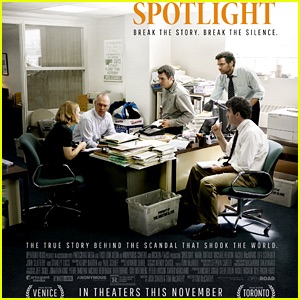
This is a gripping but measured film, a reportorial procedural and a meditation on the impact of the sexual abuse scandal that rocked the Catholic church in Boston, as reported on by The Boston Globe in 2002. “Spotlight” refers to an investigative team of the paper (Michael Keaton, Mark Ruffalo, Rachel McAdams, Brian d’Arcy James) who, under the direction of a new editor (Liev Schreiber) takes on the case. As they dig deeper, the breadth of the scandal widens (the number of culpable priests balloons from 13 to 87) and the institutional protections surrounding the church become more evident and intrusive. The story also takes its toll on the team, all some form of Catholic (cultural, lapsed, etc . . . ) at the time of the investigation.

The film is economical and direct and it stubbornly avoids cliche’ and histrionics. It is also a rare “based on true events” movie that feels authentic throughout, not jumped up or glamorized.  It is very similar to A Civil Action, another Boston based movie that tackles a legal case (water contamination in Woburn) by analyzing the city and its institutions. Like that film, Spotlight packs its biggest punch during scenes of interviews with the survivors of abuse, which are nothing short of heartrending.

If you want a gripping movie about the mechanics of taking on a story like this, this is it, and if you want a companion piece that shows exactly how an individual molester operates, I recommend Doubt. Watching this film, as with Doubt, stirred my own memories on the subject, having been educated by the Catholic church for eight years of grade school and by the Jesuits for four years of high school. I saw the picture with my kids and tried to explain how what is now an indelible black mark on the church wasn’t exactly a deep, dark secret by the time I reached high school, yet somehow, was not a full-fledged scandal. I explained that we had a religion teacher who was very charismatic, but who you just kind of knew not to be around. Why? It’s hard to say. It could have been my own sense of it, or the fact that my brother or his friends imparted some decent advice, or the fact that after gym, when you were showering, he could sometimes inexplicably be seen in the locker room.

Whatever the impetus, you learned not be around Father Bradley, but I guess I just assumed that all boys shared the same sense of something being off and were similarly self-protective. That wasn’t the case, and in 2007, I was one of thousands of recipients of a mass email detailing the misdeeds of this priest at our high school, and at other places where he taught afterwards, encouraging us to report if in fact we had any knowledge of his abuse. Without the work of The Boston Globe on the story, that email may never have come to be.  In that manner, this film is a testament to solid, door-knocking, pavement pounding reporting.

If you’re interested in the priest who plagued my school, the story is here.  The original Boston Globe story can be found here.

image

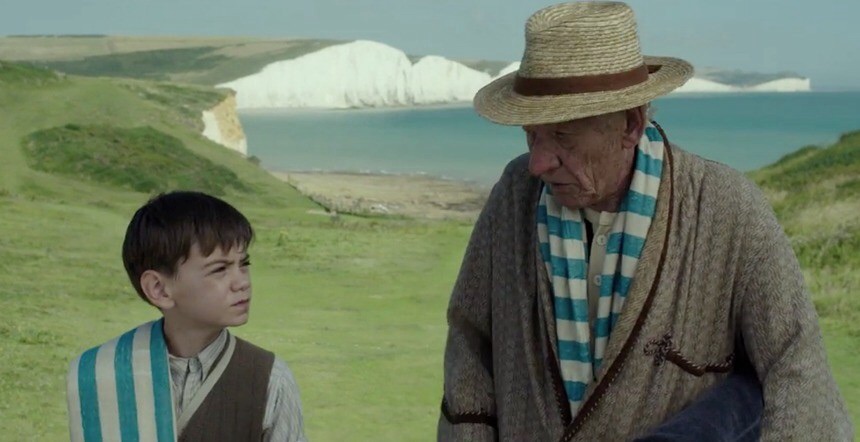
Sherlock Holmes (Ian McKellen) has been in retirement for decades, forced there by the traumatic events of his last case, a case he has increasing trouble remembering as senility does its damage. With Watson long gone, Holmes relies on the son (Milo Parker) of his caretaker (Laura Linney) to assist him in his daily activities and serve as a bridge to younger, healthier and more lucid days. Holmes is soon entwined in the hostile relationship between the working class mother and her clearly clever yet condescending son, and he confronts the mistakes of his past while engaging, reluctantly, in their very pedestrian domestic drama. This is Holmes adrift, vulnerable and shorn of the cock-sure bravado of his younger years.

It’s hard not to over-praise McKellen’s performance. Too much Gandolf has fixed him as caricature, but here, he deftly injects Holmes’s withering intellect and emotional shortcomings with a plaintive frailty. Director Bill Condon has experience with McKellen – their work in Gods and Monsters was similarly touching, restrained and intelligent and also garnered McKellen a Best Actor nod.  The film is also blessed by a strong turn by Parker. If I’ve said it once, I’ve said it a thousand times, as in life, you warm to a child who is genuine as opposed to precocious, natural instead of stagey.  Parker is just right.

Occasionally, the movie is a little dragging, but this is still one of my favorite films this year.