Archive

Crime/Mystery

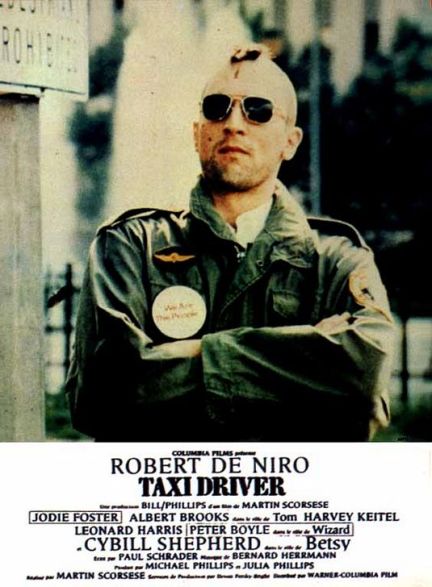
I was surprised to see several things in my recent re-viewing of Martin Scorsese’s classic, including Albert Brooks as the exact same character he has been playing for nearly 40 years; Scorsese himself making a Hitchcockian appearance in the background, but then taking a significant one-scene role as a lunatic in the back of Travis Bickle’s (Robert DeNiro) cab, suggesting he changed his mind about how much time he would spend in front of the camera; and the effectiveness of the score, which was Bernard Herrmann’s last one.

That aside, it holds up as the classic it is considered (47 on AFI’s Top 100). Scorsese’s New York is a modern hell.  He shoots the city so it almost reeks. Steam pulses out of the grates, rot is everywhere and kindness is non-existent (I couldn’t get a fantastic book, “Ladies and Gentlemen, the Bronx is Burning” out of my mind).  The viewer is immediately in kinship with Bickle’s voiceover, “All the animals come out at night – whores, skunk pussies, buggers, queens, fairies, dopers, junkies, sick, venal. Someday a real rain will come and wash all this scum off the streets.” Bickle is a Vietnam vet who can’t sleep and teeters on the edge of sanity. When he falls for a campaign worker (Cybill Shepherd) merely by viewing her through a plate glass window, it seems creepy only until he approaches her, and then there is charm and hope. He is similarly touching with teen prostitute Iris (Jodie Foster), passionately replying to her taunt that he is a square: “Hey, I’m not square, you’re the one that’s square. You’re full of shit, man. What are you talking about? You walk out with those fuckin’ creeps and low-lifes and degenerates out on the streets and you sell your little pussy for peanuts? For some low-life pimp who stands in the hall? And I’m square? You’re the one that’s square, man. I don’t go screwing fuck with a bunch of killers and junkies like you do. You call that bein’ hip? What world are you from?”

But they are from the same world. Bickle is not wired right, he sabotages himself with Shepherd, and soon, he retreats into the mode of a dangerous and unstable assassin, one who has gone from observer of the inferno to an extinguisher. Ahead of its time, Bickle’s would-be John Hinckley gets a Bernie Goetz makeover, cementing Scorsese’s theme that in the jungle, there’s often but a hair between hero and lunatic, moral beacon and dysfunctional threat. Woody Allen’s Blue Jasmine doesn’t seem a natural comparison to Taxi Driver, but in essence, when it ends with Cate Blanchett in rumpled clothes, talking to herself in the park, the directors are exposing the same reality.

The Silence of the Lambs - July 11th, 2020 at Lefty's Drive In!

My son is headed off with his pals to see The Silence of the Lambs tonight, courtesy of AMC theaters’ occasional screenings of older films. I saw it with him a few weeks back and I think he’s looking forward to watching it again in the theater as much as witnessing the reaction of his friends.

Jonathan Demme’s masterpiece is one of the few films that focuses on the serial killer but doesn’t give way to excess. What we know about Hannibal Lecter (Anthony Hopkins) is simple: he is locked up for eating people; he is brilliant and fascinating; and he is lethal. When a serial killer, Buffalo Bill (Ted Levine) starts to plague the Ohio, Pennsylvania, West Virginia area, FBI profiler Jack Crawford (Scott Glen) sends a trainee, Clarice Starling (Jodie Foster), to elicit any advice from Lecter. Starling and Lecter use each other for their own ends, engaging in a thrilling psychological dance that is one part therapy and one part mental combat; she seeks to stop Buffalo Bill while he waits for a slip-up.

The Silence of the Lambs is so well-paced and taut that on occasion, you are near-breathless. There is only one pause in the film’s very serious, unrelenting tone (when Starling is “hit on” by two geek entomologists with whom she is consulting). The pressure is not only from Lecter and Buffalo Bill, but from Starling’s lack of experience, harrowing childhood, and even her gender and diminutive physicality.  The odds seem uncomfortably stacked against her.

The exchanges between Hopkins and Foster are electrifying. You can see just how dangerous Lecter is and near curse yourself for being charmed by him. Yet, you root for the seemingly overmatched Starling, and when she stumbles, you feel the sting of her awkwardness. When Lecter so easily assesses her background and her sexual desires, it is excruciating. Yet Starling comes up to speed and achieves a plausible parity.  Levine is also expert as the tortured, frightening Buffalo Bill, and his transformation to “normal” when he is questioned is a chilling addition to this “monsters among us” story.

The picture is one of only three to win Academy Awards in all the top five categories: Best Picture, Best Actor, Best Actress, Best Director, and Best Writing (Adapted Screenplay), and deservedly so.

After seeing Harper as part of the AFI Silver LA Modern series, me and my son watched Paul Newman’s follow-up turn as Ross McDonald’s P.I. in 1975’s The Drowning Pool.  Lew Harper finds himself in New Orleans in the middle of a scandal involving an ex-love (Joanne Woodward), a sleazy oil man (Murray Hamilton) and a protective local police chief (Tony Franciosa).  Newman again gives an infectious star turn as the cynical but funny private detective brought into to town by Woodward to get to the bottom of her being blackmailed.  When Franciosa is impressed by his $150 per day plus expenses rate, Harper explains that it isn’t all that much when you work four days a year.

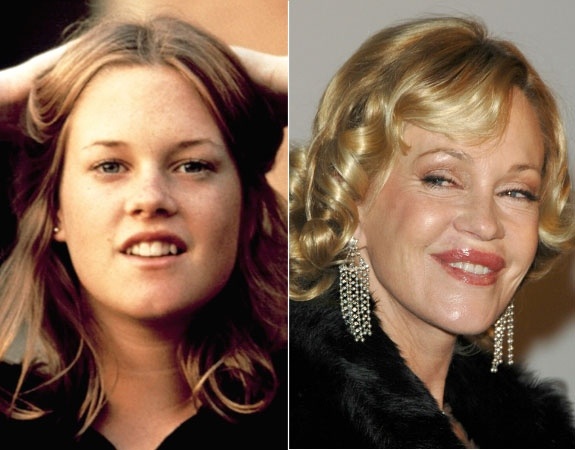
But the picture lacks too many elements that made its predecessor so good.  New Orleans ain’t LA, and while there is a certain fish-out-of-water charm to Harper’s investigation, the setting feels off.  The score is also very cheezy, alternating between musical interludes worthy of a Mannix or Barnaby Jones and an annoying symphonic riff of Roberta Flack’s “Killing Me Softly”.   Worse, Joanne Woodward’s Louisiana drawl is borrowed straight from The Long Hot Summer.  She’s ridiculous in her theatrics and a terrible replacement for Janet Leigh as Harper’s love interest. Hamilton does his best to give his character some flavor, and an 18 year old Melanie Griffith is an alluring near-jail bait, but most everyone else is either histrionic or blah.

While Woodward is a step down, Griffith as the poisonous Lolita is a significant upgrade from Harper’s Pamela Tiffin.

And a reminder of the horrors of plastic surgery.

Very much like Goodfellas, but with a broader palette and more compelling characters. In Goodfellas, Liotta, DeNiro and Pesci are sharks, swimming to survive and devour, and the peek Martin Scorsese gives us into their immoral, brutal world is such a dizzying kick, we tend to forget that these brutal archetypes are no more than that. In Casino, Scorsese aims higher. DeNiro’s Sam Rothstein is not just an Irish street thug, but instead, a wunderkind Jewish bookie who is handed the keys to the cash cow for the mid-West mob – the Tangiers hotel (funded, of course, by union pension money) in 70s Las Vegas. DeNiro finds his oasis in the desert and works to re-create himself as a solid citizen. His efforts are doomed to fail, however, because no executive title, country club membership, or professional success can sanitize the shit on his shoes. He’s still just a functionary effectuating the skim just like when he was picking Oklahoma, taking the points. But DeNiro’s self-deception is absolute. At one point, he even hosts a casino television show which he devotes to exposing the raw treatment he has received at the hands of the local politicians who have forsaken him, ala’ Lenny.

When DeNiro feigns respectability, his protector, Nicky Santoro (Pesci) is always around to puncture his pretensions. In one of my favorite scenes, Pesci accuses a silk robe wearing, cigarette holdered DeNiro of walking around like “fucking John Barrymore.” It is Pesci’s presence that ensures DeNiro’s success (he muscles out any competitor or threat) as well as his demise (every Pesci excess is linked to DeNiro). And DeNiro is incapable of truly weaning himself off of his criminal past. As he cannot reform or blunt Pesci, he uses him to bring his conniving wife (Sharon Stone) to heel. Stone was a working girl who DeNiro hoped to take with him on his journey to polite society, but she was no more malleable than Pesci. DeNiro is, rather strangely for a Nicholas Pileggi/Scorsese character, a romantic, opening the film with “When you love someone, you’ve gotta trust them. There’s no other way. You’ve got to give them the key to everything that’s yours. Otherwise, what’s the point? And for a while, I believed, that’s the kind of love I had.” So you invest in him. His inevitable tragedy is unsurprising yet moving.

Scorsese’s use of music is, as always, impeccable, and the fluid camera-work manages to convey not only the mechanics of Vegas but the exhilaration of the town. Moreover, the film’s ending lament about its corporatization is one of his few codas to a Scorsese film supported by what preceded it.

If there is a weakness, it is in the last third of the film, where the dissolution of the DeNiro-Stone marriage is exhausting and a bit tiresome.  That identified, this is a great film and certainly a top ten American crime picture.

Robert Altman’s send-up of Hollywood process and morality opens with an audacious 7 minute, no-cut scene that is a primer on economical, fluid exposition. We meet most of our characters, including the studio’s no. 2, the writer’s executive, Griffin Mill (Tim Robbins), and the tone is set.  Unfortunately, Altman cannot fulfill the promise of his introduction. Robbins’s star is falling and he is also being threatened via postcard by a writer he has brushed off. Unnerved, he sets up a meet with who he believes to be his stalker, accidentally kills him and then falls in love with the writer’s girlfriend (Greta Scacchi). The murder is implausible and the heat-of-the-moment relationship unconvincing (a love scene with Robbins and Scaachi is not so much hot as uncomfortable). Robbins is way too mannered and standoffish to elicit empathy, and the film swerves artlessly from suspenseful to broadly comic (Whoopi Goldberg is very funny as the investigating detective, but she’s too funny).

On the plus sides, we are treated to a whirlwind tour of LA, and Altman makes sure it is populated by just about every star, young or old, he can get his hands on. Also, the lingo of the pitch meetings can be very funny:

“It’s a TV star who goes on a safari.”

“A TV star in a motion picture?”

“A TV star played by a movie star.”

“A movie star playing a TV star.”

“Michelle, Bette, Lily.”

“Dolly Parton would be good.”

“I like Goldie.”

“Great, because we have a relationship.”

“Goldie goes to Africa.”

“She’s found by this tribe.”

“- of small people.”

“She’s found and they worship her.”

“It’s like The Gods Must Be Crazy.”

“except the coke bottle is an actress.”

“Right. It’s Out of Africa.”

“meets Pretty Woman.”

Still, the script is rather gentle on the town, and it never really succeeds as a thriller or a satire. In fact, the movie could have been done without any reference to the murder at all, which, ultimately, drags it down. The Player falls into the category of Movies You Thought Were Better at the Time (Altman was nominated as Best Director, as was Michael Tolkin for the script)

Point Blank was introduced by its presenter at the AFI Silver as “the most pretentious good film ever made.” The “good” discussion follows, but there is no doubt John Boorman’s tough noir picture is arty, almost to the point of distraction.

The story is simple: Walker (Lee Marvin) and his pal Reese (John Vernon, Dean Wormer from Animal House, in his film debut) make a score, Reese double-crosses Walker, takes his lady and his dough and leaves him for dead. Walker returns and with the help of his sister-in-law Chris (Angie Dickinson) works his way up the criminal syndicate that protects Reese to get his money.

This is a cold film. The characters are hollow, and Marvin is catatonic. The story is near non-existent and Boorman relies on showy and repetitive flashbacks that suggest portent and meaning but do not deliver. Boorman’s prior film, Having a Wild Weekend, was a romp in the mode of Help, featuring the Dave Clark Five, so his high-mindedness may have been itching to get out.

On the plus side of the ledger, the color and texture of the film are vivid, Boorman’s depiction of violence is jarring (in particular, a vicious brawl in a cacophonous soul club), many of Point Blank’s images are stunningly iconic, and the fractured timeline clearly influenced Quentin Tarantino, among others.

The virtues of Point Blank are more identifiable in its legacy than in the viewing. Except for the incomparable Dickinson.

As part of the AFI Silver LA Modern series, I took my son and his friend to see a double-feature Saturday, the first entry being 1966’s Harper. I’d probably seen this Paul Newman vehicle 5 or 6 times before this weekend. It was on regular rotation as the 4 o’clock daily movie during the 1970s, and I was immediately enamored of the sarcastic, bedraggled Newman playing Ross McDonald’s updated private dick, Lew Archer, changed to Harper for the picture.

It turns out I’d never seen it in full. Those bastards at Channel 7 must have cut the living crap out of it, because there were at least four scenes absolutely new to me.

I digress. Harper is a treat. Newman’s jovial cynicism fits the character perfectly.  Thankfully, Frank Sinatra was not interested in the role.  He lacked Newman’s playfulness and ability to make fun of himself.  Interestingly, when Dirty Harry came around 5 years later, Sinatra again begged off, as did numerous others, and Newman was approached.  Turned off by its politics, Newman suggested Clint Eastwood.

Lauren Bacall is deliciously venomous as Newman’s client (the paralyzed wife of a missing tycoon), Harper’s byzantine plot is more than serviceable (though, overly complicated), LA is well traversed, and the supporting cast (Robert Wagner, Strother Martin, Julie Harris, Arthur Hill, and Janet Leigh as Harper’s suffering ex-wife) is impressive.  It also didn’t hurt to see the film in AFI’s palatial main theater.

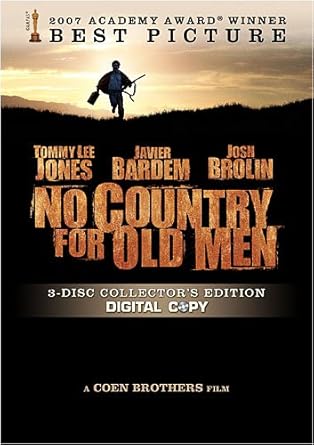
The Coen brothers’ finest film, a gritty, nerve-wracking crime story and an existential horror movie set in the harsh and desperate environs of dusty, bleak Texas.  Josh Brolin takes the wrong money from the wrong drug dealers, victims of a cocaine buy gone bad, after he happens upon their slaughtered bodies while hunting.  Javier Bardem is dispatched by the higher-ups to get it back, killing most everyone he encounters along the way (including rival bounty hunters sent by his employer).  The pacing is taut, the terror near-asphyxiating.   But interwoven in the story is a sense of generational disconnect, rot and the utter bewilderment of an older generation at the brutality and senseless violence of the new.  An observation from a friend is also spot on: “I thought the most important theme in the movie was that older men gradually lose contact with their country, and that this sad fact has nothing to do with the objective reality of what’s happening but is the natural consequence of getting older.”

Set in 1980, the young are depicted as callous and corrupt.  Brolin, shot and desperate to get to Mexico, encounters kids on the border bridge returning to the U.S. after a night of carousing.  He offers to buy a shirt from one of the trio to cover his bleeding, but they quickly demand money, and when he asks for a beer, they want more.  Similarly, at the end of the film, two boys encounter a wounded Bardem and bicker over the share of what he has given them for a shirt.

The Vietnam generation is represented by Brolin and Woody Harrelson, the latter sent to bring Brolin in before Bardem gets to him.  Brolin is not exactly honorable but he still maintains a tie to some principles.  He literally awakes with guilt because he can’t let a dying drug dealer go to his end without water, and it is that charity that brings Bardem his way.  Harrelson, also a Vietnam vet, has a similarly flexible code (he is a killer), but at least there is some code there.  As he says to Brolin about Bardem: “You can’t make a deal with him.  Let me say it again.  Even if you gave him the money he’d still kill you.  There’s no one alive on this planet that’s had even a cross word with him.  They’re all dead.  These are not good odds.  He’s a peculiar man.  You could even say that he has principles.”  When Brolin returns from Mexico, still hobbled but intent on stopping Bardem, a border guard lets him through on the strength of Brolin’s Vietnam service.

Then, there are the old men for whom there is no longer a country.  Tommy Lee Jones and his law enforcement contemporaries just don’t get it.  It’s all gone to hell and a hand basket and while they understand violence, they don’t understand the new violence.  As Jones says, bewildered, reading the paper: “Here last week they found this couple out in California they would rent out rooms to old people and then kill em and bury em in the yard and cash their social security checks.  They’d torture them first, I don’t know why.  Maybe their television set was broke. And this went on until, and here I quote… ‘Neighbors were alerted when a man ran from the premises wearing only a dog collar.’ You can’t make up such a thing as that. I dare you to even try.”

It is not Jones’ world anymore (my favorite Jones musing was from Cormac McCarthy’s book – “She kept on, kept on. Finally told me, said: I don’t like the way this country is headed.  I want my granddaughter to be able to have an abortion.  And I said well ma’am I dont think you got any worries about the way the country is headed.  The way I see it goin’ I dont have much doubt but what she’ll be able to have an abortion.  I’m goin’ to say that not only will she be able to have an abortion, she’ll be able to have you put to sleep.  Which pretty much ended the conversation”).

The film ends with Jones driven to retirement, talking to other older lawmen about what it all means:

Roscoe: It’s all the goddamned money, Ed Tom. The money and the drugs. It’s just goddamned beyond everything. What is it mean? What is it leading to?

Jones: Yes.

Roscoe: If you’d a told me twenty years ago I’d see children walkin the streets of our Texas towns with green hair and bones in their noses I just flat out wouldn’t of believed you.

Jones: Signs and wonders. But I think once you stop hearin’ sir and madam the rest is soon to follow.

Roscoe: It’s the tide. It’s the dismal tide. It is not the one thing.

And the end of the film, Jones has retired (he’s done, “overmatched,” he says) and he sits with an older retired lawman, Barry Corbin, who observes, “All the time you spend tryin to get back what’s been took from you there’s more goin’ out the door.  After a while you just try and get a tourniquet on it.”

And the coda:

Corbin: You’re discouraged.

Jones: I’m… discouraged.

Corbin: You can’t stop what’s comin.  Ain’t all waitin’ on you.

Bardem is what is waiting on us all. Certain, unstoppable, arbitrary death.

This is a beautiful, unrelenting movie, deservedly winning Oscars for best picture and supporting actor for Bardem.

Thirteen years later, Martin Scorsese has re-made Boiler Room, writer-director Ben Younger’s patient and understated Wall Street picture about a sweet kid (Giovanni Ribisi) who gets sucked into the easy cash of a penny stock chop shop run by crooked investment manager Tom Everett Scott. Scorsese’s picture is from the vantage point of Scott’s character, penny stock maven Jordan Belfort, and clearly, the guy who played the drummer in That Thing You Do wasn’t going to cut it as his lead. Enter Scorsese’s boy Leonardo DiCaprio, an able and unsurprising choice. But as I sat through this excessive, gaudy, and at too many times, repetitive extravaganza of the go-go 90s, I pined for the more muted touch of Ben Younger.

DiCaprio as Belfort is an aspiring stockbroker tutored by Matthew McConaughey (who is hilarious; what a year he’s having) but wiped out on 1987’s Black Monday. He reinvents himself by switching to penny stocks, where the clientele is working class, the investments not so much risky as ludicrous, and the broker commissions 50%. Soon, with a band of merry fuckups (including Jonah Hill, who walks a steady line between an ambitious man and a raging child), he is crazy rich. He is also a drug and sex addict of mythic proportions and his life is an endless bacchanal, until, like Ray Liotta in Goodfellas, he must pay the piper.

The Wolf of Wall Street apes Goodfellas and Casino in its exposition, showing us through voiceover or DiCaprio speaking directly to the camera just how the securities game works. But writer Terence Winter lacks interest in the mechanics, and many times, DiCaprio leers and tells us directly, “You don’t want to know this.”

The film deduces that what we really want to know is what it’s like to live a high-wire act where every desire is fulfilled, and then some. For the most part, the filmmakers are correct, but in depicting the excess, they overindulge in it. There are two too many orgies, drug crack-ups and the like and at times, the mind wanders. Worse, as in Casino with Sharon Stone and Robert De Niro, Scorsese wrongly presumes we are interested in the marriage of DiCaprio and his trophy wife (Margot Robbie), a union founded on lust, greed and advancement that doesn’t deserve the time given to dramatize its crack-up. Our interest in Robbie peaked on her first date with DiCaprio, when she alights from the bedroom naked save for thigh highs of her own design.

Despite these foibles, the film is often very funny, and when it hits strides, dizzying and infectious. It also does not labor under the burden of a heavy message. Oliver Stone would surely have had Martin Sheen arrive in the final chapter to lecture us about American greed. Hell, Adam McKay, he of titanic films that reach to the heart of who we are as nation, closed The Other Guys with a tutorial on the excesses of Bernie Madoff (but we would expect no less from our new Capra, the creator of not only Anchorman, but Step Brothers and Anchorman 2). Instead, Scorsese and Winter don’t provide a message as much as a testament to the tribal customs and loyalty of certain American subcultures (Winter wrote 19 episodes for The Sopranos) and the universal intertwinement of the American dream and gluttony. But really, this is a picture about how crazy shit can get when those who pray at the altar of the dollar are fueled by endless cash, and the result is both alluring and grotesque.

The cast is very good. DiCaprio gives such a muscular, physical, manic performance (his 1 mile trip from his country club to mansion while on too many Quaaludes is herculean) , he is a lock for a best actor a nomination, but the win will go to McConaughey for Dallas Buyer’s Club.

When Dead Again came out in 1991, 31 year old Kenneth Branagh was fresh off his stunning Henry V, and along with Emma Thompson, threatened to be the next big thing. So as a follow-up, why not try a modern Hitchcockian homage set in San Francisco, with Branagh playing the hard-bitten gumshoe who runs across Thompson, a mysterious woman who has lost her memory, is terrorized by nightmares from her past, and needs Branagh to sort it out.

At the time, the film was well-received (Roger Ebert – “I am a particular pushover for movies like this, movies that could go on the same list with Rebecca, Wuthering Heights or Vertigo”) and it holds an 82% on Rottentomatoes. I can’t scoff. In 1991, I thought it was clever and well-conceived.

How wrong I was.  Dead Again just became available on Netflix streaming. It is an atrocious film.  Branagh’s “American” accent is an awful, nasally annoyance; Thompson barely makes an impression; the story (Thompson and Branagh both lived past lives where he, a famous composer in the 40s, was executed for her murder) is a preposterous pile of pure Gouda; and the villain is so obvious and nonsensical that you are offended at the degradation of the fine actor playing him.

He’s also not so good with scissors.

I’ll give credit where credit is due – Robin Williams does a few decent cameo scenes as a disgraced former psychotherapist and a babyfaced Campbell Scott shows off some nifty ninja kicks.