Richard Linklater offers the story of Bernie Tiede (Jack Black), a gay mortician who companions a significantly older woman, Marjorie Nugent (Shirley MacLaine) and then, in a fit of rage and exasperation at her domineering ways, shoots her in the back and stuffs her in a freezer, pretending she is still alive (not ala’ Norman Bates). Tiede is the town Robin Hood, the town being Carthage, Texas, and in many ways, Carthage is the star of the film. Linklater uses very few professional actors, instead interspersing the dramatic narrative with interviews of real-life Carthage citizens, almost all of whom are squarely on the side of Tiede, and almost all of whom are hilarious. To them, Nugent was a nasty, wicked old wretch and Bernie Tiede was the man who bought you a nice gift, sang the beautiful song that escorted a loved one to the hereafter, directed the town play or just gave you a nice wave everyday. And he was driven to it.
Of course, in the presentation, Linklater neglects a few ugly details of the real life Tiede (not all of the vast sums he spent of Nugent’s wealth went to charity), but it appears the basic premise is true – Tiede was well-loved and Nugent well-hated (her own nephew observed, “‘Bernie’s not the first one who thought about killing her. He’s just the first one who went through with it”).
Black is mesmerizing as Tiede, hilarious, hapless and harried, but uncontainably sweet and just a little guilty (even before the murder). MacLaine is effective as an old witch and Matthew McConaghey is amusing as the dogged D.A. But the stars are the real people of Carthage, who Linklater neither mocks or mythologizes, wisely letting them be.
My only criticism is the choice to make Tiede so sympathetic. Black does a great job in keeping him from being saccharine, with occasional flashes of guilty pleasure at his newly found wealth, but Linklater keeps away from any real dark heart, opting for a feel-good film. Which is fine, but I think it could have remained feel-good and still been a little more revealing.
A meaty, engrossing crime picture, right in Martin Scorsese’s wheelhouse. Jack Nicholson is a Boston crime boss who has a quasi-adopted son/mole in the Boston PD (Matt Damon). In that same department, a small unit (headed up by Martin Sheen and Mark Wahlberg) is set up to get Nicholson, and they recruit a police academy trainee (Leonardo DiCaprio) who has one leg in the tough streets of Southie (his dad’s side) and another in the upper crust of Boston (his mom). Meanwhile, a second task force, headed by Alec Baldwin, is also trying to get Nicholson and can’t get a handle on why they are thwarted at every turn. DiCaprio is “erased” from police files, purposely gets arrested, and infiltrates Nicholson’s organization, which is populated by colorful, brutal goons (Ray Winstone, David O’Hara), in order to identify the mole. Meanwhile, Damon keeps screwing Baldwin’s pooch.
A cat-and-mouse hunt ensues, as Damon searches for DiCaprio and vice versa. Damon is also dating a psychologist (Vera Farmiga) who treats cops and ex-cons, including DiCaprio.
Almost to a person, the performances are rich and rough. DiCaprio is now in full bloom, grown out of the Titanic baby face and having just previously offered two nuanced and substantial performances in The Aviator and Blood Diamond. Nicholson is bloody and funny, and, well, Nicholson.
All the supporting characters are strong and natural save for Farmiga (she’s too feminine for the role and when she becomes infatuated by a clearly unstable DiCaprio, it is unconvincing) and Wahlberg, who, ironically, was nominated for best supporting actor. He yells an awful lot and delivers a few speeches, but volume and line memorization do not deserve a nomination. Wahlberg seems uncomfortable and masks it with rage. And once again, Matt Damon does all the heavy lifting and gets none of the credit. His turn as the fatherless boy who is being manipulated by Nicholson is alternately frightening and heartbreaking, yet he remains a very charming sociopath.
The picture whizzes by. Scorsese effortlessly paces what could have been a morass of a story, providing his signature quick-cut expositions to perfectly chosen music (The Stones, Badfinger, Allman Brothers).
“I’m not a racist,” says Dave Brown. “I hate all people equally.” Dave Brown is a crooked, brutal, misogynistic L.A. cop who can turn a phrase now and again and, as is evident, can crib from Dirty Harry. Woody Harrelson plays Brown with a growing intensity. Just about every bureaucratic pressure is brought against him after he is caught on tape delivering a Rodney King to an unfortunate citizen. And in many ways, that’s the least of his worries. His ex-wives (Anne Heche and Cynthia Nixon) are sisters and he has a daughter with each, making for a challenging domestic life. He’s also an alcoholic and drug abuser, a thug, a sex fiend, and a murderer. And he’s going broke.
Similar to Bad Lieutenant, Rampart’s greatest virtue is the performance of its lead. There are also some well-written Wire lite exchanges, and director Owen Moverman (following up on his impressive The Messenger) films 1999 Los Angeles in a bleached, dreamy manner. But otherwise, this is a meandering, exhausting tale of the descent of a mildly interesting bully, made even longer by an utterly pointless relationship between Harrelson and a bar pick-up/defense attorney (Robin Wright). His exchanges with the bureaucrats hounding him (Steve Buscemi, Sigourney Weaver, and Ice Cube) are banal, his heart-to-hearts with ex-wives shed no light, and his discussions with his very bitter, uncommunicative older teen daughter are grating. Harrelson does a very effective job of conveying the importance and centrality of his home, especially in his moving scenes with the younger daughter, but that’s all Harrelson. The script offers little assistance (a personal disappointment because it was co-written by one of my favorite crime novelists, James Ellroy).
Not to mention, there is no street cop so well-connected or union protected that he could still be on duty after becoming front page news in a brutal beating and then involved in a deadly force shooting. Of course, were Harrelson suspended, Moverman would have to lose the cool shots of Harrelson in his police cruiser, contemplating his surroundings and his future.
It’s no shock the audience gave this a 38% and the critics gave it a 78% on rottentomatoes.
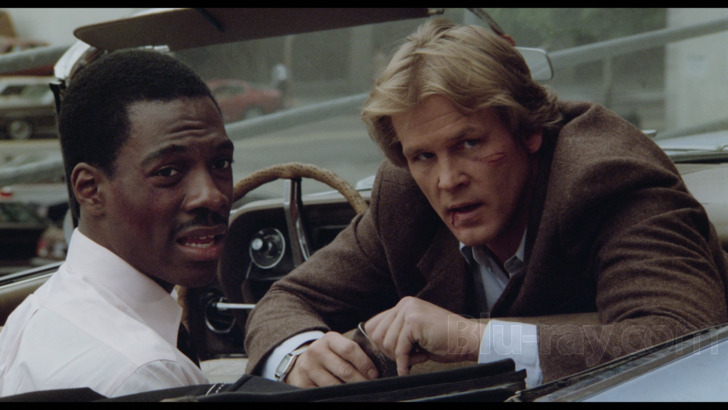
Eddie Murphy kinetically debuts as hustler Reggie Hammond, released from prison for 48 hours under the brutal watch of Detective Jack Cates (Nick Nolte) to hunt for Hammond’s ex-partners, who have gone on a cop-killing spree in San Francisco. The film catapulted Murphy to stardom. It was also the first picture to feature a Saturday Night Live comedian in a raw, crime story and stands as one of the better “buddy cop” pictures ever, though Murphy is really only deputized.
Yes, Murphy is very funny, sometimes side-splittingly so, but he does not treat every scene as an opportunity to do a bit or schtick. He picks and chooses his moments, trusting in the story directed and mostly written by Walter Hill (The Long Riders). Murphy has one virtuoso scene, when he poses as a cop to roust a redneck bar, but even there, where he puts a knife to a man’s face and tells him, “I’m your worst fu***** nightmare, I’m a ni**** with a badge”, he’s in keeping with the picture’s tough tenor. Nolte’s Cates is brutal, unpleasant and an unrelenting racist, almost shockingly so, given our current advanced ethos, yet, they bond in a manner that feels authentic. Given we’re dealing with tough cops and criminals, the racial dynamic is not off-putting. It just adds to the tension.
I was also surprised by the gritty brutality of the movie. The body count is high, but rather than explosions and elegant slo-motion, Hill takes more of a Sam Peckinpah approach. The shootings are bloody and awkward, not stylized. And the bad guys – Albert Ganz (James Remar) and Billy Bear (Sonny Landham) – are scary bad.
James Horner’s original music (he’s been nominated 5 times and won for his scoring of Titanic) is apt, a moody mix of jazz and Asian chimes. Hill also uses San Francisco to his full advantage, mixing the grimy feel of Bullitt and Dirty Harry with a little early 80s glitz.
It has a few weaknesses. Annette O’Toole, for whom I have had my own weakness since Robby Benson’s One on One, is wasted as Nolte’s long-sufferring gal.
And the finale, where Cates and Hammond just “play a hunch.” is a bit lazy.
Still, an uproarious, and assured flick, much more than it seems.
Former police officer Jack Nicholson is haunted by the murder of a little girl, so much so it tests his sanity. He finds the love of a good woman (Robin Wright Penn), who has a little girl as well, but he remains haunted and, as near as I can tell from this complete mess of a movie, goes insane.
Sean Penn directed this picture, which was released in 2001 (he directed another similarly dark mess of a movie released that same year, The Crossing Guard, so perhaps this was a phase). The film is clumsy, uninvolving and disconcertingly showy. Penn can’t just have a cop walk into a room without cross-cuts to the ticking clock and the face of a fat, stupid common clerk telling us something (but what?). Nicholson can’t drink at a Nevada airport bar without pointless flash cuts to whirring slot machines. Not only does all this jazz lead to continuity problems (Nicholson’s scotch miraculously becomes a beer), it is annoying.
The Pledge also demonstrates Hollywood’s disdain for the working class. Set in the flatland of Nevada, Robin Wright Penn, Sean’s then-wife, is a vessel of all Hollywood presumptions about regular folk. She plays a barmaid. She has a gnarled front tooth. She is a little dim. She wears a lot of flannel. And when her savior Nicholson comes to love both her and her daughter, we know that they will commune because . . . Nicholson fixes her tooth! I mean, let’s not take this working class thing too far. We can’t expect Jack Nicholson to have sex with woman with a gnarled tooth.
Ewwwwwwwwwwwwwwww.
Another problem? Penn uses top actors for single scenes, so each feels compelled to ACCCCCCCCCCCTTTTTTTTTTT! like there’s no tomorrow. Benicio Del Toro, Vanessa Redgrave, Mickey Rourke, Helen Mirren, they all emote for a brief, generally unnecessary scene, and boy do they make the most of it. Also, the little girl is killed on the day of Nicholson’s retirement party. If Penn directs a war picture, God help the character who shows his platoon mates a picture of the gal he has at home waiting for him.
That said, I was a big fan of Penn’s more restrained and mature Into the Wild, directed 6 years later, so I chalk The Pledge up to practice.
The Bone Collector is a thriller about a police detective (Denzel Washington) who is paralyzed. Unfortunately for New York City, a serial killer is on the loose and there is nothing Denzel can do except mentor a rookie cop during the investigation. The killer dwells in the NYC subway system, so naturally, the rookie cop must be sent in its bowels, with an earpiece and camera, allowing the bedridden Washington to see what she sees and thus guide her.
As implausible as that may seem, try this on for size – the rookie cop is Angelina Jolie.
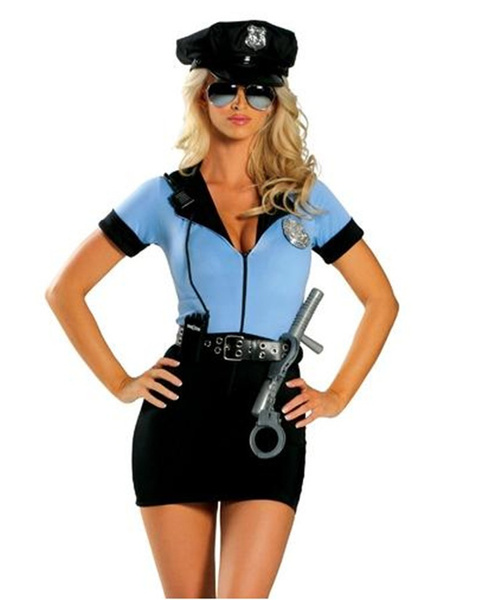
Those lips, those cheekbones, that gun!
The choice was so inept that the scriptwriter actually wrote in the fact that she is an ex-model. You half expect her to start disrobing, ala’
Truly, Jolie’s character should set the teeth of all modern womanhood on edge. When she cries, all the men pat her on the back and tell her she is “terrific” (in fact, Mike McGlone and Denzel Washington actually call her “terrific” within 10 minutes of each other). And then she bucks up with a pretty smile. When she is upset, she huffs off the job, although she is a beat cop. But then the men drop by to see if she is “all right.”
For some reason (and I am guessing “those lips, those cheekbones!”) the men don’t say, “Hey. Where the hell are you going, you piece of sh**.”
Anyone with a rudimentary knowledge of movies and a brain stem will have this figured out in a jif. That said, New York City is very spooky in this film. It gave me that same creepy, flesh crawl I felt in “Ghostbusters II.” Hence the single star.
Matthew McConaughey plays a smarmy, slick, charming southern lawyer . . . in every single movie he makes. He does it again here, inexplicably drawling his way through a role as a hotshot Los Angeles criminal attorney retained to defend Ryan Phillipe, a rich boy accused of a brutal rape.
The entire film rests on selling you the real possibility that Phillipe is innocent. And there is not one moment when you believe that Phillipe is innocent.
Look at him. Guilty, guilty, guilty.
Now that the story is hosed, we’re left with McConaughey’s schtick, a motley crew of character actors without character (dewy-eyed Marisa Tomei, as McConaughey’s ex-wife prosecutor; tough old cop Bryan Cranston; hippie P.I. William H. Macy; and the peripatetic bondsman John Leguizamo) and “twists” so implausible that Director Brad Furman must have assumed the audience had checked out by the time of the reveals.
Clint Eastwood plays a divorced father of two and homicide detective in New Orleans who has a penchant for prostitutes. The prostitutes are murdered, each one shortly after being visited by Eastwood. Eastwood doesn’t exactly have range, but he is not Dirty Harry in this one (The New York Times dubbed him Kinky Harry). Rather, he’s a bit of a scared rat, as he realizes that his secret (some form of S&M/bondage; Clint was ahead of his time in these the days of “Fifty Shades of Gray”) is revealed and worse, he has been unintentionally marking these girls for murder.
Genevieve Bujold is the rape crisis counselor who tries to assist Eastwood professionally in the hunting down of the killer, and emotionally, by turning him from his sexual demons.
It’s a mixed bag. Eastwood is clearly stretching, which is to be commended, but he never fully commits. Al Pacino had the same problem in the controversial Cruising, where he was tracking down a killer of gays in the S&M subculture of New York. Unable to fully get in the skin of their characters, Pacino and Eastwood play it zoned out, which distances the audience.
Harsh, unyielding and spooky, David Fincher’s adaptation of Stieg Larssen’s first of his best selling trilogy (adaptations of all three have been made in Sweden) is intricate, engrossing and decidedly chilly. Daniel Craig plays a Swedish journalist who has just been convicted of libeling a financier. Another corporate titan (Christopher Plummer) summons Craig after having his background checked by an investigative firm. The firm’s investigator is a ward of the state (Rooney Mara) who ostensibly works as an office clerk, but, in fact, is a genius of surveillance and investigatory technique. Plummer entices Craig to investigate the 50 year old disappearance of his niece, and Craig eventually enlists the loner and outcast, Mara, to assist him.
Fincher’s strongest milieu is psychological crime. Seven gave us the mastermind of Kevin Spacey as he offed his victims using the seven deadly sins as a guide. Zodiac was an intriguing take on a real life case, the Zodiac murders in Northern California during the late 1960s, early 1970s, and while it bombed at the box office, only two movies appeared on more critics’ top ten lists in 2007. Fincher can deftly keep a lot of balls up in the air with great precision yet still tells a tale you can follow. The book provided a family tree chart in the preface, and given the number of characters in the family, I found myself referring to it regularly. Screenwriter Steve Zallian has smartly excised the plot of a few people, but not many, yet I never found myself confused.
Mara is genuine as a troubled, anti-social outcast who teams up with Craig to work on the mystery, and they produce a strong and convincing bond (her nomination for best actress is merited). The close of the picture, when she realizes she cannot have perhaps one of the few people who has shown her affection, is a gut punch.
The ending, however, is muddled, tacking on a financial windfall/scam to the resolution of the mystery. Once you’ve witnessed the solving of a string of gruesome ritual killings and a missing persons case that goes back decades, a coda of fraudulent financial transfers is hardly satisfying and robs crucial minutes away from further character study of the family, some of whom get short shrift given the sweep of the story.
Another distraction is Mara’s progressively expert investigatory skills, which by the end of the film near those of a super hero (as Christopher Hitchens noted about her literary character, she “is so well accoutred with special features that she’s almost over-equipped”). The more La Femme Nikita she becomes, the less your investment in her.
Be warned. Like Fincher’s Seven, this film is both brilliant and disturbing. Gruesome murders, rape, animal mutilation, and what appears to be an unbearably cold Sweden all await. Not for the faint of heart
A crime family, one of the five that runs New York post World War II, negotiates the fall of its patriarch, the aging Don Corelone (Marlon Brando), and the transfer of power to the son who was supposed to the family’s representative in the legitimate world, Michael (Al Pacino). Francis Ford Coppola takes Mario Puzo’s potboiler and creates a rich, operatic, and layered crime saga. As the film opens, it depicts the family’s strong ties to the old world of loyalty and blood with the marriage of the Don’s daughter (Talia Shire), and economic introduction of the hierarchy of the family: hot-headed oldest son Sonny (James Caan), sensitive and simple middle son (John Cazale), the adopted chief advisor son Tom (Robert Duvall) and Michael, who introduces his love Kay (Diane Keaton) to his family, all the while explaining that he is not them. Indeed, he is in uniform, having distinguished himself in World War II. The disconnect is beautifully evoked in the back-and-forth between the primal Sonny and the advanced Michael.
What follows is the inevitable slow decline of the family as Michael is corrupted and deformed, becoming a Sonny, but with a perverted, soul-sapping sense of “blood” and “family.”
The casting is flawless and given the later body of work of the players, it may be the strongest ensemble in film history. Brando won best actor, and Pacino, Caan and Duvall were nominated for best supporting actor. Other character actors are brilliant in smaller but integral roles, like Richard Castellana and Abe Vigoda as the Don’s chief lieutenants; Al Letieri as a rival who tries to get the Don to bankroll him in the future of drugs; Sterling Hayden as a crooked NYC police captain who serves as Letieri’s guard; and John Marley as the Hollywood mogul and Alex Rocco as the Vegas founder who won’t bend to the desire of the Corleone family until they are made offers that cannot be refused.
Perhaps the best of the bunch is Cazale as the weak, disturbed Freddo. Cazale died of lung cancer after only five films, but what a career: The Godfather, The Godfather II, Dog Day Afternoon, The Conversation, and his last film, The Deer Hunter. If you have not seen it, I strongly recommend the documentary on Cazale, I Knew it Was You.
Mob stories are difficult to resist. The allure of the criminal life, with its excess, dizzying violence and the seductive freedom to do whatever one pleases without retribution, makes for captivating viewing. The Ray Liotta character in Goodfellas is emblematic of the theme; he was intoxicated by the life and ended up being just an every day schmo, a schlub. The Sopranos melded soap opera and commentary on the modern that, while overpraised, was consistently sharp and engaging. But, oh, the moments when Tony does the things we all wish we could do. Like all mob figures in the movies and TV, the draw is the freedom and the power, consequences of the ethos over time be damned!
The Godfather, however, works as both Shakespearian tragedy and pulp. While providing a seamless criminal power struggle and family drama, Coppola articulates the creeping rot. The degradation comes in many forms, but Pacino’s haunting performance exhibits it best in Michael. He starts as a fresh face, canny, even altruistic, but determined to be separate. Yet, by the end of the film, Michael is hollow, almost physically transformed, as if he has been poisoned slowly by an internal disease. It’s an incredible turn, solitary and meticulous, so utterly different from the excess of what would come later in Scarface and Scent of a Woman.
The look of the film is stunning, perfectly attuned to the material. Gordon Willis’s cinematography is classic nostalgia. Willis shoots in a darker hue as the story becomes more ominous and sinister. Martin Scorsese has called it a trick so influential that “every director of photography over the last 40 years owes [Willis] the greatest debt for changing the style completely.” The art direction is also noteworthy. Whether it is an art deco bar that serves as the meeting ground where an enforcer is offed or the sumptuous estate of a problematic Hollywood mogul, every setting feels timeless. Coppola is also crafty, shooting old New York tightly (his budget was not huge). Nonetheless, iconic wide shots (a Long Island expressway and causeway, a Times Square street) make up for the lack of sweep.


![Cinemascope: The Departed [2006]](https://filmvetter.com/wp-content/uploads/2012/08/e65d1-the2bdeparted.jpg?w=545)



 Those lips, those cheekbones, that gun!