Archive

Action/Disaster

A timely watch, as I recently finished Nuclear War, A Scenario, an eye-opening, cautionary theoretical which envisions North Korea lobbing several nuclear warheads at the United States, thereby testing decades- old protocols from all major powers and igniting a nuclear Armageddon.

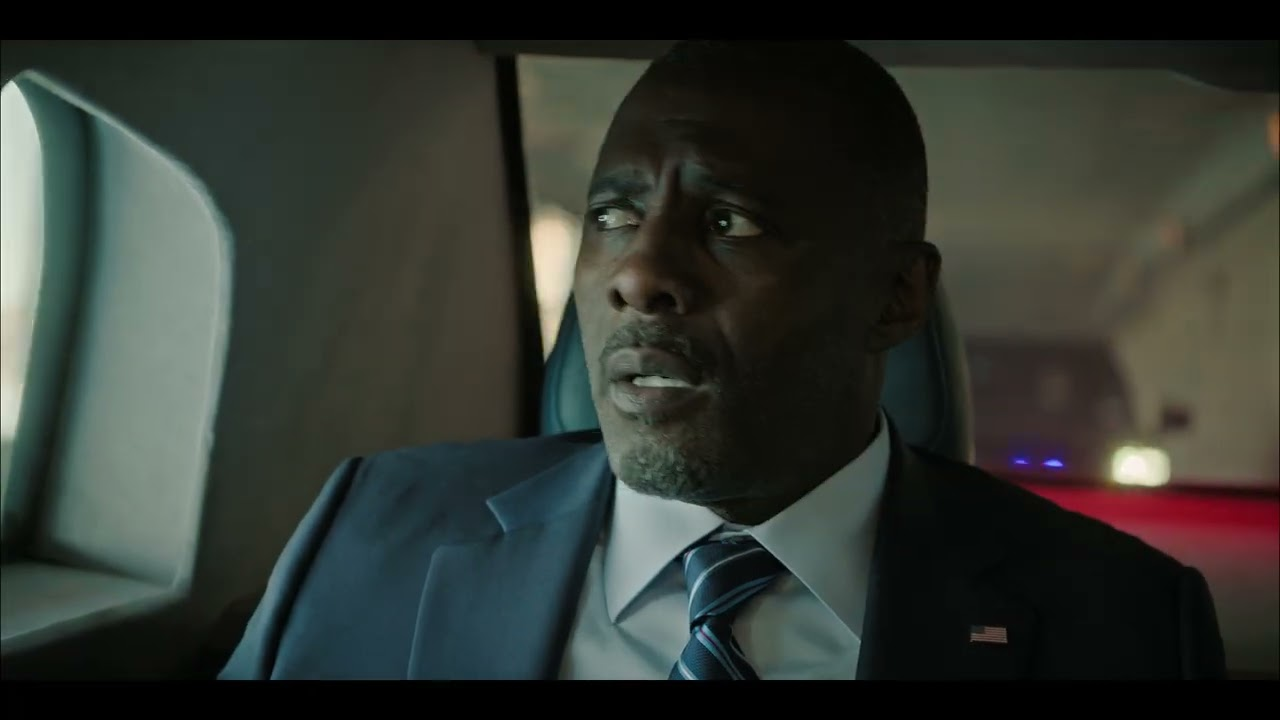
Here, Kathryn Bigelow (Zero Dark Thirty)  dramatizes the story via three timelines, all ending at the moment of decision as to response. Just as the attack is reported, after which we have 16 minutes before detonation, President Idris Elba, harkening back to George W. Bush reading to little kids when informed of the terror strikes of 9-11, is shooting hoops at a basketball camp run by Angel Reese.

And … there goes another minute.

Heart-pounding, riveting, and expertly paced, I was most reminded of Paul Greengrass’ United 93, a picture that elevated the professionals and non-professionals in a nightmare scenario, finding bravery, competence, and no matter the outcome of their particular hell that day, a rise to the occasion, with beautiful moments of humanity and humility. Bigelow’s characters are authentic, capable, and thus, all the more engrossing, and she does not neglect them in a film primarily about process and protocol. We learn but tidbits about who they are and what they do. With 16 minutes, there is not time enough, but Bigelow’s economical explication is superb.

On Netflix, one of the better flicks of the year.

*SPOILERS*

There is one major hole. In the book, the scenario had more than one missile coming and they were definitively from North Korea, which truly made the decision as to retaliate more salient. Were more coming? If so, now may well be the time to counterstrike to ensure they were interdicted, even if it meant destabilizing Russia and/or China and inviting a counterstrike based on their misapprehension.

Here, by using a single missile, and making the striking of Chicago a foregone conclusion, on reflection, the response, for which we are all obviously waiting on pins and needles, is not really in doubt.

You would wait on the single missile to hit, see if it detonated, and then wait to see if any more were launched. Nothing that you could do two minutes before the missile hit, you could not do after the missile hit. 

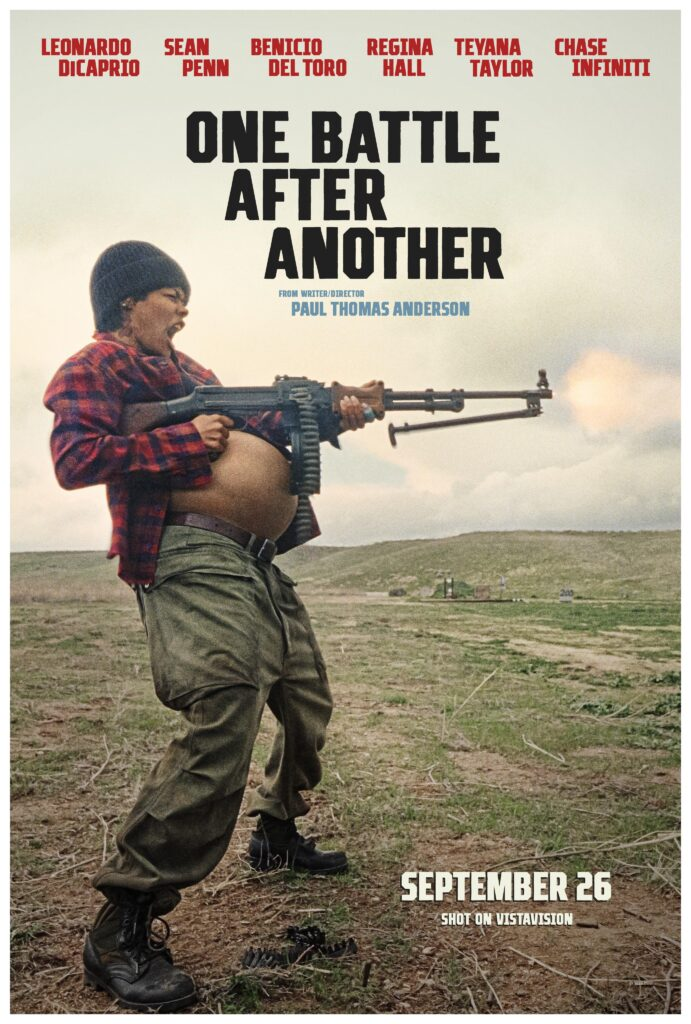
A wild, screwball thrill ride, Paul Thomas Anderson infuses adrenaline with wit and a surprising knack for action sequencing. Leonardo DiCaprio, after Once Upon a Time In Hollywood again demonstrating he is our most accomplished dramatic/comedic actor, plays Bob, a former American domestic revolutionary. Think Weathermen, or Symbionese Liberation Organization, but hyper-charged with comic book pizzazz. Bob got out of the game when he had a daughter, Willa (Chase Infiniti). When Willa is endangered by the past, DiCaprio must save her from a dangerous man on a mission, the government, and a white supremacist society that feels like a mix of Eddie Bauer and SPECTRE. If you wish to stop the review here, as this is a current release, no worries. Enjoy and come back. This is one of the better flicks of the year.

*MINOR SPOILERS FOLLOW*

DiCaprio’s wife, Perfidia Beverly Hills (Teyana Taylor), is a mix of Coffy and Angela Davis. After Willa is born, Perfidia cannot quit the rush of the struggle or face the yoke of motherhood, so she abandons the family, continues to participate in robberies and bombings, and is eventually captured. Her kick-ass bravado exposed, Perfidia squeals on her fellow compatriots, leaving DiCaprio vulnerable and forced to lam it with infant Willa. Bob gives up the life and settles in a quiet town a fat happy stoner, where Willa’s safety is priority number one. 15 years later, a loose end from the past, Sean Penn as Colonel Lockjaw (yes, this is indeed a comic book), needs the daughter, DiCaprio must rouse his flabby mind and body to save her, and the giddy, hilarious chase and race are on.

**MAJOR SPOILERS FOLLOW**
On the minus side, and the basis for deductions.

The film is overlong. Penn is offed twice, to no good end in a film nearing 3 hours. Anderson also tacks on a sop, Willa reading a “Fight the Power!” letter from Perfidia, which, if you do not see it coming means you do not watch many movies.

Penn is also problematic, some of it his fault, some not. He is well-developed as a rigid, top-of-food-chain guy who is so sexually attracted to Perfidia (and she to him) his obsession seems genuine and all-encompassing. They are warriors, on opposite sides, feral, carnal, battle junkies. But when Perfidia is gone, and 15 years pass, Penn’s fixation stems from a funny cartoon creation. “The man,” as in white supremacist corporatist types in a suburban star chamber, come calling for Penn and offer him entree’ to their racial purification club. To enter this august body, however, Penn must erase the fact of his mixed-race daughter. If Anderson had expeditiously grounded Penn’s desires for acceptance and/or the roots of his racial enmity as well as he did his hunger for Perfidia, the film would have been stitched tighter, and Penn’s dilemma would have been more interesting.   

Penn himself is also over-the-top at times, which is sometimes called for (Mystic River) and sometimes not (his William Holden in Anderson’s Licorice Pizza was a masterclass in cool understatement, but he still has the sin of Casualties of War for which he must atone). Given that we spend so much time on Penn’s fate, he needed to be better fleshed out and ratcheted back.  

There is also the matter of the film’s politics. While the revolutionary group opposes all forms of classist, misogynist, racial establishment dominance, ICE-like deportation raids are at the center of the story. Indeed, DiCaprio is ensconced in a sanctuary city. Naturally, this has raised the hackles of observers on the right, another sad development in a world where you can’t even eat a Chick-Fil-A sandwich or drink a Bud Lite without a political colonoscopy.  Nonetheless, Anderson is not interested in proselytizing. He wants action, slowing only to have a little fun, such as when DiCaprio forgets a password and must deal with a punctilious comrade much as we all have to deal with help desks and call centers:

  • Bob: I need this rendezvous point, you understand what I’m saying? I need it.
  • Comrade Josh: I understand and the question is “What time is it?”
  • Bob: Fuck! If you don’t give me the rendezvous point, I swear to God I will hunt you down and stick a loaded, fuckin’ hot piece of dynamite right up your fuckin’ asshole.
  • Comrade Josh: Okay, this doesn’t feel safe. You’re violating my space right now.
  • Bob: Violating your space? Man, come on – what kind of revolutionary are you, brother? We’re not even in the same room here. We’re talking on the phone, like, man!
  • Comrade Josh: Okay, there’s no need to shout. This is a violation of my space to me. These are noise triggers.
  • Bob: Fuckin’ noise triggers? Listen, I wanna know something. I wanna know one thing when this is all said and done: what is your name? I need to know your name.
  • Comrade Josh: My name is Comrade Josh.
  • Bob: Comrade Joshua? Get a better name. “Comrade Josh” – that’s a fuckin’ ridiculous name for a revolutionary. First off. Second off, I want to know your coordinates. I want to know your location right now. What is it?
  • Comrade Josh: I’m in a secure location somewhere between the stolen land of the Wabanaki and the stolen land of the Chumash.
  • Bob: You’re fuckin’ intolerable, man. You’re really intolerable. This is not the way revolutionaries do shit. Do you know how hard you are to talk to? Do you know the information I’m trying to give you? You’re a little nitpicking prick! That’s what you are: a little nitpicking prick. And do you know what I’m gonna do to nitpicking pricks? I’m gonna call in a Greyhawk 10.
  • Comrade Josh: You’re calling in a Greyhawk 10?
  • Bob: I’m calling in a Greyhawk 10, all right? I want you to get your supervisor on the phone right now, because I know you’ve got one. I know you’ve got one, Comrade Josh. All right, I’m going way over your fuckin’ head. Way over your head, all right? Put your commanding officer on the phone now!
  • Comrade Josh: Cause you’re calling in a Greyhawk 10?
  • Bob: I’m calling in a Greyhawk 10, Comrade Josh.
  • Comrade Josh: Please hold.

The interlude is a reminder that this is a trip, not a treatise, and the revolutionaries and their adversaries on the ground are presented as professionals or cogs rather than ideological heroes or villains. They never veer too far from a wink and a nod.  

Ultimately, I think liberal audiences will love the flick no matter their artistic sensibilities. As I feel the excitement of conservative retributive justice (rights be damned!) in a Dirty Harry or Equalizer movie, this flick is the fantasy of glorified gutsy, cool, strutting anti-fascists who possess skill, discipline, and smarts. As opposed to their meh real-life counterparts, living in their mother’s basement, contributing to the revolution one bag of Cheetos and social media post at a time.   

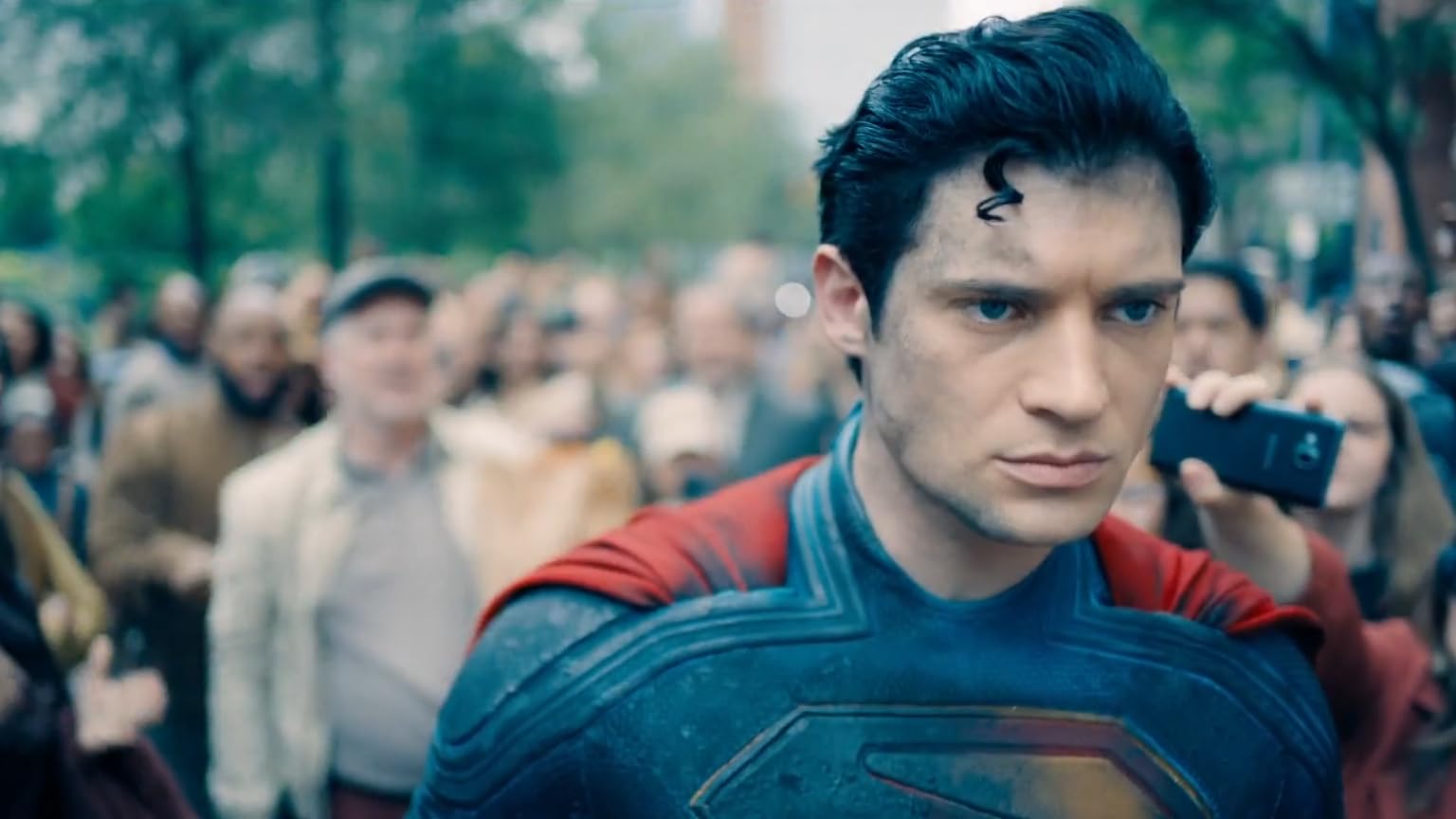
Great fun. The new Superman is nothing short of winning (his recent angst has been jettisoned for an earnestness that cannot even countenance the needless death of a squirrel); director James Gunn (the Guardians of the Galaxy movies) has no pretensions beyond that of making a smart summer popcorn flick; the villain, Nicholas Hoult, is both interesting and funny; Krypto the unruly super dog is a great bonus for the kids; and Lois Lane (Rachel Brosnahan) and Superman have real sexual chemistry. Ultimately, what I loved most about the film was that it was for kids but elevated enough that adults are also entertained, rather than some hideous transmogrification of a kid’s comic dirtied up, made noir, or otherwise infused with big serious themes, because a bunch of 41 year old fat asses sitting in their parents’ basement need to justify their childhood fetishes.

The nits are minor. A few characters get short shrift, a foray into something called a pocket galaxy is a bit long, and the last second introduction of an obnoxious Supergirl feels Something Wicked This Way Comes (next summer).

A big, flashy, visually overwhelming nirvana for speed junkies. But when cars are not going vroom vroom around the cinematic coliseums of the Formula 1 race tour, the film is unoriginal, dull, sexless, and stupid. It is also badly acted (Brad Pitt excepted, as he doesn’t act so much as pose).

Pitt is a journeyman racer, much like Tom Cruise’s Cole Trickle in Days of Thunder, though it is relevant to note Cruise’s silliness as an old “I can race anything with wheels” hand given his youth. Pitt can indeed race anything, be it in NASCAR, Lemans, Formula One, Baja, or, the Sahara, on a camel. Pitt is looking for something transcendent and elusive, like Kwai Chang Caine in Kung Fu. When his old chum Javier Bardem arrives to offer him a spot on his flailing Formula One team, Pitt can’t say no even if it interrupts his unarticulated quest.

The old timer Pitt joins the team arrives and runs into a hotshot younger driver teammate (Damson Idris). Idris is resistant to the grizzled interloper. He makes his mark on social media more than the track.

Pitt teaches him maturity, discipline and self-respect.

Pitt also runs into team car design guru Kerry Condon.

Condon teaches how to be a good teammate.

They also sleep together. Pitt has not had very good chemistry with a woman on screen since Thelma and Louise, and here, he is a stoic. In return, Condon musters all the heat of a flagging sterno cup. With a strongly established “older brother, younger sister” vibe, they have what can only be envisioned as some of the worst sex in history.

Just when you are nodding off, another race will start. You will perk up, because the spectacle is kinetic and exciting. But you can only watch so much racing. These people will have to start talking again, and when they do, it is AI-generated drivel.

The plot then begins to track that of a much better racing film – Talladega Nights. There is corporate skullduggery in the form of Tobias Menzies, who wants control of the entire racing team and schemes to depose and supplant Bardem. Like Ricky Bobby, Pitt must not enter the final race for Menzies’ machinations to succeed.

Pitt, of course, enters the final race and saves the day.

In a withering coup de grace, Pitt texts Menzies an emoji.

It is the finger.

We have just spent an entire film trying to establish that Pitt is a simple, grounded, live-in-your camper, shut-out all of the noise enigma.

Yet, in declaration of his own worth and independence, he texts an emoji.

Yeesh.

The movie is terrible when characters talk, impressive when wheels are turning, a bit of a conundrum, because I can’t imagine it would transfer as well at home.

Use your best judgment. Knowing what I know now, I believe mine would have been to forgo the film and watch the vastly superior Rush.

William Friedkin’s follow-up to the massive successes of The French Connection and The Exorcist, the film has met with greater favor in recent years, but at the time, it was a dud at the box office. While it has its charms, the tepid response at its release was deserved.

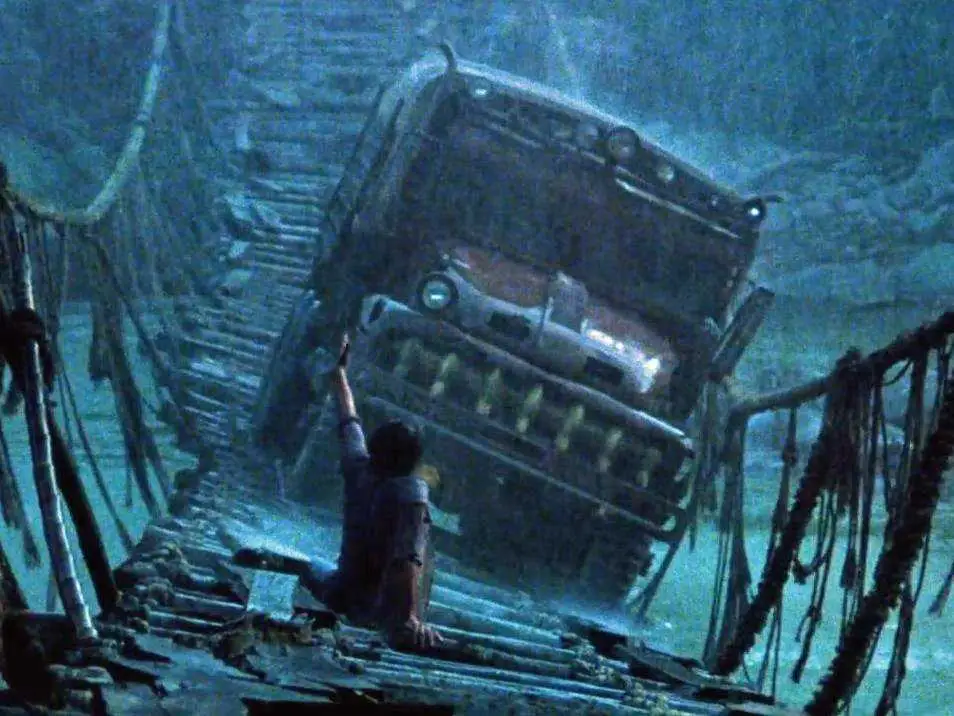
By way of set up, Roy Scheider is part of a 4 man stick-up crew in New York City that robs from the mob. Three are killed in the caper and Scheider goes on the run, to a small town in Chile, There, he works as a laborer under an assumed name on subsistence wages for an American oil company. He is joined by a French financier, an Arab terrorist, and a hit man of indeterminate background, all incognito and under the gun for their own reasons. None has the means to get out of town. Guerillas, however, blow up an oil well 200 miles away, and the four men are hired to ferry highly combustible dynamite containing nitroglycerin in two trucks through a hellacious terrain of winding mountain roads, dismal swamps, and, at times, torrential rain. The dynamite is necessary to cap the well and extinguish the geyser of fire.

The problems.

First, Roy Scheider is not a lead. Never has been. His intensity is unquestioned but his range is limited, and he’s only asked to be wary and furious, which he does fine. He’s just not very interesting.

Second, given the massive jostling and bouncing in the trucks during the expedition, one does wonder, “Why again was a helicopter out of the question?” Assuming it just was because somehow the flight was more unstable than the truck (which when you see the journey, is ludicrous), I’m still with one commenter, and I don’t think this is niggling:

“This big oil company calls in a helicopter and asks the pilot to transport unstable nitro that would be unsafe to handle, but never thinks to ask the helicopter pilot to bring with him some stable explosives that they can use right away. Was it more cost-effective to pay 40000 pesos (plus supplying two large trucks and apparently a bunch of additional new auto parts) and risk a 218-mile land journey than it would have been to just fly in some new explosives?

Third, other than the French financier (Bruno Cremer), with whom we spend a lot of time explaining his backstory, we don’t really get to know these men, and in their journey, they share very little.  

On the plus side, many of the ordeals are stunning (getting the trucks over wooden, swinging bridges is one of the most riveting things I’ve ever seen in movies); the visual grit of the film is palpable, which in the age of sterile CGI, is always welcome; there is also a matter-of-fact lack of sentimentality that melds well with the harshness of the environment; and the picture introduced Tangerine Dream (Thief, Risky Business, Near Dark) and the synthy soundtrack is dissonant but effective, as the environs seem almost otherworldly.    

Bill Burr, Quentin Tarantino, and my son (his biting rejoinder pending) are decidedly more enthusiastic. Hell, Tarantino deems it “one of the greatest movies ever made.”  

On Amazon, for $3.99.

I was abandoned this past weekend, and I don’t do well alone. With an empty house and the care of a disinterested 15-year-old cat entrusted to me, I took the time to catch up on a few 70s flicks in my queue, including this strange creature.

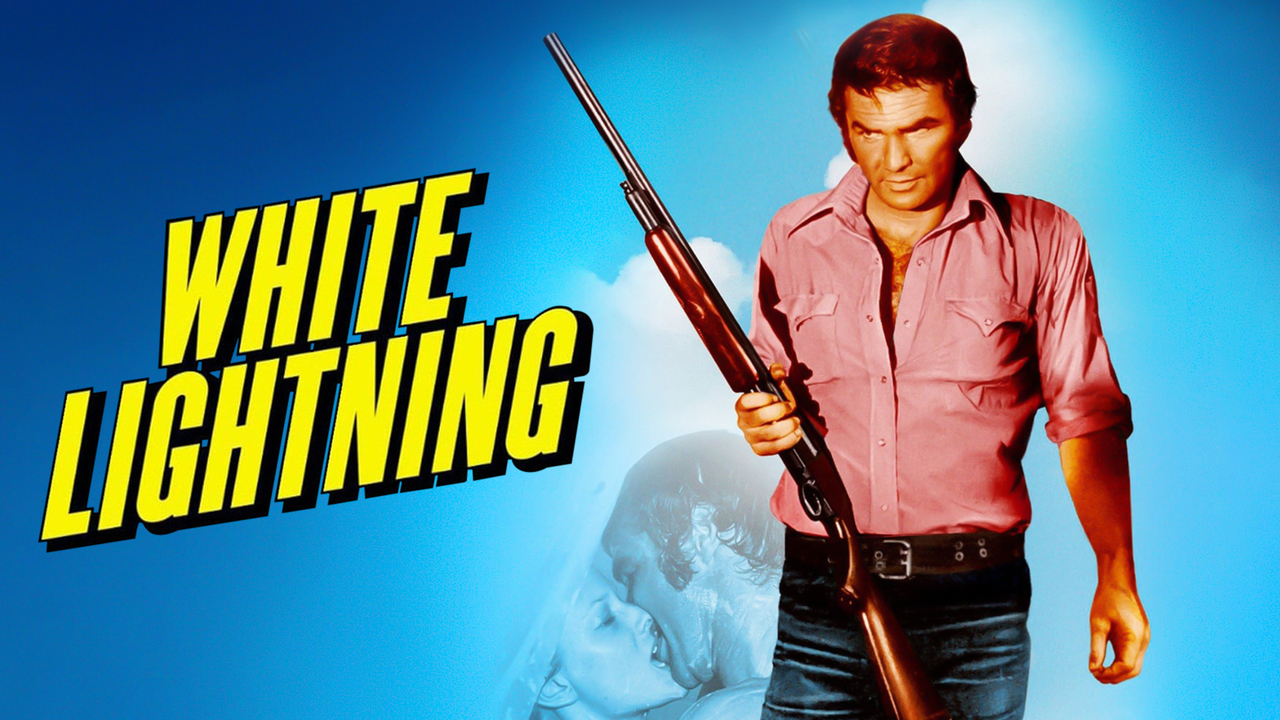
Burt Reynolds – not at the height of his popularity, but post-Deliverance – is Arkansas inmate Gator McCluskey. He’s in the federal pen for illegal liquor running when he learns that a crooked sheriff (Ned Beatty) has murdered his younger brother. Why? Because the brother was a meddlesome hippie, and Beatty does not like hippies. So, Gator gets out, insinuates himself into the county, and exacts his revenge.

There’s a lot bad to meh here.  The “I hate hippies” thing is unexplained – we never really know what the kid did to deserve being dumped in the swamp, and a sit-down between Beatty and Reynolds never happens. And the women of the Arkansas county are so carnal in their attraction to Gator, it seems cartoonish. Worse, there are tons of car chases, but not of the ilk of The French Connection or The Seven-Ups or Bullitt. Just a lot of banal vrooming around dusty country roads. From this demon seed sprouted Smokey & the Bandit and Cannonball Run (Hal Needham was a mere stuntman for the picture, but a few years later, he was second unit director on a reprise, Gator, and then he moved on to directing the slop that was Smokey and the Bandit I & II and Cannonball Run I & II). The first glimpses of Reynolds’ giggling, slapsticky, “I don’t give a fuck” mien can be found in the flick as well.    

There are a few notes on the plus side of the ledger. Reynolds connects. He has movie star gravitas and just enough menace left over from Deliverance to project power and fear. Beatty is also strong, exuding a meanness and lethality in the guise of a portly bureaucrat. The film also takes a few runs at a healthy cynicism.

Fun facts – at the tail end of his career, the picture’s screenwriter, William Norton, did 19 months for ferrying guns to the IRA. After being released from prison, he moved to Nicaragua, where he shot and killed an intruder in his home. He then spent a year living in Cuba, was unimpressed, and was smuggled into the U.S. by his ex-wife.

Where is this film?

On Amazon, not recommended except as a curio.      

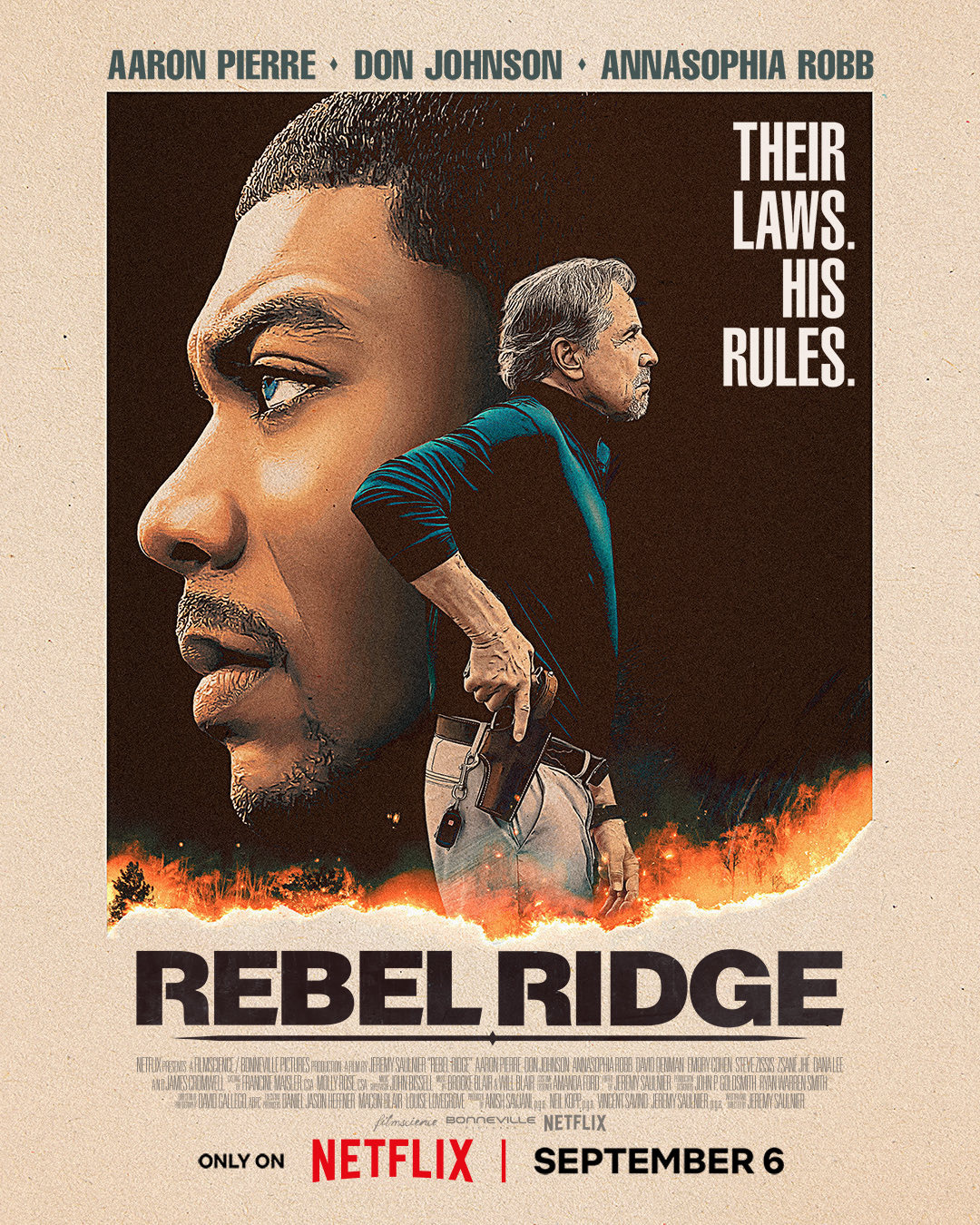
Writer-director Jeremy Saulnier’s Blue Ruin, an earthy, dark meditation on the messy and corroding influence of family blood oath and violence in rural Virginia, was such an assured debut, I was blown away. He followed up with the canny, creepy Green Room – where a band gets the worst gig ever playing for skinheads in the Upper Northwest – a commercial failure, perhaps because it was such a grounded horror film. No unstoppable evil or chop-licking psychos, just nasty, human, unregulated criminals with Swastikas and 12 packs who dig punk rock and live in the deep, deep woods. 

Rebel Ridge again showcases the director’s dead-on familiarity with small town America. No Chevy Truck “backbone of the USA” schmaltz or easy tropes of the rural downtrodden being done in by “the man’s system.”  Saulnier understands that most people are in some form or fashion paid by “the man’s system” and that system is what keeps mortgages current, power boats afloat, and Carnival cruises filled. In the small Southern hamlet that is our setting, graft, skimming, and railroading drifters end up just being part of the fabric, the next logical step for a speed trap town. 

What follows is a gripping, subtle melange of liberal fear of cops and conservative “power of the deep state” fear of the government, good old fashioned small town Walking Tall corruption via asset forfeiture and  … Rambo: First Blood.

No preening, no speeches, a lot of surprises, and a boffo, visceral, satisfying revenge fantasy ending, powered by Aaron Pierce’s reserved, steely leading turn. 

In spots, a bit ragged for Saulnier, and there is an underdeveloped relationship between Pierce and a plucky court clerk (AnnaSophia Robb), but those are nits.

On Netflix. 

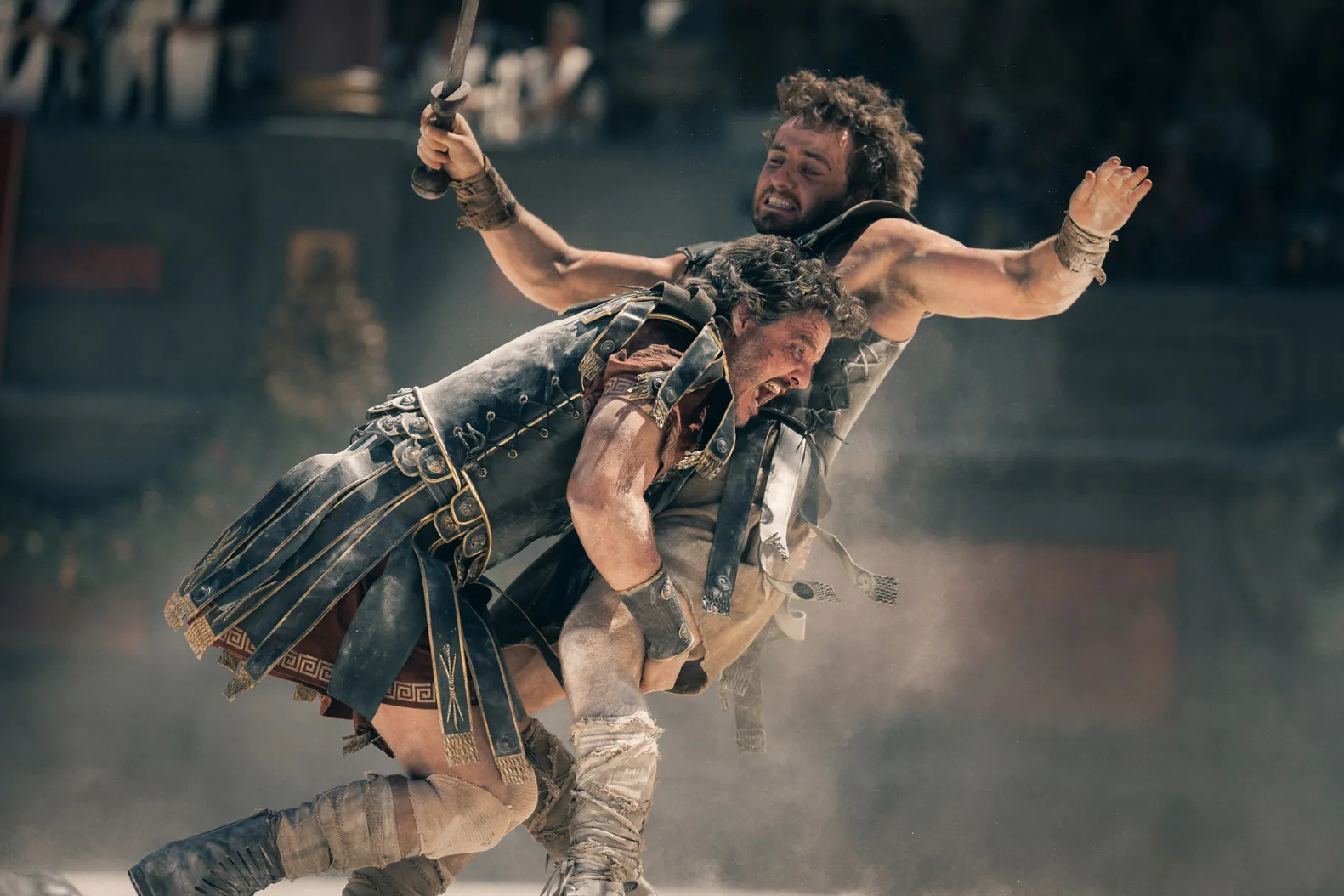
Imagine Gladiator, a fun, glorious, bloody romp. Now, forget about that film. It will only make things worse.

Here, the lead is not the captivating Russell Crowe but rather, the much younger Paul Mescal. Mescal has none of Crowe’s gravitas. He is not a Roman general, weary of war and politics, who just wants to go home to his wife and children. Instead, he’s a happy agrarian bean-picker, kissy-facing with his wife, when a new Roman general (Pedro Pascal) threatens their idyllic, multi-cultural commune in Africa. Mescal and wife strap on their gear and fight side-by-side. Pascal wins. The wife dies. And now, Mescal is a slave, soon to be gladiator, bent on revenge.

So, the same picture, but worse in all respects.

Every smart line in the original is replaced with “up with people” pablum and a dull dispute as to whether there is a “glory of Rome” or a “glory to the idea of Rome”, and every minor character who exuded their own agency and flair in the first film is replaced by cookie cutter figures infused with a boring wisdom that anachronistically presents as spiritually worldly.

While Gladiator II provides more combat than the original, it is juiced with unconvincing CGI monkeys, a big ass rhinoceros, and sharks. Even the hand-to-hand combat seems obligatory. You don’t care and no amount of spraying blood, gutting, and decapitation can involve you.

Our protagonist, Mescal, is supposed to be filled with “rage” but, at his most engaged, seems ironic and perhaps annoyed. The romanticism of the first picture was fueled in no small part by Crowe’s seething hatred at the needless and cruel slaughter of his family. Here, you think, “Maybe Mescal wasn’t so into his wife.”

There is little you don’t see coming. Mescal is the biggest non-mystery man ever and when the film finally gets to someone who can generate interest – gladiator merchant Denzel Washington – his grand plan and motive hit too late and quickly, right when you are nodding off. Washington, however, is at least having fun. Everyone else seems to be in mid-root canal.

And no one seems Roman here. The machinations are more on-the-fly than crafted, the concern for the people preposterous, and the finale – where two armies unite with “Huzzahs!” after an unconvincing “aren’t you sick of death?” speech by Mescal – has the feel of the old Coke ad where everyone wished they could teach the world to sing.

There is no greater dissonance than the emperors. In the original, Joaquin Phoenix was delicious, funny, just chewing scene after scene, but also substantial. Here, we have two emperors, sybaritic brothers who flounce about and exude a “let them eat cake” mien. They have no backstory, no goal, just dull, giggly, face-painted, effeminate schtick.  

Interminable. Avoid. 

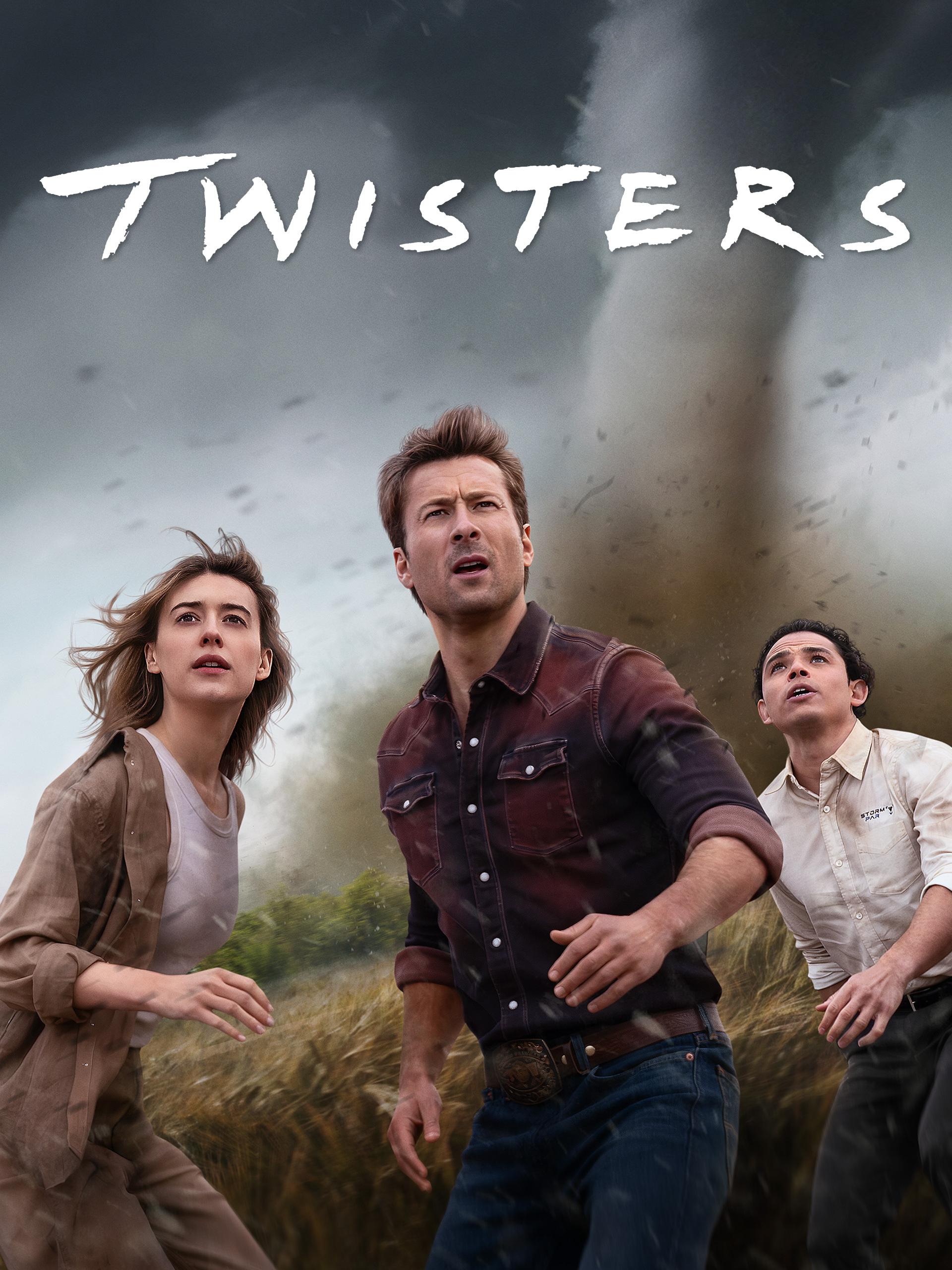
Goddawful, save for the winning Glen Powell and the fact I saw it in 4D, so the chairs moved and rumbled, wind blew on us, and lightning flashed in the theater.

Sensurround updated!

Otherwise, a complete dung heap.

Our story begins in Oklahoma, with one set of DEI/ChatGPT generated, wisecracking, riffing storm chasers, led by the charmless Daisy Edgar-Jones (Where the Crawdads Sing). Their endeavor feels like a Mentos commercial, until catastrophe strikes, and then it feels more like a darker Skittles commercial.

Five years later, after Daisy has run away from her fears to New York City, she is drawn back home, because, well … she’s a tornado whisperer. She can scan the topography, watch the wind disassemble a dandelion, take a deep breath, and she just knows where that pesky sky is gonna’ funnel.

Soon, she runs into Powell, a YouTube sensation who chases, or “wrangles,” tornados for fame and followers. Daisy must overcome her fears. Glen will help.

She also confronts the laziest form of corporate skullduggery one can imagine (so thin it is dropped immediately).

The script is banal and nonsensical. There really is nothing to say other than, “whoa!” given the impressive CGI and pyrotechnics (though someone does say, “be careful out there” – ugh), so you wait on some solid jokes and clever banter to get you to the next tornado, maybe some insight into other characters beyond “quirky” and “loud” and “ostentatiously, individualistically hip.”

Not gonna’ happen. Sure, there are a few spots for Powell to shine. But otherwise, he too has a coterie of kooky storm chasers, and they too look and speak like they’ve been assembled by a DEI/ChatGPT witch doctor, and while they all say “whoa!” differently, they don’t say it in a funny or interesting way (SPOILER – not a one of these wafer thin “characters” dies, which is a huge disappointment).

Powell pretty much has to steer this leaden ship with his impressive charm. God knows he tries, but he is thwarted by his co-star and a script written for dimwits.

Edgar-Jones has two faces – sad and sadder. So, for a rollicking, high octane joyride, one of your hosts is on thorazine, and Powell just can’t get past, into, or through her innate dullness.

And when they bond, there is nothing for them to chew on.  Case in point,  They are at a rodeo. Glen thinks Daisy is from New York City originally, so he is showing her the sights. There is great potential for some fun to be had here, the girl who knows the rodeo like the back of her hand letting the cowboy puff out his chest and wax poetically. But no. The kicker is she gets to say, mournfully, that this is not her first rodeo.

Then they talk about their first tornados. Again, this doesn’t have to be Oscar-worthy, but you can have a decent sexual double entendre or two here. God, anything to break up the verbal monotony. But Daisy demurs, Powell tells a story of how he saw one when he was 8 and realized he was supposed to be scared, she asks if he was scared, and he says . . . “yes.”

This is unintentionally moronic dialogue better suited to Idiocracy. Or Quest for Fire.   

As badly abused as the audience may have been, the people of Oklahoma are sitting on a winning class action suit for defamation. Here they are, living in a hellscape where tornados appear in an instant and ravage their communities. It’s all over the news! But damn if they don’t insist on proceeding with the town fair or the Little League playoffs or the Annual Pie-Eating Contest or running lightweight old-timey trolley cars down their streets.

Those plucky Okies won’t be dictated to by mere weather!

Yet, when the tornados arrive, you’d think these weathered veterans were from New Hampshire. They run around screaming and trying to gather belongings, hiding under metal containers, holding knives and bags of broken glass, doing all the other things people in tornados are advised not to do, until Daisy and Glen show up to remind them to seek shelter.

In a movie theater.

That is playing Frankenstein.

Because they don’t get first run movies in Oklahoma.

They do get a shitty country song about how you can’t spell Oklahoma without “home” and there’s a lot more of those ditties throughout this dog.

Gonna’ have to give a second look at Sharknado after this turd.

I recently devoured Quentin Tarantino‘s Cinema Speculations, wherein he recounts his childhood and the succession of films his mother’s boyfriends would take him to see when he was a kid. Most of the films he discusses are ones you probably shouldn’t take a kid to see.

When my mother and father got divorced, I was six years old and my father was supposed to take us every other weekend for two nights. That arrangement became a little less frequent over the years, and by later grade school, he was taking me and my brother on a Saturday day and an overnight. We would spend the weekend with him at his apartment and pretty much do the same thing every time: go shopping, do his errands, look for stereo equipment, maybe spend an hour or two at his law office, go Putt Putt golfing, and then to Shakey’s Pizza in Rockville or The Charcoal Grille in Bethesda. Dinner was from Swanson’s, so you got a entree’, two sides, and a dessert.

And movies. We went out to the movies a lot. Or, we stayed in Dad’s apartment, where he had a special key that was hooked up to some kind of internal cable system, and we could watch close to first-run movies there instead of going out. Or just catch what was on TV.

My father loved movies, he loved to talk about movies, he lived for movies. So much so that he would go through a certain kabuki with me where he would let me take a look at The Washington Post and ask what I wanted to see. I would pick a Herbie the Love Bug and he would say, “Nah. I heard about this good movie.” And then, like Quentin Tarantino with his mother’s boyfriends, you went to see a lot of dark, heavy, violent flicks, like The Laughing Policeman, The Silent Partner, Death Wish, or The Taking of of Pelham One Two Three. Or the remake of Farewell My Lovely, Night Moves, or The Eiger Sanction.

And Rolling Thunder. Which I noticed was available, and, as I couldn’t sleep anyway, I watched last night

Tarantino’s book has an entire chapter on the film, one of Paul Schrader’s first screenplays after Taxi Driver. Major Charlie Rane (William Devane) and Sergeant Johnny Vohden (Tommy Lee Jones) return to Texas after seven years of brutal captivity in a North Vietnamese prison camp. The adjustment is fraught, and even greater tortures are brought to bear on Devane, who is being treated by an Air Force psychiatrist (the just recently deceased Dabney Coleman) in his attempt to readjust. Tragedy ensues. Devane snaps. What follows is a classic 70s revenge flick.

The film travels wonderfully. There is a crisp foreboding to Devane’s return. While San Antonio welcomes him with marching bands and celebrations, and he is reunited with his long suffering and loving wife and the son who he last saw as a baby, Devane is damaged, and beneath the cheery gleam of a welcoming Texas, there is rot and danger. His son has anxiety issues. His wife has found another man (Devane says to her evenly, “you’re not wearing a brassiere” to which she replies, “oh, no one wears them anymore”). He cannot sleep in the house, preferring a cot in the garage.

So much is done well in the lead-up to the Death Wish-ian payoff, it goes unnoticed because, after all, this is a shoot ’em up, just desserts pic. Per Tarantino: ““This opening thirty minutes is a grippingly detailed character study, and by the time it’s over the audience doesn’t just sympathize with Charlie Rane, we really do understand him. Apparently better than anybody else in the film. It’s a much deeper depiction of the casualties of war than the [other movies of that era].”

I remember watching the film with my father. It is engrossing, both subtle and visceral, like a lot of pictures we saw together. It is also wildly inappropriate, also like a lot of pictures we saw together. I had trouble wrapping my head around something horrible that happens to Devane; not a spinning, vomiting Linda Blair kind of visual, but a brutality so smartly connected to a mundane part of the household, it just traveled with me, and probably not in a good way. Even last night, I fast-forwarded.

But on Sundays, when we were dropped off, I would not tell my mother about any of these movies, because I felt me and my Dad had this thing, this bond, and it was cemented in our little secret, Jujufruits and Junior Mints in hand.  And perhaps we did, although I’m probably mythologizing it. After all, my father needed to have something to talk to me about. Or at a minimum, just a two hour break from my babbling.

The picture is currently on Amazon Prime. Nostalgic for me but it really holds up.