Baseball season is upon us, so a review of a Sam Raimi baseball movie (?) is apropos. Raimi, whose credits include three Evil Dead movies, three Spiderman movies, and Drag Me to Hell, proves a strange choice to helm a love story-via-flashback, as an aging starter (Kevin Costner) thinks on his love life while trying to pitch a no-hitter.
I am no Costner-hater. He is limited but does what he does well – affable, with a flash of anger and occasional stoicism. Get him outside his comfort zone (Robin Hood, JFK, 13 Days) and you got problems. But he was a fine, goofy golfer in Tin Cup and as the sweet but violent and repressed killer in Open Range. Here, he’s Tin Cup but replaces goofy with taciturn.
Costner is not the problem. In fact, his time on the mound is compelling. But when he gets to thinking about that woman of his – Kelly Preston (wife of John Travolta, poor thing) – things go to pot. Preston is thin, harpy and jittery, and her pitch is, “you need to settle down with serious people like me instead of living the life of a little boy.” Her case is not strong. Even though she has a nice daughter (Jenna Malone), it does not seem conceivable that a good-time, easygoing jock like Costner would be enticed by her invitation. And thus, the movie is undone (and at 2 hours and 17 minutes, very trying).
Postcript: this is supposed to be a baseball movie, and while I understand that athletes get injured in the off-season performing everyday tasks, Raimi has Costner slicing his hand on a router. A pitcher making $15 million a year is not working in the shed with his Black and Decker (hell, he is likely contractually prohibited from self-gratification).
The film also has the manager putting guys up in the bullpen while Costner, who is at the end of his career, IS PITCHING A PERFECT GAME for a team no longer in the pennant race!
Paul Thomas Anderson’s opus chronicles the American porn industry in the late 70s via the story of a loose family of weaklings, caught up in the speed, confusion and excitement of sex, drugs and fleeting fame in the bleaching sun of Los Angeles (Anderson took some license here, as the porn industry started in San Francisco and NYC, but his film requires that feel of promise and wasteland that is LA).
The patriarch is porn director Jack Horner (Burt Reynolds), and the story revolves around his LA retreat, a gaudy ranch-styled haven for his coterie of misfits. There are the young rejects: porn star and mother Amber Waves (Julianne Moore), her teen charge Rollergirl (Heather Graham), studs Reed Rothschild (John C. Reilly) and Buck Swope (Don Cheadle) and lesser stars Jessie St. Vincent (Melora Walters) and Becky Barnett (Nicole Ari Parker); the film crew (William H. Macy, Ricky Jay and Phillip Seymour Hoffman); the money men, The Colonel (Robert Ridgely) and Floyd Gondolli (Phillip Baker Hall); and a host of hanger-ons (club owner Luis Guzman and troublemaker Thomas Jane).
Into this world comes Mark Wahlberg, a young kid who works at Guzman’s nightclub and comes to the attention of porn director Horner after Rollergirl has an encounter with him and reports back his massive endowment. Horner offers the boy a place in the family. Wahlberg becomes Dirk Diggler, porn superstar, escaping from a toxic home to the warm embrace of pseudo-stardom in fuck films. In the world of porn, he finds acceptance, friendship and a certain form of celebrity.
Diggler is based on famed porn star John Holmes, and while Anderson doesn’t take Dirk Diggler down Holmes’s exact path of The Wonderland Murders and AIDS, the trip tracks close enough. Hubris and drugs take Diggler from the safety of Horner and his new family to the street, where he ends up turning tricks, beaten by punks, desperate to score drugs and nearly murdered by a psychotic drug dealer (Alfred Molina).
To a person, these people are none-too-bright, but they cleave together in a life that mirrors celebrity, though it is gaudy and flimsy, glitz on the cheap. They briefly flourish in a fantasy world within a fantasy world, where their work is deemed art, and their talent is certified as genuine. Despite the self-delusion, Anderson shows how the family actually provides support to these outcasts never found elsewhere.
The film is visually audacious and features several flowing scenes without a cut for long stretches, including a 3 minute opening scene which introduces most of the characters. Anderson’s filming of two separate parties at the Horner house is boundless and reminiscent of Altman’s opening scene in The Player as well as Scorcese’s casino scenes in Casino. The effect meshes with Wahlberg’s entrance on the scene, as he steps into a world where he is the golden child. You see the wonder – beautiful young people drugs, a swimming pool! and despite better instincts, you become intoxicated along with Dirk.
The screenplay by Anderson is authentic and resonant, evoking David Mamet, but without the showiness. A prime example is the discussion between Horner and Floyd Gondolli on the changing business of porn:
The music by Michael Penn is evocative of the time as well, and the cuts chosen for each scene are spot on, from Andrew Gold’s “Lonely Boy” (revealing Amber Waves as a mother) to the Beach Boys “God Only Knows” providing the coda for the characters, to “Sister Christian”, which now serves as a sinister song, as used in the film’s most harrowing scene, much like “Stuck in the Middle with You” after Reservoir Dogs.
Finally, the performances are uniformly stellar. Julianne Moore was nominated for best supporting actress (she was beat out by Kim Basinger in LA Confidential, a great film and a fine performance, but still, Moore was robbed). Burt Reynolds was also nominated and rightly so. Interestingly, after seeing a rough cut of the movie, Reynolds fired his agent for casting him in Boogie Nights, but Burt’s artistic choices have never been stellar. Wahlberg stands out, exuding the perfect blend of charm, wonder, cluelessness and want. Anderson is lucky Leonardo DiCaprio turned down the role to work on a little picture called Titanic. DiCaprio’s a fine actor, but he’s a little too savvy and wary. Wahlberg was perfectly open, trusting and innocent. The scene where his mother berates him as worthless and stupid, forcing him out of the house, is heart-wrenching.
This is a classic film of America sprawl, ascent, decay, and fall. One of my favorites and one of the top 20 ever made.
An engaging and surprisingly even picture about a simplistic, homophobic ex-NY cop (Robert De Niro) living in the same apartment building as a drag queen (Phillip Seymour Hoffman). De Niro has a stroke and needs the drag queen’s assistance as a voice coach (she teaches singing) so he can learn to talk again. This is two fish, different waters. You’ve seen it. But through the skills of Hoffman and De Niro, it works really well, and review of the picture allows a meditation on Hoffman. I remember him as the spoiled rich fink in Scent of a Woman, the unfortunate thief in the remake of The Getaway and the dunce with a badge in Nobody’s Fool. Even in such small roles, he resonated. Soon came absolutely indelible and brilliant supporting turns, as the closeted and adoring fan of Dirk Diggler in Boogie Nights and rich visiting playboy Freddie Miles who smells a rat in The Talented Mr. Ripley. Leads came next, including a best actor Oscar for Capote, but Hoffman is in the club with Duvall and Hackman – he can play the lead, but he’s more often better in support or ensemble, be it the outrageous Lester Bangs in Almost Famous, the chilling priest in Doubt, or the stubborn manager Art Howe in Moneyball. He’s pitch-perfect and makes everyone around him better.
His role here is actually a very different character for Hoffman. He’s flamboyant, wildly emotional and central. These are easy roles to botch, but Hoffman communicates both the external vamp and internal insecure deftly (his hysteria as his boyfriend abuses him is particularly touching). He’s very moving, and De Niro (who is also good as the disabled grump) does not get in his way.
Beautiful and sumptuous, the picture marked the end of Terrence Malick’s 20+ year absence from film. Ostensibly about an offensive during the Guadalcanal campaign, the film follows Privates Bell (Ben Chaplin) and Witt (Jim Caviezel) as they are deposited on a Pacific island to take an enemy air base deep inland. They are accompanied along the way by Private John Savage, Sergeants Sean Penn, Woody Harrelson and John C. Reilly, Lieutenant John Cusack, Captains Elias Koteas and George Clooney, Colonel Nick Nolte, General John Travolta and a host of other young actors playing infantrymen.
The first time I saw this picture, the characters did not register. It seemed like a glut of talent working with limited space, and the result was disjointed and, at worst, high falutin’. I wrote:
Koteas and Cusack register, the former as a humanistic officer who cannot accept the slaughter of his men for a greater good and the latter as a brave underling who shows true leadership in a grave hour. Nolte is standard spit and scream (it is truly amazing how red he can make his face). Penn, Harrelson, Clooney, and Travolta are cardboard, and Reilly is given a short, hackneyed speech on how he has become hardened by the war. Savage in particular is really, really bad as a soldier who has cracked under the strain of combat. It’s hard to believe that Savage, so good in 1978’s The Deer Hunter, was revived for such histrionics 20 years later.
I was harsh and/or wrong. On re-viewing, most of the characters do register, and they often make lasting imprints with little screen time. Further, Malick’s use of the voice-over in their heads, which initially struck me as a distracting cheat, is much more than that. It’s an ambitious technique to not only get us in their minds practically (which, in combat, would likely be an inner monologue of “oh fuck, of fuck, oh fuck, oh fuck”) but philosophically as they wrestle inner demons and regrets while negotiating external hostility.
The film is lush and visually riveting, from the beauty of the ship cutting through the Pacific prior to disembarkation of its armed cargo (filmed directly down from the prow), to the stark image of a dismembered mine team, alone among the peacefully covered foliage (the first carnage the company witnesses) to the killing of two men by a Japanese sniper – they fall poignantly in the tall grass before the vista of a misty, impossibly beautiful hillside. Malick’s juxtaposition of the wonders of nature and the blight that is the intrusion of combat is jaw-dropping.
Hanz Zimmer’s score supports the sense of dread and beauty, intertwining the exotic of the island and the tick-tic-tick of the danger therein.
Malick does makes some fundamental errors that, I’m sure, seem niggling in the light of the ambition of the project. For example, Witt and Bell look alike and they kind of sound alike and when two men are running around in battle and doing voice overs, that becomes problematic. The cameo factor can also be distracting because actors are trying to make their mark in the short time allotted. As such, Travolta is weird as an ambitious general, and Clooney shows up at the end for a few lines (since you still haven’t seen Clooney until the end of the picture, you fear he may be pivotal and you have that much longer until the end).
I am getting muthafu***** tired of these muthafu***** sharks!
Deep Blue Sea. Researchers at a deep sea lab experiment on sharks by making their brains huge (4 times a normal size) so they can extract a secretion that will cure Alzheimers. The sharks (computer generated) get very smart. Too smart. A hurricane gives them an opportunity to hunt down several stock characters on the isolated station. None of the characters is “bankable” so their gruesome ends are ho hum. Samuel L. Jackson makes an appearance, and LL Cool J is the sea station cook who says things like “Damn, muthaf***a'” and “Peace out, bitc*” and “Open wide, you nappy toothed fu**a’.” And there is a Jacqueline Bisset look-a-like and damned if her diving suit doesn’t allow for ample cleavage.
There are three sharks, and they are all dispatched in manners strikingly similar to the Jaws films. Figure that.
All that said, this film can be fun and Jackson’s “give the sharks hell” speech is memorable. Snakes on a Plane memorable.
A black crime comedy that is full of visual gambits (many hit, many miss), this is a heist film billed as Great Britain’s Pulp Fiction. It has many similarities – the screwing around with sequence, the blase’ attitude to brutality, the quirky characters – but visually, it shares more in common with the Cohen Brothers first film, Blood Simple, though post-MTV in attitude. The director shows you every knife in his drawer, from stop action to slow motion 360 (an entertaining card game gone bad), to interspered music video. The result is a mash of a film, but it is populated by engaging players (a quartet of inept thieves, a trio of crass, drugged out marijuana brokers, a Mr. Big, a fatherly enforcer with a weird concept of family values, an Abbott and Costello) and it moves quickly (sometime, too quickly, because the Cockney is a bitch).
The director, Guy Ritchie, has moved on to the Robert Downey-Jude Law Sherlock Holmes flicks, infusing them with the same action and pace as this picture.
Does it have soul? None. It’s all flash and teeth.
The first half of this cynical war comedy is pretty audacious, if derivative. The plot – essentially, Kelly’s Heroes – has four Gulf War servicemen scheming to steal gold previously stolen by Saddam Hussein from the Kuwaitis. The beginning of the picture is loaded with funny bits reliant on the culture clash of Americans and Iraqis. Coupled with eye-catching camera work and clever forays into fantasy (the recreation of the route of a bullet into the human body is noteworthy), the film hurtles along, and you never really notice the complete lack of plot or character.
The problems ensue when Three Kings moves from the wacky to the message-laden. Faced with the horrors of war (dead civilians and specifically, the fate of Iraqis who rose against Saddam without U.S. support), our protagonist thieves become changed men. Up until this point, however, they are merely cleverly written cardboard cut-outs, so it is impossible to determine from where or what they have changed.
The film also descends into hackneyed “I have met the enemy and he is me” tripe. The political moralizing becomes a bit much, and the sweeping feel-good ending is awkward. Messages delivered — the war was about oil, not the liberation of Kuwait; there is a human cost to civilian deaths; war is indeed hell; and, if we just listen, we can all get along.
Still, the film’s first half is damn near flawless. The quartet – George Clooney, Mark Wahlberg, Ice Cube and Spike Jones – are also quite good, as are the people given the thankless, noble Iraqi roles.
How bad? Shortly after release, Liam Neeson told a magazine that The Phantom Menace was his last film (he recanted shortly thereafter). I’m guessing Neeson’s despair had nothing to do with The Phantom Menace. This is the kind of film that makes me think Alec Baldwin was lying when he told Charlie Rose that when a film doesn’t work out, “it’s not like we planned to make an awful picture.” The Haunting is made more wretched because it is purports to be a remake of an excellent supernatural, psychological thriller from 1963.
A hip mash-up of The Terminator, The Story of Jesus, kung-fu flicks, DePalma slow-motion violence, Gap “stop action” commercials, and leather. It has some cool, existential silliness and Keanu Reeves says “Whoa!”
The effects, however, eventually become wearying. Overpraised.
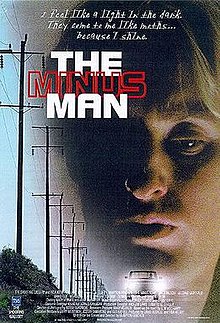
A sweet serial killer film, if such a thing is possible. Owen Wilson plays a drifter who poisons his victims. He is a gentle soul with a horrific secret, a man-child who comes into the lives of several characters in pain (in particular, Mercedes Ruehl and Brian Cox playing parents grieving the departure of what appaers to be their teenage daughter) and provides them what appears ito be support, all the while practicing his craft.
This is an offbeat, even sleepy picture, wholly reliant on Wilson’s quirky, dream-like performance, which I found riveting.





 filmvetter