Archive

Tag Archives: writing

As explained by one of the characters, Eephus is the name of a baseball pitch so slow it mesmerizes the batter such that he is either too late or too early when he swings.

This quirky, meditative, and maybe too low-key gem of a comedy feels like the pitch, a nice, floating firefly you enjoy even as it flummoxes you. The story depicts the last baseball game on “Soldiers Field,” a ratty Massachusetts park soon giving way to construction of a school and ending the years-long tradition of a bunch of townies. Their skills, conditioning, and waistlines are vastly disparate, but they are inexorably drawn to the place. They carry the wizened irony of knowing they suck, but also, the hope that they can shine. The inconsistent fire in their belly is one of many charms of this languorous debut.  

Co-Writer and director Carson Lund presents the ballfield as church and purgatory, both hallowed and a crappy, interminable penance. The players are of all walks and skills, from the super competitive to easy lopers to ex-jocks with nothing better to do but try and catch an old spark. Some come solely to get out of the house for minimal exercise while draining Narragansetts. They have the same arguments, bits, and chatter they’ve been having for years, and the demise of their weekly tradition seems half mournful and half relief.

There are no great stakes, no “let’s get this out in the open” showdowns, just a few flaccid tiffs. It is implied that the manager of one of the teams may have a tangential connection to the closing of the field, yet there is no overt confrontation. It’s just a bunch of dudes in uniforms giving varying effort to passing the time.

Thankfully, Lund shuns the elegiac baseball-as-metaphor for life story and even slyly makes fun of Field of Dreams as people just seem to wander on and off the field as from a mist, be they stoners, kids, strangers, or even a former weird pitcher from the Red Sox.

I have been playing basketball with the same group of guys since around 2000, over a quarter of a century. As one of the, if not currently the oldest participants, I’ve seen a lot of players come and go. My skills – never formidable to begin with – have diminished such that every 6 months, when the time comes to re-up, I contemplate retirement like smarter, older players before me. Such is my tenure, they call me “the Commish.” Rhetorically, at least, I have been relegated to a desk job.

Every time I think about leaving, if not quite on top, on my own terms, sans a ruptured Achilles or torn ligament, I realize that those terms are non-negotiably, “I will go down with the ship.” This is not good news for the others, who are better and who likely sigh when I am assigned to their squad. But you know what?  Fuck them. For all my handicaps, a good night on the court on the verge of 62 is simply too sweet an elixir to voluntarily forego. Last week, 5 of us, undersized in each matchup by an average of 3-4 inches, took the last three games of the night. I felt like a member of the ’80 Olympics hockey team. This week, I turned an ankle on someone’s foot, hit the deck in the lane, and caught a driving knee to the back of my head. Later, I caught a slap to the front.  All fine, but I also singlehandedly lost 2 games with turnovers, bricks, and very bad decisions. To make matters worse, I celebrated a win with a fist pump when, in fact, we merely tied the game, which we then lost when I decided to switch off my man, who hit the game winner. I felt sick.   

So, the film spoke to me in a manner that probably warrants recusal.   

But you know what?  Fuck that.

On Amazon Prime, for free.     

I recently watched a documentary on the estimable Sidney Lumet and ran across one of his later films on one of my streaming queues. Q&A is a New York City potboiler about an idealistic and ambitious young assistant district attorney (Timothy Hutton) and his quarry, a corrupt, enigmatic detective (Nick Nolte). The film opens with Nolte executing a perp and planting a gun. Hutton is brought in by the district attorney (Patrick O’Neal) to investigate the shooting.  It is clear from the outset that Hutton is supposed to play ball and not dig too deep. Hutton is more than happy to perform the task.

Then Hutton has lunch with an old mentor (Lee Richards). Hutton tells Richards that O’Neal is tough but fair, and decisive.

Richards, who once worked with O’Neal, does not tell Hutton to be wary. Rather, he tells him that O’Neal is a prick, a racist and an anti-Semite who manufactures evidence to put people in the electric chair. He also tells Hutton a story. In one case, O’Neal went to go witness one of the black defendants he railroaded “fry” at Sing Sing, and when he came back to the DA’s office, he crowed about it, telling the other lawyers that he sure hoped that the guy was guilty. Hardy har!

“Fuck him. Now and forever,” says Richards. 

To this, Hutton eats his corned beef sandwich. He does not object. He does not ask any questions. He does not say to his mentor, “Come on. You must be exaggerating.”  He just eats. 

Then Richards tells Hutton that the case he drew is all wrong, suggesting that Nolte must’ve planted a gun, because the decedent never carried a .45, only a .32. 

More chewing of corned beef.  Ho hum.

That is when I turned this intolerably stupid film off.

22 minutes in. 

We already know from the outset that Nolte is dirty, and now we know that the district attorney is even dirtier and everyone knows Nolte is dirty.

At 22 minutes, we also know that the script is dogshit and the Hutton character may have been lobotomized.

On Tubi.

This is not a film review, but some events require a detour from standard operating procedure.

A close friend and fellow film buff sent me the following:

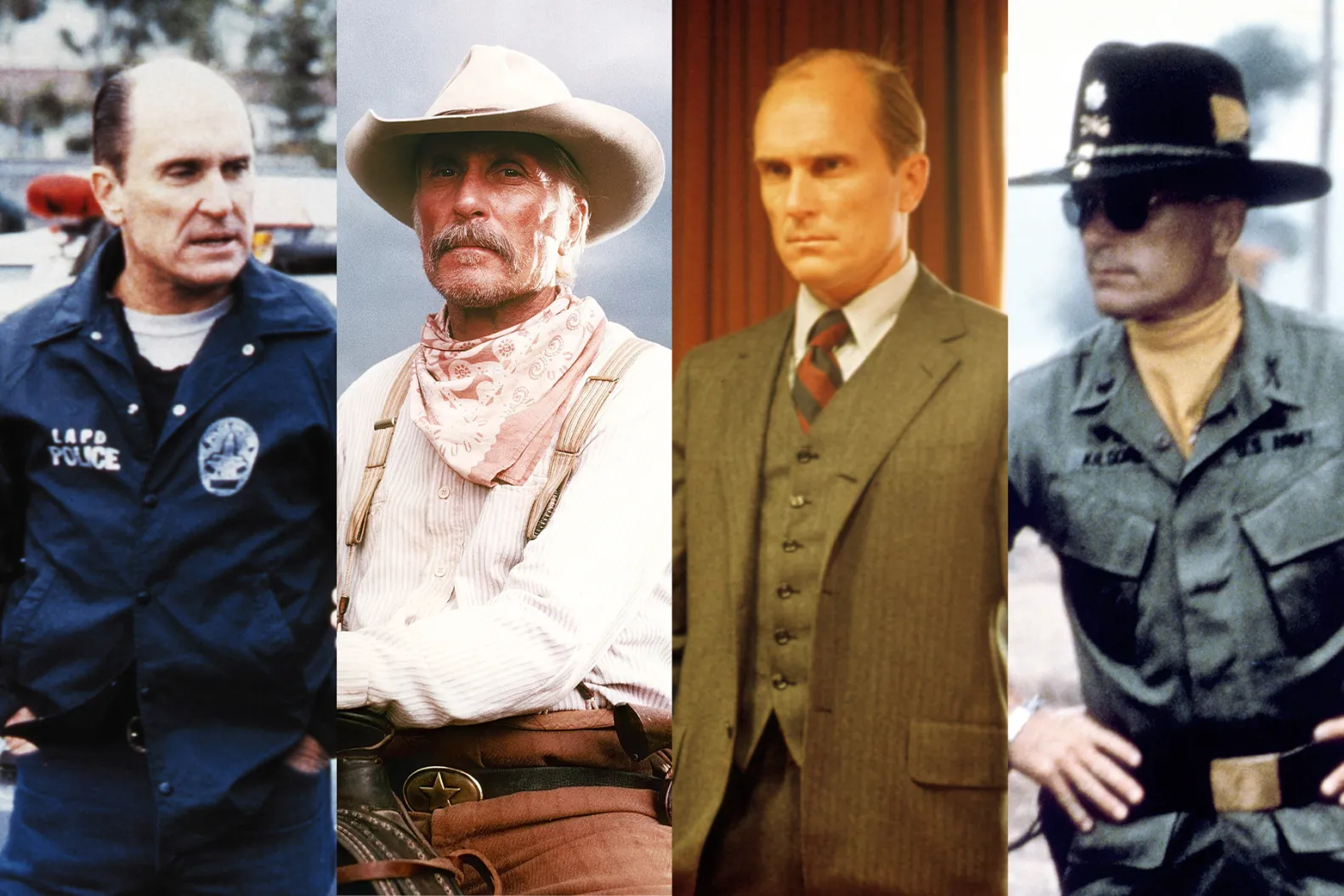
Robert Duvall’s very first film is hard to find and may not exist: a made for TV Playhouse 90, John Brown’s Raid, directed by Sidney Lumet starring James Mason as John Brown, filmed on location at Harper’s Ferry. In addition to Mason and Duvall, the movie had James Broderick and Ossie Davis. His second film and first feature was, of course, To Kill a Mockingbird. He made about 7 feature films in the 60s–mostly episodic TV. But those 7 features arguably set up the next decade of his career: Countdown, a failed film by Robert Altman, The Rain People, a failed film by Francis Ford Coppola, and then The Chase (Arthur Penn), True Grit and Bullitt (Peter Yates). Oh, yeah, he plays a gay biker and Richard Jaeckel’s lover in Nightmare in the Sun. So the 70s opened and he plays a lot of assholes: MASH, Network, Killer Elite, Great Northfield Minnesota Raid. Also a lot of fairly colorless people: I’m sorry, but Tom Hagen is a thankless role, and while he’s an interesting Doctor Watson, it’s not very showy. And a Good Nazi, kind of, in The Eagle Has Landed. Also a lot of movies we’ve forgotten about. But almost all of his movies share two characteristics: he’s getting much bigger parts and most are directed by or written by big names. So even though at the end of the 70s, the average person hadn’t heard of him, he’s got a lot of respect in the industry and criticis love his ass. Setting up The Great Santini, Apocalypse Now, True Confessions and Tender Mercies–and that’s a sequence of films that’s got few rivals, particularly given he’s starring in three of them. Now he’s kind of found his groove as a movie star–of this group, only True Confessions wasn’t Oscar nominated. Ironically, his 80s after that is a bit tame–probably taking some time off. And then the epic Lonesome Dove, where he creates Augustus, leading to his strongest decade not in movies (that’s the 70s by far) but in Robert Duvall Roles. He made 24 movies in the 70s, 12 in the 80s, and 23 in the 90s. He still worked up into his own 90s, getting another nomination and directing up into his 80s. From CNN, “…the family encourages those who wish to honor his memory to do so in a way that reflects the life he lived by watching a great film, telling a good story around a table with friends, or taking a drive in the countryside to appreciate the world’s beauty.” He was apparently a Republican, too. Long time buddies with Gene Hackman and Dustin Hoffman. I’m glad he had a better end than Hackman.

There is very little with which to disagree there, except for her misstep on Tom Hagen. Duvall’s turn as the “almost brother” is an understated, canny performance, pitch perfect to his co-stars, with quiet moments of real hurt. When Michael says, “You’re out, Tom,” Duvall shows piercing vulnerability, beseeching Vito with his eyes. When Michael attacks Tom for disloyalty, again, his bewilderment belies a greater fear (“Why do you hurt me, Michael? I’ve always been loyal to you”).

The scenes must be juxtaposed with Tom’s fights with Sonny, who also derided Tom, but with whom Tom was at ease, because for all his faults, Sonny was human, they were blood even if Sonny could cruelly suggests otherwise. And Sonny was dumber than Tom, a reality so patently obvious to Tom that his worth was never in doubt. They’d fight, Tom took it with a grain, and Sonny immediately apologized.

Michael, however, was inhuman and smarter.

The performance is masterful, like so much of what Duvall did.

Last thought. A Civil Action is an underrated legal thriller about a class action case brought against local polluters. John Travolta is the engine, a plaintiff’s lawyer fighting a massive, all-enveloping case and his own sense of inadequacy, and he is quite good. Duvall represents one of two corporate defendants, a wily, eccentric old line senior partner with a white shoe Boston firm. I’ve been around lawyers of all stripes my whole life. He is spot-on, brilliant, and inhabits the quirky-but-wise character entirely:

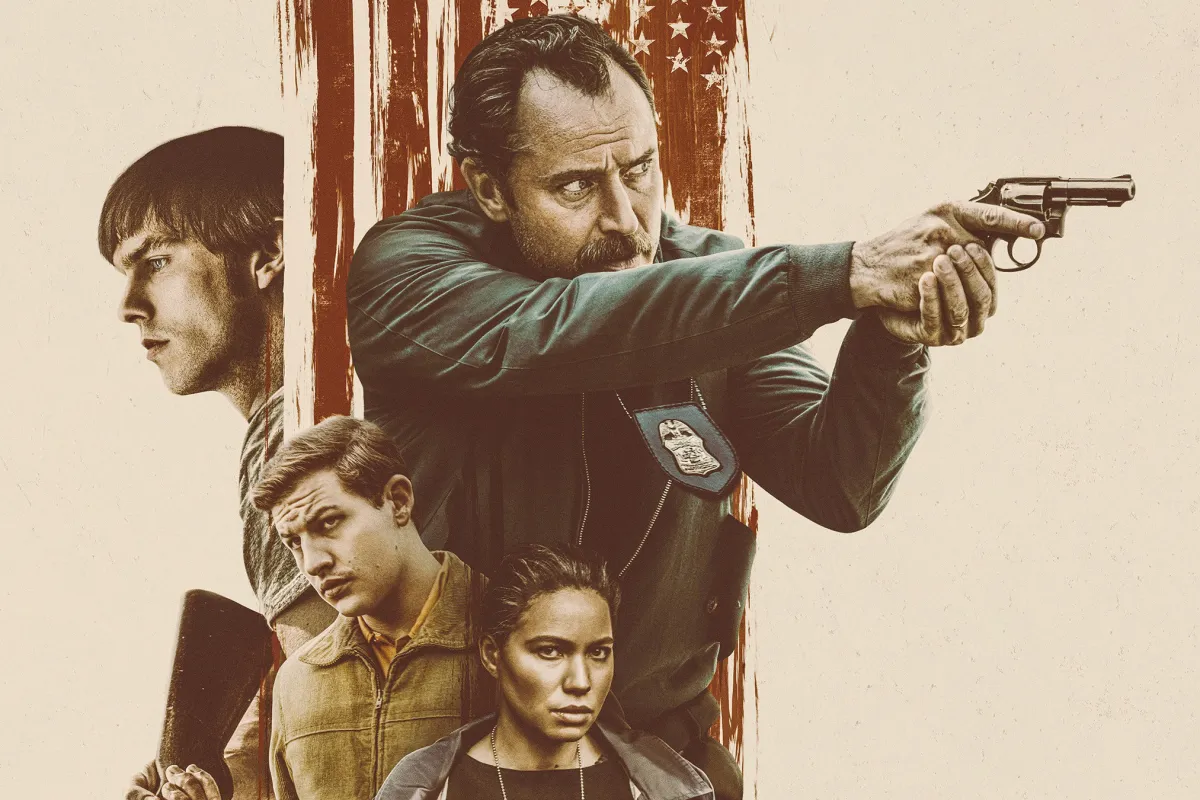
A straightforward procedural based on a true story, broke-down and ailing FBI agent Terry Husk (Jude Law, as unpretty as you’ll find him) arrives at his new desk in Idaho only to stumble upon the rise of The Order, an “action, not words” offshoot of The Aryan Nations in the early 1980s. The Order is led by the charismatic Bob Matthews (Nicholas Hoult), who guides it from counterfeiting to bank robbery to assassination to planned insurrection. As Matthews rises, Husk and the Feds close in, amidst a backdrop of the majestic and haunting Pacific Northwest.

There is nothing new here save for restraint, but restraint is in awful short supply these days. The pace is taut, the acting largely superb, and the photography memorable. In the hands of a lesser director or writer, the temptation to weigh in on the philosophy of The Order, and to jam it into whatever current bugaboo is in fashion, would be too much to resist. Here, writer Zach Baylin shows you what The Order believes and how, attenuated or not, those beliefs are connected to their criminal endeavors. To Law, who we learn has worked undercover on cases from The Klan to The Mob, the “the” doesn’t really matter. They’re all the same. And that keeps the story from stalling on the anticipated wordy handwringing that you expect.

As one article observed, “Ultimately, the hope of slipping an unsparing portrayal of domestic extremism—produced outside of the Hollywood studio system—into the December award season is to reintroduce a discussion of radicalization to American society. ‘If you don’t learn from history, you’re doomed to repeat it—how a guy that, in the way Nick depicted him, could live down anybody’s street,’ says Haas. ‘There are lots of people right now who are hurting and struggling and looking for answers.'”

Thankfully, this kind of easy, didactic tripe is little found in the actual picture.

We also aren’t loaded down with Law’s past. There is a medical issue and familial distress, but Baylin explains just enough to give you a sense as to their effect on Law’s nature and psyche. Husk is not out here for redemption or revenge. Even his obligatory “Let me tell you about this one horrible thing” speech is muted, his explanation almost perfunctory. Much like the father of one of the young men who joined The Order, a man who resignedly tells Husk, basically, “you do the best you can with your kids, but it’s a crapshoot.”

The film could have used a little more exposition (particularly with the doomed local deputy, Tye Sheridan), the tough gal FBI supervisor (Jurnee Smollett) is hackneyed even with the gender change, and maybe there should have been one more turn before reaching resolution.

But otherwise, very solid, entertaining crime flick. Reminded me of the equally impressive Under The Banner of Heaven.

On Hulu.