Martin Scorsese’s surreal nightmare of one man’s (Griffin Dunne) ill-advised late-night trip into lower Manhattan is painfully funny and, at times, genuinely unsettling. Dunne is beset by a quintent of quirky, if not outright dangerous females (Roseanna Arquette, Linda Fiorentino, Teri Garr, Catherine O’Hara and Verna Bloom), a fact that will one day be Exhibit X in his anticipated trial for misogyny. His torture is lovingly photographed by Michael Ballhaus, giving SoHo’s grimy exterior a dream-like quality (and there is no greater horror than being hunted by a mob that has commandeered a Mister Softee truck).
Dunne is very good and much like Steve Carell, except he’s not burdened at all by the imprint of a long-running character, and where Carell is childlike and vulnerable, Dunne is sympathetic, but sexually opportunistic.
Bonus: if anyone asks you, “What movie casts the parents from Home Alone, one of whom went to filmvetter’s high school?”, now you know.
Today, William Friedken’s 1971 Academy Award winner seems better-than-standard cop fare, but this is an extremely influential film, notable for its verisimilitude, grit and movement. Shot on the mean streets and ugly haunts of decrepit New York City, Friedken follows two detectives, Popeye Doyle (Gene Hackman) and Buddy Russo (Roy Scheider), as they try and take down a huge heroin shipment. No prior American film seemed as immediate or aggressive. Friedken’s camerawork is frenetic and edgy, and his virtuoso car chase scene is still one of the best in all of film. Here is Friedken on the chase, which took 2 weeks to shoot.
Friedken’s insistence on visual authenticity extends to Ernest Tidyman’s script. Doyle is a casual racist and a simplistic bully, Scheider a slightly more pleasant accomplice. They are neither archetypes or anti-heroes. They’re just dogged, unremarkable cops. What is a little mystifying is the Best Actor win and Best Supporting Actor nomination for, respectively, Hackman and Scheider. These performances are almost 100% sweat, the equivalent of thespian calisthenics. There is no arc or development, and I don’t believe there has been this much running in any film save for Chariots of Fire, The Gods Must Be Crazy and any film about Steve Prefontaine. Roger Ebert disagrees about Hackman’s performance, writing: “As Popeye Doyle, he generated an almost frightening single-mindedness, a cold determination to win at all costs, which elevated the stakes in the story from a simple police cat-and-mouse chase into the acting-out of Popeye’s pathology.”
Interestingly, Friedken didn’t want Hackman (they fought constantly and as Friedken writes in his memoir, “His outbursts [onscreen] were aimed directly at me… more than the drug smugglers”). But Paul Newman and Steve McQueen were too pricey, Peter Boyle objected to the film’s violence and Friedken’s first choice – Jackie Gleason! – was deemed unsuitable by the studio.
On the heels of Robin Williams suicide, I thought I’d review one his few films I liked. In Gus Van Sant’s drama, written by Matt Damon and Ben Affleck, Williams plays a community college professor and psychologist. With his MIT credentials, he could have been a big deal but was waylaid by love and is now stricken with grief at her passing.
When William is introduced to guide the damaged savant, Will Hunting (Damon), we know that when all is said and done, both characters will have taught each other something valuable about life.
A lot can go wrong here.
But Van Sant keeps it even. Williams is smartly subdued, with no hint of the manic persona that became more schtick and adrenaline than acting. He is patient, picks his spots and elevates much of the film’s schmaltz with real pathos. When he is riled, it feels authentic and raw.
As for the film itself, I’ve always been torn. The concept is smart. A working-class Boston kid is also a genius, sadly mopping floors at MIT, but he finds a way to shine and then falls in love and then, through therapy, grows out of his limiting, Southie world. Van Sant’s direction is inventive (the slo-motion rumble to Gerry Rafferty’s “Baker Street” is particularly nifty, and there are many such cool touches); the exchanges between the Southie pals (Damon, Ben Affleck – again, proving he can be very good in small doses – Casey Affleck and Cole Hauser) are believable, very natural, and often hilarious; there is actual heat between Damon and his romantic interest, Minnie Driver; and Elliot Smith’s musical contributions are hauntingly memorable.
On the downside, while Damon is quite good as the lead, his character is kind of one big cheat. Plagued by his own demons, we are supposed to empathize with Will, but he is a selfish, smug prick throughout, just about every assist you can give a modern protagonist – he’s lonely, he was shuttled from foster home to foster home, he was beaten as a child, his enemies are grotesque caricatures that lack only the villain’s mwahahahahahaha, and yet …
Here, Will goes toe-to-toe a snooty Harvard type:
Obviously, the Hah-vahhhd pony-tail is the bad guy (on the strength of the pony tail alone), but much of the film is sneering at the uptight folks who admire his genius and do him no injustice.
It reminded me of Walker Percy’s The Thanatos Syndrome: “There’s Hawkeye and Trapper John back in Korea. I never did like those guys. They fancied themselves super-decent and super-tolerant, but actually had no use for anyone who was not exactly like them. What they were was super-pleased with themselves. In truth, they were the real bigots, and phony at that. I always preferred Frank Burns, the stuffy, unpopular doc, a sincere bigot.”
So, as the music swells, and Will escapes the clutches of Southie to chase love, I’m pretty sure he’s going to revert to being a smug prick soon enough. Only now, Minnie Driver will be there to socialize him.
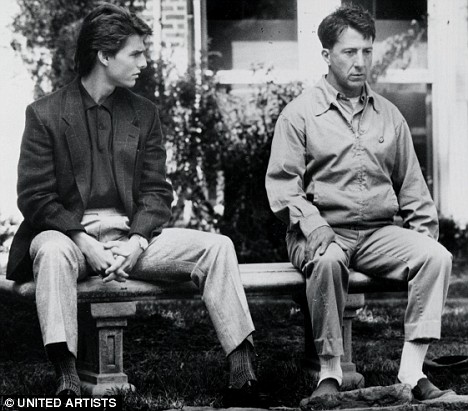
When Rain Man came out, I enjoyed it, but soon came to sour on the film for its easy emotional manipulation and an affected star turn by Dustin Hoffman. I didn’t credit Hoffman the prescience of Robert Downey Jr. in Tropic Thunder (“never go full retard”) and found Hoffman’s portrayal of an autistic adult unsubtle and obvious. Perhaps had I waited until Al Pacino’s blind rampage in Scent of a Woman, I would have been more forgiving.
Pauline Kael called it “a piece of wet kitsch” and I can’t say I could have disagreed. Rain Man has always maintained a spot in the pantheon of overpraised domestic drama Oscar winners that, I assumed, would age very ungracefully (see Forrest Gump, American Beauty, Crash).
Rain Man has hit the schedule on my pay movie channels, and yes, it is emotionally manipulative and yes, it does sport some of the more annoying hallmarks of the 80s (a Hans Zimmer synthesized score that would put him on the map, a few too many montage scenes, a gorgeous and pointless female lead, Valeria Golino, who came and went). But Hoffman’s performance as a hidden older brother to Tom Cruise (Cruise learns of him upon their wealthy father’s death and “kidnaps” him to have an edge in getting his share of the will) is very strong. What unfortunately became represented by cute catchphrases (“I’m an excellent driver”, “10 minutes to Wapner”) is actually a canny, deep portrayal of a tortured soul, and director Barry Levinson never really lets you forget the dangers that lie therein. Much like Bradley Cooper in Silver Linings Playbook, Hoffman is endearing until he is terrifying, and at exactly the moment Spielberg would have inserted treacle, Levinson has Hoffman explode again.
Tom Cruise is even better in his role as Hoffman’s wheeler-dealer, LA smooth brother, Ray. His frustration with Hoffman is communal. His entire performance is a study in anger at Hoffman, not for being denied his loving company or for being shut out by his father, but because Hoffman is an annoying lunatic. “I know you’re in there somewhere,” he screams, and while he undergoes change in his time with the afflicted Hoffman, he does not become redeemed so much as educated.
The film is also very, very funny, perhaps too much so for our times. I can imagine grievance groups objecting to the use of an autistic adult for chuckles, but the screenwriters’ (Barry Morrow and Ronald Bass, the former of whom, like Golino, pretty much disappeared after this film) don’t pull many punches and the exchanges between Hoffman and Cruise are often brutally comic:
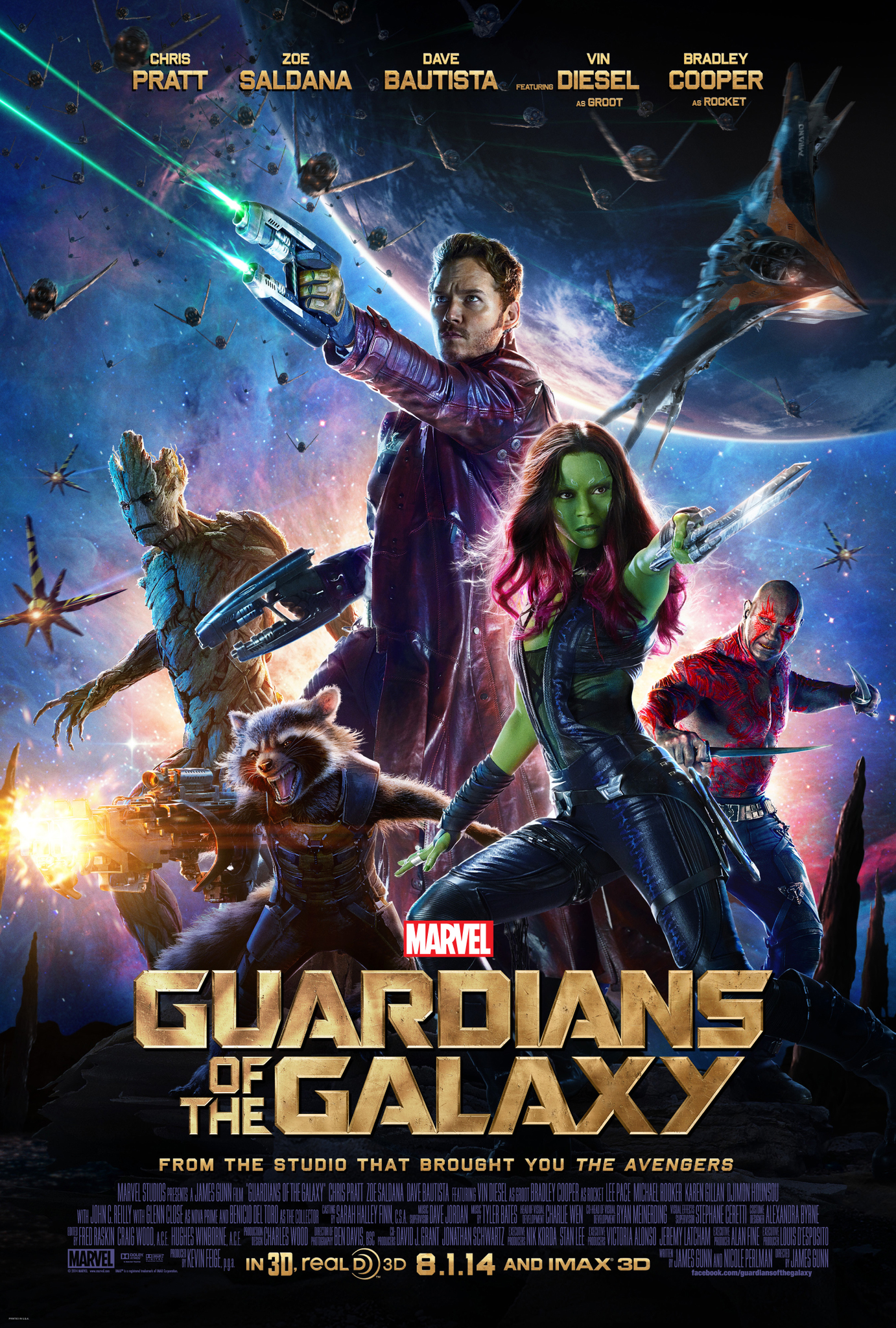
The model summer movie, with perfectly distributed action, humor and homage. There is nothing original in the film – Chris Pratt as intergalactic robber “Star Lord” is a younger, hipper Han Solo, Vin Diesel is Chewbacca without the fur, and the Death Star has been miniaturized to a tiny crystal – but if not unique, it is fresh. Rather than reaching for the myth of Star Wars, Guardians opts for more humor, and the operatic sweep of John Williams is replaced by vintage pop, courtesy of Pratt’s 70s mixtape. There is sweetness (Bradley Cooper voices a surprisingly moving raccoon) and while director James Gunn’s resume’ (Slither) contains nothing suggesting an ability to handle this fare, the actions sequences are expert, comprehensible and brief, avoiding the mind-numbing excess of so many Marvel pictures. The only criticism is the short shrift given to the motives and backstory of the villains, but I assume that comes in the inevitable and welcome sequel.
The best sports movie ever made, a character-driven blend of sentimentality and tension that dramatizes the football culture on a small, poor Texas town. Every trope that is bandied about by lesser sports films is obliterated, yet, the film doesn’t reject the formula. There are gridiron heroes, strong women who stand behind them, racial undertones, father-son generational combat and an obligatory half time speech.
But compare the ridiculous grandiosity and easy message of most any sports film with the replication of the game in this picture and you’ll find there is no comparison. The women are actual characters, not noble support. The racial issues are genuine and near imperceptible, the blacks don’t exist to teach the whites to dance, and the whites don’t exist for the confession of absolution. The father son dynamic between Tim McGraw and Garrett Hedlund is incredibly moving and Billy Bob Thornton’s halftime speech is poetry.
This is a beautifully acted film, as much about a community as the players, and I’m moved every time I see it. Never more so than by Derek Luke’s work in this scene:
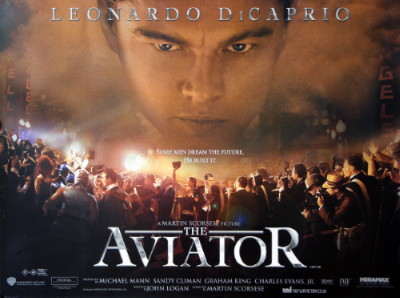
Martin Scorsese’s critically acclaimed biopic of the young-to-middle age Howard Hughes (Leonardo DiCaprio) has much to recommend it. It was the first role that established DiCaprio as a force, and in inhabiting the kinetic, driven and tortured character of Hughes, he was able to shuck off the callowness of his characters in Titanic (Jack London: Teen Wolf!), The Beach and Catch Me if You Can. His time to become a leading “man” had arrived (his attempt at a mature character in Gangs of New York was undermined by the garish nature of the picture, Daniel Day Lewis’s battering ram of a counter-performance and what appeared to be DiCaprio’s own discomfort in the role).
The film is also visually stunning. Scorsese is usually the king of movement in tight spaces, but the sky liberates his eye, and the scenes of flying (there are five) are vast and poetic, and for the ones that end in crashes, utterly thrilling.
When Scorsese is on the ground, the film does not suffer. His glitzy pre-war Los Angeles, where the parties are populated by the likes of Errol Flynn (a jaunty Jude Law) and Ava Gardner (a tough, motherly Kate Beckinsale), are eye-popping.
Finally, the choices of Scorsese and screenwriter John Logan (Gladiator, Sweeney Todd, Skyfall) are adept. Rather than focus on the breadth of Hughes’s life, they opt to show him at his most vibrant, while giving ever-increasing glimpses of the madness that would grip and eventually consume him later in life. For an almost 3 hour film, it’s clear they could have shot for Hughes in the 70s, surrounded by a Mormon coterie and the madness that it protected. By skillfully giving us the symptoms, they economically finish the story.
So, what’s not to like? While DiCaprio and Alan Alda (playing Hughes’s nemesis, the slimy Senator Owen Brewster) were rightfully nominated, though they did not win, so too was Cate Blanchett as Hughes’s love interest Katherine Hepburn, and she actually took home the Best Supporting Actress statuette.
To call her performance cartoonish is a gross understatement. It’s manic, ludicrous mimicry.
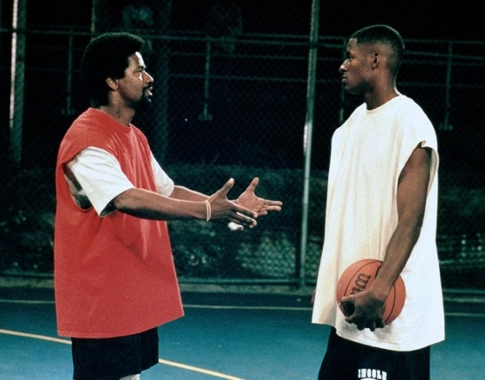
This is one of Spike Lee’s better films, an audacious picture of Americana (scored by Aaron Copland no less) that both mythologizes and indicts the sports culture while dramatizing the strained relationship between a convict father (Denzel Washington) and his son (Ray Allen), a prized high school basketball recruit. Washington is released from Attica with the promise of a lessened sentence if he can convince Allen to sign with the governor’s alma mater. He has one week to do it, and has to overcome several hurdles, the greatest of which is the fact that he is in jail for accidentally killing Allen’s mother in a domestic fight.
As in Summer of Sam, Lee’s appetite is enormous, and he typically tries to tackle too many issues in this sweeping story. He also includes a pointless subplot between Washington and a prostitute (Milla Jojovich) and indulges in his unfortunate penchant for speeches (Roger Guenveur Smith plays the local crime boss and delivers a PSA soliloquy on all the perils of fame that brings the picture to a screeching halt). But at the heart of the picture is Lee’s love for basketball, which he portrays as something truly majestic and unifying, skillfully interspersing old footage to punctuate the revered history of the game.
Washington is also commanding as the father who drove his son to succeed, and we see in him the love as well as the excesses of a parent who wants too much for his child. The scenes of a younger Washington pushing his little boy to be Jordan and their later one-on-one are beautiful and heartbreaking. Allen, an acting novice, does surprisingly well as the son, communicating the wonder of it all as the world opens itself for him.
This is a flawed picture, but Lee is working from the heart and shooting for the stars and it shows.
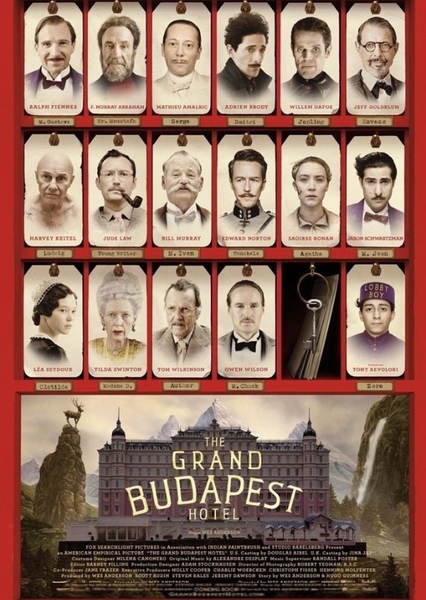
Wes Anderson makes highly detailed, whimsical and richly textured children’s stories for adults, films that evoke an old picture book or model train set from our youth.
The Grand Budapest Hotel is in that same vein, a colorful story about the concierge of a once majestic property (Ralph Fiennes) and his efforts to tutor a protégé (Toni Revolore).
Here, Anderson accentuates the stylish (the scenery approximates toy furniture) and emphasizes the screwball. Missing, however, are the moments of true human connection that punctuate his earlier works, the moment inRushmorewhen Jason Schwartzman shows his hurt feelings or introduces his father, or in Moonrise Kingdom, when the children kiss or Edward Norton reveals his fears of failure as a scout master, or even in The Life Aquatic, when Bill Murray tries to woo Cate Blanchett.
Grand Budapest is Anderson’s non-animated The Fantastic Mr. Fox, a fantastic film, So too this film, but it’s Anderson’s least affecting picture.
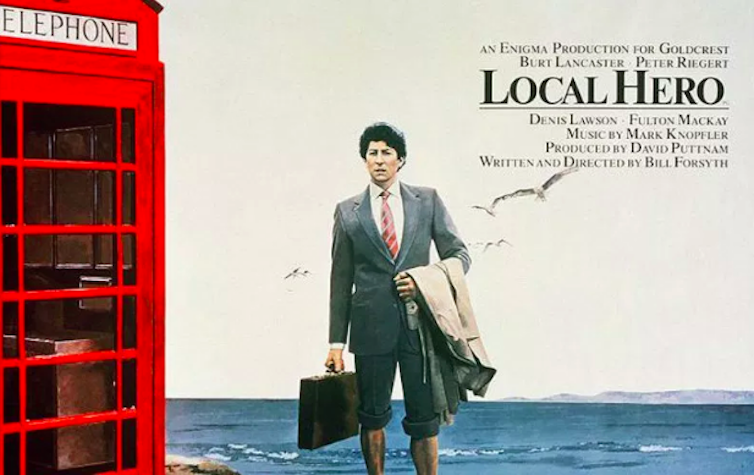
Writer/director Bill Forsyth was born in Glasgow so he was well-positioned to create this love letter to Scotland. Big oil executive Peter Riegert, who lives a precise, antiseptic and singular life in Houston (he prefers to do deals at arm’s length – “I’m a telefax man”) is sent to a small fishing community in Scotland to buy up the land for a new refinery site. Before his journey, the company’s quirky owner and amateur astronomer, Burt Lancaster, enlists Riegert to canvass the skies in search of a comet. Riegert finds a quaint, simpler life that slowly transforms him from uptight businessman to wistful boy, entranced by the scenery, pace and wonder of the coast. The charm of the film is embodied in the village, in the film’s quieter moments, and as it infatuates Riegert, so too the audience.
There are so many good things about this picture it’s hard to catalogue them all. Riegert manages to be deadpan yet earnest, never once lapsing into sarcasm or condescension, and Forsyth writes him in a manner that never requires an explanation of or ode to his disquiet. The villagers are not schmaltzy local yokels, with a song in their heart and a lesson to impart. Rather, they are a slightly cynical bunch who received intel on the purchase and they – like anyone – lust for the big payoff. As Forsyth has acknowledged, “I don’t want you to think there was some deliberate message. You talk about the plot, but was there one? I mean, people can look back and say, oh, this was all an early one about the environment or whatever, but it didn’t happen that way, or if it did it was accidental. I’m not political, either in film or personally, and I don’t really do plot, and certainly don’t aim to broadcast a ‘message’. I suppose I like to tell stories. And if I’m writing a film, and don’t really have a plot, then you have to fill the screen with something, so I try to do so with characters, incidents.”
The picture features an impossibly young Peter Capaldi (In the Loop, World War Z), hilarious as Riegert’s liaison. His high dudgeon when the town’s cook serves him an injured rabbit he has saved from a road injury is priceless. Mark Knopfler also contributes a restrained, moody score that melds his guitar licks with a little-80s Vangelis synthesizer.
Apparently, Forsyth only got a few bites at the apple in Hollywood, the last one being a poorly reviewed Robin Williams vehicle, Being Human. It’s a shame. Forsyth was interviewed by The Guardianin 2008, which correctly called Local Hero “one of the quiet must-see little masterpieces of British cinema.”