My dive into the crime films of Amazon Prime gets deeper.

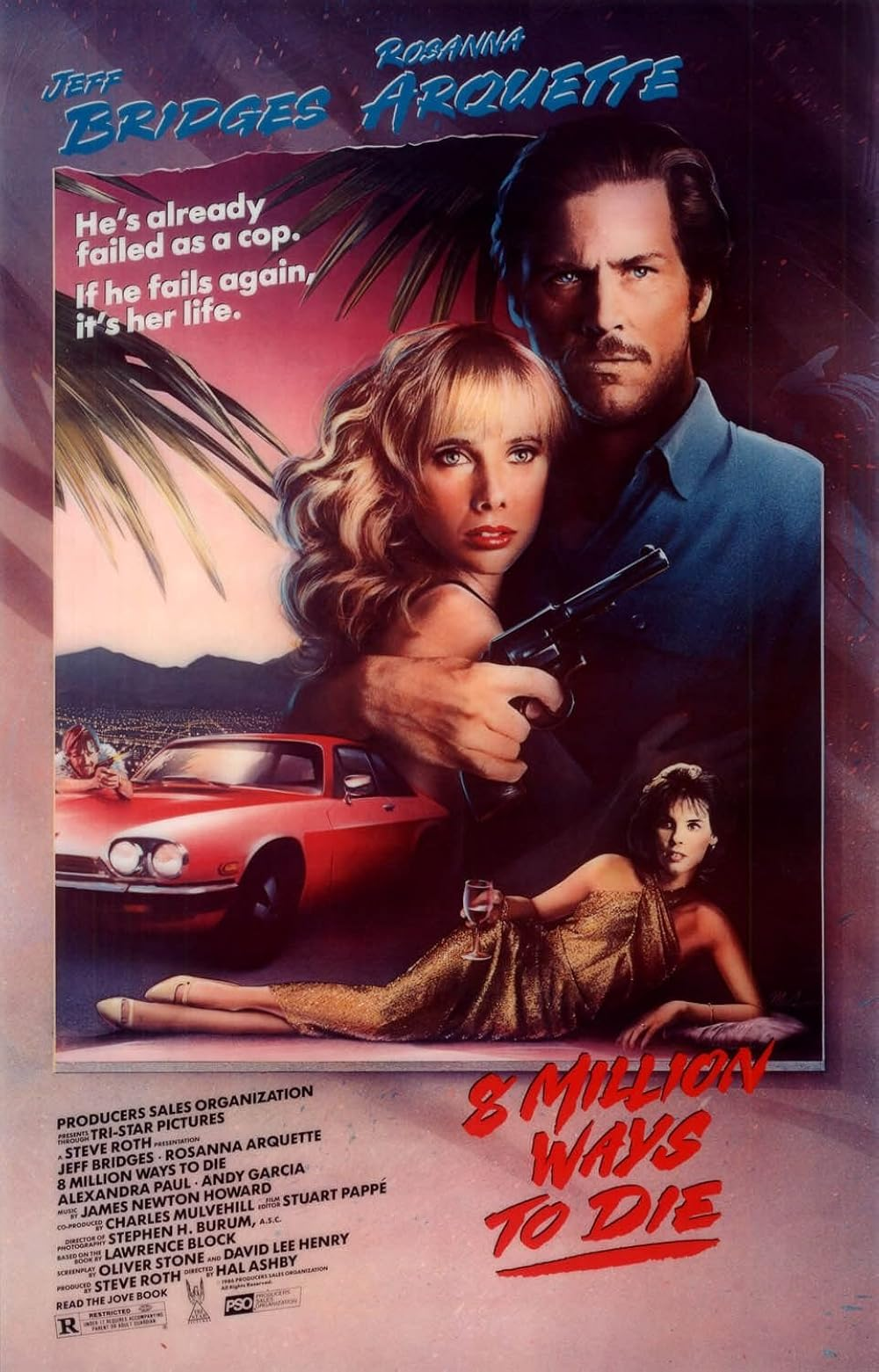
I was intrigued by this flick because I like Jeff Bridges, the movie was an early Oliver Stone screenplay (a co-write), and it was one of last films directed by Hal Ashby (Shampoo, Being There, Coming Home).

I don’t have 8 million reasons to hate this film, but I have 8.

  1. Stone’s writing is garish and ridiculous. In an attempt at modern noir, we actually hear Bridges say, in voiceover, “Yeah, there are eight million stories in the naked city. Remember that old TV show? What we have in this town is eight million ways to die.” A high-priced call girl ups the retch factor, cooing to Bridges, “the streetlight makes my pussy hair glow in the dark. Cotton candy,” as she lays out ala’ Ms. March 1978. Maybe these gems were penned in the source novel by Lawrence Block. I don’t know. It doesn’t land here.
  2. Hal Ashby knows about as much about film action as I do taxidermy. It’s not like Coming Home’s Jon Voight was doing wheelies in his chair. This picture, which involves blackmail and cocaine and kidnapping and gunplay, is as flat and unimaginative as professional bowling.
  3. As the alcoholic ex-cop, Bridges seems as confused by the script as the viewer. There are times you feel, his eyes alone, Bridges is communicating, “What the hell is this thing about, again?” When he’s involved in a bad shooting, and guns down a man in front of his family, he says, “Shit.” Like when you don’t get a good score in Skee Ball. And then, “Fuck,” like when you leave home without your iPhone.
  4.  Bridges is also forced to play an alcoholic who relapses; he does this by reprising his role in Thunderbolt & Lightfoot, after he was thunked on the head.
  5. The plot is inane. Bridges is lured into the entire mess because the girl with the cotton candy pubic hair heard his name from the friend of a friend.
  6. Roseanna Arquette is terribly miscast as the sultry, misunderstood, cynical call girl with a heart of gold. Arquette is cute best friend, quirky neighbor.  She ain’t this.
  7. The supporting turns are execrable.  Andy Garcia is so over the top (see below), it’s hard to stop laughing, as if he saw Scarface and said, “Hmmmm. Pacino seems a bit muted.” Another actor, Randy Brooks, nemesis to Garcia, is also near-lunatic. Brooks scurried off to TV after this flick, only to return as the worst actor in Reservoir Dogs six years later. The cotton candy girl is the badly miscast Alexandra Paul. She is the girl next door. Here, she’s over-the-top coquettish, as erotic and worldly as Georgette in The Mary Tyler Moore show. To be fair, this may not all rest on the actors. From the analysis below, “Ashby’s style of directing, according to Block, involved letting the actors do takes where they exaggerated their emotions, before reining them back in for subsequent takes. Since Ashby did not have final cut, some of these ‘dialed up’ takes were used in the film.” Seems like all of them were.                 
  8. Scenes are interminable. The characters scream the same thing at each other ad nauseum or endlessly posture. Behold, the longest, loudest, most idiotic confrontation scene in film history:

Apparently, I am not alone in my derision and confusion.

Amazon Prime is loaded with old crime pictures and though it pains me to categorize a 1990 flick as an “old crime picture,” there you have it.

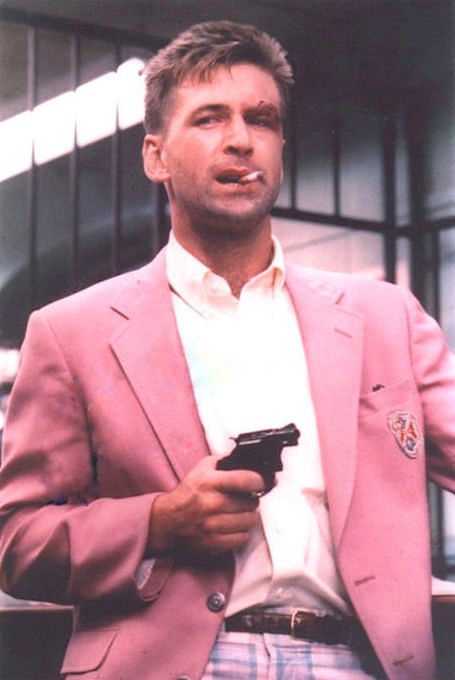
George Armitage (Grosse Pointe Blank) directs an adaptation of a Charles Willeford Detective Hoke Mosely novel (Willeford is a Florida crime novelist less heralded and a lot better than Carl Hiaasen). Alec Baldwin is a quirky thug just out of prison who lands in Miami, accidentally kills a Hari Krishna at the airport, and lands with small town and just starting out call girl Jennifer Jason Leigh. He evades arrest by Detective Mosely (Fred Ward), who is investigating the death of the Hare Krishna, and in the process, steals Mosely’s gun, badge, and dentures, thereafter ripping people off with the imprimatur of authority. The movie is absurdist and light, Armitage’s direction is workmanlike and industrious, and the result is more soft than hard boiled, a fun jaunt through weird 80s Miami. Enjoyable and mostly forgettable.

Mostly. Baldwin is so talented, loose and committed, his weirdo ex-con is fascinating and often gut-splitting. Literally every time he flashes Mosely’s badge, it is laugh out loud. As everyone he tries to hoodwink responds with a weary “ya’ gotta’ be kidding me,” Baldwin amps up his TV cop persona and the result is even funnier. These were early days for Baldwin, a hell of a dramatic actor but stellar in comedies. His choices are brazen and risky, and they all hit. The performance screams “star.”

To complement him, Jason Leigh as the hooker with a heart of gold is so earnest (she is saving up to start a fast food franchise) she actually moves you. Baldwin matches her with a crazy sweetness as they play house (until Mosely closes in).

Worth it, flaws and all, for the performances.

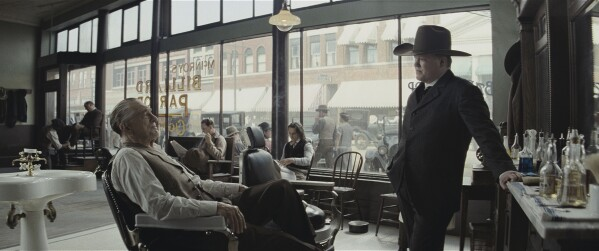
An unheralded gem, powered by the stellar performances of Robert De Niro and Robert Duvall, as brothers Dez and Tom Spellacy. De Niro is a rising monsignor in post-WWII Los Angeles, archbishopship on the horizon. Duvall is a tainted LA homicide cop. De Niro is ambitious and technocratically capable but fast becoming disillusioned with the moral elasticity necessary to keep the church afloat, including being chummy with the likes of a scumbag real estate mogul (Charles Durning, who seeks the church as beard for his corruption and literally sweats menace). Duvall is trying to make up for his past as a bagman. A Black Dahlia-esque murder connects them, and as De Niro wrestles with his faith and station, Duvall agonizes over his past crimes and his attempt to make amends by going after Durning, damage to his brother be damned. We learn about their secrets and upbringing in an L.A. that has a Chinatown-vibe.

One of my favorite fiction authors, John Gregory Dunne, wrote the screenplay with his wife Joan Didion, and it exudes verisimilitude and deftness. The script allows De Niro and Duvall significant space and what they do with the quiet moments is poignant. There is always tension, but also, always an intimacy and a shorthand that speaks to shared happier, or unhappier, times. Their exchange on their uber-Catholic mother is emblematic:

Tom Spellacy: How’s ma? Is she still eating with her fingers?

Des Spellacy: Well, she says the early Christian martyrs didn’t have spoons.

Tom Spellacy: Tell her they didn’t have Instant Cream of Wheat, either.

It’s a cheat to cite a review within a review, but Vincent Canby’s is so dead on and conclusive, I’ll transgress:  the film is a “tough, marvelously well-acted screen version of John Gregory Dunne’s novel, adapted by him and Joan Didion and directed by Ulu Grosbard who, with this film, becomes a major American film maker. Quite simply it’s one of the most entertaining, most intelligent and most thoroughly satisfying commercial American films in a very long time.”

If there is a problem, it is third act, which could have used a few more moves to get to the ultimate revelation. But I’m hesitant even in that criticism for fear that any nod to beefing up the procedural would have taken away from Grosbard’s patience and care with the characters. The film not only showcases De Niro and Duvall, but takes time to establish real connections between De Niro and an older priest (Burgess Meredith), who De Niro puts out to pasture because of the latter’s interference and sermonizing (“I’m not a man of the cloth, I’m a man of the people”); Duvall and a whorehouse madame (Rose Gregorio) with whom he had some sort of ragged relationship until she took the fall for his crookedness and did a stint in jail (“I need you like I need another fuck,” she spits at him); and Duvall and his partner, Kenneth McMillan, who shakes down Chinese restaurants for his retirement motel and tries to keep Duvall out of trouble (“You know who we’re going to pull in on this one? Panty sniffers, weenie flashers, guys who fall in love with their shoes, guys who beat their hog on the number 43 bus. What? Do you think I’m gonna lose any sleep over who took this broad out?”). The blunt and cynical nature of the dialogue aside, Dunne and Didion never stoop to hackneyed tough guy patter, and they counterbalance with real tenderness. The train station scene where the parents of the murdered girl meet with Duvall to take their dead daughter home is one memorably piercing example.       

Just added to Amazon.

William Friedkin’s follow-up to the massive successes of The French Connection and The Exorcist, the film has met with greater favor in recent years, but at the time, it was a dud at the box office. While it has its charms, the tepid response at its release was deserved.

By way of set up, Roy Scheider is part of a 4 man stick-up crew in New York City that robs from the mob. Three are killed in the caper and Scheider goes on the run, to a small town in Chile, There, he works as a laborer under an assumed name on subsistence wages for an American oil company. He is joined by a French financier, an Arab terrorist, and a hit man of indeterminate background, all incognito and under the gun for their own reasons. None has the means to get out of town. Guerillas, however, blow up an oil well 200 miles away, and the four men are hired to ferry highly combustible dynamite containing nitroglycerin in two trucks through a hellacious terrain of winding mountain roads, dismal swamps, and, at times, torrential rain. The dynamite is necessary to cap the well and extinguish the geyser of fire.

The problems.

First, Roy Scheider is not a lead. Never has been. His intensity is unquestioned but his range is limited, and he’s only asked to be wary and furious, which he does fine. He’s just not very interesting.

Second, given the massive jostling and bouncing in the trucks during the expedition, one does wonder, “Why again was a helicopter out of the question?” Assuming it just was because somehow the flight was more unstable than the truck (which when you see the journey, is ludicrous), I’m still with one commenter, and I don’t think this is niggling:

“This big oil company calls in a helicopter and asks the pilot to transport unstable nitro that would be unsafe to handle, but never thinks to ask the helicopter pilot to bring with him some stable explosives that they can use right away. Was it more cost-effective to pay 40000 pesos (plus supplying two large trucks and apparently a bunch of additional new auto parts) and risk a 218-mile land journey than it would have been to just fly in some new explosives?

Third, other than the French financier (Bruno Cremer), with whom we spend a lot of time explaining his backstory, we don’t really get to know these men, and in their journey, they share very little.  

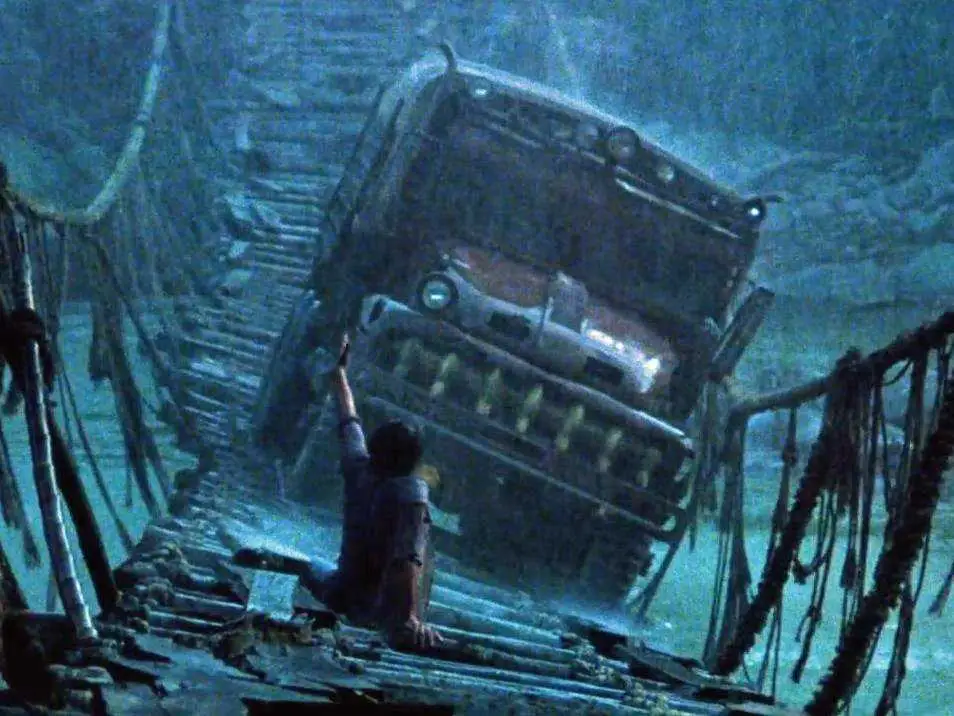
On the plus side, many of the ordeals are stunning (getting the trucks over wooden, swinging bridges is one of the most riveting things I’ve ever seen in movies); the visual grit of the film is palpable, which in the age of sterile CGI, is always welcome; there is also a matter-of-fact lack of sentimentality that melds well with the harshness of the environment; and the picture introduced Tangerine Dream (Thief, Risky Business, Near Dark) and the synthy soundtrack is dissonant but effective, as the environs seem almost otherworldly.    

Bill Burr, Quentin Tarantino, and my son (his biting rejoinder pending) are decidedly more enthusiastic. Hell, Tarantino deems it “one of the greatest movies ever made.”  

On Amazon, for $3.99.

I was abandoned this past weekend, and I don’t do well alone. With an empty house and the care of a disinterested 15-year-old cat entrusted to me, I took the time to catch up on a few 70s flicks in my queue, including this strange creature.

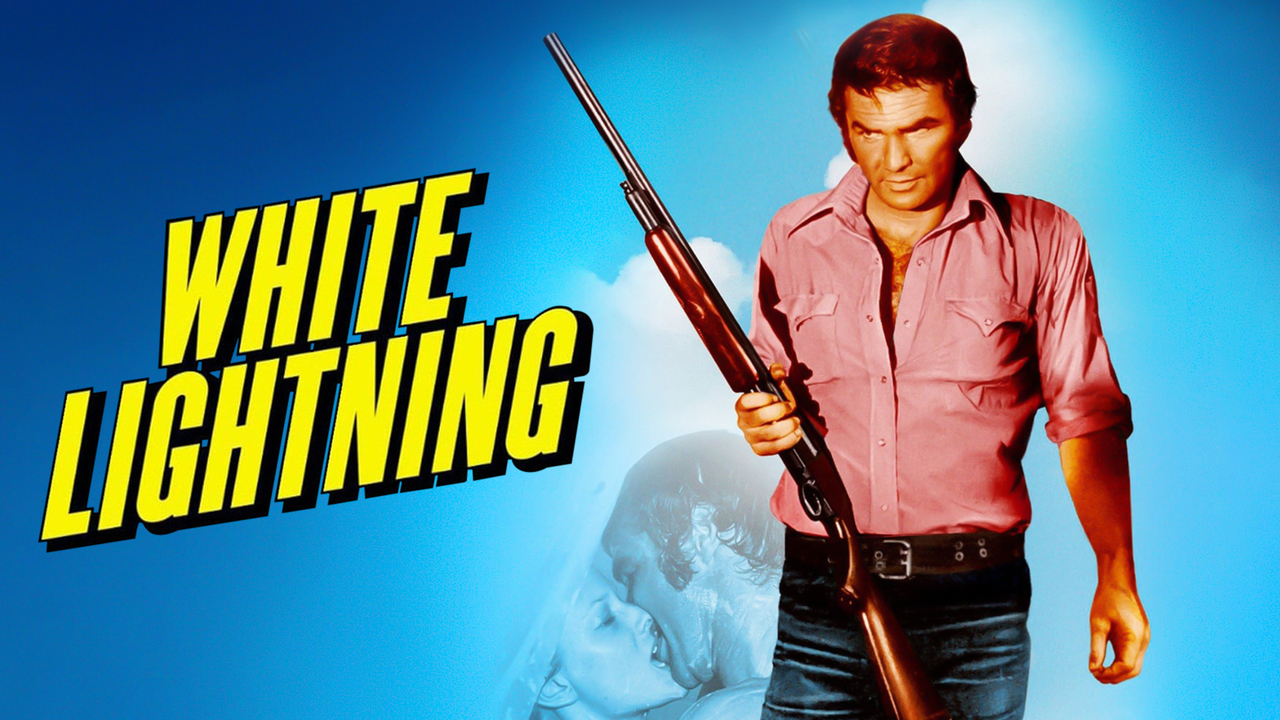
Burt Reynolds – not at the height of his popularity, but post-Deliverance – is Arkansas inmate Gator McCluskey. He’s in the federal pen for illegal liquor running when he learns that a crooked sheriff (Ned Beatty) has murdered his younger brother. Why? Because the brother was a meddlesome hippie, and Beatty does not like hippies. So, Gator gets out, insinuates himself into the county, and exacts his revenge.

There’s a lot bad to meh here.  The “I hate hippies” thing is unexplained – we never really know what the kid did to deserve being dumped in the swamp, and a sit-down between Beatty and Reynolds never happens. And the women of the Arkansas county are so carnal in their attraction to Gator, it seems cartoonish. Worse, there are tons of car chases, but not of the ilk of The French Connection or The Seven-Ups or Bullitt. Just a lot of banal vrooming around dusty country roads. From this demon seed sprouted Smokey & the Bandit and Cannonball Run (Hal Needham was a mere stuntman for the picture, but a few years later, he was second unit director on a reprise, Gator, and then he moved on to directing the slop that was Smokey and the Bandit I & II and Cannonball Run I & II). The first glimpses of Reynolds’ giggling, slapsticky, “I don’t give a fuck” mien can be found in the flick as well.    

There are a few notes on the plus side of the ledger. Reynolds connects. He has movie star gravitas and just enough menace left over from Deliverance to project power and fear. Beatty is also strong, exuding a meanness and lethality in the guise of a portly bureaucrat. The film also takes a few runs at a healthy cynicism.

Fun facts – at the tail end of his career, the picture’s screenwriter, William Norton, did 19 months for ferrying guns to the IRA. After being released from prison, he moved to Nicaragua, where he shot and killed an intruder in his home. He then spent a year living in Cuba, was unimpressed, and was smuggled into the U.S. by his ex-wife.

Where is this film?

On Amazon, not recommended except as a curio.      

I pledged to go to the theater Saturday to see the three-and-a-half hour The Brutalist. I begged off at the last minute, but then, the guilt of it made me do penance.

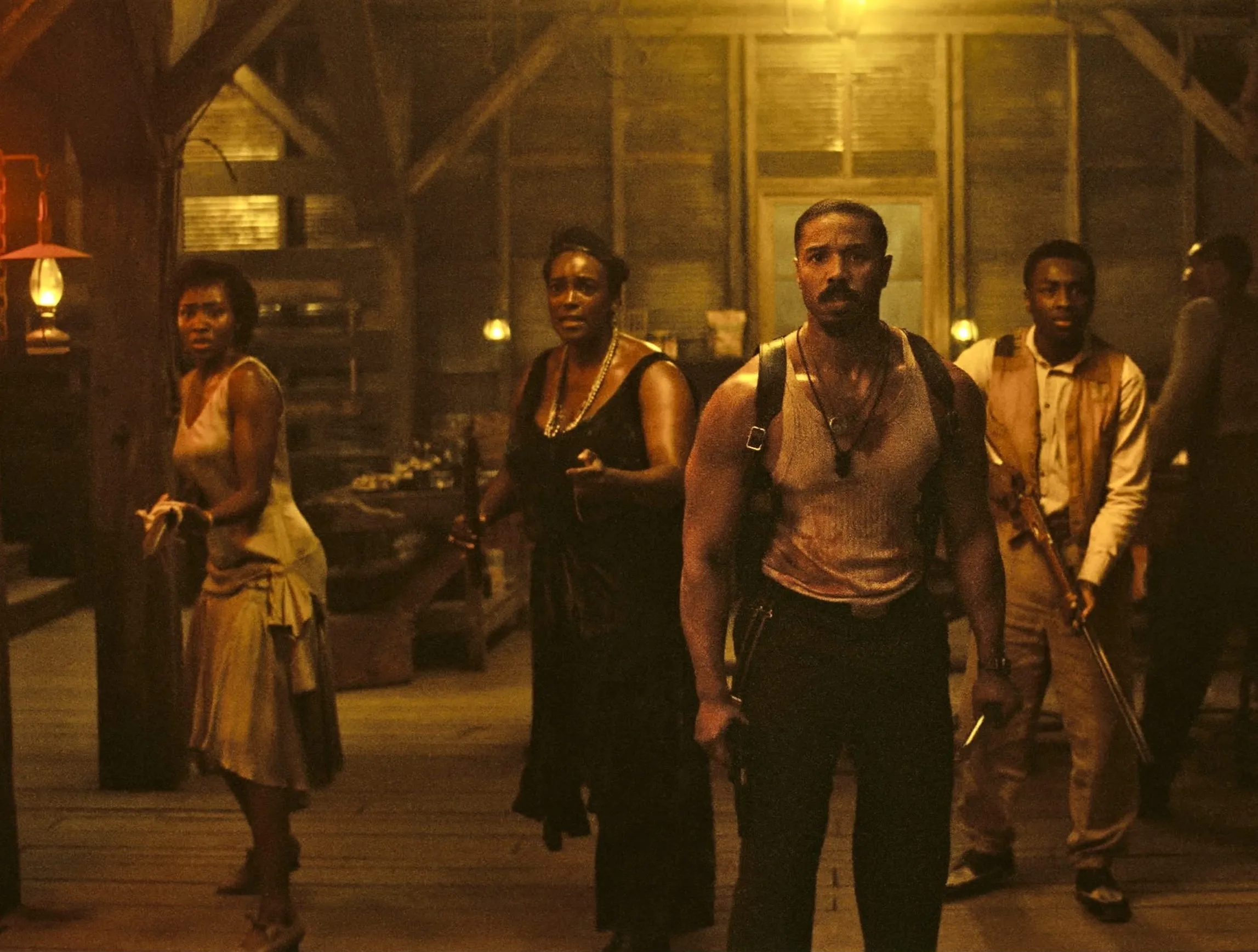
I watched Killers of the Flower Moon, another glaring omission, especially on the part of an unpaid film reviewer. Killers was adapted from David Grann’s best-selling book about a series of murders of Osage Indians in the 1920s, crimes borne of their oil wealth and societal vulnerability.

The good.

Martin Scorsese is no slouch behind the camera, and he ably presents the grandeur and sweep of Osage life and the peculiar opulence that sprouted about it. The film looks and feels like a $200 million picture. The detail is impeccable and the feel authentic (not the garish, silly design of Gangs of New York).

Lily Gladstone. Her job as the stoic sufferer of any number of depredations could have been capably performed with simple solemnity. But she infuses it with charm, passion, and subtle resignation. In a film during which I often found myself stifling a yawn, she was captivating.     

To the bad.

Scorsese seems to be having a late-in-life problem with repetitive scenes. Here, we are treated to at least a half dozen scenes of Robert De Niro (the bad guy) telling Leonardo DiCaprio (his nephew and henchman) what to do, DiCaprio getting more and more upset, and De Niro just yelling at him again and again. Much like The Irishman, the movie is 3.5 hours. In that film, it was “1.5 hours … trying to get Jimmy Hoffa (Al Pacino) either to his senses or a meeting.” Here, it is De Niro and DiCaprio bickering.

Worse, their interminable mugging is to the detriment of more interesting characters and subplots, from the resistance of one white man (played quite ably by Jason Isbell), to the genesis of the federal investigation, to the intervention of an Indian investigator, to the actual murders themselves.  Simply put, no one gives a flying fig about these two one-dimensional, barking characters, but there they are, hogging all the scenery at the trough.

The film is also painfully confused. Is this a testament to a historical wrong? A little. But that factor seems mailed in, with scenes of Osage registering objection, but no real agency. Which is fine.  Most people in history have little to no agency. They are subject to the cruelties of their surroundings. It leaves us the machinations of the criminals. But they are so simple (Osage sheep, whites sheep shearers), they don’t lend themselves to captivating drama. Also, Scorsese’s tie to the Tulsa race massacre seems cheap and manipulative.

Is it a procedural or whodunit? Nope.  We know the villain from moment one, he only lacks a mustache to twirl, and when the case is cracked in the last third, it is by far the best part of the picture. But the way it is solved is mundane. They try to break a guy, he gives a bit of guff but soon talks. The book was very much a whodunit and a procedural, grippingly so.

Is it a love story? Scorsese tries, but there is no real chemistry between DiCaprio and Gladstone, certainly, not enough to sustain his serial abuses, i.e., his central part in the murder of her family and friends. The lovable scamp!

Is it a psychological portrait? Perhaps. DiCaprio is the guilty henchman, no doubt, but he is so glaringly stupid (Scorsese even give him pointless unwieldy teeth, this side of Simple Jack), you wonder if the character’s psychology is worth the inquiry.

The writing is not so much weak as it is misdirected. If you’re going to pay $5 million for adaptation rights to a book, why jettison the most interesting parts? The book really digs into the strange origins and dichotomy of the Osage and their oil wealth, which was borne of their savvy as much as their geographic fortune. Here, they hit oil, and the rest is a surface coverage of their spendthrift ways and the fact that to access the wealth, they need white guardians. Scorsese presents this in a sort of mashed up montage. Similarly, the book covers the birth of the FBI and the investigation of the corrupt locals from a federal agent, a first. Here, the Feds just show up (led by a criminally underutilized Jesse Plemons) and start to brace some dudes.          

Like The Irishman, I felt this would never end, and like The Irishman, the universal plaudits feel like they are being artificially elevated on the vapor of Scorsese’s status and the ennobling of the cause.          

In the Gary Oldman Churchill vehicle, I wrote of, “one of the most cringe-inducing scenes you’ll ever see, when Winston Churchill finds himself on the Underground getting his back stiffened by ‘the people’ [which was] patently ridiculous.  The only thing missing on that subway car is Tiny Tim exclaiming ‘God Bless Us, everyone,’ thereby spurring Churchill to reject appeasement and declare that England would ‘never surrender.’”

In Blitz, near every scene feels as authentic as THAT scene. Darkest Hour meets Sesame Street meets Yo’ Teach. Tired, anachronistic piffle.

If you can get past the Model U.N. in the Tube, you are made of very stern stuff.

Steve McQueen, not the actor but the director of 12 Years A Slave, needs some perspective. This film comes six years after his last, the uneven Widows, and the rust and ennui shows.

A friend put it perfectly: “It is as if he wanted to make a standard racial parable, but knowing how played out that could be, jammed it into a period piece.”  

McQueen did himself no favors in casting either. Saoirse Ronan opts for 90% beatific. Playing her son, Elliott Heffernan just doesn’t register, starting with sullen and eventually advancing to more sullen. When he stretches, it is more miss than hit. As he told Variety, when asked to cry, “I pretended my mom was taking away my PlayStation.” It is Heffernan’s first gig, and yes, it looked like his mom took away his PlayStation. 

I’ll give McQueen the accomplished look. The opening scene of men fighting a post-bombing fire and Heffernan’s journey across the English countryside to escape the terror are arrestingly resonant.

On Apple.

What to say about Ti West? I quite liked The Innkeepers, an old school, throwback ghost story and was happy to see he’d gotten bigger budgets and a broader canvas.

He’s done little with it.

MaXXXine’s predecessor flick – X – modeled Texas Chainsaw Massacre in set-up (group of young folks go to the wilds of rural Texas where they rent a property on a farm to shoot a porno and are picked off one by one). Charmless, boring, and not even ingenious in how the characters meet their end, the fate of the players was more serial than momentous. The movie also seemed confused. X was not really funny or even ironic, ala’ Scream. It was certainly not scary (there’s a gator in the pond, so, uh … look out). It had the feel of schlock but was not really an homage to drive-in trash. It was just “steady as she goes” vanilla.

One character makes it out of X alive and we find her in MaXXXine, where it is 1985. She has become a porn queen in LA, trying to crossover to serious roles, which ends up being a whole lotta’ nothing in terms of plot development.

As Maxine aspires, her survival in Texas and her trauma catch up with her, the former in the guise of blackmailing private detective Kevin Bacon, and the latter in the form of flashbacks as to what happened that fateful weekend back in Texas.

Meanwhile, Maxine’s friends start dropping like flies.   

Bacon is so over the top Tex-anny – toothpick and drawl and gold orthodontics – he annoys rather than amuses, and Maxine’s flashbacks seem hubristic, an assumption that anyone watching this picture was hanging on the edge of their seat to see what happens to her now.

What does happen to Maxine is so disjointed, disinteresting, and cheezy, you’re tempted to fast forward. There is no reason to care, and with a film as predictably preposterous as this, one cannot be manufactured.

Worse, the look and feel are cheap. How do we know this is 1980s LA? Pointless news clips referencing The Hillside Strangler, a lot of smoking, shiny suits, and men wearing earrings. I guess wardrobe was out of piano key ties.

But West even bollixes up the scenes where he seemingly is trying to take care. For example, our killer visits one of his victims – another porn star – by visiting her performance at a peep show. So, he drops a quarter in the slot and there she is, in an outfit and a room that is $100 bill, not a quarter-a-minute worthy. It seems small but is emblematic of just how lazy the entire endeavor feels.

Most unforgivably, West takes a run at enveloping Maxine’s fate in a parable as to the hypocrisy of Tinsel Town and moral majoritarian finger-waggers.

It falls as flat as everything else in this dog.   

On MAX.

The writers of A Quiet Place (Scott Beck, Bryan Woods) got their own flick, and they delivered. 

Two Mormon sisters (Sophie Thatcher and Chloe East) on their door-to-door proselytizing tour come to the wrong house, where Hugh Grant engages them on a religious and philosophical level, entraps them intellectually and physically, and then, puts them to the test of faith. Or at least his own perverse version of same.

His house is set up like a religious Chutes and Ladders, with wrong and right doors, hidden coves, timed locks, and, obviously, more horrifying surprises.

The writers make you love these girls, earnest believers but not dolts, so you hope for the best. But dammit, their tormentor is so witty and interesting, you feel guilty for wanting the mental duel to continue.  

Literate, suspenseful, darkly funny, and ultimately, perhaps overly-reliant on Grant’s cheeky, playful and charismatic performance. But oh, what a turn!

A taste.

Eventually, the mental gymnastics must give way to violence (I was hoping Grant would say, “Okay, joke is over! Goodbye, girls!”) but of course, that just wouldn’t do. The film falters just a bit at the bloody end, but [spoiler, sort of – it has a faith-based final act worthy of The Exorcist, and as Grant has been kicking these girls about for most of the movie, Huzzah!].  

$4.99 well spent on Amazon.

Great, wondrous fun, a spectacle that exceeds its promise.

Ariana Grande (Glinda the Good) and Cynthia Erivo (Elphaba the Wicked) are young schoolmates in the land of the Emerald City (at a brighter, more colorful Hogwarts), immediately antagonistic, then fast friends, and we see them as they begin their journey to Elphaba’s ultimate end (“I’m melting!”). History, as they say, is written by the winners, and now, we have the real story, to song.

Both actors are splendid, mastering very difficult vocals while establishing strong chemistry and exhibiting astute comic timing. Director Jon Chu (Crazy Rich Asians) moves the film at a dizzying pace but keeps space for the tender moments. And while I always felt the Broadway musical was marred slightly by a few uneven or underwhelming numbers, as committed to screen, “Dancing Through Life” is majestically choreographed and “I’m Not That Girl” subtly moving.

A few issues. First, there is an underdeveloped subplot of official antipathy to animals, who were once contributors to Emerald society but are now being shunned and caged. Not that this is a political potboiler, but the issue is presented perfunctorily as a fait accompli. Given that the matter is the breaking moment between the Wicked Witch and the Wizard (underplayed in a disinterested, almost blase’ manner by Jeff Goldblum), there needed to be more, and it could have been provided in the existing framework.

Similarly, when the girls get to Oz to meet the Wizard, there is an expository number to provide the basis for the rise of the Wizard and the source of his power. The number allows for the return of the Broadway originals Idina Menzel and Kristin Chenoweth, but it is clunky and not really all that explanatory. I needed my daughter to explain to me what the hell was going on.

Again, minor nits. Total blast!