Archive

5 stars

image

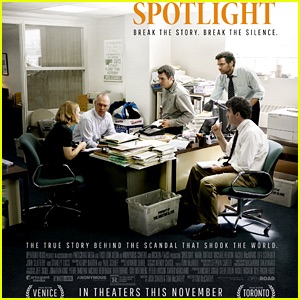
This is a gripping but measured film, a reportorial procedural and a meditation on the impact of the sexual abuse scandal that rocked the Catholic church in Boston, as reported on by The Boston Globe in 2002. “Spotlight” refers to an investigative team of the paper (Michael Keaton, Mark Ruffalo, Rachel McAdams, Brian d’Arcy James) who, under the direction of a new editor (Liev Schreiber) takes on the case. As they dig deeper, the breadth of the scandal widens (the number of culpable priests balloons from 13 to 87) and the institutional protections surrounding the church become more evident and intrusive. The story also takes its toll on the team, all some form of Catholic (cultural, lapsed, etc . . . ) at the time of the investigation.

The film is economical and direct and it stubbornly avoids cliche’ and histrionics. It is also a rare “based on true events” movie that feels authentic throughout, not jumped up or glamorized.  It is very similar to A Civil Action, another Boston based movie that tackles a legal case (water contamination in Woburn) by analyzing the city and its institutions. Like that film, Spotlight packs its biggest punch during scenes of interviews with the survivors of abuse, which are nothing short of heartrending.

If you want a gripping movie about the mechanics of taking on a story like this, this is it, and if you want a companion piece that shows exactly how an individual molester operates, I recommend Doubt. Watching this film, as with Doubt, stirred my own memories on the subject, having been educated by the Catholic church for eight years of grade school and by the Jesuits for four years of high school. I saw the picture with my kids and tried to explain how what is now an indelible black mark on the church wasn’t exactly a deep, dark secret by the time I reached high school, yet somehow, was not a full-fledged scandal. I explained that we had a religion teacher who was very charismatic, but who you just kind of knew not to be around. Why? It’s hard to say. It could have been my own sense of it, or the fact that my brother or his friends imparted some decent advice, or the fact that after gym, when you were showering, he could sometimes inexplicably be seen in the locker room.

Whatever the impetus, you learned not be around Father Bradley, but I guess I just assumed that all boys shared the same sense of something being off and were similarly self-protective. That wasn’t the case, and in 2007, I was one of thousands of recipients of a mass email detailing the misdeeds of this priest at our high school, and at other places where he taught afterwards, encouraging us to report if in fact we had any knowledge of his abuse. Without the work of The Boston Globe on the story, that email may never have come to be.  In that manner, this film is a testament to solid, door-knocking, pavement pounding reporting.

If you’re interested in the priest who plagued my school, the story is here.  The original Boston Globe story can be found here.

When my grandmother started to lose it, she was ingenious in masking it. If you asked her who was president, she’d say, “that fool in the White House.” If you asked her about something topical, she’d reply, “Who has time for such things?” It was her game face as her memory began to fail her.

At the beginning of I’ll Be Me, this is where we find Glen Campbell, recently diagnosed with Alzheimer’s. He is vague, folksy and stubborn in attempting to defend himself from a world ever more foreign to him. He leans heavily on his wife, who acts as his lifeline to his past, but we see his true state when he watches old home movies, and asks “who is that?” It’s achingly painful to hear his wife’s reply, “That’s you, silly.”

Campbell’s diagnosis came on the eve of his final tour, and in an effort to increase awareness about the disease, he went public and allowed a documentary crew along for the ride. The result is a bittersweet retrospective of his work (I had no idea just how big a star he was) and an examination of what it is to suffer this disease through the eyes of his family (three kids are in his touring band). I feared that this might become exploitative and was heartened to see that not only was it not, but that Campbell’s wife acknowledged the concern, explaining that they weighed the costs and benefits and decided to go forth. I also feared that it would be altered to create a “triumph of the spirit” vibe, but director James Keach (an actor in his own right and Stacy’s brother) presents Campbell and the disease in sober fashion; when Campbell’s issues become acute, it is almost too much to bear, and when they evince on stage (as is shown on the clip above), it is not sugar-coated. But the audience is with him, so are we and the fact that his music is so ingrained in him it triumphs over the disease, for a time, is a wonder to watch.

Currently on Netflix Streaming.

Director-writer John Maclean has crafted a hypnotic fable, an ingenious tweak on the western that bundles the innocence of Wes Anderson, the sly cynicism of the Coen Brothers, and the quiet, stunning visuals of Terence Malick. Maclean has us follow a Scottish naif (Kodi Smit-McPhee, presenting more Australian than Scottish, but no matter) as he travels through the Colorado territory, clueless and not long for the world until he is taken under the wing of an experienced gunman (Michael Fassbender). Smit-McPhee is on a quest to find his true love and Fassbender is in it for the cash, but as they wend their way through an expanse that is vast, surreal and sporadically lethal, they develop a bond that seals their fates. The cinematography is stunning, and Maclean’s confidence and patience are all the more impressive given this is his first feature. There are times you feel the scene has near been painted, until Maclean shatters it with violence. I was surprised to see many critics hail the picture as a revisionist western or an action film. It dabbles a little in both, but the heart of the picture is in the dreamy world of child’s myth and unrequited love. This is a beautiful, patient picture, to be watched on a large screen with no interruption. Available on Amazon Prime streaming.

image

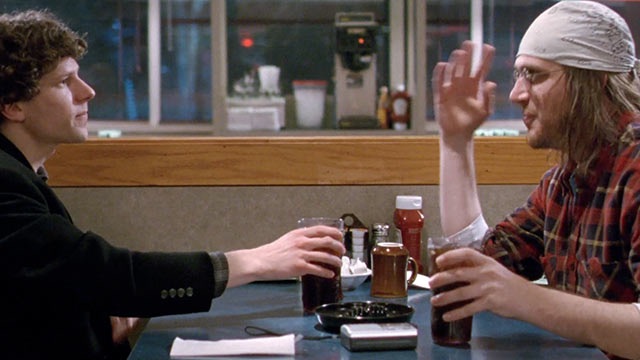
The film is a flawless meander over a few days with an enigmatic and at times debilitatingly insecure novelist.  Jason Segal’s turn as author David Foster Wallace is soul-deep, a particularly impressive performance given that it is from a light comedian. As a film about a doomed man (Wallace hung himself 12 years after the events depicted), the picture is also refreshingly light on foreboding. We are not here to observe the clues that led to Wallace’s demise.  Rather, we are here to enjoy the mind of the author, while being made privy to some of the demons within him, as he is interviewed by a Rolling Stone writer, played by Jesse Eisenberg. We are allowed to hang out with two writers as they discuss their craft, their fears, and America; fence over their different viewpoints and goals through the interview process; and eventually, form a fleeting friendship. Thankfully, the movie is so self assured it doesn’t feel the need to provide the expected big reveal or the emotional paroxysm.

But perhaps what is best about this film – a film about a writer where we do not hear him recite his prose – is the fact that you’ll become affected enough to go read his work after the movie is over. I generally do not read fiction, I have never read Wallace (with the exception of a few magazine pieces), but on the strength of this very personal and intriguing film will read one of his novels.

Image result for Red Army movie

This a great time capsule documentary, providing insight into the post WW II Soviet Union cult of supremacy as manifested in its hockey program. The Soviet military actually ran the tryouts at the Red Army school, winnowing out of the weak and fusing sport with propaganda. The result was a juggernaut that came of age right at the moment it ran into the American team in 1980 at Lake Placid. After that ignominy (the Russians had just beaten the Americans in an exhibition 10-3), the team did not lose a game for the two years prior to Sarajevo, where they won gold, and again, in 1988.

However, the toll on the players was brutal. They spent their time in hockey camps 11 months of the year, and the coach, Viktor Tikhonov, would not even allow a player see his dying father. Perestroika loosened some of the restrictions, but still, Tikhonov, would not permit his best defenseman, Slava Fedisov, to go to the NHL.   Fedisov quit over the prohibition, made his displeasure public, and was ostracized for his impunity.  On the light side, he was denied training facilities. On the harsher, the police in Kiev picked him up, beat him, and then called Tikhonov to pick him up. Eventually, the Soviets allowed the players to play in the NHL, but they took half their salaries (Fetisov said no and was the first Soviet hockey player to get his full check) .

The footage – especially of the fluidity of the Soviet team – is dazzling, and the interviews of any number of direct but impatient Russians are sharp and revealing. The documentarian, Gabe Polsky, is to be commended for including footage of his broad questions, where he stretches to get a response on larger geopolitical issues, only to get a “stupid question” from the “suffer no fools” Fedisov. In fact, it was a stupid question, but we learn more in Fedisov’s curt comment than had he answered the stupid question.

Image result for ex machina

Writer director Alex Garland has written several very distinct dystopian films (28 Days Later, Dredd) and his directorial debut is assured and not unexpectedly, unique. Oscar Isaac is Nathan, a Steve Jobs-esque reclusive titan who invites Caleb (Domnhall Gleeson), a coder at his web service monolith, to his retreat deep in the mountains to conduct the testing of an artificial intelligence being (Alicia Vikander) he has created. While Nathan and Caleb start off in an awkward forced friendship hampered by their employer-employee dynamic, and the fact that the reason for Caleb’s selection seems flimsy, they soon become adversarial – with Nathan chastising Caleb for his unscientific approach and Caleb increasingly distrustful of Nathan’s methods. It then becomes unclear exactly who is being tested, Eva, Caleb or Nathan, as the three negotiate their roles while strategizing to achieve their aims.

Expertly paced and beautifully photographed, there is a little bit of Her and Spielberg’s A.I. in here, but ultimately, the film that best captures the ethos of this picture is Mousetrap. This is an intelligent, absorbing and imaginative sci-fi thriller which rejects shocks for a slow dance and smartly realized  dawning at the end.

image

Rory Kennedy’s Academy Award nominated documentary opens with American Captain Stuart Herrington asking, “The burning question. Who goes and who stays?” When it went bad, Herrington took his South Vietnamese friends out surreptitiously (Americans were not allowed to bring South Vietnamese out without authorization), but the move was not expected nor planned for.  As Herrington explains, as do others, after the Paris Accords, the presumption of most in-country Americans was that peace was at hand, and the Americans would be in South Vietnam for a long time.

This film shows the feel on the ground for the last denizens of Saigon, while adding insight on a geopolitical level. For example, the North Vietnamese took very seriously the threat of Nixon bringing back American air power after execution of the accords – as one interviewee states, the North Vietnamese thought Nixon was a madman – but after Watergate and the “madman’s” self-inflicted wound, they were naturally emboldened. “Overnight, everything changed. Hanoi suddenly saw the road to Saigon as being open.”

With 16 divisions bearing down on Saigon, Herrington recounts how Ambassador Graham Martin wouldn’t countenance plans for evacuation because it was defeatist and he feared a panic (Martin is a tragic figure who lost his only son in combat in Vietnam, and while he is criticized for his intransigence, he also saved hundreds of South Vietnamese by refusing to leave the embassy until more civilians were evacuated).

At the end, there were 6,000 Americans still in country, and Martin held firm even after he returned to the United States to watch President Ford’s $722 million request for an evacuation voted down.  At this juncture, embassy staff began to risk their careers to get South Vietnamese compatriots out in makeshift airlifts to the Philippines, and at the very end, in any other way they could find.  Their stories are harrowing.

There is no political agenda here.  Kennedy’s documentary is about people, not policy, and their stories are engrossing.  One Vietnamese evacuee recalls his father, a pilot in the South Vietnamese, picking his family in a Chinook and heading out to sea (“when I heard the Chinook, I knew my Dad was coming to get me”).  When it couldn’t land on an American vessel, the occupants jumped out to be fished from the water.

Much of the footage is simply jaw-dropping. A scene of a modern World Airways passenger jet taking off with its on-board stairs lowered, hustling panicked South Vietnamese on as it hurtles down the runway, is indelible.  Another is footage of the pick-up points (Americans knew when to go to them; the code was the playing of “White Christmas” on the radio”) as South Vietnamese press the buses for entry to helicopter evacuations, one of the last options available after the North Vietnamese closed down the airport with artillery fire.  Or the American naval vessels that became deposit points for South Vietnamese helicopter pilots, who had flown from their air bases to pick up their families and then headed to sea hoping for the best.  The ships could only accommodate one helicopter at a time, so when one landed, and its passengers disembarked, the crewmen pushed it over the side to make room for the next.

A must see.

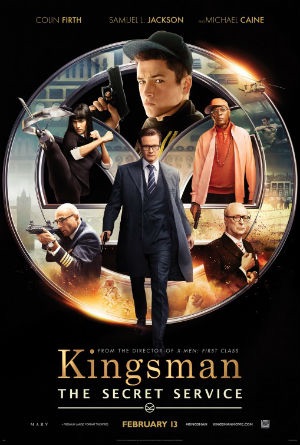
image This is a Roger Moore-era Bond flick, but with cheeky self-referential humor, first-rate, modern action sequences and a decidedly South Park sensibility. It features a budding, young James Bond from the wrong side of the tracks (Taron Egerton), his sophisticated mentor (Colin Firth), a megalomaniac, quirky villain (Samuel L. Jackson, with a lisp), his own Odd Job (Sofia Boutella, who slices you with her scythe legs instead of a hat) and a plan to destroy the world to save it from the menace that is man, much like Drax in Moonraker and Stromberg in The Spy Who Loved Me.

Spoilers follow. There’s no way to do the film justice without talking about the plot.

Jackson, a zillionaire, has decided, like his Bond forebears, that man is a virus. So, he enlists the upper reaches of society – prime ministers, royalty, heads of state (including President Obama) and the rich and powerful – to let him loose a transmitting signal that will make man kill man. And thus, the world will be saved from the global warming man has created through immediate, violent, hand-to-hand near self-extinction. Again, Jackson “enlists” the upper crust. But to ensure they stay the course, he implants a chip in all their necks so, if they do decide to balk, he can blow their heads up. But they don’t balk. The world’s leadership is mostly in on the gig.  They willingly and without reservation sign on to the plan that will have mankind wipe itself out, except for the rich and powerful.

This is a delightful, wildly politically incorrect “eat the rich” comic book, which just amps up the absurdity.  The Kingsmen not only thwart Jackson’s design, but we get to see it tested out on Westboro Baptist Church-types,  who dispatch each other out with gusto in a raucous church melee. Then, a Kingsman activates the implants, so we see the heads of state and the rest of their aristocratic collaborators, blow up.

Some world leaders do not collaborate, and they are jailed.  One is a beautiful Swedish princess, blonde and resolute, and when Egerton shows up to save her, as with Bond before, she offers him a kiss and more if he will free her and kill Jackson.  And if he saves the world?  His prize is enhanced.

That’s a couple of extra stars right there.

I re-watched and reviewed Apocalypse Now a few weeks ago and followed it up with the documentary of its making, Hearts of Darkness: A Filmmaker’s Apocalypse. Directed by Francis Ford Coppola’s wife Eleanor and two others, the documentary intersperses Eleanor’s “home movies” of the extended shoot in the Philippines with participant interviews and actual film footage. The result is a gripping, informational remembrance from start to finish.  The story is incredible.  Coppola put up his own money against the profits and endured a host of calamities:  a change in lead actor (Coppola brought in Martin Sheen to replace Harvey Keitel after reviewing a few weeks of footage); a typhoon that destroyed many of his sets; a Philippine air force (standing in for American Vietnam-era air cavalry) whose helicopters would often have to leave in the middle of his shoots to fight rebels; Sheen’s heart attack, which delayed filming further; and finally, the bewildered behemoth that is Marlon Brando, who came to the shoot fat, unprepared, and mercurial, insisting on spending days talking about character motivation rather than shooting scenes. On this last fiasco, Coppola realized Brando had not read the book Heart of Darkness as instructed nor was he in any shape to adhere to the script, Unfortunately, Coppola had given $1 million to Brando to show up, and it was non-refundable. In a particularly tragicomic part of the documentary, Coppola explains that he made a decision to have Brando just walk around and improvise during his time on set, and some of the rushes are painfully funny, as Coppola tries to prompt some sort of usable dialogue from Brando, and Brando rejoins with pomposity and ultimately, a certain “can I just cash my check and get out of here?” weariness.

This is just one of many brilliant nuggets exploring the process of filming this audacious movie.

image

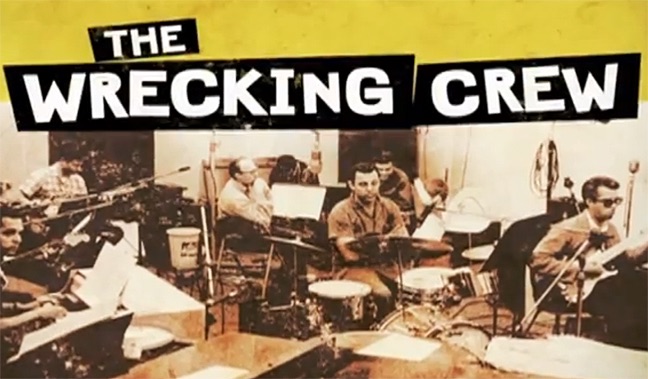
A significant portion of Love & Mercy is devoted to Brian Wilson’s production of The Beach Boys record “Pet Sounds.” Wilson enlists a room full of session musicians rather than the Beach Boys, who are utilized solely for vocals. The studio players were known as The Wrecking Crew, and it was from this group that the band found its replacement for Wilson on the road, Glen Campbell.

Denny Tedesco, the son of session guitarist Tommy Tedesco, has written and directed a fascinating documentary that chronicles the heyday of The Wrecking Crew, who played the music on a seemingly exhaustive list of pop records in the the 60s and 70s. Working from interviews of the players and the acts they backed, as well as home movies of his father, Tedesco provides great insight into the times as well as the life of a working musician.

The interviews are particularly fun. Roger McGuinn of The Byrds, who had been a session player himself, had to break it to the band that the rest of them wouldn’t be playing on their hit single “Mr. Tambourine Man” which didn’t go over well. As McGuinn recalls, The Byrds produced two tracks in three hours during the “Mr. Tambourine Man” session, while it took 77 takes to produce “Turn, Turn, Turn” which the band insisted on playing.

Tommy Tedesco tells the story of The Gary Lewis and the Playboys guitarist who confessed he could never play what Tedesco had played in studio on tour and always felt embarrassed when fans complimented his playing on the records.  Peter Tork of The Monkees tells a poignant story of the disappointment he felt when he was invited to come to the studio for the production of a Monkees tune only to learn that the invitation was solely as an observer.  On an up note, Mickey Dolenz reveals that the studio musicians taught him how to play the drums in preparation for his Monkees tour.

Obviously, the days of a small crew of players backing most of the pop radio play (and film and televisions tracks and radio and TV commercials) coming out of LA couldn’t last, but this is a blast of a documentary that also serves as a loving remembrance of the filmmaker for his father.