Archive

5 stars

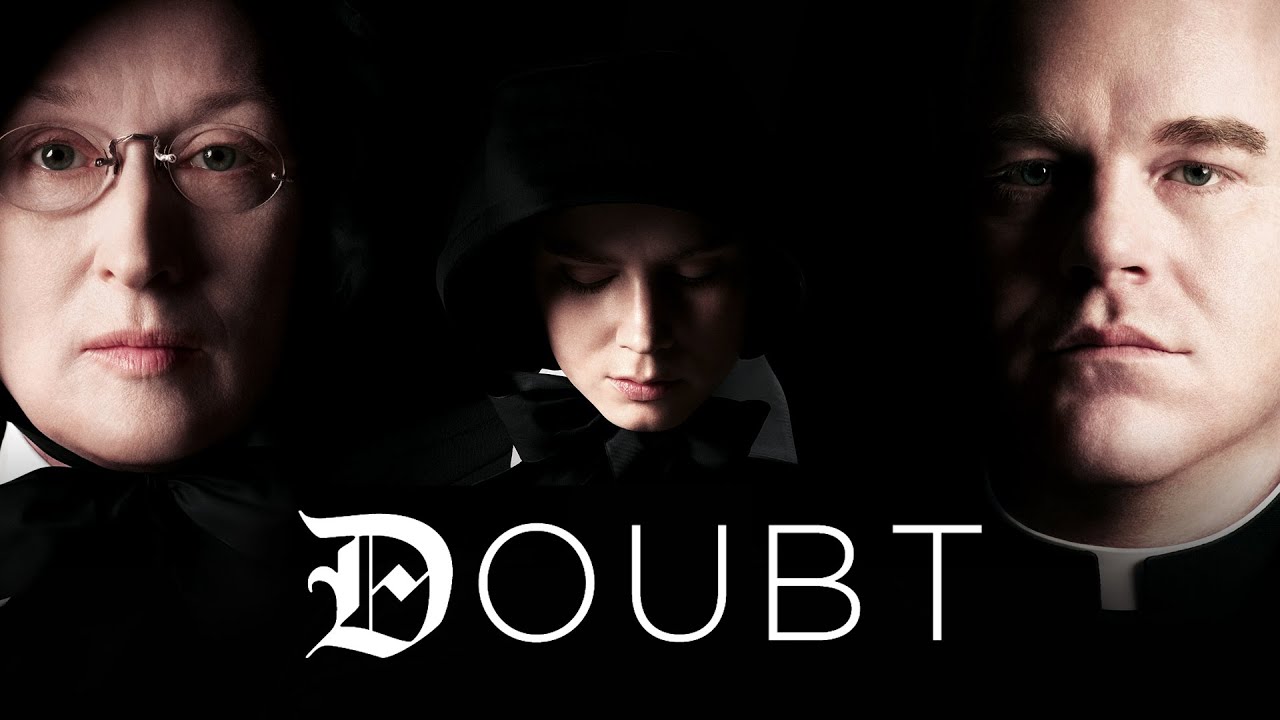
Doubt | Official Trailer (HD) - Amy Adams, Meryl Streep, Phllip Seymour  Hoffman | MIRAMAX

John Patrick Shanley adapted his stage play for the screen, both writing and directing, and as a product of Catholic schools born the year the picture is set, boy does he nail the look and feel. From the severity and sweetness of the nuns (the way they care for an older nun who is losing her sight is exactly how I saw nuns care for a clearly senile sister when I was in grade school) to the imbalanced hierarchy between nun and priest (servants to gods) to the design and feel of the Brooklyn grade school, cookie-cutter in many ways to my old Blessed Sacrament parish, it’s clear Shanley has been here.

Philip Seymour Hoffman, Meryl Streep and Amy Adams serve and teach at a Catholic grade school in the Bronx the year after the Kennedy assassination.  Hoffman is the “new church,” Adams is the young nun who wants to believe in his less strict methods, and Streep is the principal of the school, the resolute conservative hammer (her attack on “Frosty the Snowman” is worth the price of admission alone). A concern over Hoffman’s behavior toward an 8th grade boy, the only black kid in the school, drives the plot, but Shanley uses the crisis to have his characters exchange views on faith versus acts, modernity, religious liberalism, raising children and tolerance.  As someone who was schooled by nuns in 8 years of Catholic elementary school, and by the Jesuits in 4 years of high school, I came into the film with certain presumptions that were difficult to stow away. Some of my nuns appeared to loathe children, and one of my priests clearly behaved inappropriately (and it turns out, criminally) with students, but neither of these realities marred what was essentially a happy and more simple time of childhood. At the time, we knew this Jesuit was problematic and it strangely seemed just part of the deal, a simple hurdle or punchline (“Don’t let yourself be alone with Father Bradley” or “Christ. He’s in the locker room again””) You knew to steer a little clear, even if you weren’t really sure why. For ones who were vulnerable and thus not insulated by a casual, “he’s a little strange so watch yourself” attitude, however, Father Bradley was a more menacing and destructive force.  But he was also charismatic and he was impressive, much like the priest in this picture, adding to the lethality.

I offer my reminiscence because my background likely colored my judgment of the picture’s central conundrum, but the film is riveting no matter your background. All the principal actors are fantastic; there is not a time I see Hoffman and do not mourn his pointless and untimely demise.  And Viola Davis should have earned an Oscar for her one scene as the mother of the boy, putting her in the ranks with Beatrice Strait (Network), William Hurt (A History of Violence) and Judi Dench (Shakespeare in Love) for greatest impact in shortest screen time.
A gut-busting, literate comedy about the run-up to a fictitious war (clearly meant to be Iraq) and the involvement of US and British civil servants in the process, which includes vicious political jockeying, abusive message control, mendacious leaks, pettiness of the grandest of scales, and biting insults. Armando Iannucci’s script was rightly nominated and proved to be the forerunner to the hilarious HBO series, Veep.

In many ways,  it echoes the British The Office, with politics supplanting paper. The repartee’ is smart, crackling and hilarious.  The film is a series of verbal jousts, this one, on the eve of a critical U.N. vote, being my favorite (Of course, Malcolm Tucker – Peter Capaldi – is a personal hero):

Tom Hollander (Pirates of the Caribbean and scene stealing as King George in HBO’s John Adams) is brilliant as a British minister out-of-his-depth and made a pawn, and James Gandolfini, a you can see above, is also memorable as an American general trying to slow down a march to war.

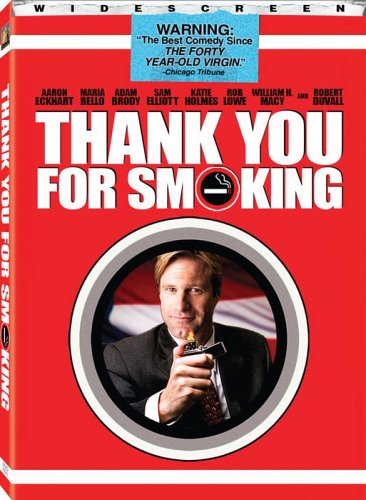
Amazon.com: Thank You for Smoking (Widescreen Edition): Aaron Eckhart,  Cameron Bright, Maria Bello, Joan Lunden, Eric Haberman, Mary Jo Smith,  Todd Louiso, Jeff Witzke, J.K. Simmons, Marianne Muellerleile, Alex Diaz,  Jordan Garrett,

The sharpest of satires.  Aaron Eckart is slick motormouth and p.r. flack Nick Naylor, a smooth and ingratiating shill for the tobacco industry. In his rise, fall, and semi-rise, the film’s message – think for yourself because there’s money and power in letting folks tell you what is good for you, be they corporate behemoths or self proclaimed protectors of the common good – is hilariously delivered. 

As Naylor struggles internally with selling death, the fight is not a one way dawning. It goes 15 rounds and the preening self-regard and power seeking of the do-gooders is contrasted with the soulless, rapacious greed of the baddies.  It’s a close run thing, and an enjoyable fight to watch.  

Indeed, this movie should be required viewing for every ex-hippie who now clamors to ensure that his or her child live a risk-free life, at the expense of everyone who might otherwise own a gun, light a smoke, have a drink, eat a transfat, shout an obscenity or injure budding self-esteem. 

I mean, we know the corporations are bad, as exemplified by my favorite line from the film, from the President of The Academy of Tobacco Studies (played by J.K. Simmons):  

We don’t sell Tic Tacs, we sell cigarettes. And they’re cool, available, and addictive.  The job is almost done for us.


24 Hour Party People quad poster.jpg

Michael Winterbottom’s time capsule sells itself as a rendering of the birth of the rave culture.  In fact, as the film’s protagonist – Manchester television personality and producer Tony Wilson – constantly informs us in fourth wall breaking break away chats and insights made directly to the camera, the film is about at least a half dozen things: Manchester itself, the rave culture, the birth of what I then-called the British moany-boy bands (Joy Division, New Order), punk, “selling out”, and the comforts of being the next big thing.

The picture has been reviewed in the following manner: “if you liked New Order, you’ll . . . “, as if enjoying the music is intrinsic to enjoying the picture.  Untrue. The picture is sharp and funny, regardless of whether you dig the music at its center (I never did).  Indeed, Winterbottom explicitly dispenses with the necessity of the bands being good.  With the constant wild Kurt Loderesque accolades to the bands (there are even two “geniuses”), Winterbottom is mocking the creation of mini-gods to fuel the gravy train.

Smartly filmed, sometimes gonzo, always electric, and all the performances – especially Steve Coogan’s Wilson (our self-interested cum true-believer-in-the-music guide) are tops.

Image result for LA Confidential

A byzantine noir potboiler set in post-war go-go America, rich in gangsters, drugs, sex and corruption, this is one of my favorite films and an excellent adaptation of James Ellroy’s classic novel.  I’m re-posting because I just noticed it is available streaming on Netflix.

Depth, pacing, and authenticity – the flick has it all.  The three main characters are rich and finely drawn.  LAPD Lt. Edmund Exley (Guy Pearce) is half ambition, a quarter condescension, and a quarter insecurity.  Anything he fears he must best, even destroy.  He fears fellow cop Bud White (Russell Crowe), who is outwardly all muscle and frontier justice.  So he testifies against White in a brutality scandal to have him kicked off the force.  White survives Exley’s testimony, but White’s partner does not, and thereafter, White seethes with hatred and desire for payback.  When they become entwined in the same investigation, a mass shotgun slaying which claims White’s disgraced partner, they clash, and yet, they are forced to work together.

Prior to formation of the uneasy alliance, White tries to tear Exley’s head off.  Their supervisor, Captain Dudley Smith (James Cromwell) intervenes in an exchange that typifies the dialogue:

DUDLEY SMITH: It’s best to stay away from the lad when his color is up.

ED EXLEY: His color is always up.

DUDLEY SMITH: Then perhaps you’d do well to stay away from him altogether.

A third detective, Jack Vincennes (Kevin Spacey), rounds out the trio.  I saw Spacey on Inside the Actors Studio and he said that he patterned Vincennes on Dean Martin in Rio Bravo.  It shows.  Spacey’s Vincennes alternately swaggers and hunches, bravado followed by just a little shame.  He’s corrupt, he’s good at being corrupt, and corruption has made life easy, but he is torn between the celebrity and easy cash and the guilt his choices have brought him.  In a film that is so sweeping, Spacey has little time to make the transition from crook to clean.  But he does it in a very brief scene, alone, at a bar, as he eyes a $50 bill (a payoff from the slimy editor of the scandal rag Hush, Hush, played by Danny Devito).  Spacey looks at the bill, sees his face in the mirror, places the bill on his shot, and leaves to do the right thing.  It’s a beautiful, economical moment.

Kim Basinger won the Supporting Actress Oscar as the high class prostitute who captivates Bud White, and while she’s sleek, sultry and affecting, every other major performance is better than her own and more deserving of accolade.

The care taken by director Curtis Hansen (who we sadly lost in 2016) is evident in every scene, be it a jail melee’, a triple interrogation, or a stunning shotgun shootout.   Hansen is straightforward and confident, and the picture positively hurtles but it never feels pell mell.  Save for some gentle interplay between Basinger and Crowe,  the movie is quick, sharp movement, punctuated by real or verbal violence.   It never, ever drags or becomes self-indulgent.  You love what you are seeing but want it to be over because you want to see more.

The film also oozes the L.A. of the time period. It feels right and looks better (for the opposite – a tacky, awful, ridiculous L.A. film –  see Mullholland Falls). 

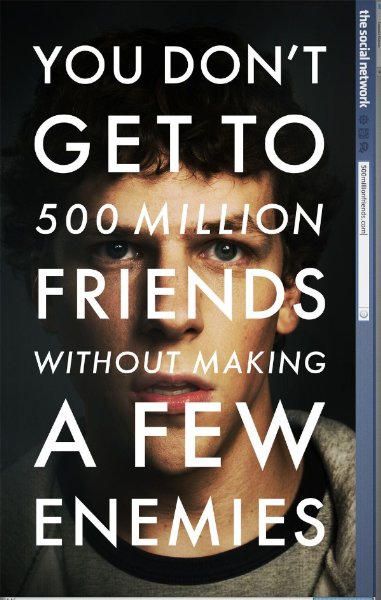
The Social Network Reviews - Metacritic

Brilliantly acted, expertly paced, endlessly fascinating, topical and armed with an Aaron Sorkin script shorn of the rat-a-tat cutesy, this film was by far and away the best picture of 2010, with a story that sucks you in immediately.  The protagonist, Mark Zuckerberg, is one you alternatively love and hate, but you always care about.  The loosely historical rise of Facebook in the setting of Harvard is about as fertile ground as you can find for a character rich story of treachery, honor and greed.  There is not a false note (save for the final scene, where a second year law associate tells Zuckerberg the score, but I niggle) or a stock character and your allegiances are constantly tested.

David Fincher, who last directed the masterpiece Zodiac, has made a masterful film.

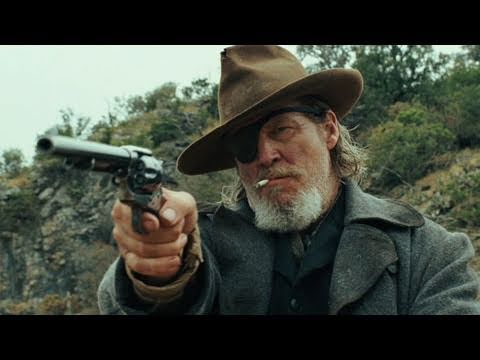
True Grit is really near-flawless, hewing very closely to the structure of the prior film.  Some folks may feel that John Wayne’s larger-than-life persona is a bit of a blot in the original, but I always liked his performance, as well as that of a novice actor, Glen Campbell.  For those folks, this film is an upgrade – Jeff Bridges and Matt Damon deliver deft performances that don’t suck the air out of a scene or distract.  This version also replaces many of the laughs for the “grit,” though, thankfully, it is not a dour, bloody replacement (the scenes of the 14 year old Mattie Ross negotiating her father’s affairs are very funny, as is the cross-examination of Rooster Cogburn).  It is also beautifully shot by the Coen brothers.

Finally, I always found Kim Darby annoyingly showy in the original, even though the film was good enough to minimize her excess.  A newcomer (Haley Stanfield) plays her role in the re-make, and she’s just the right mix of earnest, savvy and bitchy, a perfect companion for Bridges and Damon as they search for her father’s killer (Josh Brolin, who has a mere two scenes and almost steals the film).

Red Riding Trilogy (1974 1980 1983) : Movies & TV - Amazon.com

A British television production released theatrically in the U.S., the story is set against a backdrop of serial murders in the north of England, including the Yorkshire Ripper case. The investigation is covered in three installments: 1974, 1980 and 1983. Though the murders are the central focus, this is really a rich and gritty story about police corruption and the strain of the cases on the police and the community. I liken it to David Fincher’s masterpiece Zodiac. Brilliant.

J.C. Chandor (A Most Violent Year) gives us a taut, intelligent, crisp story of one NY investment house which realizes (credibly, at least for movie purposes) that the economic crash/conflagration of 2008 is not only going to happen, but it is happening, however subtly.  As a result, we get to see the reaction of and impact upon the firm’s silky Gordon Gekko-like chairman (Jeremy Irons); the executives who sold him on the mortgage-based investment policy that brought the firm to the brink of ruin (a harsh looking Demi Moore, made all the more brittle by her counterpart, the Dorian Grayish Simon Baker); the traders (Kevin Spacey, who I would say steals this movie except for the fact that Paul Bettany as his no. 2 is every bit as good); and the lower-level young risk analysts (Zachary Quinto and Penn Badgley) who reveal the threat and then serve as wide-eyed witnesses to the first rumblings of the financial earthquake.  The film never misses a beat as it propels the story (which unfolds in a 24 hour period) while offering great characters in an ensemble piece loaded with dialogue that is thoughtfully cynical but never showy.

Chandor’s byzantine world of finance is neither sexy or diabolical, and the cogs are just performing their jobs in a system whose caprice they often fail to understand.   As the trading floor manager, and the closest thing the film comes to a moral voice, Spacey sees the inevitability of the resolution but he cannot resist it; the system won’t let him.  There are no villains, and thankfully, no simplistic Oliver Stone-esque sermons.  The characters are the audience, and they, like us, do not lash themselves to the wheel as the ship goes down.  They survive, take stock and move on.

By far the best film of 2011.