Archive

Genre

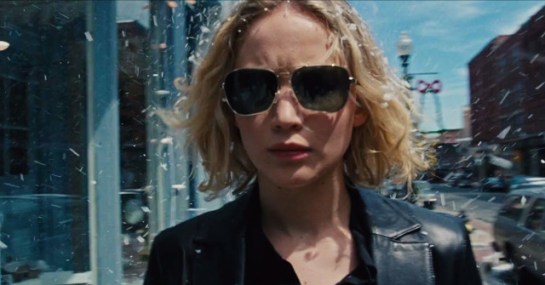
David O. Russell’s American Hustle was an over-heralded, stream-of-consciousness mess, but it was nominated for Best Picture, and I was a huge fan of Silver Linings Playbook, so the watching of Joy was obligatory. It was not an altogether unpleasant experience given Russell’s command of the camera and his early sense of pace. Russell briskly lntroduces us to Joy Mangano, a little girl and then a young woman destined for great things, if only she weren’t consistently thwarted by her lunatic family, a coterie of misfits and weirdos so peculiar they veer into Tim Burton territory. Still, with her one big idea – a self-wringing mop – she perseveres to become queen of The Home Shopping Network, though her journey is an exhausting “one step forward, two steps back” ordeal so arduous, even Jennifer Lawrence’s pluck and a kick ass Rolling Stones song (“Stray Cat Blues”) can’t make the resolution tolerable. One gets the sense Russell knows his audience is bored, because he appears to get bored, veering off into a resolution so off-kilter (Lawrence faces down her business foe in Texas, cutting her hair and donning leather, after reviewing some documents in a “Voila!” moment) it is laugh out loud funny.

Semi-compelling in its melding of the English countryside circa 1812 and brain-eating undead, this film has its moments.   In particular, Matthew Smith (an old Dr. Who) as Parson Collins and Lena Headey (Ceirse Lannister in Game of Thrones) as Lady Catherine de Bourgh get the joke, stealing every scene they are in with wink and nod mugging that acknowledges the levity of this venture. Unfortunately, the rest of the cast actually seems to be struggling with the delivery of Jane Austen in the middle of a zombie outbreak and choose to treat the latter as a catastrophe that demands some degree of solemnity. Worse, director Burr Steers finds it necessary to inject the tiresome physicality of a kung-fu movie, which is one ingredient too many for the stew. Still, this is pretty decent fun.

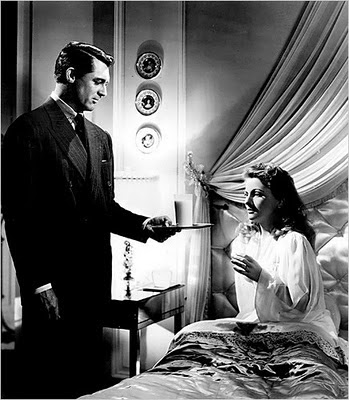
Image result for Suspicion Hitchcock

And those stars go to Alfred Hitchcock’s deft hand and Cary Grant’s irrepressible charm. Grant plays a society cad who gloms on to spinster Joan Fontaine, who impulsively marries him out of rebellion and passion. She soon learn Grant, charming though he may be, is a liar, a thief and a lay-about gambler, and his debts may be propelling him to more capital crimes. The essential tension, however, is wasted. The deck is so stacked against Grant that when he professes “it was all a misunderstanding”, you’re left disappointed at the expenditure of time and contemptuous of Fontaine, who just seems like a ninny. If Grant could not commit the capital crime, the studio sure did by insisting their star male lead could not play a wife murderer.

The film was nominated for Best Picture, Fontaine won Best Actress for her very delicate, frail but stagey performance which does not travel, and in an interview with Francois Truffaut, Hitchcock summed it up when he reported the actions of a producer who initially took every scene out that indicated Grant was a murderer, leaving a 55 minute product.

Anyone interested in Truffaut’s interviews with Hitchcock, enjoy.


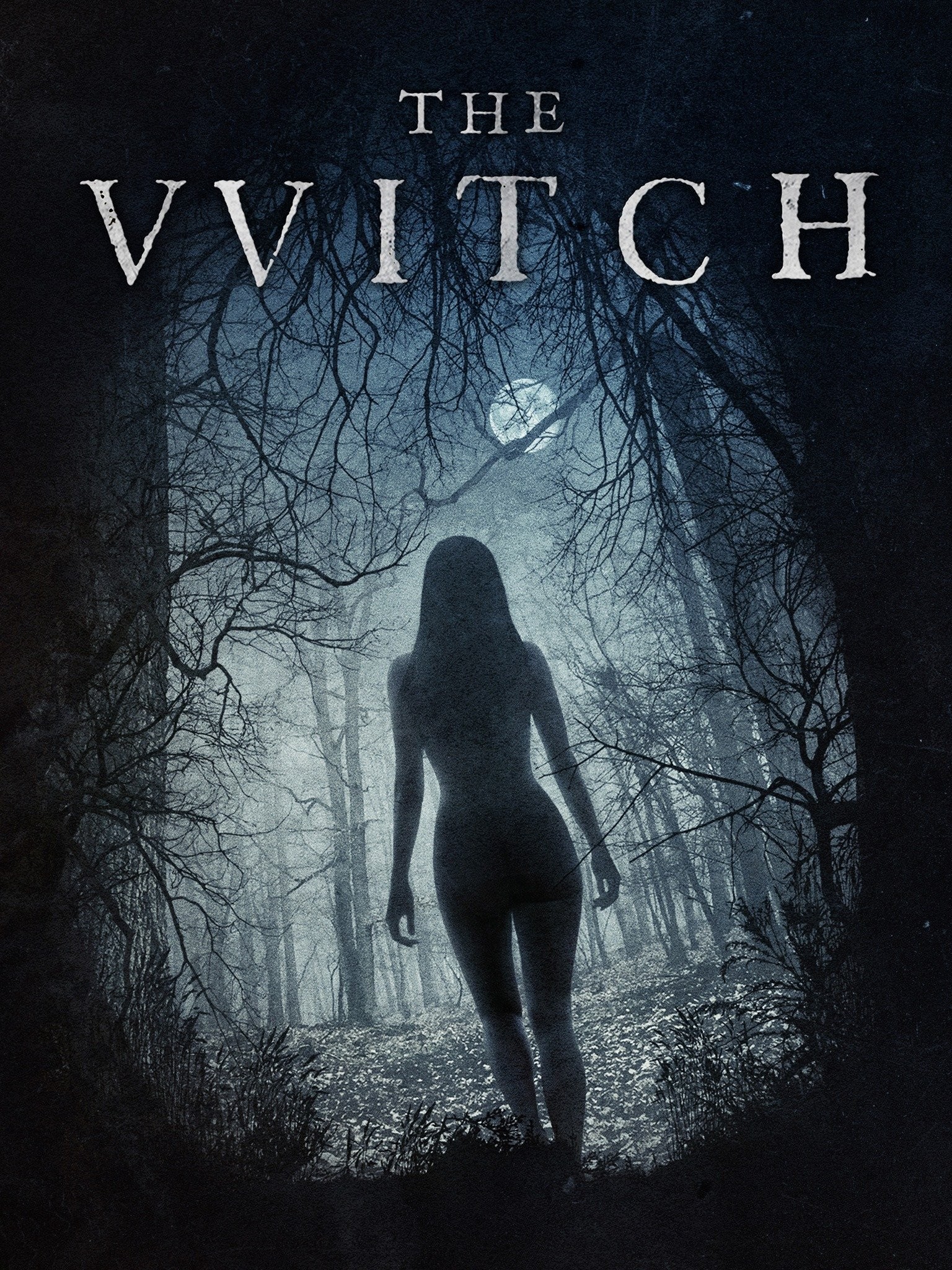
The Witch | Rotten Tomatoes

This is a consistently disturbing and terrifying film, one that explores myth, religion, and the dread of isolation in the cruel and unforgiving setting of pre-colonial America.  Writer-director Robert Eggers is a master of the creepy visual as he tracks a Puritan family, cast out from their community and into the wilderness on the strength of religious conviction. It is there, alone, that the bonds of their faith and family and the limits of their sanity are tested by the supernatural.

This film has a lot in common with The Babadook, invoking both curse, madness and the susceptibility of children, and like that film, there are moments of absolute horror that do not rely on a drop of shed blood.  If there is a weakness (and it is by no means universal, just one of personal taste), it is the simplicity of the threat. In The Witch, the threat is omnipotent and unexplained. It has no backstory, no articulated lore, and no vulnerability. As such, as assured as it presents, there is a decided lack of drama. We quickly learn these folks don’t stand a chance, and while their fate and story is loads more interesting than standard meat grinder fare, I just don’t have much of an interest when the deck is so stacked, no matter how skilled the effort.  Nonetheless, this movie has one of the spookiest feels of any I’ve seen.

Image result for Deadpool

It’s hard to decide on what was more enjoyable about Deadpool. There’s the ingenious flash-forward, flashback in story, which keeps the action fresh. There is also an intelligent self-referential trick; as Deadpool (Ryan Reynolds) is dragged to the estate of the X-Men, he asks “ “So, McAvoy or Stewart?”.  The back-and-forth between Reynolds – our hero, though he insists he is not – and the other characters is sharp and profane. The utter lack of seriousness, save for a very few poignant moments that are immediately deflated by the screenwriting equivalent of fart noises – is also a joy (indeed, Reynolds actually farts as he walks by his roommate, who, unbelievably, is a geriatric blind woman). There’s the 106 minute running time, juxtaposed nicely with the bloated, Shoah-like length of the interminable Avenger movies, which keeps things humming.

But I guess my favorite part is when Reynolds meets his love interest (Morena Baccarin) and we are educated as to the depth of their ardor via a montage of their incredibly kinky sex life, which incorporates days of commemoration. The image of Reynolds bound and on all fours as Baccarin prepares to “celebrate” International Women’s Day with him is hilarious, made more so by the image of parents quickly hustling their children out of a theater they lazily thought was showing children’s fare

Image result for shotgun stories

Anyone who watches movies knows that some of the greatest offerings of falsity come in the package of authenticity, and this is never more so than when a filmmaker takes his shot at rural or back home America. The pitfalls are many, and invariably, films about the small town succumb to oppressive nostalgia (Hoosiers), salt-of-the-earth worship (Promised Land), the presence of an impossibly attractive lead as he or she slums (Mel Gibson in The River, George Clooney in The Perfect Storm), cutesy “we’re jes’ folks” condescension (Passion Fish), amped up mythology (Out of the Furnace) or just plain old moronic messages, like money doesn’t buy happiness or home is where the heart is or safe sex is the best sex.

There are exceptions (Billy Bob Thornton’s Sling Blade, Carl Franklin’s One False Move, Debra Granik’s Winter’s Bone), but they are rare and they are not current. In Mud, Take Shelter, and this film, a story about two modern Arkansas families drawn into a violent confrontation upon the death of their shared patriarch, writer-director Jeff Nichols cements that he can translate the patterns, pace and feel of the small town like no other. The actors portraying the family members are natural and unburdened by archetype, and the town itself is not presented to you as a metaphor or cautionary tale, just a town.

What Nichols does with actors and setting he achieves with tone. The families are seemingly in as safe a place as you can be, but when their animosities surface, their very environment becomes foreboding, and the pressure mounts accordingly. As the calamities befall them, there are no revelations or Hollywood speeches or screenwriter dot-connecting. Nichols is content to let you be the judge of what it all means.

This was Echol’s first film, and that may explain its brevity (about 90 minutes). The result is some backstory that is a tad rushed, but nonetheless, this is a gripping, thoughtful picture.

image

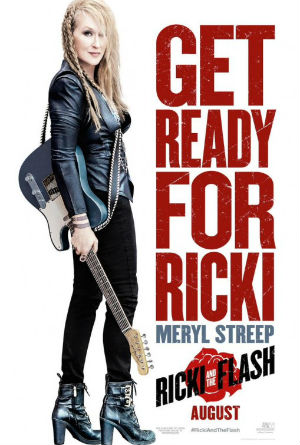
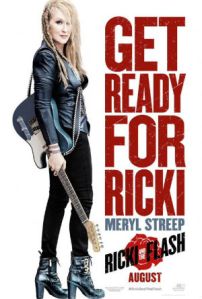
Screenwriter Diablo Cody made a big splash with the clever Juno, and showed real growth with the acid Young Adult. But that was a while ago.  This trite stinker, in the mold of so many dramadies about the travails of rich families as they negotiate the perilous path of monied suburbia, is a massive step backwards.

Cody offers Ricki, a talentless front woman for a cover band who has come home to her estranged, affluent ex-husband and adult children after a long hiatus.  She chews with her mouth open, says dirty words, and attends a family wedding.

But hey, it’s Meryl Streep, so we’re okay, right?

Right?

Wrong.  Streep is just terrible, whether slumming as the hip cast-off or leading the worst bar band ever. She’s in-authentically grungy and gratuitously down-to-earth and when she visits her erstwhile family, led by the kind ex-husband (Kevin Kline), it is cringe-inducing, not because of the fish-out-of-water stuff (this is the kind of movie where the denizens of the tony enclave practically say, “Well, I never!”), but because there’s not a word of it that feels real.  There is no way Streep’s character would even be a distant cousin to these people, much less the former matriarch.

Kline has, of course, remarried a protective earth mother type who raised the abandoned children while Ricki honed her craft covering Tom Petty.  Others who Ricki abandoned include a nice son about to get married to the most stuck-up bitch imaginable; a fragile daughter who has had a breakdown because her marriage of three seconds failed (you’d think she’d been a captive of Boko Haram, so extreme is her distress); and a son straight out of gay central casting (he is furious because Ricki called his gayness a phase and voted for W . . . twice!)

All of which would be humdrum but bearable twaddle save for the fact that Ricki and her shit band play about 7 numbers in this picture, including a version of Wooly Boolie so bad we could have won the war on terror years ago had it been utilized at Guantanamo.

Worse, Ricki’s version of Springsteen’s My Love Will Not Let You Down starts more like a Quarterflash tune and ends with your head in a bucket.

After August: Osage County and this, I am not saying Streep is at that Pacino point, where she thinks she can just fart in a bottle and call it potpourri.

But she’s veering to the off ramp.

Least likely sentence I ever expected to write?  Rick Springfield, who plays the lead guitarist for the Flash and Ricki’s love interest, deserved better.

 

image

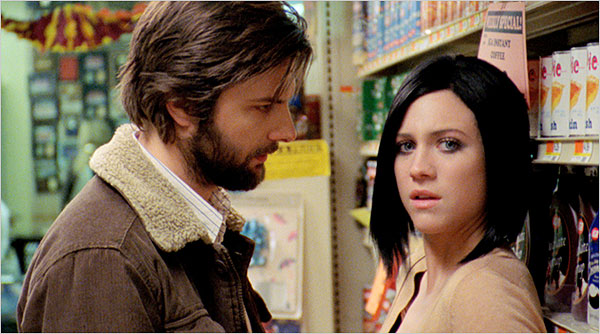
In the vein of “awful people who became awful because they suffered childhood trauma” family drama movies, this one is not half bad. That’s mainly due to Adam Scott, who is one of the more versatile and under-appreciated actors working today.  Scott plays the damaged, stuck in the hometown older brother who picks up his younger brother and the brother’s girlfriend from college and proceeds to fall in love with the latter. Scott is a depressive, an alternately cruel and then apologetic anti-hero, who maligns the girlfriend as a whore who will hurt his naive little brother. The problem is that she succumbs to his damaged entreaties, thus partially cementing his earlier uncharitable appraisal.

There is the obligatory childhood trauma and the big reveal, and it could all be so pat, except for Scott’s ability to communicate real suffering and writer-director Lee Toland Krieger’s insistence on taking these characters seriously instead of using them as charming archetypes to condescend to the audience. More to the credit, there is no wrap-up or deeper understanding. It starts messy and ends up hopeful but still messy, which is commendable.

There are problems.  The hometown is overpopulated by distinctive characters, the father (J.K. Simmons) is too seminal to be so underdeveloped and the hipster soundtrack is now so obligatory it borders on self-parody.  Still, a worthwhile watch on a rainy Saturday.  Thanks, Xmastime.

image

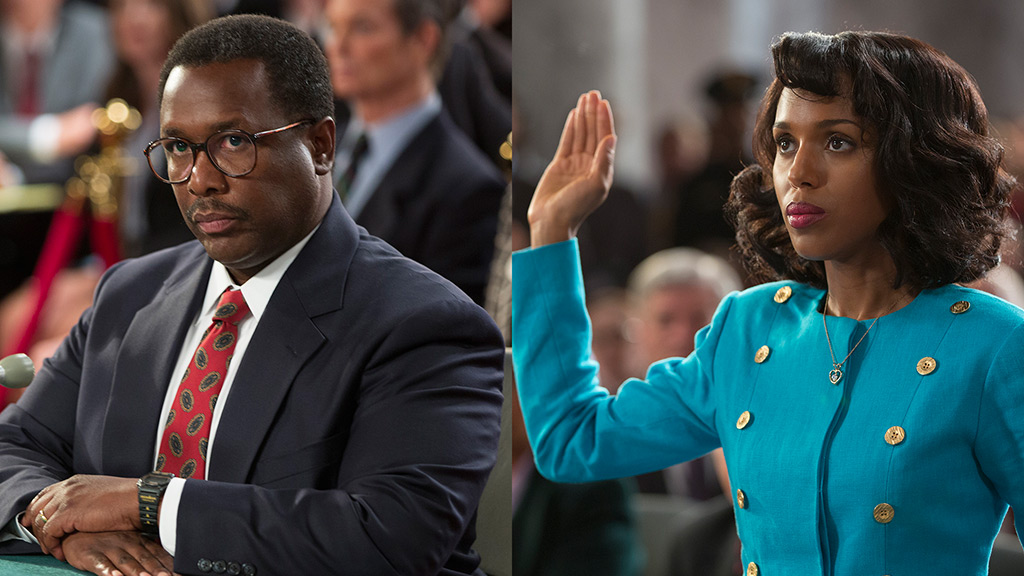
Execrable.  Anita Hill as Jesus Christ, Clarence Thomas as Impenetrable Sphinx, the story so stacked in her favor it’s a liberal wet dream. Then, there is this laughable coda where the hard charging female Kennedy aide says to the more judicious female Biden aide, “who’d you believe, him or her?” like any response other than “her” was possible given the hagiography that preceded the exchange.

Not only is the mythology laughable (apparently, Anita Hill will be replacing someone on currency sooner than we think), but the presentation is lackluster and vanilla.  It’s not Kerry Washington’s fault that Hill is so dull.  She’s written as nothing more than a platitudinous victim, and her emotional response to any given development is a self-pitying, dew-eyed disappointment in how mankind has failed her.  Wendell Pierce’s Thomas is no better, occasionally rising above catatonic, always in the corner, ruminating, obsessing, zzzzzzzzzzz.  The Democrats are hands-tied, decent truth-seekers, the Republicans hysterical street brawlers, not a scene surprising or enlightening.

It’s a shame.  The story of Hill and Thomas is, in the seams, the story of two people who worked together, she relied on him for advancement, but clearly developed a grudge at some point.  He said some Long Dong Silver shit to her, and then she, for whatever reason, took her shot at him on the eve of his confirmation, with the naively hopeful guarantee of anonymity.

And then wham!  She’s outed (a mere anonymous statement will not stop the Hope from Pinpoint, Georgia) and the process takes them both to places they never imagined they’d be, where he must play a hard race card against a cheap smear, and she must feign dramatic victimhood.  Their champions bloody and bruise the protagonists.

She tried a back alley stilleto and it wasn’t enough. He replied with a daylight, streetfront 2×4 and overcame.  They both became emblems of something larger, which, given the picayune roots of their antagonism, is the essence of the tragicomic.

Could have been a great movie.

image

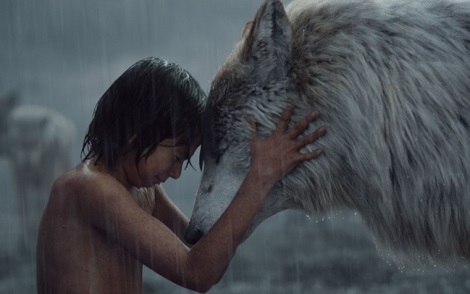
This is a technological wonder and a beautiful rendition of its much cheerier animated predecessor. The insertion of a human in director Jon Favreau’s lush and crisp CGI jungle is a riveting juxtaposition, and the technology is presented as a window, not a club. The young actor playing Mowgli (Neel Sethi), the man cub of Rudyard Kipling’s stories, communicates emotional involvement in what must have been a difficult job talking at a green screen. He is not precocious nor is he showy.  He’s pitch perfect.

Moreover, the voice work of Ben Kingsley, Idris Elba, Christopher Walken, Bill Murray and Lupita Nyongo is nuanced and rich; they convey a children’s story with a seriousness and gravitas that doesn’t demean their audience. The film is also thematically mature. The jungle is a brutal place and the humanization of its denizens does not white out its dangers or its essence. Mowgli is a threat, and his presence is a danger to the animals, but there is also connection and love.

For every technological Oscar, you can fill out your ballot now. It’s should also be a shoo-in for a best picture nod.