Archive

Crime/Mystery

Public Enemies: America's Greatest Crime Wave and the Birth of the ...

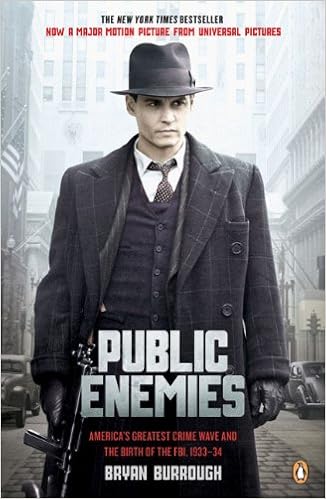
I watched 40 minutes, which was 40 minutes too much.  Michael Mann’s last picture – Miami Vice – was bad in exactly the same way Public Enemies is bad – all mood and cool, beautifully photographed, and as interesting as a super model on a talk show.  Within 20 minutes, we learn all we would ever learn about our lead, John Dillinger (Johnny Depp).  He is cooly attractive, wear a suit well, lives for the moment and . . . he is cooly attractive.

Moll: What do you want?

John Dillinger: Everything. Right now.

Blech.

23 Things We Learned From the 'Road to Perdition' Commentary

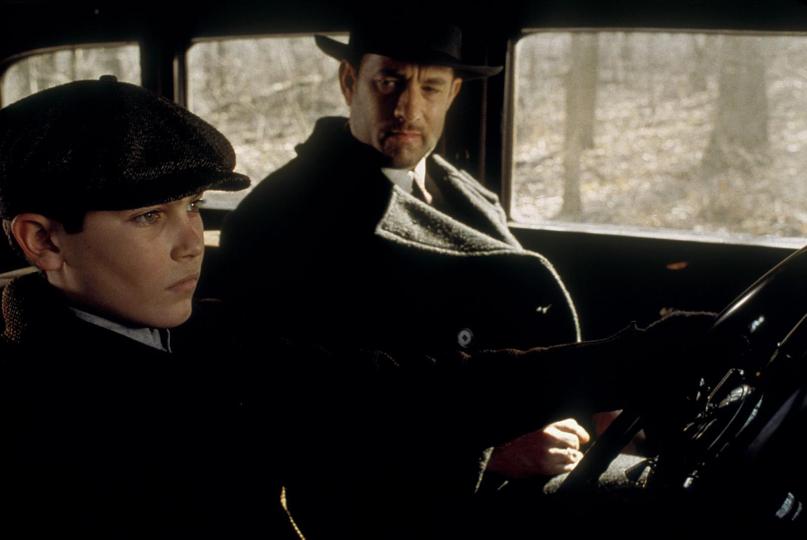
Sam Mendes’ follow-up to the overpraised American Beauty almost survives the miscasting of Tom Hanks, the overacting of Jude Law, an at-times leaden script, and an unhealthy preoccupation with slow visuals.  With all of that, Road to Perdition is also a beautiful movie graced by some very smart, substantial performances by Paul Newman (his last big screen role) and Stanley Tucci as mobsters working in the same organization.  Thomas Newman’s haunting score is perfect for the material, and the set design, art direction, costumes and cinematography recreating the Depression-era Midwest are impeccable.

But a film about fathers and sons cannot survive a child actor who does not resonate.  The actor playing Hanks’ son is not awful but he’s not very good either.  As our narrator, he simply doesn’t register, and as the guide to the life of his father (mob enforcer but family man Michael Sullivan, played by Hanks), this cannot do. Indeed, the last line of the film is “He was my father.”

It didn’t really seem like it.

Hanks is also problematic. His character is a bit like Eastwood’s William Munny in Unforgiven.  He is supposed to have demons.  The way Sullivan is played by Hanks, however, is as more of an automaton.  When things are going well, Hanks seems grimly fine with family and pot roast and a solid 9 to 5 job committing violence on behalf of his boss and father-figure (Newman).  When things go poorly, you get the sense Hanks doesn’t really have much to reassess.  He just seems sad that the easy 9 to 5 gig is up (and up in a rather cruel manner).  When he does soften, it seems too easy, like a swell guy has been just beneath that hard surface all along. The role is a lily-pad to a villain, but Hanks drowns on it.

And can Hollywood please take the “powerful and honorable man driven to treachery by his weak issue” trope out back and put it down with a bullet?  The weak son here – Daniel Craig – is entertainingly rotten, but God, I’ve had enough!

Hanks does have some moments, such as his meeting with an amused Tucci, where he tries to offer his services in return for permission to exact revenge on his old employers.  But overall, I don’t think he was the right call.  Bruce Willis may have been a more apt choice.  Certainly Ed Harris.  The best choice would have been Chris Cooper.

Still, there is enough good in here to watch.

Amazon.com: Murder By Numbers [VHS]: Sandra Bullock, Ben Chaplin, Ryan  Gosling, Michael Pitt (II), Agnes Bruckner, Chris Penn, R.D. Call, Tom  Verica, Janni Brenn, John Vickery, Michael Canavan, Krista Carpenter, Neal  Matarazzo,

Awful. The protagonist is a hardened, take-no-crap bitter homicide detective with ghosts in the past and a skeleton in the closet. This detective fucks hard and then kicks you out of bed so you don’t get too close. Voices haunt this detective. This detective is a pro, hardened by the massive homicide rate of a California coastal town in San Benito County, California. This detective has seen it all.

This detective is played unconvincingly by professional pixie Sandra Bullock.

The next Jack Ryan may as well be David Hyde Pierce.

Grizzled ole’ Sandra has to deal with two Leopold and Loeb wannabes (Ryan Gosling and Michael Pitt) who fail the Leopold and Loeb movie prerequisites of being either 1) smart or 2) cool under fire. The plot is a senseless mush of hackneyed stew, and Bullock is humiliated by being given a discordant tough gal role, only to be pushed around time after time after time by one of these high school punks.

Worse, she gets attacked severely by . . . a monkey.

You really have to see it, but I recommend that you do not.

Image result for LA Confidential

A byzantine noir potboiler set in post-war go-go America, rich in gangsters, drugs, sex and corruption, this is one of my favorite films and an excellent adaptation of James Ellroy’s classic novel.  I’m re-posting because I just noticed it is available streaming on Netflix.

Depth, pacing, and authenticity – the flick has it all.  The three main characters are rich and finely drawn.  LAPD Lt. Edmund Exley (Guy Pearce) is half ambition, a quarter condescension, and a quarter insecurity.  Anything he fears he must best, even destroy.  He fears fellow cop Bud White (Russell Crowe), who is outwardly all muscle and frontier justice.  So he testifies against White in a brutality scandal to have him kicked off the force.  White survives Exley’s testimony, but White’s partner does not, and thereafter, White seethes with hatred and desire for payback.  When they become entwined in the same investigation, a mass shotgun slaying which claims White’s disgraced partner, they clash, and yet, they are forced to work together.

Prior to formation of the uneasy alliance, White tries to tear Exley’s head off.  Their supervisor, Captain Dudley Smith (James Cromwell) intervenes in an exchange that typifies the dialogue:

DUDLEY SMITH: It’s best to stay away from the lad when his color is up.

ED EXLEY: His color is always up.

DUDLEY SMITH: Then perhaps you’d do well to stay away from him altogether.

A third detective, Jack Vincennes (Kevin Spacey), rounds out the trio.  I saw Spacey on Inside the Actors Studio and he said that he patterned Vincennes on Dean Martin in Rio Bravo.  It shows.  Spacey’s Vincennes alternately swaggers and hunches, bravado followed by just a little shame.  He’s corrupt, he’s good at being corrupt, and corruption has made life easy, but he is torn between the celebrity and easy cash and the guilt his choices have brought him.  In a film that is so sweeping, Spacey has little time to make the transition from crook to clean.  But he does it in a very brief scene, alone, at a bar, as he eyes a $50 bill (a payoff from the slimy editor of the scandal rag Hush, Hush, played by Danny Devito).  Spacey looks at the bill, sees his face in the mirror, places the bill on his shot, and leaves to do the right thing.  It’s a beautiful, economical moment.

Kim Basinger won the Supporting Actress Oscar as the high class prostitute who captivates Bud White, and while she’s sleek, sultry and affecting, every other major performance is better than her own and more deserving of accolade.

The care taken by director Curtis Hansen (who we sadly lost in 2016) is evident in every scene, be it a jail melee’, a triple interrogation, or a stunning shotgun shootout.   Hansen is straightforward and confident, and the picture positively hurtles but it never feels pell mell.  Save for some gentle interplay between Basinger and Crowe,  the movie is quick, sharp movement, punctuated by real or verbal violence.   It never, ever drags or becomes self-indulgent.  You love what you are seeing but want it to be over because you want to see more.

The film also oozes the L.A. of the time period. It feels right and looks better (for the opposite – a tacky, awful, ridiculous L.A. film –  see Mullholland Falls). 

I picked up The American mainly because it starred George Clooney and he had a gun in his hand on the DVD cover. So, on me.

There is a lot wrong here.  Foremost is Clooney, miscast as an emotionally detached killer-sort. Steve McQueen, sure. But not Clooney, who mistakes emotionally detached with catatonic.

He plays a killer and/or facilitator for killers who has to hide out in the most picturesque town in Italy.  There, he demonstrates that he is a spartan and a loner, because, well, he is alone, has no pictures in his apartment and does a fair amount of sit-ups and push-ups. Of course, he strikes up a friendship with a priest, who pushes him a little morally, and a prostitute, who, given how attractive she is, should charge $50,000 a roll.

George a gent for Violante sex – The Sun

And, yes, he decides it is time to “get out.”

The film is overbearingly serious, and chock full of tropes, like, oh, he kissed a prostitute on the mouth and went down on her = love.  And then he was in a shoot-out and won, and got in the car, and . . . is that blood?  Oh my God!  He was so in shock and it was all so crazy, he didn’t even know he’d been shot in the gut until he was driving a a mile out of town.

This guy is really . . . detached.

And “they” won’t let him “out.” Why?  Unsaid, unexplained. Apparently, it’s enough to say “I’m out” and then some really serious French dude makes arrangements for you to be offed.

I wish I could have gotten out too. But no.

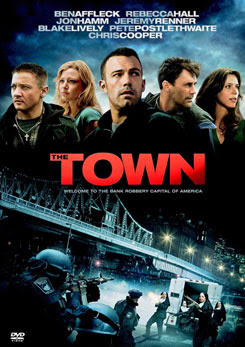
Ben Affleck’s follow-up to Gone Baby Gone finds him sticking with his roots, again setting the film in a desolate part of Boston. But there is nothing to heavy here, just a crackling, straightforward crime caper, part Heat and part The Departed, with a few nice twists, solid performances and Don Draper as the dogged FBI agent on the trail of a Boston robbery squad. No great shakes, but efficient, smooth and entertaining. Best, Affleck smartly plays the lead as monochromatic, keeping his lifting to a minimum.  Bonus:  Blake Lively plays trashy and she carries it off!

Red Riding Trilogy (1974 1980 1983) : Movies & TV - Amazon.com

A British television production released theatrically in the U.S., the story is set against a backdrop of serial murders in the north of England, including the Yorkshire Ripper case. The investigation is covered in three installments: 1974, 1980 and 1983. Though the murders are the central focus, this is really a rich and gritty story about police corruption and the strain of the cases on the police and the community. I liken it to David Fincher’s masterpiece Zodiac. Brilliant.

George Clooney took his run at McQueen in last years’ dull, arty The American. At least Clooney was old enough to play a weathered “man-with-no-name” zombie. This year, it is Ryan Gosling’s turn in Drive.

Dull, arty and ridiculous, the addition of a grating soundtrack, gratuitous and utterly pointless violence, and Gosling, who has sublimated his personality to play an automaton.

You see, he drives.

For a minute, one wonders if he is the lethal, charmless version of Dustin Hoffman in Rain Man.

No such luck.

The film is also marred by plot twists that make no sense. For example, a professional killer stalking Gosling in an elevator allows our hero to give his gal a loving, long kiss, during which he could have stabbed Gosling in the back.  As a result of his inexplicably polite waiting, he gets his head stomped into a bloody pulp.  Later, Gosling chases a career criminal onto the beach, said criminal being strangely unarmed, and then, said criminal  attempts to escape — by sea.

Mix in scenes chosen for the picturesque, Brian Cranston phoning it in as the old codger who gets Gosling “in too deep”, and Albert Brooks as an offbeat heavy, and the entire endeavor seems forced and inauthentically hip.

I love small crime movies, particularly moody and elegant ones like Layer Cake or The Limey or The Way of the Gun or Sexy Beast.

Drive isn’t a third of any of those films.