Archive

Crime/Mystery

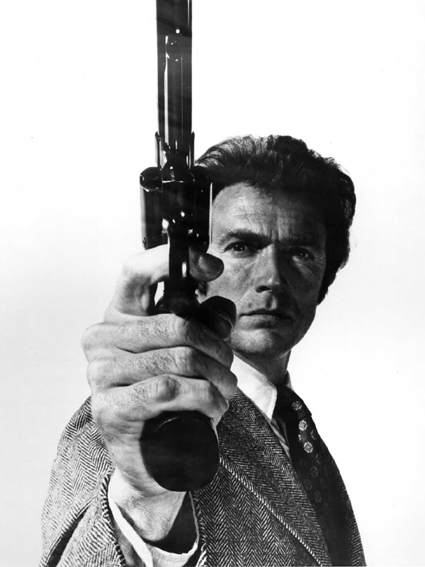
Harry Callahan (Clint Eastwood) is a no-nonsense detective in 1970s San Francisco, where the political correctness is thick, Miranda-warning era sensitized bureaucrats rule, and crooks are coddled (every thug in Dirty Harry has the sneering, arrogance of a punk who knows that the law is on his side). The baddest guy in a sea of bad guys is the film’s facsimile of the Zodiac Killer, a vicious beatnik with Woodstock hair, an army fatigue jacket and a peace symbol on his belt buckle. Callahan is called in to help with the case.  He is immediately accosted by the D.A. for his excessive brutality.

District Attorney Rothko: You’re lucky I’m not indicting you for assault with intent to commit murder.

Callahan: What?

District Attorney Rothko: Where the hell does it say that you’ve got a right to kick down doors, torture suspects, deny medical attention and legal counsel? Where have you been? Does Escobedo ring a bell? Miranda? I mean, you must have heard of the Fourth Amendment. What I’m saying is that man had rights.

Harry Callahan: Well, I’m all broken up over that man’s rights!

In fighting with the mayor – who wants to give in to the killer’s demands – Callahan is blunt and dismissive.

Mayor: I don’t want any more trouble like you had last year in the Fillmore district. Understand? That’s my policy.

Harry: Yeah, well, when an adult male is chasing a female with intent to commit rape, I shoot the bastard. That’s my policy.

Mayor: Intent? How did you establish that?

Harry: Well a naked man is chasing a woman through an alley with a butcher’s knife and a hard-on, I figure he isn’t out collecting for the Red Cross.

Even in his ultimate scene, where he mocks one of three hold-up men, Callahan embodies the rugged conservative fantasy of turned-tables and frontier justice.

Harry: Ah Ah, I know what you’re thinking. Did he fire six shots or only five? Well, to tell you the truth, in all this excitement, I’ve kinda lost track myself. But being as this is a .44 Magnum, the most powerful handgun in the world, and would blow your head clean off, you’ve got to ask yourself one question: ‘Do I feel lucky?’ Well, do ya punk?

Punk. He’s a punk. Not a suspect. Not a person. Not a downtrodden, misunderstood product of an uncaring society.

Paul Newman was offered the film, but legend has it he was nervous about its politics, and suggested Eastwood for the part. Great suggestion. Eastwood has commented on Dirty Harry that “It’s not about a man who stands for violence, it’s about a man who can’t understand society tolerating violence.” Pauline Kael called the film “fascist.” This is, however, the same Pauline Kael who was stunned when McGovern lost in 1972, saying “I live in a rather special world. I only know one person who voted for Nixon.”

Politics aside, this is an excellent picture. Eastwood is mythic, the story moves, the San Francisco locale is used to great advantage, and the killer is truly frightening.

Image result for reservoir dogs

\Quentin Tarantino’s debut picture has weaknesses, and it is in some ways showing its age, but many of the things that are good about it remain very good. The dialogue remains vivid, fetishizing pop-culture via tough guy patter. The conversations are irresistible, trading in on the vulgar, racist, homophobic pitch-and-catch of the red-blooded American male killer. Tarantino’s explanation of “Like a Virgin” (“It’s all about this cooze who’s a regular fuck machine, I’m talking morning, day, night, afternoon, dick, dick, dick, dick, dick, dick, dick, dick, dick”); Steve Buscemi’s theory on tipping; the back-and-forth “he’s trying to fuck me in front of my Daddy” between Chris Penn and Michael Madsen – it all crackles.

The machismo is undercut, however, when they get their aliases:

MR. PINK
Why am I Mr. Pink?

JOE
Because you’re a faggot, all right?

(Mr Brown laughs, Mr Blonde smiles)

MR. PINK
Why can’t we pick our own colors?

JOE
No way, no way. Tried it once, it doesn’t work. You get four guys all fighting over who’s gonna be Mr. Black. But they don’t know each other, so nobody wants to back down. No way, I pick. You’re Mr. Pink. Be thankful you’re not Mr. Yellow.

MR. BROWN
Yeah, but Mr. Brown, that’s a little too close to Mr. Shit.

MR. PINK
Mr. Pink sounds like Mr. Pussy. How about if i’m Mr. Purple? That sounds good to me. I’ll be Mr. Purple.

JOE
You’re not Mr. Purple. Some guy on some other job is Mr. Purple. You’re Mr. Pink.

MR. WHITE
Who cares what your name is?

MR. PINK
Yeah, that’s easy for you to say. You’re Mr. White. You have a cool sounding name. All right look, if it’s no big deal to be Mr. Pink, you wanna trade?

JOE
Hey, nobody’s trading with anybody. This ain’t a goddamn fucking city council meeting, you know. Now listen up, Mr. Pink. There’s two ways you can go on this job– my way or the highway. Now what’s it going to be, Mr. Pink?

MR. PINK
Jesus christ. Fucking forget about it. It’s beneath me. I’m Mr. Pink. Let’s move on.

The dialogue is even given its own soundtrack; Steven Wright’s droning as the “Super Sounds of the 70s” dee jay is our comic relief.

Until Gerry Rafferty’s “Stuck in the Middle With You” accompanying a torture becomes one of the scarier songs ever.

Tarantino also does so much with very little. No big action sequences. No big money.  Economical and still impressive.

Two things I didn’t like about the film. First,

You’re not to make a move till Joe Cabot shows up. I was sent in to get him. All right? Now you heard me. They said he’s on his way. Don’t pussy out on me now, Marvin. We’re just going to sit here and bleed till Joe Cabot sticks his fucking head through that door.

The idea that the cops are parked around the corner a block away waiting for mastermind Joe Cabot while two of their own are in the place as hostages (one actually dying, one being mutilated) is absurd.

Second, Tim Roth was bad. He was fighting his accent and he lost. I never bought him. Still don’t.

Image result for Big bad mama

Five things recommend this film.

1) Angie Dickinson is both beautiful and naked in the picture. First, with a very young Tom Skerritt and next–

2) with William Shatner, who is also semi-naked in the picture, which significantly detracts from Dickinson being naked.

3) Angie Dickinson is one helluva woman.

4) It is an exploitation, low-budget picture that tried to be period (1930s Texas).  It is worth the rental alone to watch the modern 70s pop up in the 1930s.

5) This is Steve Carver work. Lone Wolf McQuade? Yes. That Steve Carver.

If you’re in a hurry, Dickinson’s naked scenes are about halfway through (it’s only 83 minutes).

P.S.  I saw this picture when I was 12 or 13 at my father’s apartment (he had the earliest version of cable-ready movies, which would show “racy” movies on weekend nights, so when we’d be at his apartment for the weekend, and he’d gone out, me and my brother got to see Russ Meyer movies, or movies with a naked Police Woman, from Big Bad Mama to Pretty Maids All in a Row, or Jacqueline Bisset in Secrets).  So, there’s that.

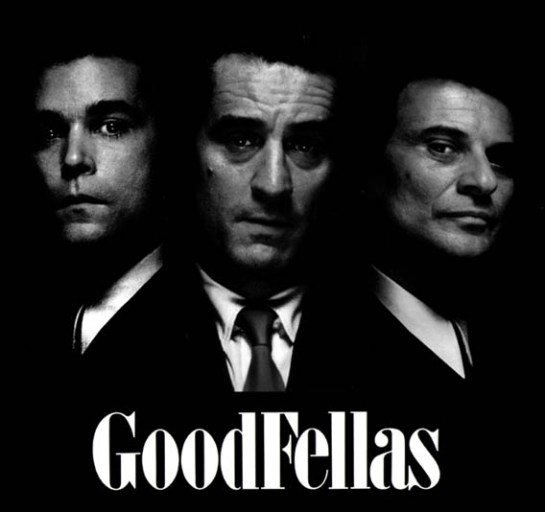
This movie is so good that AFI’s ranking of 94 is an embarrasment (Forrest Gump is rated almost 20 slots higher). From the moment of Ray Liotta’s first voice-over line (I don’t think there is more effective voice-over work in any film ever) to the maniacal, miserable fall, Scorsese chronicles the mob as fantasy to the crime as reality from Liotta’s boyhood to Witness Protection schlub. In re-viewing, here are my thoughts on what makes Goodfellas the greatest crime picture ever made.

The camera-work. The sheer audacity of Scorcese’s tracking shots make their counterparts in The Player and Boogie Nights seem gimmicky.  Scorcese goes on without an edit, not as flourish, but to introduce the cast of mob characters and their life  The uninterrupted trip of Liotta getting into a nightclub speaks volumes about the life – the excitement of his date (Lorraine Bracco) as they are being guided to the best table in the house is shared by the audience.  As we take the trip with Bracco, we are introduced to the glitz during a seemless dreamy waltz.  This is the difference between Spike Lee silliness (floating characters) and skill with purpose.

The Feel.  It looks and sounds right in every respect, from the kitschy Tiki bars to the outlandishly tacky apartments and home to the ghastly look of the mobster wives to the diners and late night drives.   Better, Scorsese, as always, picks the right song for each trip.

Liotta, Pesci and DeNiro, especially Pesci. Liotta, like us, is the outsider, though he is effortlessly conscripted.  Still, he plays Henry Hill as a shade removed from the crazy of DeNiro and Pesci.  He’s a brute but he is not an innate killer.  Thus we are capable of remaining empathetic.  Robert De Niro also keeps vestiges of humanity, though in fact, he is only one notch below Joe Pesci in terms of sociopathy. Pesci, however, is the most honest character and the heart of the picture.  He is a killer, his code is barbaric and his emotions uncontrolled. Which means that he can beat you near to death and comfortably have a meal right after.

Authenticity. The best example of this is not in the look or the sets or the music, but rather, in Scorcese’s portrayal of the easy violence, which one assumes he knows from his roots and/or from working with writer and former Mafia journalist Nicholas Pileggi. No better example is when Pesci comes back to kill the “made” guy (Scorsese and The Sopranos regular Frank Vincent) for busting his balls.  We know Pesci is going to snap, but the moment Pesci attacks him, De Niro jumps in viciously to assist, no hesitation. De Niro knows that killing the guy is stupid. In fact, De Niro was calming Pesci down earlier in the evening, trying to smooth things over. But the attack sets him off like a shark smelling blood, and he instinctively jumps in to rip the guy’s head apart. He’s an animal in a feeding frenzy.

Scorsese’s Casino is actually a deeper film about the Mob, but Goodfellas is the landmark, a precursor to the humor of The Sopranos and an obliteration of the operatic grandiosity of the life left to us by The Godfather.


Scarface travels well and survives the excesses of Al Pacino and the 80s Vision Quest/Flashdance/Top Gun cheeseball musical interludes (as Tony Montana’s crime empire grows, we are treated to a flashy 80s number, “Push it to the Limit” by the estimable Paul Engemann). The plot is simple. Cuban Marielitos (Pacino and Steven Bauer) come to Miami, work their way up the drug trade, do too much blow, and flame out. Scarface is an exercise in excess equal to the appetites of its characters. Pacino’s performance is gruesomely cartoonish, the violence is extreme, and DePalma lovingly lingers on each grisly moment.

The film is also very funny, not as camp, but intentionally so. DePalma does what David Chase does with Tony Soprano on HBO – he shoves Tony’s barbarism in your face, but he surrounds Tony with even more despicable characters, so you can root for him. Oliver Stone’s script loads Tony up with his own set of Harry Callahan one-liners. When his one-time boss, Robert Loggia, begs for his life, Tony leans down and says “I not gonna’ kill you.” As Loggia kisses Tony’s feet and thanks him, Tony turns to Bauer and says “Shoot this fu**ing cock-a-roach.” It’s a funny moment. Later, Harris Yulin, the corrupt Miami cop, takes one in the gut from Tony and he’s stunned. “You can’t shoot a cop,” he says, as he looks at the hole in his belly. But then he puts his hand up, and screams “Wait!” I love that moment. He’s still in the game. He thinks he can still make a deal. And as Tony becomes more powerful and self-pitying, he announces himself with “Make way for the bad guy.”

Scarface is also very effective at creating tension. Scene after scene ratchet up a fair amount of dread, from Tony’s favor knifing in a Miami holding area; to the botched drug transfer, where Tony’s compadre is chopped up with a chainsaw; to an unsuccessful nightclub hit on Tony, to Loggia’s murder. The doomed love story between Bauer and Tony’s sister, Mary Elizabeth Mastrantonio, also works. They seem to have a real affection for each other, and while you may root for Tony with guilt, you really like Bauer, who seems a very sweet thug. It’s also good to see Pacino, F. Murray Abraham, Mastrantonio and Loggia taking a stab at Cuban. They all come out with a different interpretation. The ending is giddy and ridiculous. Tony has become a coked out Superman. As assasins swarm over his estate like . . . well, like cock-a-roaches, he emerges from a pile of blow to kill almost all of them, with a very big gun.

BlowEh.  Johnny Depp is convincing as drug dealer George Jung, but George Jung’s life, even as he amasses $60 million in cocaine profits and pals around with Pablo Escobar, is tedious.  In the last fourth of the film, Depp is outfitted with a paunch.  Is that a pillow under his shirt?  It looks ridiculous and it is distracting.

A Simple Plan | Rotten Tomatoes

Sam Raimi’s Fargo without the sweep, innovation or strong characterizations.  It settles for snow and violence.

Three men, two of them brothers (Bill Paxton, Billy Bob Thornton) find money. They try to keep it. Things go terribly wrong.

Thornton was deservedly nominated for best supporting actor. He plays an alternatively canny and dimwitted local yokel who unravels as the heat increases. Thornton captures perfectly the essence of the childlike, simple brother who stays home to drink with his dog, immersed in something beyond his capabilities by his smarter, greedier brother (Paxton).

Unfortunately, Raimi’s direction is workmanlike and forgettable. In the end, however, the script sinks the ship. Paxton is dumber than a hound’s tooth. Worse, he is singularly uninteresting and he is the protagonist we are forced to follow, more so than Thornton.

Bridget Fonda plays his greedy wife, a transformation that takes her over in a millisecond.  In fact, it would be hard to cast two thinner actors than Paxton and Fonda.  Perhaps this was the strategy, to show everyday folks turned to greedy dullards, but dullards are dullards.

The plan simply wasn’t simple enough for these snoozers.

Coen brothers confirm Fargo is a true story after all, or at least based on  some | The Independent | The Independent

One of the best crime movies ever made, deservedly on AFI’s list of the top 100 films (no. 84). This is the Coen film that brought flesh-and-blood characters and a cinematic theme eclipsing their technical skills.

Fargo is about American crime. The ridiculous crime you read about in newspaper blurbs. The Coens offer a rich explanation behind “Man Found Shredded in Wood Chipper” or “Couple Carves Fetus out of Young Woman.” But while the story is mythic (aided by Carter Burwell’s memorably dark score), the characters are not mythical. William H. Macy is a scared, little man who wants to make his mark, gets in hock, and cooks up a scheme to have his wife kidnapped and ransomed. The kidnappers (Steve Buscemi and Peter Stormare) are ignorant and brutal, sharp, cunning animals who subsist on the reticence of victims to respond. That they will resort to violence is never in doubt. They are criminal through-and-through, of the type depicted in In Cold Blood or One False Move or, for a truer example, in occasional “Real Live Video” shows. The killers in Fargo remind me of a true video I saw of a carjacking, which was filmed from inside the car. The “carjackee” is an undercover cop, and he tries to calm the carjacker down to give the police time to swoop in. The carjacker will not be assuaged.  He is a vicious animal, constantly pointing his gun at the undercover cop, threatening to blow his head off. Up until the moment the police swoop in and disarm him, the criminal is a beast. Immediately upon being disarmed, however, the carjacker is all, “It’s cool, it’s cool.” He’s smiling. He’s reasonable. He’s a completely different person, almost in a prep mode to appear more deferential and misunderstood.

Here, the Coens show something rare in crime films – they show the killers in everyday, mundane life, as driving companions, as drinking buddies, as guys picking up chicks at a bar, or holed up watching TV and waiting for the money. Then, after we laugh at or with them and become more comfortable with their demonstrated incompetence, the directors show us their vicious sociopathy. Quickly, their first instinct when pressured is to kill, and they do it without remorse or reflection. They eventually turn on each other, and it is Macy who let loose these furies through his mind-numbing weakness.

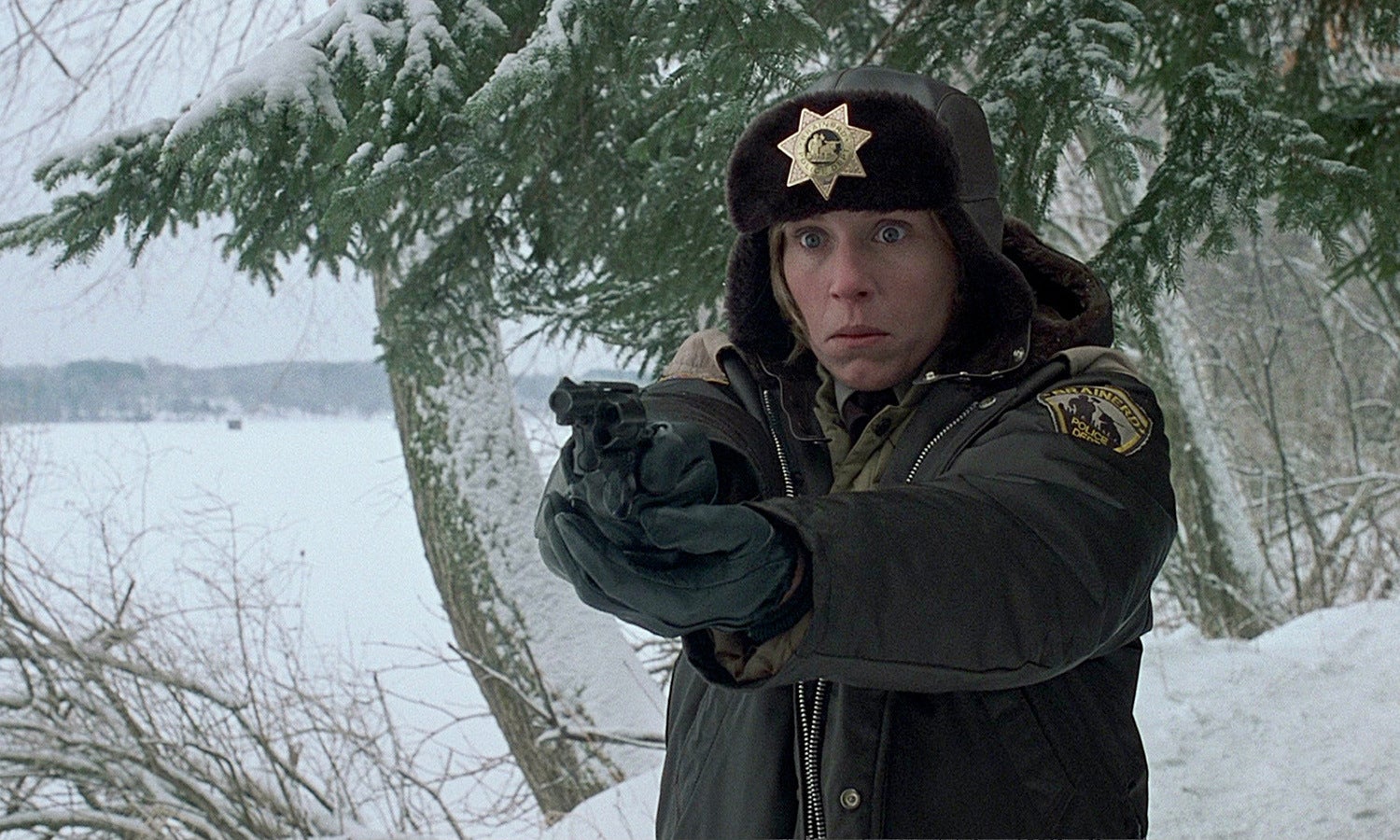
Their foil is Frances McDormand, a pregnant sheriff who has a simple uncomplicated sensitivity and a very clear, tough line of right-and-wrong. She still doesn’t understand Stormare, who, at the end, sits forlornly in her squad car:  “There’s more to life than a little money, ya know. Don’tcha know that? And here ya are. And it’s a beautiful day. Well. I just don’t understand it.”  That’s enough for her.

What McDormand exudes, unlike the tortured Sheriff played by Tommy Lee Jones in the Coens’ bookend film No Country for Old Men,  is that she really doesn’t care to understand it. She’s not interested in giving a Stormare the time to think about his motives, his beginnings, his modified persona as a captured animal. He’s an animal, she knows it, and she moves on.

In this way, I also think Fargo is a uniquely American movie, a window to a culture that champions individual rights yet accepts the death penalty. That’s nifty work, one that keeps you interested in the criminals, but does not elicit anything more than the most base sympathies (though it is hard not to feel somewhat bad for the hapless Buscemi as he tries to hide money with a bullet in his face).