Archive

Decade

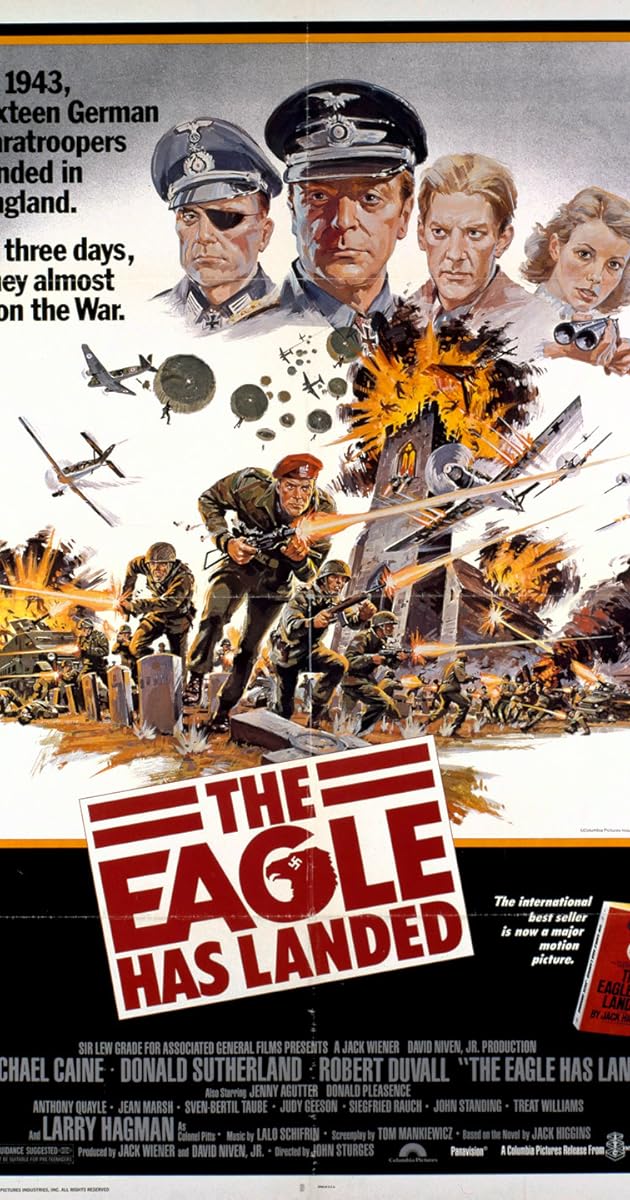
Image result for the EAgle has landed

My father took me to The Eagle Has Landed in 1976, and I of course loved it.   John Sturges (The Great Escape) can make a solid  war picture and this one was smart, cynical, compelling and the last one he directed.

As I watched it again last weekend, I imagined this script landing on some hotshot Hollywood moguls’ desk today.

First pages, not so bad.  The war is going poorly for the Nazis and they are looking into a plan to kidnap Churchill. 

Okay, so far so good.

The plan is dropped on an armless  Nazi with an eye patch.  No, not Tom, Cruise as Von Stauffenberg in Valkyrie.  That film is 30 years and a Bryan Singer sex scandal away.

This armless, eyeless Nazi is played by Robert Duvall.  And whoa!  In what he thought was a moment of whim on the part of Hitler, it turns out that the plan is feasible and the game is afoot.

So feasible that Duvall scours the records for the perfect German unit to take on the task of posing as a Polish outfit in a northern English town until Churchill arrives, when he can be snatched.  Who does he find?

Michael Caine, and his close-knit commandos, who have been kicking ass and becoming more and more embittered on the Eastern front.

But Duvall needs more; he needs two boots on the ground in the little town before the “Polish” troops arrive.  Enter . . . Donald Sutherland, an Irishman who hates the English so much he’s in league with the Nazis.

Okay.  It seems like a lot of money to be throwing at the bad guys. 

Who is the hero?

Larry Hagman?  J.R EWING?

Well, no, but Hagman does play the American commander on the ground in the quaint English town.  He’s no hero.  He’s more like John Larroquette in Stripes, a martinet wannabe who craves combat badly.  Hagman is incompetent, Caine’s men repel his frontal assault with ease, and he dies in such an ignominious manner, it’s almost comic.

Oh good.  There’s a young Treat Williams and Jeff Conaway.  Good looking American GIs who . . . . hmmmmmm, these guys have no lines!  They barely even register!!

Wait, are you telling me . . . . the leads are all Nazis!!???

Yup.

In 1976, this is how Hollywood got past this inconvenient cast.  First, they made Duvall erudite and resigned, as well as armless and eyeless, and they had him present the opportunity to grab Churchill as an opportunity to sue for peace.

As for Caine, as he and his men are shipped back from the Eastern Front, they meet an SS unit rounding  up Jews at a railroad junction.  Out of sheer frustration, Caine assaults the SS commander, assists in the escape attempt of a Jewish woman, and for his troubles his men are all cashiered and consigned to tasks that will eventually result in all their deaths.  Did Caine revolt because he was torn over the Holocaust?  Well, no.  In his own words, “I have nothing for or against Jews, personally. But I’ve seen too many men die for cause, to watch a young girl be killed for sport!”

Okay.  Good enough for the Bicentennial.

And Sutherland?  Well, he’s humanized because his beef is about Ireland, not that icky master race stuff, and he’s quick with a drink and the brogue and he’s so charming, Jenny Agutter falls in love with him instantly (really, the weakest part of the picture because he’s too old for her, it’s too immediate, and what she does for her “love” is so extreme it just doesn’t pass the smell test).

Solid flick, clearly of its time.  Triggerocity at about an 8 out of 10. On Amazon.

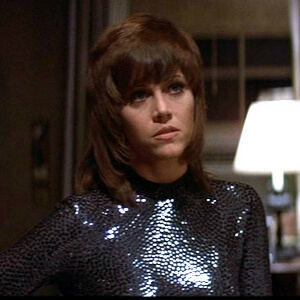
Klute' Dramatizes the Exploitation of Women | Cinema Faith

Alan Pakula’s sexual thriller is still a little jarring in its frankness, even today.  In the age of “sex tape as career move”, very little can astound or shock, but Jane Fonda’s electric and vulnerable turn as a call girl hunted by a killer gives the viewer entrée not only into the precariousness of her world, but in her own vulnerability.  She plays Bree Daniels, a struggling actress who considers her sexual exchanges mini-dramas, where she gets control, something she clearly needs desperately, even if it is self-destructive.  When we see her in action, she’s powerful and pitiable, all the while exhibiting how effective and alluring a good call girl can be.

Daniels is saved on more than one occasion by a laconic John Klute (Donald Sutherland), a police officer turned p.i. who is investigating the disappearance of a businessman who may or may not be her stalker.  Naturally, they develop a relationship.

Pakula (The Parallax View, All the President’s Men) has a keen eye for the shadows and menace in otherwise humdrum, pedestrian environs.  He also has great patience, which results in very understated, moving scenes, such as when Fonda flips through the catalogue of homicide photos of dead prostitutes, and her character and the viewer see her face in all of them.  The scenes where Fonda attempts to seduce Sutherland in order to establish control are similarly subtle, and Pakula places you directly in the dilemma of not wanting to be played but being enticed all the same.

There are problems.  Fonda is so good (she won Best Actress) I thought the scenes of her in therapy were unnecessary.  She’s strong in them, but she’s better expressing her foibles and fears in the context of the story.   As the detective, Sutherland runs into the opposite problem.  He is fully unexplored, a quiet mechanism for Fonda’s growth and nothing more.  I  wanted to know more about him.  Not tons, but something.

Still, this a very strong picture that holds up well, especially given the subject matter.

Another sweeping war epic from my past, along with Waterloo and Zulu, this one introduced me to the “stiff upper lip” Brit.  Unlike those films, this picture just doesn’t hold up at all.  Directed by Guy Hamilton (who had a much better time of it with four Bond films), the film is overly reliant on air battles that perhaps seemed impressive at the time, but now, are flat, difficult to comprehend (you rarely know which character is in which plane) and without drama.   Worse, what happens on the ground is remarkably staid and uninvolving.

It is, however, loaded with the cream of British actors (Michael Caine, Michael Redgrave, Ralph Richardson, Trevor Howard, Laurence Olivier, Christopher Plummer, Edward Fox and Robert Shaw, to name a few), and of particular note, it features a strikingly handsome Ian McShane, who aged into the craggy, rough Al Swearengen of Deadwood.  You can see what Emmanuelle’s Sylvia Kristal saw in him.

Battle of Britain: Ian McShane's RAF Uniforms » BAMF Style

FDEE7D08-09FB-462C-859E-80CC4A421583

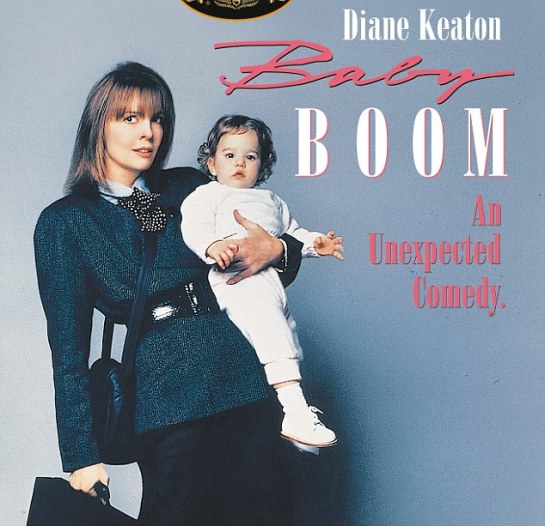
We always loved Baby Boom because the toddler reminded us so much of our daughter, in that she was adorable. I concede, one’s own daughter is always adorable. But our daughter was and is, objectively, adorable.

I digress.

Baby Boom is currently on the Showtime rotation and in watching to see the facsimile of our daughter, we caught the entire picture. The little girl is still cute. The 1987 film, however, does not travel as well as the kid.

Diane Keaton is the go-go Manhattan executive on an upward trajectory when a long lost and recently deceased relative delivers her a beautiful little girl via will.

It’s a broad comedy.  I can accept that a baby would be delivered at the airport at the mere stroke of a pen. I can accept that the cutest baby in the world would almost be transferred from a Manhattan agency to a cold, poor, backward Iowa couple. I can accept that James Spader in a suit is a villain. Well, that last one is a requirement for 1980s films.

But after Keaton keeps the baby, she is so inept – as demonstrated by numerous silly vignettes of a Weekend at Bernie’s stripe –  it becomes unfunny.  She deposits the baby at a coat check. She can’t negotiate a disposable diaper. She feeds the doll pasta and red sauce.  Hilarity does not ensue

It’s just easy, schlocky and weak. And when she is jettisoned by her company, you don’t have the sympathy for her that you should.

After getting demoted, Keaton takes the baby to Vermont, buys a dream house that is actually falling apart, meets rustic veterinarian Sam Shepard, fights with him until he forcibly kisses her, then has rewarding and fulfilling sex with him, and then starts her own successful baby food chain, all to the standard twinkly saxophone and Kimball organ score of the time. Whereupon, the corporate heels call her back to offer her the moon for her little company.

She declines, delivering a confused declaration of independence, a stemwinder announcing that 1) she should not have to choose between family and work; 2) she should not have to move operations from quaint Vermont to Cleveland; 3) James Spader is a rat; 4) she may just take her baby food company national herself; and 5) oh, she’s having rewarding sex with Sam Shepherd.

Except 1) they offered her $3 million and a COO job at nearly $1 million per, but it was the opening offer and she could have asked double, while getting a ceremonial board seat or do-nothing exec slot with an ample salary; 2) they said at the outset the move to Cleveland was negotiable; 3) she could have insisted Spader work the account and tormented him unmercifully, or she could have asked for his head to seal the deal; 4) there is no way she could take this company national; she can’t operate a pair of Pampers; and 5) swooning, with an actual sigh, about Sam Shepherd in a business meeting reinforces a lot of the stereotypes the stemwinder was supposed to rebut.

But the baby is adorable.

d714221b-26f1-468b-b825-744fd2f9179f

A technical advance in both sound and movement, and a caustic, first-of-its-kind black comedy, Robert Altman’s M*A*S*H was once deemed a masterpiece. Alas, now, it is as culturally atonal and offensive as Gone With the Wind.

The women in the film are nothing but sexual playthings, constantly subject to the predations of Trapper John, Hawkeye and all the rest of the misogynists who inhabit the camp. The nurses are first and foremost flesh to be pawed at, conquests to be made. Add an indelible strain of homophobia, a black character named “Spearchucker” and Trapper John and Hawkeye in Japan yukking it up with racist Charlie Chan imitations, and you end up with the transformation of what used to be an iconic, anti-establishment, anti-Vietnam (Korea just plays the part) film into a vessel for the most retrograde and debilitating of social views, a moral blight as offensive as blackface.

Mind you, I do not come to this conclusion lightly or happily. Before my own reeducation, I would have found this a clever, funny and brash film. The characters possess incredible medical gifts and live in an untenable situation, surrounded by gore and death, and they resort to sophomoric gags and easy sex because that’s what some people under stress do, especially in dark comedies. The old me would view this film as cruelly hilarious. I might have also found the treatment of the women tempered by their corresponding consent, agency and obvious value to the camp.

But that was before I understood the power of patriarchal constructs. My God, at one point, Hawkeye brings a female nurse to a depressed colleague as if she were a comfort girl to a marauding victor. And she is dreamily driven off, her lust was so sated.

The brutal ouster of the pious Frank Burns and the ritual humiliation of Hot Lips Hoolihan aren’t the mere comeuppance of villains. Watch again as she is unbared in the shower. The leering men settle a bet as to whether she is, in fact, a true blond; she writhes, naked, abused, on the shower floor while they hoot and holler and jeer.  Despicable.

God help the campus movie house that accidentally runs this baby.

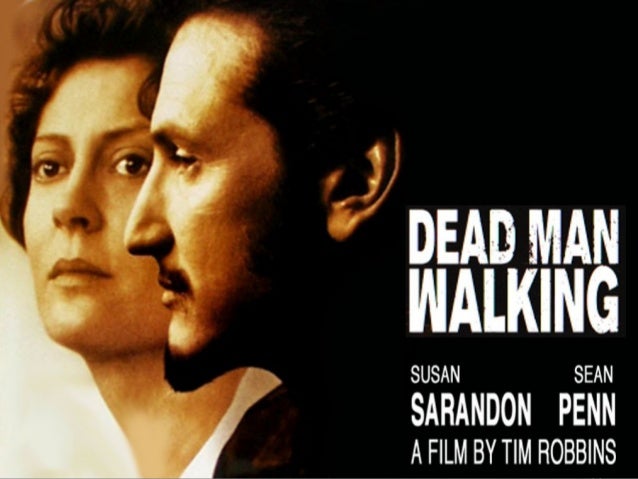
Image result for Dead Man Walking

I caught this a few rainy days ago.  There are very few films that deal with contemporary hot button issues well. Most of the time, the inclination of the writer and director is so patently obvious that the art is robbed of plausibility and force.

This movie is an exception.  The issue is subordinate to the human story, and while that story is primarily told from the viewpoint of an anti-death penalty character (Susan Sarandon as Sister Helen Prejean) ministering to convicted murderer and rapist Matthew Poncelet (Sean Penn), that in no way colors the message, which is admirably equivocal, even, to my mind, shockingly, a hair pro-capital punishment. That is probably just me, given the hackneyed uniformity of most such films, but that the picture provides an emotional and almost ethical argument for the practice is astonishing.

Sarandon is restrained and effective as a woman of faith called to provide spiritual comfort to a man who has committed a monstrous crime, and as that man, Penn exhibits all the bravado, self-pity, cruelty and narcissism of a thug.  Eventually, she learns she is not there to redeem him in any way, and shucks off her self-comforting fantasies that he was just a good boy led astray,  and focuses on simply leading him to confession.

Director Tim Robbins takes meticulous pains to display the brutal toll on the victims’ families and has the balls to juxtapose the execution with an unforgiving flashback of the crime, and unlike what Poncelet has been selling Prejean up until the last moments before he is executed (he is innocent, he was stoned, his accomplice did the killing and raping and things just got out of hand), those flashbacks show him as a vile, entirely in control piece of shit.

Nobody is caricatured. No easy rhetorical gotcha’ lines are delivered.  The employees of the prison, the medical professionals involved in the process, the families, they are treated with rare grace and equanimity.  An example: Sarandon has dinner with her wealthy family, some of whom question her service to Poncelet.  In the wrong hands, they would have been portrayed as the aristocratic, privileged rich, more concerned with their name and espousing small, likely bigoted views.  Robbins, however, shows them as loving and concerned, with questions (“Why spend so much time on this cretin when you could be helping young children not to grow up into becoming this cretin?”) similar to that of the audience.

Similarly, Poncelet is never a beatific victim.  Near the end, he praises Hitler, he spews racist invective, he even makes a sexual come on to Sarandon.  But she works with him, to help him find a dignity within himself through the sole act of the admission of his guilt and contrition.

Great film.


Image result for Brubaker

I just finished Blood in the Water, an exhaustive history on the Attica uprising and its aftermath.  And lo and behold, Brubaker hits the cable movie rotation.  I remember it being overly preachy but engaging, but times have changed, and now, Stuart Rosenberg’s (Cool Hand Luke) film seems rather reserved and even-handed.  It isn’t but that’s how it feels today.

No matter the prevalence of a particular bent, the picture juggles its message and a gripping mystery within the prison adeptly, the feel is right, and it is never dull.

Henry Brubaker (Robert Redford) is a reform warden incarcerated incognito as an inmate in the Arkansas prison he will soon be running.  From the outset, he witnesses abuses by trustees (prisoners given the right and authority to be armed and act as corrections officers) that include brutal beatings, theft of food for resale, and extortion for basic necessities.  As for the conduct of the governmental officials of the prison, it is no better.  The doctor charges for services, the cooks charge for edible food, and the warden hires out men to local businesses for free.  Rape is rampant and problem inmates (including a young Morgan Freeman) are shut in dark, airless cells in a separate area of the prison.

Brubaker soon reveals himself, and in his attempts to change the prison, he is met with stiff resistance from the local community, the trustees, and soon, even the governor who appointed him.  His liberality is thrown in his face by the conservative elements, who see him in league with the prisoners, while the liberal faction sees only the damage done by his upending the system and his refusal to take half a loaf.

There are problems.  Redford is plagued by his good looks.  His embedding into the prison population without notice is a stretch.  He is also so self-righteous and literal, it grates, and the end is just piling on. Also, a potential sexual chemistry between Burbaker and assistant to the governor Jane Alexander is needlessly left unexplored.  And Roger Ebert, per usual, hits the nail on the head:  “The movie (refuses) to permit its characters more human dimensions. We want to know these people better, but the screenplay throws up a wall; they act according to the ideological positions assigned to them in the screenplay, and that’s that. … Half of Redford’s speeches could have come out of newspaper editorials, but we never find out much about him.”

Still, the film melds political tract and thriller pretty effortlessly, and it is extremely well-acted, featuring strong performances by David Keith and Yaphet Kotto in early roles.

The Changeling 1980 | Changeling, Horror, Ghost stories

One of my favorite ghost stories, it has all the elements: a believable tortured performance by George C. Scott, a recent widower with whom an old house begins to communicate; absolutely chilling, hair-standing on the back of your neck moments; an engrossing mystery that seamlessly ties into the increasingly disturbing hauntings; and, a unhurried pace which heightens the terror.  Trust me. Or trust Martin Scorsese. It’s on his list of the 11 scariest horror films of all time.

Also, scariest wheelchair ever.

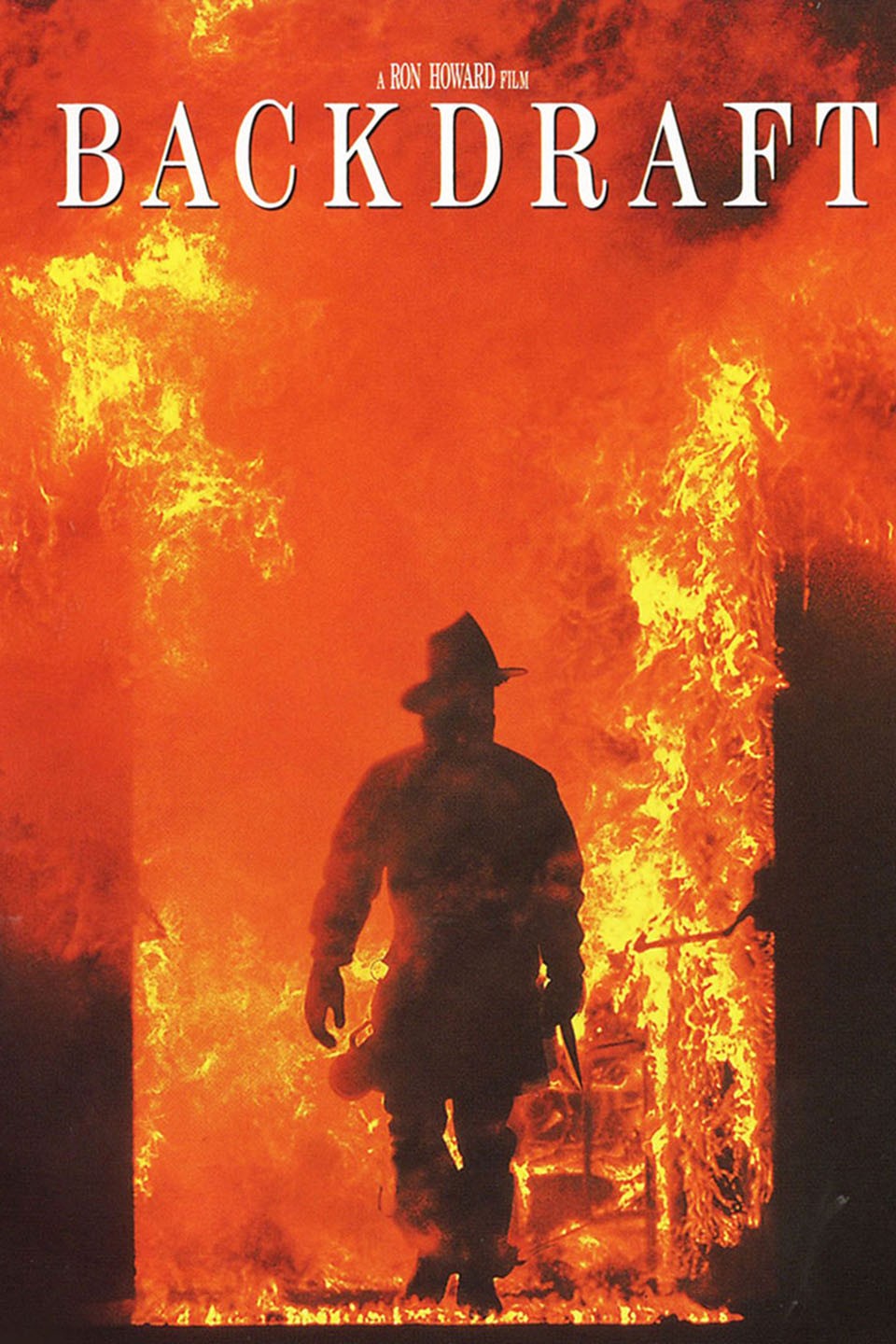
Backdraft | Rotten Tomatoes

Terrible, excessive, a yawning blot of a movie. I can’t get enough. From the opening scene, where our protagonist is shown as a boy, watching his father fight a fire, and his father blows up, in slo-mo, before his eyes, and the old man’s fire chief hat rattles at his feet, to the sobering realization that this boy has grown up to be a firefighter himself.   Verklempt.

Better, the boy grows up to be a male model firefighter (in the guise of Billy Baldwin, straight out of Zoolander) who gets the rookie treatment (“wash my socks, cook my food, hey, stand in front of this thingie I call a firehouse . . . rook”) and his greatest tormentor is Kurt Russell, his older brother, who says things like “The only problem is that in this job is there’s just no place to hide. It’s not like having a bad day selling log cabins. You have a bad day here and somebody dies… and that’s just not fucking good enough.”

Which is an awesome line and can be replicated in all professions every day.

Of course, Baldwin looks like he couldn’t lift an IPhone much lest hoist a hose, but he does have a few humdingers himself.  Like “you did it man. You did it all the way Steven, you were really a hero today.”  Allowing Russell to retort, ” Brian… its not about being a hero. I went in because there was a kid up there. You know, I just, I do what I do because that’s my way. And it was Dad’s way. Maybe it’s not everybody’s way. ”

Which can also be replicated in all professions every day, but it helps if you’re talking to your brother.

It’s not all sweet, sweet perfection.  Baldwin’s love scene with a Jennifer Jason Leigh is, uh, unconvincing. But it is on top of a fire truck and has the feel of a Whitesnake video.

Basically, this is a two hour fellating of the brawn, brio and body odor of American firefighters, scored by whoever did Triumph of the Will (okay, too much, but I was close – it’s Hans Zimmer).  There is also a mystery stitched in this cupcake, and when solved, it is not just preposterous, it defies the laws of physics.

There is only one explanation-Ron Howard fell in love with a firefighter and made him a valentine.

Unwatchable and yet, I cannot look away.

Image result for a bridge too far

This is a dinosaur, a sweeping, big budget 70s war flick loaded with A and B+ stars of the time, directed with an accomplished economy and flourish by Sir Richard Attenborough (Gandhi).

Imagine the equivalent of this cast in one movie today:

OSCAR WINNERS

Laurence Olivier

Anthony Hopkins

Robert Redford

Sean Connery

Gene Hackman

Michael Caine

Maximilian Schell

OSCAR NOMINEES

Elliot Gould

Ryan O’Neal

Liv Ullman

James Caan

BAFTA WINNERS

Edward Fox

Dirk Bogarde

The picture is post-Vietnam era cynical but not overly so, depicting the tragic clusterfu** that was World War II’s Operation Market Garden, an ill-fated attempt to cripple Germany quickly post-D Day via a lightning paratroop strike into Holland.  Everything that can go wrong does go wrong, due in no small part to bureaucratic incompetence and the willful discounting of intelligence.

Attenborough manages to let stars be stars while incorporating the performances seamlessly into a well-thought out and accomplished military drama.  William Goldman’s script is also very moving, empathetic to the plight of the foot soldier and bereft of a lot of “hoo rah!” 

There is really only one casting weakness.  I get that you want “young” for General James Gavin, who was 37 years old at the time of the operation, but O’Neal is just too pretty and soft for the role, and his attempt to overcome it (being stern) is unavailing.  He looks and acts like a peeved choreographer.

Some fun tidbits:  Most of the stars took a pay cut, agreeing to a $250,000 weekly fee, with the exception of Redford, who hauled in $2 million for 10 minutes of screen time. 

Also, with two lines, and a spot right behind Redford on a collapsible boat in a brutal river crossing, it is none other than John Ratzenberger (Cliff Clavin from Cheers).  Spoiler – Cliff doesn’t make it