Archive

Decade

The first half of Stanley Kubrick’s Full Metal Jacket, based on Gustav Hasford’s novel The Short Timers, is flawless. Marine privates Joker (Matthew Modine), Leonard Lawrence (Vincent D’Onfrio) and others are trained with their class at Parris Island by their Lord and Master, Marine Gunnery Sergeant Hartmann (R. Lee. Ermey). Kubrick depicts the indoctrination and transformation of Marines in a manner that is tragi-comic, lyrical and, at the end of training, deadly. Penned by Kubrick, Hasford, and Michael Herr (Dispatches), the dialogue has the stamp of authenticity (Hasford and Ermey were Marines and Ermey, first hired as a technical advisor, had actually been a drill sergeant at Parris Island during the Vietnam war). The process of creating cohesion and toughness is brutal and efficient, and its unsparing nature produces effective warriors, but it also damages the fragile D’Onofrio.

The second half opens with a concise commentary on the problems of an occupying army, memorably introduced by the sultry voice of Nancy Sinatra. Despite such promise, the film becomes less engaging. Modine is sent to Vietnam as a correspondent for Star and Stripes and he wants desperately to get in “the shit.” He does, during the Tet Offensive, and what he sees is the hard killers from Parris, broken, unmoored and wreaking havoc. The film plays out as a series of barely connected set pieces, which is in stark contrast to the single-mindedness of the first half.

I strongly recommend Matthew Modine’s diary and Herr’s Vanity Fair piece on Kubrick.


After taking my boy to Django Unchained, we started a concerted effort to watch the Tarantino catalogue. When he asked about the Kill Bills, I told him they were films made primarily for children, but were so violent, if cartoonishly so, that children probably shouldn’t be allowed to watch them. Of course, Tarantino is a visionary, having anticipated an audience of children of a wider breadth than I could have imagined, scads of 24 to 36 year old slacker geeks, still living in Mom’s basement, deathly terrified of footballs and baseballs and supervisors and real women, banking retirement on mint condition comic books, their only meaningful relationships having been 2 to 3 minute internet trysts with the various Jenna Jamesons cranked out of the San Fernando Valley with increasingly worrisome regularity.

This is their crack cocaine.

Volume 1 is stylish, meticulous, occasionally funny and inventive but a mostly tiresome abscess of a picture. As if any enjoyment derived from the first picture required penance, Volume 2 is that contrition.

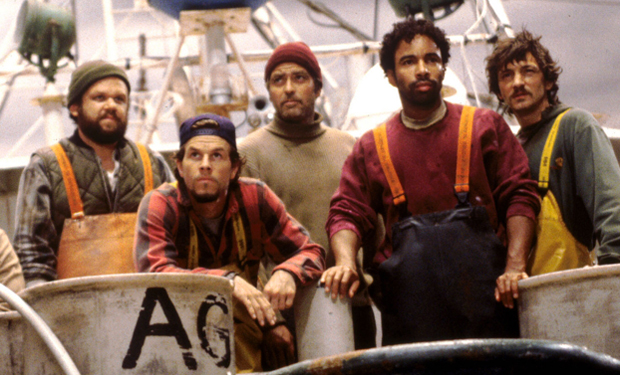
Image result for The Perfect Storm crew

A Gloucester fishing boat captained by George Clooney goes out to get some fish and is soon in “the perfect storm.” Based on Sebastian Junger’s best-selling book about the fate of the Andrea Gail, the visuals are occasionally impressive but this is no Captain’s Courageous. The characters have a working class look but not the feel, and Clooney, who normally chooses well, is too damn dreamy to be the salty sea dog (he would have been better as the telegenic and wide-eyed meteorologist who captures the storm on his Doppler).

A better skipper would have been John Hawkes, the crewman furthest to the right above, who was nominated for an Oscar for Winter’s Bone and should be nominated again this year for The Sessions.

Junger’s book delved deeply into the precarious, brutal and chancy world of commercial fishing, but the script elects to show hard drinkin’, hard lovin’, misunderstood men of the sea while on land, and on the water, a boring band of brothers. The screenplay is either hackneyed or just plain dull.

Here’s a taste.

This is the the moment of truth”

“Billy, you’re not gonna’ like this but I’m gonna’ say it anyway.  You be careful.”

“I always find the fish.  Always.”

“Last night was worth it. There’s nothin like sleepin’ with you… just sleepin’… lyin next to you… all warm and sweet… Me wishin’ the mornin’ would never end.”

“You just caught me on a good night. I’m doing what I was made to do – and I’ve got a feeling I’m going to do it even better this time.”

And when crew member John C. Reilly is about to drown, he doesn’t scream or panic. Instead,  being a man of the sea, he says to no one in particular, “This is gonna be hard on my little boy.”

Hard on the audience as well, John.

There’s also a lot of forlorn women looking out the window for these good men of the sea (Diane Lane is completely wasted). Old Spice commercials are filled with greater verisimilitude.

Director Wolfgang Peterson made it to Hollywood on the strength of his gripping U boat drama Das Boot, but since then, he’s gone to sea twice, with The Perfect Storm and the even worse Poseidon.

He needs to stay on land.


This is the most un-Tarantinoesque of Quentin Tarantino’s pictures, faithfully adapted by the director from an Elmore Leonard book. A flight attendant (Pam Grier) gets caught shuttling money and drugs for a gun seller (Samuel L. Jackson) and caught in between the ATF (represented by Michael Keaton) and Jackson, she devises her own scheme to steal all of the latter’s funds while extricating herself from prosecution, enlisting the help of a bail bondsman (Robert Forster) in the process.

Tarantino’s pace is languid, his body count minimal, and the film features long stretches of sharp dialogue and silent character reflection. As Jackson’s scheming girlfriend and dim accomplice, Bridget Fonda and Robert DeNiro shine in a cast of apt, funny secondary characters. This is a clever and straightforward crime story.

Like the two Tarantino pictures that preceded it, Jackie Brown utlizes the seedy environs of Los Angeles to great effect (the bar and nightclub locales are particularly well-chosen). In an interview, Tarantino explained his changing of the locale from Miami to LA:

I don’t really know anything about Miami. I had never been to Miami before. One of the things Elmore Leonard has to offer in his novels, is an expert sense of both Miami and Detroit. He has got his Detroit novels and he has got his Miami novels. I can’t compete with that, and Miami is very hot! You don’t want to got there to shoot! One of the things I do have to offer is that same kind of knowledge about Los Angeles; partly in the area that the area is shot in, in the South Bay. It is not used that often. Tequila Sunrise used it a little bit, and a few other movies have touched on it a little bit. I am very familiar with that area because I grew up around that area. It is one of the things I could bring to the piece; an expert knowledge of that area, the way he brings an expert knowledge to Miami.

While Jackson uses the “n” word with his usual vigor, the script is refreshingly shorn of the showy pop culture references found in Reservoir Dogs and Pulp Fiction. It’s also a lot moodier than those pictures.

The plot, however, is not wildly intricate and certainly doesn’t justify a 2 and a half hour running time. Also, while Tarantino loves reclamation projects like John Travolta and David Carradine, Pam Grier and Robert Forster are bridges too far. Neither are particularly good actors, and while Forster’s wooden approach isn’t terrible given his role, Grier is key, and she cannot convey the emotions necessary to really bring the character home.

She was a B picture star in the 70s for a reason other than acting.

Pin on Jinx

Even Halle Berry cannot save the ridiculously coiffed, barely interested Pierce Brosnan in the last of his four Bond films (her love scene with Brosnan makes you uncomfortable, like watching your father dance to a pop song at a wedding). Shockingly, even though Austin Powers had been released five years earlier, this Bond film amped up the cheese, provided a cartoonishly mwahahaaa villain (Toby Stephens), an ice fortress, Duran Duran video slow-motion, enough sexual double entendres to shame Roger Moore, Halle Berry uttering the line “read this bitch!” to baddie Rosamund Pike, and perhaps the most laughable stunt in the series.

Bond gains entrance to the villain’s lair because a guard takes a leak at an inopportune time.  You can hear the toilet flushing.  Hilarious.

Daniel Craig arrived in the nick of time.

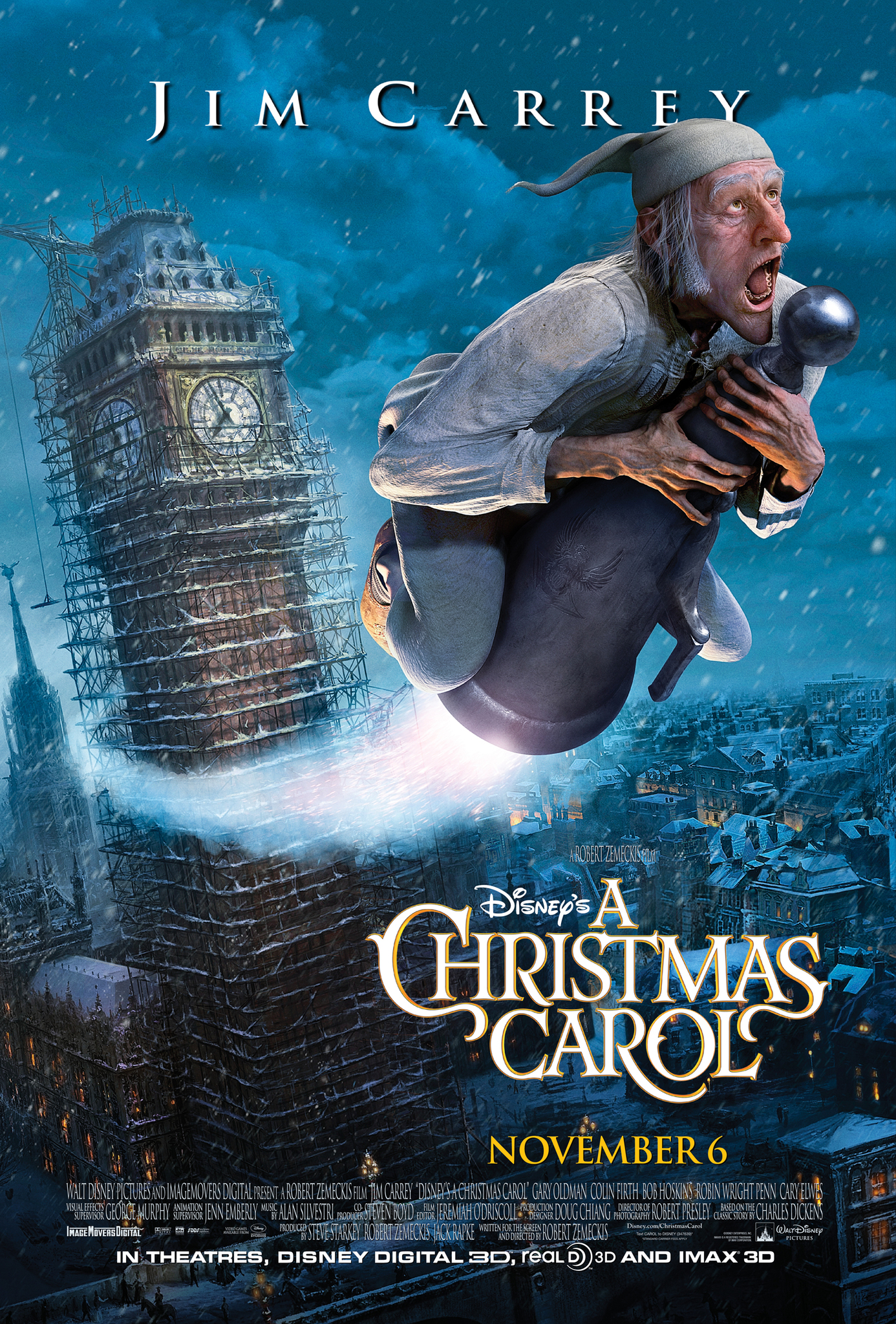
A Christmas Carol (2009) - IMDb

Take a classic Christmas tale, animate it in the creepy Polar Express method, cast Jim Carrey as Ebeneezer Scrooge, drain the tale of any nuance or subtlety, make the ghost of Christmas past child molester creepy and Marley so horrifying his jaw falls off, and dramatize it in such a manner that you fault cartoon characters for overacting, and you have a Robert Zemeckis holiday “classic.”  The only redeemIng feature is the guilty pleasure you’ll get when you imagine how terrified a child in the theater would be during this family film.  Grotesque.

image

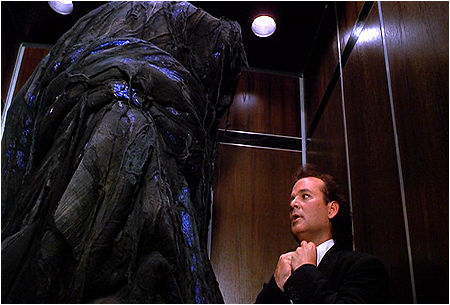
Bill Murray plays the Scrooge character, Frank Cross.  Cross, however, is not in finance, but television.   A child abandoned to the TV by uncaring parents, Cross has become a holy terror as the head of programming for a major network.  His newest achievement is a live broadcast of “A Christmas Carol” on Christmas Eve, with Buddy Hackett as Scrooge.  Cross is so cynical and mean he’s ordered the stapling of tiny antlers on to the heads of mice.  Soon, the ghosts appear.

This is a zany, funny version of the Dickens tale co-written by SNL alum Michael O’Donoghue (he communicated his loathing of the theatrical version before his death at 54) and directed by Richard Donner (who helmed all the Lethal Weapons and various and assorted dreck).  Donner has little skill save for making movies move, and this movie moves.  O’ Donoghue’s complaints aside, it’s also often very clever, propelled by Murray’s manic and humorous descent into madness and his joyous redemption.  It’s big, messy, all-over-the place, and excessive (which is kind of the point) but great fun.

Late Roger Moore Bond films, with the cornball quips and the hideous 80s fashion, obscure the fact that Moore used to be a pretty cool James Bond.  After the confusion of George Lazenby’s bizarre withdrawal from the series having only done one film (On Her Majesty’s Secret Service) Sean Connery was hurried back to woo Jill St. John in Diamonds are Forever for a then-astronomical $1 million.  But Connery was finished, so Moore was signed up (he’d already played a secret agent – Simon Templar – on television’s The Saint) .

Live and Let Die has Bond tracking Dr. Kananga (Yaphet Kotto), the dictator of a small Caribbean nation, after MI6 agents start dropping like flies.  Kananga is into drugs and voodoo, using Solitaire (Jane Seymour) and her gift with tarot cards to his advantage (until Bond deflowers her and she loses her “sight”).  Paul McCartney and Wings produced a rollicking theme (ranked number two here), there is a tremendous cigarette boat race, and Bond effectuates one of his better escapes from a Florida crocodile farm.

The new Bond presents as unflappable, as well as perpetually amused.  He’s also the horniest of the Bonds.  Moore, who just wrote a book on his time as Bond, articulated both his admiration for current Bond Daniel Craig and his own ethos:  “Now they’ve found the Bond—Daniel Craig…. I always said Sean played Bond as a killer and I played Bond as a lover. I think that Daniel Craig is even more of a killer. He has this superb intensity; he’s a glorious actor.”

Moore also identified his principal weakness as Bond: “Quite honestly, I do everything the same and I think everything comes out the same, whether I’m flinching as James Bond or raising my eyebrows as Simon Templar.”  His casualness often borders on disinterest and a certain “mailing it in” approach results.

As for the film, it has two primary faults.  First, an annoying Louisiana good ole’ boy, Sheriff Pepper (Clifton James), brought in for broad, Jerry Lewisesque comic relief.  Second, a very poor finale, with the delightful Kananga dispatched in a manner way beyond the special effects capabilities of the time.  He deserved better.

Daniel Craig’s second turn as Bond is moodier, not as brisk and bracing as Casino Royale.  Coming off the loss of the love of his life (pretending, of course, that George Lazenby and Pierce Brosnan never lost their hearts to Diana Rigg and Teri Hatcher),* Bond is bitter and ultra-violent, and he is made more so after an attempt on M’s (Judi Dench) life.  As he investigates, M upbraids him for killing all his leads, but Bond is driven, uncovering a sophisticated plot by faux-environmentalist Dominic Greene (Mathieu Amalric) to corner the market on a precious resource.

The plot is serviceable, and the film sports three exciting and audacious action sequences – car chase, boat chase, plane chase – and a thrilling shootout finale.  Amalric is also an interesting villain, not quite charming or brilliant, but casually efficient and super-creepy.  And of all the secondary Bond girls, Quantum features my favorite, Gemma Arterton as

Image result for Quantum of Solace Strawberry Fields sexy

Strawberry Fields

There is also a virtuoso surveillance scene during a performance of Tosca at the open air Opera building in Bregenz, Austria, as well as intriguing backstabbing between British surveillance and the CIA, which brings in my favorite Felix Lighter (Geoffrey Wright).

On the downside, after the death of Vesper (Eva Green) in Casino, Bond is perhaps too brooding in this flick, and the angst-level is often very high.  But you could have easily predicted the charge of excessive-seriousness, as if there were some bizarre nostalgia for the bonhomie of Roger Moore and Pierce Brosnan.   Given that director Marc Forster (Monster’s Ball, Finding Neverland, The Kite Runner) doesn’t come from action stock, it is easy to conclude that was perhaps taking itself too seriously.

Phooey.  This is one of the stronger Bonds.  It’s also distinctive.  Especially impressive is Foster’s filming of Bond’s escape from the opera.  There is no jacked-up Bond score, but rather, a dreamlike flight as Tosca dominates the soundtrack.

*  By the way, when Bond becomes emotionally involved with a woman, it’s hard to fault his choices:


Writer/director James Cameron’s blockbuster is lovingly grand and its atmospherics and visuals breathtaking.  But a single scene exemplifies the failure of the picture.

The moment before the lookouts spot the iceberg that would seal their fates, they’re dicking around watching Rose (Kate Winslet) and Jack (Leonardo DiCaprio) smooching on the foredeck.  As a result, a plausible argument can be made that the two leads sank both the ship as well as the film, because their insipid teen love affair is at the heart of this movie.

Rose is unhappily slotted for a marriage to a well-heeled snob (Billy Zane).  She intends to fling herself off the ship, but she is saved by and falls for roustabout Jack.  As the ship continues its doomed voyage, these two chuckleheads moon at each other, while blithely noticing things that are important:

Andrews leads the group back from the bridge along the boat deck.

                                   ROSE
Mr. Andrews, I did the sum in my head, and with the number of lifeboats
times the capacity you mentioned… forgive me, but it seems that there are
not enough for everyone aboard.

                                  ANDREWS
About half, actually. Rose, you miss nothing, do you? In fact, I put in
these new type davits, which can take an extra row of boats here.

                        (he gestures along the eck)

But it was thought… by some… that the deck would look too cluttered. So
I was overruled.

                                    CAL
                       (slapping the side of a boat)
Waste of deck space as it is, on an unsinkable ship!

                              ANDREWS
Sleep soundly, young Rose. I have built you a good ship, strong and true.
She’s all the lifeboat you need.

Not enough lifeboats, you say?

Soon, Rose is posing nude for Jack (he is a portraitist) and shortly thereafter, they’re going at it hot and heavy.  Zane is infuriated and sets his goon (David Warner) on Jack, leading to an implausible  cat-and-mouse chase through the ship while it is going under (Warner is truly Employee of the Century).

There are many, many other problems.  DiCaprio could not be more wrong for the part.  He looks as if he just started shaving, so his turn as a man-of-the-world is laughable.  It’s an Aidan Quinn role given to a near pre-pubescent.
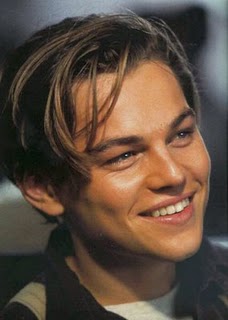
 Rose, did you see where I put my Bubble Yum?

Cameron’s script is also unbearably overt.  He trusts his audience not, as early exposition demonstrates:

HAROLD BRIDE, the 21 year old Junior Wireless Operator, hustles in and
skirts around Andrews’ tour group to hand a Marconigram to Captain Smith.

                                   BRIDE
Another ice warning, sir. This one from the “Baltic”.

                                   SMITH
Thank you, Sparks.

Smith glances at the message then nonchalantly puts it in his pocket. He
nods reassuringly to Rose and the group.

                                   SMITH
Not to worry, it’s quite normal for this time of year. In fact, we’re

speeding up. I’ve just ordered the last boilers lit.

Andrews scowls slightly before motioning the group toward the door. They
exit just as SECOND OFFICER CHARLES HERBERT LIGHTOLLER comes out of the
chartroom, stopping next to First Officer Murdoch.

                                LIGHTOLLER
Did we ever find those binoculars for the lookouts?

                           FIRST OFFICER MURDOCH
Haven’t seen them since Southampton.

Iceberg, speeding up, and no binoculars?  Uh oh.

The film unravels at the end.  The idiocy of Warner hunting Jack and Rose as the ship nears its final peril can no longer be ignored.  Meanwhile, Cameron becomes enamored of what he can do on his broad canvas.  Tragedy becomes an action caper as the director starts bouncing hapless victims off of fantails.

In the final scene, an aged Rose (Gloria Fisher) looks longingly into the icy waters that took her Jack, and throws a massive jewel in.  Leaving your last thought as, “That damned thing could have fed Sub-Saharan Africa for a few months.  What a selfish old hag!”