Archive

Rating

A hilarious mockumentary done in the style of The Real World and other reality dramatizations of domestic life. Four mates, distinct in style and manner, share a house in Wellington, New Zealand, and a documentary crew shadows them for a period of months to capture their lives. In the style of the genre, we get to witness petty fights about house rules, dirty dishes, who can have friends over and which clubs to frequent on the weekends. The twist is that our flat mates are all vampires of varying ages, and soon, they add a fifth (Nick) to their coterie, which rapidly undoes their dynamic. As the youngest, Nick is my second favorite, simply because he is so enthused by his new powers, repeatedly telling anyone who will listen that he is a vampire. My favorite of the household, however, is the oldest, Petyr, for the obvious reason that he is a Nosferatin curmudgeon who cannot speak and presents a brilliant deadpan:

This is consistently funny, with particularly great bits about the vampires’ fascination with technology and run-ins with self-improving werewolves.

Currently available on Netflix streaming, this almost 3 hour documentary essay presents as both art exhibit and graduate course (it is written and narrated by the sleepy-voiced Thom Anderson, a filmmaker and film theory and history teacher at the California Institute of the Arts).  Los Angeles Plays Itself is textually interesting, the visuals of the city’s depiction in film are always entertaining, and accompanied by Anderson’s incisive narration, often illuminating.

Anderson can also be very funny, in a dry “this is Carlton, your doorman” way. On a scene from Michael Mann’s Heat:  

 [In Heat, Neil McCauley (Robert DeNiro) is briefing two members of his gang. He tells them, “Saint Vincent Thomas Bridge, that’s escape route number one.“]  Vincent Thomas was San Pedro’s representative in the state assembly for many years, but he hasn’t been canonized yet, not even in Pedro.

And on the perpetual destruction of LA in the movies:

Mike Davis has claimed that Hollywood takes a special pleasure in destroying Los Angeles, a guilty pleasure shared by most of its audience. The entire world seems to be rooting for Los Angeles to slide into the Pacific or be swallowed by the San Andreas fault. …In Independence Day, who could identify with the caricatured mob…dancing in idiot ecstasy…to greet the extraterrestrials? There is a comic undertone of ‘good riddance’ when kooks like these are vaporized by the earth’s latest ill-mannered guests.  But to me the casual sacrifice of Paris in Armageddon seems even crasser. Are the French being singled out for punishment because they admire Jerry Lewis too much? Or because they have resisted Hollywood’s cultural imperialism too fervently?

Of course, if you let an academic talk long enough without interruption or query, he’ll eventually meander into overstatement and grandiosity, and as Anderson moves from LA’s history, architecture, sprawl and patterns in film to politics, race and class, we get poetic broadsides, against the cops and the modern Noah Crosses and skyscrapers. This is all part of the condescension of most any “true” city dweller who presumes to know the authentic heart that beats in his city, and for the most part, that’s part of Anderson’s charm.  Anderson has a grievance, as he concedes at the outset:  That’s another presumption of the movies: that everyone in Los Angeles is part of their industry or wants to be. Actually, only one in forty residents of Los Angeles County works in the entertainment industry. But the rest of us simply don’t exist.  We might wonder if the movies have ever really depicted Los Angeles.

But doleful mouthfuls like “White America had declared a crisis of the black family as a cover for its campaign of incremental genocide against its expendable ex-slave population, rendered superfluous by immigrant labor power, so black film-makers responded by emphasizing families and children” are waiting at the end, so you have been warned.

Though it limps a little at the finish, I really dug this movie, and it is a must-see for any film buff.


image

J.C. Shandor wrote and directed my favorite film of 2011, Margin Call, a verbose, intricate “what if?” financial thriller set before the crash of 2008. Last year, Shandor made the critically acclaimed All is Lost, a tale of survival on the sea starring Robert Redford and featuring a script of a mere 31 pages (it is now on Netflix streaming but I’ve neglected to see it). If there was any doubt, Shandor’s third film cements that he has no interest in doing the same thing again.  A Most Violent Year is the anti-crime picture, a meticulous thriller set in the suburbs of 1981 New York City revolving around the intricacies and corruption of . . . the home heating oil business. Oscar Isaac and Jessica Chastain are a married couple working to expand their reach in the business, in the face of union troubles, a prosecutor’s investigation, the hijacking of their trucks and the intimidation of their sales force. Isaac, an immigrant, is resolute in combating these obstacles in a legal and above-board manner. Chastain is the daughter of a mob boss, and her fealty to the straight-and-narrow is less stringent. As the screws turn, you think you can see where this is going.  You’re wrong.

Chandor’s medium cool meditation emphasizes Isaac’s passion, ethics, and larger vision and while the stakes are small in the scheme of things, to Isaac, they are everything, and Shandor effectively invests the audience in his struggle without infusing the narrative with the expected fleshy, pulpy, satisfying retributive violence. I’ll admit:  bloodletting is what I wanted and expected and as the tension mounted, Chandor’s resolution felt unsatisfying. In that way, Chandor transforms the genre.

This is an ingenious, unique movie.  Chandor’s feel for 80s New York is sharp, his pacing is tight and he never veers far from the heart of the picture, the unswerving devotion of Isaac and Chastain to their business and to each other. Their performances are riveting; they feel like a married couple who melded passionately but never addressed longstanding disputes in their view of the world.  Like a real married couple.

One of the best of the year.

image

John Michael McDonagh’s The Guard was one of the best films of 2011, a sharp, wry, talky culture clash comedy that pitted straight laced federal agent Don Cheadle against the blustering, Irish provocateur Brendan Gleeson. In Calvary, Gleeson is again McDonagh’s center as a Catholic priest tending to an Irish seaside community. The film opens in the confessional, with a man telling Gleeson that in 7 days time, he will meet him on the beach and murder him. What follows is a depiction of Gleeson’s role in a town in transition culturally, economically and spiritually, where Gleeson’s faith is tested time and time again. McDonagh has crafted a compelling parable, deep with import.  It also stands as one of the few films that conveys the centrality of religion in a particular modern locale (The Apostle comes to mind but that was set in the American South, which is in many ways archaic)Yet, as much as the film is steeped in the story of the New Testament, it is thoroughly modern, as Gleeson is mocked, goaded and pitied by a flock that considers him a joke from days gone past yet are drawn to his authority and the promise of understanding and guidance.

This sounds very heavy and yet, McDonagh’s strength is his keen grasp of the unique Irish patter, with its unyielding thrust and parry.  The dialogue is razor sharp and bitingly funny, and when these characters get past the language that insulates them, an almost national dialogue, revelation of their pain is truly moving.  One of the best of the year, and while the crimes of the Academy are many, the omission of Gleeson and the screenplay for nominations is, keeping in a religious vein, an abomination.

image

Downton Abbey is a hugely successful period British soap opera that is anachronistic, predictable and overwrought.  The Imitation Game is Downton Abbey for the movies.  Alan Turing (Benedict Cumberbatch) is the Sheldon Cooper of World War II; brilliant, odd, effeminate and humor impaired, and he is tasked with cracking the Nazi Enigma code.  He does so, with the help of Keira Knightley and Matthew Goode and an actor from Downton Abbey, all the while struggling with his sexuality, his anti-social personality and a race against the clock.

There is not much in the film that isn’t expected.  After alienating his colleagues, Turing wins them over.  After being quirky, we are charmed and in his corner.  After connecting with a teen friend in boarding school in flashback, the boy dies. After that boy tells Turing, “Sometimes it is the people who no one imagines anything of who do the things that no one can imagine,” that line is delivered again and then again.  After the team cracks the code, they immediately pinpoint the location of every ship in the Atlantic and deduce that a passenger ship is in danger, but they can’t save it, because it would give their achievement away to the Nazis, and then, it turns out the brother of a team member is on the ship in danger, and he tells Turing he can’t be God.

Cumberbatch is good in parts, but it is a mannered, tic-laden performance, one that eschews every one of the relationships he is supposed to develop.  You don’t believe he has bonded with his co-workers and you sure don’t believe he and Knightley have established an intellectual kinship.  Curiously, Turing’s homosexuality is successfully used against him – when he discovers a Soviet spy in his midst, the spy threatens to reveal Turing’s sexual orientation and Turing clams up.  And how did the spy come to learn Turing was gay?  When Turing became engaged to Knightley to keep her on the team, after treating his sexuality as a state secret, he rather comfortably tells the spy his personal business.

Another problem is the insistence on establishing a suffering symbol for homosexuality, a dramatic decision that has plagued African American characters in historical films for eons.  The real Turing was pretty openly gay with his co-workers, even coming on to several male colleagues.  Now that is interesting.  But we need a noble victim here so, let’s just forget the stubborn and inconvenient facts.  It is one thing to amp up Turing’s role in creating the device that breaks the German code.  It’s another to change his very essence to deliver us our important lesson.

But its British, it’s topical, it has sweep and it is a tragedy anchored by Cumberbatch’s Oscar bait tears and quivers.  So, it is heralded.  But when it is not being ridiculous and ahistorical, it is pedestrian.

image

American Sniper is a spellbinding war film. Clint Eastwood conveys the simplicity of patriotism, the horror of war and its psychological toll when it is concluded, and the ambiguity of heroism, all encapsulated in a riveting re-creation of combat during the second Iraq War.  Bradley Cooper is the perfect vessel for Eastwood’s tale. As sniper Chris Kyle, Cooper projects a forthright assuredness that, as he is tested, wears down, not in the expected emotional breakdown or the hackneyed apologia and rejection of values, but physically, in the narrowing of his eyes, the long stare, the suspicion with which he greets even the most unthreatening of domestic events. It’s a haunting, restrained performance, completely at odds with Cooper’s manic turns in Silver Linings Playbook and American Hustle, and beautifully in tune with Eastwood’s anti-war, yet very much a war movie (the combat sequences are expert; in particular, a closing battle that Eastwood makes cogent and gripping even though the combatants are enveloped in a sand storm).

The picture is one of the most successful of the year, predictably eliciting a tired cultural debate as to its politics and its accuracy. The film’s political offense can be found in its marrow. There is no defense of the Iraq War.  There is no suggestion that the endeavor was worthy or advisable and the events depicted suggest otherwise.  Kyle’s own brother, while shipping out, looks hollow, telling Kyle “fuck this place” and Kyle’s first kills are regrettably a child and his mother. Ty Burr’s conclusion that it is a “tragedy in which American certainty comes to grief against the rocks of the real world, and it views its central figure as a decent man doing indecent things for what he keeps telling himself is a greater good” is perfectly defensible.

But Kyle is a Texan from a churchgoing family. His father teaches him to hunt and to be violent in defense of those who are weaker. Kyle is called to duty by the terrorism of the 90s and beyond, and he builds the rapport of the soldier with his fellow Seals, with all the machismo, camaraderie and xenophobia that entails. He is a patriot, unyielding in his views toward his country and his fellow soldiers. And that is one noxious stew for certain quarters. Hence the sniggering of Seth Rogen, Michael Moore, and Bill Maher, comfortable in their condescension and elevated station. When Howard Dean (who did his Vietnam tour in the snows of Killington) attributed the film’s success to anger and the Tea Party, he conveyed two certainties: he had not seen the film but he had read and heard a lot about it from like minded folk.  When dolts aren’t taking potshots at the culture Eastwood presents, others decry its lack of context, nothing more than the idiocy directed at Zero Dark Thirty, which ostensibly failed because it omitted the Surgeon General’s warning, “Torture is bad and no valuable intel ever came from it.”

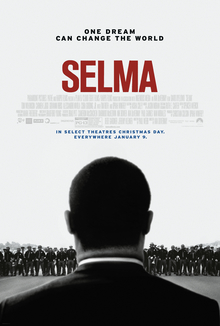
The other controversy has centered on the picture’s accuracy. In a year when Selma took flak for creation of an LBJ-Hoover conspiracy to get Martin Luther King, it’s fair to expose American Sniper to some rigor. But as Slate‘s Courtney Duckworth points out, while Kyle may have been a fabulist in other areas of his life (Kyle, who embraced celebrity, said he killed two carjackers in Texas, sniped looters during Hurricane Katrina, and punched Jesse Ventura in the face), “more than any other strategy, omission keeps the film true to life.” Generally, what Eastwood filmed was true to Kyle’s memoir, though that truth was often subject to standard massaging and embellishment (a cell phone call to his wife mid combat, creation of one bad guy and expanded dramatization of another).  The truth is incredible enough:  over 250 kills, and survival of four tours, three gunshot wounds, two helicopter crashes, six IED attacks and numerous surgeries.

Instead of training in on the accuracy of what Eastwood depicts, there seems to be an expectation that Kyle as blowhard should have been plumbed.  I’m not sure how that would have worked thematically, and it could really only be justified as a caution about the wartime events he wrote about.  I have not read anything that suggests Kyle’s telling of that part of his life is assailable, so it would be like injecting JFK’s serial adultery into a Cuban Missile Crisis flick – enjoyable for those prone to  dislike Kennedy but otherwise awkward and misplaced.

Image result for fury

A traditional war picture depicting the harrowing experiences of an American tank unit at the close of World War II, this white-knuckle drama alternates between the well-trodden verisimilitude of Band of Brothers and Saving Private Ryan and the cynical outlook of The Thin Red Line and Flags of Our Fathers. Brad Pitt commands a tank crew that includes Shia LaBeouf (the religious gunner), Jon Bernthal (the profane Southerner), Michael Pena (the sly Mexican) and Logan Lerman (the baby-faced clerk/typist accidentally assigned to the unit). Lerman undergoes a baptism by fire, as Pitt attempts to de-sensitize him on the fly in an effort to make him more effective. This includes light beatings, a few sermons and, eventually, much worse. That pretty much does the trick, and the rest of the film consists of the unit taking on two missions, both of which are visually audacious and nerve-wracking. In particular, the battle between three under-matched Sherman tanks and a Tiger tank is a thing of beauty.

Writer/director David Ayer (End of Watch) occasionally veers into the hackneyed, but the actors elevate the material with a cohesion that seems genuine. They actually feel like a unit cramped together for three years, especially when they engage in everyday banter, such as “best job I ever had.” Ayer also writes a haunting scene where Pitt and Lerman spend a quiet meal with two German women, only to have the rest of the crew bluster in angrily to join them, a reminder of their grotesque existence.

One the downside, Steven Price’s score is bizarre and bombastic, better suited to a Lord of the Rings pic than a grim war film.  The final battle scene is also a bit too protracted and incredible, at odds with the grimy realism of what preceded it.

This is a solid picture and one I was surprised was made (the budget was over $60 million but at last count, it had grossed over $80 million domestic and over $200 million total).  Apparently, there’s an audience for this kind of story (unless Pitt still has that kind of box office juice).

Better than its predecessor, for a couple of reasons: the perfunctory heartless, nasty corporation is not in the mix, the film is not saddled with the herculean task of presenting James Franco as a scientist, and we spend more time with the apes than the humans. The apes, led by Caesar (Andy Serkus), are decidedly more interesting, having created a thriving, peaceful colony outside of San Francisco. Since this sequel is set only 10 years after the apes escaped their Bay area zoo at exactly the moment mankind became afflicted with a disastrous plague, it appears the simians got right down to the nasty, because there are a shitload of monkeys hiding out in Muir Woods.  But man comes a calling . . .

Photo Gallery - Inherent Vice - Inherent Vice Movie Poster

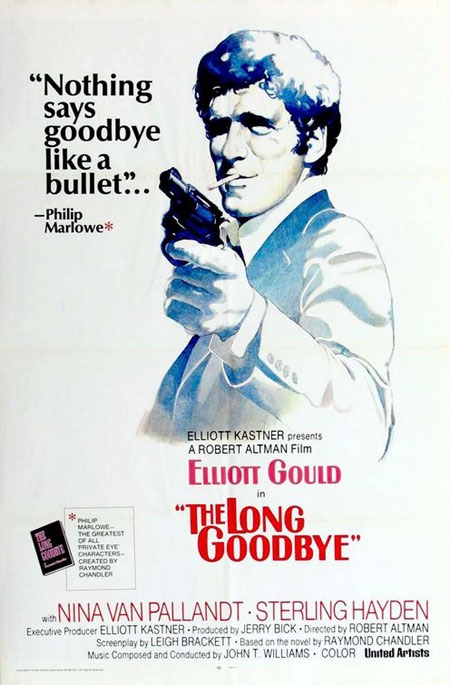
Paul Thomas Anderson’s (Boogie Nights, Punch Drunk Love) private investigator noir evokes Robert Altman’s The Long Goodbye, but instead of Elliot Gould as Phillip Marlowe-meets-Jeff Bridges’ “The Dude”, Joaquin Phoenix is all 1970 Southern California hippie, all the time, so “out there” he has to keep a notepad with one word reminders to stay focused. The result is a detective yarn, but through the eyes of a stoner, in parts scintillating and in parts frustrating. If you approach the picture traditionally, you’ll find yourself trying to connect the dots of a plot that seemingly fuses murder, real estate, the FBI, the Las Vegas mob and a drug trade that profits from its customers on the front end and back. However, Phoenix is our guide on this trip (there is no scene without him), and he is unreliable. Two couples walked out of the theater during this movie, and while the thought never occurred to me, I could see it occurring to others. Anderson has a nice cheat at work here: the byzantine plot has promise, but rigor is unnecessary when viewed through the eyes of a doper. When you shake your head, you’re a square and not in on the joke. When you go with the flow, it’s a little tiresome, and at 148 minutes, even boring.

Anderson’s movies look fabulous, and this is no exception. His sundrenched beach LA is almost mystical, and his re-creation of Manson-era, Southern California weirdness is vivid. The picture can also be very funny, with nice contributions from Josh Brolin as a straight-laced, psychologically fragile LAPD detective, and Martin Short as an electric, drug-snorting dentist.  Katherine Waterston, as the femme fatale and the only character who seems to ground the picture, is a revelation, mesmerizing and completely believable as the woman who could penetrate even Phoenix’s lazy, listless existence.

Rottentomatoes.com critics gave this picture a 70%, with only a 57% from the audience. There may be a lesson there.  Even though Anderson is an auteur commodity, he should consider getting back into traditional storytelling. His last two films –The Master and this – have been beautifully shot and acted yet uninvolving and disaffecting.  Phoenix is presented to us as an archetype in both films, without backstory or motivation. As such, it’s hard to care, and that’s a problem.

A beautiful film, lovingly rendered by Richard Linklater, who has an affinity for passage of time and coming of age stories.  His Julie Delpy-Ethan Hawke Before trio of films similarly plumbed a relationship over the years and Dazed and Confused is perhaps the best coming of age film ever made. Shot a short period of every year over a 12 year period, Linklater presents the life of a family (Patricia Arquette, Ethan Hawke, son Ellar Coltrane and daughter Lorelie Linklater) from 2002 through 2013.  We see the kids grow up before our eyes, as well as mother Arquette through two post-Hawke relationships and father Hawke through maturation from free spirit, bohemian divorcee’ to a more grounded, traditional man, with a second wife and child.  The exchanges are utterly believable and poignant, in particular, those between Coltrane and Hawke. The leads, with an exception below, are very good, and the authenticity of the endeavor is enhanced by their restrained performances.  Linklater’s treatment of the transient characters – Arquette’s two troubled husbands, the boy’s high school teacher and boss at work, and the others who comprise his support group – is deft and even-handed.  Missing are the histrionics of most any family drama or the easy lessons and dawnings that infect the coming of age genre.

There are two problems with the picture, neither insignificant nor crippling. First, unlike Hawke, who appears to have meticulously studied his character as a changing being, Arquette is static in her role as the boy’s mother. Some of this is attributable to the stolid nature of her character, but when, as Coltrane is about to depart for college, she breaks, Arquette doesn’t have the chops to deliver the scene, and what Linklater has her deliver – a surprising, almost narcissistic “what about me?” plea – is atonal and off-putting.  The film is also too long. The last stretch, covering the son’s high school and entry to college, traverses from languid to drowsy.

Still, a deserved Best Picture nominee and groundbreaking in its production.  As Linklater noted in a recent interview, “you talk to business people, and they couldn’t get their heads around it. They were like, ‘What? We can’t see any of the film before it’s finished? And we don’t get our money back for 13 years?’ All of that makes people insecure . . . The idea that an executive at a company anywhere in this business would green-light it and still be there 12 years later – that’s a statistical anomaly. So if a film like this never gets made again it’ll be for those reasons.”