Archive

5 stars

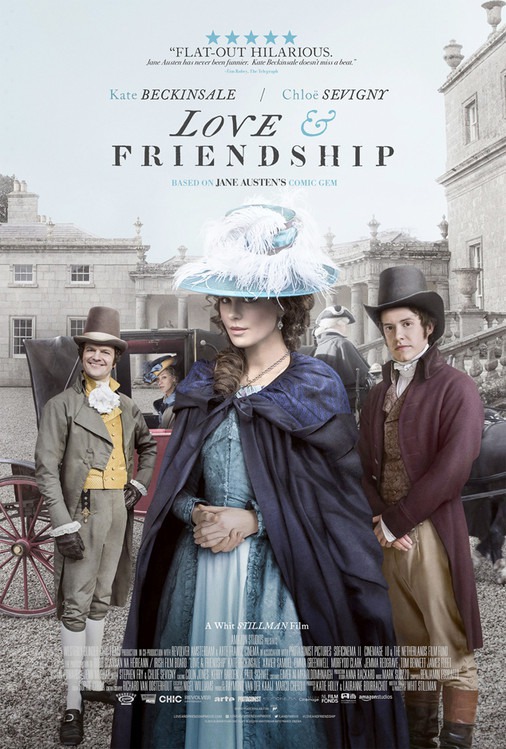
Jane Austen has been treated well and often by Hollywood, but – with the exception of the recently humorous but underwhelming Pride and Prejudice and Zombies – she has been treated with a reverence which also brings with it a certain torpidity.  How often have we seen that same dour, tortured Mr. Darcy; the loyal, suffering Elinor Dashwood; or the quick-witted but headstrong Elizabeth Bennet?  Don’t get me wrong.  I love them all, but their portrayals tend to be so bleeding earnest, and of the same stripe, that it begins to feel very rote.

Whit Stillman has written and directed three modern Austenian pictures- Metropolitan (essentially, Mansfield Park), Barcelona, and The Last Days of Disco.  When he gets his hands on an actual Austen short story, it is no surprise that Stillman shakes it all up with an original and witheringly funny adaptation.  Rather than dally with dialogue establishing the Austen archetype – handsome rogue, lovestruck hysterical wife, scheming social climber, etc . . . – he gives us the actors in poses, drawing upon the audiences’ presumed familiarity with Austen, so as to get the ball rolling more quickly.

And in the hands of the most vicious and hilarious of all Austen protagonists, Lady Susan Vernon (Kate Beckinsale), what a ball it is.  An elegant bloodsucker, Lady Vernon flits from household to household, leaving each in tumult as she wheedles her way into the most advantageous social position she can find.  Her dexterity when she encounters obstacle is noteworthy and her aplomb when thwarted is near winning.  In Beckinsale’s hands, Austen’s wit crackles, and the repartee is fast and furious.  I won’t ruin any of the fun, save to offer my favorite line from the film:  “Americans really have shown themselves to be a nation of ingrates, only by having children can we begin to understand such dynamic.”

Austen’s work always delivers us a fop, a fool, or both, but Beckinsale is almost upstaged by Tom Bennett who plays the unflappable, cheery, and utterly clueless James Martin, one of Lady Vernon’s many targets.  I laughed out loud in all of his scenes.

One of my top five for the year thus far.
The Nice Guys Blu-ray Release Date August 23, 2016 (Blu-ray + DVD)

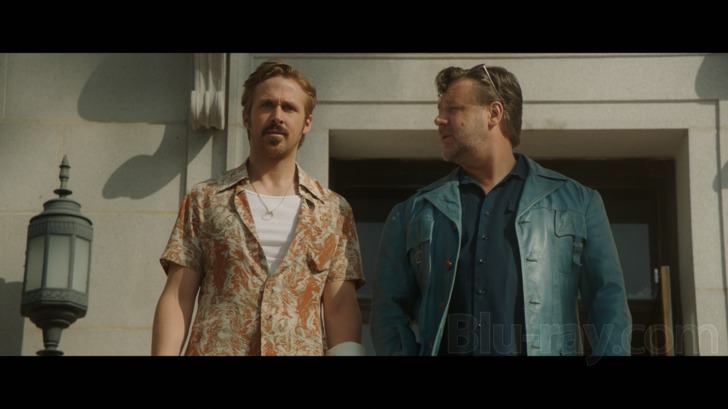
It sounds silly to say, but I’m compelled – they just don’t make movies like this anymore.  Shane Black’s (Kiss Kiss Bang Bang, Iron Man 3) noir-ish 70s buddy crime comedy pays homage to the genre by faithfully adhering to many of its precepts while updating the form in ways that are progressively more clever.  It’s late 70s LA.  Russell Crowe is a burnt out “enforcer” making his dough in the protection racket with brass knuckles and dogged determination.  Ryan Gosling is a private investigator rip-off artist with a drinking problem, a mouthy (but not precocious) pre-teen daughter, and an air of intelligence, if not actual smarts.  Crowe is hired to beat up the person or persons (one of whom is Gosling) looking for a young femme fatale, and the two team up as the semi-serious, but not really serious plot – which melds porno and corporate skullduggery – thickens.

The banter is first rate, the look primo, and the tone just right.  Black writes cynical yet hopeful, and while he makes all his station stops on time, the rides in between are a gas, made even more enjoyable by his crackling script and brilliant physical comedy.  Gosling is particularly adept at slapstick, giving Leonardo DiCaprio’s turn in The Wolf of Wall Street a run for its money.

The chemistry between Crowe and Gosling is so strong that I hope the broad hint of a sequel at the end of the film is genuine.  I was reminded of Nick Nolte and Eddie Murphy in 48 Hours , Alan Arkin and James Caan in Freebie and the Bean, and Robert DeNiro and Charles Grodin in Midnight Run.  These guys are having a blast together

Yet, Black never fully commits to the “buddy pic” requirements.  When Crowe, in a moment of reflection, reveals his tender side or Gosling seemingly rises to the occasion by exhibiting theretofore hidden mental gifts, the payoffs are unexpected and laugh out loud funny.  A dream sequence is inserted that is truly ingenious, and there are more than a few other moments when Black’s detours enhance the humor.   One of the best films this year.

I watched this documentary on Monday night, after Anthony Weiner’s final on-line transgression resulted in the announcement of his separation from his wife, Hillary Clinton handler and confidante Huma Abedin.  The documentary shadows Weiner during his run for the New York City mayoralty, a run he made after resigning from Congress when he was busted for sending a dick pick to a young girl.  The ignominy of that act was exacerbated by the facts of Weiner’s lying about the incident (he was hacked, it might not be his junk, forces opposed to him were at play, “”Maybe it did start being a photo of mine and now looks something different or maybe it is from another account”) and his unfortunate name.

But come back he did, and as relayed by the documentarians, he returned with verve and passion.  Until he got busted again, this time sexting under the nom de plume “Carlos Danger” with a sad, grasping, soon-to-be porn star named Sydney Leathers (the scandal is notable as much for its bizarre nature as the silly names of its participants).  This unfolds before our very eyes, and it is often difficult to watch.  After this second humiliating revelation, Weiner opts for an aggressive, charge forward “this is what we do“ approach, as if to keep moving is to delay facing up to the consequences of his actions.   But you can see him harden and crack, in contentious interviews and encounters with voters.  Abedin, a beautiful, stoic woman, also becomes more brittle, but she retreats inward.  When the camera catches her watching Weiner desperately prattle on, a look not so much of disgust as disbelief is on her face.  The campaign staff, all young and committed to Weiner, are rattled, and you feel for their predicament.

The documentary also illuminates a few other aspects of this entire farce that merit comment.  First, even with all the drama and pain of Weiner’s relationship with Abedin, there is an intimacy between the two that is undeniable, making this national joke a bit harder to laugh at.  The revelation of real love in what you cynically presume is a marriage of convenience is quite unexpected.  Additionally, Weiner and Abedin evince a certain cynicism of their own in the way they operate politically.  It seems perfectly natural to them when Weiner monitors her fundraising calls to friends or uses their child as a shield-in-a-stroller, or she engages in strategic musings to keep his campaign afloat.  But it feels grubby and sad.   Also, the media comes off as nothing short of vile.  Their glee and faux moralizing actually engenders sympathy for Weiner, which, given his hubris and recklessness, would seem impossible.   When Weiner becomes unspooled after being baited by the likes of MSNBC dimwit Lawrence O’Donnell, it’s hard to determine who comes off worse.  At least, for me and Weiner.  There is a  charming moment when Weiner looks back at Abedin after re-watching his interview with O’Donnell and imploringly asks who got the worst of it.  She replies unequivocally that Weiner was loser of the exchange, a fact he can’t quite grasp.   Frankly, to me, it was a close call, but the unctuous O’Donnell was not running for office.   The crazed Weiner was.

Ultimately, what I liked most about the documentary is it didn’t portray Weiner as tragedy.  He is not presented as some promising wunderkind undone by his excesses and a vicious press corps.  While in post-campaign crater sit-down interviews with the filmmakers, Weiner looks beaten, emaciated, like a recently released hostage . . .

image

. . . sad as he looks, you don’t feel that something grand has been lost.  He’s just a guy with a persistent fetish in the wrong business.


Image result for Deadpool

It’s hard to decide on what was more enjoyable about Deadpool. There’s the ingenious flash-forward, flashback in story, which keeps the action fresh. There is also an intelligent self-referential trick; as Deadpool (Ryan Reynolds) is dragged to the estate of the X-Men, he asks “ “So, McAvoy or Stewart?”.  The back-and-forth between Reynolds – our hero, though he insists he is not – and the other characters is sharp and profane. The utter lack of seriousness, save for a very few poignant moments that are immediately deflated by the screenwriting equivalent of fart noises – is also a joy (indeed, Reynolds actually farts as he walks by his roommate, who, unbelievably, is a geriatric blind woman). There’s the 106 minute running time, juxtaposed nicely with the bloated, Shoah-like length of the interminable Avenger movies, which keeps things humming.

But I guess my favorite part is when Reynolds meets his love interest (Morena Baccarin) and we are educated as to the depth of their ardor via a montage of their incredibly kinky sex life, which incorporates days of commemoration. The image of Reynolds bound and on all fours as Baccarin prepares to “celebrate” International Women’s Day with him is hilarious, made more so by the image of parents quickly hustling their children out of a theater they lazily thought was showing children’s fare

Image result for shotgun stories

Anyone who watches movies knows that some of the greatest offerings of falsity come in the package of authenticity, and this is never more so than when a filmmaker takes his shot at rural or back home America. The pitfalls are many, and invariably, films about the small town succumb to oppressive nostalgia (Hoosiers), salt-of-the-earth worship (Promised Land), the presence of an impossibly attractive lead as he or she slums (Mel Gibson in The River, George Clooney in The Perfect Storm), cutesy “we’re jes’ folks” condescension (Passion Fish), amped up mythology (Out of the Furnace) or just plain old moronic messages, like money doesn’t buy happiness or home is where the heart is or safe sex is the best sex.

There are exceptions (Billy Bob Thornton’s Sling Blade, Carl Franklin’s One False Move, Debra Granik’s Winter’s Bone), but they are rare and they are not current. In Mud, Take Shelter, and this film, a story about two modern Arkansas families drawn into a violent confrontation upon the death of their shared patriarch, writer-director Jeff Nichols cements that he can translate the patterns, pace and feel of the small town like no other. The actors portraying the family members are natural and unburdened by archetype, and the town itself is not presented to you as a metaphor or cautionary tale, just a town.

What Nichols does with actors and setting he achieves with tone. The families are seemingly in as safe a place as you can be, but when their animosities surface, their very environment becomes foreboding, and the pressure mounts accordingly. As the calamities befall them, there are no revelations or Hollywood speeches or screenwriter dot-connecting. Nichols is content to let you be the judge of what it all means.

This was Echol’s first film, and that may explain its brevity (about 90 minutes). The result is some backstory that is a tad rushed, but nonetheless, this is a gripping, thoughtful picture.

image

This is a technological wonder and a beautiful rendition of its much cheerier animated predecessor. The insertion of a human in director Jon Favreau’s lush and crisp CGI jungle is a riveting juxtaposition, and the technology is presented as a window, not a club. The young actor playing Mowgli (Neel Sethi), the man cub of Rudyard Kipling’s stories, communicates emotional involvement in what must have been a difficult job talking at a green screen. He is not precocious nor is he showy.  He’s pitch perfect.

Moreover, the voice work of Ben Kingsley, Idris Elba, Christopher Walken, Bill Murray and Lupita Nyongo is nuanced and rich; they convey a children’s story with a seriousness and gravitas that doesn’t demean their audience. The film is also thematically mature. The jungle is a brutal place and the humanization of its denizens does not white out its dangers or its essence. Mowgli is a threat, and his presence is a danger to the animals, but there is also connection and love.

For every technological Oscar, you can fill out your ballot now. It’s should also be a shoo-in for a best picture nod.

Barton Fink had the Coen Brothers delving into the dark heart of old Hollywood as it crushed the dreams, condescension and verve of the working man’s playwright. The result was a dark and sometimes terrifying comedy that revealed the old film business as an industrial behemoth, plowing over the souls of artists. It is a dour, unpleasant movie, and ironically, so arty and showy that you long for the simplistic Wallace Beery wrestling picture that plagues its protagonist.

It appears the Coen Brothers have lightened up considerably. Hail, Caesar! is a breezy, clever and light love letter to old Hollywood. The studio chief (Josh Brolin) is being wooed by corporate America, and the man sent to Tinseltown to lure him away can’t help but take jabs at the frivolity of Brolin’s work. Indeed, between staging marriages to deal with the unplanned pregnancy of a star (Scarlett Johansson), matchmaking stars to feed to the gossip columnists, squelching rumors about his Clark Gable-esque A lister (George Clooney) and saving that same commodity from kidnappers, it all seems pretty silly. But it is not. It is, as presented by the Coen Brothers, noble work.

This light romp is made glorious by several masterful recreations of old Hollywood scenes, from the massive scale of period pieces to cowboy antics to jaw-dropping swim and song-and-dance numbers. The detail is lovingly rendered, and the humor is always there. This is one of their better films. It prompted Ann Hornaday of The Washington Post to rank her Coen Brothers films, a list that is in many ways beyond stupid. Here is mine:


  1. Fargo
  2. No Country for Old Men
  3. The Big Lebowski
  4. True Grit
  5. Inside Llewyn Davis
  6. Burn After Reading
  7. Miller’s Crossing
  8. Hail, Caesar
  9. Raising Arizona
  10. Oh Brother Where Art Thou
  11. Blood Simple
  12. Intolerable Cruelty
  13. Barton Fink
  14. The Hudsucker Proxy
  15. The Man Who Wasn’t There
  16. A Serious Man

**. The Ladykillers (never saw it)


image

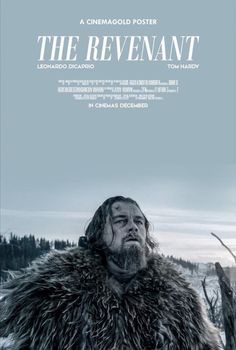
Like Birdman before it, there are scenes in this movie so visually audacious, I gasped. But where that picture hit you like a ton of bricks based on the cumulative effect of its dizzying pace and construction in the close confines of a Broadway theater, Alejandro Inarritu’s The Revenant – which is essentially a lone survivor/revenge flick, with a little spiritual mumbo jumbo thrown in for good measure – presents dazzling set pieces interspersed with awesome portraits of the vastness of nature. The year is 1823, and Leonardo DiCaprio is a guide for a fur trapping expedition in South Dakota beset by a brutal Indian attack, and in escorting the survivors back to the safety of their fort, he is viciously mauled by a bear, a scene so expertly rendered I could not believe it had not happened, yet, of course it had not. DiCaprio seems a committed actor, but no one is that zealous.

After the attack, DiCaprio has many more hurdles before him, including a suspicious and dangerous member of the surviving group (Tom Hardy, channeling Tom Berenger in Platoon, a compliment) and pretty much every calamity the brutal world of the wilderness can provide.  DiCaprio has little to say, but he brings all the physicality he mustered in The Wolf of Wall Street, only this time, during his infirmity, he exudes animalistic fury instead of stoned near-paralysis.

This is one of the most thrilling, visually stunning films I’ve ever seen. Inarritu used natural light and subjected the actors to enormous rigors (some say, “a living hell“).  Like George Miller in Mad Max: Fury Road, Inarritu dispensed with CGI, remarking, “If we ended up in greenscreen with coffee and everybody having a good time, everybody will be happy, but most likely the film would be a piece of shit … When you see the film, you will see the scale of it, and you will say, ‘Wow.'”

Wow indeed.  It all pays off in making the picture visceral, authentic and epic.  My only nits are a bit of anachronistic, stale “you have stolen everything from us” dialogue from the primary Indian and one depiction too many of DiCaprio hallucinating his Pawnee wife welcoming him to death ala’ Russell Crowe in Gladiator. But these are very minor criticisms. This is a great film and certainly one of the best of the year.

image

When Noah Baumbach makes movies about miserable people, they tend to be miserable experiences. Ben Stiller was a depressed, egocentric bundle of nerves in Greenberg. In Margot at the Wedding, Nicole Kidman was a near hysteric mother, so casually cruel to her teen son it set your teeth on edge. And Jeff Daniels’ insecure, superior father in The Squid and the Whale was a textbook narcissist and a gasbag academic to boot. While talent is evident in these films, they are neither enjoyable or incisive. Rather, they are merely intricate portraits of unpleasant people doing awful things to themselves and those around them.

But Baumbach has a breezier side, one that was shown in his writing of Wes Anderson’s The Life Aquatic and Fantastic Mr. Fox, and of late, his films seem less like autopsies and more like entertainment. In Frances Ha and While We’re Young, Baumbach could not quite leave the realm of the neurotic, but at least we had characters to semi-root for. In Mistress America, we have an unqualified heroine, Greta Gerwig (who dates Baumbach and co-wrote the script), a whirling dervish of a climber, all idea and no follow-through, who latches on to a lonely college freshman (Lola Kirke), lifts her spirits and serves as her muse. What follows is a hilarious social and then drawing room comedy, which has a bit of a Whit Stillman nostalgia, but is decidedly more modern in its literate and canny observation of academia, money, status and success. Gerwig is truly a force of nature, and Kirke is genuinely touching as a child adrift in the cold realm of college and New York City. I laughed out loud throughout, one of the best films of the year.

image

Key Largo melded with Quentin Tarantino’s bravura scenes in Inglorious Basterds and his crackling dialogue in Reservoir Dogs. I had the pleasure of watching this picture on Christmas Day in 70mm at the AFI Silver Theater, complete with an overture and an intermission. The latter occurred after 1:46 minutes, and I remarked to my son that the film was flying by, particularly so because almost all that had occurred was conversation. Obviously, a Tarantino film cannot subsist on talk alone, but when the violence occurs, it is supported by the rich, if broad, characters developed beforehand (unlike in Django, where the carnage at the end felt like an indulgent spasm, revealing an insecurity at what came before).

It’s one of the best films of the year and it’s also one that should not be in any way spoiled by a plot summary or any other commentary that could lessen the fun. Accordingly, I’ll make my review brief and non-specific in the form of a few notes.

First, Spike Lee once disrespected Samuel L. Jackson when the latter was a working character actor and the former was the auteur du jour. Lee is also made apoplectic by Tarantino, who wades into race with a daring and incisiveness that obliterates Lee’s rote and easy observations. As it turns out, Lee and Jackson have achieved a rapprochement (they do commercials together), but any rift between Lee and Tarantino is settled by Jackson (“Spike saying, ‘I’m not going to see Django because it’s an insult to my ancestors’? It’s fine if you think that, but then you have nothing else to say about the movie, period, because you don’t know if Quentin insulted your ancestors or not,”).

Also, Jackson should receive an honorary Oscar for this alone:

This is an ensemble picture but it’s Jackson’s picture (though costars Walter Goggins and Jennifer Jason Leigh give him a run for his money).

Second, Tarantino masterfully blends genre, history, comic books and violence, but sometimes, it is to the detriment of his narrative. Not here. When the necessary resolution explodes, it’s almost a disappointment because you know there will be less talk. Tarantino’s script is razor-sharp, hilarious, suspenseful and a brilliant mix of modern pop culture and historical grievance.  It’s really something.

Third, I generally do not read any reviews or commentary about a film before seeing it or writing my own review, and I did not do so here. But I presume there is the same hullabaloo about Tarantino’s liberal use of racial and sexist insults. All I can say is that he uses them beautifully, like David Milch in Deadwood.  This is how you would expect low, dangerous comic book characters who steal and murder to parlay.  Any objection is likely coming from the same humorless prigs or their progeny who objected to the hyenas in The Lion King because they were villains voiced by minorities. In fact, in creating a movie depicting a roomful of lethal people who must sleep with one eye open as they brave a blizzard and their own treachery, opprobrium aside, it’s one of the most egalitarian rooms you’ll find in film.