Archive

5 stars

I just saw this on the AFI big screen with Will and my nephew in from Spain, Julian.  A great holiday classic.

John McClain (Bruce Willis), a NYC cop who is flying to LA to spend some time with his kids over Christmas, drops by his estranged wife’s (Bonnie Bedelia) holiday party in the gleaming high-rise, Nakatomi Plaza.  Unfortunately, he arrives just when the party is crashed by a terrorist gang led by the slick and debonair Hans Gruber (Alan Rickman).  The terrorists had the perfect plan, but they did not foresee a rogue cop picking them off one by one.

When I first saw Die Hard, I was impressed such an efficient, commercial, cop-against-the world shoot ’em up could be so deft and clever.  Most contemporary blockbuster cop pictures were devoid of humor; featured laughable, deadly serious male leads spouting leaden dialogue and women relegated to looking 80s video hot; invariably starred Sylvester Stallone, Arnold Schwarzenegger or Steven Seagal; and sucked.  The only outliers were vehicles for established comedians (Beverly Hills Cop) or buddy pics (48 Hours and Lethal Weapon).

Willis, in his first big role, is winning.  When the terrorists strike, he is in his wife’s private office bathroom, shoeless and clad in pants and a wifebeater.  He’s vulnerable, put-upon and even giddy, and his charm is infectious.  He’s the perfect guide.

He’s assisted by an intricate, charming villain.  Rickman eschews stock heavy,  opting for an amused persona that hides a deeper ruthlessness :


The film also features numerous secondary characters who resonate even with limited screen time.  Reginald VelJohnson is the patrolman first on the scene and McClain’s link via walkie-talkie to the activities on the ground, with a tragic backstory of his own; Alexander Gudonov is the number 2 for the terrorists, infuriated because McCalin has killed his brother; Bedelia becomes the de facto leader of the hostages and has a few nifty exchanges with Rickman; and William Atherton (the haughty EPA investigator in Ghostbusters) is a convincing slimy television reporter.  Most notable is Hart Bochner, the coke-snorting LA cool cat who works for Bedelia.  I always thought Bochner would be a big star and the scene where he tries to “negotiate” McClain’s surrender damn near steals the picture.

Finally, Jeb Stuart’s writing is fresh, cynical and all the more surprising given this was his first picture.  Stuart writes for all characters, providing great, unobtrusive repartee.


It’s difficult to resist a dissipated, alcoholic, and profane Billy Bob Thornton as a Santa Claus who works department stores to crack their safes, especially when he meets an eternally cheerful but clueless grade schooler (Brett Kelly) left alone with his addled grandmother (Cloris Leachman) in their tony Arizona suburban ranch home.  In true Christmas spirit, Thornton discovers the boy is essentially alone and defenseless, moves right in, raids the liquor cabinet, and trysts with a slutty barkeep (Lauren Graham) who has a Santa fetish.

Santa is so bad he rips open the kid’s Advent calendar to get at some chocolates.  He pisses himself on the job.  He beats up children.  He engages in sodomy in the dressing rooms of the Big & Tall Women’s section of the department store.  He looks in the cherubic faces of all those blessed children who revere him and  . . . well, see for yourselves.

Is there redemption for Bad Santa? Kind of. But Thornton is a character who could endure three Dickensian ghosts and conclude, “Eh. Fuck ’em.”

Bad Santa is the ultimate anti-Christmas flick and a holiday favorite.  Thornton is brutally acerbic (especially when dealing with a host of bratty kids on his lap), Graham is indescribably hot, and John Ritter and Bernie Mac (as mall security and management) contribute significantly to the humor (Ritter’s repulsion/fascination with Bad Santa is inspired; what a loss he was).

image

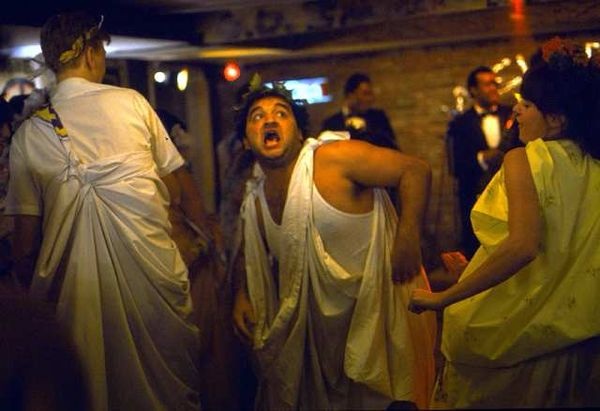
We were invited to the 50th birthday party of an old friend this weekend, and the theme was Animal House. In preparation of attending as Boon (Peter Riegert) and Katy (Karen Allen), my wife and I watched the movie to identify what they wore in the hopes of being identified as the characters. Our specific goal was delayed by our enjoyment of the movie, which neither of us had seen for twenty years or more.  It is sharply written, consistently inventive and enhanced by dozens of astute comic performances.  John Belushi’s physicality tends to get the lion’s share of accolades, but I’ve always been a bigger fan of Dean Wormer (John Vernon), who was chosen after Jack Webb turned the part down, and the pot-smoking Professor (Donald Sutherland), who took a $50,000 paycheck instead of the offer of 15% of the gross, a decision I’m certain haunts him to this day (the movie went on to gross $141 million).  His plaintive plea to his class is still one of my favorite moments of the movie:

Perhaps the greatest joy in these repressed, politically charged times is its dogged insistence on political incorrectness. Today, there would be a line of $46-an-article on-line ‘zine shitheads excoriating the film for its casual racism, sexism, insensitivity to the mentally disabled, and homophobia.   I can see the clickbait banners now:

“Animal House: The Genesis of the UVA Scandal”

“Nearly 40 Years Later, and We’re Still Laughing at Animal Cruelty”

“Animal House: A Frat Guy’s Birth of a Nation”

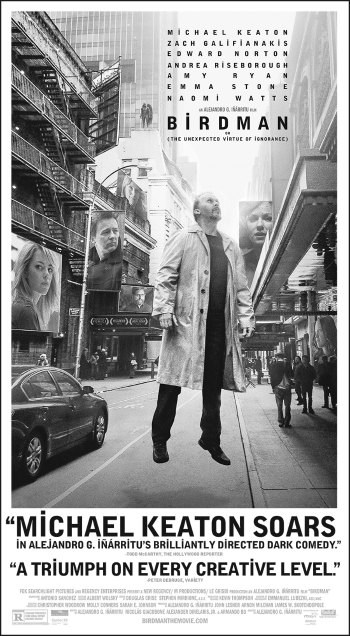
Birdman is so visually audacious you almost lose focus on its engrossing performances, cutting sense of humor and ambitious breadth. It is Rope on meth, tracking, almost hounding, with very few cuts, our tortured protagonist (Michael Keaton) in, through and around Broadway’s St. James Theater as he seeks to revive an acting career defined by his iconic role as a movie superhero. His fortune and name are on the line, and he is beset on all sides by family (fresh out of rehab daughter Emma Stone, ex-wife Amy Ryan), his jittery manager (Zack Galifianakis), his needy female co-stars (Andrea Riseborough, Naomi Watts), his antagonistic male co-star (Edward Norton) and a vicious and even more antagonistic New York Times reviewer (Lindsey Duncan).

One other character gives him some trouble as well.  His alter ego, who at first is a voice in his head but soon appears in person, telling him that all this stage acting bullshit is just that, he needs to get his ass back in a Birdman movie, and he must “shave off that pathetic goatee. Get some surgery. Sixty’s the new thirty, motherfucker!”

Director Alejandro Gonzalez Inarritu collaborated with three others on the play-within-a-play script, which is a satirical series of verbal jousts on the topics of sex, relationships, acting, the stage versus Hollywood, machismo, art versus commerce and the impact of social media.  The clashes between Keaton and Norton (sell-out v. artiste’) and Keaton and Duncan (the sell-out virus stinking up the hallowed stages of Broadway v. the Lord Protector of those stages) are particularly sharp, but the entire screenplay is chock full of gems.  My favorite is Keaton explain how he is holding up under the strain:  “”I’m broke, I’m not sleeping and this play keeps hitting me in the balls with a tiny little hammer.”

The frenetic, adrenaline rush style of the film heightens the tension (the cinematographer, Emmanuel Lubetzki, was the mastermind behind the dizzying tracking shot in Children of Men). The manic shooting makes the performances all the more impressive.  Keaton is superb.  His early trademark (ironically, before he became Batman) was a fevered, riffing style of acting, which could be spellbinding or just exhausting.  Older and more world-weary, Keaton internalizes his frenzy, struggling to bottle it in just as he struggles to keep Birdman at bay.  It’s a riveting turn.  Everyone else is excellent, and Norton deserves special mention.  As an actor with a history of being temperamental, Norton’s performance as a condescending, difficult, self-loathing actor is canny and knowing.  He damn near steals the film, which again, mirrors what is going on in the story.

Gonzalez Inarritu also gives the actors a great deal of space.  In Boogie Nights, Paul Thomas Anderson filmed a solid chunk of a drug deal going bad solely on the face of Mark Wahlberg.  The effect was powerful because in Wahlberg’s eyes, the audience could register the disaster unfolding before him.  Whenever I think of that classic film, I first remember that scene.  Of all the memorable parts of Birdman, there is a scene when Stone lashes out at her father, purposefully trying to hurt him.  In one of the few times the camera isn’t moving, Gonzalez Inarritu holds on Stone’s face as she delivers the cut and then as she sees its effect.  It’s a captivating moment in a film full of them.

Thus far, the best film I’ve seen all year.

image

In the vein of Carl Franklin’s One False Move, writer director Jeremy Saulnier has produced a moody, taut and earthy thriller that bleeds authenticity. Dwight (Macon Blair) is a seemingly harmless, homeless drifter who haunts a beach town in Delaware. He eats out of the boardwalk trash cans and his crimes are petty (he breaks and enters not to steal, but to take hot baths while the homeowners are away). Dwight is well known to the authorities, one of whom takes him aside and lets him know the killer of his parents has been released from prison in Virginia. This revelation sets in motion a chain of events that brings Dwight back home to confront the killer, and his family.

Saulnier shoots the eerie back roads of Virginia in a manner that accentuates Dwight’s foggy mental state. He seems almost enveloped by a mist of doom upon returning to his childhood home. Despite the haunting, dreamlike feel of the picture, Saulnier does not glamorize the violence, which is up-close, personal and jarring.  People panic, they miss their mark, they make unbelievably stupid mistakes, and they say things under duress that people under duress actually say.

The actors are true. Blair near carries the entire film (in a fair and just world, he’d be an Academy Award nominee). We meet him insulated by the cloud of his drifter life. When he is jerked back to grim reality, we see the dawning, and the depth of the anger he has been suppressing.  When he reunites with his sister (Amy Hargreaves), the familial anger is obviously shared, but we pointedly feel her ambivalence upon the return of her troubled brother. It’s as if she worked for years to form a scab which is ripped off the moment Dwight arrives.

Saulnier’s storytelling is such that you credibly piece together the events that led to Dwight’s fresh hell, and there is no predictable satisfaction from extraction of his revenge. Instead, both he and the audience come to realize this is a slow-moving clusterfuck of a car crash from the word go.

If none of this floats your boat, I have one more pitch:  Eve Plumb (of The Brady Bunch) makes an unexpected, terrifying appearance.

One of the better pictures of the year, a deserved 96% on rottentomatoes, available streaming on Netflix and all the more impressive when you know it was done for $425,000.

Image result for Babadook
Never let your child select his own book to read at bedtime, for he might select “Mr. Babadook.” This is a terrifically scary psychological thriller/haunted house yarn about a single mother (Essie Davis) pushed to the breaking point. Widowed seven years prior when a car accident took her husband’s life en route to the hospital to deliver her son, she’s not in a good place. The boy (Noah Wiseman) is uncontrollable during the day and plagued by monsters underneath his bed at night. He is, in short, a spoiled handful and a weird one at that. His peculiarity is driving his mother to the brink, and in the midst of this turmoil comes Mr. Babadook, a terrifying bogeyman.

Davis is sympathetic as she tries to resist the evil force that has taken advantage of her torment, and as has been proven time and again in scary films, from The Shining to The Sixth Sense to The Devil’s Backbone, the contribution of a gifted child actor greatly enhances the terror, as you see what unfolds through the child’s eyes. Wiseman is a brilliant mix of charming and brutally annoying, and while he evokes both compassion, you resent him, making the viewer complicit in unleashing Mr. Babadook.

This is writer/director Jennifer Kent’s first feature and it is assured and often iconic. There are images that stick hard with you, they are not solely the scary ones, and she doesn’t resort to gore (late night Australian television, which is playing a good portion of the film, is quite horrifying enough). While Kent owes a little to James Wan’s Insidious, she avoids his slickness and has a way of capturing what frightens even in the most mundane of settings. She merits a Hollywood project.

image

The film versions of Dennis Lehane’s books Mystic River and Gone Baby Gone are excellent, but they are mythic stories about the bonds of family in a criminal world. The Drop has no such sweep. It’s a small crime film about a Brooklyn bar and the little people (James Gandolfini and Tom Hardy) who run it for the Chechen mob. When the bar is used as a “drop bar” for the mob’s money, and it is robbed, the little people are thrust into a situation they are ill-equipped to handle.

I just saw Hardy as a meticulous Welsh construction manager dealing with his crumbling life in Locke, and he was immersed in the role. But when you bring foreigners to “New Yawk” (or Biloxi, for that matter), you run the risk of the mannered, cartoonish accent and swagger of Russell Crowe in Naked City. Forget foreigners. Even Mickey Rourke and Eric Roberts can succumb to the perils of “da’ street, and as anyone who has seen The Pope of Greenwich Village will attest, the sight is not pretty.

Not so with Hardy. He is comfortable with the character and the milieu and while it’s no stretch for Gandolfini to play the type, in his last role, Tony Soprano does not disappoint. Hardy is Gandolfini’s quiet second banana, either inscrutable or dim, but steady and loyal either way. As the out-of-their depth small-timers, Hardy and Gandolfini are ably supported by Noomi Rapace, the damaged local girl who binds with Hardy over an abused pit bull left in her trash can (the dog is so cute as to be unnerving; his fate becomes almost too paramount and you spend an inordinate amount of time asking, “Where’s the damn dog?”).

As good as these actors are, Matthias Schoenaerts steals the film as Rapace’s ex-boyfriend, a local hood looking to capitalize on the heist. He presents the perfect mix for a villain; terrifying, intriguing and just a little sympathetic, although you can’t put your finger on why. It’s a great performance that should be recognized come Oscar time. There is no chance that will occur.

This is Michael Roskam’s first American film, and the Belgian exhibits everything you want a new filmmaker to show. It is understated, assured in its pace, taut, organic and comfortable with the quiet moments.  Roskam feels no need to amp the action or to bolster the emotional connection between the characters. He lets the audience fill in the gaps, resulting in very poignant moments between Hardy and Gandolfini and a compelling love story between Hardy and Rapace, even though they don’t so much as kiss.

One of the best films of the year.


image

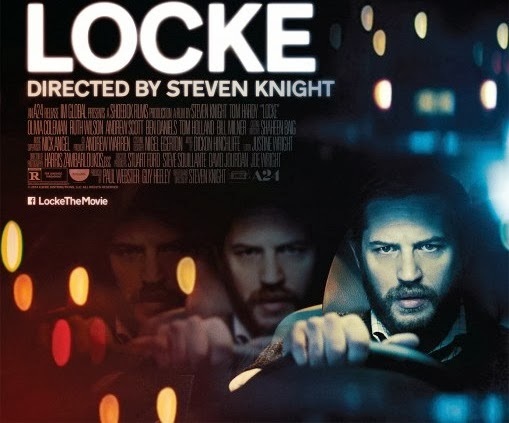
My first thought before watching Locke was of Hitchcock’s Rope, a film remembered more for the gimmick of no cuts than its merit. With an entire film consisting of hands free cell phone conversations from a car, I was primed to evaluate how the director handled such a limited visual scope. It’s a testament to the film that 10 minutes in, I never once gave another thought to that limitation. Ivan Locke (Tom Hardy) is a precise, obsessive construction manager, and on the eve of his greatest work triumph, his personal and professional lives implode, a disaster made worse by his determination to do one thing above all others. As he travels to his destination, he attempts to cobble together the fragments of his shattered life while figuratively sparring with the ghost of his deceased father in the backseat. Hardy, who seems to get every plum role these days, goes a good way to explaining why here. He is riveting and he expands his physical constrictions, evoking desperation, skill and even some gallows humor in the process. This is an audacious, confident second feature by writer director Stephen Knight, who I am pleased to report is writing the forthcoming World War Z 2.

image

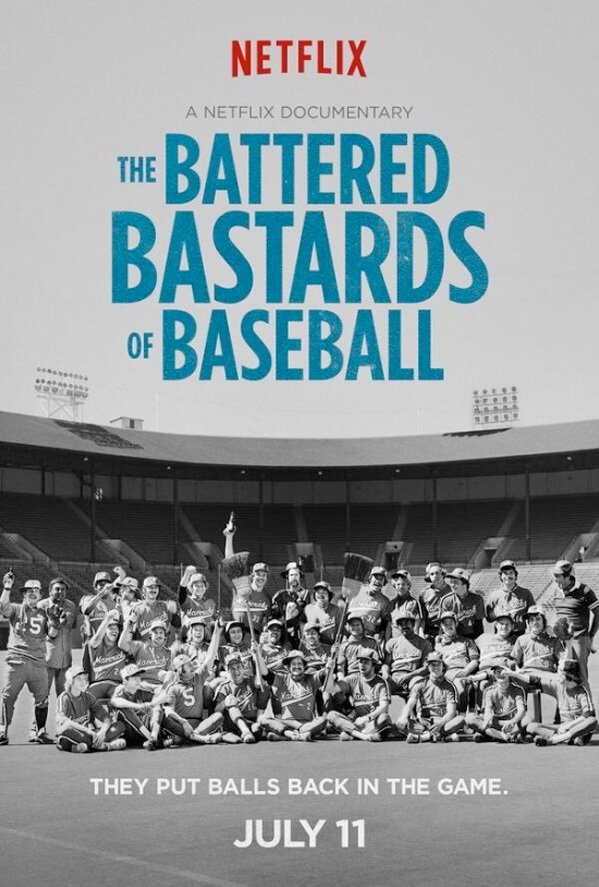
I’m not sure what is more surprising, this fascinating, Netflix-produced documentary chronicling the Portland Mavericks, an independent minor league baseball club run by baseball enthusiast and actor Bing Russell in the 1970s, or the fact that this story has not been made into a major motion picture. Russell capped off a lucrative career as a Hollywood “plumber actor” (according to his son, actor Kurt Russell, who also played on the Mavericks) by going to Portland and starting the only independent minor league baseball club in the country. The team is loaded with characters (including New York Yankee great and then baseball pariah Jim Bouton, who played for the Mavericks en route to a short MLB comeback), the story is utterly fascinating, and it has sweep, color, tragedy and vindication. Jesus, the damn thing writes itself.

This is available streaming on Netflix and I can’t recommend it enough, not only for the undiscovered gem of a story, but for the documentarians skillful restraint in reliance on interviewed remembrances and poignant found footage (a lot of which is 8mm). Not even close to schmaltzy, this output is yet another reason to get Netflix.

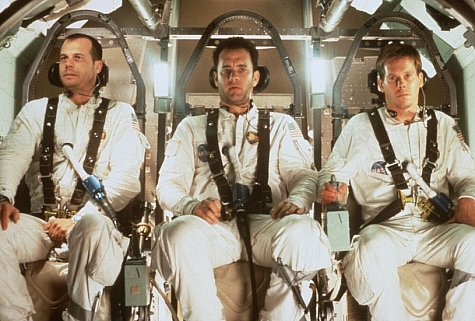
A thrilling and engaging piece of Americana and an homage to national ingenuity and purpose, this is the kind of film you hope your children watch (jocks and geeks and in-between alike, for they are all celebrated and shown as peers) and thereafter, become inspired.  I was surprised at how white-knuckle the re-creation of the near-doomed mission felt given I knew the outcome (Spoiler – the crew of Apollo 13 survived), but this is really edge-of-your-seat fare.

The performances are all excellent. Tom Hanks as mission commander Jim Lovell is hitting right in his sweet spot, the decent, measured everyman of Saving Private Ryan, Castaway and Philadelphia, and he is ably supported by Bill Paxton (a likeable but ever weakening Fred Haise) and Kevin Bacon (as Jack Swigert, added to the mission at the last minute, both defensive and independent). On the ground at home, Kathleen Quinlan is steely and vulnerable as Lovell’s wife, she underplays a role that is stock and often butchered by over drama (see Madeline Stowe as the suffering wife in We Were Soldiers), and she was deservedly nominated for Best Supporting Actress.  In Houston, it is a cast of seemingly thousands, led by Ed Harris as NASA Flight Director Gene Kranz, who work tirelessly to bring the crew back home to earth safely. At every moment, you recognize another character and/or commercial actor and say, “oh, yeah, he was in . . . .”

A year after the stunning visuals of Gravity, I expected the 20 year old Apollo 13 to feel dated. It does not.  But this is not a picture featuring aesthetics, but rather, the resourcefulness of all types of individuals engaged in a grand effort during a harrowing rescue mission, told without schmaltz or thick reverence.  The immediacy of the film comes in part from the fact that the dialogue between Houston and the astronauts is near verbatim from transcripts and recordings, and Hanks, Paxton and Bacon were all trained at NASA’s space camp in Huntsville, AL.  It’s Ron Howard’s best picture.