All good things . . . Whit Stillman lost his patience and made a lazy film. Rather than allowing us to cozy up to his affluent young characters, understand their milieu, and then enjoy their erudite yet innocent banter, he dispensed with development and jammed the quirky kids right down our gullet.
A transfer student to a tony private liberal arts college is identified by a trio of society girls who decide she needs their counsel and guidance. All four negotiate a lampoon of a Seven Sisters campus replete with neanderthalic frat boys, sneering campus journalists, and neurotic coeds.
There is no subtlety to this picture. The characters aimlessly drift into various Stillman exchanges, waiting their respective turns to say something Stillmanesque, like, “Do you know what’s the major problem in contemporary social life? The tendency to always seek someone cooler than yourself.”
There is more cleverness than that, but little intelligence, warmth or draw. Like Kubrick’s Eyes Wide Shut, which proved Kubrick probably had not had a sexual relationship in decades, Stillman seems too far removed from youth to master even a very broad comedy about young people.
And broad it can be. When one of the girls runs away to sort out her feelings after she finds her boyfriend has cheated on her, she goes to a low-rent motel. “Were you at a Motel 6?” her friends ask. “The Motel 4 – it’s even cheaper.”
Stillman has achieved bad Woody Allen. Not much fun, especially when he takes us out of Manhattan.
The film is often amusing, but the characters, never particularly realistic in Stillman pictures, are cartoons. Worse, every actor knows Stillman, and they’ve brought their Stillman A Game. The dialogue is stilted and even charmless. Oh for Chris Eigeman, who last I saw, stole a scene in HBO’s “Girls.”
The movie borders on a Whit Stillman spoof, though that really can’t be, at least until we get a proper David Mamet spoof.
He also cribs from his own work. A character has a fascination with a dance craze as social movement, just like a character in The Last Days of Disco. When you’ve only made 4 films, this is bad news.
It is no recommendation that it ends with two dance numbers.
Splash put Tom Hanks on the map as a leading man, though he was not yet filled-in and substantial. Instead, Hanks was mannered in the way an actor can be after a long stint on a sitcom (Hanks was one of the Bosom Buddies from 1980 to 1982). The film was also Ron Howard’s biggest feature, and its success would launch his career as the director of competent, workmanlike, earnest and generally dull films.
Hanks plays a love-phobic NYC businessman (derived from a childhood trauma – he fell off a Cape Cod ferry and encountered a mermaid). In the depths of despair over his romantic failures, he returns to Cape Cod, falls in the water again, and is again rescued by the mermaid, now grown up (Daryl Hannah), who follows him to New York. She is pursued by a cruel scientist (Eugene Levy), captured and probed to the point of sickness (ala’ E.T.) and then is busted out by Hanks, his brother (John Candy) and a repentant Levy.
Almost 30 years later, it’s a shock to see such a callow and obnoxious Hanks. His voice is whiny, his character churlish and childish, and he seems too much the boy for the part, light as it is. Perhaps because a mermaid has no experience with men, she just presumed Hanks was a good catch (ba-dump) but he is not. He’s aggravating and surprisingly unfunny.
The same cannot be said for Candy, who steals the movie as the heavy, schmoozing, hard drinking, yuk-yukking brother, excited to have one of his letters printed in Penthouse. Levy is also good as the nerdly, bitter scientist, and Hannah is appropriately innocent and glowing as the fish-out-of-water.
It’s a cute movie, no more, but it ends in an uninentionally ridiculous fashion. Hanks jumps in the water, making the choice to live the rest of his live with Hannah under the sea (he cannot, for reasons unexplained, ever return to land). The credits roll and Hanks and Hannah swim the ocean as she shows him her world. She has a big fin, he does not (when she was on land, when dry, she had legs and what goes along with them when they meet, and they were able to have a lot of sex). Her world is murky and humdrum. “See, this is the ocean floor. And there is a conch. And there are some fish.” And what will Hanks eat?
Two dumb Southerners vie for a North Carolina congressional district, one a Democrat (Will Ferrell), a randy Bill Clinton wannabe, and one a Republican (Zach Galifinakis), who is essentially Ned Flanders. But they are of the same bent, using appeals to God, country, morality, patriotism and the like to sway the voters, who, being Southern, are borderline mentally retarded. After an unscrupulous campaign that features baby punching, grudge wife screwing and near-maiming, we are all served a lesson in civics.
There are a few very funny gags — Ferrell accidentally leaves a message for his mistress on a phone answering machine while an unsuspecting family is having dinner; Galifinakis uses a book (“Rainbowland”) Ferrell wrote in the second grade to suggest Ferrell is a socialist because, in Rainbowland, everything is free; the baby punching; and Ferrell’s tortured rendition of The Lord’s Prayer at a debate. But much of it is derivative, either of earlier Ferrell vehicles or the fim itself. Worse, Ferrell so over-relies on his own brand of wild man antics that you can feel the air release from the movie. Quite something when it clocks in at a mere 90 minutes or so. When Ferrell engages in the gibberish-spouting freakout scene, I’m reminded of the story about the late Chris Farley, who once shoved a pool cue up his own ass to get yucks. Ingenuity or desperation? You make the call.
To compensate, we get some political instruction, presumably from producer Adam McKay, who must actually believe that vehicles created for the delivery of fart jokes will also suffice for ideological lessons (he did the same thing in the seminal Ferrell pic The Other Guys, which ended with a primer on the evils of TARP). In this movie, the Citizens United Supreme Court case is actually cited, and stand ins for the Koch brothers (John Lithgow and Dan Aykroyd reprise the roles of Ralph Bellamy and Don Ameche from Trading Places) are wasted when provided with no funny material. There’s also much that is not funny, including a gag where an Asian housekeeper is made to talk black . . . again and again.
“I’m not a racist,” says Dave Brown. “I hate all people equally.” Dave Brown is a crooked, brutal, misogynistic L.A. cop who can turn a phrase now and again and, as is evident, can crib from Dirty Harry. Woody Harrelson plays Brown with a growing intensity. Just about every bureaucratic pressure is brought against him after he is caught on tape delivering a Rodney King to an unfortunate citizen. And in many ways, that’s the least of his worries. His ex-wives (Anne Heche and Cynthia Nixon) are sisters and he has a daughter with each, making for a challenging domestic life. He’s also an alcoholic and drug abuser, a thug, a sex fiend, and a murderer. And he’s going broke.
Similar to Bad Lieutenant, Rampart’s greatest virtue is the performance of its lead. There are also some well-written Wire lite exchanges, and director Owen Moverman (following up on his impressive The Messenger) films 1999 Los Angeles in a bleached, dreamy manner. But otherwise, this is a meandering, exhausting tale of the descent of a mildly interesting bully, made even longer by an utterly pointless relationship between Harrelson and a bar pick-up/defense attorney (Robin Wright). His exchanges with the bureaucrats hounding him (Steve Buscemi, Sigourney Weaver, and Ice Cube) are banal, his heart-to-hearts with ex-wives shed no light, and his discussions with his very bitter, uncommunicative older teen daughter are grating. Harrelson does a very effective job of conveying the importance and centrality of his home, especially in his moving scenes with the younger daughter, but that’s all Harrelson. The script offers little assistance (a personal disappointment because it was co-written by one of my favorite crime novelists, James Ellroy).
Not to mention, there is no street cop so well-connected or union protected that he could still be on duty after becoming front page news in a brutal beating and then involved in a deadly force shooting. Of course, were Harrelson suspended, Moverman would have to lose the cool shots of Harrelson in his police cruiser, contemplating his surroundings and his future.
It’s no shock the audience gave this a 38% and the critics gave it a 78% on rottentomatoes.
When dealing with race and the civil rights era, Hollywood is guilty of many sins. In Mississippi Burning, blacks were little more than props and corpses. Return of the Titans and Glory Road gave us treacle, with blacks ennobled and whites edified by the close quarters of the locker room, the baptism of sweat, and each race providing the other the lowdown on their versions of pop culture. Men of Honor presented Cuba Gooding Jr. not as a man, but as a superman, literally prepared to drown in order to establish his place. Ghosts of Mississippi was the story of Alec Baldwin’s dogged pursuit and Whoopie Goldberg’s shaming patience and little else. All of these movies were pat, uninvolving and blandly heart-stirring.
The depiction of ingrained societal racism in Conrack, the surprise of A Soldier’s Story or the depth of character of In the Heat of the Night is a rarity:
Even more rare are civil rights-era films that strike a fair balance between the protagonists yet still feel authentic. The Help continues the trend. A much lighter film than most of its ilk, ala’ Driving Ms. Daisy, most of the characters soon bust out of the broad and into the wildly cartoonish. Unsurprisingly, the center of the film is not really the help, but rather, the hysterical shrieking racist society queen Hily Holbrook (Bryce Dallas Howard). Hily is so odious as to appear sociopathic. But the film takes no chances, surrounding her with a coterie of henchwomen who fear her disapproval and endorse every initiative she proposes, including the creation of a separate household bathroom for the help of Jackson, Mississippi. Perhaps this was necessary because her character, literally, must be so vile as to deserve unknowingly eating sh**, but it doesn’t make for anything beyond grating when Hilly is not biting into that surprise of a pie.
We also have a newcomer to town, Celia Foote (Jessica Chastain). Celia is shunned by Hily because she’s of poorer West Virginia stock and she married Hily’s former beau. Celia is a character in the film solely to be ostracised, to wallow in it, and then, to be given strength by her sassy, powerful house maid, Minny Jackson (Octavia Spencer), who had also been abused by Hily. In Chastain’s big wet eyes of wonder, we see the dawning of racial understanding as she assesses her own station vis-a-vis Minny. The happy ending? Minny will be given a job for life, free use of any bathroom in the mansion, and, presumably, stock options. Both Chastain and Spencer give similar, over-the-top performances (Chastain’s suggests Priscilla Queen of the Desert; Spencer every sitcom housekeeper of the last 30 years). Both were nominated for best supporting actress. Spencer won.
But the true triumph of Minny and the rest of the help is the publishing of The Help, a book written anonymously by Skeeter Phelan (Emma Stone). The book exposes the secrets of Jackson’s households as provided by the maids who serve in them. At first, naturally, the maids are not interested in the project. But then Medgar Evers is shot and in a scene as inevitable as dawn, everybody signs up.
Stone is a terrible choice for this role. She’s an accomplished comedic actress, but she lacks any real depth – the best she can do is a screwed up face that is supposed to suggests emotion but looks more like a pre-sneeze.
Worse, we’re stuck with her uninvolving subplots, as the plight of the whites eventually takes precedence over the humdrum, silent suffering of their servant counterparts. Those trials include a deep, dark family secret — her mother (Allison Janney) ousted Skeeter’s childhood nanny (Cicely Tyson) in order to impress a local gaggle of racist women. The scene is provided in flashback and it is beyond ridiculous. Tyson is so humiliated you expect the women to start throwing cutlery at her for her menial offense. Add on Skeeter’s barely fleshed out love affair – her beau is standoffish, then smitten, then furniture, and then, he walks out after Skeeter is no longer anonymous for reasons unexplained. Granted, this has been deemed a woman’s picture, but I’m not sure the designation requires every male character to be shy of lobotomization. Regardless, Skeeter’s nonsense takes away from the film’s one good thing . . .
Viola Davis, who I first saw as the mother of a boy molested by a priest in Doubt. Davis was nominated for best supporting actress in Doubt though she appeared in just one scene, and what a scene it was (alas, she lost), and she was deservedly nominated for best actress in The Help, losing again to Meryl Streep’s Margaret Thatcher. Her performance as the first of the maids to work with Skeeter is moving and nuanced. She rises above stereotype and really comes across as authentic, something not one other character in The Help manages. This scene is an example, where Davis confronts Hilly, showing both rage, confusion and ultimately, compassion:
Other than Davis, there’s little to recommend this movie, a disappointing follow-up by Tate Taylor to his stark and cool Winter’s Bone.
Proof of Life is a competent but dull thriller/romance. Russell Crowe is the hot shot “negotiator” assigned to extricate Meg Ryan’s husband, David Morse, from the clutches of South American kidnappers.
Director Taylor Hackford tries to reprise the simmering steaminess he got from Jeff Bridges and Rachel Ward in Against All Odds and Richard Gere and Debra Winger in An Officer and a Gentleman. He has a harder road to hoe here. Crowe and Ryan rub against each other, as they apparently did in real life doing shooting, but sparks do not emit. Crowe is only offering a sly “mate” every now and again, and no matter how strong the effort, Ryan can never get too far from perky popsicle.
There are a few good things: David Caruso was actually built to be a supporting actor (his run as a post “NYPB Blue” movie lead – Jade and Kiss of Death – sent him quickly back to television for “CSI”) and he is sly and funny as Crowe’s number 2, an integral part of his professional extrication team (though he’s always been a strange choice for gritty physicality; he seems more ballet than brute).
This is also one of the last films before Meg Ryan finally succumbed to the excesses of plastic surgery and became
This documentary is directed by Carl Colby, the son of the subject, former CIA Director William Colby. In all likelihood, therein lies the problem. Carl is torn as to which themes to stress, much as he is torn by the legacy of his father. He settles on three. First is a straight up documentary about a clandestine Cold Warrior who saved Italy from Communism and was critical to the Phoenix Program, eventually rising to the directorship of the CIA, where he was battered by Congress’s withering post-Watergate assault on the Agency. Footage from Italy, Vietnam, and congressional hearings is provided, along with interviews of numerous members of the American power structure at the time, including Donald Rumsfeld, Bob Kerry, Bud McFarlane. Bob Woodward and many others. This part is occasionally interesting, but since critical emphasis is placed elsewhere, the historical report lacks any real depth.
Carl Colby also presents a portrait of his family, with the strict and moralistic William Colby at the head, his wife Barbara at his side, as they were stationed from post to post. The interviews with Barbara Colby are affecting as she explains how her husband worked and the impact of Catholicism on his personality, and there are some charming vignettes, but we don’t get much of a sense as to how Colby interacted with anyone in the family. Occasionally, Carl’s voiceover expresses disappointment about his father’s secretive nature, but there are no real insights. Carl drops hints of various issues (an epileptic and anorexic sister, a late in life divorce), but they are only given the most cursory treatment (we never learn that, in fact, the sister died in 1973). For a man “nobody knew,” secrets are to be expected, but we should get better from a son.
Carl offers a third, more personal theme – the effect of having such a mysterious and enigmatic father. This aspect of the film is the weakest and most awkward. Very abruptly at the end, we’re informed that in 1996, Colby took a canoe from his Southern Maryland home after dinner and was found days later, dead. The coroner concluded that Colby drowned after a stroke or heart attack. Carl does not provide an alternative theory though he strongly suggests the miserable, guilty William Colby did himself in, after some wine and clams(?) Carl has been quoted as saying, “Call it whatever you like. I think he’d had enough of this life.”
Carl tells us – as he has in some form or fashion throughout the documentary – that Daddy wasn’t there for him, intoning, “I’m not sure he ever loved anyone and I’m not sure I ever heard him say anything heartfelt.” Given the limited presentation, and in particular the absence of remembrances from William Colby’s other 3 children and his second wife, Carl’s view strikes me as unique. Indeed, Carl told The Washington Post “I preferred the old dad, not the new . . . The old dad taught me how to sacrifice. The new dad . . . was just an ordinary guy with ordinary desires.” That says a lot. It is as if Carl has settled on his father as a dark, tortured soul and the coda to his life – a love affair with another woman that lasted 13 years that was by all accounts happy – didn’t fit his meme, so he ignored it.
Prior to seeing Dogma, my dislike for Kevin Smith was pronounced. His “breakout” self-financed picture Clerks was wildly overpraised and when he got a big budget behind him, he produced varying degrees of crap. Mallrats showed that outside the confines of a convenience store, where camera movement is unnecessary, Smith was lost. Chasing Amy proved Smith a lame, unfunny writer, incapable of directing actors, preferring to let them exfoliate, flatulate and otherwise bleed all over his print.
Dogma sucks as well, but there are some pleasures in the sucking, because Smith has written a hit-and-miss lampoon on the perversities of Catholicism. Where he hits, he knocks it out of the park, as he plays fast and loose with the Bible in an effort to tell his modern fable (fallen angels trying to get back into Heaven; other angels, muses, apostles and assorted characters tryng to stop them). Smith also takes a few decent shots at the Pope, and offers a heartfelt tribute to true faith, all in the zany format of The Russians are Coming, The Russians are Coming . . .
Smith still does not direct actors, so the players in Dogma look like they are in home movies (Linda Fiorentino manages an entire film with a smirk and rolled eyes). But his laissez-faire approach is made less ruinous by crafty renderings of four angels (Matt Damon, Ben Affleck, Jason Lee and Alan Rickman) and the best performance to-date by Smith regular, stoner Jason Mewes. The movie is silly, but it is by far Smith’s best work. What followed was more crap (Jay and Silent Bob Strike Back, Jersey Girl, Zack & Miri Make a Porno, Cop Out), and Smith’s sensibility that his crap was actually awesome and the studios don’t “get” it and that’s what makes him awesome and everyone else not awesome.
Which leads to a biography of a director highlighting the following: criticism of Paul Thomas Anderson, as if Anderson were a peer; becoming so overweight he is kicked off of a flight for not having bought two seats; attacking Bruce Willis (“I had no f***ing help from this dude whatsoever”) because Willis did not work hard enough to promote the execrable Cop Out); an attempt to market his last cruddy picture “outside the system”; and retiring, at the ripe old age of 41.
Baseball season is upon us, so a review of a Sam Raimi baseball movie (?) is apropos. Raimi, whose credits include three Evil Dead movies, three Spiderman movies, and Drag Me to Hell, proves a strange choice to helm a love story-via-flashback, as an aging starter (Kevin Costner) thinks on his love life while trying to pitch a no-hitter.
I am no Costner-hater. He is limited but does what he does well – affable, with a flash of anger and occasional stoicism. Get him outside his comfort zone (Robin Hood, JFK, 13 Days) and you got problems. But he was a fine, goofy golfer in Tin Cup and as the sweet but violent and repressed killer in Open Range. Here, he’s Tin Cup but replaces goofy with taciturn.
Costner is not the problem. In fact, his time on the mound is compelling. But when he gets to thinking about that woman of his – Kelly Preston (wife of John Travolta, poor thing) – things go to pot. Preston is thin, harpy and jittery, and her pitch is, “you need to settle down with serious people like me instead of living the life of a little boy.” Her case is not strong. Even though she has a nice daughter (Jenna Malone), it does not seem conceivable that a good-time, easygoing jock like Costner would be enticed by her invitation. And thus, the movie is undone (and at 2 hours and 17 minutes, very trying).
Postcript: this is supposed to be a baseball movie, and while I understand that athletes get injured in the off-season performing everyday tasks, Raimi has Costner slicing his hand on a router. A pitcher making $15 million a year is not working in the shed with his Black and Decker (hell, he is likely contractually prohibited from self-gratification).
The film also has the manager putting guys up in the bullpen while Costner, who is at the end of his career, IS PITCHING A PERFECT GAME for a team no longer in the pennant race!
With Terms of Endearment, Broadcast News, and As Good as it Gets on his resume’, James L. Brooks commands the respect of viewing one of his movies, even if it was not well-reviewed. So, I watched How Do You Know, the story of a 31 year old Olympic softballer (Reese Witherspoon) who is cut from the team and thereafter, alternates between two romantic futures – a freewheeling, rich, fun and unserious Major League baseball pitcher (Owen Wilson) and a nervous, polite, endearing corporate-type under federal investigation (Paul Rudd). Rudd’s predicament stems from the wrongdoing of his father (Jack Nicholson) and ultimately, he must choose jail for himself or Dad.
The film is fine in parts, and it has its funny moments, almost all of which come from Wilson and Nicholson, but it doesn’t catch hold or intrigue.
The chemistry between Wilson and Witherspoon and more acutely, Witherspoon and Rudd, is just not there. Wilson is his daffy, charming self (though as much a baseball pitcher as I am an astronaut), so he’s trying, but Witherspoon is horribly miscast as a jock who doesn’t buy into a future of love. She is not at all jock material, and she seems to know it. Her response is confusion. This is a younger Sandra Bullock role. And Rudd so overplays his mooning infatuation that you soon hope he does not get the girl and, in fact, is jailed. Most times, Rudd’s sweet mug works, but too often in this movie, you just want to smack him in the mouth.
There’s also too many cutesy scenes and quirky characters, where everybody has the witty line. The scene in a delivery room (Rudd’s secretary has a baby and gets a marriage proposal from a cookie cutter galoot) is so precious you may retch. Even the relationship between Nicholson and Rudd, which has some pretty good laughs, is too broad and thus unconvincing.
There are, however, funny moments and some very good lines even beyond the ones in the trailer. And I’ve certainly seen worse romantic comedies.




 This documentary is directed by Carl Colby, the son of the subject, former CIA Director William Colby. In all likelihood, therein lies the problem. Carl is torn as to which themes to stress, much as he is torn by the legacy of his father. He settles on three. First is a straight up documentary about a clandestine Cold Warrior who saved Italy from Communism and was critical to the Phoenix Program, eventually rising to the directorship of the CIA, where he was battered by Congress’s withering post-Watergate assault on the Agency. Footage from Italy, Vietnam, and congressional hearings is provided, along with interviews of numerous members of the American power structure at the time, including Donald Rumsfeld, Bob Kerry, Bud McFarlane. Bob Woodward and many others. This part is occasionally interesting, but since critical emphasis is placed elsewhere, the historical report lacks any real depth.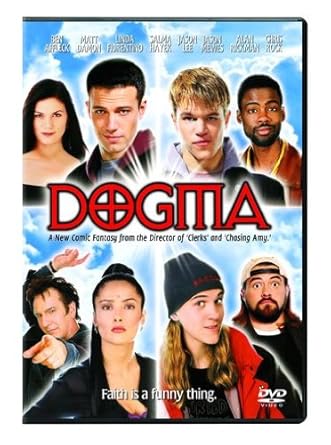
 Which leads to a biography of a director highlighting the following: criticism of Paul Thomas Anderson, as if Anderson were a peer; becoming so overweight he is kicked off of a flight for not having bought two seats; attacking Bruce Willis (“I had no f***ing help from this dude whatsoever”) because Willis did not work hard enough to promote the execrable Cop Out); an attempt to market his last cruddy picture “outside the system”; and retiring, at the ripe old age of 41.

 filmvetter