Beautiful, sumptuous and deservedly nominated for production design, costume design, and cinematography Oscars, the film is also leaden and dull. There is no burning desire detectable in the icy, mannered Keira Knightley, and her illicit romance with the fey Aaron Taylor-Johnson (Kick-Ass, Nowhere Boy) is unconvincing. The lush production is soulless and a bit gimmicky, replete with a dance sequence that recalls Tony and Maria in West Side Story (minus the passion), and a distracting movie-within-a-play depiction. Very pretty and little else. Knightley is preeternaturally girlish. She cannot convey having lived long and rich enough to put it all on the line for an adulterous love, so she opts for Anna as bipolar.
2 stars
The Awakening – 2 stars

A hodgepodge of The Devil’s Backbone, The Others, The Sixth Sense, and The Orphanage, the resulting stew lacks the intrigue, creepiness or depth of any of those films. Post WWI, a noted spiritualist debunker played by Rebecca Hall (The Town, Parade’s End) is enlisted by a teacher (Dominic West) to come to a remote English boy’s school. A young student has died and the children have been traumatized, not only by that tragedy, but by the ghost of another boy. After begging off, Hall unconvincingly takes on the challenge, easily solving the more recent death in the first quarter of the film. The rest is devoted to her chasing the ghost about, falling for West, and being manipulated for a big Shymalanesque reveal that is rushed, awkward and unnecessary. The film is overly ambitious, neglecting the less showy aspects of a ghost story, like pace, investigatory patience, and diversion. Instead, Hall tears around the house, easily converted from skeptic to believing hysteric, until her ludicrous connection is clumsily offered via flashback. It’s director Nick Murphy’s first feature and he is overmatched. Worse, there are a mere three scary moments, a number The Woman in Black provided ten fold.
The Master – 1 star

Paul Thomas Anderson’s attempt to chronicle the rise of an L. Ron Hubbard type, Lancaster Dodd (Phillip Seymour Hoffman), is crippled by what the director probably deems a necessary evil. Dodd finds the damaged and cruel WWII veteran Joaquin Phoenix, and through his character (a brutish Of Mice and Menesque Lennie), we see how the weak can be co-opted and conscripted by a charismatic charlatan. But to dramatize that point, we have to spend an inordinate amount of time with a vicious, unsympathetic thug. Phoenix’s rendition is jarring, but unpleasant, as his character is mentally unstable and ape-like.
Amy Adams plays Dodd’s fanatical wife and observes of Phoenix, “He’s a drunk and he’s dangerous and he will be our undoing if we have him here.”
And that’s what happens to the movie. Phoenix progresses, but from feral animal to a more controllable and controlled beast. Not a particularly interesting or illuminating journey.
The film is also repetitive. The scenes of Phoenix’s “processing” feel interminable, Phoenix skulks and broods and then attacks critics of Hoffman, and Hoffman charmingly explains his cobbled together philosophy, until he is questioned, and then he explodes.
The performances of Hoffman, Phoenix and Adams are all excellent (all three received deserved Oscar nominations), but this is a very long, awful dull, hard slog and the ending is ridiculous.
The Master is a marathon of well shot tedium. It’s also a bit of a cop out. If you’re going to take on the genesis of Scientology, why be so oblique? Why choose to focus so tightly on the relationship between the Hubbard character and a baboon like Phoenix?
End of Watch – 2 stars

This is the film cops might make about themselves if they were in the business of recruiting like the military and they had a big budget. Jake Gyllenhaal and Michael Pena are LA cops, and they work a beat every bit as tough as that of Sean Penn and Robert Duvall in Colors and Denzel Washington and Ethan Hawke in Training Day. Unlike those duos, however, these guys love each other. Brothers in blue, these two are damn near bunk mates. But they happen upon the stashes of a drug cartel, twice in between stunts of great derring do, and bad things happen. And that’s it. We see the camaraderie, the daily toll, the unbreakable bond, the heroism and some kick-ass gunplay.
There is no story to speak of, the movie doesn’t really work as a “slice of the life” exercise, the villainous Hispanic gang members are wildly cartoonish (they don’t say, “ess-Ayyyyyyy” but they come close), and director-writer David Ayer (who wrote Training Day) utilizes a distracting, ridiculous camera technique (Gyllenhaal is filming his daily activities for a class he is taking). The different vantage points juice up the action, but the technique also evokes The Office and the Paranormal Activity movies. On the plus side, the movie is occasionally thrilling and Pena and Gyllenhaal are very good.
Homeland – 2 stars

The buzz was so strong I couldn’t resist, so I queued up the discs for Season 1 and me and the wife settled in. What was not to like? I’d been impressed by Damian Lewis ever since his turn as Captain Winters in Band of Brothers, and The Manchurian Candidate set-up was intriguing. Better, the series started off with a bang as Sgt. Nicolas Brodie (Lewis), a Marine held in captivity by al Qaeda for 7 years, calls his wife (Morena Baccarin) to tell her he’s been rescued just as she is dismounting her lover, Lewis’s Marine buddy. The CIA operative who suspects his allegiance, Carrie Matheson (Claire Danes), is so committed that when her boss Saul Berenson (Mandy Patinkin) threatens to expose her excess, she offers him her body. So far, so good.
But boy does this show get ragged, if not in a hurry, eventually. There are many reasons.
1) Could an American be turned against his government ala’ Laurence Harvey? Sure. He could be a ticking time bomb. But could an American be turned into a ideologically driven, pray-to-Allah daily in his garage Muslim who has accepted in his marrow that he must strike the blow against his homeland? Perhaps, but with absolutely no backstory on Lewis’s character, and the thin gruel provided as his impetus, the leap is too far.
2) As Lewis’s Javert, Danes is a bi-polar freakout queen who regularly tests the limits of her family friends, coworkers and meds. She is singularly miscast, laughably over-the-top, made even more annoying by her love of jazz (which, we’re led to believe, is intricate and riffy like her mind), and is horribly written. My favorite line is when she directs the apprehension of a dangerous sniper, warning other agents over the radio that he is to be considered armed and extremely dangerous. When her mentor tells her to be careful, she responds, “this is not my first polka.”
I’ll concede. Her signature move – the bug eyes and quivering trout mouth – is pretty awesome.

She is wonderfully lampooned here by Anne Hathaway in this SNL skit, but upon reflection, it’s not so much a goof as a faithful rendition.
3) Danes is presented as a tough cookie, but she soon lapses into a simpering “I never got asked to the prom” victim and it becomes more and more difficult to take her seriously as a CIA pro.
4) Danes’ mentor, Mandy Patinkin, is as interesting as Carlton your Doorman but that doesn’t prevent a pretty involved, sleepy subplot about his wife leaving him.
5) There is actually a line where the al Qaeda man who has turned Lewis says, “And they call us the terrorists.”
6) Apparently, if you are going to authorize a drone strike on a school, it is always best CIA practices to videotape the Vice President, the deputy CIA director and the Secretary of Defense making that decision.
On the upside, the sister of our good friend is in the show, and whenever she appears, we point and remark at how similar the two are in appearance and mannerism. Every time.
Ah, the corruption of celebrity.
Kill Bill, Vol. 1 – 2 stars/Kill Bill, Vol. 2 – 0 stars

After taking my boy to Django Unchained, we started a concerted effort to watch the Tarantino catalogue. When he asked about the Kill Bills, I told him they were films made primarily for children, but were so violent, if cartoonishly so, that children probably shouldn’t be allowed to watch them. Of course, Tarantino is a visionary, having anticipated an audience of children of a wider breadth than I could have imagined, scads of 24 to 36 year old slacker geeks, still living in Mom’s basement, deathly terrified of footballs and baseballs and supervisors and real women, banking retirement on mint condition comic books, their only meaningful relationships having been 2 to 3 minute internet trysts with the various Jenna Jamesons cranked out of the San Fernando Valley with increasingly worrisome regularity.
This is their crack cocaine.
Volume 1 is stylish, meticulous, occasionally funny and inventive but a mostly tiresome abscess of a picture. As if any enjoyment derived from the first picture required penance, Volume 2 is that contrition.
The Revenant – 2.75 stars
A soldier in Iraq (David Anders) is gunned down and dragged away into the desert. He comes home to LA for a full military funeral, but after being put in the ground, he rises. And goes straight to the apartment of his wastrel friend (Chris Wilde, who looks like David Spade but acts funnier). There, he realizes he cannot eat. Soon, he craves blood. He robs a blood bank but realizes he is better served appearing vulnerable and then feeding off of criminals (a mix of Charles Bronson in Death Wish and Dexter).
The first half of the film is fresh and clever. The “what the fu**!” reaction of Anders to his plight is gut-busting and the aplomb with which Wylde greets his pal is the perfect pitch. The picture has a wicked sense of humor, harkening back to American Werewolf in London and Reanimator. This could easily have been a bigger budget, Paul Rudd/Seth Rogen project. Indeed, feeding your back-from-the-dead pal is the ultimate validation of a bromance.
Alas, two thirds in, and it runs out of gas. The plot shifts to the woes of Anders’s girlfriend, who still unconvincingly loves him with all her heart, even if he actually rots and stinks when unfed. It gets more and more absurdist, and after we dispense (in gruesome fashion) with the girlfriend, the movie doesn’t know what to do with itself. So it opts for over-the-top excess and a high concept finale. The former is numbing. The latter comes off cheezy. The film’s low budget, hidden nicely by well-chosen LA locales and unambitious special effects, becomes an issue when we get into police chases, an overlong massive shoot-out in and outside of the subway, and sci fi nonsense that cries out “Student film.”
Still, promise from director D. Kerry Prior and a noble failure.
The Best Exotic Marigold Hotel – 2.5 stars

A vehicle for the skills of a host of accomplished Brit actors, this movie starts out swift and charming, as we watch our leads end up in India at a run-down retirement hotel that looked a helluva lot better in the brocuhure. Judi Dench is recently widowed; Tom Wilkinson, fed up, abruptly resigns his judgeship; Bill Nighy and Penelope Wilton have had to scale down their retirement plans after an investment in their daughter’s internet company went bad; Maggie Smith needs a hip replacement and can get it quicker in India; and Celia imrie and Ronald Pickup are fighting aging and simply along for the ride. Directed ably by John Madden (Shakespeare in Love), the set up is deft and the upcoming culture clash looks to be fun. Okay. Love Actually for old people, right?
Instead, the film takes itself way too seriously. The Nighy-Wilton union is crumbling. Dench is regretful of her long-term marriage. Wilkinson has a deeper secret underlying his removal to India. Smith’s tale is even more woeful. What seeemed a light comedy turns into a morose trek. Even the comic relief (Slumdog Millionaire’s Dev Patel, who runs the hotel) has his own crucible – he must stand up to his mother and choose the one he loves (all with the help of some sound Brit advice).
The actors are really all very good, and they are elevating pedestrian material (not a thing happens that you haven’t guessed). The resolutions are absurdly convenient and it ends sickeningly cloying. Unlike Slumdog, the India portrayed here is all sweetness and dazzle, if a little crowded, and the Indian actors are given that child-like nobility that always comes off as condescending.
The last 15 minutes is so rushed in its effort to provide a tidy, happy ending, it feels damn near like the entire endeavor was trying to make a flight.
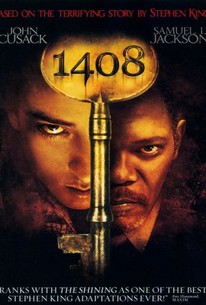
1408 – 2.75 stars
With Halloween nearing, and my son in eighth grade, the number of scary films appropriate for him to see is increasing, and he is chomping at the bit (he’s already secured a promise from me that I will take him to The Exorcist for its 40th anniversary next year). I remembered 1408 as having been both scary and appropriate and so we watched it this weekend. It is scary and appropriate, but on a second viewing, it is pretty weak tea,
The movie is based on a Stephen King short story, so naturally, the protagonist (John Cusack) is a writer, and not just any writer, but that certain writer whose first book was brilliant and serious and moving, but it just didn’t sell (how could “The Long Road Home” not sell?). Cusack is James Caan in Misery, even down to the sole cigarette. So now, embittered, Cusack writes a schlocky travelogue based on his visits to haunted hotels, inns and B&Bs. Cusack is enticed by an anonymous invitation to spend the night in New York City’s The Dolphin Hotel, room 1408. Despite the best efforts of its manager (Samuel L. Jackson) to dissuade him, Cusack insists, and soon, he is ensconced and psychologically assaulted.
The lead up is good stuff. Cusack is convincingly cynical in his pooh poohing and Jackson is effectively ominous in his warnings. Moreover, the plot is equipped with a nifty “in” to the room – Cusack’s agent (Tony Shalhoub) engaged lawyers to find a civl rights statute that prohibits a hotel from refusing to rent an available room.
But there are only so many holes that can be patched. Cusack learns that there have been 56 deaths, both natural and unnatural, in Room 1408, and Jackson also informs him that recently, a maid went in the room and gouged her own eyes out. Cusack doesn’t believe it, which is fine, but Jackson knows the room is a meat grinder. How in the world could the room be made available to anyone under any circumstances? The civil rights law wouldn’t override gutting the room, or making it a part of the hallway, or simply declaring it off limits to any renter. And who needs to tidy up this room?
This is a failure of writing. There are any number of ways around the “we have a haunted room but it is still available” conundrum, but first, you have to cut the body count down by 46 to make its availability to Cusack, even under threat of litigation, reasonable, and its availability to victims 15 and up plausible.
Once Cusack gets in the room, it becomes a decent fright fest, starting with a few slight tricks (chocolates on the pillow appearing magically, a creepy clock radio that only plays The Carpenters). Ghost jumpers follow, then an unexplained slasher and soon, you name it, it happens. The room plays on Cusack’s pain, and torments him, inevitably, with the memory of his dead daughter.
Cusack is excellent as a man fighting losing his mind, but without backstory, the movie becomes all about the visuals. And those remain interesting only for so long.
Still, state senator Clay Davis from The Wire (Isiah Whitlock, Jr.) steals the picture in his one scene as a reluctant air conditioning repairman. So there’s that.

Sheeeeeeeeeeeeeeeeeeeeeeeit!

Rounders – 2 stars
Matt Damon is a law student, loyal to a childhood pal (Edward Norton). They’re poker players, but guided by law professor Martin Landau and gal with the heart of gold Gretchen Moll (all grown up in HBO’s Boardwalk Empire), Damon tries to walk the straight and narrow.
But just when he thinks he’s out, he’s pulled back in! Norton gets indebted to a brutal, track suit wearing Russian mobster (John Malkovich) and he needs Damon to square him.
I’m a huge fan of Matt Damon, and consider him wildly underappreciated. He’s the engine of The Talented Mr. Ripley and his villain in The Departed is the most interesting and challenging character in the picture. His grieving fathers in both Syriana and Contagion are deeply moving, as is his shell-shocked soldier in Courage Under Fire. I winced when I heard he was cast in the Glen Campbell role for The Coen Brothers’ True Grit, but I don’t know why. He was the perfect blend of haughty and out-of-his-depth.
But make him the hero and the feeling of somnabulence soon washes over you. His Good Will Hunting was the most boring of his pals, Bagger Vance moved golf on film from tiresome to interminable, his Jason Bourne had you stifling yawns even while he was snapping necks, and Eastwood’s Invictus showed he could be pedestrian with a South African accent.
Damon is a terrible choice for the hero in this picture. He’s dull, knows it, and eventually, just gives up. Damon’s blah performance is underscored by the fact that all the other characters are oozing and sweating and doing noir tough.
Thank God for Malkovich. He’s the only thing that save this hackneyed tripe, and the reason for both stars.
Minsk?
