Archive

1 star

In the Gary Oldman Churchill vehicle, I wrote of, “one of the most cringe-inducing scenes you’ll ever see, when Winston Churchill finds himself on the Underground getting his back stiffened by ‘the people’ [which was] patently ridiculous.  The only thing missing on that subway car is Tiny Tim exclaiming ‘God Bless Us, everyone,’ thereby spurring Churchill to reject appeasement and declare that England would ‘never surrender.’”

In Blitz, near every scene feels as authentic as THAT scene. Darkest Hour meets Sesame Street meets Yo’ Teach. Tired, anachronistic piffle.

If you can get past the Model U.N. in the Tube, you are made of very stern stuff.

Steve McQueen, not the actor but the director of 12 Years A Slave, needs some perspective. This film comes six years after his last, the uneven Widows, and the rust and ennui shows.

A friend put it perfectly: “It is as if he wanted to make a standard racial parable, but knowing how played out that could be, jammed it into a period piece.”  

McQueen did himself no favors in casting either. Saoirse Ronan opts for 90% beatific. Playing her son, Elliott Heffernan just doesn’t register, starting with sullen and eventually advancing to more sullen. When he stretches, it is more miss than hit. As he told Variety, when asked to cry, “I pretended my mom was taking away my PlayStation.” It is Heffernan’s first gig, and yes, it looked like his mom took away his PlayStation. 

I’ll give McQueen the accomplished look. The opening scene of men fighting a post-bombing fire and Heffernan’s journey across the English countryside to escape the terror are arrestingly resonant.

On Apple.

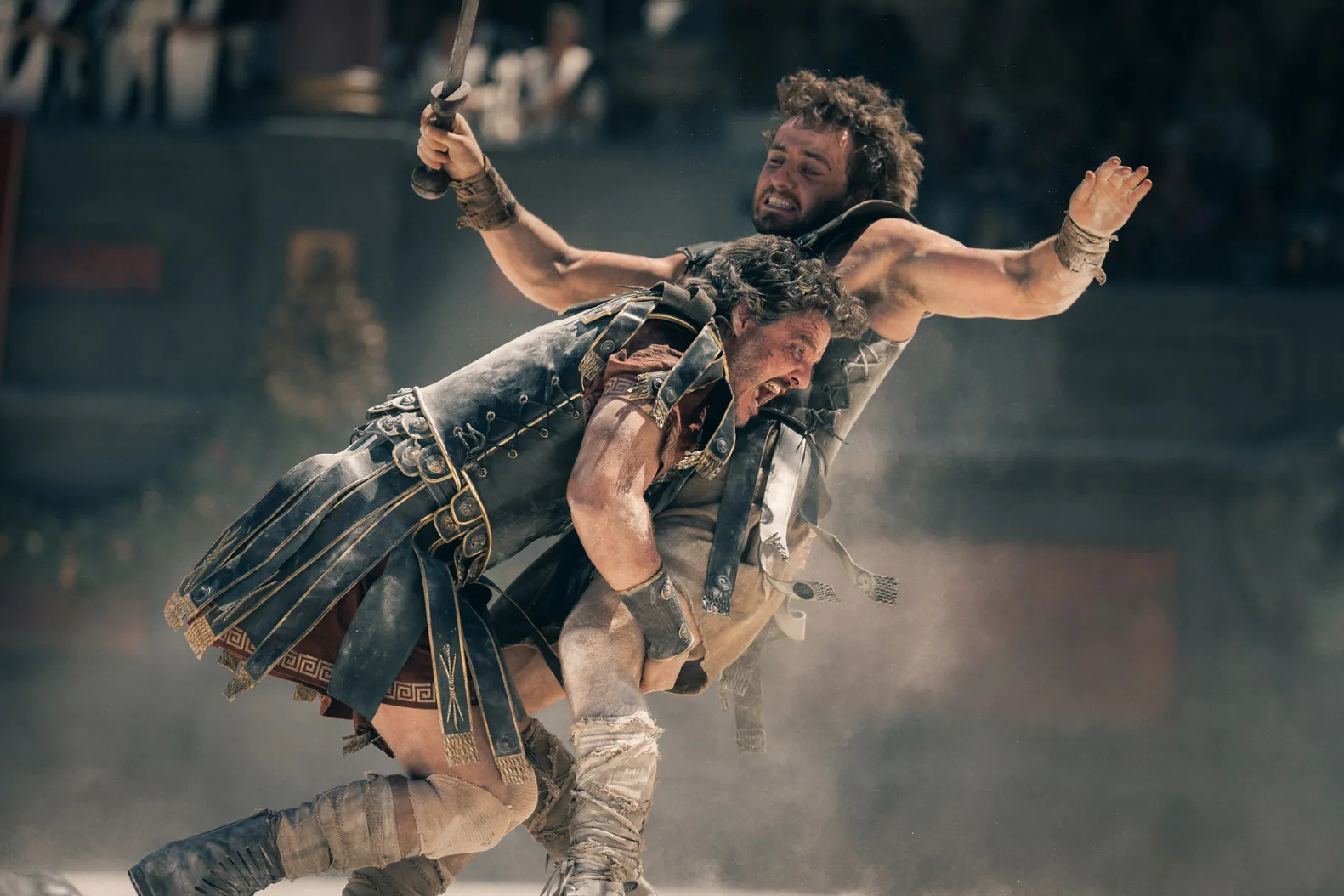
Imagine Gladiator, a fun, glorious, bloody romp. Now, forget about that film. It will only make things worse.

Here, the lead is not the captivating Russell Crowe but rather, the much younger Paul Mescal. Mescal has none of Crowe’s gravitas. He is not a Roman general, weary of war and politics, who just wants to go home to his wife and children. Instead, he’s a happy agrarian bean-picker, kissy-facing with his wife, when a new Roman general (Pedro Pascal) threatens their idyllic, multi-cultural commune in Africa. Mescal and wife strap on their gear and fight side-by-side. Pascal wins. The wife dies. And now, Mescal is a slave, soon to be gladiator, bent on revenge.

So, the same picture, but worse in all respects.

Every smart line in the original is replaced with “up with people” pablum and a dull dispute as to whether there is a “glory of Rome” or a “glory to the idea of Rome”, and every minor character who exuded their own agency and flair in the first film is replaced by cookie cutter figures infused with a boring wisdom that anachronistically presents as spiritually worldly.

While Gladiator II provides more combat than the original, it is juiced with unconvincing CGI monkeys, a big ass rhinoceros, and sharks. Even the hand-to-hand combat seems obligatory. You don’t care and no amount of spraying blood, gutting, and decapitation can involve you.

Our protagonist, Mescal, is supposed to be filled with “rage” but, at his most engaged, seems ironic and perhaps annoyed. The romanticism of the first picture was fueled in no small part by Crowe’s seething hatred at the needless and cruel slaughter of his family. Here, you think, “Maybe Mescal wasn’t so into his wife.”

There is little you don’t see coming. Mescal is the biggest non-mystery man ever and when the film finally gets to someone who can generate interest – gladiator merchant Denzel Washington – his grand plan and motive hit too late and quickly, right when you are nodding off. Washington, however, is at least having fun. Everyone else seems to be in mid-root canal.

And no one seems Roman here. The machinations are more on-the-fly than crafted, the concern for the people preposterous, and the finale – where two armies unite with “Huzzahs!” after an unconvincing “aren’t you sick of death?” speech by Mescal – has the feel of the old Coke ad where everyone wished they could teach the world to sing.

There is no greater dissonance than the emperors. In the original, Joaquin Phoenix was delicious, funny, just chewing scene after scene, but also substantial. Here, we have two emperors, sybaritic brothers who flounce about and exude a “let them eat cake” mien. They have no backstory, no goal, just dull, giggly, face-painted, effeminate schtick.  

Interminable. Avoid. 

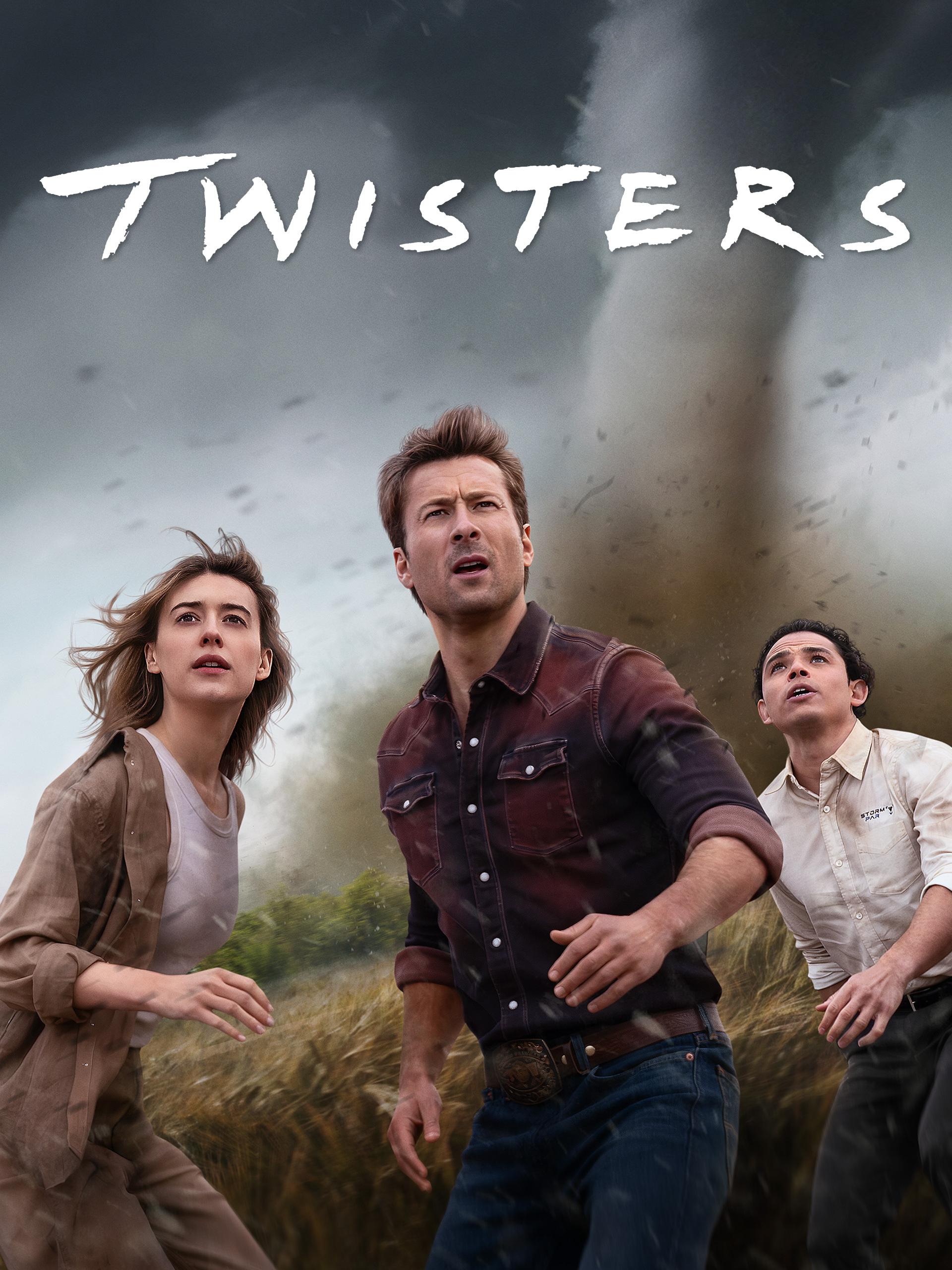
Goddawful, save for the winning Glen Powell and the fact I saw it in 4D, so the chairs moved and rumbled, wind blew on us, and lightning flashed in the theater.

Sensurround updated!

Otherwise, a complete dung heap.

Our story begins in Oklahoma, with one set of DEI/ChatGPT generated, wisecracking, riffing storm chasers, led by the charmless Daisy Edgar-Jones (Where the Crawdads Sing). Their endeavor feels like a Mentos commercial, until catastrophe strikes, and then it feels more like a darker Skittles commercial.

Five years later, after Daisy has run away from her fears to New York City, she is drawn back home, because, well … she’s a tornado whisperer. She can scan the topography, watch the wind disassemble a dandelion, take a deep breath, and she just knows where that pesky sky is gonna’ funnel.

Soon, she runs into Powell, a YouTube sensation who chases, or “wrangles,” tornados for fame and followers. Daisy must overcome her fears. Glen will help.

She also confronts the laziest form of corporate skullduggery one can imagine (so thin it is dropped immediately).

The script is banal and nonsensical. There really is nothing to say other than, “whoa!” given the impressive CGI and pyrotechnics (though someone does say, “be careful out there” – ugh), so you wait on some solid jokes and clever banter to get you to the next tornado, maybe some insight into other characters beyond “quirky” and “loud” and “ostentatiously, individualistically hip.”

Not gonna’ happen. Sure, there are a few spots for Powell to shine. But otherwise, he too has a coterie of kooky storm chasers, and they too look and speak like they’ve been assembled by a DEI/ChatGPT witch doctor, and while they all say “whoa!” differently, they don’t say it in a funny or interesting way (SPOILER – not a one of these wafer thin “characters” dies, which is a huge disappointment).

Powell pretty much has to steer this leaden ship with his impressive charm. God knows he tries, but he is thwarted by his co-star and a script written for dimwits.

Edgar-Jones has two faces – sad and sadder. So, for a rollicking, high octane joyride, one of your hosts is on thorazine, and Powell just can’t get past, into, or through her innate dullness.

And when they bond, there is nothing for them to chew on.  Case in point,  They are at a rodeo. Glen thinks Daisy is from New York City originally, so he is showing her the sights. There is great potential for some fun to be had here, the girl who knows the rodeo like the back of her hand letting the cowboy puff out his chest and wax poetically. But no. The kicker is she gets to say, mournfully, that this is not her first rodeo.

Then they talk about their first tornados. Again, this doesn’t have to be Oscar-worthy, but you can have a decent sexual double entendre or two here. God, anything to break up the verbal monotony. But Daisy demurs, Powell tells a story of how he saw one when he was 8 and realized he was supposed to be scared, she asks if he was scared, and he says . . . “yes.”

This is unintentionally moronic dialogue better suited to Idiocracy. Or Quest for Fire.   

As badly abused as the audience may have been, the people of Oklahoma are sitting on a winning class action suit for defamation. Here they are, living in a hellscape where tornados appear in an instant and ravage their communities. It’s all over the news! But damn if they don’t insist on proceeding with the town fair or the Little League playoffs or the Annual Pie-Eating Contest or running lightweight old-timey trolley cars down their streets.

Those plucky Okies won’t be dictated to by mere weather!

Yet, when the tornados arrive, you’d think these weathered veterans were from New Hampshire. They run around screaming and trying to gather belongings, hiding under metal containers, holding knives and bags of broken glass, doing all the other things people in tornados are advised not to do, until Daisy and Glen show up to remind them to seek shelter.

In a movie theater.

That is playing Frankenstein.

Because they don’t get first run movies in Oklahoma.

They do get a shitty country song about how you can’t spell Oklahoma without “home” and there’s a lot more of those ditties throughout this dog.

Gonna’ have to give a second look at Sharknado after this turd.

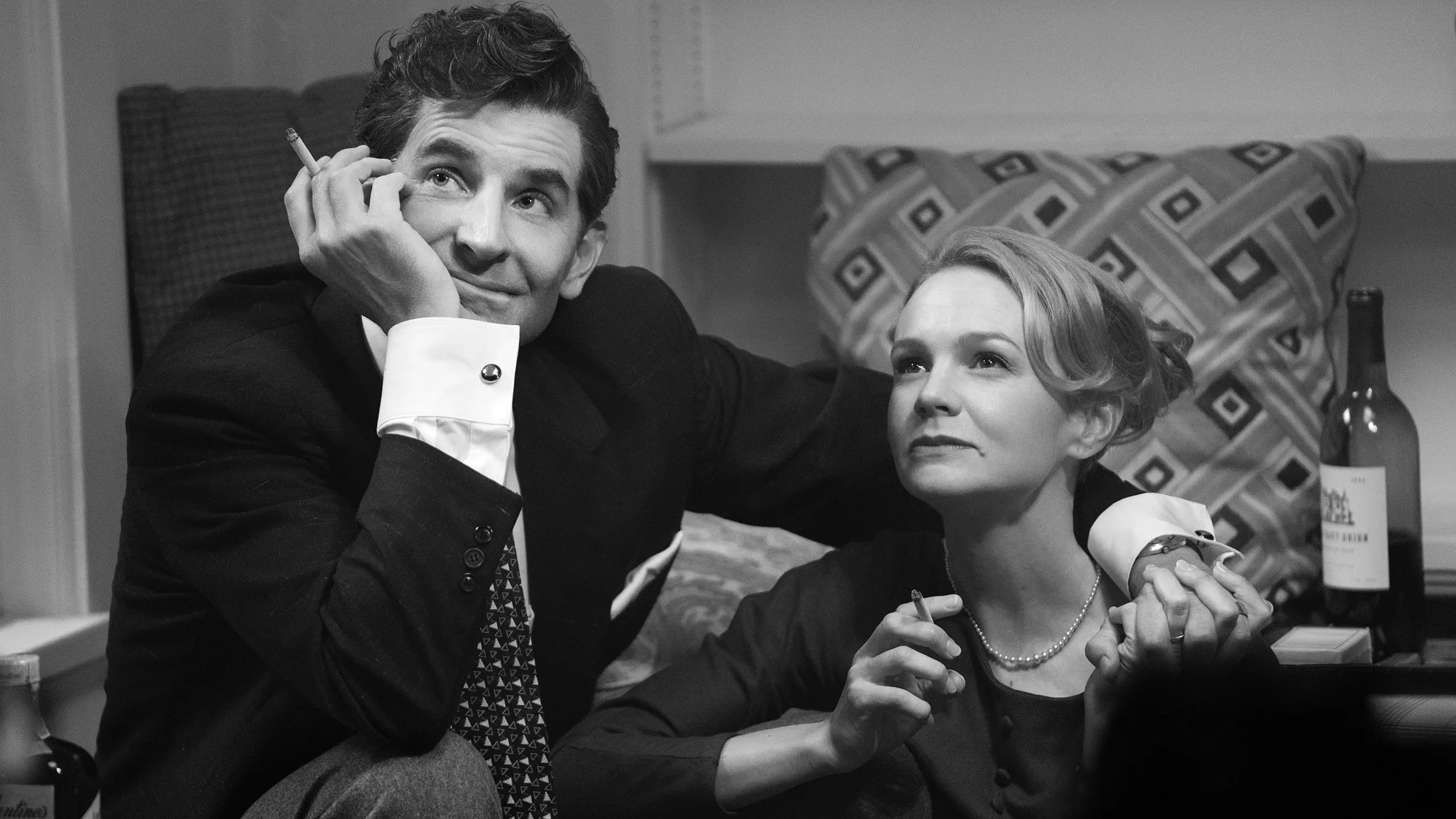
Leonard Bernstein was a significant man. But you wouldn’t know it from this film. Bradley Cooper’s labor of love makes Bernstein seem rather humdrum, and as the film progresses, Cooper certifies that reality, eventually discarding Bernstein’s story for that of his wife (Carey Mulligan).

Look, it is clear Cooper reveres Bernstein, but too much is too much. Think of when someone you know introduces you to someone they love. They are already in thrall, and they have explored every nook and cranny of their idol so, in your introduction, you don’t come to your appreciation organically, the way your friend did. You start with, “He is the greatest.” And then, after that, your friend just keeps saying, “Isn’t he? Told you!”

Here, Cooper is so entranced, he glosses over what makes Bernstein Bernstein – his music. Sure, there’s tons of scenes of Cooper directing with the panache and flourish of Bernstein, but Cooper is more interested in having mannerisms down pat than exploring why we’re here. Cooper’s meticulous impersonation cannot substitute character.

Worse, since Cooper has little interest in Bernstein’s craft, we focus on his domestic struggles, which are pedestrian, even for a famous man living a barely disguised double life. He is not denied his pleasures, nor is he punished for them. Rather, they create some marital strife. And that’s what we get to see until cancer closes the story out. No war time concert in Israel in 1948. No silly cocktail party for the Black Panthers (sent up so wonderfully by Tom Wolfe). No concerts after the assassinations of JFK and RFK. No philanthropy for AIDS as it decimated his profession (and killed his longtime lover Tom Cothran, for whom he left his wife). 

We learn very little about what Bernstein should be remembered for.  Hell, he could have been a periodontist.

A well shot chore. On Netflix.


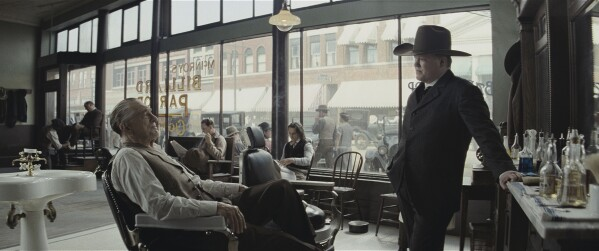
Andrew Dominik’s The Assassination of Jesse James by the Coward Robert Ford is one of the best films of the last 25 years and would rank in my own top 25 of all time.  So, no matter the negative notices, any of his pictures merit a look.

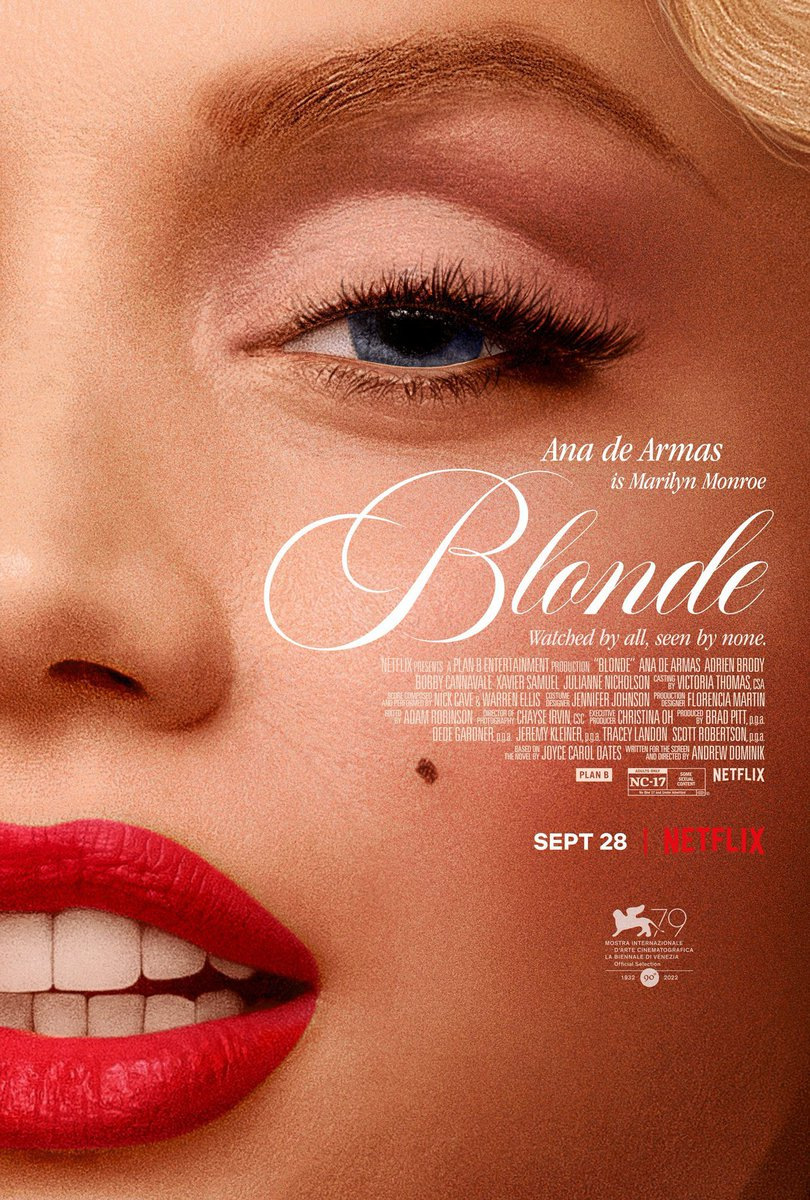
Blonde received scads of poor notices.  Justifiably so.

The picture has much in common with Elvis, and you get the sense that Dominik, like Baz Luhrmann, was behind the eight-ball from the outset.  Both biopics are devoted to broad pop icons with fixed public personas that, when pierced, reveal soft, dull goo.  So, the directors make up for the deficit by untethering the stories from fact, gussying up the visuals, and stretching for a larger point. As with Elvis, we quickly learn a good-looking picture can only get you so far.

Make no mistake.  Blonde is a visual feast. But it has no real narrative. We meet poor Norma Jean as a child brutalized by her mentally ill mother, and then she’s brutalized via casting couch, and then she seeks shelter in a “throuple” with two men, who take advantage of her sexually and financially. Soon, Joe DiMaggio (Bobby Cannavale) shows up out of nowhere, and then Arthur Miller (Adrien Brody), and then JFK, and soon, drugs and death. One calamity after another, one torment replacing another. None of her relationships are developed. Rather, her romantic entanglements just appear, are thunderstruck, and then we move to the next victim/victimizer.

It is all very sad, but watching a film is transactional, and you soon wonder, “Why am I supposed to care?”

Ana de Armas as Marilyn is occasionally effective (in particular, during a riveting audition), but for the most part, she’s a cartoon, cooing “Daddy” (to her own, unknown father and every man she has chosen to replace him) in a breathy, childlike manner at such a rate that you can almost see DiMaggio and Miller thinking, “Yikes! I thought the ditzy bombshell thing was an act? How do I get myself out of this?”

de Armas was nominated for best actress, and much like Natalie Portman in Jackie, the rendition is an over-the-top caricature of a public figure, where their peculiar tics are amplified. When her Cuban accent makes one of many appearances, it doesn’t really bother.  There’s just too much else wrong with the performance, as if someone told de Armas to play Marilyn as a perpetual thirteen year old girl. With a concussion.  

Not that de Armas was given much to work with.  In one scene, she is with the none-too-impressed DiMaggio women, who are making spaghetti, and she lilts, “ooooh … real spaghetti? Like . . . not from a store?”

There’s plenty more where that came from in this ridiculous script. At the premiere of her first big film, as the crowd erupts in thunderous applause for the town’s new star, Marilyn breathily says, out loud, “For this, I killed my baby.”

Hoo boy.

Dominik’s missteps can also be traced to his misunderstanding of Monroe in the American consciousness: “If you spent 70 years enjoying a fantasy of a person; then a movie comes along that says she was not complicit in your enjoyment, it puts you in an uncomfortable position for having enjoyed it. People don’t want to be put in that position; they want her to be the one that created their enjoyment, and was along for the ride, then had a bad year and killed herself. That’s not the way it works. There’s no redemption in suicide. Americans don’t like you to monkey with their mitts too much. They very often want to jump to the solution without looking at any of the trauma.”

I am not unreceptive to some of these observations, but as applied to Monroe, Dominik is just wrong,  He is talking about the Monroe of Elton John’s “Candle in the Wind” which was so long ago (1973, only 11 years after Monroe’s death) the song has been repurposed for Lady Diana (and will eventually be repurposed again when the next pop starlet dies before her time). Americans are not so protective of Monroe that Dominik’s pedestal tipping would elicit a reflexive defense.  Rather, in modern memory, she was a sexy, mentally disturbed, marginal actress who sang a sultry “Happy Birthday, Mr. President!” publicly and privately and then overdosed. Side note: has anyone been taken down further in filmic history than JFK? When I grew up, he was the cool, collected president who saved his mates in PT 109 and stared down the Russians in The Missiles of October. Recently, in The Crown, he was a pill-popping whirling dervish.  Here, he’s a #MeToo emblem, forcefully cajoling Monroe to perform oral sex on him in what has to be the worst scene in the picture.            

I suspect Dominik knows the film fails, but credit him for a stout defense: ”Blonde is a very well worked-out film. Those who don’t think that aren’t watching it. If you sit back and trust that the movie knows what it’s doing, it’ll work.”         

It does not. But if you are hot for a visually impressive, near 3-hour movie about a glamorous, vapid punching bag, Blonde is streaming on Netflix.  

For a film about the investigative reporting of a very big story, this picture is about as interesting as assembly line work.

Some may say, “but Filmvetter, this is the reality of the job.” Alas, so is banging out fenders and they don’t make movies about that.

$34 million brought in $5 million domestic, justifiably so.  The film is a didactic, repetitive, undramatic, boring 2+ hours of drudgery acted by rote with a sprinkle of washed out dread.

I presumed the picture was a financial flop because of #MeToo fatigue, the lack of a present villain (in the movie, Harvey Weinstein is just a voice on boring phone calls and the back of a head – the most riveting part of the film by miles is the short clip of the actual vicious brute threatening a woman), a lack of stars, and the fact that a movie about reporters, especially in the digital age, would be static.  But its problems go deeper. This is less a picture than homework.  The great reportorial films (All The President’s Men, Spotlight) place their journalist protagonists in the areas of doubt, indecision and lack of assuredness. Even if they think they have the story cold, they are intrepid, skeptical, tough on each other. They make mistakes. They catch breaks.  They are drawn in.

Here, the reporters are emotionally invested in a matter that is a foregone conclusion from the outset. Beyond the sympathy they communicate is a barely contained outrage. Therapeutic enabling takes the place of inquiry, skepticism and the remove of professionalism. They just get a name, make a call or visit, sit down with an emotional, reluctant, and/or scared victim and report back to editors (Patricia Clarkson, Andre Braugher) who support them unreservedly, listening intently as the duo relay facts so elemental you weep for the descent of The New York Times. The newsroom is thus reduced to church and rally (“Let’s interrogate the whole system”).  Thank you, oh thank you, the reporters hug and cry when a source confirms. They do this three times.  

The two leads (Carrie Mulligan, Zoe Kazan) are as flat as both the material and the portentous strings and piano score. Kazan overlays her dullness with sophomoric earnestness. It also doesn’t help anyone that the film regularly proclaims it is about women at the expense of its female cardboard characters.

The picture is also brutally unsubtle. On numerous occasions, the film has a woman clunkily just pop in and do a solid for women writ large or a creepy man being an oaf or a pig. Discussions between Kazan and her young daughter on the nature of her work and “rape” are so forced and artificial as to be embarrassing. A character actually looks into the mirror to search his soul.

Finally, for what aspires to be a brave expose’, the movie pulls a few punches, ignoring or soft-pedaling some of the great institutional protectors of Weinstein (NBC, scores of Hollywood folk who knew for sure Weinstein was sexually abusive) while highlighting easier targets. Weinstein was Jeffrey Epstein and everyone wanted to be at his party, but we don’t get much on the partygoers.  

The film can be moving on occasion. A few of the interviews of Weinstein’s victims have the crackle of the scenes of abuse survivors in Spotlight. But the genuine moments are few and far between in this long, edifying slog, where post-partum depression is the most compelling aspect.

On Peacock.

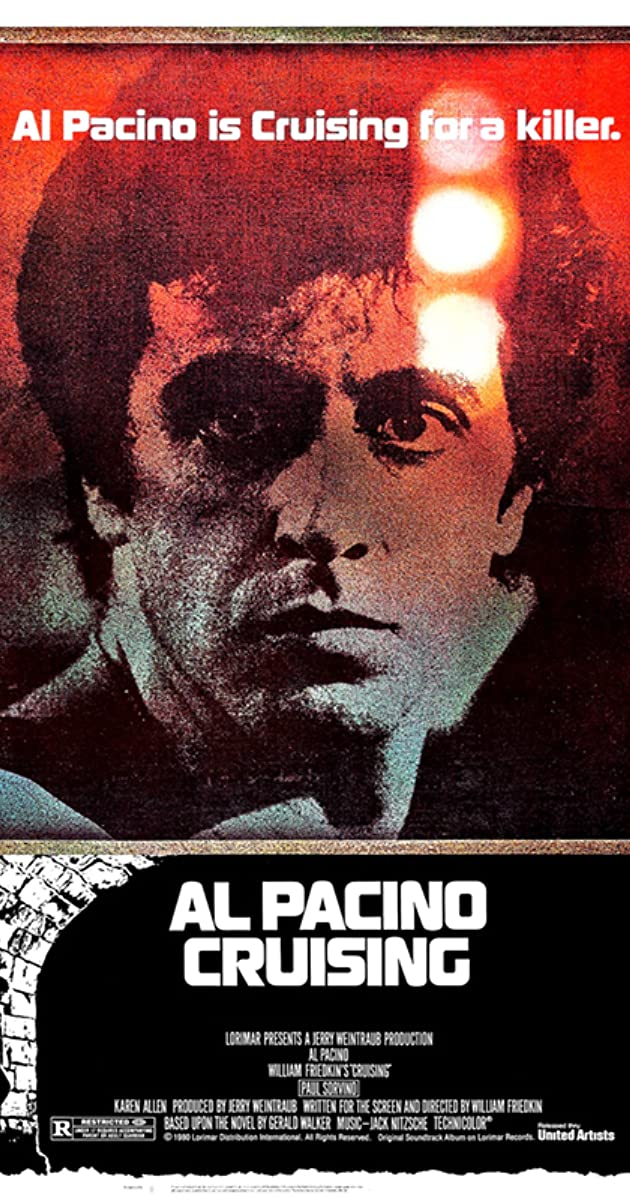
There is no rhyme or reason to William Friedken’s (The French Connection, The Exorcist) serial killer flick, which plays clumsily with both timeline and identity. While the killings are unique, in that gay men in New York City’s S&M scene are the prey, Friedken’s execution is non-existent and the picture is a tiresome. muddled mess. 

The year is 1980. Foot patrolman Al Pacino, who we know absolutely nothing about, is brought in by Police Captain Edelson (Paul Sorvino) to go undercover and smoke out a serial killer plaguing the BDSM community in the Meatpacking District. Pacino is chosen solely because he bears a physical  resemblance to other victims. That’s it, and when he’s told where he’ll be working, he shows little reticence. You see, he’s bucking for detective. 

Pacino is clearly too long in the tooth for the role.  In 1980, he was 40, not a very convincing ambitious beat cop. Hell, Pacino was pushing it a bit in 1973, when he was a 33-year-old rookie in Serpico. Friedken would have done better with Richard Gere, his first choice and 10 years younger.  

After his perfunctory selection and acceptance, Pacino just goes from club to club, bar to bar, pick up spot to pick up spot, cruising. Pacino is less acting the role of a man than being a worm on a hook. Not a lot of heavy lifting and given no motivation or backstory, Pacino seems particularly disinterested. It is clear the actor has no idea how to convey whatever is happening to him internally. 

With barely a story and zero character development, Friedken focuses on the grimy, fetishistic world of leather and sweat, so much so that when word of the picture got around, many in the gay community were outraged to the point of protest against what they thought was a demeaning and offensive portrait of their community. Indeed, the picture had to have its audio almost totally redubbed due to protestors on scene screaming to screw up the sound production.

They need not have worried so much. The movie is a bore and rather than being misled, most audiences likely shrugged.
Not that the bones of a good flick aren’t there. There’s a promising subplot of two police officers who are forcing hustlers to dole out sexual favors. Unexplored. There’s a nice friendship that a develops between Pacino and his gay neighbor. Dropped. And there is little done with the pressure on Pacino and girlfriend Karen Allen (the whole of it is that the more he becomes immersed in the lifestyle, if only as a voyeur, the less he wants to be intimate with her).

Is he gay? Is he curious? Shockingly, you don’t care, and neither does the director.  Friedken just wants to get to the next dank cellar where the testosterone-soaked steam is rising.

Sure, there is some obligatory, “I’m in too deep” dialogue. But nothing more. Fleshing out the relationship between Pacino and the gay neighbor would have been the smart way to explore whatever was happening internally, allowing Pacino to search and inquire, maybe even to test.

No dice.

The film is also hobbled by a pretty elemental impediment. Pacino is, seemingly, straight.  So, it seems less and less possible that he’s ever gonna’ get close to the killer, who murders all of his victims in the process of or after sex. 

The whole thing is draggy and confused and more than a little gutless. 

If you sally forth, look for a very a young James Remar, Ed O’Neill, and Powers Boothe. 

On HBOMax.

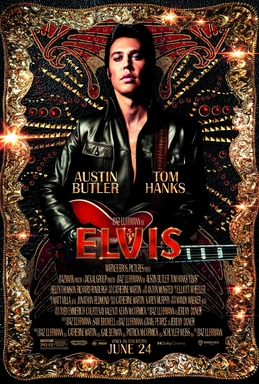
I don’t know a lot about Elvis Presley, but I’ve read enough to know that most of Baz Luhrmann’s film is distorted, if not outright fictional.  It doesn’t matter, because Elvis is a near-inconsequential figure, perhaps proven by the fact that this movie is more about Colonel Tom Parker (Tom Hanks in a fat suit) than poor, boring Elvis. Maybe Luhrmann got bored as well. I can’t say I blame him.

Watching this picture, strangely, I was reminded of Ronald Reagan. He too was a mythic, iconic figure with worshipping acolytes. And as his career wound down and he lapsed into senility, a writer, Edmund Morris, sought to pen the definitive Reagan biography. Morris, however, was stymied by what he perceived as Reagan’s banality, his simplicity, and so, for the book, was forced to invent an American-born Edmund Morris, who as Reagan’s contemporary followed “Dutch” from his near-poverty childhood to Hollywood to the presidency. Here, it feels like Luhrmann realized that Elvis is a dud, so he re-created Parker as Elvis’ dark half, the grotesque sidekick who can provide insight into a wisp. It’s a game effort, but it fails.  

While the picture is admittedly visually arresting, you soon realize several things.

  1. It’s not so much a movie as a series of trailers stitched together. Eye-popping vignettes that, for a time, divert you from the tropes and the utter lack of any character development.
  2. The picture is about 45 minutes too long and repeats the same scene, over and over again. Elvis is an impossibly beautiful, mesmerizing near-wax doll with swiveling hips. He is wooed by wily carnival barker Parker. Elvis gets famous. Then Parker reminds Elvis that it’s all about the money.  Elvis occasionally strays out of his lane. Parker reminds him, again, that it’s all about the money. Elvis quickly gets back in line to keep the money flowing in. Then he strays again, modestly. Parker reminds him that it’s all about the money. And then Elvis does the financially sound thing, but soon, he’s bucking just a bit. Parker reels his boy back in, time after time, and when things are at their most dicey, the Colonel says, “we are the same, Elvis, you and I” (an actual awful line). And Elvis gets back to doing what he does best, making and spending fat stacks of cash.
  3. Luhrmann tries to sell Elvis as a tragic figure who was killed by his overwhelming love for his fans, rather than his affinity for the cash to keep him in deep fried hollowed out loaves of Italian bread stuffed with bananas, bacon and peanut butter.
  4. Just as Austin Powers buried the super-campy version of James Bond, I thought Dewey Cox buried this kind of hackneyed testament. Not so.

Biopics often fall into the same traps.  Hagiography, over-dramatization of mundane events, ridiculous suggestion of significant social impact.

But rarely do they present dullards as their subjects. Here, when you strip away all the glitz, all the quick cuts, all the visual tricks in Luhrmann’s bag, you’re left with the inescapable conclusion that Elvis Presley was a dummy, and that he was manipulated by no Svengali, but rather, someone just a little bit smarter than The King.

Pretty much terrible through and through. The best part of the film is the first 20 to 25 minutes, which focus on a macho friendship between professional contract killers Robert Duvall and James Caan. Caan is double-crossed, and then goes through an arduous rehabilitation after he is shot. After dogged sexual harassment of his nurse, he does garner a girlfriend/caretaker in the bargain, but soon, he is drawn back in by his corporate sponsor. Caan assembles a small team (Burt Young, Bo Hopkins) and takes on a contract to protect a would-be revolutionary (Mako) from an unknown Asian country. What follows is a blocky, ridiculous shoot ‘em up, marred by laughable cynical intrigue, schizophrenic tone, and mystical Eastern mumbo-jumbo.

Both Duvall and Caan were a few years off The Godfather, so perhaps the studio thought that would be enough, With Sam Peckinpah at the the helm, what could go wrong?

A lot. Peckinpah melds ninja warriors attacking men with guns, and ala’ The Wild Bunch, much of it is in slow motion. The result is a comic slaughter, one that seems only to be missing the Benny Hill soundtrack. At one point during one of these turkey shoots, Caan and Young are actually cracking up.

And as noted, there are Asians, so there is the obligatory honorable fight to the death with samurai swords.

The script is a mess, a mix of tough guy patter, platitudinous observations on “the Man” and the virtue of a cause, and verbal slapstick. Caan seems to be laughing through the entire endeavor, and it’s hard to blame him.

In the plus column, 70s San Francisco is a kick, and the final shootout is filmed in the Suisun Bay US Navy graveyard with hundreds of mothballed ships. The feel is spooky and the visual awe-inspiring.

The lure of Steve McQueen is a steely resolve that doesn’t need a lot of explanation.  McQueen is the Cooler King, driven by an unarticulated obsession with escape. Or Frank Bullitt, even-tempered yet resolute as he doggedly figures out a conspiracy while courting Jackie Bissett (who, of course, wants to know what’s ticking . . . . up there). The Sand Pebbles, Papillon, The Getaway, The Magnificent Seven, Nevada Smith . . . all pretty much the same guy, with some slight moderation on the irony-to-darkness meter. Always something hidden, a mix of detached bemusement, determination and code.

In The Cincinnati Kid, that’s who we are promised, but the film is so bare bones and uninvolving, it only succeeds in exhibiting how skeletal McQueen can actually be. 

He’s a hot shit stud poker player who gets his chance at the top man (Edward G. Robinson) and there is a little skullduggery afoot before and during their epic showdown on the felt.  Some of it is business (Rip Torn and Karl Malden vie for his loyalty), some of the heart (child-like Tuesday Weld offers love, voluptuous Ann Margret her vixen’s hips), and none of it is interesting.  The Weld-McQueen union is hollow, the Margret-McQueen coupling inexplicable (she oozes, McQueen snoozes), and the shenanigans between Torn and Malden are pedestrian.

Only Robinson, as an aging card player tiring of every young buck who wants to take him on, offers some shading and intellect.

This is a sleepy rip-off of The Hustler.