I loathe artistic political correctness in all its forms, be it the soul-sucking idiocy of demanding cultural authenticity in casting, the blanket condemnations of some “ism” by the cultural debt counters, or the wails of some grievance group as one of their own is skewered for comedic purposes (Robert Downey Jr.’s “retard” riff in Tropic Thunder comes to mind). The effect is the same – to straightjacket creative endeavor so it presents like a PSA. The only good that comes of the p.c. influence are–
* the groveling apology (Cameron Crowe bootlicking because he cast Emma Stone as a quarter-Asian, quarter Hawaiian: “I have heard your words and your disappointment, and I offer you a heart-felt apology to all who felt this was an odd or misguided casting choice”);
* the unctuous backpedaling (Matt Damon, after having been caught on camera rejecting affirmative action and using the word “merit”: “My comments were part of a much broader conversation about diversity in Hollywood and the fundamental nature of ‘Project Greenlight’ which did not make the show. I am sorry that they offended some people, but, at the very least, I am happy that they started a conversation about diversity in Hollywood. That is an ongoing conversation that we all should be having”), and
* inane public proclamations (Viola Davis, who, when receiving an award for a TV drama, without a hint of irony or self-awareness equated her struggle to that of Harriet Tubman).
That said, Welcome to Me is an offensive film, and the heart of its offense is in how it portrays mental illness. Kristen Wiig plays a sad shut-in, obsessed with Oprah, who wins the California lottery. She suffers from borderline personality and is off her medication, yet that doesn’t stop a local production company run by Wes Bentley and James Marsden from taking her millions so she can develop her own show. That show is a stage for Wiig to exhibit all the debilitating aspects of her un-medicated disease in a manner that at best is quirky and at worst is truly disturbing.
If done well, I don’t have a huge problem with making a dark comedy about a mentally disturbed person being taken advantage of. I’ve gone down weirder, filmic roads.
So, to be clear, my objection is not to the premise nor do I advocate for the babying of any protected class in art.
But when you take this on, you can’t have your cake (using the disability as comedic tool) and then ask the audience to regurgitate it in shame after the eating.
Essentially, that’s what writer Elliot Lawrence does here. It’s not that the picture is poorly acted or directed or that there aren’t even a few funny scenes. Rather, the film is an exploitative movie about a sick person being exploited, and it wants to use mental illness for yucks while pretending to be brave in showing the true face of that illness.
You need a really deft hand for that kind of trick, and Lawrence and sophomore feature director Shira Piven do not have it.
Worse, the movie condescends with a throw-away lame anti-television theme, and in the end, Wiig is transformed into a “winner” with the help of a mere few pills.
This is a football movie made by people who, if they ever saw a football, would mistake it for hippo shit. Kevin Costner is the General Manager of the Cleveland Browns. His Dad just died. He’s in crisis. He’s a “go with your gut” kind of guy. He has the number 1 pick in the draft. He intends on getting a hot shot quarterback but becomes disenchanted when he learns that the quarterbacks’ teammates didn’t come to his 21st birthday party. Costner is then offered 2 NFL starters and 2 future number 1 draft picks for that number 1 pick. He declines the trade. Instead, he uses the number 1 draft pick to select a linebacker who we have been told “may” be selected 15th. For non-football fans, this is the equivalent of Bill Gates selling his Microsoft shares for a Shetland pony and a wheel of Gouda. But Costner desires the linebacker because he saw the linebacker get kicked out of a game for giving his dying sister a football after he scored a touchdown.
Nothing I just wrote about the plot is made up.
Then, Costner wheels and deals with other NFL general managers to come out of the draft with 100 draft picks. One general manager is 11 years old. Another releases his bowels when Costner raises his voice during a conference call. All the others are at risk of dying from swallowing their own tongues.
The movie is about men, and choices, and your instincts and tradition and commitment and respect. The film also has a minor a romantic subplot between Kevin Costner and Jennifer Garner so uncomfortable it has an almost molesty feel. Garner feels it. She damn near makes herself catatonic to get through this travesty. Costner merely looks embarrassed.
This is the anti-Moneyball. This is not merely one of the worst sports films ever made. It’s one of the worst films ever made. It is so bad, you have to see it. It’s mandatory.
And it was endorsed by the NFL. When current NFL Commissioner Roger Goodell walks out to open the draft, the audience erupts in applause.
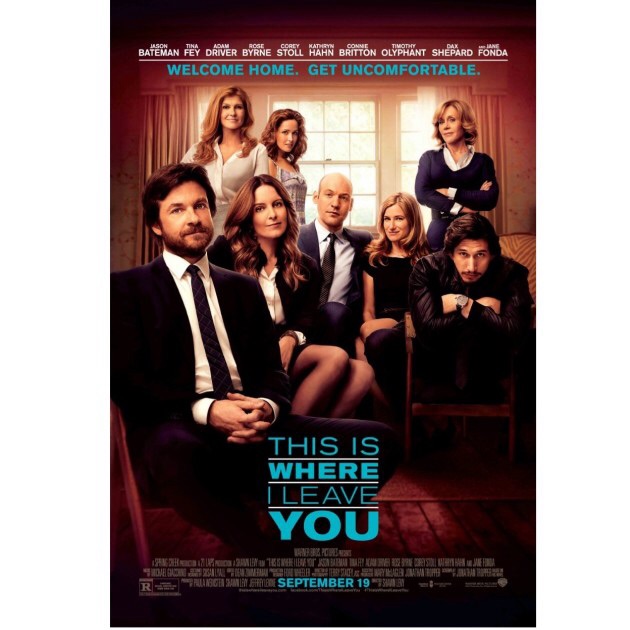
There is a certain kind of self satisfied dramedy that can only be written by a child of the affluent, over educated and beleaguered by the misery of his suburban upbringing, yet oh so smitten with its quirky coolness. Tragedy brings this writer into contact with his or her estranged family. Their hypersexualized mother (Jane Fonda) is overbearing and positively lords her “hip for her age” persona over them. One brother is the unreliable, manchild rebel (Adam Driver), one sister (Tina Fey) the angry perfectionist. Then there is the long suffering, stodgy older brother (Corey Stoll) and finally, there is the sarcastic, sad brother (Jason Bateman). What unites them is their fealty to stereotype and ostentatious progressivism, a condescension to every other non-familial character, 80s pop, odd folks from the old neighborhood, the fact that nothing that happens in the story would ever happen in real life, secrets revealed (“Mom’s a lesbian!”; “Dad was a bad businessman!”; “You slept with HIM?”), assigned stem winders, a scene where the sons smoke weed (found in Dad’s jacket! Crazy!!!!) and heartfelt tributes immediately followed by crass one-liners.
Full disclosure – I came in late, but I saw enough of this obvious, treacly, hackneyed, preachy pile of cornpone to feel safe that I didn’t miss the good part. Hitler is destroying all of Europe’s art. The Monuments Men, each and every one a gentle soul borne of devotion to those things that ennoble us, arrive in Europe to stop him. In the process, they say things like: “You can wipe out an entire generation, you can burn their homes to the ground and somehow they’ll still find their way back. But if you destroy their history, you destroy their achievements and it’s as if they never existed. That’s what Hitler wants and that’s exactly what we are fighting for” and “Who would make sure that the statue of David is still standing or the Mona Lisa is still smiling? Who will protect her?”
It’s not hard to figure what director and co-writer George Clooney was aiming for, an inspiring, old-fashioned period piece that trumpets the virtues of humanity in a world mired in barbarism, updated to include a little wit. Call it “Band of Oceans 14.”
Clooney fails utterly. Every character is stock, and the film feels untethered, veering wildly from the cornily comic to the embarrassingly sentimental (the deaths of Downton Abbey master Hugh Bonneville and Jean Judarin from The Artistare laughably operatic). Bill Murray and Bob Balaban go for some night air, meet a scared German boy-soldier and share a cigarette with him. Makes you think, right? Then, Matt Damon, a member of the mission to save the art, steps on a land mine, prompting Clooney to quip, “Why d’you do something like that?” And then Elliot Gould and Brad Pitt show up and they all have a drink at The Bellagio.
Clooney took a very interesting story and made it a bunch of hooey. Turns out Hitler didn’t order the destruction of art. Now, is Hitler the kind of historical character you actually need to lie about to make him look worse? I submit he is not. But this manifest picture isn’t taking any chances.
A banana split, with two pounds of cane sugar dumped on top, followed by a generous ladling of chocolate syrup, dropped in a bucket of melted cotton candy and deep fried in maple butter, then placed on film. That is . . . Love Actually.
The only thing that recommends this monstrosity is Billy Bob Thornton playing an American president as an uncanny mix of Bill Clinton and George W. Bush. Even this brief treat is spoiled by his counterpart, British PM Hugh Grant, who apparently reverses relations with the U.S. solely because he caught Thornton feeling up his secretary.
It’s all too precious. Avoid the tooth decay and bellyache, even in the judgment altering season that is Christmas.
2022 Update: I took a few years off from my annual autopsy of this festering corpse, and lo and behold, the film celebrated a 20th anniversary. I must concede, it never occurred to me that this trite, candied, filmic effluvium could have been worse in an earlier incarnation, but it appears the editors exercised unknown restraint.
That cute kid who learned how to drum and fell in love? Liam Neeson’s darling little urchin? Turns out, as originally envisioned, he was a gymnast, and he was going ballet his way through the airport to greet his love.
This is akin to creating a highly toxic disease that infects the public but then announcing, “Well, before the lab leak, we did manage to contain the flesh-eating variant”.
Um . . . thanks?
Apparently, in test screenings, the mass retching created a significant liability issue, so they cut it.
Prior entries:
2015 Update: Look, this is a gruesome film, substituting true emotion and pathos with a staggering falsity. If you ever met anyone in your life anywhere near as quaint and darling as any of the characters in this bucket of marshmallow and melted gumdrops, it’s likely they are an enemy of the state infiltrating our ranks for a low purpose. Before you feel your heart swoon and your mouth say “awwwwwwww”, run. Run for your damned life.
2016 Update:
Think about how creepy it would be for a person who long-pined for you to show up at your door with cue cards (one of which has semi nude women on it) to reveal his long held love immediately after you have chosen another. Keira Knightley seems to think this is charming, but in point of fact, she should have called the cops. This weirdo is now going to do . . . what, exactly? Go off to Tahiti because mere proximity to his lost love is too much for him to handle? Go to his apartment thinking that his gambit may pay off, that Knightley might think to herself, “Hmmmmmm. He must really love me.” Hang around, quietly watching . . . waiting . . . hoping . . . tinkering with her husband’s brake lines.
This scene is emblematic of this stupid film because it trades a sentimental ball of goo moment for what should have been a larger and more generous gesture. The dude should have simply left Knightley to her new husband and their life, which would have been stoic and laudable.
But nooooooo. Let’s make this icky.
Married women, think of you, at home, newly betrothed for a few weeks, snuggling with your husband. Then, his best friend of decades comes to the door with cue cards and professes his long love for you. Now, remove the gloppy music, the cobblestones, and the holiday lights and Love Actually becomes . . . . Play Misty For Me? When the stalker says, “Enough. Enough now,” I sensed menace, crazy shit going on in his head like the dog haunting Son of Sam’s noggin. Had he gone back in the townhouse and killed them all, it still wouldn’t save this vile film, though it would have been an improvement.
Also, how dumb is the husband? The boom box is supposed to be a substitute for carolers, but it is a professional singer with some harmonists and an orchestra.
Sorry, Keira. The guy you chose is a moron and the one you did not is going to kill you.
Also, one of the loon’s cards says “And at Christmas, you tell the truth.”
Ludicrous. You no more tell the truth at Christmas than on Easter or Arbor Day.
2017 Update:
This year, let’s delve into this kid, so precocious, so darling, and just so articulate!
“Do you really want to know . . . even though you won’t be able to do anything to help . . . the truth is, actually, I’m in love?”
Couldn’t you just eat him . . . . . I mean, eat him up.
The only thing that could make this scene work is if a bunch of shady Eastern European thugs showed up, grabbed the boy, attempted to sell him into white slavery, and Liam Neeson started on the Taken series quite a bit earlier.
Then, this sweetums might know what is indeed worse than “the total agony of being in love.”
2018 Update:
Let’s talk about the secretary, Prime Minister Hugh Grant’s love interest. She is referred to as “chubby” by another aide and she herself explains that her boyfriend “said no one’d fancy a girl with thighs the size of tree trunks.”
First, I can’t believe this kind of fat shaming allows for enjoyment of this film by any decent person.
Second, I really don’t give a rip about fat shaming. But the woman is not in the slightest bit fat. It is a ridiculous conceit. It makes absolutely no sense. She is buxom, one of the few enjoyable aspects of this filmic turd pile.
So, the movie is abusive and retrograde, which I for one will not let stand even at the expense of your enjoyment. Perhaps worse, it doesn’t even know what a fat person looks like. Ridiculous.
2019 Update:
In this years’ entry, let us take up the Martin Freeman-Joanna Page story line. Apparently, these two meet while playing body doubles on the set of a porn flick. This seemed absurd, but I did my legwork. As confirmed by the screenwriterand much of the commentary, they are, indeed, supposed to be on the set of a porn flick.
I have learned about pornography solely for purposes of this review, and be it hardcore or arty soft core, one of the genre’s principal draws to a producer is the low to non-existent production costs.
Yet, by the looks of the sets and the crew and the fact that there are stand-ins for the actors who will be performing the actual sex act on camera, this appears to be a multi-million dollar production.
Worse, not only are Freeman and Page forced to endure an assistant ordering them to shift mechanical poses and pretend to be having sex, he has them do it in the nude, which would seem completely unnecessary, except, and this is a quote, “lighting and camera want to know when we will actually see the nipples”.
Apparently, the “real” actors are cooling their heels in the green room while the stand-ins work to make the shots just so.
So, for purposes of super cute chit-chat, we are presented with two of the most pathetic characters in film history. They won’t even be receiving wages for having actual sex on camera, but rather, the pay will be for standing in and simulating sex for other people who will be simulating or having sex on camera, i.e., the stars!
What could that amount be? A couple of quid?
This is a job . . . okay, it’s not a job, because this premise is so mind-boggling lazy and ridiculous, but were it a job, it is one for meth heads.
My reply: “Nothing is worse than that steaming turd. Osage is a standard, Southern shoutfest, with as much authenticity as Hee Haw. The Family Stone, however, is a pat-its-own-back paen to womyn, disabled homosexuals, showy profanity by people wearing flannel, and New England flintiness. The cancer ravaging Diane Keaton couldn’t come fast enough. I am pleased to say that its writer director didn’t get another project until 6 years after The Family Stone and that was a Selena Gomez joint. Justice.”
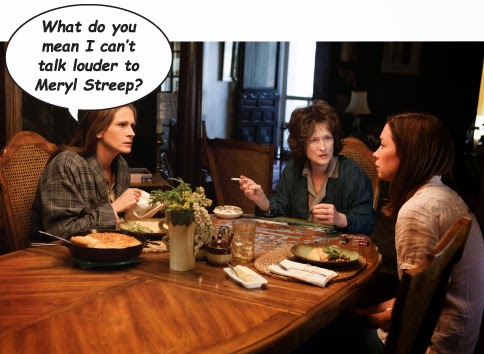
A grueling, gloppy, false film. A poet father (Sam Shepard) goes missing (and then dies) and the family is summoned to bury him. They proceed to vomit all over each other as the matriarch (Meryl Streep) goads and undermines the lot of them.
It is based in Oklahoma, which elicits exaggerated heartland/Southern accents and theatrical, hokey back-and-forth (Julia Roberts’ “get tough” bit with her mother, Streep, is laughably unconvincing). There are confrontations and serial reveals of family secrets, followed by more wailing and teeth-gnashing, and that’s about the whole of it.
The film is adapted from a stage play, which encourages overacting. Streep and Roberts are particularly culpable, the former not so much in technique but in volume and size. She positively leers at her stupid family, and horns near come out of her head. Naturally, the Academy nominated them both for Oscars, but nobody in their right mind would spend another minute with these women after the mildest of their taunts or insults. But there this family of dolts sits, taking it just like the audience.
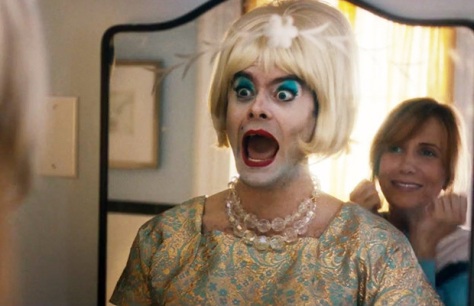
When the two major characters of a film attempt suicide in the first scene, by the end of the picture, you’re not supposed to regret their lack of success. The Skeleton Twins is a ragged, cloying, mannered dramedy starring entirely-out-of-their-depth SNL alums Kristen Wiig and Bill Hader as estranged siblings brought together by near tragedy. Wiig is utterly lost here, and all her tics and quivers cannot make up for substance. Hader is a little better, if a facsimile of a gayer Sean Hayes from Will & Grace is the aim.
The siblings are the children of tragedy, their father a suicide and their mother a hackneyed New Age narcissist introduced only to make her children seem noble. They are presented to us as seeming losers who have lost their way and their special bond on the rocky road of life. They come alive in a weirdly incestuous routine of replaying bits and hijinks from their childhood, and the watching (particularly, a drawn out stoned scene featuring Wiig’s HI-larious flatulence and a lip-synch duet brazenly stolen from Bridesmaids, sans humor) is cringeworthy. These two are as likely to be siblings as Olivier and Midler, but as foreign as they seem, the real problem is that they are fundamentally disinteresting to anyone but each other. It’s like spending an evening with two dull people who constantly crack each other up with reference to inside jokes and childhood excesses (burps, farts, hopes and dreams). Um. Check please.
As for the story, it is a lurching mess, serving primarily to highlight ridiculous and arty visuals, such as a slow dance in Halloween costumes that is finger-down-your-throat precious. When nothing happens (the film feels interminable), a character says or does something clunky and overt, and we slog forward. One example: Wiig is unhappy in her marriage to Luke Wilson and surreptitiously takes birth control pills while they are “trying” to get pregnant. Hader tips Wilson off after a HI-larious scene where hetero Wilson takes homo Hader rock climbing, which is funny because . . . gay. The clue? Sometimes my sister hid things when we were kids. And off Wilson goes to find the pills in a basket of decorative soaps.
An awful hipster picture with nary an authentic moment in it. Makes Zach Braff seem like Cassavettes.
This movie is more than bad. It’s an affront to genre, consistency and common sense. It also represents the end of film as art, the shape of things to come. Just as novels will soon give way to comics, movies will give way to . . . . comics.
The sequel pretends at noir but it has no kinship with it save for a string of laugh-out-loud, hard-bitten lines. The worst of the bunch: “I was born at night. Not last night.” Every single line is like that, played deadly straight, as if writers Robert Rodriguez and Frank Miller concluded, “You know! The same idiots who have substituted, you know, books for serialized comics are, like, the ones coming to this stupid movie, so why would we try and, you know, make the dialogue anything more than the drivel in the picture book?”
There are three story lines, each more boring than the last. Joseph Gordon-Levitt is a hot shot gambler who crosses mean Senator Powers Boothe. Jessica Alba is a stripper who crosses mean Senator Powers Boothe. In between, Josh Brolin (taking over for Clive Owen, who screwed the pooch turning down James Bond but made the right call here) gets double-crossed by his ex-wife, Eva Green. Gordon-Levitt beats 4 Kings with 4 Aces and then, ah, who cares? Alba and Brolin enlist madman Mickey Rourke to get them out of jams. That’s the whole of it, except Lady Gaga pops up as a clichéd waitress, following in Madonna’s footsteps yet again. Blood spatters, bodies are dismembered, the ominous score thuds along, and yawns are stifled.
Nothing makes sense. While Rourke blows up an estate, the guards remain unalerted, the easier to chop their heads off. Green seduces a cop (Christopher Meloni) and enlists a crime boss (Stacey Keach, made to look like an ambulatory Jabba the Hut) to invade the part of Sin City run by armed whores clad in Frederick’s of Hollywood because the girls are hiding Brolin. Both entreaties are awkwardly dropped shortly after their introduction. Brolin, healed by the whores, comes back with a newly reconstructed face to exact revenge, except he looks just like he did before, only with a sprightly toupee.
It’s a nasty, stupid, senseless movie. It’s also a little frightening. The first Sin City was a modest success, grossing $70 million domestic on a $40 million budget. It had the benefits of being unique and a little humor. Almost ten years later, they churn this dour turd out, and the budget is $70 million.
Maybe there is hope in the fact that it is getting killed at the box office ($11 million and trickling) but something tells me the Chinese will bail it out.
Death is just like life in Sin City. It always wins.
Not just historically inaccurate, but outright hostile to the facts, Mel Gibson’s Braveheart matches its puerile fantasy with cheezy romance, splatterfest battle scenes, and cartoonish characters (Patrick McGoohan plays King Edward Longshanks as Ernst Stavro Blofeld and Peter Hanley plays his son as if auditioning for La Cage Aux Folles). Then, there is the James Horner score that brings you back to the ye olde highlands of Busch Gardens. Naturally, like Robert Redford and Kevin Costner before him, the Academy honored an actor turned director with an undeserved Best Picture statuette. But Ordinary People and Dances with Wolves are merely pedestrian. Braveheart is bad through and through and often, excruciatingly so.
On the plus side, when you decide to rewrite history, you might as well give William Wallace a haircut straight out of Duran Duran.




 Original review




 filmvetter