Archive

Romance

Rear Window, or the World's Scariest Bottle Episode – Scriptophobic

I just engaged in a donnybrook of a discussion with a few friends over this film, the primary contention being what it was actually about. It was the kind of exchange only the participants could enjoy, but the spirited debate about the film and Hitchock in general led me to re-watch Rear Window this weekend.

Jimmy Stewart is an adventurous photographer who has a broken leg (but he got the shot of the crashing motor car before it hit him). Cooped up in his New York City apartment, he spends the time peeping on his neighbors across the way (he has a splendid view of their windows and courtyards), and in the process, he begins to suspect one (Raymond Burr) of murdering his wife. He enlists his socialite girlfriend (Grace Kelly), whose marriage entreaties he is fending off, in his investigation, leading to a thrilling conclusion.

The film succeeds on three levels. First, it is a witty comedy, with sharp exchanges between Stewart (the confirmed bachelor and super snooper) and Kelly, as well as Stewart’s health care attendant, the brusque Thelma Ritter. The women are pro-marriage and anti-peeping. As these discussions develop, Stewart enlists them in his monitoring of Burr, and thereby, Kelly “proves” herself to Stewart as something more than a rich, pampered girl. At its best, it plays like a David Ogden Stewart or Ruth Gordon battle of the sexes script.

It is also a love story, initially very light, but when Kelly is in harm’s way, Stewart evinces true passion. Stewart has been lampooned so often (“Zu Zu’s petals!”) that one forgets his ability to communicate depth of emotion, but before those petals, there was his haunting breakdown in Martini’s bar. Also, given the 21 year age disparity, it is surprising Stewart and Kelly manage chemistry, but it’s there.  Indeed, the insane idea of rejecting Grace Kelly is made more comprehensible by Stewart’s cranky maturity.

Finally, this is a meticulous thriller with a few dark overtones. Stewart peeps as a lark, but soon, he is obsessed and a little ashamed.  He sheepishly admits to Kelly that they’re viewing “pretty private stuff going on out there.”  She retorts, “We’re two of the most frightening ghouls I’ve ever known.”  And what they see is generally pretty depressing: a suicidal Ms. Lonelyhearts, a composer in despair, newlyweds from shine to routine. And, of course, a killer, nagged by his wife and driven to extremes. It’s not a happy place, as is shown by one neighbor whose dog, sniffing in the wrong garden, meets an untimely end.

I’ll end with the thoughts of someone more distinguished, David Thomson, from his book The Moment of Psycho: How Alfred Hitchcock Taught America to Love Murder:

Hitchcock knew that a system locked into watching and seeing can misread its surroundings and can even lose its identity and ordinary human sympathies because of the pressure of voyeurism. The voyeurism is so heavy, so forceful, it can smother real human nature. Psycho is the conclusion to a set of films beginning with Rear Window, and for me that is Hitchcock’s best film in that the smile of satisfaction at the end covers without hiding the loneliness that affects real people. Rear Window is a romance, a comedy and a thriller, but a portrait of alienation too. The apartments and windows are screens, of course, but they are traps, or cells – in that entire courtyard no one seems to “know” anyone else; neighborliness has not been invented.

Joseph Gordon-Levitt directed, wrote and stars in this surprising romantic comedy about a New Jersey working class lothario who prides himself on an ability to bed the most beautiful girls at the clubs (the “dimes”) but maintains a more personal, lasting relationship with on-line porn.  When the dimiest of dimes, Scarlett Johannson, comes between Levitt and his smut, he is forced to make a choice, with the assistance of an older friend, Julianne Moore.

The picture starts out fresh and funny, getting the most out of Levitt’s conundrums and fetish, but it takes a sweet and slightly deeper turn as he comes to realize the degenerative, asocial impact of his choices.  Gordon-Levitt is a winning performer, and even as a slightly dim palooka, you invest in him. Johannson and Moore are also strong in support. In fact, the entire cast is sharp, save for Tony Danza and Glenne Headley doing a louder, less capable Robert De Niro/Jackie Weaver from Silver Linings Playbook.

In some ways, this movie appears to be the last thing a teen should watch, especially a younger one.  It is crude and deservedly R rated.  But I’m going to recommend it to my high school freshman son and senior daughter because it is original and clever and, as importantly, because it communicates a positive lesson about sex and love in a world where, well, you have porn stars wondering why they just aren’t accepted and the medical community searching for yet another clinical addiction.

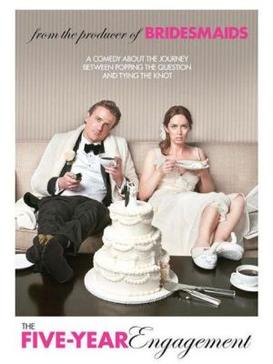
Another from the factory of producer Judd Apatow, director Nicholas Stoller co-wrote the script with star Jason Segal, which tells the story of Segal and Emily Blunt, he a San Francisco chef and she a would-be psychology professor at the University of Michigan.  They fall in love but then endure the long stretch of pre-marriage, with its attendant insecurity, doldrums and misgiving.  While the stretch can be a little rough on the viewer, Blunt is charming and as he did in Forgetting Sarah Marshall and Get Him to the Greek, Stoller wisely populates the story with supporting characters who offer varied, funny bits.  In particular, David Paymer and Mimi Kennedy shine as Segal’s blunt, atypically private parents.  Alison Brie (Trudy from Mad Men) is also strong as Blunt’s happily married sister and she and Blunt pull off a hilarious conversation/confrontation in front of her young children in the guises of Elmo and The Cookie Monster, thus masking the seriousness of their subject matter.

Still, there are glaring problems.  Stoller and Segal over-rely on the easy laughs of adults using dirty words (though nothing quite so bad as Apatow’s embarrassing This is 40); the image of Segal’s bare ass or failing and/or harried while humping really isn’t all that funny; the replacement mates when Segal and Blunt break up (Rhys Ifans and Dakota Johnson) are gruesome, easy marks; and there’s nothing really new here.

There is also the problem of Segal, who is perhaps the only actor who makes Paul Rudd seem manly.  From his awful sitcom How I Met Your Mother to just about every film in which he’s carried the load, Segal is a tiny variation on the same persona – aw shucks, hapless, sweet and prone to self-pitying outburst.  Summed up, a huge pussy.  I’m happy to defer, but in a romantic comedy, he’s a natural best friend, not the lead.

An ingenious concept undone by a tedious pace, a dull heroine, an indecisive tone, and a cheezy feel.

First, the concept. The world is post-apocalyptic and zombies mill about, waiting to eat human brains. One twist – when they eat the brains, they get a rush of the memories of the prior owner. Our protagonist. Nicolas Hoult (About a Boy, X-Men: First Class) eats the brains of Dave Franco (brother to James), fiance’ to Teresa Palmer, and immediately falls in love with Palmer.  So, he saves Palmer’s life and an unlikely romance ensues. So far, so good.

Palmer, clearly an acolyte of the Kristen Stewart school of acting, makes no impression. She’s all smarm and attitude and lacks any depth necessary for material deeper than Glee. It may seem like niggling but it is not, because she has to convey that she has fallen for a zombie. She doesn’t come close.

With Palmer failing to communicate a romance, what is left is the scary.  It is not scary, at all, and the use of CGI skeletors – really evil zombies who have lost all their flesh – suggests the old stop motion visual effects of the Harry Hamlin Clash of the Titans – and not in a good way.

Since it is not scary, it should be funny. After all, talk about your clash of cultures. But it is only occasionally amusing. Hoult, whose speaking is necessarily rudimentary, mainly mumbles and moons at Palmer. While he is given a voiceover to explain what he feels and sees, the observances are pedestrian.

The picture looks just awful – again, not in a good way. The post-apocalyptic world looks more like a Meadowlands dump, the encampment where the humans are holding out looks like the porn set of a parody (Dawn of the Head? apologies)*, and in comparison to Zombieland or even The Walking Dead, the feel just seems chintzy.

It’s also deathly slow. At only 90 minutes, I started to feel like the zombies themselves, numb and mindlessly staring at the TV, waiting desperately for something to chew on.

*  I made that up, but I shouldn’t have had to.


Poor little rich girl, Amy Minsky (Melanie Lynskey) is in her early 30s, recently divorced, depressed and living at her parents beautiful, opulent home in Westport, CT.  My how times change. When Jill Clayburgh did it, she was An Unmarried Woman and it was kind of a big deal because she had to face economic dislocation, romantic inexperience and societal reproval.

Here, Amy is surrounded by the usual troupe of insensitive caricatures who serve to make us feel she is really the good one, and in case we forget, she is juxtaposed against her ambitious parents, high school friends who have not moved on, and a would-be suitor utilized to show that though Amy presents as a wallowing mope, at least she’s not a loser like him.  And she’s a photographer, no less, but she gave it up for love. Odds on a return to that vocation by the end of the film are, obviously, high.

The character is too fortunate and too dull to gin up any sympathy or interest.  She flings with the 19 year old son of friends of her parents (Christopher Abbott), whose charming little quirk is that he is an actor who hates acting (Abbott’s character ends up going to Oberlin, which, coincidentally, is where his character in HBO’s Girls matriculated).  They bemoan their uncool parents, Westport, and their sad stations (his second quirk is pretending to be gay for his mother because she is “into being accepting”). Minsky’s Mrs. Robinson experience does not make her more compelling.

Expectedly, the film sports precious acoustic music and a pile of Lilith Fair ditties to cement its indie bona fides (Liz Phair should sue Laura Veirs, but I guess there ain’t a lot of money there), and in most other respects is as cookie-cutter as any studio assembly line production.

It does have one good line, when her ogre of a mother (at least, as played by Blythe Danner, she is supposed to be an ogre) upbraids her for her laze and self-pity with, “What did you think life was going to be, one ribbon cutting after another?”

But that’s like after an hour.

Silver Linings Playbook,' Directed by David O. Russell - The New York Times

David O. Russell (Three Kings, The Fighter) has written and directed a special drama/romance, made all the better by a flawless ensemble. Bradley Cooper is just out of an 8 month court ordered stint in a psychiatric ward after having found his wife in the shower with her lover and beating the hell out of the former. Cooper is also bipolar. Under police supervision and ensconced in the Philadelphia home of his OCD, Philadelphia Eagle fanatic, bookie father (Robert De Niro) and supportive mother (Jackie Weaver), Cooper plots his way back into his wife’s heart, enlisting the help of a neighbor (Jennifer Lawrence) who has a few not insubstantial psychiatric and familial problems of her own. Unfortunately, he does this while forswearing the medications that will keep him on an even keel.

The film seamlessly portrays the pressure and effect of mental illness on a family with the Herculean effort of love and commitment it takes to manage it. Intertwined is a beautiful, engaging love story.

Cooper is rightly nominated for Best Actor. His performance is riveting, and no easy feat.  He presents a character plagued by demons, trying to hold them back, while leveling off to actually grow. As I walked out of the theater, my estimation of Cooper as merely a more electric Ryan Reynolds was erased, and Daniel Day Lewis’s turn as Lincoln seemed humdrum in comparison.

Jennifer Lawrence, also nominated, also wows. She is wounded and in crisis, and as she reaches for Cooper, her desperation and need are palpable. De Niro, who I wrongly suspected might have been nominated for best supporting actor as a nod to his overall body of work, is touchingly desperate as a father who carries his own mental disability as well as the weight of failing his son. Last, but certainly not least, the film’s fourth nominee Jackie Weaver plays Cooper’s mother lovingly while communicating the weariness of someone who has been required to hold a tenuous family together. The rest of the cast is also very funny, especially a portly Chris Tucker, who plays a patient from the psychiatric ward with a penchant for self-furlough.

This is a tough film to make. Mental illness does not lend itself either to yuks or romance, and without Russell’s deft hand, it could easily have been offensive, pat and/or schmaltzy. Cooper’s outbursts are funny, but that is because he’s a funny character whose disability has removed his filter. But Russell does not sugarcoat the illness, and when Cooper is manic, we are scared for him and those around him. Lawrence is also hard, mercurial and often tough to take, and normally, she would have been the whore with a heart of gold. In fact, her damage requires Cooper’s strength and the two share a strong chemistry.

To be able to construct a sweet, original romance from such stuff is both an achievement and a damning indictment of almost all romantic comedies/dramedies that have so little to say about people. This is the best movie of the year.

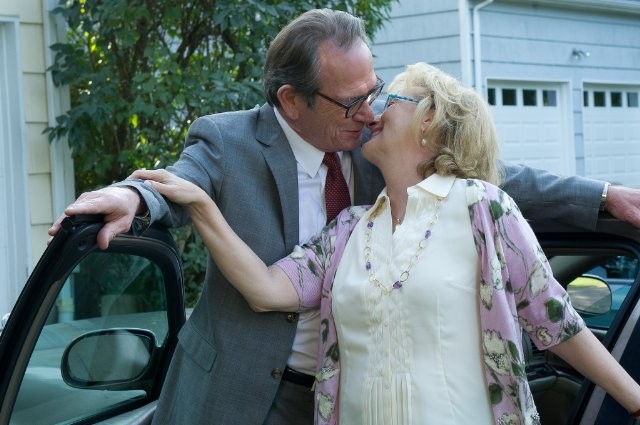
Meryl Streep is incredible, as always, flawlessly and effortlessly inhabiting the character of a repressed, unhappy Nebraska housewife, married to a removed, cantankerous Tommy Lee Jones.  She signs the couple up for a week of couples counseling in Maine under the tutelage of Steve Carell, during which their marriage is analyzed in order to fix it.

Most of their problems stem from intimacy issues.  They haven’t had sex for 4 years.  So that’s where Carell focuses.

The performances are uniformly good and the interplay between Streep and Jones is often genuinely affecting.  The film, however, becomes repetitive and ends in a cloying renewal of vows that is much too much.  The movie also features some of the worst, most intrusive and blaring pop songs to accompany emotional stretches.

Be prepared.  As I said, the central problem for Jones and Streep is sexual.  Which means frank talk about and between people I’d prefer not to think about in sexual situations.  It also has a scene of Streep trying to give Jones a blowjob in a theater, a failed endeavor. Sure, there is some humor in Streep purchasing “Sex Tips for Straight Women by Gay Men.” But watching her put those tips into practice?  Sorry, kemosabe.  Deal me out.

Writer/director James Cameron’s blockbuster is lovingly grand and its atmospherics and visuals breathtaking.  But a single scene exemplifies the failure of the picture.

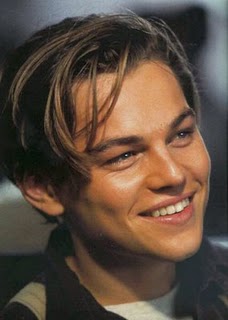
The moment before the lookouts spot the iceberg that would seal their fates, they’re dicking around watching Rose (Kate Winslet) and Jack (Leonardo DiCaprio) smooching on the foredeck.  As a result, a plausible argument can be made that the two leads sank both the ship as well as the film, because their insipid teen love affair is at the heart of this movie.

Rose is unhappily slotted for a marriage to a well-heeled snob (Billy Zane).  She intends to fling herself off the ship, but she is saved by and falls for roustabout Jack.  As the ship continues its doomed voyage, these two chuckleheads moon at each other, while blithely noticing things that are important:

Andrews leads the group back from the bridge along the boat deck.

                                   ROSE
Mr. Andrews, I did the sum in my head, and with the number of lifeboats
times the capacity you mentioned… forgive me, but it seems that there are
not enough for everyone aboard.

                                  ANDREWS
About half, actually. Rose, you miss nothing, do you? In fact, I put in
these new type davits, which can take an extra row of boats here.

                        (he gestures along the eck)

But it was thought… by some… that the deck would look too cluttered. So
I was overruled.

                                    CAL
                       (slapping the side of a boat)
Waste of deck space as it is, on an unsinkable ship!

                              ANDREWS
Sleep soundly, young Rose. I have built you a good ship, strong and true.
She’s all the lifeboat you need.

Not enough lifeboats, you say?

Soon, Rose is posing nude for Jack (he is a portraitist) and shortly thereafter, they’re going at it hot and heavy.  Zane is infuriated and sets his goon (David Warner) on Jack, leading to an implausible  cat-and-mouse chase through the ship while it is going under (Warner is truly Employee of the Century).

There are many, many other problems.  DiCaprio could not be more wrong for the part.  He looks as if he just started shaving, so his turn as a man-of-the-world is laughable.  It’s an Aidan Quinn role given to a near pre-pubescent.

 Rose, did you see where I put my Bubble Yum?

Cameron’s script is also unbearably overt.  He trusts his audience not, as early exposition demonstrates:

HAROLD BRIDE, the 21 year old Junior Wireless Operator, hustles in and
skirts around Andrews’ tour group to hand a Marconigram to Captain Smith.

                                   BRIDE
Another ice warning, sir. This one from the “Baltic”.

                                   SMITH
Thank you, Sparks.

Smith glances at the message then nonchalantly puts it in his pocket. He
nods reassuringly to Rose and the group.

                                   SMITH
Not to worry, it’s quite normal for this time of year. In fact, we’re

speeding up. I’ve just ordered the last boilers lit.

Andrews scowls slightly before motioning the group toward the door. They
exit just as SECOND OFFICER CHARLES HERBERT LIGHTOLLER comes out of the
chartroom, stopping next to First Officer Murdoch.

                                LIGHTOLLER
Did we ever find those binoculars for the lookouts?

                           FIRST OFFICER MURDOCH
Haven’t seen them since Southampton.

Iceberg, speeding up, and no binoculars?  Uh oh.

The film unravels at the end.  The idiocy of Warner hunting Jack and Rose as the ship nears its final peril can no longer be ignored.  Meanwhile, Cameron becomes enamored of what he can do on his broad canvas.  Tragedy becomes an action caper as the director starts bouncing hapless victims off of fantails.

In the final scene, an aged Rose (Gloria Fisher) looks longingly into the icy waters that took her Jack, and throws a massive jewel in.  Leaving your last thought as, “That damned thing could have fed Sub-Saharan Africa for a few months.  What a selfish old hag!”

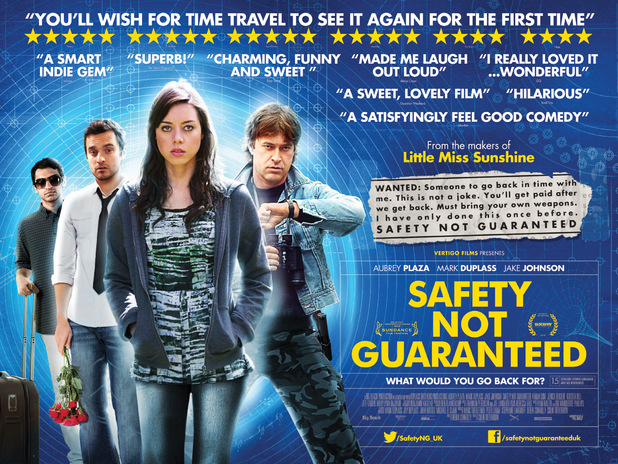
What are the chances I’d see two Mark Duplass movies back-to-back much less one I’d rate a 0 and one I’d rate a 5?  This is a sweet, whipsmart picture about three Seattle magazine employees – two interns (Aubrey Plaza and Karan Soni) and a writer (Jake Johnson) – who go to Northern California to do a piece on a guy (Duplass) who put out an ad to go back in time, looking for a companion.  The writer took the job solely to nail an old high school girlfriend he found on Facebook (Jeneca Bergere).  Plaza is along for the ride and Soni, a geeky Indian techie, only took the internship to round out his resume’.  Plaza becomes intrigued by Duplass, Johnson falls for his target, and it turns out time travel may be possible.

This is a dual story between four people looking to connect.  Duplass bonds with Plaza while Johnson and Soni engage in a mentor-mentee dance.  Best, what seems a goof assignment to write an ironic, hip piece on a quirky dude masks a couple of crises of conscience, place and purpose.

Everybody is excellent, but Johnson is particularly strong as an urban scammer who uses the story as a cover to hook up with a high school flame and realizes how empty he feels in the arms of a real woman.  She asks what he’s doing, he responds that he has an Escalade, she clarifies “no, I meant with your life” and he responds “I just told you.”

When she puts up her guard, points out the error of his idealization, and his fairy tale collapses, he runs to Soni and screams in the geek’s face to get off the Internet, away from his safety bubble and live a life.  Johnson’s character is emblematic of the maturity of the writing.  Normally, he’s the dick, the full-of-himself comic relief.  As a character, it’s an honorable job, ala’ Bradley Cooper in Wedding Crashers.  But Johnson (and really, all the characters) are given more depth in an economical fashion, making a very funny movie poignant and multi-layered.  One of the best films of the year.

Your Sister's Sister (2011) - Rotten Tomatoes

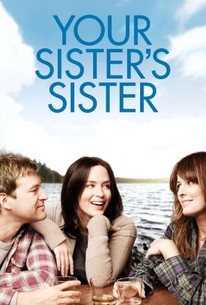
Mark Duplass (Humpday, Safety Not Guaranteed) is the brother of a recently deceased.  We meet him at the one year anniversary of his sibling’s death.  After a gentle eulogy by his brother’s friend, Duplass offers his own, explaining that his brother was a bully who only changed for the better after watching Revenge of the Nerds and realizing that the bully doesn’t get laid.  His brother’s ex (Emily Blunt) intervenes, let’s Duplass know he’s in a bad place and offers her remote family house so he can sort it out.  When Duplass arrives, he finds Blunt’s sister (Rosemary DeWitt) sorting her own issues out, having just left a 7 year relationship with another woman.

With a promisingly caustic first scene and the idea of a romantic angle perhaps immediately removed from the equation, the possibilities are momentarily intriguing.  But Duplass and DeWitt share a bottle of tequila, they have sex (she actually says “I’m game if you’re game”), and the movie craps out.   Duplass achieves orgasm in less than a minute to establish his bona fides as a regular schlub and to ensure that no connection was achieved.  Blunt, in love with Duplass, shows up.  It gets weird.

The film tries desperately to be cool, but the dialogue is stilted and humorless.  Duplass is presented as a bit of a crack-up, but he is unfunny (a sample bon mot is his observation that they go to an IHOP but will need passports), superficial, and self-involved.  Both women are crashing bores and for a romantic triangle of sorts, it is surprising how sterile and sexless they seem.

Though Duplass is desperate to keep the fact he had sex with DeWitt from Blunt, you know and hope it will out.  Anything to break the monotony, which is quite something for a 90 minute film.  These are the three most boring people in the world, characters created by the writers who pen quips traded by couples in Ikea commercials, if an Ikea commercial was sound-tracked by acoustic guitarists who play at contemporary Christian services.

The film is also amateurishly acted (Duplass is the poor man’s Ron Livingston, DeWitt is dishwater dull and Blunt one-note dewy eyed).  Is there depth under those still waters?  Most likely, just brackish, gloomy ennui.

Another criticism.  There is no lazier writing tic than the use of “fucking” before every noun, a regular staple in this film.

How I Met Your Mother is better paced and funnier and that show sucks.  This is hipster drivel without a single genuine moment.  Avoid.