Archive

Genre

Our Idiot Brother movie review (2011) | Roger Ebert

A ridiculous feel good comedy about a sweet, trusting stoner (Paul Rudd, so open he sells marijuana to a uniformed policeman who professes to having a bad week) forced to live at home with his mother and then with his witches brew of sisters (Emily Watson, Parkey Posey and Zooey Deschanel).  Hijinks and family drama ensue.

Admittedly, not a great sell job for this picture.  But the movie is carried by Rudd, whose innocence and good-naturedness are both attractive and believable.  There are also some pretty amusing scenes.  The drug bust is deft, and Rudd’s meetings with his jaded parole officer are also funny.  Deschanel, who plays the artistic sister who wants to be some sort or stand-up comic, is winning, and her performances in what appear to be a NYC basement bar have a real authentic feel (she is not funny and the crowd of 7 people watching her is 85% family).   Adam Scott, as the love interest of Posey, is also excellent.  I’m not sure there is a funnier guy in formulaic comedies than Scott (his asshole brother in Step Brothers is legend).

Unfortunately, Posey, as the unscrupulous celebrity interviewer (yet again, high strung) and Watson as the earth mother sister whose husband (an unpleasant Steve Coogan) is cheating on her are tedious cartoons, but once Rudd re-enters the movie, all is well again.

The film, however, is stolen by T.J. Miller as a stoner who replaced Rudd by taking up with his woman when Rudd went to jail.  Miller is a gentle soul, just like Rudd, and that they pair up at the end of the picture to start a candle making business is not a spoiler.  It just had to be.

The World Is Not Enough is the worst James Bond film ever made, worse than even late bad-fashion, Roger Moore duds A View To a Kill or Octopussy .  As camp and aged as Moore became at the end, Pierce Brosnan proved to be something worse – tedious.  He’s got two moves: a smirk and grim displeasure.

Still, Bond films are rarely deep character studies, so how hard can one be on Brosnan?  At least we get beautiful sights, jaw-dropping stunts, good gadgets, a certain clever patter, Bond’s ingenuity, gorgeous women and intriguing villains with grand designs.

The World Is Not Enough has none of these things.  It is set almost exclusively in the drab former Soviet Union (see exciting Azerbaijan and Kazakhstan!); the stunts are pedestrian (another ski chase, a ho hum boat chase, more travel in an oil pipeline); the gadgets are routine (Bond can make his car come to him like a dog); the repartee’ is awful; and, worst of all, Bond is no longer ingenious – most things just drop into his lucky lap.

Unforgivably, the women are forgettable.  Sophie Marceau is grim and Denise Richards is so ridiculously Charlie’s Angels, she holds no interest – where the hell are Jill St. John and Barbara Carrera when we need them?

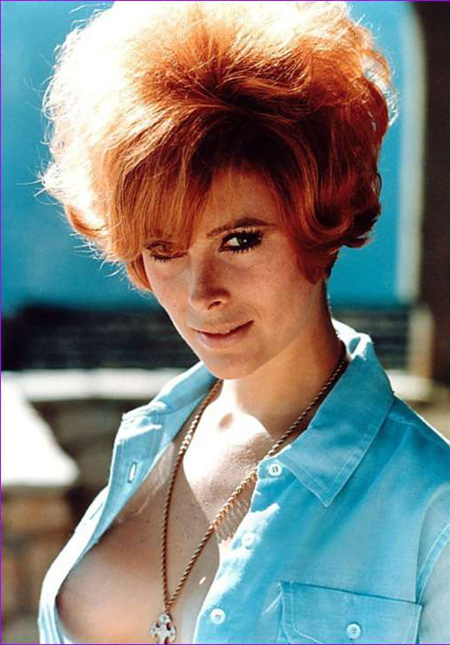
Now, that’s a Bond girl.

The villains have no design, other than financial mixed with some revenge (almost as bad as in Goldeneye, when the whole movie centered around Jonathan Pryce getting tv rights in China).  Worse, the picture is accompanied by a relentlessly cheezy Bond theme-meets-drum machine.

Finally, Bond is again emotionally involved with a woman (that’s two out of four for Brosnan), adding to the tiresome nature of the whole thing.  Bond’s attachment to a woman is rarely a good sign, On Her Majesty’s Secret Service notwithstanding.

Brosnan played the part one more time after The World Is Not Enough, demonstrating even more urgently that the Bond series needed a new face.  I had urged Jeremy Northam or Clive Owen, but the franchise knew better when it tapped Daniel Craig.

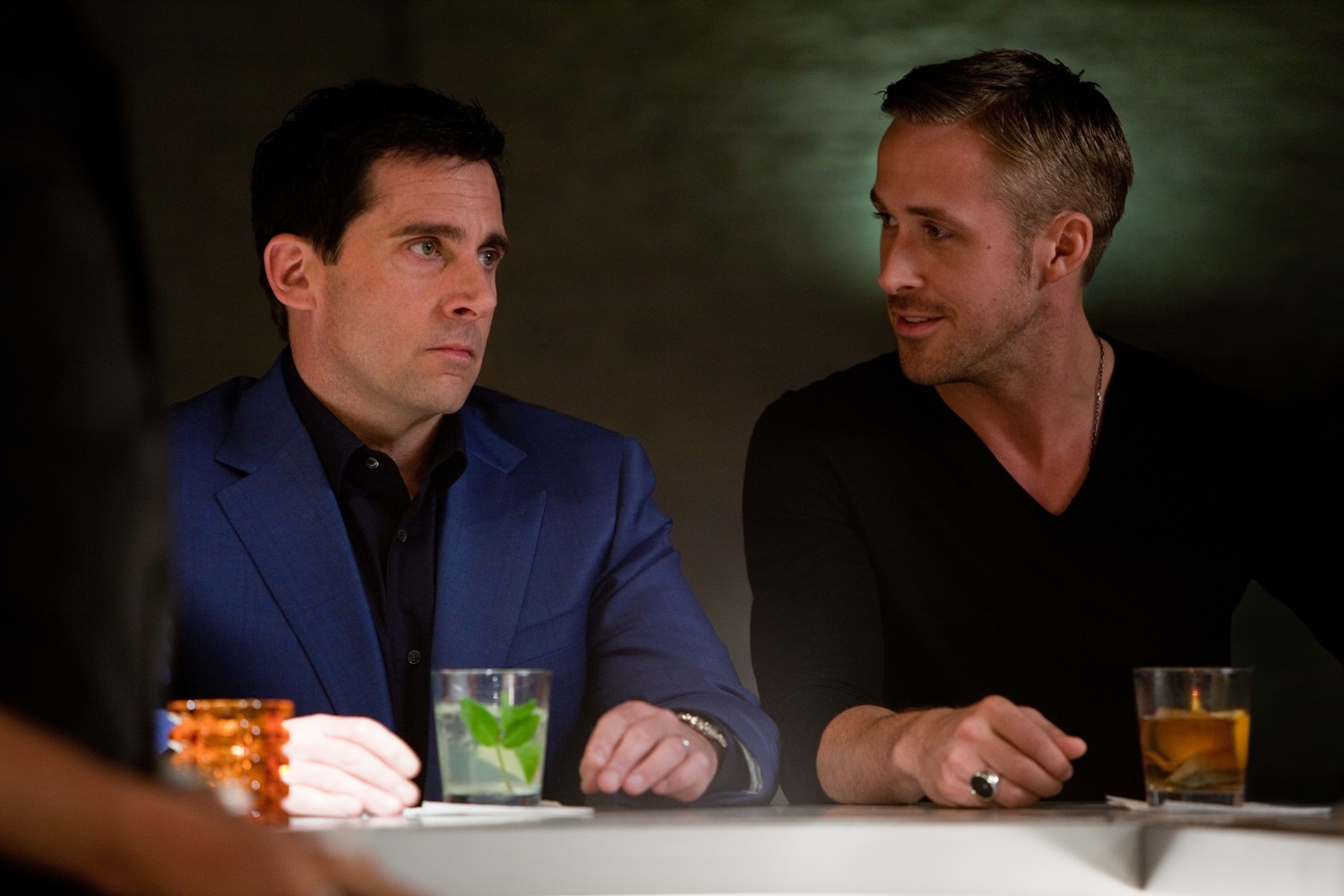
Image result for Crazy stupid love

A nice ensemble “bromantric” comedy.  Steve Carell plays the schlub husband thrown over by the “wife in mid-life crisis” Julianne Moore after she flings with an office colleague.  Despondent, Carell retreats to the local singles bar to lick his wounds, where the charming, suave ladies man Ryan Gosling takes him on as a project, ala’ Henry Higgins.  Carell is soon quite the ladies man himself but still pining for his wife, while Gosling learns the merits of deeper love with the electric but gawky Emma Stone.

There are some glitches: Carell’s sad-sack/nice guy routine is getting a bit stale; the friends of the broken-up Carell and Moore and Stone’s lame-o boyfriend are ridiculously stock and unrealistic; Carell’s 8th grade son is a little too cloying and hip; and Moore is reprising her flustered role in last year’s excellent The Kids Are Alright.

Still, this is cute and mostly funny, and Gosling, who I have been very hard on for his work in The Ides of March (confused) and the wildly overrated Drive (catatonic) is the engine.  His repair work on Carell provides some of the best scenes, and he and Stone have very convincing chemistry.

Also, Marisa Tomei plays a one-night stand who ends up being a teacher of Carell’s son.  Tomei just keeps getting better and better looking and more charming to boot.  She can be very dark, as she’s shown in The Wrestler and Before the Devil Knows You’re Dead, but she’s also a deft comedienne, as she showed here and in Cyrus.

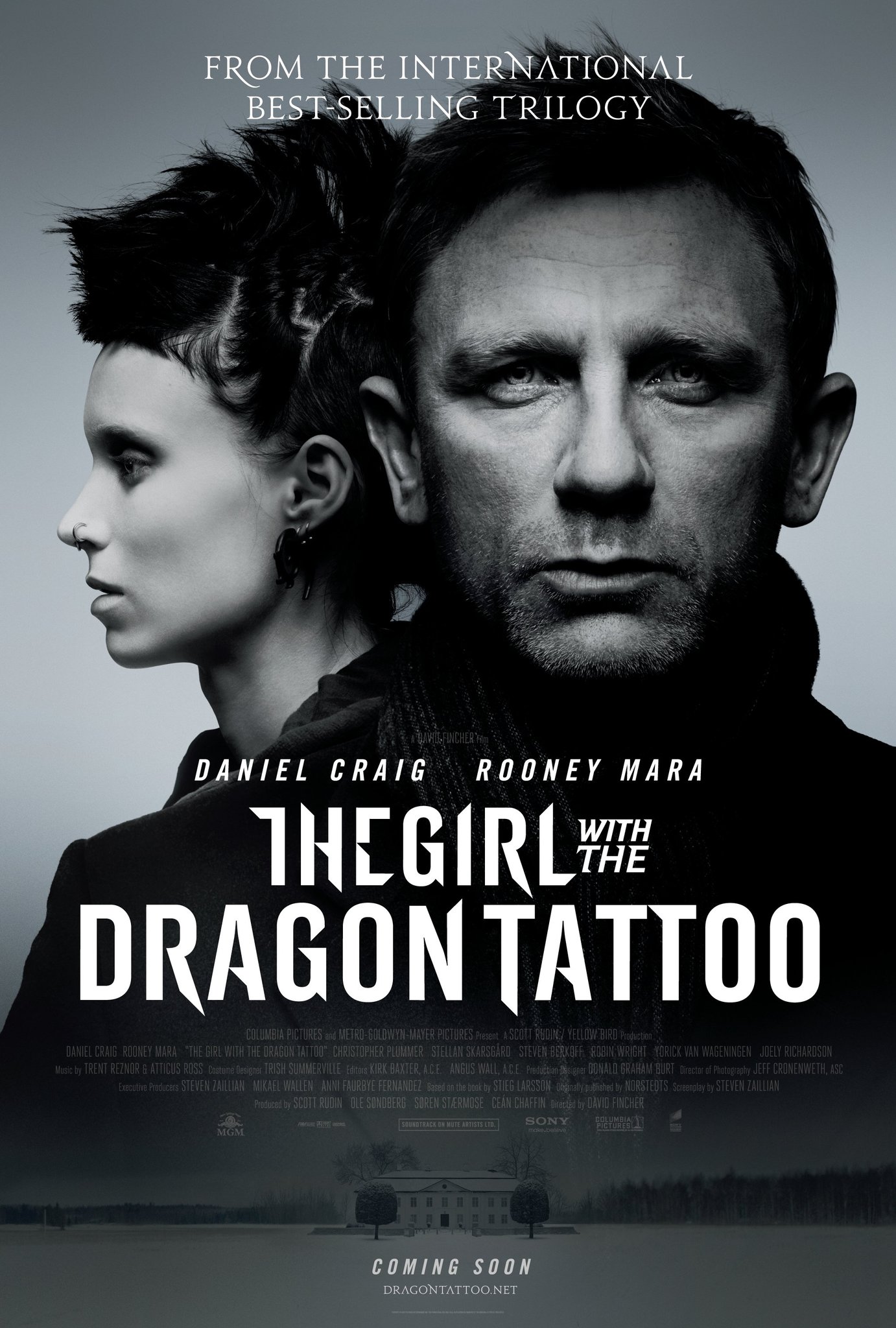
Image result for Girl with Dragon Tattoo

Harsh, unyielding and spooky, David Fincher’s adaptation of Stieg Larssen’s first of his best selling trilogy (adaptations of all three have been made in Sweden) is intricate, engrossing and decidedly chilly.  Daniel Craig plays a Swedish journalist who has just been convicted of libeling a financier.  Another corporate titan (Christopher Plummer) summons Craig after having his background checked by an investigative firm.  The firm’s investigator is a ward of the state (Rooney Mara) who ostensibly works as an office clerk, but, in fact, is a genius of surveillance and investigatory technique.  Plummer entices Craig to investigate the 50 year old disappearance of his niece, and Craig eventually enlists the loner and outcast, Mara, to assist him.

Fincher’s strongest milieu is psychological crime.  Seven gave us the mastermind of Kevin Spacey as he offed his victims using the seven deadly sins as a guide.  Zodiac was an intriguing take on a real life case, the Zodiac murders in Northern California during the late 1960s, early 1970s, and while it bombed at the box office, only two movies appeared on more critics’ top ten lists in 2007.  Fincher can deftly keep a lot of balls up in the air with great precision yet still tells a tale you can follow.  The book provided a family tree chart in the preface, and given the number of characters in the family, I found myself referring to it regularly.  Screenwriter Steve Zallian has smartly excised the plot of a few people, but not many, yet I never found myself confused.

Mara is genuine as a troubled, anti-social outcast who teams up with Craig to work on the mystery, and they produce a strong and convincing bond (her nomination for best actress is merited).  The close of the picture, when she realizes she cannot have perhaps one of the few people who has shown her affection, is a gut punch.

The ending, however, is muddled, tacking on a financial windfall/scam to the resolution of the mystery.  Once you’ve witnessed the solving of a string of gruesome ritual killings and a missing persons case that goes back decades, a coda of fraudulent financial transfers is hardly satisfying and robs crucial minutes away from further character study of the family, some of whom get short shrift given the sweep of the story.

Another distraction is Mara’s progressively expert investigatory skills, which by the end of the film near those of a super hero (as Christopher Hitchens noted about her literary character, she “is so well accoutred with special features that she’s almost over-equipped”).  The more La Femme Nikita she becomes, the less your investment in her.

Be warned.  Like Fincher’s Seven, this film is both brilliant and disturbing.  Gruesome murders, rape, animal mutilation, and what appears to be an unbearably cold Sweden all await.  Not for the faint of heart

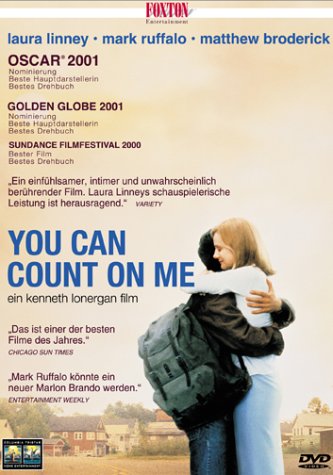
You Can Count on Me (2000)

In 2000, writer-director Ken Lonergan had just come off of making the estimable The Adventures of Rocky and Bullwinkle.  His follow-up, You Can Count on Me, is one of the strongest written and acted family dramas ever made.  Go figure.

Laura Linney and Mark Ruffalo are siblings whose parents died in a car accident when they were children (I’d say 8 and 11).  Once that fact is established (with a sparse care that should be required viewing for all writers of family drama), we see them as adults.  Linney is divorced with an 8 year old son, and she lives in her parent’s house and works in her upstate New York hometown.  Ruffalo is an irresponsible drifter who comes home to visit.  Both are not emotionally crippled, but they are certainly products of the trauma, the communication of which is never overt.  We get no long, laborious revelations or speeches, no explosive healings or verbal re-opening of old wounds.  These people are hurt, but aren’t we all?  Lonergan subordinates the pain to the hard truth that they have to live their lives like the rest of us.

Linney’s pain can be seen in how she prepares for her brother’s return, in her desire for order in all things, and in her penchant for the reckless (as long as such recklessness is papered over by a seemingly staid conservative existence).  Ruffalo, on the other hand, just floats in and out of situations.  Linney’s son (another in a long line of Culkins) is a bridge between the siblings.

There are few lessons learned.  But the beauty and pain of family is perfectly expressed throughout.  Better, You Can Count On Me eschews stock secondary characters, infusing each (Linney’s boss Matthew Broderick, her minister, her boyfriend, her ex-husband, the town sheriff) with actual distinguishing qualities and natural impulses.  The film takes the time to linger on the emotional registers of these people in reaction to Linney and Ruffalo, as opposed to simply having them act in a standard fashion to further amplify the angst of the leads.

The original music is haunting cello and the soundtrack features a heavy dose of roots rock, alt-country and Americana (Steve Earle, Marah, and my favorite unsung band, The V-Roys).

Beautiful and sumptuous, the picture marked the end of Terrence Malick’s 20+ year absence from film.   Ostensibly about an offensive during the Guadalcanal campaign, the film follows Privates Bell (Ben Chaplin) and Witt (Jim Caviezel) as they are deposited on a Pacific island to take an enemy air base deep inland.  They are accompanied along the way by Private John Savage, Sergeants Sean Penn, Woody Harrelson and John C. Reilly, Lieutenant John Cusack, Captains Elias Koteas and George Clooney, Colonel Nick Nolte, General John Travolta and a host of other young actors playing infantrymen.  

The first time I saw this picture, the characters did not register.  It seemed like a glut of talent working with limited space, and the result was disjointed and, at worst, high falutin’.  I wrote:

Koteas and Cusack register, the former as a humanistic officer who cannot accept the slaughter of his men for a greater good and the latter as a brave underling who shows true leadership in a grave hour.  Nolte is standard spit and scream (it is truly amazing how red he can make his face).  Penn, Harrelson, Clooney, and Travolta are cardboard, and Reilly is given a short, hackneyed speech on how he has become hardened by the war.  Savage in particular is really, really bad as a soldier who has cracked under the strain of combat.  It’s hard to believe that Savage, so good in 1978’s The Deer Hunter, was revived for such histrionics 20 years later.

I was harsh and/or wrong.  On re-viewing, most of the characters do register, and they often make lasting imprints with little screen time.  Further, Malick’s use of the voice-over in their heads, which initially struck me as a distracting cheat, is much more than that.  It’s an ambitious technique to not only get us in their minds practically (which, in combat, would likely be an inner monologue of “oh fuck, of fuck, oh fuck, oh fuck”) but philosophically as they wrestle inner demons and regrets while negotiating external hostility.   

The film is lush and visually riveting, from the beauty of the ship cutting through the Pacific prior to disembarkation of its armed cargo (filmed directly down from the prow), to the stark image of a dismembered mine team, alone among the peacefully covered foliage (the first carnage the company witnesses) to the killing of two men by a Japanese sniper – they fall poignantly in the tall grass before the vista of a misty, impossibly beautiful hillside.  Malick’s juxtaposition of the wonders of nature and the blight that is the intrusion of combat is jaw-dropping.

Hanz Zimmer’s score supports the sense of dread and beauty, intertwining the exotic of the island and the tick-tic-tick of the danger therein.

Malick does makes some fundamental errors that, I’m sure, seem niggling in the light of the ambition of the project.  For example, Witt and Bell look alike and they kind of sound alike and when two men are running around in battle and doing voice overs, that becomes problematic.  The cameo factor can also be distracting because actors are trying to make their mark in the short time allotted.  As such, Travolta is weird as an ambitious general, and Clooney shows up at the end for a few lines (since you still haven’t seen Clooney until the end of the picture, you fear he may be pivotal and you have that much longer until the end).  

Still, nits aside, this is a worthwhile epic.


Forum | It's all kicking off at the border already by Garyjack | Swansea  Independent

Zulu was released in 1964 (the year of my birth) and runs pretty regularly on both The History Channel and Turner Classic Movies.  Starring Stanley Baker (Lt. Chard) and Michael Caine (Lt. Bromhead) as two late 19th century British Army officers, the picture dramatizes the 1879 battle of Rorke’s Drift in the Natal province during the Anglo-Zulu war. 

At Rorke’s Drift, a contingent of 150 British soldiers was trapped in a converted mission station they were garrisoning as a supply base and hospital.  A British army column of 1,200 men had been massacred by an overwhelming force of Zulus at Isandhlwana earlier in the day.  The Zulus moved on the mission station.  The film chronicles the frenzied defense of the mission by the tiny contingent against 4,000 Zulus.  At end, the Rorke’s Drift defense resulted in 11 Victoria Crosses, the most ever awarded for an action in one day.

The film is memorable for several reasons, including gripping close-action battle photography, sweeping and memorable vistas of the African landscape (most of the film was shot on location in South Africa), the tight scripting of at least 20 supporting characters, and the adult handling of the culture clash between Brit and Zulu with no intrusive moral lessonry.  This is a movie about these men in this battle at this time, not about the big bad white man exploiting the proud, wise, noble black man.  This is not to say the blacklisted screenwriter Cy Endfield completely ignores the culture clash, as is evidenced by a back-and-forth between Caine and a Boer co-defender (Adendorff) as Caine maligns the natives assisting the Brits:

Lieutenant Gonville Bromhead: Damn the levies man… Cowardly blacks!

Adendorff: What the hell do you mean “cowardly blacks?” They died on your side, didn’t they? And who the hell do you think is coming to wipe out your little command? The Grenadier Guards?

Endfield has a little to say about geopolitics as well:

Bromhead: Well done, Adendorff, we’ll make an Englishman of you yet!

Adendorff: No, thanks. I’m a Boer. The Zulus are the enemies of my blood. What are you doing here?

Bromhead: You don’t object to our help, I hope?

Adendorff: It all depends on what you damned English want for it, afterwards.

The back-and-forth between Baker and Caine is also subtle and well-crafted.  Caine is a patrician but junior in commission by a month.  Baker, a newcomer to the garrison sent to build a bridge, is an engineer and apparently lower born, so Caine is not at all happy about being usurped and particularly resentful of being second-in-command:

Bromhead: [mounted, crossing stream] Hot work?

Lieutenant John Chard: [kneeling in stream] Damned hot work.

Bromhead: Still, the river cooled you off a bit though, eh?
[pause]

Bromhead: Who are you?

Lieutenant John Chard: John Chard, Royal Engineers.

Bromhead: Bromhead. 24th. That’s my post… up there.
[points into middle distance]

Bromhead: You’ve come down from the column?

Lieutenant John Chard: That’s right. They want a bridge across the river.

Bromhead: Who said you could use my men?

Lieutenant John Chard: They were sitting around on their backsides, doing nothing.

Bromhead: Rather you asked first, old boy.

Lieutenant John Chard: I was told that their officer was out hunting.

Bromhead: Err… yes.
[spurs on horse]

Bromhead: I’ll tell my man to clean your kit.

Lieutenant John Chard: Don’t bother!

Bromhead: No bother… I’m not offering to clean it myself! Still, a chap ought to look smart in front of the men, don’t you think? Well chin-chin… do carry on with your mud pies.

As their situation presents itself, they join together in the heroic defense.

The picture is also aided by a memorably thundering John Barry score.

Next time you see it on television, try and catch it, and you’ll be treated to a taut classic.  My favorite line is after the first wave of Zulu warriors is repelled by the Brits, and Caine says, “60!, we got at least 60 wouldn’t you say?” and another character wryly replies “That leaves only 3,940.”

Before The Hunger Games, and its depiction of a televised death match for teens, there was Network, perhaps the most prescient film ever made.  Released in 1976, Network foreshadows the gruesome future of television as it slides nearer and nearer to county fair freak show.  Caustic, incisive and at times frightening, if modern writers managed half of Paddy Chayefsky’s lines in Network, we’d all be better off for it.

The plot is simple.  A network is going down the tubes and in order to save it, the reckless, soulless and brilliant Faye Dunaway is given free reign over programming.  She forwards numerous efforts, the most popular being The Howard Beale Show, a nightly venue given to a network news anchor (Peter Finch) who is slowly going mad.

The script bogs down a bit in the last quarter, mainly, I think, because the medium of film does not handle monologues for two hours, and in between Chayefsky’s smart dialogue, this is essentially a film of well-delivered speeches.

The movie is filled with gems.  Finch making his mark with an on-air nervous breakdown (“I’m mad as hell and I’m not going to take it anymore!”) or corporate titan Ned Beatty thundering to Finch that he has meddled with “the forces of nature” after one of his on-air screeds affects an oil investment.  A scene that is unparalleled involves the activists from the Ecumenical Liberation Organization, a quasi-Symbionese Liberation Organization, upon which Dunaway is basing a “reality” show.  These revolutionaries for the proletariat are soon perverted by the influence of TV and begin squabbling as to points and percentages off the back end.   There are also wonderful pitch scenes for shows that in 1976 would have seemed outrageous, but would now be ho hum.

There are some weaknesses.  The romance between Dunaway and William Holden, the old network bull, is unconvincing.  It is easy to understand a older man-younger woman dalliance, but in this case, Dunaway plays as a frenetic shark.  Her character freely admits she is a lousy lay and then demonstrates as much with Holden.  Dunaway’s character is about power and moving up (when a young, non-powerful man kisses her shoulder, Dunaway’s sharp “Knock it off” tells you all you need to know), and the fact that Holden does not see it is problematic.

Perhaps it was Holden trying to understand the future, or he was waning and wanted a taste of youth.  It’s possible that Dunaway, like televison, is empty but still capable of beguiling Holden for a time, like Beale’s viewers.  But the relationship seems peculiar and off-kilter. That said, some of Chayefsky’s best lines are during their conversations, so the curious nature of the couple can be forgiven.

Network is deservedly ranked 64 on AFI’s Top 100 movies.

Stanley Kubrick’s last film opens with an affluent married couple – Tom Cruise, a doctor, and his wife, Nicole Kidman  – at a Christmas Party, during which he flirts with two models (and later revives the host’s prostitute girlfriend, who has overdosed) .  Meanwhile, Kidman gets tipsy in the hands of a mysterious foreigner who does his damndest to get her away for a quickie.  The experience leads to a later conversation, during which Kidman gets stoned and cruelly informs Cruise that she once was so overcome by desire for a stranger that she would have given away everything – husband, child, life – to be with the man.  Cruise is destabilized.  Stunned, he walks the streets of New York, bouncing from sexual odyssey to sexual odyssey.

Kubrick had no business making a film about modern sexual issues.  Having read a “Vanity Fair” piece on Kubrick shortly after his death, his disconnection with his subject matter is no mystery.  He appeared to have been a semi-recluse with no social skills, much less any romantic experience.  I was reminded of the incongruity of presumably celibate Catholic priests who advise young parishioners on marital issues.  Including sex.

Cruise and Kidman are like some 1950s couple dressed in 90s clothes.  After his wife’s revelation, Cruise is menaced by the recurring image of her being ravished by the stranger, as if a wife sharing her fantasy with her husband is some great cataclysm.  Yet, Cruise is strangely immune to the manner in which Kidman mocks and taunts him with her fantasy.  Her cold and unloving manner – she roils on the floor pointing at Cruise, doing her level best to castrate him with her secret – appears to be no problem for Cruise.  Rather, it is the image of someone sleeping with his wife that drives him batty.  As for Kidman, she’s just mean and icy. 

Then there is the plot, which is non-existent, thus making for a droning, tedious ride. Cruise does his best with what he’s given, and he is particularly effective early, when he performs the minuet of explaining to his wife why he would never bed the two models. She summarily shreds his rationale.  Kidman, however, is consistently awful throughout, forced to play drunk at the party, stoned during her humiliation of Cruise, and then, in a completely over-the-top bit, frightened by a sexual dream she experienced.  She hits all the wrong chords, her drunk being sloppy, her stoner being vicious, and her post-dream persona annoyingly overwrought.   This is a performance ruined by bad choices.

Kubrick’s other forays into the pastiche of modern sexuality are laughable.  The man who would get Kidman away for a tryst at the Christmas Party is an unintentionally hilarious Hungarian.  Any minute, you expect him to say, “I vant to suck your blood.”  Prostitutes who entice Cruise from NYC streets are Kate Moss hot, with hearts of gold to boot.  The famed orgy scene is chortle inducing (everyone wears goofy yet frightening masks).  I’ve seen more effective soft core on late night Showtime.

“ARE THERE ANY SNACKS AT THIS ORGY?”

If you were not inclined to laugh at certain parts, the film is accompanied by perhaps the most distracting soundtrack ever scored – a single note piano plinking that can destroy even the most stoic.

Visually, Kubrick is painfully reliant on one trick in his bag – an endlessly repetitive floating tracking shot.  On the plus side, he does make a passable New York City out of London.   But this was a bad way to go out. 

Image result for Hugo Scorsese

It won a slew of technical Oscars and was nominated for best picture, and it looks good. But it is  a long, hard slog. I’m certain there were quite a few kids who came out of this one realizing that 3-D ain’t all that.  I nodded off more than once. When I awoke, I was greeted with the same mundane dialogue and plodding story.

Martin Scorsese makes a Parisian train station the center of this “magical” tale of an orphan, a secret, and the movies, but after the magic of the imagery wears off, you’re still left with two hours of cloying depictions of the inhabitants of the station.

You’re also stuck with two of the least interesting child actors in film history.

This is the kind of children’s movie certain parents would love their children to love, along with trans-fatless cookies.  I’ll take Puss and Boots and Oreos any day.