Archive

Historical

Steve Jobs [DVD]

It says a lot that director Danny Boyle and screenwriter Aaron Sorkin can hold your attention to a picture consisting solely of conversation. Yes, Sorkin and David Fincher did the same thing in The Social Network, but there, the characters were developing before your very eyes, and things were happening – a revolutionary product was being developed, friendships and rivalries were being established, complaints were being lodged, people were being screwed, and litigation was ongoing. Here, we meet Steve Jobs pretty much fully formed, at the peak of his first rise, as he launches the product that will result in his first fall, and he has already established the defining templates and themes for most of his relationships. He converses with his early collaborator and colleague (a surprisingly forceful Seth Rogen as Steve Wozniak), another colleague (Michael Stuhlbarg), his loyal lieutenant (Kate Winslet) his ex-girlfriend and mother of his child (Katherine Waterston), his CEO (Jeff Daniels) and his daughter (various actresses). With the exception of a few short flashbacks, we repeat these conversations at different points in Jobs’ life, and while the effect is pronounced with regard to the relationship between Jobs and his daughter, the rest is pretty much the same conversation (certainly, with Wozniak, Waterston and Winslet), and it takes all of the gifts Boyle and Sorkin can muster to maintain interest. That’s said, mine was maintained, and as Jobs, a man so driven and disconnected that he can freely renounce his paternity of a little girl to her face, Fassbender is in total control. There is a wonderfully written scene with Jobs and longtime friend and co-worker Stuhlbarg that demonstrates the wit of Sorkin while exhibiting the unique remove and iciness of Jobs. Jobs says “I don’t want people to dislike me. I’m indifferent to whether they dislike me”, Stuhlbarg tells Jobs he’s always disliked him, and Jobs responds “Really? I’ve always liked you a lot. That’s too bad.”

As with The Social Network, Sorkin has also shorn his dialogue of the cutesy, easy patter that often plagues his work (I counted one Sorkinism – where Fassbender smarmily asks Winslet why they haven’t slept together – and that was it). The film clicks and moves, but it does not pause to celebrate its own cleverness. Still, there is not a lot of meat on this bone.  I didn’t learn a great deal more about Jobs from conversation to conversation, nor was I made privy to his genius, unless that genius is solely derived from drive and calculation.

image


Adam McKay’s The Big Short is ingenious, economical, and expert in translating a difficult subject – the mortgage crisis of 2008 – for non-expert viewers.  McKay makes what could be an arcane and tedious topic move, and his use of characters and celebrities to directly address and instruct the audience is particularly effective. The film is also wildly entertaining, and for the most part, well paced. In adapting Michael Lewis’s book, McKay alternates between keeping a sense of humor and paying appropriate deference to the deadly serious nature of the crash, revealing the seeming lunacy of modern finance and inherent flaws in our system. As we cover the prescient characters who foresaw the collapse of the mortgage market, and created a new financial instrument to short it to their advantage, the film builds to a depressing climax that is educational and even moving.

But one has to remember, McKay tacked on tedious moral lessons about our financial system in, of all things, the moronic buddy comedy The Other Guys. So after watching Will Ferrell and Mark Wahlberg engage in their crazy hijinx, we received a sermon on the ponzi scheme that is Wall Street, though blessedly, only during the credits.  McKay did the same thing for campaign finance reform in the Ferrell/Zach Galifinakis comedy The Campaign, but his jeremiads actually crept into the film, and I’ll bet dollars to donuts he considers Anchorman 2 a modern Network.  Anybody who had to append morality epilogues to these light stinkers clearly was itching for more serious fare.

Unfortunately, when McKay got it, he made a riveting, rip-roaring, true life story, and then . . . he choked. A moral fable was not enough.  McKay wanted a moral scolding.  So, every representative of the establishment – bankers, investors, an SEC investigator, a bond rating company analyst, two Florida real estate brokers, the financial reporter – are to a person grotesque cartoons. As depicted by McKay, they might as well be spit-roasting the homeless. Worse, every single one of our hedge fund manager protagonists, all of whom made a shit ton of money off of the collapse, is presented as a tortured, morally conflicted hero. Profiteer Brad Pitt scolds two characters by reminding them that when unemployment rises 1%, 40,000 people die. They are chastened, though I doubt chastened enough to do much about it. Christian Bale, who made billions for his firm betting on the economy to fail, closes his shop with an email to investors that bemoans the cruelty of the market. And the third genius, Steve Carell, literally apes Christ on the cross as he weighs whether to sell. He is urged to do so by his staff as they call him from the steps of a church! And yes, he too cashes in, but only after much soul searching and many, many lectures. And after all that, McKay adds a coda where he warns us that it is all happening again, no one went to jail for it the last time, and so, we are not absolved.

It was all right there, the deed done with, if not a scalpel, a stiletto.  But McKay couldn’t trust his own narrative and so, he used a butcher knife. The ensuing bludgeoning is gonna’ pay off with an Oscar tomorrow night, followed by, I am sure, a sermon much like the one that kneecapped his own movie.

image

The first half of this biopic whizzes by, introducing the three main characters (NWA founders Easy E, Ice Cube and Dr. Dre) as young pop visionaries who see the future and impact of gangsta’ rap. They rise against the backdrop of racially-charged LA, and director F. Gary Gray gives each their own space and voice. We invest in them individually and collectively, while rooting for their success as they navigate fame, the music industry, the violence of their environment and financial and professional jealousies. Gray also skillfully juxtaposes the raw anger of their music with the brutality of Compton. It’s good, involving fun.  The second half, however, is slower, and the path is well-worn. Excess takes its toll, “the man” (i.e., manager Jerry Heller, the record company, cops and the government) does what he does, and it sure gets lonely at the top.

Overall, this is an entertaining and competent if overlong film. It’s also filled with factual inaccuracies, to be expected when rich men collaborate on the telling of their own rise (and Dr. Dre and Ice Cube are mega-rich). A few, however, are problematic. Gray obviously wants to set a time of rampant police brutality and oppression, so he has Dre arrested for simply talking back to a thuggish Compton cop. All well and good, except Dre was actually arrested for . . . unpaid parking tickets! Ha ha ha. Not very gangsta’.

Similarly, there is a scene where the Detroit police, led by a Bull Connoresque whitey and his phalanx of all-white cops, chase NWA off the stage and beat them viciously, throwing them one by one into a van for processing, for playing “Fuck the Police.”  In fact, while NWA was arrested in Detroit, it wasn’t at the venue, nor were they beaten. Instead, later that evening, they were safely ensconced in their hotel when they went to the lobby to meet some girls.  There the cops took them in with little fanfare, and no body blows.

Oh well.  They still had attitude.

image

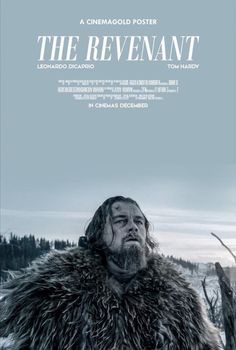
Like Birdman before it, there are scenes in this movie so visually audacious, I gasped. But where that picture hit you like a ton of bricks based on the cumulative effect of its dizzying pace and construction in the close confines of a Broadway theater, Alejandro Inarritu’s The Revenant – which is essentially a lone survivor/revenge flick, with a little spiritual mumbo jumbo thrown in for good measure – presents dazzling set pieces interspersed with awesome portraits of the vastness of nature. The year is 1823, and Leonardo DiCaprio is a guide for a fur trapping expedition in South Dakota beset by a brutal Indian attack, and in escorting the survivors back to the safety of their fort, he is viciously mauled by a bear, a scene so expertly rendered I could not believe it had not happened, yet, of course it had not. DiCaprio seems a committed actor, but no one is that zealous.

After the attack, DiCaprio has many more hurdles before him, including a suspicious and dangerous member of the surviving group (Tom Hardy, channeling Tom Berenger in Platoon, a compliment) and pretty much every calamity the brutal world of the wilderness can provide.  DiCaprio has little to say, but he brings all the physicality he mustered in The Wolf of Wall Street, only this time, during his infirmity, he exudes animalistic fury instead of stoned near-paralysis.

This is one of the most thrilling, visually stunning films I’ve ever seen. Inarritu used natural light and subjected the actors to enormous rigors (some say, “a living hell“).  Like George Miller in Mad Max: Fury Road, Inarritu dispensed with CGI, remarking, “If we ended up in greenscreen with coffee and everybody having a good time, everybody will be happy, but most likely the film would be a piece of shit … When you see the film, you will see the scale of it, and you will say, ‘Wow.'”

Wow indeed.  It all pays off in making the picture visceral, authentic and epic.  My only nits are a bit of anachronistic, stale “you have stolen everything from us” dialogue from the primary Indian and one depiction too many of DiCaprio hallucinating his Pawnee wife welcoming him to death ala’ Russell Crowe in Gladiator. But these are very minor criticisms. This is a great film and certainly one of the best of the year.

image

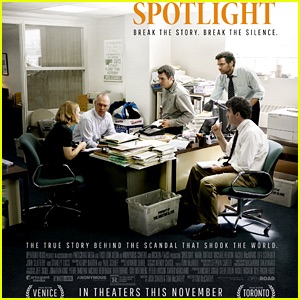
This is a gripping but measured film, a reportorial procedural and a meditation on the impact of the sexual abuse scandal that rocked the Catholic church in Boston, as reported on by The Boston Globe in 2002. “Spotlight” refers to an investigative team of the paper (Michael Keaton, Mark Ruffalo, Rachel McAdams, Brian d’Arcy James) who, under the direction of a new editor (Liev Schreiber) takes on the case. As they dig deeper, the breadth of the scandal widens (the number of culpable priests balloons from 13 to 87) and the institutional protections surrounding the church become more evident and intrusive. The story also takes its toll on the team, all some form of Catholic (cultural, lapsed, etc . . . ) at the time of the investigation.

The film is economical and direct and it stubbornly avoids cliche’ and histrionics. It is also a rare “based on true events” movie that feels authentic throughout, not jumped up or glamorized.  It is very similar to A Civil Action, another Boston based movie that tackles a legal case (water contamination in Woburn) by analyzing the city and its institutions. Like that film, Spotlight packs its biggest punch during scenes of interviews with the survivors of abuse, which are nothing short of heartrending.

If you want a gripping movie about the mechanics of taking on a story like this, this is it, and if you want a companion piece that shows exactly how an individual molester operates, I recommend Doubt. Watching this film, as with Doubt, stirred my own memories on the subject, having been educated by the Catholic church for eight years of grade school and by the Jesuits for four years of high school. I saw the picture with my kids and tried to explain how what is now an indelible black mark on the church wasn’t exactly a deep, dark secret by the time I reached high school, yet somehow, was not a full-fledged scandal. I explained that we had a religion teacher who was very charismatic, but who you just kind of knew not to be around. Why? It’s hard to say. It could have been my own sense of it, or the fact that my brother or his friends imparted some decent advice, or the fact that after gym, when you were showering, he could sometimes inexplicably be seen in the locker room.

Whatever the impetus, you learned not be around Father Bradley, but I guess I just assumed that all boys shared the same sense of something being off and were similarly self-protective. That wasn’t the case, and in 2007, I was one of thousands of recipients of a mass email detailing the misdeeds of this priest at our high school, and at other places where he taught afterwards, encouraging us to report if in fact we had any knowledge of his abuse. Without the work of The Boston Globe on the story, that email may never have come to be.  In that manner, this film is a testament to solid, door-knocking, pavement pounding reporting.

If you’re interested in the priest who plagued my school, the story is here.  The original Boston Globe story can be found here.

image

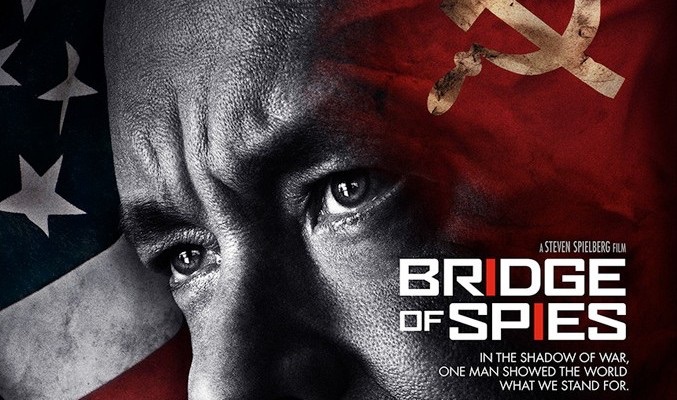
Steven Spielberg’s rendition of private attorney James Donovan’s (Tom Hanks) defense of a Cold War Russian spy (Mark Rylance) and then his negotiation of the swap of that spy for downed U2 flier Gary Powers and an American student detained in East Berlin is assured, workmanlike, forgettable, and plagued by the schmaltz that accompanies much of his work. Spielberg takes a can’t miss, gripping tale of espionage and burdens it with overwrought homilies to American civil liberties, repetitive scenes of bland conversation, and cheap comedy (Rylance is even given a catchphrase he repeats three times). I’m as patriotic as the next fella, but it’s not enough to show Hanks resisting the zeal of the Cold War simply because he’s Hanks. We never learn why Donovan holds his convictions. They apparently come with Hanks, no assembly required.

Worse, Spielberg juices up the action, probably because he sensed the movie was a bit of a slog. So, Donovan’s house is shot up because he is representing a Russian spy (never happened) and Donovan witnesses East Germans gunned down as they try and make it over the wall (also never happened).

It’s an okay film, it has some moments, and I’ve certainly seen worse, but it’s no great shakes, and as with much of Spielberg’s work, it stays safely in the lines.

You won’t fall asleep in this picture, and it has a few nice moments (plus very good performances by Rory Cochrane and W. Earl Brown, as henchmen), but at root, this is a hackneyed crime saga that celebrates the dreary over all else.

Sure, it offers a bonanza of Boston accents. There’s the “Downtaaaaaaaaahhhhhhhn Abbey” (Benedict Cumberbatch, as Whitey Bulger’s more respectable brother), the “all-in” (Australian Joel Edgerton, as the FBI agent who utilizes Bulger as a confidential informant), and even the “Robin Hood Costner” (Corey Stoll, as the U.S. Attorney who brings the Bulger crew down; sometimes he does a Boston and sometimes he says, “Eh, fuggedaboutit”), all of which, mind you, are better than the “Kennedy Costner” from 13 Days, which, while we’re talking, was execrable, yet better than the Cajun Costner in JFK.

As fun as it is watching everyone extend there “aaahhhhrrrrrrrrrrrrrrrrrrrs”, they ahhhhhhhrrrrrrrrrrrrrren’t saying anything worth hearing. We are introduced to Whitey Bulger (played by a monochromatic, cloudy-eyed Johnny Depp) on his way up, and that trip is blindingly dull. He is kind to the old women of the neighborhood, he loves his Mommy, he tells his son “if no one sawwwwr it, it didn’t happen” and if you cross him, he comes at you in a gray, humorless, inexorable way.  When he does joke, it’s in the Joe Pesci manner of Goodfellas, by which I mean this movie actually has him bully a guy after the guy says something innocuous, only to say, “I had you going there, didn’t I.” It’s hard to say if Bulger was even that good a criminal. They keep telling us he’s mythic and runs all the dirty deeds in Beantown, but as far as I can tell, he made enough dough to live in a shitty house and occasionally go to Florida to watch Jai alai.

Bulger’s way up was paved by the FBI agent, played by Edgerton, so perhaps he’s the story? He turns out to be not much of one. He wants fancy things and he wants them badly, and he’s loyal to Bulger from his Southie days, so we suffer countless scenes of him defending the protection of Bulger as a source of information at FBI headquarters. Kevin Bacon, who plays Edgerton’s boss, pops in repeatedly to say the same things, awkwardly accompanied by Adam Scott sporting a porn ‘stache (Scott’s presence is jarring; you almost expect the rest of the Anchorman gang to follow behind him).  As Edgerton grows more desperate, Edgerton’s Boston mugging gets worse.

With accent wars and a story bordering on the torpid, at least we get Boston, no? Not really, Director Scott Cooper (Out of the Furnace) has a fondness for bad 1970s kitchens and office buildings. We get it. Even interior design was ugly in the 70s.

Pointless.

image

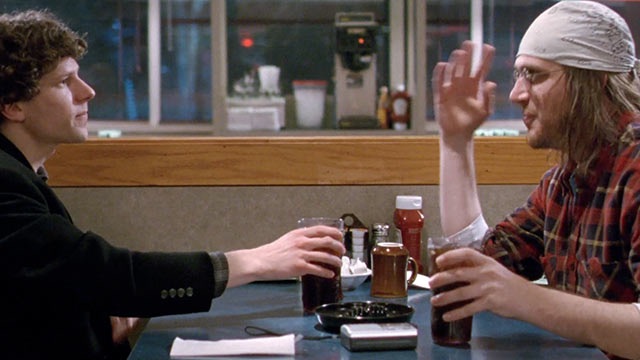
The film is a flawless meander over a few days with an enigmatic and at times debilitatingly insecure novelist.  Jason Segal’s turn as author David Foster Wallace is soul-deep, a particularly impressive performance given that it is from a light comedian. As a film about a doomed man (Wallace hung himself 12 years after the events depicted), the picture is also refreshingly light on foreboding. We are not here to observe the clues that led to Wallace’s demise.  Rather, we are here to enjoy the mind of the author, while being made privy to some of the demons within him, as he is interviewed by a Rolling Stone writer, played by Jesse Eisenberg. We are allowed to hang out with two writers as they discuss their craft, their fears, and America; fence over their different viewpoints and goals through the interview process; and eventually, form a fleeting friendship. Thankfully, the movie is so self assured it doesn’t feel the need to provide the expected big reveal or the emotional paroxysm.

But perhaps what is best about this film – a film about a writer where we do not hear him recite his prose – is the fact that you’ll become affected enough to go read his work after the movie is over. I generally do not read fiction, I have never read Wallace (with the exception of a few magazine pieces), but on the strength of this very personal and intriguing film will read one of his novels.

image

First time film director Yann Demange’s cat-and-mouse historical thriller is taut and assured, blending wrenching action sequences with emotional and historical authenticity.  A Brit soldier (Jack O’Connell) detailed to Belfast in 1971 is stranded after a riot in the Catholic section, and he must negotiate an internal power struggle amongst IRA strongmen, retribution from Protestant terrorists, army incompetence, and double-dealings amongst the intelligence personnel that have rank over his unit, to get out alive.

Belfast is portrayed as nothing less than the white man’s Mogadishu, and while there are some intelligent exchanges in first-time screenwriter Gregory Burke’s script, thankfully, there is no time for an examination of the various political agendas and hypocrisies at play.  Instead, the dismal backdrop of Belfast does most of the political talking, taking a backseat to the heart-pounding chase of O’Connell (who played the lead in Unbroken, so he’s created a niche for characters who have been put through the wringer).  It’s realistic, engrossing and heart-pounding.

In an interview, Demange gives a sense of his perspective on balancing the historical and the dramatic:

At first you can say, “It’s ‘Apocalypto’ in Belfast!” And yes it is, but you can’t just exploit a recent and painful period in people’s lives to make a fucking genre picture. And we all knew that. So we knew it had the shape of a genre picture, that’s how we’ll get a 20-year-old to watch it. But it had to have an honesty, a humanity, a soul.

What was hardest was bringing in shades of grey. Because I’m not like a Greengrass, you know? I’m not that bright, I didn’t go to good schools, I’m not a historian. I’m not interested in lessons. I just wanted to connect in a human way.

And I really struggled, when I began, to understand the Loyalist point of view. It was all white noise when I grew up. I was born in Paris, and plonked into Streatham in the late ’70s, ending up in West London, and this thing was just on the news constantly. But no one in my house understood it, it was just, “there’s been another bomb” “Who is it?” “The IRA” “Oh right.” It was like hearing Brits trying to talk about the Algerian conflict: Algeria? Where’s that? Eastern Europe?

We were so parochial, you know? I was amazed how ignorant I was, once I started meeting people and talking about it. I had no idea the level of sectarian division. I had no idea, and why they don’t put it on the curriculum?

Demange does owes a bit to Paul Greengrass’s Bloody Sunday and some more to the Red Riding trilogy, but his vision is unique.  His camerawork alternates between shaky documentarian and lyrical, giving you a breather while amping up the suspense.

As with those films, I recommend use of the subtitles.  I couldn’t understand a damn thing most folks were saying.

.

image

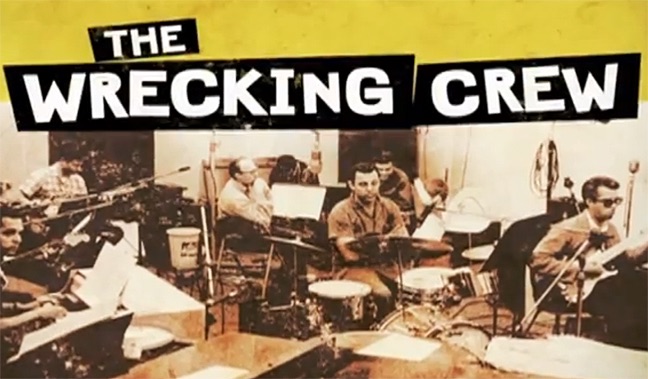
A significant portion of Love & Mercy is devoted to Brian Wilson’s production of The Beach Boys record “Pet Sounds.” Wilson enlists a room full of session musicians rather than the Beach Boys, who are utilized solely for vocals. The studio players were known as The Wrecking Crew, and it was from this group that the band found its replacement for Wilson on the road, Glen Campbell.

Denny Tedesco, the son of session guitarist Tommy Tedesco, has written and directed a fascinating documentary that chronicles the heyday of The Wrecking Crew, who played the music on a seemingly exhaustive list of pop records in the the 60s and 70s. Working from interviews of the players and the acts they backed, as well as home movies of his father, Tedesco provides great insight into the times as well as the life of a working musician.

The interviews are particularly fun. Roger McGuinn of The Byrds, who had been a session player himself, had to break it to the band that the rest of them wouldn’t be playing on their hit single “Mr. Tambourine Man” which didn’t go over well. As McGuinn recalls, The Byrds produced two tracks in three hours during the “Mr. Tambourine Man” session, while it took 77 takes to produce “Turn, Turn, Turn” which the band insisted on playing.

Tommy Tedesco tells the story of The Gary Lewis and the Playboys guitarist who confessed he could never play what Tedesco had played in studio on tour and always felt embarrassed when fans complimented his playing on the records.  Peter Tork of The Monkees tells a poignant story of the disappointment he felt when he was invited to come to the studio for the production of a Monkees tune only to learn that the invitation was solely as an observer.  On an up note, Mickey Dolenz reveals that the studio musicians taught him how to play the drums in preparation for his Monkees tour.

Obviously, the days of a small crew of players backing most of the pop radio play (and film and televisions tracks and radio and TV commercials) coming out of LA couldn’t last, but this is a blast of a documentary that also serves as a loving remembrance of the filmmaker for his father.