Archive

Historical

Clint Eastwood’s biopic is lovingly photographed.  Washington, D.C., and other venues, from the teens through the 1970s, are regal, warm and classic. Unfortunately, Eastwood has populated his pretty film with a dull collection of historical figures, none of whom have much to offer. Eastwood also mostly punts on the nature of Hoover, and as played by Leonardo DiCaprio, the character is little more than a one-note old windbag, constantly going on and on about the same thing – the enemy within.  Eastwood’s vehicle for Hoover’s reminisces – Hoover is dictating his memoirs to an ever-changing number of aides- does not help.  As one is replaced, you can almost hear the jettisoned aide saying, “Thank God! What a snooze!”  Oliver Stone’s Nixon gave us a ridiculously lustful and evil Hoover, played by Bob Hoskins, but at least he wasn’t tedious.

Naomi Watts is wholly wasted as Hoover’s long loyal secretary.  Armie Hammer, as Hoover’s long loyal number 2 Clyde Tolson, does a poor version of a young Brendan Fraser (Hammer was last seen in The Social Network playing the Winkelvosses).  Judi Dench’s turn as Hoover’s overdoting mother is predictable.  Josh Lucas’s take on Charles Lindbergh is foggy.  In fact, the only decent performance is a brief appearance by Jeffrey Donovan as a trumped Bobby Kennedy.  Donovan thankfully avoids the standard “Haaaaaaaaahvaaaaaads” and “Baaaaaaahstons” endemic to the role.

Eastwood portrays Hoover as a repressed homosexual, no question.  Which makes Mom upset and Tolson bitter.   And Hoover seems most bothered by Martin Luther King because he overheard King having sex on a wiretap.  Not much of a motivation.  Eastwood even gives in to the dubious cross dressing story, but ennobles it because Hoover gets gussied up in Mom’s clothes after she dies.  Another punt.

Another problem.  DiCaprio’s makeup as an older Hoover is very good.  Hammer and Watts, however, look ridiculous, very similar to the characters in “Star Trek” when they age decades in hours.

The Many Looks of Captain Kirk - IGN

Dustin Lance Black’s (Milk) script ends in treacle and nonsense.  Out out of nowhere, Hoover turns moralistic, the man who would stop . . . Nixon!  This prefaces a melodramatic conversation between an old Hoover and Tolson that is straight up “One Life to Live.” When Tolson, doddering in his ridiculous makeup, finds the dead Hoover, it comes close to bringing laughter.

At one point, DiCaprio asks Watts, “Did I kill everything I love?”

Oh if she’d said, “No Edgar.  That was Michael Corleone.  You just bored them to death.”

Image result for Farewell My Queen

Downfall, but instead of Hitler and his bunker, it is Versailles and the French Revolution.  Marie Antoinette (Diane Kruger) is pampered by a coterie of attendants, including her reader and our protagonist (Lea Seydoux) a quiet but determined girl who adores her queen.  Her adoration never wanes, even after the queen asks her to take flight and pose as a more favored courtier, Gabrielle de Polignac (Virginie Ledoyen) with whom the Queen has developed a near romantic attachment.  Seydoux knows this could be her head, but out of a childish need to please, a desire for purpose, and ultimately, the chance to at least play both above her station and the queen’s favorite, she agrees.

Shot at Versailles, the film is beautiful, even as it deglamorizes its locale (mosquitos, rats, vicious gossip, heat, and dank cellars take precedence over finery and gold).  The depiction of life at court from the vantage point of rank-and-file staff has an “Upstairs, Downstairs” feel. Kruger plays Marie with the right mixture of caprice and entitlement. Seydoux is a bit tedious, however, because she is written as little more than a teen with a crush.  Though her scene in the carriage as she pretends to be Polignac is moving (she waves to the peasants, one of whom makes a throat-slitting motion and even that does not dissuade her from fully indulging in her moment of glory), following a teen with a crush for an entire film can be a little boring. At its most dour, I yearned for Sofia Coppola’s dizzying and silly Marie Antoinette.

Walter Hill is a workmanlike director.   He makes some decent and intriguing films (The Warriors, Southern Comfort, Geronimo), and a fair amount of bad ones (Red Heat, Last Man Standing, Extreme Prejudice) and good or bad, the pictures are little more than macho shoot ’em ups where brawn and bullets win the day.  Hill’s commercial pinnacle was probably 48 Hours, the buddy-cop film that vaulted Eddie Murphy into the stratosphere.

The Long Riders is his masterpiece.   The story of the James-Younger (and Miller) gang, Hill cast the Keaches as Frank and Jesse James, the Carradines as the three Youngers, and the Quaids as the Millers (he also throws in the Guest brothers as the duo who eventually shoot Jesse).  It comes off not in least bit gimicky.  Hill comfortably alternates the mythic and the mundane about the brothers, and there is a naturalness to the interplay between the men that makes every scene easy and true.  Brothers in life portray convincingly as brothers in film.

Hill also provides a rich facsimile of Peckinpah-style screen violence, while setting forth a keen depiction of rural tradition and family loyalty . His scenes in the Missouri woods, while the gang hides out, are well-crafted and authentic, his Texas bar fight by Bowie knife is inspired Western legend, and the Northfield, Minnesota bank debacle is unforgettably haunting.  Hill shoots high speed escape by horse interspersed with slow-motion shots of the gang being shot up, commensurate with an eerily slow-soundtrack that purports to track the actual bullet and its impact above the slooooooow distorted sounds of hoof beats, screams, horse whinnies, and thuds. The scene is bravura, a milestone in action filmmaking.

The tensions between the gang, and the brothers, are summed up in the woods outside of Northfield, where Frank and Jesse -w who can move – and the Youngers, who are too shot up to escape, say their bitter yet still faithful farewells, most of it non-verbally.

The best feature is Pamela Reed as Belle Starr.  She steals the movie from the brothers, presenting as of the time.  Reed is not beautiful by a long shot, but her strength is undeniably alluring.  Her exchanges with Robert Carradine are memorable, especially the second one, as she sits, dressed to the nines on her carriage in the street, uninvited to a Younger wedding.

I love this picture because it has one foot in the myth of the West and another in its grimy, brutal reality, it is at once entirely unsentimental and yet, through the understated depictions of the family, moving.

1.  The Patriot‘s director, German born Roland Emmerich, is not quite a hack of Renny Harlin’s status, but his resume’ is filled with a boatload of crappy, excessive, ludicrous films such as 201210,000 BC, The Day After TomorrowGodzillaIndependence Dayand Universal Soldier.  And The Patriot.

2.  The Patriot is a revenge movie set during The Revolutionary War.  Revenge movies are fine.  But a revenge movie fails if the person upon whom revenge must be visited is blase’ about his own life or death.  In The Patriot, the villain (a British officer played by Harry Potter baddie Jason Isaacs) is a vicious killing machine with no desire to live other than to burn women and children alive.  So, short of having his skin peeled off, there can be no satisfaction in his demise.  And there is none.  Which, in the words of Donald Rumsfeld, makes this a very long, hard slog.

3.  The Patriot veers wildly from the manipulative (excess depictions of crying and/or dying children) to the sitcomish (Saving Private Ryan screenwriter Robert Rodat  uses tension-breaking quips between men-in-war and then expands them into broad cartoonish gag scenes worthy of “The Jeffersons”) to near-spoofs of beer commercials (the slow-motion as men high-five after winning the big battle is missing only the bosomy blondes and frothy pitchers of ale, and the scene where Gibson gets romantic with Joely Richardson is a replica of Corona commercials).

4.  The best part of the movie is when Gibson appears heroically, flag in hand, and all the militia scream “Huzzah!” but it sounds exactly like “Wazzzzzzzzzuuuuuuuuup!”

5.  The Patriot is predictable.  If you don’t know whose life the stoic black-man-fighting for his freedom will save; if you don’t know that the moment Gibson gives his daughter-in-law a necklace, it is proof of her death; if you don’t know the “trick” played on the Brits to gain the release of American militia; if you don’t know the fate of a warship off in the distance as the Brits live the high-life and General Cornwallis (Tom Wilkinson moans about his less-than-spectacular uniform), you are not very observant.

6  There are a few historical inaccuracies.  My favorite is the use of exploding cannonballs.  They hadn’t been invented yet, but you can just see Emmerich screaming “I vant it BIGGER!!!!!!”  And when Isaacs character burns an entire church filled with women and children, based on an incident from World War II when Nazi soldiers burned a group of French villagers alive, I’m sure Emmerich was there screaming, ‘I vant him MEANER!!!!!!”.

Amazon.com: Glory Road [Italian Edition] : derek luke, jon voight, james  gartner: Movies & TV

It is hard to find a worse sports movie than the hackneyed and overwrought Remember the Titans, but after Glory Road, I was almost wistful for the homespun wisdom of Denzel Washington and the beatific look on Will Patton’s face as racial understanding dawns upon him.

No matter what you may think of the delivery of Remember the Titans, and I think very little of it, with a few exceptions, it hewed however loosely to actual historical events. There was a high school football team in Alexandria, Virginia. The school was recently desegregated. The team did get a black coach and he did make the whites sit with blacks on the bus and the team did win the championship. Sure, the film exaggerated racial tensions, but that much is to be expected. It can’t be “feel good” if at first we don’t “feel bad.”

Glory Road is every bit as maudlin and formulaic as Remember the Titans (both films were produced by Jerry Bruckheimer, blast Motown, show the trading of racial culture between young men in the form of dance moves, and teach us valuable lessons about what’s “in here”) but it is also a perversion of history that goes way over the line.  Yes, 5 black men played on the 1965-66 Texas Western NCAA winning basketball team and yes, they were coached by Don Haskins.  This much is true.

But it wasn’t that big of a deal.  A decade before Texas Western won, the undefeated 1955-56 University of San Francisco team won the NCAA championship with a team that played four blacks — Bill Russell, K.C. Jones, Hal Perry and Gene Brown.  In 1958, the coaches’ All-American team was all black — Wilt Chamberlain of Kansas, Oscar Robertson of Cincinnati, Bob Boozer of Kansas State, Guy Rodgers of Temple and Elgin Baylor of Seattle.  In 1962, the University of Cincinnati started four black players when it won the NCAA championship.  Loyola University of Chicago started four when it won in 1963.

We also have the sports announcer screaming, “Who ever heard of Texas Western?”

A lot of people. Texas Western was a regional third place finisher in the 1964 NCAAs.

So, that sucks, but it gets worse.

The reason 5 black players got the start (and 7 played) was mundane – Haskins thought they were the best players.

Not so in the film.  Instead, we get some p.c. twaddle wherein Haskins tips his desire to make a statement to the team and the white players actually agree not to play so a larger societal point can be made.

How the screenwriter came to the conclusion that it was more edifying to make the achievement a gift from whites rather than earned by blacks, well . . . that’s for another day.

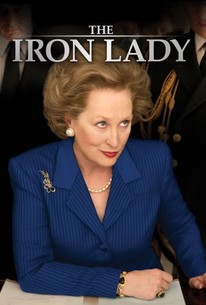
The Iron Lady (2011) - Rotten Tomatoes

First, I really have no idea as to the historical accuracy of the movie. To the extent there are historical nits to pick, I concede.

Second, this is two films.  One, very personal and touching, speaking to the loss of a loved one and an individual’s weakening ability to remember, a great thinker’s capacity to articulate and rationalize.   Meryl Streep’s turn as a woman infected by Alzheimer’s is frightening, poignant and moving.

Third, it works less well as a political biography.  The young Thatcher is a simplistic spouter of conservative bromides.   As prime minister, she’s almost ridiculously “iron” with the men about her always clucking like nervous nellies.  Worse, particular challenges are handled via music video montages and newsreel footage. It lends a certain cheap and easy feel to the endeavor.  During The Falklands War in particular, she is the lone Joan of Arc amidst jelly bellies. Speech follows speech, with great, grand pronouncement. It gets silly.  We even have the obligatory review of the casualty figures and the personal letter-writing histrionics.

Fourth, Streep is beyond convincing in the role and when assessing the body of her work, the idea that she is not the finest actress in the history of film is laughable.  There is no Magic Johnson to her Michael Jordan. It’s not even close. And she only gets better.  As the nun in Doubt, she completely captured the nuns of my early education, and as Julia Child in Julia and Julia, a role that like Thatcher could have been hammy and overt, she is vibrant and real.

This is a charming first love story, different in that the first love is Marilyn Monroe and her suitor is a third assistant director (a glorified gofer) on her 1957 picture The Prince and the Showgirl.  The picture co-starred and was directed by Laurence Olivier, who is played by Kenneth Branagh.  Branagh was fine and nominated, though I’m not sure deservedly so.  His primary posture is one of exasperation.

It is Monroe who exasperates Olivier, because she is tardy, skittish, unprofessional and seemingly over-handled by her method acting coach and her business manager.  Pills are used to control her.  Thus, she seeks companionship and escape with the gofer, played with wide-eyed innocence but occasional steel by Eddie Redmayne (Redmayne is a little distracting – he has lips that rival the collagen-induced monstrosities of Barbara Hershey, Meg Ryan, at al.)

Williams was nominated and deservedly so.  She’s a perfect confluence of beauty, sensuality, naivete’ and whore.  At times, she was so stunning that you could understand the entire Monroe worship.

Best, the story is sweet but not sugary, and economical.  It also has a great sense of time and sports some nice supporting turns by Dominic Cooper and Toby Jones as her weasel management and especially Julia Ormond as Olivier’s aging and jealous wife at the time, Vivien Leigh.  Leigh is obviously wary of Olivier working with Monroe which results in a great exchange with the smitten gofer:

VIVIEN

Of course, Larry would never leave me. (Pause) But, if anything were to happen, you would let me know, wouldn’t you?

COLIN

I’m sure he loves you very much.

There is a flash of sudden anger in her expression.

VIVIEN

Oh, don’t be such a boy!

COLIN looks shaken and she touches his hand in contrition.

VIVIEN (cont’d)

At least you still adore me, don’t you?

COLIN

Of course. Everyone does.

There is a wintry bleakness in her face for a second.

VIVIEN

I’m 43, darling. No one will love me for much longer. Not even you.

To the extent there is a weakness in the picture, however, it is implicit in the character of Monroe and not the film.  Monroe is so iconic as to be both beguiling and ridiculous.  Her end was tragic and elicits the syrup ladled out by Elton John’s “Candle in the Wind” (which can be dusted off and updated for a Princess Di and had Elton and she been friends, probably Anna Nicole Smith).  Luckily, we are spared the cruelties that lay in store for Marilyn, but the film does take for granted her absolute boundless and radiating talent.

It’s a tough sell.  Monroe was beautiful and seductive and had the ditzy blond bit down pat.  But had she not been such a notorious pain in the and piece of ass, vexing Olivier and Gable and bedding DiMaggio, Miller and two Kennedys, would she be the goddess of today or . . . Anna Farris?

Forum | It's all kicking off at the border already by Garyjack | Swansea  Independent

Zulu was released in 1964 (the year of my birth) and runs pretty regularly on both The History Channel and Turner Classic Movies.  Starring Stanley Baker (Lt. Chard) and Michael Caine (Lt. Bromhead) as two late 19th century British Army officers, the picture dramatizes the 1879 battle of Rorke’s Drift in the Natal province during the Anglo-Zulu war. 

At Rorke’s Drift, a contingent of 150 British soldiers was trapped in a converted mission station they were garrisoning as a supply base and hospital.  A British army column of 1,200 men had been massacred by an overwhelming force of Zulus at Isandhlwana earlier in the day.  The Zulus moved on the mission station.  The film chronicles the frenzied defense of the mission by the tiny contingent against 4,000 Zulus.  At end, the Rorke’s Drift defense resulted in 11 Victoria Crosses, the most ever awarded for an action in one day.

The film is memorable for several reasons, including gripping close-action battle photography, sweeping and memorable vistas of the African landscape (most of the film was shot on location in South Africa), the tight scripting of at least 20 supporting characters, and the adult handling of the culture clash between Brit and Zulu with no intrusive moral lessonry.  This is a movie about these men in this battle at this time, not about the big bad white man exploiting the proud, wise, noble black man.  This is not to say the blacklisted screenwriter Cy Endfield completely ignores the culture clash, as is evidenced by a back-and-forth between Caine and a Boer co-defender (Adendorff) as Caine maligns the natives assisting the Brits:

Lieutenant Gonville Bromhead: Damn the levies man… Cowardly blacks!

Adendorff: What the hell do you mean “cowardly blacks?” They died on your side, didn’t they? And who the hell do you think is coming to wipe out your little command? The Grenadier Guards?

Endfield has a little to say about geopolitics as well:

Bromhead: Well done, Adendorff, we’ll make an Englishman of you yet!

Adendorff: No, thanks. I’m a Boer. The Zulus are the enemies of my blood. What are you doing here?

Bromhead: You don’t object to our help, I hope?

Adendorff: It all depends on what you damned English want for it, afterwards.

The back-and-forth between Baker and Caine is also subtle and well-crafted.  Caine is a patrician but junior in commission by a month.  Baker, a newcomer to the garrison sent to build a bridge, is an engineer and apparently lower born, so Caine is not at all happy about being usurped and particularly resentful of being second-in-command:

Bromhead: [mounted, crossing stream] Hot work?

Lieutenant John Chard: [kneeling in stream] Damned hot work.

Bromhead: Still, the river cooled you off a bit though, eh?
[pause]

Bromhead: Who are you?

Lieutenant John Chard: John Chard, Royal Engineers.

Bromhead: Bromhead. 24th. That’s my post… up there.
[points into middle distance]

Bromhead: You’ve come down from the column?

Lieutenant John Chard: That’s right. They want a bridge across the river.

Bromhead: Who said you could use my men?

Lieutenant John Chard: They were sitting around on their backsides, doing nothing.

Bromhead: Rather you asked first, old boy.

Lieutenant John Chard: I was told that their officer was out hunting.

Bromhead: Err… yes.
[spurs on horse]

Bromhead: I’ll tell my man to clean your kit.

Lieutenant John Chard: Don’t bother!

Bromhead: No bother… I’m not offering to clean it myself! Still, a chap ought to look smart in front of the men, don’t you think? Well chin-chin… do carry on with your mud pies.

As their situation presents itself, they join together in the heroic defense.

The picture is also aided by a memorably thundering John Barry score.

Next time you see it on television, try and catch it, and you’ll be treated to a taut classic.  My favorite line is after the first wave of Zulu warriors is repelled by the Brits, and Caine says, “60!, we got at least 60 wouldn’t you say?” and another character wryly replies “That leaves only 3,940.”

No matter the gravity of the historical event, be it the assassination of JFK or the Cuban Missile Crisis, Kevin Costner raises the hard question.

“What the hell kind of accent is that? Did Jim Garrison and Kenny O’Donnell have speech impediments?”

As to the movie, Thirteen Days is the historically inaccurate drama of the Cuban Missile Crisis told through the eyes of former JFK advisor Kenny O’Donnell, who most historians agree was more of a gofer and pal than a policy force. While it is not unreasonable to inflate the involvement of a tertiary character in historical drama, if you’re going to make stuff up, then do it smart. Make O’Donnell from Delaware, so Costner doesn’t have to butcher an accent. And make him interesting. As written here and played by Costner, O’Donnell is dull as dishwater, has poor political instincts and the temperament of a teen. Indeed, his primary motivation seems to be to have the Kennedys (as played by Bruce Greenwood and Stephen Culp) really, really like him (upon reflection, given the sycophancy surrounding the Kennedys, that motivation may be more in line with actual history than I surmised).

Blocky, uniform, anti-climactic, and predictable (it even uses black-and-white reverence to Camelot), you’d do much better with the classic teleplay The Missiles of October, which had William Devane as Jack and Martin Sheen as an angry, blustering Bobby.

Thirteen Days (2000) - IMDb

Cub-er, Cub-er, Cub -ah – er”

The only thing that recommends the film is Greenwood, who does a fine job conveying President Kennedy’s angst and his sense of isolation. Conversely, Culp’s Bobby Kennedy is portrayed as borderline stupid with impulse control issues (again, on reflection, maybe they got the history right there as well).

Even when the film does pick up a little speed (after all, it is the story of the nation on the brink of nuclear holocaust), Costner’s O’Donnell re-enters with his domestic issues and bizarre elocution, to grind it to a halt.

Denzel Washington plays a high school football coach in 1970s Alexandria, Virginia. Washington is given the head coaching job in the middle of the integration wars. Making matters worse, he replaces Will Patton, the soft-spoken former coach, who responds with a bruised ego but a determination to stay on as an assistant coach for “his boys.” There are racial tensions between Washington and Patton and between the now integrated high school football team.

No worries, though. All those tensions are erased by group sings, group hugs, group showers, the iron-fist of the strict Washington, and the velvet touch of the gentle Patton.


“THIS IS A VALUABLE TEACHING MOMENT, SON.”

The lessons are fired into your brain with the subtlety of a nail gun, and the cliches pile up quicker than you can say After School Special.

The black players can sing and dance, and they soon turn those slow-footed white boys into singers and dancers.

The black defensive captain is angry and he lacks the concept of team, so the white defensive captain shows him what teamwork really means.

Washington is a “My way or the highway” kind of guy, yet Patton shows him that improvising and being receptive to new ideas can make him a better coach.

Patton is too gentle on the black players, a repressed form of condescension, so Washington points this out, and dag gummit, Patton learns to be tough.

Oh, and for the most part, the story is a concoction churned out by the Hollywood folks who gave you the slow clap, “don’t you die on me!” and racial healing via dancing to Ain’t No Mountain High Enough.

As for what one would hope could be a saving grace in a sports picture, the football is laughably inauthentic. Altman filmed better sports footage in M*A*S*H.

If your intelligence isn’t insulted, as the screenwriter might observe, “Houston, we have a problem.”