A subtle, surprising movie that avoids many of the easy choices and gratuitous emotionalism of similar “coming home” war films. Woody Harrelson received a deserved nomination for best supporting actor. Harrelson played the role of grizzled Army vet who leads a notification duo to inform relatives that they have lost a loved one in Iraq, but it’s a Jeff Bridges kind of role – old, broken down, folksy, etc . . . No real stretch. Other nominations should have gone to Ben Foster (Six Feet Under, Alpha Dog, 3:10 to Yuma) as his new partner, recently returned from Iraq after being wounded, and Samantha Morton (In America, Minority Report) as the wife of a KIA who they inform.
Drama
Crazy Heart – 2.5 stars
A paint-by-numbers “ole’ broke down country singer gets its together by the love of a good woman” movie. Tender Mercies is a better picture by leaps and bounds, and while Jeff Bridges is very good, he’s not exactly breaking a sweat. Some of T. Bone Burnett’s numbers are very catchy and authentic, though the one that was nominated for best song is pedestrian.
The Blind Side – 3.75 stars
![Amazon.com: The Blind Side [Italian Edition]: sandra bullock, tim mcgraw, john lee hancock: Movies & TV](https://images-na.ssl-images-amazon.com/images/I/516fF20i2LL._SY445_.jpg)
A good old fashioned heart-tugging, crowd-pleasing weepy, and Sandra Bullock’s brassy performance is perfect for the material. The actor who plays “Big Mike” has a devastating mixture of nobility and tenderness and there are some very funny lines (Bullock’s husband – “Who would’ve thought we’d have a black son before we met a Democrat?”).
Inglorious Basterds – 4 stars

I was teed up to hate this picture, given how juvenile and overpraised Quentin Tarantino’s last offerings were (the Kill Bills, and the truly execrable double feature, drive-in homage). Those movies were the toasts of critics yet belied all of his worst qualities – excess, self-regard and juvenilia.
But Tarantino returns to his sweet spot here, with crackling dialogue, edgy and beautifully crafted set pieces, and a brisk pacing, comic but not immature. It’s a clever and exciting popcorn film, anchored by the actor who plays the primary Nazi baddie (Christoph Walz) with such relish, you near root for him.
Great fun, and yet, highly intricate and accomplished. The shootout scene in the French cafe’ basement is one of the most tense and exciting I’ve ever scene on film. A worthy Best Picture nominee.
The Pianist – 2.5 stars
Roman Polanski won best director and Adrien Brody won best actor, so I expected something special. I was disappointed. The story of a Polish pianist and his grueling fight for survival during the Nazi occupation (and extermination) of Warsaw depends on one caring for the lead (Brody). And to the extent one cares for any human made to endure unendurable suffering, the film carries you through. But it becomes more of an assignment than an enjoyment. Brody is a blank slate in freedom and notoriety (he is a well known musician), and he becomes even less interesting during the Nazi occupation (most of which he spends hiding in apartments provided to him by sympathetic non-Jewish Poles).
The picture is beautiful – the scenes of a devastated Jewish ghetto are particularly memorable. And the slow, desperate demise of Brody’s family, who incur one withdrawn right after another while managing to stick together, is affecting. But the film is 150 minutes long, and the family loses its struggle about half way through. That leaves us Brody. He is not enough, and soon, the film becomes tedious and stubborn. Many characters help Brody (from an old flame to fellow musicians to a Nazi collaborator to a Nazi officer), but we don’t get to know them. Polanski is content to stay with Brody as he becomes more emaciated and desperate, and in the end, little more than a caged animal. To the extent Polanski wants to demonstrate that even through the most awful of horrors, people can survive and return to the pre-horror life relatively undamaged, The Pianist succeeds. But as drawn in the film, it’s a minor success.
25th Hour – 3.5 stars
![]()
Further confirmation that sometimes, when Spike Lee does not write a movie indoctrinating viewers as to the racial dogma of a wealthy courtside-sitting Knicks fan, he can forego the lecture and make solid entertainment . See also Clockers and Inside Man.
Edward Norton is spending his last day and night in Manhattan before serving a 7 year stretch for drug distribution. He deals with the certainty of his impending brutalization and agonizes over the choices he made, all while saying his goodbyes to friends and family, reliable New York City archetypes to a one. His father, Brian Cox, is a former fireman (the film is a post- 9-11 story and it is reliant on that catastrophe) and now proprietor of an Irish tavern; his girlfriend, Rosario Dawson, a luscious Puerto Rican who had never been to Puerto Rico until Norton took her; his best friends are Barry Pepper (a tough, cynical, New York Post reading conservative trader) and Philip Seymour Hoffman (a tentative, caring, Jewish public school teacher who lives a meager, sheltered life and has a hidden trust fund). Anna Paquin is Hoffman’s vixen of student, all freedom and possibility, just on the edge of pregnancy and disease and the first steps to getting used up. Norton’s employers are Russian mobsters.
Norton’s choices are delicate and a man on the brink is a tough character to deliver. He does not sweat or ooze like so many would-be Brandos, but runs the emotional gamut (anger, recrimination, fear, acceptance) with authenticity. The story holds you, and Lee’s lyrical skills give the picture a haunting vibe. Solid watch.
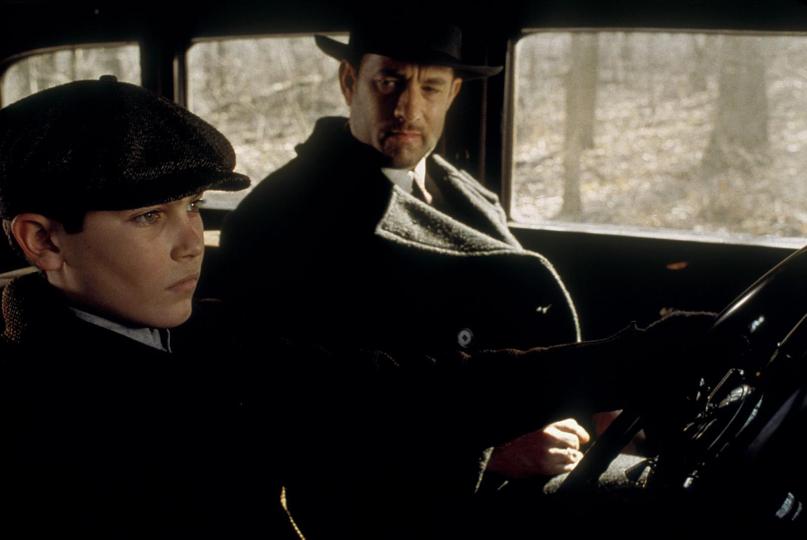
Road to Perdition – 3 stars

Sam Mendes’ follow-up to the overpraised American Beauty almost survives the miscasting of Tom Hanks, the overacting of Jude Law, an at-times leaden script, and an unhealthy preoccupation with slow visuals. With all of that, Road to Perdition is also a beautiful movie graced by some very smart, substantial performances by Paul Newman (his last big screen role) and Stanley Tucci as mobsters working in the same organization. Thomas Newman’s haunting score is perfect for the material, and the set design, art direction, costumes and cinematography recreating the Depression-era Midwest are impeccable.
But a film about fathers and sons cannot survive a child actor who does not resonate. The actor playing Hanks’ son is not awful but he’s not very good either. As our narrator, he simply doesn’t register, and as the guide to the life of his father (mob enforcer but family man Michael Sullivan, played by Hanks), this cannot do. Indeed, the last line of the film is “He was my father.”
It didn’t really seem like it.
Hanks is also problematic. His character is a bit like Eastwood’s William Munny in Unforgiven. He is supposed to have demons. The way Sullivan is played by Hanks, however, is as more of an automaton. When things are going well, Hanks seems grimly fine with family and pot roast and a solid 9 to 5 job committing violence on behalf of his boss and father-figure (Newman). When things go poorly, you get the sense Hanks doesn’t really have much to reassess. He just seems sad that the easy 9 to 5 gig is up (and up in a rather cruel manner). When he does soften, it seems too easy, like a swell guy has been just beneath that hard surface all along. The role is a lily-pad to a villain, but Hanks drowns on it.
And can Hollywood please take the “powerful and honorable man driven to treachery by his weak issue” trope out back and put it down with a bullet? The weak son here – Daniel Craig – is entertainingly rotten, but God, I’ve had enough!
Hanks does have some moments, such as his meeting with an amused Tucci, where he tries to offer his services in return for permission to exact revenge on his old employers. But overall, I don’t think he was the right call. Bruce Willis may have been a more apt choice. Certainly Ed Harris. The best choice would have been Chris Cooper.
Still, there is enough good in here to watch.
24 Hour Party People – 5 stars

Michael Winterbottom’s time capsule sells itself as a rendering of the birth of the rave culture. In fact, as the film’s protagonist – Manchester television personality and producer Tony Wilson – constantly informs us in fourth wall breaking break away chats and insights made directly to the camera, the film is about at least a half dozen things: Manchester itself, the rave culture, the birth of what I then-called the British moany-boy bands (Joy Division, New Order), punk, “selling out”, and the comforts of being the next big thing.
The picture has been reviewed in the following manner: “if you liked New Order, you’ll . . . “, as if enjoying the music is intrinsic to enjoying the picture. Untrue. The picture is sharp and funny, regardless of whether you dig the music at its center (I never did). Indeed, Winterbottom explicitly dispenses with the necessity of the bands being good. With the constant wild Kurt Loderesque accolades to the bands (there are even two “geniuses”), Winterbottom is mocking the creation of mini-gods to fuel the gravy train.
Smartly filmed, sometimes gonzo, always electric, and all the performances – especially Steve Coogan’s Wilson (our self-interested cum true-believer-in-the-music guide) are tops.
The Piano Teacher – 0 stars
The Piano Teacher. An icky foreign film about a gruesome piano teacher (Isabelle Huppert) who self-mutilates and otherwise sexually degrades herself. Why? She’s over 40, lives with her overbearing mother, has a father in an insane asylum, and a deep loathing for love, joy or compassion. When she finds a love (in the form of a young piano student), she does not know how to receive it and thus, she must pervert it.
Why would you want to watch a 2 hour foreign film about such a person, even if it were well acted and adequately directed? Perhaps you too have a deep loathing for love, joy or compassion. You should get that looked at.
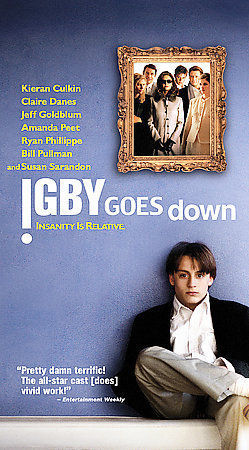
Igby Goes Down – 0 stars

A punk of a little rich kid, Igby (Kieran Culkin), is sold to us as righteous because all who vex him are, comparatively, worse. There is his pill-popping, domineering mother (Susan Sarandon), his coldly efficient and soulless brother (Ryan Phillipe), and his go-go godfather (Jeff Goldblum). So, yea smarmy little shit Igby is indeed the best of the bunch.
Igby also has a schizophrenic father (Bill Pullman), an unhappy childhood, and he is in therapy. While “rebelling” (i.e., escaping various boarding schools and bumming off of people in New York), Igby harshly judges those around him, has some sex (Amanda Peet and Claire Danes) and comes to terms with . . . well, he doesn’t really come to terms with anything. Rather, Igby endures angst, punctuated by slow motion scenes of our lonely rich boy running through New York – lost.
Yes lost in a world of hypocrisy. Poor lost Igby, reduced to running through Manhattan to Coldplay or The Dandy Warhols.
This film might appeal to folks who fantasize about always having the perfect comeback and who fancied themselves terribly oppressed and misunderstood (because of their unflinching truth-telling and high standards) when they were teens. Folks who lived high school with a really cool soundtrack in their heads, and who think schizophrenia is bad, but it may just be more “honest” than normal life.
None of which may be surprising, as it was written and directed by Burr Steers, who has familial ties to Jackie Kennedy and Gore Vidal and even Aaron Burr. Like Igby, Steers was educated at the best, kicked out by the best, and eventually, forced to attend military school.
The film is crap. If you want to see a funny, soulful and intelligent coming of age NY flick, see Tadpole and if you want to see Kieran Culkin play in a coming of age flick with heart, see The Dangerous Lives of Altar Boys.