Archive

Drama

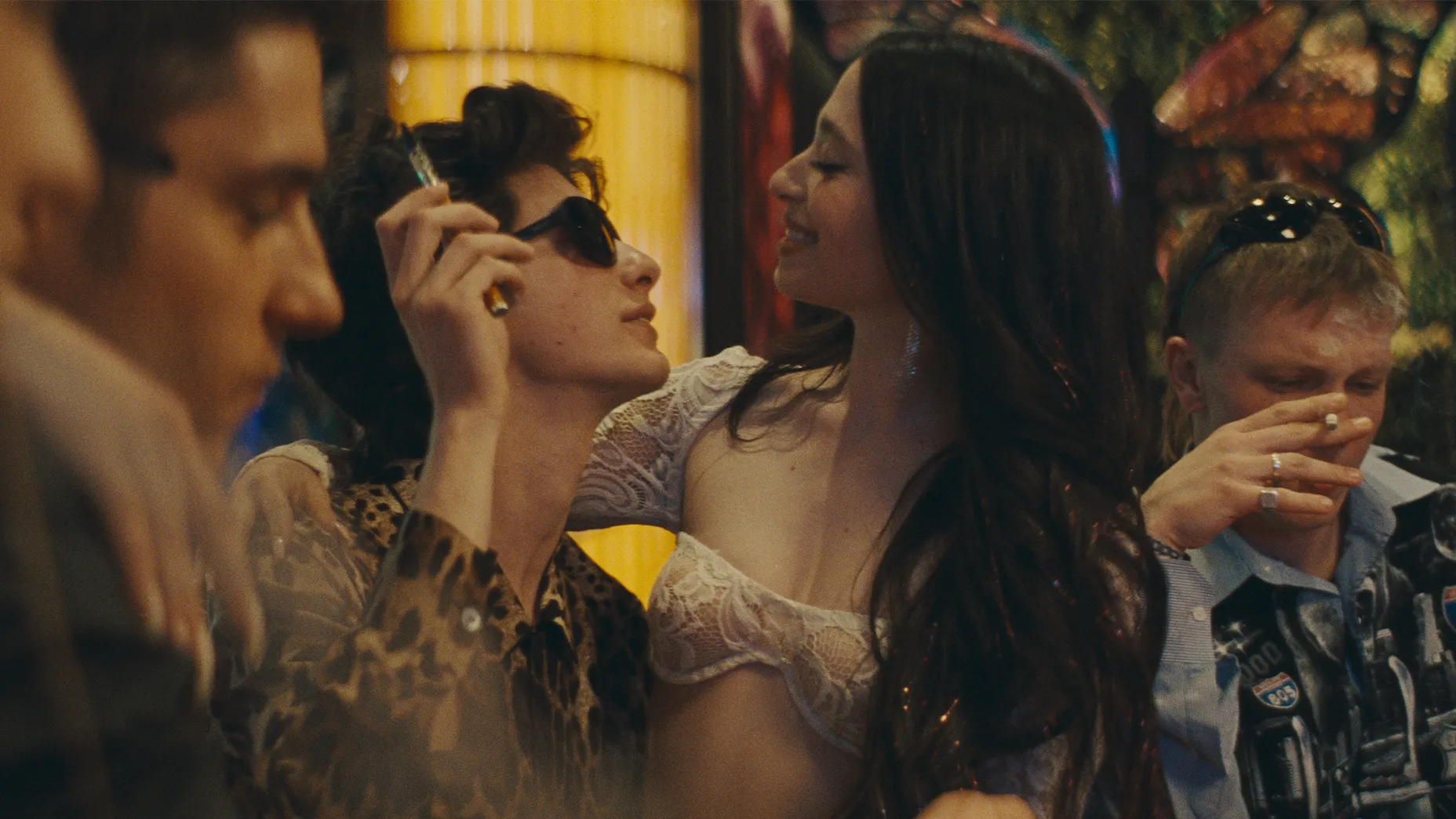
Elliott, a vacuous, self-satisfied, snarky Canadian teenager (Maisy Stella) is visited by her 39 year old self (Aubrey Plaza) during a mushroom trip. Plaza’s old ass has much to say to Elliott’s young ass, much of it a violation of the Prime Directive, the guiding principle of Starfleet that prohibits its members from interfering with the natural development of alien civilizations.

Yes. I watched Star Trek. What of it?

The set-up is well worn. Elliott wants to get off the family cranberry farm and find herself in the big city of Toronto. She is meant to be celebrated for her freedom and grab-life-by-the fistful approach. She’s gonna’ shake the red juice off her small town boots and let loose before global warming interferes with her cell service. She’s a rebel. But she’s also a loudly stupid and narcissistic rebel, and all the soft piano, oboe, and terrible acoustic dirges cannot make her interesting.

With a lead who could act and a less obvious, smarter script, My Old Ass could have been a clever twist on the coming of age flick, Freaky Friday meets A Christmas Carol.

Stella (member of the music duo Lennon & Maisy), however, cannot act. She is one-note, snotty, and charmless. She makes Disney Channel kids seem method. 

The film has a few genuine moments where Plaza, Elliott’s mother, and her would-be first boyfriend all present Elliott with a remembrance, a well-rendered insight, a moment of tenderness. In response, Elliott – not allowed to say “dude, what the fuck? for the umpteenth time- offers a “dude, what the fuck?” countenance. Any expressed emotion crashes into her stubbornly smug visage, where it thuds. Such that we are thinking, “Miley Cyrus could have really done something with this role!”

Worse, no one has bothered to make the trick explainable. After the drug trip ends, inexplicably, Plaza still texts and calls and visits Elliott. Tripping as portal to an Apple data plan? This is lazy mush and indicative of the ragged nature of this endeavor. 

The script is mostly middling sitcom. Plaza and Elliott say cool stuff like “when do we …?” Followed by “oh my God. This happens …” Plaza says to Elliott: “Moisturize!” Elliott replies with a form of “What the fuck? Dude!???” Elliott to Plaza: “Can I kiss you?” Plaza replies with “ewwwwwwwwwwww!” or some derivation of same. Stella says “fuck” and “dude” and “like” and “sick” a lot. She spouts hip cliche’-ridden observations that may tickle the fancy of an 18 year old peer, but test the patience of anyone who has read a magazine. Or a cereal box.

When we get to the meat, Plaza reveals a particular thing Elliott must prepare for, something so obvious, it seems a perfunctorily preordained. It is asked to serve as the emotional linchpin of the movie, yet the most Stella can muster is the disappointment of a girl who pours a bowl of Lucky Charms only to find a low marshmallow count. 

Sometimes, in these flicks, you get some funny, well-drawn secondary characters who maybe could drag Stella along. But everybody is pretty vanilla and meh. When they have something to say, it is leaden with announcement and unforgivably banal. 

The film might have been saved if Plaza told Elliott not to take a particular hike and she did it anyway and then she was almost murdered by the Green River killer.

Missed opportunity. 

Last point. Yes, teens say “like” and “fuck” nonstop, like men in war curse beyond any comprehension. But to actually let characters lapse into this doggerel in a script? Jesus. It may as well be serial farting. 

The picture was on a few top 25s and 50s and very highly rated on Rottentomatoes.com.

Undeservedly so. Like dude, what the fuck. 

On Amazon. Thankfully, for free. 

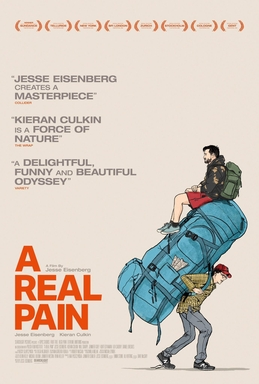
A beautiful, meditative story about family, and the disconnect between ancestry, past, and shared blood. Writer-director Jesse Eisenberg (The Social Network), and Kieran Culkin (Succession) are disconnected cousins who used to be very close when young, and are now held together by a strong attachment to their recently deceased grandmother. In remembrance and per her wishes, they join a tour group to Poland to visit her origins, including the concentration camp she survived. In that journey, they hash out some old differences, reveal their insecurities and grievances, and otherwise, commune with the past. Culkin is enagaging,  charming, yet emotionally dictatorial, and peripatetic. Eisenberg is OCD, eclipsed, a little bit pissed off about it, and, yet, desperate for his cousin’s ability to connect while at the same time weary of having to clean up his emotional messes.

The film is never overt, but it is very touching, particularly when the fissures between the cousins arise in the midst of a supportive group of fellow tourists (one of whom is Jennifer Grey, from Dirty Dancing, who is really quite good, even if she looks nothing like she used to given the radical plastic surgery she underwent many years ago). They are all on their own journey for different reasons, and they quickly become another family to the two protagonists.

Eisenberg’s script is sharp and his direction leisurely. At times, his take felt a little like Sofia Coppola, such is his comfort with the silences and the scenery (his shooting at the camp is haunting). The pain of the characters, as juxtaposed against the history, is made more acute, but again, there is no resolution, no great battle royale, no truly deeper understanding. But, quite tenderly, the bonds are strengthened. The experience may not change their trajectories, but that seems baked into Eisenberg‘s cake.

A lovely, bittersweet picture.

There are figures who defy biography. Some are dolts who we lionize because of an electric public persona, but after we peel back the skin, dig in, and nothing but soft goo is revealed, we adorn them with meaning if only to combat the dullness and our disappointment. Some are opaque, having lived a purposefully secretive life that does not lend itself to exposition. Some are so mythic, hagiography follows, lest a god be sullied. And many are just boring through and through, even if their impact was monumental.

How best to approach Donald Trump? I was thinking about why Saturday Night Live has such a problem caricaturing Trump and concluded that it is difficult to lampoon a cartoon. Trump is thuggish, brash, bombastic, ridiculous, and his persona – both before and during his political career – is that of someone who is already playing a part, man as product. Someone once observed that Bill Clinton was the most authentic phony they’d ever encountered, which makes him Trumpian on one level. The persona so effectively swallows the person that the former becomes innate.

Now, I don’t know what Donald Trump (or Bill Clinton, for that matter) is like privately, and Hollywood has yet to take on Clinton in biopic (we’ve had snippets, most recently Ryan Murphy’s rendition of the Lewinsky scandal, but nothing penetrating or overarching). And neither does screenwriter Gabriel Sherman. But he takes a fair stab, and it’s a game effort, for a time.

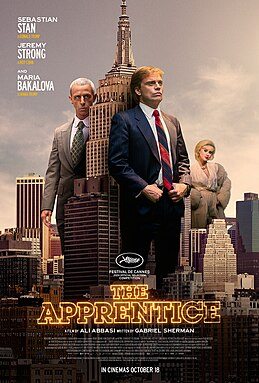
We meet Trump (Sebastian Stan) in the 70s, an ambitious son of an old-fashioned real estate developer who strives for entrée’ into tony Manhattan clubs while working for Daddy, collecting his rents in cheap New Jersey apartment housing. Donald has a dream – to develop a hotel in the then-hellscape of 42nd Street – something his father (Martin Donovan) considers an ill-advised fantasy. But Trump persists and soon, he meets another father figure, Roy Cohn (Jeremy Strong), who becomes his tutor and mentor. Cohn, a sybaritic fixer, protégé’ of Joe McCarthy, and executioner of the Rosenbergs, blackmails those who attempt to thwart his new charge, facilitating Trump’s rise. We watch Trump ascend, while negotiating the death of his alcoholic brother, eclipsing his father, and falling in love with Ivana (Maria Bakalova), all the while with Cohn in his ear. This is the part of the film that works, as we see a progression, both maturation and degeneration.

When we hit the 80s, Trump is on top, Cohn is crippled by AIDS, and their relationship deteriorates. With what feels like the snap of a finger, Trump is callous and brutal, as he repeats the Cohn mantra (attack, deny, always claim victory). But we don’t really see him ever employ those rules. In fact, he just reappears as a brute, and we are treated to the litany of rumor, concoction or well-known unflattering fact without context or explanation. Trump abandoned his brother, raped and verbally abused Ivana, tried to take financial advantage of his doddering father, gave Cohn fake diamond cufflinks, swung and missed in Atlantic City, took a lot of speed, wrote The Art of the Deal, mused about a political future, got liposuction and a scalp reduction, and is a germaphobe. One box after the other perfunctorily ticked. Just overt capsules, with all character-development jettisoned for dizzying visuals of the corrosive jet set life.

I suppose Sherman was trying to portray the seduction of Trump in concert with the go-go 80s, but it was done much better by Oliver Stone with Bud Fox in Wall Street, and even that movie can be garish and obvious.  

What does work, however, works very well. The Trump-Cohn relationship is beautifully drawn. The elder sees talent and vitality in the son he never had and a young man he refrains from seducing sexually, while the understudy finds the father who truly believes in him. When the former imparts his wisdom, it would have been nice if Sherman could have employed it more directly as the basis for Trump’s rejection, but it is enough that the devil gets his comeuppance from his Frankenstein, and you know it works, because you kind of feel bad for the devil.

Stan and Strong are riveting and I expect both actors to be nominated. Even if they were undeserving, Trump is irresistible bait for the Oscars and given the unflattering vignettes of the film and the fertile environment for decrying the Bad Orange Man, we and the Academy shall not be denied.  

Luckily, the actors are deserving. Strong is quickly becoming one of the most innovative character actors of his generation (I cannot so on enough about his turn in last years’ Armageddon Time, which, ironically, also included a young Trump character), and Stan manages to humanize a cartoon while incorporating the now ubiquitous Trump cadence and physicality, but doing so in a way that shows the features in infancy, so we can envision what they will be when we turn on our TVs today. Per Sherman, “And I think what Sebastian did so brilliantly is that he doesn’t try to impersonate Trump. He finds his own version of the character. And it works in a way where you feel like you’re watching a real person. You’re not watching Sebastian trying to be Donald Trump.” Dead on.

A solid, game, entertaining, very flawed near-hit that peters out.

On demand.

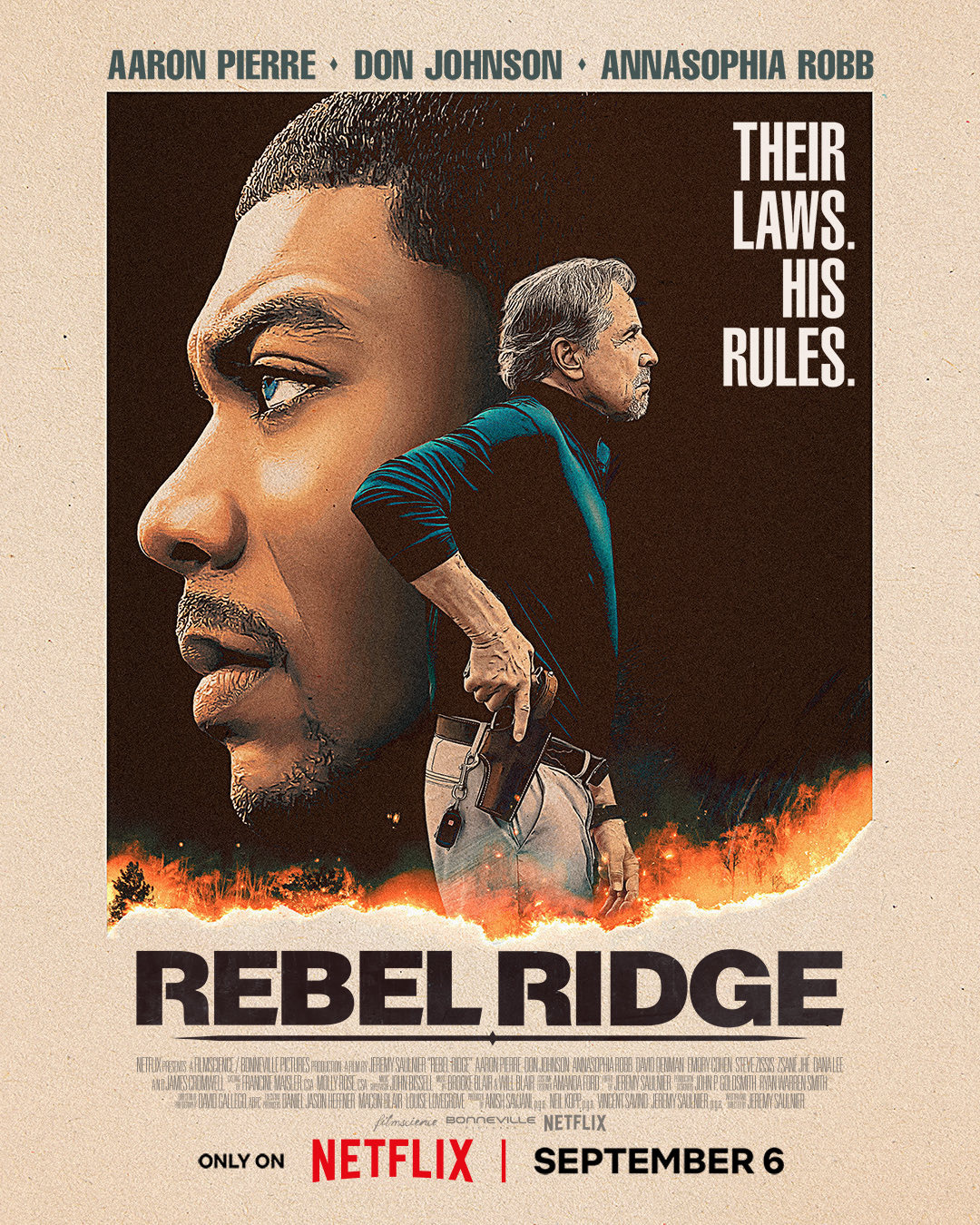
Writer-director Jeremy Saulnier’s Blue Ruin, an earthy, dark meditation on the messy and corroding influence of family blood oath and violence in rural Virginia, was such an assured debut, I was blown away. He followed up with the canny, creepy Green Room – where a band gets the worst gig ever playing for skinheads in the Upper Northwest – a commercial failure, perhaps because it was such a grounded horror film. No unstoppable evil or chop-licking psychos, just nasty, human, unregulated criminals with Swastikas and 12 packs who dig punk rock and live in the deep, deep woods. 

Rebel Ridge again showcases the director’s dead-on familiarity with small town America. No Chevy Truck “backbone of the USA” schmaltz or easy tropes of the rural downtrodden being done in by “the man’s system.”  Saulnier understands that most people are in some form or fashion paid by “the man’s system” and that system is what keeps mortgages current, power boats afloat, and Carnival cruises filled. In the small Southern hamlet that is our setting, graft, skimming, and railroading drifters end up just being part of the fabric, the next logical step for a speed trap town. 

What follows is a gripping, subtle melange of liberal fear of cops and conservative “power of the deep state” fear of the government, good old fashioned small town Walking Tall corruption via asset forfeiture and  … Rambo: First Blood.

No preening, no speeches, a lot of surprises, and a boffo, visceral, satisfying revenge fantasy ending, powered by Aaron Pierce’s reserved, steely leading turn. 

In spots, a bit ragged for Saulnier, and there is an underdeveloped relationship between Pierce and a plucky court clerk (AnnaSophia Robb), but those are nits.

On Netflix. 

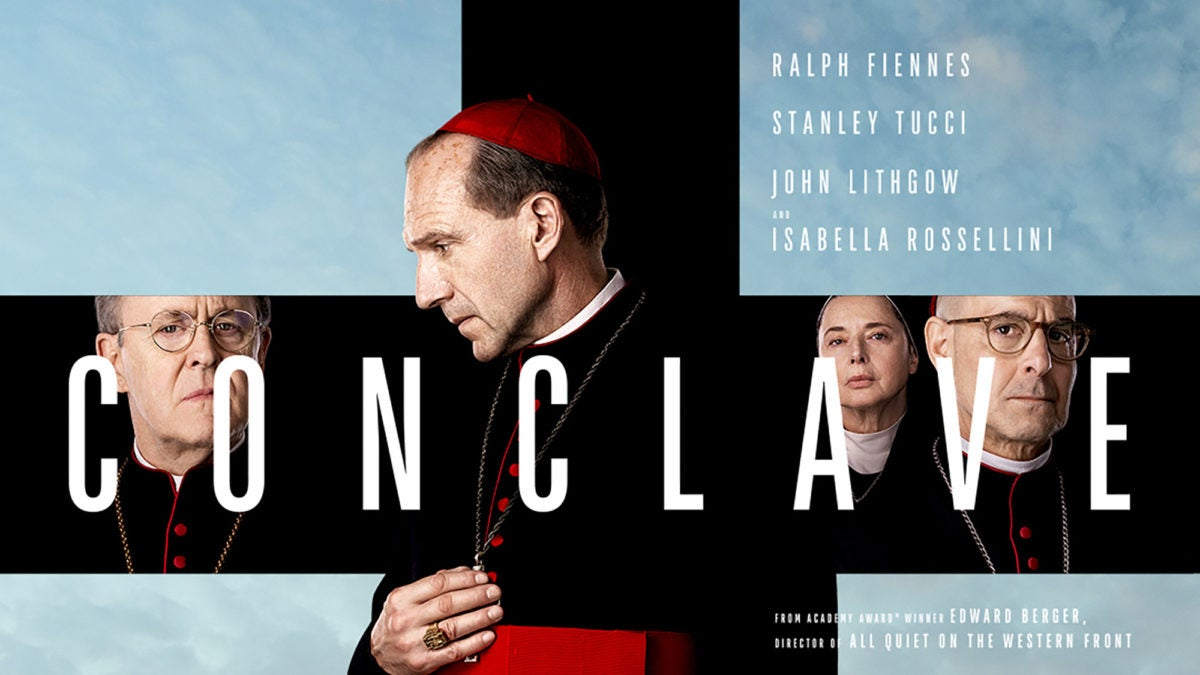
A movie that works beautifully on several levels.  First, if you ever wanted an “inside” look at how a pope is selected, someone did their homework. Just like William Peter Blatty’s research into the ritual seemed so authentic in The Exorcist, and the hierarchy of a late 60s parochial school was nailed by John Patrick Shanley in Doubt, the convening of the cardinals to pick the next pontiff exudes legitimacy. Based on a Robert Harris novel, screenwriter Peter Straughn has a solid feel that comes from some religious experience and curiosity (“It was a world I was interested in. I was brought up Catholic. I was an altar boy, and I went to a Catholic school, so, in some ways it felt like home territory, even though I’m no longer a believer. I had one foot in the world and one foot out, so that interested me”).

Second, and I can’t write much on this, there is a satisfying Sixth Sensian reveal that is confident enough to leave it at that, without delving into the machinations of the ultimate selection. I was concerned we’d recap with a Murder on the Orient Express flashback diagram, but the picture is less about how we got to the selection than what it meant to get there and what it means. Better, the end is the kind of reveal that could have been wielded like a sledgehammer, but Straughn and Director Edward Berger (All Quiet on the Western Front) celebrate subtlety over all else.  

Third, the film is a feast for the actors. Ralph Fiennes is masterful in his portrayal of the manager of the conclave, fighting his own ambition and anger at his designation as a mere facilitator rather than a spiritual leader. Fiennes is ably supported by John Lithgow, Stanley Tucci, Lucian Msamati, Sergio Castellitto, and Carlos Diehz, who represent different future paths for the papacy while vying for the top slot. Isabella Rossellini plays her own game as the sister who, for lack of better title, is the site manager for the election. Her hand may be well hidden and guiding, but given her near vow of silence in the world of men, even though her face tells so much more by necessity, nothing is confirmed. Nominations will be accorded generously and she is a shoo-in.  

Last, the Catholic Church comes out well in this. In and of itself, not necessarily a recommendation, but the movie offers a different view of an institution so maligned of late that another broadside would just feel hackneyed. Sure, there are shenanigans and skullduggery, but there is also great deference to the awesomeness of the task, the mysticism and seriousness of the process, and the weight placed on the jurors. The debate between the “new” and more traditional Church is also given a fair airing and ultimately, without taking a side, the picture elevates a philosophical point to a logical, if arguably heretical conclusion.        

One of the best of the year.

I took my cat to the vet yesterday and had that strange interregnum – too late to go back to work and too early to have a drink. So I flipped on the TV and lo and behold, Dog Day Afternoon was starting.

“Prescient” doesn’t even begin to capture Sidney Lumet’s masterpiece. Sonny (Al Pacino) and Sal (John Cazale) rob a bank in Brooklyn and before you know it, everything goes to shit, it’s a hostage situation, and they are surrounded by 100 cops, led by the overmatched and harried Charles Durning.

This is one of those 70s “New York City seems like hell” flicks. The robbery occurs on a sweltering summer day, and the police seem itching to gun down Pacino if only to get out of the heat. But soon, the TV cameras roll in, the crowds arrive, and before you know it, Pacino is a street-performer, not negotiating so much as whipping everyone up, screaming, “Attica! Attica!” and otherwise savoring the moment and, for lack of a better phrase, sticking it to “the Man.” His rage and theatrics are infectious. The crowd bays, bystanders want “in”, the hostages (plucky New Yorkers all) play-act and become featured cast members, and soon, the cops are the ones being led by the nose. Everybody has their 15 minutes.

But Sonny’s ride must end. Sal is a dimwit (when Pacino asks him what country they should fly to in escape, Cazale responds, “Wyoming”). The origins of the heist – to get money for Sonny’s boyfriend Chris Sarandon’s sex change – become public when Sarandon is sprung from a suicide attempt at Bellevue to come talk some sense into Pacino. The hostages start to lose the fun of it as well, and Cazale’s biggest worry becomes the fact that the networks are reporting “two homosexuals” in the bank. When Pacino is put on the line with his wife, you can see how he could be driven to such extremes and also what an awful person he has been to her. His mantra is, “I’m dying.” He is, in front of us, in slo-motion, but we sense we’ve missed a lot of the decline.

There is a great scene where the manager, having suffered a diabetic episode, is tended to by a doctor, gets his shot and chooses to stay with his employees:

               As Sonny grabs him to try to help him up, Mulvaney wrenches

               away.  A little physical here.

                                     SONNY

                         Hey!  I’m tryin’ to help you.

                                     MULVANEY

                         I stay here.  Damn it.  I just needed the insulin.  I’m used to it.

                         Go on.  Go on.

                                     SONNY

                              (to Doctor)

                         You tell me.  Is he endangering his

                         health, because if you tell me he

                         is, I’ll get him out.

                                     MULVANEY

                         I’ll be God damned if you will.

                                     SONNY

                         Oh, Jesus!  You want to be a martyr

                         or a hero or what?

                                    MULVANEY

                         I don’t wanta be either, I just want

                         to be left alone.  You understand

                         that?  I wish the fuck you never

                         came in my bank, that’s all, don’t

                         try to act like you’re some angel of

                         human kindness!

You can see Pacino’s hurt.  As if maybe he really thought this would work out and that he is a good man.

But soon, the FBI take over, and they are helluva lot more together than poor Durning and company.

Pacino is riveting,  alternately electric and doomed, eliciting your scorn and then sympathy. He’s all furtive energy minus the excess and “hoo ah!” You know this had to go bad, and so does he, and it’s depressing to see him hope, just for a minute, and then know he’s a loser and finished. Sarandon is fantastic (he was nominated for supporting actor), ridiculous and yet, affecting in his affectations, as if he knows he’s absurd but can’t shake the affliction.

It won an Oscar for Frank Pierson’s (Presumed Innocent, Cool Hand Luke) original screenplay, which doesn’t have a false note in it.

I recently devoured Quentin Tarantino‘s Cinema Speculations, wherein he recounts his childhood and the succession of films his mother’s boyfriends would take him to see when he was a kid. Most of the films he discusses are ones you probably shouldn’t take a kid to see.

When my mother and father got divorced, I was six years old and my father was supposed to take us every other weekend for two nights. That arrangement became a little less frequent over the years, and by later grade school, he was taking me and my brother on a Saturday day and an overnight. We would spend the weekend with him at his apartment and pretty much do the same thing every time: go shopping, do his errands, look for stereo equipment, maybe spend an hour or two at his law office, go Putt Putt golfing, and then to Shakey’s Pizza in Rockville or The Charcoal Grille in Bethesda. Dinner was from Swanson’s, so you got a entree’, two sides, and a dessert.

And movies. We went out to the movies a lot. Or, we stayed in Dad’s apartment, where he had a special key that was hooked up to some kind of internal cable system, and we could watch close to first-run movies there instead of going out. Or just catch what was on TV.

My father loved movies, he loved to talk about movies, he lived for movies. So much so that he would go through a certain kabuki with me where he would let me take a look at The Washington Post and ask what I wanted to see. I would pick a Herbie the Love Bug and he would say, “Nah. I heard about this good movie.” And then, like Quentin Tarantino with his mother’s boyfriends, you went to see a lot of dark, heavy, violent flicks, like The Laughing Policeman, The Silent Partner, Death Wish, or The Taking of of Pelham One Two Three. Or the remake of Farewell My Lovely, Night Moves, or The Eiger Sanction.

And Rolling Thunder. Which I noticed was available, and, as I couldn’t sleep anyway, I watched last night

Tarantino’s book has an entire chapter on the film, one of Paul Schrader’s first screenplays after Taxi Driver. Major Charlie Rane (William Devane) and Sergeant Johnny Vohden (Tommy Lee Jones) return to Texas after seven years of brutal captivity in a North Vietnamese prison camp. The adjustment is fraught, and even greater tortures are brought to bear on Devane, who is being treated by an Air Force psychiatrist (the just recently deceased Dabney Coleman) in his attempt to readjust. Tragedy ensues. Devane snaps. What follows is a classic 70s revenge flick.

The film travels wonderfully. There is a crisp foreboding to Devane’s return. While San Antonio welcomes him with marching bands and celebrations, and he is reunited with his long suffering and loving wife and the son who he last saw as a baby, Devane is damaged, and beneath the cheery gleam of a welcoming Texas, there is rot and danger. His son has anxiety issues. His wife has found another man (Devane says to her evenly, “you’re not wearing a brassiere” to which she replies, “oh, no one wears them anymore”). He cannot sleep in the house, preferring a cot in the garage.

So much is done well in the lead-up to the Death Wish-ian payoff, it goes unnoticed because, after all, this is a shoot ’em up, just desserts pic. Per Tarantino: ““This opening thirty minutes is a grippingly detailed character study, and by the time it’s over the audience doesn’t just sympathize with Charlie Rane, we really do understand him. Apparently better than anybody else in the film. It’s a much deeper depiction of the casualties of war than the [other movies of that era].”

I remember watching the film with my father. It is engrossing, both subtle and visceral, like a lot of pictures we saw together. It is also wildly inappropriate, also like a lot of pictures we saw together. I had trouble wrapping my head around something horrible that happens to Devane; not a spinning, vomiting Linda Blair kind of visual, but a brutality so smartly connected to a mundane part of the household, it just traveled with me, and probably not in a good way. Even last night, I fast-forwarded.

But on Sundays, when we were dropped off, I would not tell my mother about any of these movies, because I felt me and my Dad had this thing, this bond, and it was cemented in our little secret, Jujufruits and Junior Mints in hand.  And perhaps we did, although I’m probably mythologizing it. After all, my father needed to have something to talk to me about. Or at a minimum, just a two hour break from my babbling.

The picture is currently on Amazon Prime. Nostalgic for me but it really holds up.

I was not a big fan of Yorgos Lanthimos. He is clearly talented, but he also revels in the ugly. The Lobster was inventive, but also, masochistic, even abusive. The Favourite was evocative but also grotesque. Lanthimos traffics in the absurd, but he luxuriates in meanness and the darkly visceral, with all its bleeding, flatulence, fluids, and muck. Yet, here, in this hilarious and charming re-telling of Frankenstein, he allows himself whimsy and some gut-busting hilarity.

The time is Victorian London. Emma Stone (Bella Baxter), a fully grown drowning victim fished from the Thames, is brought back to life by none other than a Dr. Frankenstein (actually, Dr. “God”win Baxter, Willem Dafoe) and given life via the insertion of her own unborn baby’s brain. When we meet her, she’s a mere child, eating like a infant, urinating where she stands, stubborn and defiant. But she grows, quickly, and when she happens upon sexual pleasure, she is out and free, with the assistance of a dandy (Mark Ruffalo) who haughtily acts as her tutor even as he is slowly enslaved. Soon, Bella becomes worldly, and learns a few hard lessons, but she quickly masters (speaking of absurd – this word was tagged by spell check as problematic) the ability to make her own destiny in a world that would normally relegate her to docility and subservience. To see her eat, to come, to dance, it is hard not to be as captivated by Stone’s gifted performance as Bella is by the world. And Ruffalo’s foppish moth to her carnal flame is riotous. Bella’s journey is wondrous, funny and beautifully shot, deftly lifting from the best artistic visions of both Tim Burton and Wes Anderson.

I laughed uproariously and sat in wonderment at Lanthimos’ ingenious world.

Two nits. First, I never really thought I’d say, “Hey, there’s just too much of Emma Stone naked” but the film is 20 minutes too long, and there’s just too much of Emma Stone naked. I think Lanthimos became entranced by Stone’s moxie, but soon, all of the sex seems less like a revelation, and more like an obstacle course.

Second, Jerrod Carmichael makes an appearance and there is no other way to put it – he’s terrible. Stilted, clunky, confused, and aggravatingly amateurish. You kind of feel bad for him, but you brighten when you realize he is gone.       

Otherwise, great, smart fun.

Seven down, three (Past Lives, Killers of the Flower Moon, The Zone of Interest), to go.

Leonard Bernstein was a significant man. But you wouldn’t know it from this film. Bradley Cooper’s labor of love makes Bernstein seem rather humdrum, and as the film progresses, Cooper certifies that reality, eventually discarding Bernstein’s story for that of his wife (Carey Mulligan).

Look, it is clear Cooper reveres Bernstein, but too much is too much. Think of when someone you know introduces you to someone they love. They are already in thrall, and they have explored every nook and cranny of their idol so, in your introduction, you don’t come to your appreciation organically, the way your friend did. You start with, “He is the greatest.” And then, after that, your friend just keeps saying, “Isn’t he? Told you!”

Here, Cooper is so entranced, he glosses over what makes Bernstein Bernstein – his music. Sure, there’s tons of scenes of Cooper directing with the panache and flourish of Bernstein, but Cooper is more interested in having mannerisms down pat than exploring why we’re here. Cooper’s meticulous impersonation cannot substitute character.

Worse, since Cooper has little interest in Bernstein’s craft, we focus on his domestic struggles, which are pedestrian, even for a famous man living a barely disguised double life. He is not denied his pleasures, nor is he punished for them. Rather, they create some marital strife. And that’s what we get to see until cancer closes the story out. No war time concert in Israel in 1948. No silly cocktail party for the Black Panthers (sent up so wonderfully by Tom Wolfe). No concerts after the assassinations of JFK and RFK. No philanthropy for AIDS as it decimated his profession (and killed his longtime lover Tom Cothran, for whom he left his wife). 

We learn very little about what Bernstein should be remembered for.  Hell, he could have been a periodontist.

A well shot chore. On Netflix.


My mother tells people that The Boys in the Boat is a book “every young man must read.” In point of fact, the book has been on the New York Times bestseller list for quite a long time. But I am not a young man, so I settled for taking her to the picture.

She was rightfully disappointed. I was bored to tears or underwhelmed. For the following reasons.

1. The actual boys in the boat were supposed to be destitute, desperate, and worn down from the Depression, lean, hungry, rough boys who found rowing as a way to eat. Unfortunately, they all look like this:

2. The lead, Calum Turner, has all of the character and nuance of a Nilla Wafer.

3. Rowing does not lend itself to film. We don’t learn much about the mechanics of it, so it’s difficult to discern the issue when the boys falter (they just start to bicker at each other and their stoic, forgettable coach merely shakes his head). In races, they start out slow, and through grit, pluck and determination, the boys pick up the pace and win. That’s it.

4. Hitler shows up. But he looks like Charlie Chaplin as The Little Dictator, and I’m not sure that was the effect Director George Clooney was aiming for. 

5. Jesse Owens also shows up. He says one line that is impactful and wise, with the effect being one’s own rumination: “Damn, I wish this movie were about Jesse Owens.”

The film looks classic, but presents as inauthentic. It has a hazy, postcard visage that feels both obligatory and unnatural.

Ultimately, the film is not terrible, but it is instantly forgettable, of no real moment, and about as safe a production as you’ll find.