Archive

Crime/Mystery

Gritty New York City 70s films hold a special place in my heart because my father took me to the theater to see them when I was very, maybe too, young. He had a great way of asking what movie you wanted to see, and then when you picked something age-appropriate like Herbie The Love Bug, he would just say, “No. We’re going to see this.” And off to The Seven Ups or The Laughing Policeman you went. I suspect he just went through the motions of giving you a choice hoping he could get a twofer, seeing a movie he wanted to see and having you actually hit upon the same thing.

If nothing good was out, we watched a lot of these pictures at his apartment, sharing a bowl of candy corn.

I was never very disappointed to have a Disney film vetoed by my Dad.  I was nine or ten years old and I was drinking in the likes of Serpico, Death Wish, and The French Connection, which introduced me to the hellscape of New York City, so different from my own suburban enclave. Throw in some other New York City pictures that offered more complicated themes, like Klute, and the Big Apple seemed even more foreign and forbidding.

The experience could be disorienting. After all, I was watching Jane Fonda fake an orgasm but didn’t know what a call girl was or what exactly she was faking. But it was such a rush and a privilege, something we shared that really wasn’t transferable to anybody else. I mean, I couldn’t really tell kids in my fifth grade class about Dog Day Afternoon.

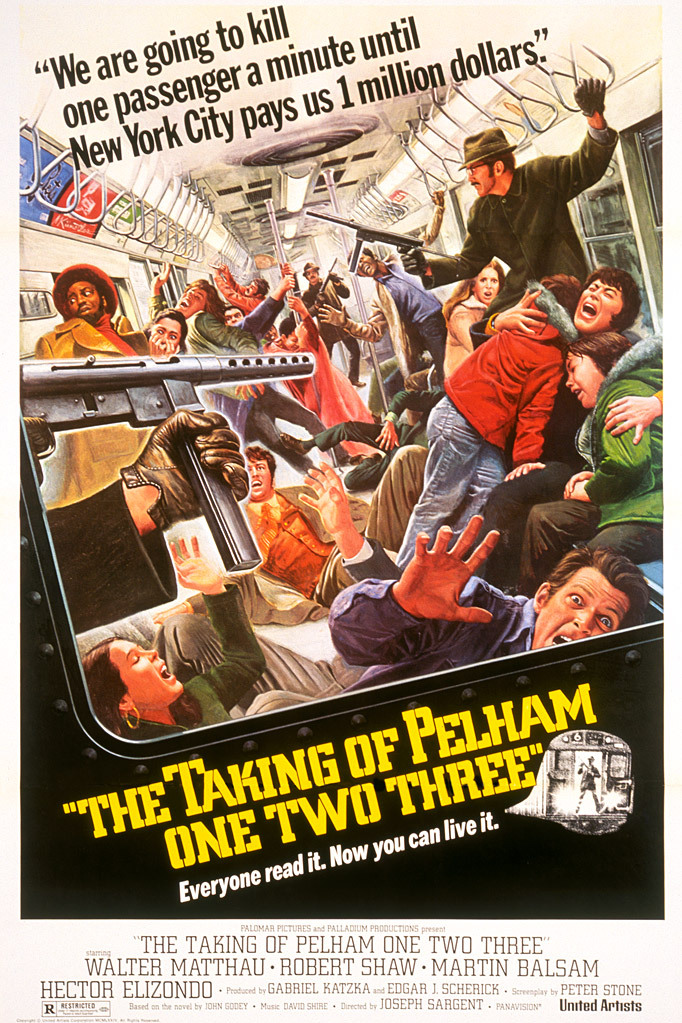
For me, the best and most accessible of these pictures was The Taking of Pelham One Two Three. I think my father agreed. From the beginning notes, a frenetic, jazzy David Shire score, the city translates musically as a haphazard mess of a place where anything can happen. In the space of 15 minutes, you’re introduced to four hijackers of, of all things, a New York City subway train, their hostages, and every sort of New York City bureaucrat, from the mayor all the way down to the weathered Transit Authority Inspector Garber (Walter Matthau). To a person, every politician, cop, administrator, dispatcher, and train driver is cynical, a little bit “Not my department” lazy, obnoxious, and yet, grudgingly heroic in their ability to work in such a fucked up place. They constantly deride, yell at, and ride each other, but there is a fundamental professionalism in their banter, and when they are put to the test by an exacting master criminal with a plan (Robert Shaw), there is something noble about their efforts. Unlike the feeble and mincing bureaucrats of Dirty Harry’s San Francisco, these folks are simply too harried and put-upon to bother with any kind of agenda, be it liberal, conservative, or something in between.  They’re just working stiffs doing the best they can and to a character, they are shockingly well fleshed out even with little dialogue. Add an entire subway car filled with all the denizens of New York City – the pimp, the prostitute, an old Jewish man, non-English speaking immigrants, a mother and her two bratty boys, early feminists, a drunk, a hippie – and the picture becomes a model in drawing characters both strongly and economically.

An example: Shaw has asked for $1 million to be assembled in 60 minutes. He tells Matthau that for every minute he is late with the dough, he’ll kill a hostage. You watch the entire city machinery lurch into action to meet the deadline, including two cops who are tasked with driving the money from the bank to the subway station. They are given a few lines as they wait for the payoff funds, and yet, I became so interested in them, when they crashed their police car trying to make time, I fretted about their fate even though the story couldn’t allow for any resolution.

And as a caper film, you’re not gonna get much better than this. I remember gripping my seat, but I can’t remember whether we were in the theater or at home on the couch. Joseph Sargent, a workmanlike director who fought in the Battle of the Bulge, keeps everything moving while the picture remains funny yet taut, and then dizzying, almost as if patterned on the runaway subway train that closes the film. When you get comfortable, he snaps you back to attention with shocking violence and the expressed terror of the hostages. 

Opening credits here, featuring Shire’s unforgettable, commanding soundtrack.   

Currently on Showtime.  And if you’re seeing Denzel Washington and John Travolta, you’re watching the godawful remake. Bail out. 
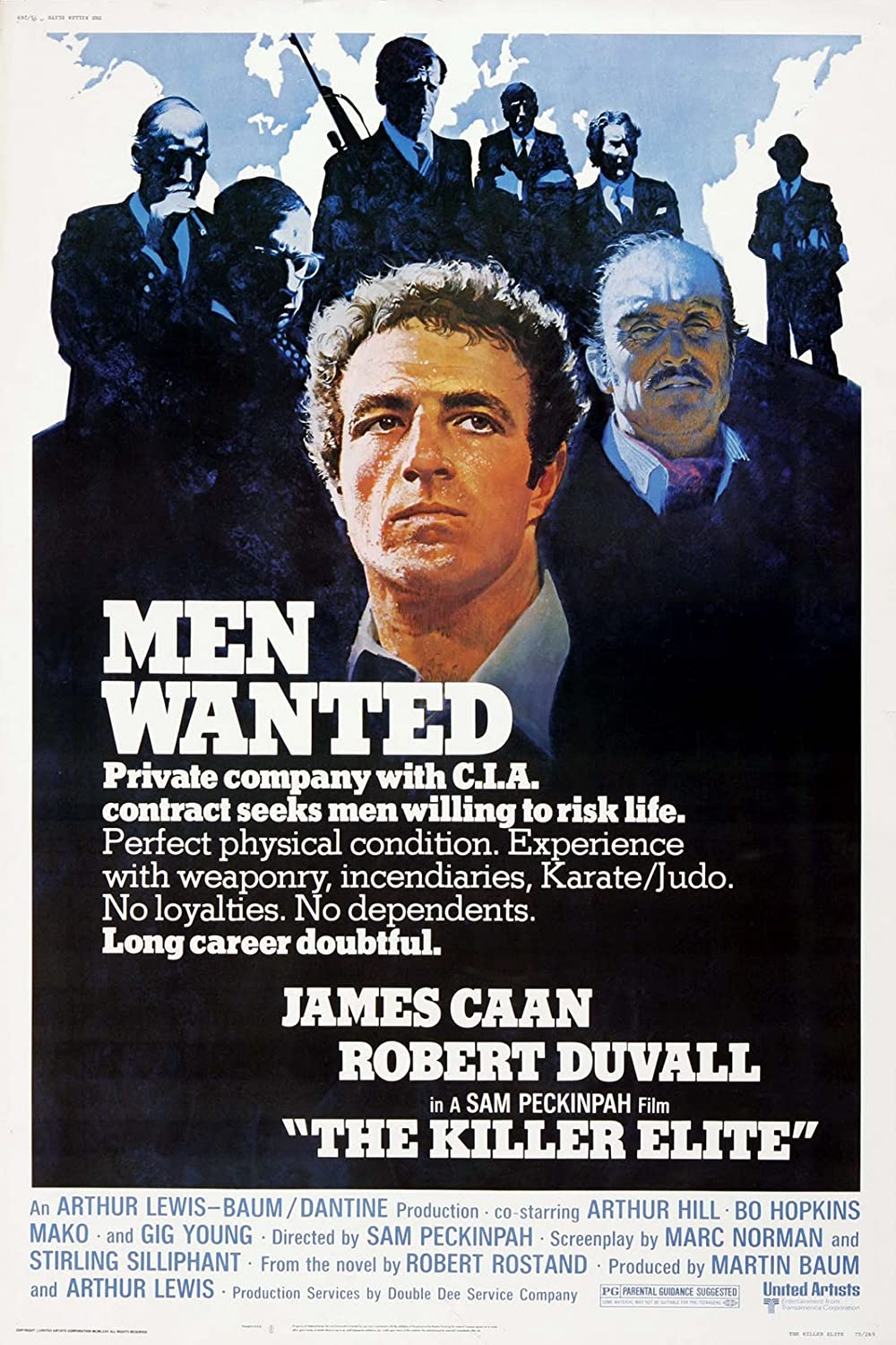
Pretty much terrible through and through. The best part of the film is the first 20 to 25 minutes, which focus on a macho friendship between professional contract killers Robert Duvall and James Caan. Caan is double-crossed, and then goes through an arduous rehabilitation after he is shot. After dogged sexual harassment of his nurse, he does garner a girlfriend/caretaker in the bargain, but soon, he is drawn back in by his corporate sponsor. Caan assembles a small team (Burt Young, Bo Hopkins) and takes on a contract to protect a would-be revolutionary (Mako) from an unknown Asian country. What follows is a blocky, ridiculous shoot ‘em up, marred by laughable cynical intrigue, schizophrenic tone, and mystical Eastern mumbo-jumbo.

Both Duvall and Caan were a few years off The Godfather, so perhaps the studio thought that would be enough, With Sam Peckinpah at the the helm, what could go wrong?

A lot. Peckinpah melds ninja warriors attacking men with guns, and ala’ The Wild Bunch, much of it is in slow motion. The result is a comic slaughter, one that seems only to be missing the Benny Hill soundtrack. At one point during one of these turkey shoots, Caan and Young are actually cracking up.

And as noted, there are Asians, so there is the obligatory honorable fight to the death with samurai swords.

The script is a mess, a mix of tough guy patter, platitudinous observations on “the Man” and the virtue of a cause, and verbal slapstick. Caan seems to be laughing through the entire endeavor, and it’s hard to blame him.

In the plus column, 70s San Francisco is a kick, and the final shootout is filmed in the Suisun Bay US Navy graveyard with hundreds of mothballed ships. The feel is spooky and the visual awe-inspiring.

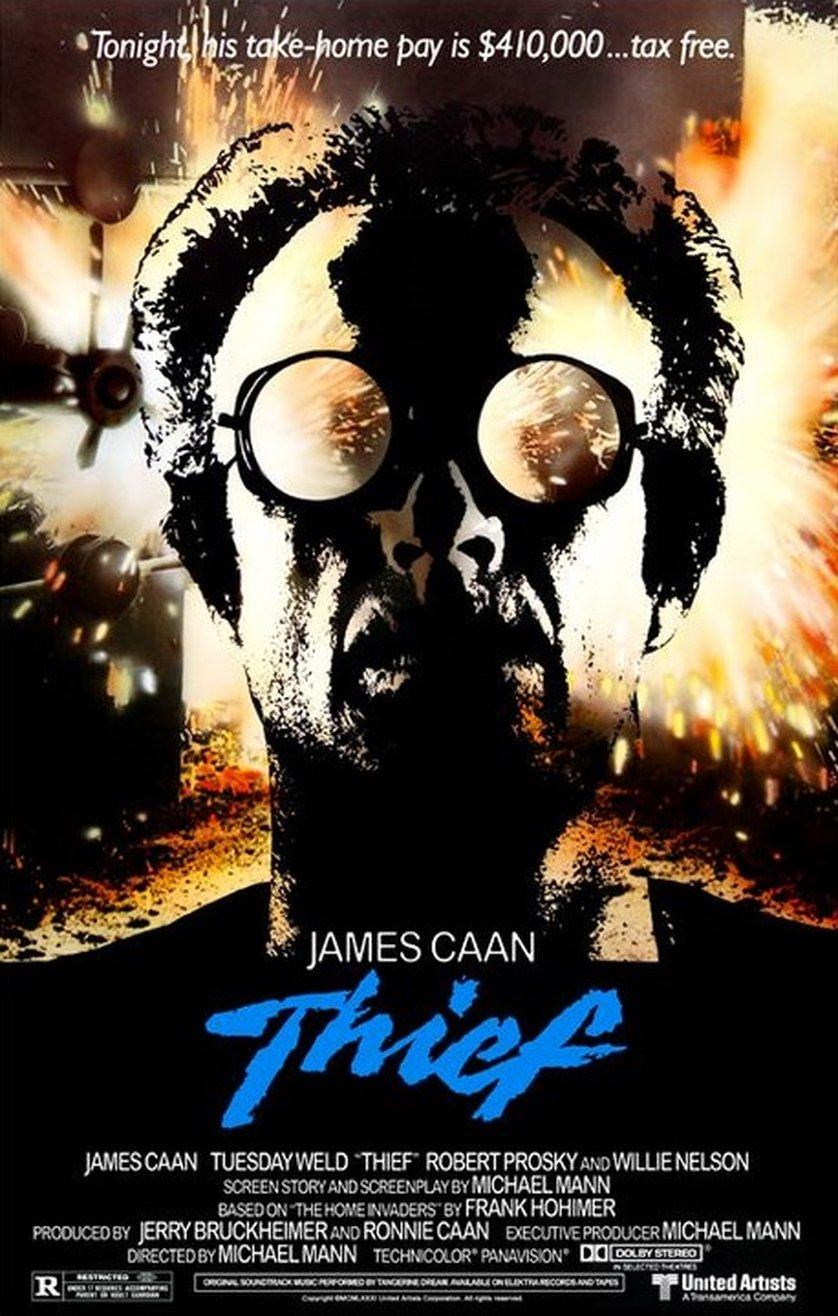
I started watching Michael Mann’s Tokyo Vice on HBO Max, which is excellent, and then I noticed that his big screen directorial debut was on Amazon Prime for free (Mann also wrote the picture).

I remember Thief primarily because the bad guy was Robert Prosky, a then-legend in D.C. theater (I went to high school with two of his sons, both theater kids). As a seemingly civilized crime boss branching out into legitimate investment, Prosky does not disappoint. He’s a sharp mix of warmly urbane and brutal and is at his best when wooing the uber-independent professional thief Frank (James Caan) to join up with his outfit. Prosky offers Caan all the tools necessary for big heists – including the materials, targets and dental – all the while “respecting” Caan’s ability to opt out of the game at his whim.  Simultaneously, Caan is wooing diner hostess Tuesday Weld, dreaming of that last score and getting out.       

Mann’s stylish sequences make great use of a perpetually wet, gray and grimy 1980 Chicago, and the industrial score by Tangerine Dream (an edgier Vangelis, who just died) adds to the noir-ish moodiness.

Sure, it is a little dated. The slo-mo shootout at the end, in particular, does not travel well. But the heist scenes are exciting, and there is a real chemistry between Caan and the several-times-around-the block Weld (their momentous date over coffee, which becomes a lifelong bond, is credible, no mean feat). Caan is riveting as a distrustful loner frantically trying to wrap it all up and get free. He plays Frank at a slow simmer, a man for whom control is so seminal, it devours him.        

Willie Nelson has a very strong turn – one scene – as a desperate convict, and you can also spot Chicago regulars Dennis Farina and William Peterson in small roles (and Jim Belushi in a larger one).   

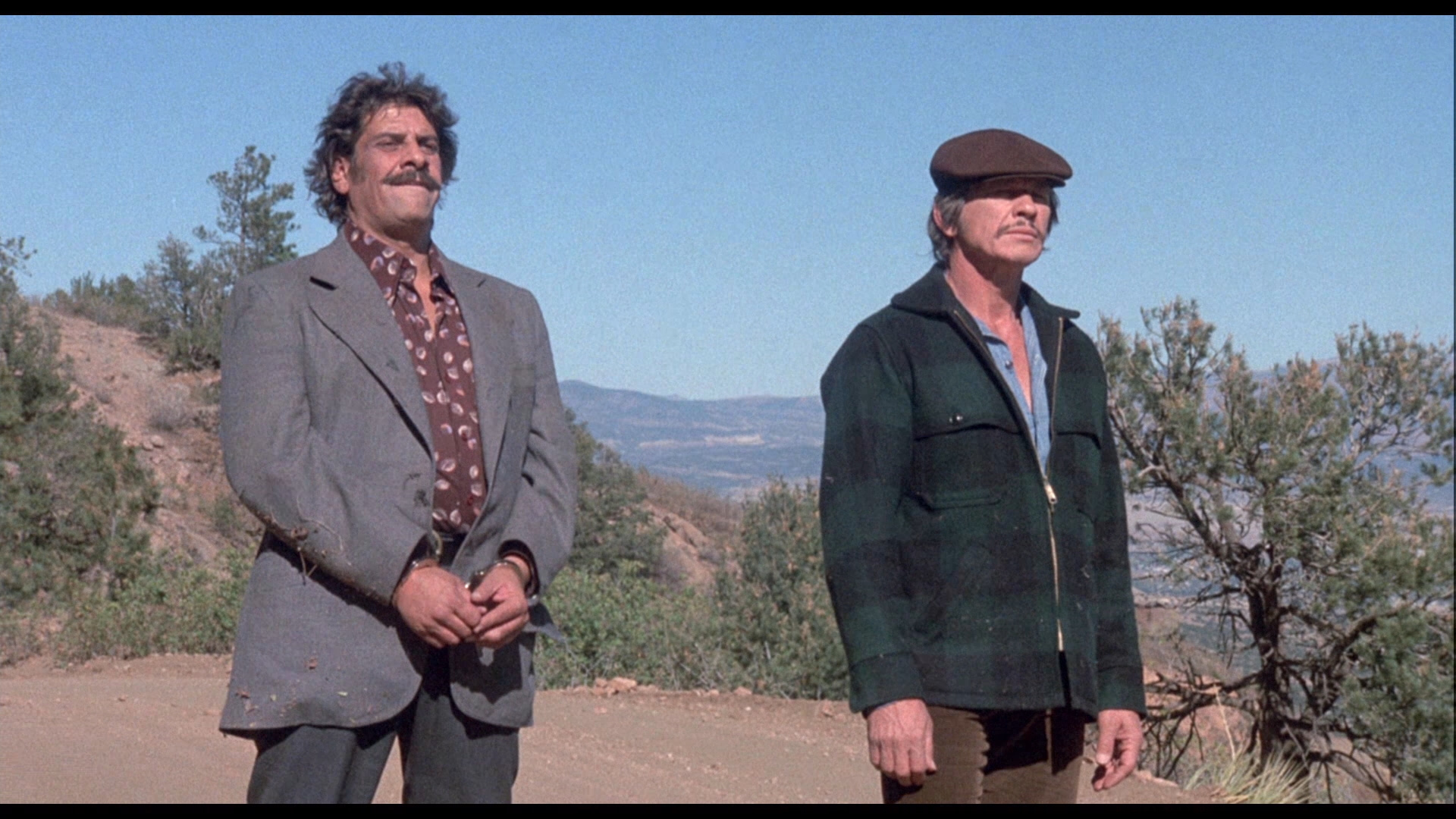
I regularly monitor the streaming services for late 60s and 70s flicks. I may have seen them on regular rotation growing up on the 4 o’clock movie. Or my father may have taken me to the theater on his semi-regular weekend visits. Some are solid pictures, enhanced by my own nostalgia. Some are complete and utter poop. Mr. Majestyk is in the latter camp.

Charles Bronson, who squinted through an inordinate amount of theses paychecks through the 70s (Telefon, Breakout, Love and Bullets), plays a Vietnam Vet who just wants to be left alone to chisel the hourly wage down for his immigrant work force and pick watermelons. Alas, local Colorado thugs who want the work for white bums (so they can take a portion of their wages) intercede, Bronson messes them up, and soon, he’s in jail, where he meets and elicits the ire of a hitman (The Godfather‘s own Virgil Solozzo, Al Lettieri, who overacts inversely proportional to Bronson’s napping). Leaden car chases, nonsensical shootouts and wooden dialogue (penned by Elmore Leonard, no less) ensue.

The picture is clearly influenced by Billy Jack, the independent film made a few years prior on a shoestring which racked up a surprisingly healthy box office. Billy Jack is also not very good, but at least it had some camp value and the virtue of originality.

Charles Bernstein’s score is an elongated intro for a Mannix or Banacek. Maybe a McCloud. Gruesome horn, spinet and wah wah guitar. I suppose it is fitting because there is not an episode of one of those shows that is as dumb and listless as this picture.

Though if machine-gunning watermelons is your thing, this one is for you.

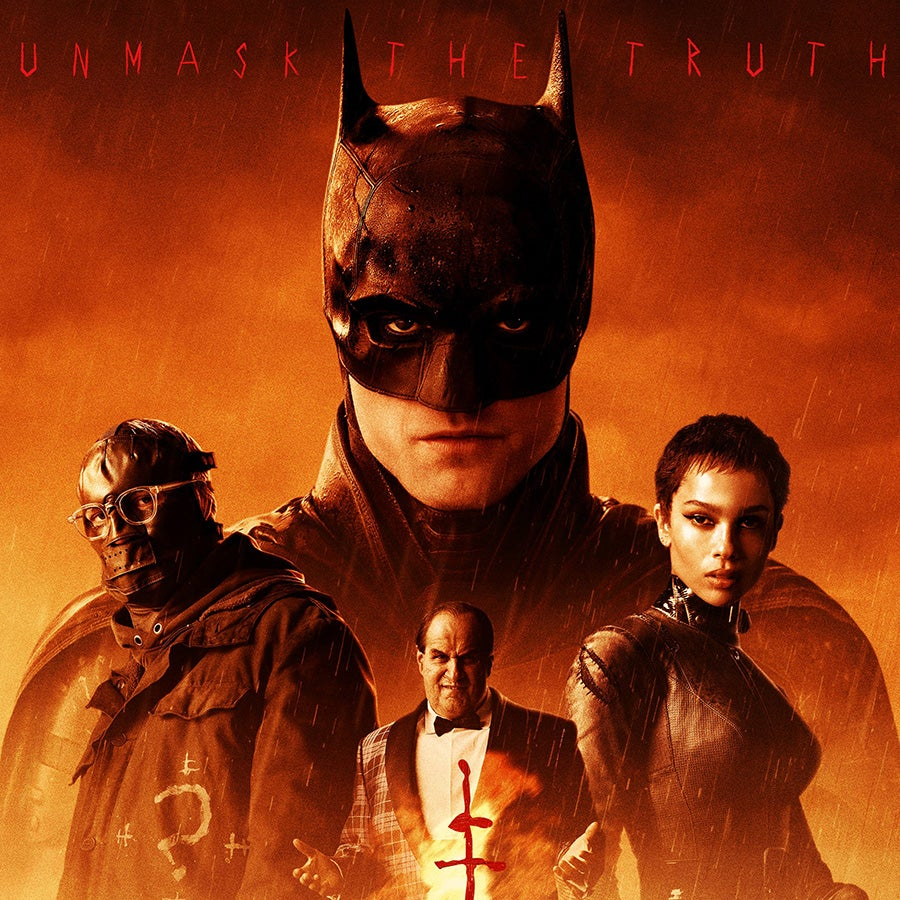
Five things about The Batman

1. I get that Batman is supposed to be spare and mysterious. Here, however, Robert Pattinson plays him whispery, dreary and not only entirely humorless, but dull. Also, whenever Batman enters a room, is it necessary to have him looking down, and then, raising his head dramatically to face … the foyer? 

2. Except for Paul Dano, the villains are forgettable.  And what a waste of Colin Farrell. He might as well have been Michael Chiklis under all that padding and putty, and Chiklis would have been cheaper.

3. The end is laughably schmaltzy “I have met the enemy and he is me” blather. Batman is no longer vengeance. He is Moses, guiding his people through a parted Red Sea on the floor of the Garden. And he wants your vote!!

4. The film is no fun. Beautifully appointed, but zero fun. The Burton Batmans were super fun, the Nolan Batmans were heavy but also had some fun.  This is a mostly unsuccessful meld of Batman and SE7EN.  In fact, Pattinson would have been better served during his face-to-face with Dano by pleading, “What’s in the box!!!” rather than just pounding angrily on the glass. Not that all films have to be fun.  But certainly, films where an adult runs around dressed as a bat should be a little fun.

5.  I get the canon that Batman does not kill people, opting instead to maim, stun, paralyze or concuss them.  But now is the time to take a hard look at how many people have died because of his outmoded reticence.  In the climactic scene, he takes out a slew of snipers with punches and judo chops, kicks and roundhouses, all the while allowing the baddies to shoot significantly more quarry.  And without the intercession of Catwoman, he would have been toast, and Gotham would have suffered grievously.  Hubris, I say.

On HBO MAX.

A pointless and excruciatingly long (2.5 hours) noir. All of the characters are thinly drawn and given second banana positioning to impossibly stylized visuals.  Before you can say “del Toro”, you’ll realize you’re in for a weak facsimile of Body Heat, minus the body and the heat, where the sex is supplanted by impeccable pre-World War II interior design. If you love art deco hallways and hotel rooms, this movie is for you!

The caper, such as it is, is laughably transparent and slapdash, having virtually no chance of success, and if you don’t have the end sussed out, you were probably justifiably looking at your phone. Cate Blanchett practically purrs with insincerity and threat, so the fact that she has any chance of getting over on grifter Bradley Cooper relegates him to super dummy status. As the love interest, Rooney Mara is dull. As the corporate titan meanie, Richard Jenkins is wasted.

I suppose it’s okay to look at, though I found the film visually just shy of the vulgar and lurid Sin City movies.

Free on HBO, which should have but did not help.     

Amazon.com: Nobody [DVD] : Various, Various: Movies & TV

“From the writer of John Wick . . .”

The film is John Wick, all the way down to its inexhaustible army of Russian pawns offered for slaughter. Instead of a laconic Keanu Reeves, we get a little less laconic and just a hair more put-upon Bob Odenkirk (the play against type is pretty cool). Still, while the film offers a massively high body count and is a little bloodier, it is pretty much the same as Wick minus the underworld mumbo-jumbo.

I’ve expended 2 hours in less fruitful pursuits. On HBO Max.

From 'Basic Instinct' to 'Showgirls': The rise and fall of the erotic  thriller

We were sitting down last night to eat Chinese, ready to watch the finale of The Alienist on HBO Max, when this popped on.  As I looked at my kung pao, and then at my wife, none too proud of myself, I asked, “Can we keep watching this until we see Sharon Stone’s genitalia?”

She acquiesced.

Sadly, that scene had passed, but we did watch the rest of the picture.  A few thoughts:

1) This is a “pre-proliferation of-internet pornography” picture, and even without the glimpse of Stone’s privates, I was impressed by the ample nudity (a lot of Stone, her girlfriend, and tons of Michael Douglas butt) and the extended sex scenes.

2) The film has aspirations to Hitchcock, but it is weak and often, hilariously mannered, and it essentially phones in any real suspense, substituting beautiful, inconvenient San Francisco locales for people to meet.

3) It is also rife with tropes, like the drunken buddy cop partner (George Dzundza), the sex so good your back gets scratched by fingernails, the hard-bitten cop who doesn’t need pencil-pushing headshrinkers messing with gut street instincts, and various versions of, “You’re way over the line, mister!”

4) It tries for a Suspicion-like ending but fails, with unintended comic results (how many times can Sharon Stone have an orgasm and at its peak, throw her hands down towards Douglas as if she were going to stab him with an ice pick?)

5) Michael Douglas has to be the most successful dick of a leading man in history,  Granted, he got his Oscar as Gordon Gekko, a true villain, but by leading man, I mean someone who is supposed to engender a smidgeon of empathy.  Sure, you felt bad for him in Fatal Attraction, but not really bad, even though a woman boiled his pet rabbit, kidnapped his child and tried to murder his family. He’s always at least half a dick.

6) The film has innumerable lazy turns, but my favorite is how no one ever takes Douglas “off the case” (sure, he is suspended, but he’s really up in the investigation all the way to his naked butt), despite sleeping with the suspect; killing her girlfriend (and providing a wildly implausible lie about how that happened); sleeping with his psychological counselor who works for the police; and beating up a colleague who later that night is found with a bullet in his temple.

Yet, the one time he is sidelined by his partner (“hey man, you can’t come up there with me, you’re suspended”), Douglas agrees and the partner gets fileted.

Plus, apparently, Douglas has “history” – 5 shootings in 6 years, two of which were tourists “caught in the crossfire.”

That’s one helluva a police union.

Anyway, the movie is bad, guilty pleasure watchable, and, as noted, overly dependent on Sharon Stone’s vagina.

With The Way of the Gun, writer-director Christopher McQuarrie assuredly expended the juice he’d earned writing The Usual Suspects to helm this noir-ish tale of a couple of fuck-ups (Benicio del Toro and Ryan Phillipe) who engineer a kidnapping with slapdash bravado and brutality. They have no idea the forces at play, and the greatest joy in the flick is their dogged aplomb as shit just gets worse and worse. These two losers are decent in the moment, but as exemplified in the movie’s best exchange, not exactly master planners:


Scenes like this one exemplify McQuarrie’s insistence on rejecting the cool in favor of the absurd. But that doesn’t mean he can’t direct an action sequence, and the final shootout is one for the ages. The film is also aided by Joe Kraemer’s moody, understated and anticipatory soundtrack (one of his firsts).

The Parallax View (1974) - IMDb

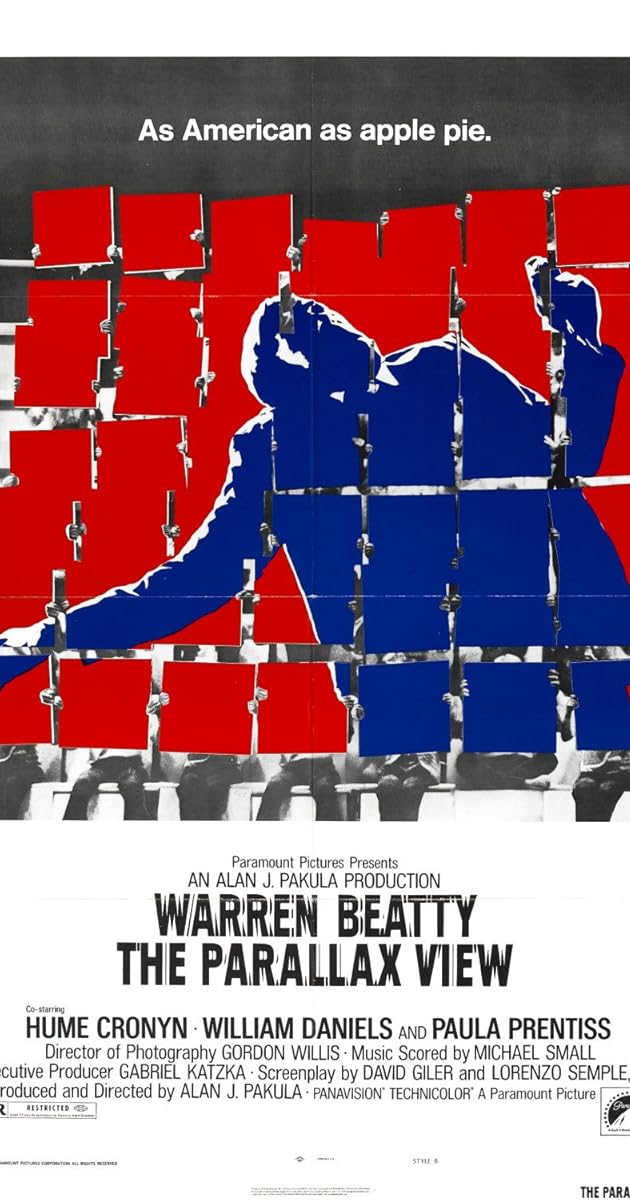
A regional reporter (Warren Beatty) stumbles on not so much a plot as an institutionalized corporate conspiracy of assassination.  The closer Beatty gets to the source, the more he realizes that what he initially deemed ludicrous is in fact a chilling reality.  

Alan Pakula’s paranoid thriller was probably more relevant upon its release.  With the shooting of JFK in ’63, Malcolm X in ’65, RFK and MLK in ’68, George Wallace in ’72 (a mere 2 years before the picture’s release), political assassination was preeminent in the mind of your average filmgoer.  And no one does paranoia quite a well as Pakula (Klute, All the President’s Men, Presumed Innocent). 

The picture is creepy and certainly makes the viewer feel anxious,. In particular, the movie potential assassins are required to watch in order to gauge their suitability/brainwash them is in and of itself overpowering.

But the film suffers from two significant handicaps.  First, the Beatty character is a cypher.  He is dogged and cynical, but he is invested with no backstory, motive or any other compelling feature.  Given how things turn out, this may be part of the message, but it makes for some stifled yawns as we travel his route to dawning.  Second, the plot is a mess.  Sure, I fully understand an assassination corporation maybe knocking off a true existential political threat once a decade. The Parallax Corporation, however, kills two United States senators and attempts to kill a third, in the space of three years, and even when they have done the good work of pinning it on a brainwashed loner stooge (the corporation’s m.o.), they threaten their entire operation by wiping out potential witnesses after the deed.  I’m not talking one or two witnesses.  After the film’s opening a scene (a gripping assassination on top of Seattle’s Space Needle), nine “witnesses” (it’s not clear they actually see anything) are taken out, a number extraordinary enough that Beatty is drawn in to dig deeper. In the final assassination, a sniper takes down a senator in front of an entire marching band.  That is going to be one helluva cleanup.

This is no way to run a railroad.